
服务消费机器人制造

Search documents
税收数据显示2025年我国科技创新与产业创新融合发展加快
Zhong Guo Xin Wen Wang· 2026-01-27 09:32
Group 1 - The core viewpoint of the articles highlights the accelerated integration of technological innovation and industrial innovation in China by 2025, showcasing significant growth in strategic emerging industries and improved efficiency in technology transfer [1][2] Group 2 - Strategic emerging industries are experiencing robust growth, with high-tech industry sales revenue projected to increase by 13.9% year-on-year in 2025. Specifically, high-tech manufacturing and high-tech services are expected to grow by 10.1% and 16.6%, respectively. Notable sectors include lithium-ion battery manufacturing, service robots, industrial robots, and biopharmaceuticals, with sales revenue growth rates of 25.1%, 60.7%, 17.4%, and 7.7% respectively [1] - The conversion of scientific and technological achievements is continuously improving, with sales revenue in the scientific research and technical service industry expected to rise by 20.4% year-on-year in 2025. Knowledge-intensive industries are also projected to see a 10.7% increase in sales revenue, indicating a stronger application of technological achievements. The national technology contract transaction amount is expected to grow by 19.1% [1] - The integration of digital technology with the real economy is deepening, with core digital economy industries projected to see a 9.4% increase in sales revenue in 2025. Related sectors such as digital product manufacturing and digital technology application are expected to grow by 9.4% and 13.8%, respectively. Additionally, enterprise procurement of digital technology is anticipated to rise by 9.6%, with manufacturing sector procurement increasing by 10.4% [2] - Traditional industries are accelerating their transformation and upgrading, particularly in automation. The procurement of automation equipment in traditional sectors such as petrochemicals, steelmaking, and ironmaking is expected to increase by 17.3%, 11.7%, and 12.7% year-on-year, respectively [2] - The data reflects solid achievements in China's technological self-reliance and the cultivation of new productive forces, indicating a strong and sustainable internal momentum for high-quality development [2]
税收数据显示:2025年我国科技创新与产业创新融合发展加快
Yang Shi Xin Wen· 2026-01-27 03:30
Group 1 - The core viewpoint of the articles highlights the accelerated integration of technological innovation and industrial innovation in China by 2025, showcasing significant growth in strategic emerging industries and advancements in technology transfer [1][2] Group 2 - Strategic emerging industries are experiencing robust growth, with high-tech industry sales revenue projected to increase by 13.9% year-on-year in 2025. High-tech manufacturing and high-tech service sectors are expected to grow by 10.1% and 16.6% respectively [1] - Key sectors such as lithium battery manufacturing, service robots, industrial robots, and biopharmaceuticals are showing remarkable sales growth, with increases of 25.1%, 60.7%, 17.4%, and 7.7% respectively [1] Group 3 - The conversion of scientific and technological achievements is gaining momentum, with sales revenue in the scientific research and technical service industry expected to rise by 20.4% year-on-year in 2025. Knowledge-intensive industries are projected to see a 10.7% increase in sales revenue [1] - The national technology contract transaction amount is anticipated to grow by 19.1%, indicating a stronger application of technological achievements [1] Group 4 - The integration of digital technology with the real economy is deepening, with core digital economy industries expected to see a sales revenue increase of 9.4% in 2025. Digital product manufacturing and digital technology application sectors are projected to grow by 9.4% and 13.8% respectively [2] - Enterprises are increasing their procurement of digital technology, with a year-on-year growth of 9.6%, and manufacturing sector procurement expected to rise by 10.4% [2] Group 5 - Traditional industries are accelerating their transformation and upgrading, particularly in automation, with significant increases in procurement of automation equipment in sectors like petrochemicals, steelmaking, and ironmaking, showing growth rates of 17.3%, 11.7%, and 12.7% respectively [2]
扩内需政策效果显现,2025年12月CPI超预期增长
Hua Xia Shi Bao· 2026-01-10 04:12
Group 1 - The core consumer demand is increasing, leading to a rise in the Consumer Price Index (CPI) for December, which increased by 0.2% month-on-month and 0.8% year-on-year, exceeding market expectations [2][3] - The core CPI, excluding food and energy, rose by 1.2% year-on-year, indicating stable domestic demand [2][4] - The Producer Price Index (PPI) showed a month-on-month increase of 0.2% and a year-on-year decrease of 1.9%, with the decline narrowing due to improved supply-demand structures [5][6] Group 2 - Prices of communication tools, maternal and infant products, entertainment durable goods, and household appliances increased by 1.4% to 3.0% month-on-month, reflecting the effectiveness of consumption-boosting policies [3][4] - Food prices rose by 1.1% year-on-year, contributing significantly to the CPI increase, while pork prices decreased by 1.7% due to sufficient supply [4][5] - The prices of durable goods showed overall improvement, with household appliances rising by 1.4% month-on-month, marking a historical high [4][5] Group 3 - The energy prices decreased by 0.5%, with gasoline prices falling by 1.2% due to international oil price fluctuations [4][5] - The prices in the coal mining and washing industry and coal processing rose by 1.3% and 0.8% respectively, continuing a five-month upward trend [5][6] - New production capacities in digital economy-related industries are driving price increases, with significant rises in prices for external storage devices (15.3%) and biomass liquid fuels (9.0%) [6]


锐财经|物价水平保持企稳态势
Ren Min Ri Bao Hai Wai Ban· 2025-12-12 01:52
Group 1 - The Consumer Price Index (CPI) increased by 0.7% year-on-year in November, the highest since March 2024, driven primarily by a reversal in food prices from a decline to an increase [2][4] - Core CPI, excluding food and energy, rose by 1.2% year-on-year, maintaining above 1% for three consecutive months [2][4] - The Producer Price Index (PPI) saw a month-on-month increase of 0.1% but a year-on-year decline of 2.2%, indicating a mixed price environment influenced by seasonal demand and macroeconomic policies [4][5] Group 2 - Food prices shifted from a 2.9% decline to a 0.2% increase, with fresh vegetable prices rising by 14.5% after nine months of decline, significantly impacting the CPI [2][3] - Service prices and industrial consumer goods prices increased by 0.7% and 2.1% respectively, contributing positively to the CPI [2][4] - The demand for coal and gas increased seasonally, leading to price rises in related industries, with coal mining prices up by 4.1% [4][5] Group 3 - Emerging industries such as new materials and intelligent technology are driving price increases in related sectors, with prices for external storage devices rising by 13.9% year-on-year [5][6] - Consumer demand is being revitalized through targeted actions, with prices in sectors like arts and crafts rising by 20.6% [5][6] - The government plans to enhance domestic demand and consumption through various initiatives, especially as the year-end approaches, which is traditionally a peak consumption period [7]
物价水平保持企稳态势(锐财经)
Ren Min Ri Bao Hai Wai Ban· 2025-12-11 22:56
Group 1 - The Consumer Price Index (CPI) increased by 0.7% year-on-year in November, the highest since March 2024, driven primarily by a reversal in food prices from a decline to an increase [2] - Core CPI, excluding food and energy, rose by 1.2% year-on-year, maintaining above 1% for three consecutive months [2] - The increase in CPI was influenced by seasonal price rises in services and industrial consumer goods, with household appliances and clothing prices rising by 4.9% and 2.0% respectively [2][4] Group 2 - The Producer Price Index (PPI) saw a month-on-month increase of 0.1% but a year-on-year decrease of 2.2%, with the decline attributed to high comparison bases from the previous year [4][6] - Seasonal demand increases in certain domestic industries, such as coal and gas, contributed to the month-on-month price rise in PPI [4] - New industries, including new materials and intelligent technology, are driving price increases in related sectors, with prices for external storage devices rising by 13.9% year-on-year [6] Group 3 - To stabilize price levels and promote reasonable price recovery, there is a need to continue expanding domestic demand and optimizing market competition [7] - The upcoming year-end and early-year period is seen as a crucial time for consumer spending, with plans for various promotional activities to enhance consumption [7] - Looking ahead to 2026, policies aimed at expanding domestic demand are expected to support a moderate recovery in prices, particularly in service sectors such as dining, accommodation, and health services [7]
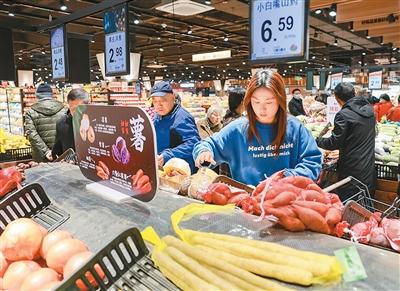
11月份CPI同比上涨0.7% 物价水平进一步企稳
Zheng Quan Ri Bao· 2025-12-10 16:25
Consumer Recovery - In November, the Consumer Price Index (CPI) decreased by 0.1% month-on-month but increased by 0.7% year-on-year, marking the highest growth since March 2024, indicating a continuous recovery in consumer spending [1][2] - The year-on-year increase in CPI was primarily driven by a shift in food prices from decline to growth, with food prices rising by 0.2% after a 2.9% drop in October [2][3] - Fresh vegetable prices saw a significant turnaround, increasing by 14.5% after a 7.3% decline in October, contributing approximately 0.49 percentage points to the CPI year-on-year [2][3] Core CPI and Industrial Prices - The core CPI, excluding food and energy, rose by 1.2% year-on-year, maintaining a growth rate above 1% for three consecutive months [3] - Prices for services and industrial consumer goods, excluding energy, increased by 0.7% and 2.1%, respectively, contributing approximately 0.29 and 0.53 percentage points to the CPI year-on-year [3] - The expansion of domestic demand policies has positively impacted prices, with household appliances and clothing prices rising by 4.9% and 2.0%, respectively [3] Producer Price Index (PPI) - The Producer Price Index (PPI) increased by 0.1% month-on-month in November, marking two consecutive months of growth, while the year-on-year decline was 2.2%, slightly widening from October [4][5] - The improvement in PPI is attributed to the optimization of supply and demand structures in certain domestic industries and the transmission of international commodity prices [4][5] Policy Impact and Market Dynamics - Continuous macroeconomic policies are showing positive effects, with a narrowing of price declines in key industries due to the ongoing governance of "involution" competition [5][6] - Emerging industries are driving price increases, with significant year-on-year price rises in sectors such as external storage devices (up 13.9%) and graphite products (up 3.8%) [5][6] - Consumer demand is being revitalized, leading to price increases in various manufacturing sectors, including a 20.6% rise in the price of arts and crafts products [6]
创20个月以来新高 11月CPI同比涨0.7%
Bei Jing Shang Bao· 2025-12-10 15:44
Core Insights - In November, the national consumer price index (CPI) rose by 0.7% year-on-year, marking the highest increase since March 2024, with a 0.5 percentage point increase from the previous month [1][2][4]. Price Changes - Food prices shifted from a 2.9% decline in the previous month to a 0.2% increase, contributing positively to the CPI [4]. - Fresh vegetable prices surged by 14.5%, marking the first increase after nine consecutive months of decline, significantly impacting the CPI [4]. - The prices of other major categories showed mixed results, with increases in other goods and services (14.2%), clothing (1.9%), and healthcare (1.6%), while transportation and communication prices fell by 2.3% [3][4]. Core CPI - The core CPI, excluding food and energy, increased by 1.2% year-on-year, maintaining a growth rate above 1% for three consecutive months [4][6]. Producer Price Index (PPI) - The PPI rose by 0.1% month-on-month but fell by 2.2% year-on-year, with the decline attributed to high comparison bases from the previous year [6]. - The prices in key industries such as coal mining and photovoltaic equipment manufacturing showed narrowing declines, indicating improved market conditions [6]. Seasonal Demand Impact - Seasonal demand increases in certain industries, such as coal and gas, have led to price hikes in related sectors, with coal mining prices rising by 4.1% month-on-month [5][6]. - The demand for winter clothing and heating products has also contributed to price increases in textile manufacturing [5]. Consumer Spending - The ongoing consumer spending initiatives have positively influenced prices in various sectors, with notable increases in the manufacturing of arts and crafts (20.6%) and sports equipment (4.3%) [6].

中国PPI环比连续两个月上涨
Zhong Guo Xin Wen Wang· 2025-12-10 07:58
Group 1 - In November, China's Producer Price Index (PPI) increased by 0.1% month-on-month, marking the second consecutive month of growth [1] - Seasonal demand in certain domestic industries, particularly coal and gas, contributed to the price increase, with coal mining and washing prices rising by 4.1% and gas production and supply prices increasing by 0.7% [1] - The PPI year-on-year decreased by 2.2%, with the decline rate widening by 0.1 percentage points compared to the previous month, influenced by a high comparison base from the previous year [1] Group 2 - The reduction in year-on-year price declines for certain industries indicates the effectiveness of measures against "involution" competition, with coal mining and washing, photovoltaic equipment manufacturing, and lithium-ion battery manufacturing seeing narrowed declines [2] - Emerging industries are driving price increases, with external storage devices and components prices rising by 13.9% year-on-year, graphite and carbon product manufacturing prices increasing by 3.8%, and integrated circuit manufacturing prices up by 1.7% [2]
税收数据显示:前三季度全国企业设备更新加快推进 以旧换新持续释放消费潜力
Zhong Guo Jin Rong Xin Xi Wang· 2025-10-16 03:00
Core Insights - The implementation of large-scale equipment renewal and consumption upgrade policies since March 2024 has significantly boosted equipment investment and consumption growth in China [1][3]. Group 1: Industrial Equipment Investment - Industrial enterprises have shown a positive trend in equipment renewal, with machinery equipment purchases increasing by 9.4% year-on-year in the first three quarters of this year [1]. - High-tech manufacturing maintained strong growth, with machinery equipment purchases rising by 14% [1]. - The electricity, heat, gas, and water production and supply sectors saw a 10.5% increase in machinery equipment purchases, with thermal production and supply specifically growing by 16.4% [1]. Group 2: Information and Technology Sector - The information and technology sectors have increased their investment in equipment, with machinery equipment purchases in information transmission, software, and IT services rising by 26.8%, and scientific research and technical services by 32.5% [2]. Group 3: Digital Equipment Investment - National enterprises have shown strong motivation for digital equipment updates, with purchases increasing by 18.6% year-on-year in the first three quarters [2]. - High-end manufacturing sectors, such as shipbuilding and computing, have accelerated their digital investments, with increases of 17.3% and 22.7% respectively [2]. Group 4: Private Enterprises - Private enterprises have played a significant role in equipment renewal, with machinery equipment purchases increasing by 13% year-on-year, surpassing state-owned and foreign enterprises [2]. - Innovative sectors within the private economy, such as the internet and smart drone industries, have seen substantial growth, with equipment purchases rising by 32.8% and 70.5% respectively [2]. Group 5: Consumer Goods and Home Appliances - Sales of home appliances and furniture have surged, with retail sales of daily-use appliances like refrigerators increasing by 48.3% and home audio-visual equipment by 26.8% [2]. - The furniture and lighting retail sectors also experienced significant growth, with sales increasing by 33.2% and 17.2% respectively, particularly in smart home products like robotic vacuum cleaners, which saw a 75% increase in sales [2]. - The retail sales of mobile communication devices, following the expansion of the market, grew by 19.9% [2]. Group 6: New Energy Vehicles - Sales of new energy vehicles have continued to grow, with a year-on-year increase of 30.1% in the first three quarters, reflecting the vitality of China's new energy vehicle industry [3]. - The "old-for-new" vehicle policy has effectively stimulated automotive consumption potential [3].
佛朗斯股份在合肥成立环保科技公司,注册资本2000万
Xin Lang Cai Jing· 2025-09-25 03:35
Group 1 - Hefei Langwen Environmental Technology Co., Ltd. was established on September 23, with a registered capital of 20 million RMB [1] - The legal representative of the company is Qian Xiaoxuan [1] - The business scope includes general equipment manufacturing, service consumer robot manufacturing, and service consumer robot sales, fully owned by France Holdings [1]