
现代纺织

Search documents
新华全媒头条|之江奔涌向“新”行——浙江以自主创新驱动高质量发展
Xin Hua She· 2026-02-12 15:53
Core Insights - Zhejiang is focusing on self-driven innovation to achieve high-quality development, aiming to transform from a manufacturing province to an innovation-driven province and eventually a technology powerhouse [1][4]. Group 1: Innovation Capacity and Goals - Zhejiang ranks fourth nationally in regional innovation capacity, with expected R&D investment intensity reaching 3.3% and high-tech industry value-added accounting for 70% by 2025 [1][3]. - The province aims to establish a high-level innovative province by 2025 and a technology powerhouse by 2035, building on its previous success in becoming an innovative province by 2020 [4]. Group 2: Innovation Ecosystem - The province is implementing a dual-driven model of technological and institutional innovation, fostering an ecosystem that supports innovation through effective market mechanisms and proactive government involvement [2][5]. - Companies in Zhejiang are responsible for 80% to 90% of the province's R&D investment, personnel, institutions, projects, and patents, highlighting the critical role of enterprises in driving innovation [5][6]. Group 3: Key Projects and Achievements - Significant projects include the establishment of national laboratories and major scientific facilities, with notable achievements in AI, biomedicine, and new energy technologies [3][8]. - The province has seen the emergence of groundbreaking technologies, such as AI models and targeted cancer drugs, showcasing its capability in high-tech innovation [6][8]. Group 4: Future Prospects and Community Impact - Zhejiang is investing over 290 billion yuan in R&D in 2024, with innovations like four-legged robots and advanced water treatment technologies making significant impacts [8][9]. - The province's innovation efforts are also aimed at enhancing community welfare, with technologies like smart prosthetics and AI glasses improving the lives of disabled individuals [8][9].
经济大省陆续发布年报,沪浙川豫去年GDP增速均跑赢全国
Xin Lang Cai Jing· 2026-01-21 12:21
Group 1 - The core viewpoint of the articles highlights the economic performance of major provinces in China for the year 2025, with GDP growth rates exceeding the national average of 5.0% [1][2][4] - Shanghai achieved a GDP of 56,709 billion yuan, growing by 5.4%, driven by the service sector which contributed 4.5 trillion yuan, growing by 6.0% [1] - Zhejiang's GDP reached 94,545 billion yuan, with a growth rate of 5.5%, where the third industry contributed over 60% to GDP growth [2] - Henan's GDP was 66,633 billion yuan, growing by 5.6%, with significant contributions from domestic consumption, which increased by 5.6% [4] - Sichuan's GDP was 67,665 billion yuan, growing by 5.5%, with a notable recovery in private investment, which increased by 2.1% [5] Group 2 - Shanghai's fixed asset investment grew by 4.6%, surpassing the national average by 8.4 percentage points, with retail sales reaching 16,601 billion yuan, also growing by 4.6% [1] - In Zhejiang, the number of new enterprises and individual businesses reached 1.646 million, with a year-end total of 11.64 million, marking a 6.3% increase [2] - Henan's fixed asset investment grew by 4.0%, exceeding the national average by 7.8 percentage points, with private investment increasing by 5.9% [5] - Sichuan's private investment growth was driven by infrastructure and social welfare projects, which grew by 29% and 18.9% respectively [5]

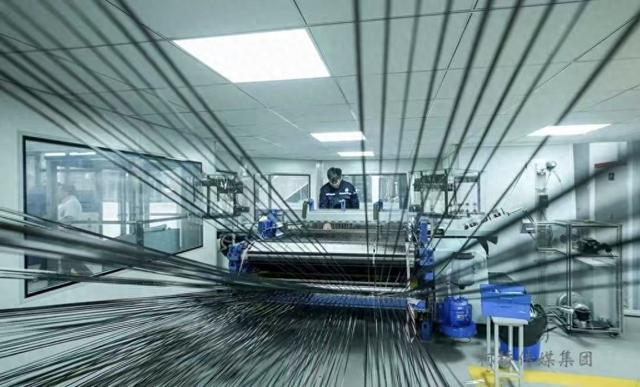
增强供需适配促进形成3个万亿级消费领域|营商环境周报
2 1 Shi Ji Jing Ji Bao Dao· 2025-12-03 06:49
Group 1 - The State Administration for Market Regulation has introduced a new credit repair management method to encourage individuals to correct violations and rebuild credit, effective from December 25 [1] - The new method categorizes violations into three levels: minor, general, and serious, each with different public disclosure periods and repair conditions [1] - Minor violations with only warnings will not be publicly disclosed, while general violations will have a minimum disclosure period of three months and a maximum of one year; serious violations will be disclosed for a minimum of one year and a maximum of three years [1] Group 2 - The Ministry of Industry and Information Technology and six other departments have issued a plan to enhance the supply of consumer goods, aiming to create three trillion-yuan consumption sectors and ten billion-yuan consumption hotspots by 2027 [2] - The plan includes 19 key tasks focusing on new technology applications, expanding the supply of unique products, and creating new consumption scenarios [2] - Key industries targeted include smart connected vehicles, smart home products, consumer electronics, and green building materials, with a goal to develop iconic products and innovative enterprises [2] Group 3 - The plan emphasizes the need to improve the supply of baby products, quality student supplies, trendy fashion items, and products for the elderly [3] Group 4 - The Ministry of Industry and Information Technology has initiated commercial trials for satellite IoT services, targeting industries such as transportation, energy, and agriculture [4] - The trials aim to enhance market supply, stimulate market activity, and establish a safety regulatory framework for emerging industries [4] - Companies that fail to provide services or violate regulations may have their trial qualifications revoked [4] Group 5 - Hunan Province has launched initiatives to create friendly environments for new employment groups, addressing issues faced by delivery workers and couriers [5] - Specific measures include optimizing delivery environments, improving access to buildings, and providing essential services like drinking water and charging stations [5] - The initiative aims to enhance the overall working conditions for new employment groups [5] Group 6 - Sichuan Province has released guidelines to improve government services and administrative efficiency through the "Efficient Completion of One Thing" initiative [6] - The guidelines propose the integration of artificial intelligence into government services to provide intelligent support for both citizens and officials [6] - The focus is on creating a list of key services and exploring streamlined processes for various stages of business development [6] Group 7 - Hangzhou has introduced a new land management reform to align land use with industrial needs, promoting a market-oriented approach [7] - The reform includes categorizing commercial land into industrial and real estate types, with incentives for industrial land use [7] - The city is piloting flexible land use policies to adapt to changing industrial trends, enhancing the responsiveness of land planning [7][8]
2027年形成3个万亿级消费领域和10个千亿级消费热点
Xin Hua Wang· 2025-11-30 22:29
Core Viewpoint - The Ministry of Industry and Information Technology, along with five other departments, has issued an implementation plan aimed at enhancing the adaptability of supply and demand in consumer goods, targeting significant optimization of the supply structure by 2027 and establishing three trillion-level consumption sectors and ten hundred-billion-level consumption hotspots [1][2]. Group 1: Key Objectives - By 2027, the supply structure of consumer goods is expected to be significantly optimized, with the formation of three trillion-level consumption sectors and ten hundred-billion-level consumption hotspots [1]. - The plan emphasizes leading industrial upgrades through consumption upgrades and aims for a dynamic balance between supply and demand, with a goal of establishing a high-quality development pattern by 2030 [1][2]. Group 2: Key Tasks - The plan outlines 19 key tasks across five areas: accelerating the application of new technologies and models, expanding the supply of distinctive and new products, precisely matching the needs of different demographics, cultivating new consumption scenarios and business formats, and creating a favorable development environment [2]. - Specific focus areas include intelligent connected new energy vehicles, smart home products, consumer electronics, modern textiles, food, and green building materials, with the goal of creating hundreds of iconic products and innovative enterprises [2]. Group 3: Market Segmentation - The plan aims to enhance the supply of green products, improve rural consumer goods, and significantly develop leisure and sports products, adapting to trends in green and low-carbon consumption [2]. - It also targets niche markets by enriching the supply of baby and children's products, enhancing quality student supplies, expanding fashionable "trendy" products, and optimizing products for the elderly [2].
六部门发文,到2027年我国将形成3个万亿级消费领域!
Ren Min Ri Bao· 2025-11-27 10:12
Core Viewpoint - The State Council's executive meeting emphasizes enhancing supply-demand adaptability as an effective measure to unleash consumption potential and facilitate economic circulation. The Ministry of Industry and Information Technology, along with five other departments, has issued an implementation plan aiming to establish three trillion-level consumption sectors and ten billion-level consumption hotspots by 2027 [1]. Group 1: Development of New Technologies and Models - Focus on key industries such as smart connected new energy vehicles, smart home, consumer electronics, modern textiles, food, and green building materials, launching a dual-hundred innovation application initiative to create a hundred iconic products and a hundred innovative enterprises [1]. - Promote flexible and customized manufacturing models, implementing a "thousand factories, thousand faces" transformation plan, and establishing a digital system that connects user demand, intelligent design, and flexible production [3]. - Encourage the application of artificial intelligence across the entire consumer goods industry, promoting generative AI and 3D digital design tools [4]. Group 2: Expansion of New Product Supply - Adapt to the trend of green and low-carbon consumption by improving energy efficiency and water efficiency standards for consumer goods, and revising national standards for volatile organic compounds (VOCs) and heavy metals [8]. - Encourage the development of energy-efficient appliances and green building materials, as well as the promotion of green low-carbon consumption in sectors like new energy vehicles [8]. - Support the development of rural-friendly high-efficiency products and enhance rural commerce infrastructure [9]. Group 3: Targeted Consumer Matching - Promote the development of high-quality, intelligent products for infants and children, focusing on feeding, travel, outdoor activities, and educational toys [20]. - Encourage the design of protective writing tools and personalized learning kits for students, integrating traditional stationery with smart hardware [23]. - Enhance the development of age-friendly products for the elderly, including care robots and multifunctional nursing beds [26]. Group 4: Cultivation of New Consumption Scenarios and Business Models - Support the establishment of flagship stores and new concept stores, and organize product launch events to enhance consumer engagement [28]. - Develop new business models such as live e-commerce and instant retail, leveraging AI to match user needs with products and services [29]. - Promote the development of shared consumption models, including shared bicycles and wheelchairs in public spaces [32].

事关促消费!六部门印发重磅文件→
Sou Hu Cai Jing· 2025-11-27 03:26
Core Insights - The Ministry of Industry and Information Technology, along with several other government departments, has issued a plan to enhance the adaptability of supply and demand in consumer goods, aiming for consumption upgrades to lead industrial upgrades and achieve a dynamic balance between supply and demand by 2027 [1][4]. Summary by Sections Overall Requirements - The plan aims to optimize the supply structure of consumer goods by 2027, creating three trillion-level consumption sectors and ten hundred-billion-level consumption hotspots, while fostering high-quality consumer goods with cultural significance [4]. Accelerating Innovation in New Technologies and Models - Focus on key industries such as smart connected new energy vehicles, smart home products, and modern textiles to develop innovative applications and create a hundred landmark products and enterprises [5]. - Promote flexible and customized manufacturing models, establishing a digital system that connects user demand with intelligent design and flexible production [6]. - Encourage the integration of artificial intelligence across the consumer goods industry, promoting smart products that provide various life services [6]. Expanding Supply of Unique and New Products - Adapt to the trend of green and low-carbon consumption by improving energy efficiency standards and promoting green building materials [7]. - Support the development of high-quality leisure and sports products to meet new demands from the sports economy [8]. - Encourage innovation in health products, focusing on special dietary foods and high-end medical devices [9]. Precise Matching of Different Consumer Needs - Enhance the supply of quality children's products, promoting safety and quality standards [10]. - Expand the supply of fashionable "trendy" products, focusing on sustainable materials and high-end brands [12]. - Develop age-appropriate products for the elderly, emphasizing comfort and functionality [13]. Cultivating New Consumption Scenarios and Business Models - Support the establishment of flagship stores and new concept stores to enhance consumer experience [13]. - Encourage the development of new business models such as live e-commerce and instant retail, leveraging advanced technologies for immersive shopping experiences [14]. Creating a Favorable Development Environment - Strengthen financial support for the consumer goods industry, promoting policies for equipment upgrades and trade-in programs [15]. - Organize promotional activities to highlight quality consumer products and brands, aiming to cultivate a strong consumer market [16]. - Maintain market order by addressing issues like local protectionism and ensuring product safety standards are updated [16].
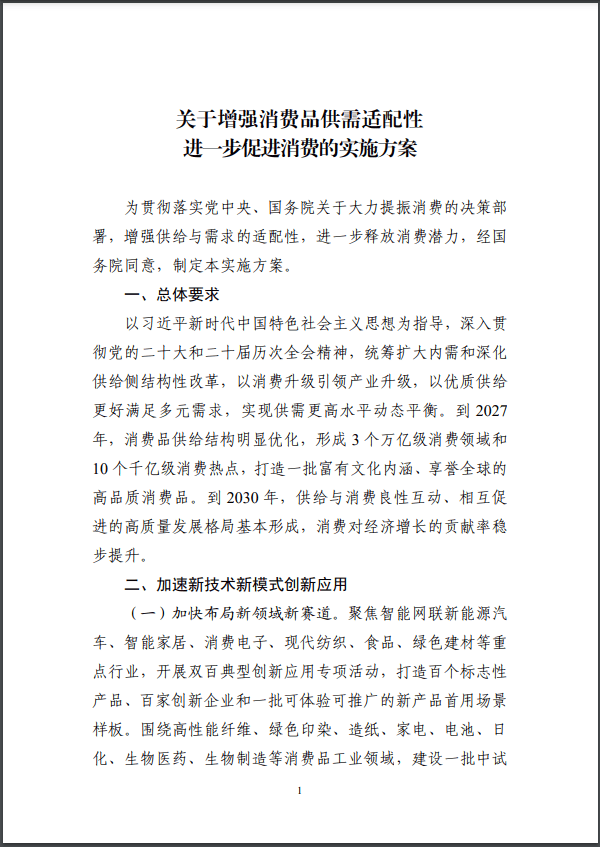
事关促消费!工信部等六部门部署增强消费品供需适配性
中汽协会数据· 2025-11-27 02:13
Core Viewpoint - The article discusses the implementation plan for enhancing the adaptability of supply and demand in consumer goods, aiming to promote consumption and achieve a dynamic balance between supply and demand by 2027 and 2030 [1][5][22]. Group 1: Overall Requirements - By 2027, the plan aims to optimize the supply structure of consumer goods, forming three trillion-level consumption fields and ten hundred-billion-level consumption hotspots, while creating high-quality consumer goods with cultural connotations [5][20]. - By 2030, a high-quality development pattern characterized by positive interaction between supply and consumption is expected to be established, with a steady increase in the contribution of consumption to economic growth [5][22]. Group 2: Key Tasks - The plan outlines five main areas with 19 key tasks, including expanding new technologies and innovative applications, enhancing the supply of unique and new products, accurately matching different demographic needs, cultivating new consumption scenarios and business formats, and creating a favorable development environment [2][6][9]. Group 3: Expanding Unique and New Product Supply - The plan emphasizes promoting green product expansion and iteration, enhancing rural consumer goods quality, and developing leisure and sports products to meet new demands [9][10][25]. - It also focuses on innovating health products, increasing the influence of historical classic products, and expanding diverse interest consumption supplies [10][11][26]. Group 4: Precise Matching of Different Demographic Needs - The plan aims to enrich the supply of baby and children's products, enhance the quality of student supplies, and expand the supply of fashionable "trendy" products [12][13][27]. - It also includes optimizing the supply of age-appropriate products for the elderly [13]. Group 5: Cultivating New Consumption Scenarios and Business Formats - The plan supports the establishment of flagship stores and new concept stores, promoting the launch of new products and enhancing the core business district's capabilities [14][28]. - It encourages the orderly development of platform consumption, including live e-commerce and circular e-commerce, while standardizing shared consumption [15][28]. Group 6: Creating a Favorable Development Environment - The plan highlights the importance of financial support for consumption, promoting the use of old-for-new policies, and enhancing consumer finance products and services [16][29]. - It also emphasizes maintaining market order, strengthening network market supervision, and updating safety and environmental standards for consumer goods [17][30].

六部门发文增强消费品供需适配性
Zhong Guo Zheng Quan Bao· 2025-11-26 20:20
Core Viewpoint - The implementation plan aims to enhance the adaptability of supply and demand in consumer goods, promoting consumption upgrades to lead industrial upgrades and achieving a dynamic balance between supply and demand [1][2]. Group 1: Key Areas of Focus - The plan outlines 19 key tasks across five areas, focusing on industries such as smart connected vehicles, smart home products, consumer electronics, modern textiles, food, and green building materials [1]. - It emphasizes the development of leisure and sports products, targeting new demands from event economies, outdoor economies, and winter sports, while promoting high-quality sports equipment [1][2]. Group 2: Targeted Consumer Needs - The plan aims to match diverse consumer needs by enriching the supply of baby products, enhancing quality student supplies, expanding trendy products, and optimizing products for the elderly [2][3]. - It also seeks to cultivate new consumption scenarios and business models, including the promotion of product launches, orderly development of platform consumption, and regulated shared consumption [2]. Group 3: Future Goals - By 2027, the plan targets a significant optimization of the consumer goods supply structure, aiming to create three trillion-level consumption fields and ten hundred-billion-level consumption hotspots [2]. - By 2030, it envisions a high-quality development pattern where supply and consumption interact positively, with a steady increase in consumption's contribution to economic growth [2]. Group 4: Industry Impact - The implementation of the plan is expected to positively impact multiple industries, including smart connected vehicles, smart home products, consumer electronics, and green building materials, driving technological innovation through the creation of flagship products and innovative application scenarios [2][3]. - The sports and leisure product sectors are anticipated to benefit from new demands arising from event and outdoor economies, gaining new growth momentum [2].
增强消费品供需适配性 进一步促进消费
Qi Huo Ri Bao Wang· 2025-11-26 17:08
Core Insights - The Ministry of Industry and Information Technology, along with five other departments, has issued a plan to enhance the adaptability of supply and demand in consumer goods, aiming for consumption upgrades to lead industrial upgrades [1] - By 2027, the plan targets a significant optimization of the consumer goods supply structure, establishing three trillion-level consumption sectors and ten hundred-billion-level consumption hotspots [1] - By 2030, a high-quality development pattern characterized by positive interaction between supply and consumption is expected to be largely formed, with a steady increase in the contribution of consumption to economic growth [1] Group 1: Key Tasks and Focus Areas - The plan outlines 19 key tasks across five areas: accelerating the application of new technologies and models, expanding the supply of unique and new products, precisely matching the needs of different demographics, cultivating new consumption scenarios and business formats, and creating a favorable development environment [1] - Emphasis is placed on expanding new fields and tracks, promoting efficient manufacturing models, and enhancing the integration of artificial intelligence [1] - Key industries targeted include smart connected new energy vehicles, smart home products, consumer electronics, modern textiles, food, and green building materials, with goals to create hundreds of iconic products and innovative companies [1] Group 2: Market Segmentation and Product Development - The plan also focuses on deepening existing markets by promoting the expansion and iteration of green products, enhancing the quality of rural consumer goods, and significantly developing leisure and sports products [2] - It aims to adapt to the trends of green and low-carbon consumption by improving the energy and water efficiency standards of consumer goods [2] - Specific market segments targeted include enriching the supply of baby and children's products, enhancing quality student supplies, expanding fashionable "trendy" products, and optimizing products for the elderly [2]
工业和信息化部等六部门联合发文 到2027年形成3个万亿级消费领域和10个千亿级消费热点
Zheng Quan Ri Bao· 2025-11-26 16:08
Core Insights - The implementation plan aims to enhance the adaptability of supply and demand in consumer goods, targeting significant optimization of supply structure by 2027 and establishing a high-quality development pattern by 2030 [1][2][3] Group 1: Goals and Objectives - By 2027, the plan targets the formation of three trillion-level consumption sectors and ten hundred-billion-level consumption hotspots, with a focus on high-quality consumer goods that have cultural significance [1] - By 2030, the plan aims for a well-functioning interaction between supply and consumption, with a steady increase in the contribution of consumption to economic growth [1] Group 2: Innovation and Technology - The plan emphasizes the acceleration of new technology and model applications, promoting efficient manufacturing responses and the integration of artificial intelligence [1] - Key industries targeted include smart connected vehicles, smart home products, consumer electronics, modern textiles, food, and green building materials [1] Group 3: Product Supply Expansion - The plan outlines measures to enhance the supply of green products, improve rural consumer goods, and promote the development of leisure, sports, and health products [2] - Specific actions include adapting to green consumption trends and revising national standards for volatile organic compounds (VOCs) and heavy metals in products [2] Group 4: Consumer Demand Matching - The plan aims to diversify product offerings to meet the needs of different demographics, including children, students, and the elderly [2] - It promotes the development of high-quality, intelligent, and refined products for children, as well as optimizing products for the elderly [2] Group 5: New Consumption Scenarios and Business Models - The plan encourages the establishment of new consumption scenarios, including the launch of flagship stores and the development of new business models such as live e-commerce and instant retail [2] - It also supports the promotion of shared consumption models in public spaces [2] Group 6: Supportive Environment - The plan emphasizes the importance of financial and fiscal support, maintaining market order, and organizing special events to foster a conducive environment for consumer goods [3] - Specific measures include leveraging policies for equipment upgrades and trade-in programs to support the consumer goods industry [3]