个人消费支出价格指数(PCE)

Search documents
PPI数据即将来袭!美联储降息之路恐再生变?
Jin Shi Shu Ju· 2026-02-27 11:46
Group 1 - The core viewpoint of the articles revolves around the anticipation of the upcoming Producer Price Index (PPI) data, which is expected to provide insights into inflation trends and influence Federal Reserve interest rate decisions [1][2][3]. - Economists predict a month-over-month increase of 0.3% in January's wholesale inflation rate, down from 0.5% in December, with a year-over-year growth rate expected at 2.6%, compared to December's 3% [2][3]. - The PPI data is closely monitored as it is a key component in calculating the Federal Reserve's preferred inflation measure, the Personal Consumption Expenditures (PCE) price index [3]. Group 2 - There is a significant focus on the potential for stronger-than-expected PPI data, which could hinder the likelihood of future interest rate cuts by the Federal Reserve [3][4]. - The January PPI report is anticipated to show a robust increase, with predictions of a 0.5% rise in both overall and core prices, indicating a year-over-year increase of 2.8% for overall PPI and 3.2% for core PPI [4]. - The dynamics of wholesale gasoline and diesel prices, along with the performance of trade services, are critical factors that could influence the PPI data and overall inflation trends [4][5].
The Fed's Favorite Measure Of Inflation Was Hotter Than Expected at the End of 2025
Investopedia· 2026-02-20 17:00
Core Insights - The Federal Reserve's preferred inflation measure, Personal Consumption Expenditures (PCE), ended 2025 higher than its starting point, indicating persistent inflationary pressures [1] - Consumer prices rose by 2.9% year-over-year in December, up from 2.8% in November, marking the highest annual increase since March 2024 [2] - Core PCE, which excludes food and energy, increased by 3% over the same period, aligning with expectations and representing the highest annual rise since February [2] Economic Implications - High inflation continues to strain household budgets and complicates the Federal Reserve's decision-making regarding interest rate cuts, as it aims to balance inflation control with employment levels [3][5] - The increase in core prices is significant as it serves as a benchmark for the Fed's inflation target of 2%, which has not been met since 2021 due to pandemic-related disruptions [3] - The Fed's current stance on interest rates may be influenced by the persistent inflation, potentially leading to prolonged higher borrowing costs to discourage excessive borrowing and restore supply-demand balance [5][6] Market Reactions - The rise in inflation can be attributed to various factors, including tariffs imposed by the government, which have led to increased prices for consumers, although housing costs have stabilized [4] - The report on PCE was delayed due to a government shutdown, coinciding with weaker-than-expected GDP growth data for the fourth quarter, highlighting broader economic challenges [7]


美联储决议倒计时!PCE“硬数据”能否引爆年底行情?
Jin Shi Shu Ju· 2025-12-05 02:30
Group 1 - The U.S. stock market has rebounded close to historical highs after a turbulent month, but persistent inflation concerns and deteriorating consumer confidence are causing unease among investors ahead of the Federal Reserve's final policy meeting of the year [1] - The September Personal Consumption Expenditures (PCE) price index, the Fed's preferred inflation gauge, is seen as crucial for investors to validate economic sentiment, as soft data has been deemed unreliable [1][2] - There is a divergence in economic signals, with strong consumer spending reported by companies like Dollar General and Macy's, challenging narratives that inflation and a weak labor market would suppress spending [2] Group 2 - The PCE report and the latest data on personal spending and income are considered extremely important for investors, especially amid bearish narratives about consumer struggles [2] - Economists surveyed by The Wall Street Journal expect a 0.3% month-over-month increase in overall PCE for September, with core PCE expected to rise by 0.2%, while the annual rates are projected to remain at 2.9% and 2.8% respectively [3] - There is an 87% probability that the Federal Reserve will cut rates by 25 basis points in the upcoming meeting, despite concerns about inflation remaining above the 2% target [3]
美联储决议前瞻:透露进一步宽松信号?缩表命运或揭晓
Di Yi Cai Jing Zi Xun· 2025-10-27 23:31
Core Viewpoint - The Federal Reserve is expected to lower interest rates by 25 basis points during its two-day meeting, with market attention on Chairman Powell's signals for future easing amid political pressure and internal disagreements within the Fed [1][5]. Economic Data and Market Conditions - The U.S. government shutdown has led to delays in key economic data releases, creating uncertainty for the Fed's policy decisions. There are conflicting signals in the macroeconomic landscape, including inflation above the 2% target, weak hiring, and rising corporate investment expectations [2][3]. - The Personal Consumption Expenditures (PCE) index, a key inflation measure for the Fed, has risen from 2.3% in April to 2.7% in August, indicating potential inflation risks [2]. Federal Reserve Officials' Perspectives - Fed Governor Barr predicts core inflation will exceed 3% by year-end, with a return to the 2% target not expected until 2027, raising concerns about the adequacy of current monetary policy [3]. - Kansas City Fed President Schmid expresses hesitance towards further rate cuts due to inflation concerns, while the absence of non-farm payroll reports complicates labor market assessments [3][4]. Labor Market Insights - San Francisco Fed President Daly emphasizes the importance of monitoring the labor market, suggesting that without risk management measures, labor market weaknesses could worsen [4]. - Despite a slowdown in hiring, there are no widespread layoffs reported, and consumer spending remains resilient, although the government shutdown poses additional uncertainties [4]. Future Monetary Policy Outlook - While a rate cut is anticipated, internal divisions within the Fed may create uncertainty regarding future policy directions [5]. - Market expectations indicate a 90% probability of consecutive rate cuts in the remaining meetings of the year, with potential for 2-3 additional cuts next year [6]. Quantitative Tightening and Asset Purchases - The Fed may signal an end to its quantitative tightening (QT) policy, with discussions around halting the reduction of its balance sheet, which has decreased from over $9 trillion to $6.6 trillion [9][10]. - Analysts suggest that the Fed could fully stop QT in the upcoming meeting, although the pace of reducing mortgage-backed securities may remain slow due to complex market conditions [10].
敦志刚:全球货币政策转向新纪元
Sou Hu Cai Jing· 2025-09-24 11:14
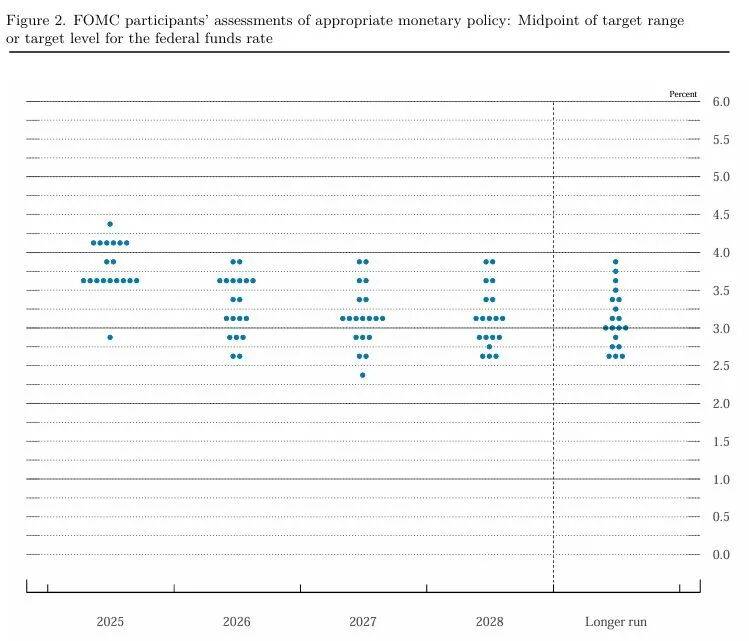
Core Insights - The Federal Reserve has announced its first interest rate cut of the year, lowering the target range from 4.25%-4.50% to 4.00%-4.25%, marking a total reduction of 125 basis points since the easing cycle began in September 2024 [1][2] Group 1: Federal Reserve's Rate Cut Decision - The decision reflects a comprehensive assessment of macroeconomic indicators, with signs of a slowing labor market and a projected unemployment rate of 4.5% [3][4] - The expected PCE inflation rate for 2025 is 3.0%, indicating a downward trend, which provides space for monetary policy adjustment [3][10] - The median projection for the federal funds rate by the end of 2025 is 3.6%, suggesting further rate cuts are anticipated [4][6] Group 2: Economic Forecast Adjustments - GDP growth expectations have been revised upward, with 2025 projected at 1.6% and 2026 at 1.8%, indicating resilience in the U.S. economy despite global slowdowns [8][9] - Unemployment rate forecasts remain stable, with a slight decrease expected in 2026 [9] - Inflation expectations for 2026 have been adjusted, with PCE inflation projected at 2.6% [10] Group 3: Global Financial Market Impacts - The rate cut is expected to improve short-term liquidity in global capital markets while prompting structural adjustments in the medium to long term [11] - Commodity markets are undergoing significant price re-evaluations, influenced by lower financing costs and improved demand expectations [12][13] - The capital flow dynamics are shifting, with a potential increase in investments in emerging markets as U.S. dollar assets become less attractive [14][18] Group 4: Future Trends in Global Monetary Policy - The rate cut opens opportunities for enhanced policy coordination among major economies, potentially leading to a new round of global financial governance [16][17] - Emerging markets may benefit from increased capital inflows, but they must also manage the risks of asset bubbles and financial vulnerabilities [18][19] - The international monetary system is likely to undergo significant changes, with a potential decline in the dollar's dominance and an increase in the roles of other currencies [20][22]
刚刚,利空来了!直线大跳水!
Zhong Guo Ji Jin Bao· 2025-08-14 13:40
Core Viewpoint - The recent U.S. inflation data exceeded expectations, leading to a significant market downturn and altering interest rate expectations for the Federal Reserve [1][4]. Group 1: Inflation Data - The Producer Price Index (PPI) for July increased by 0.9% month-over-month, marking the largest single-month rise since June 2022, while economists had anticipated a 0.2% increase [2]. - Year-over-year, the PPI rose by 3.3%, the highest 12-month increase since February, significantly above the Federal Reserve's 2% inflation target [3]. - Core PPI, excluding food and energy, also rose by 0.9%, surpassing the expected 0.3% increase [2][3]. Group 2: Market Reaction - Following the inflation data release, traders reduced their bets on a rate cut by the Federal Reserve in September, with the probability of a rate cut now at 90%, down from a previous full pricing [4]. - The market's initial expectation of a rate cut was influenced by earlier CPI data, which was in line with expectations, but the PPI data has shifted sentiment [3][4]. - Analysts noted that while PPI was higher than expected, the relatively stable CPI suggests that companies are currently absorbing most of the tariff costs rather than passing them on to consumers [4]. Group 3: Broader Market Impact - Major U.S. stock indices experienced a sharp decline in pre-market trading following the inflation report [5]. - The U.S. dollar index saw an increase, indicating a stronger dollar in response to the inflation data [7]. - Cryptocurrencies such as Bitcoin and Ethereum faced significant drops, reflecting broader market volatility [8].

刚刚,利空来了!直线大跳水!
中国基金报· 2025-08-14 13:33
Core Viewpoint - The unexpected rise in U.S. inflation data has led to a significant market reaction, with a decrease in expectations for an interest rate cut by the Federal Reserve in September [2][3]. Economic Indicators - The Producer Price Index (PPI) for July increased by 0.9%, the largest monthly gain since June 2022, surpassing the expected increase of 0.2% [2]. - The core PPI, excluding food and energy, also rose by 0.9%, exceeding the forecast of 0.3% [2]. - Year-over-year, the PPI increased by 3.3%, marking the highest 12-month rise since February, significantly above the Federal Reserve's 2% inflation target [2]. Market Reactions - Following the release of the inflation data, traders reduced their bets on a rate cut by the Federal Reserve, with the probability of a September rate cut now at 90%, down from a previous full pricing [5]. - The U.S. stock market indices experienced a sharp decline, and the U.S. dollar index rose [7]. - Cryptocurrencies such as Bitcoin and Ethereum also saw significant drops in value [9].

特朗普不满就业数据就解雇统计局长遭广泛批评:政府数据公信力不要了?
Sou Hu Cai Jing· 2025-08-04 11:29
Group 1 - The dismissal of the Bureau of Labor Statistics (BLS) director, Erica McEntyre, by President Trump due to dissatisfaction with employment data has sparked widespread criticism and raised concerns about the reliability of government statistics [1][3][4] - The July employment report indicated a weak job growth of only 73,000 new jobs, with significant downward revisions to previous months' data, reflecting the impact of Trump's economic policies [3][5] - Economic experts warn that the lack of trust in government data could lead to poor economic decision-making, as accurate data is crucial for policymakers and the public [5][6][7] Group 2 - The high inflation rate, with consumer prices rising by 2.6% and core prices by 2.8% from the second half of last year to the first half of this year, is exacerbated by Trump's tariff policies, which have increased import prices [5][6] - The uncertainty surrounding Trump's trade and immigration policies has led to stagnation in business decisions, including hiring, with only the healthcare sector showing significant job growth [6][7] - The economic divide is widening, with large banks and tech companies reporting substantial profit growth while consumer-facing companies struggle with rising costs, indicating a potential slowdown in economic growth [6][7]
美国3月通胀意外“停滞” 经济‘喘息期’或难持续
智通财经网· 2025-04-30 15:00
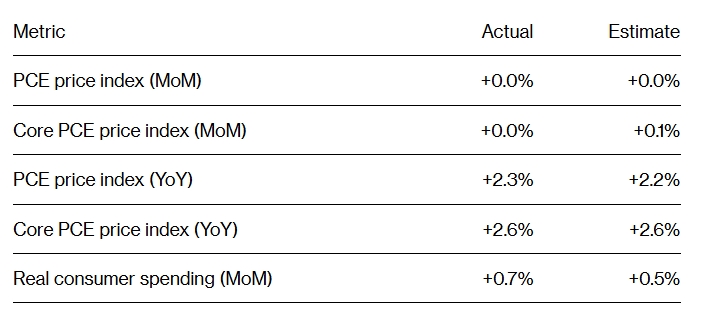
Group 1 - The PCE price index remained flat in March, marking the first "zero growth" in nearly a year, while the core PCE also showed no change, indicating a temporary easing of inflationary pressures [1][2] - Real consumer spending increased by 0.7% month-over-month, surpassing previous values, suggesting that consumers are accelerating purchases ahead of impending tariff increases [1][2] - March saw the strongest growth in real disposable income in over a year, significantly supporting consumer spending, particularly in durable goods like automobiles [3] Group 2 - The first quarter of 2023 recorded the first quarterly contraction in the U.S. economy since 2022, primarily due to a surge in imports and moderate consumer spending growth [2] - Despite the temporary slowdown in inflation, companies like Shein and Procter & Gamble have begun raising prices, while others like American Airlines and General Motors have withdrawn earnings guidance due to policy uncertainties [3] - The upcoming implementation of tariffs is expected to exert upward pressure on prices, potentially dampening consumer behavior and complicating the Federal Reserve's interest rate policy decisions [3]