
华为问界M9

Search documents
创造力是人类不可替代的竞争力
Xin Lang Cai Jing· 2026-02-26 21:46
郑毓煌 人工智能技术正在普及,与人工智能相比,人类的竞争力越来越弱。2016年,人类智慧和人工智能的对 决在世界各地掀起了空前的关注热潮——谷歌AlphaGo(阿尔法围棋)在与围棋世界冠军李世石的人机 大战中,最终以4∶1赢得胜利。AlphaGo是一款围棋人工智能程序,由谷歌DeepMind团队开发。AlphaGo 将几项技术很好地集成在了一起:通过深度学习技术掌握了大量的围棋对局,不断应用强化练习,最终 将人类顶尖棋手打败。 2008年至2024年,我在清华大学任教并长期担任博士生导师,创造力是我研究的重要领域之一。在此期 间,我和多位博士生一起完成了一个关于创造力的国家自然科学基金项目——"个体创造力:影响因 素、深层机制及管理启示",并在项目结题时获得了国家自然科学基金委员会结项评估的最高荣誉—— 优。因此,我一直有一个愿望,就是把国内外创造力领域的众多优秀研究成果写到一本书里,希望这本 书能够帮助广大的家长和教育工作者了解如何培养孩子的创造力。 例如,很多老师和家长喜欢乖孩子。然而,本书第三章的研究成果告诉你,如果一个孩子平时不听话、 不喜欢循规蹈矩,这或许并非坏事——这可能是孩子充满创造力的表现。因 ...


保时捷电动化“目标激进 落地缓慢” 战略回调寻求破局
Xin Jing Bao· 2025-10-17 05:05
Core Insights - Porsche's electric vehicle strategy faces challenges with aggressive targets and slow implementation, as the Cayenne Electric begins road testing and is expected to launch in 2026 [1] - The company aims for over 50% of new cars to be electric by 2025 and over 80% by 2030, but only 27% of deliveries in 2024 are expected to be electric vehicles [1][2] - Sales and profits have declined, with a 6.1% drop in new car deliveries in the first half of 2025 and a 26% decrease in the crucial Chinese market [2] Electric Vehicle Progress - Porsche currently has two electric models: the Taycan and the Macan Electric, with the latter delayed until 2024 [2] - The Taycan has sold over 150,000 units since its launch, but overall electric vehicle sales have not met expectations, with less than 15% of deliveries being electric [2][3] Financial Performance - In the first half of 2025, Porsche's sales revenue was €18.16 billion, a 6.7% decline, marking the first half-year drop since 2020 [2] - Operating profit fell to €1.01 billion, a significant decrease of approximately 67% [2] Competitive Landscape - The rapid iteration of smart electric vehicles in China has put Porsche at a disadvantage, as local competitors offer advanced features that Porsche's electric models lack [3] - The luxury electric vehicle market is becoming increasingly competitive, with brands like Tesla and BYD offering lower prices and comparable performance [4] Strategic Adjustments - In September 2023, Porsche announced delays for several electric models and extended the production life of internal combustion and hybrid vehicles for the next decade [5] - The company plans to enhance its competitiveness by launching the pure electric 718 by 2027 and integrating localized technology in its vehicles sold in China [6] Cost Management - Porsche has initiated a global efficiency optimization plan to reduce costs, aiming to cut approximately 3,900 jobs and save €800 million in operational costs annually [6] - The company is focusing on local operations in China, with plans to establish a research center in Shanghai to enhance smart cockpit and driving assistance technologies [6]
保时捷电动化“目标激进,落地缓慢”,战略回调寻求破局
Bei Ke Cai Jing· 2025-10-17 04:55
Core Insights - Porsche's electric vehicle (EV) strategy faces challenges with aggressive targets and slow implementation, as the Cayenne Electric begins road testing and is expected to launch in 2026 [1] - The company aims for over 50% of new cars to be electric by 2025 and over 80% by 2030, but only 27% of deliveries in 2024 are expected to be EVs [1][2] - Sales have declined significantly, with a 6.1% drop in new car deliveries in the first half of 2025 and a 26% decrease in the crucial Chinese market [1][2] Sales and Financial Performance - Porsche's sales revenue for the first half of 2025 was €18.16 billion, a 6.7% decline, marking the first half-year drop since 2020 [3] - Operating profit fell to €1.01 billion, a staggering 67% decrease year-on-year [3][4] - The decline in sales is attributed to high R&D costs for EVs, underperformance in sales, and weak demand for traditional fuel vehicles [4] Product Development and Market Position - Porsche currently has two electric models: the Taycan and the Macan Electric, with the latter not expected to deliver until 2024 [2] - The Taycan has sold over 150,000 units since its launch, but the overall EV sales have not met expectations, with less than 15% of deliveries being electric vehicles [2] - The company faces competition from local Chinese manufacturers that offer advanced smart features and competitive pricing, impacting Porsche's market position [5][6] Strategic Adjustments - In September 2023, Porsche announced delays in several new EV models and extended the production life of internal combustion and hybrid vehicles for the next decade [7] - The company plans to launch the pure electric 718 by 2027 and enhance local market adaptations, including integrating local applications into their vehicles [7][8] - A global efficiency optimization plan aims to reduce approximately 3,900 jobs, saving €800 million in operational costs over the coming years [9]
智能公路未普及前,还是叫“辅助驾驶”吧
3 6 Ke· 2025-05-20 02:54
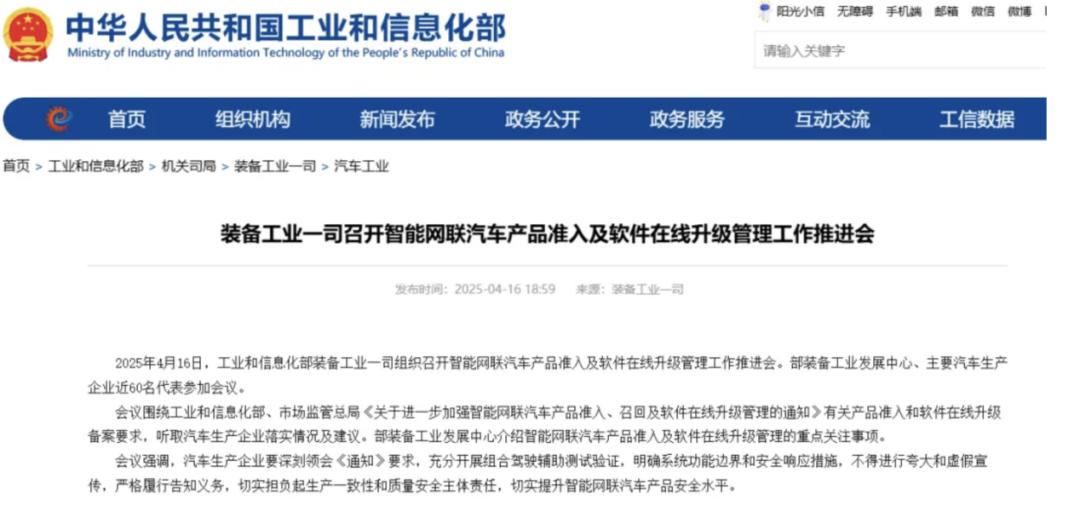
Core Viewpoint - The article discusses the evolution of driving safety in the context of advanced driving assistance systems (ADAS) and the implications of recent accidents involving these technologies, highlighting the need for clearer communication and responsibility among car manufacturers regarding the capabilities of their systems [2][3][5]. Group 1: Evolution of Driving Technology - The transition from traditional vehicles to new energy vehicles (NEVs) reflects the growing importance of safety and technology in the automotive industry [2]. - The launch of Changan Automobile's "Beidou Tianshu 2.0" intelligent driving strategy marks a significant step towards smart driving in China, involving multiple automotive partners [2]. Group 2: Safety Concerns and Responsibilities - A tragic accident in March involving students raised concerns about the over-reliance on intelligent driving systems, emphasizing the need for driver awareness and control [3][4]. - The distinction between L2 and L3 levels of driving assistance is crucial, as L2 requires the driver to remain responsible, while L3 could shift some responsibility to the manufacturer [6][7]. Group 3: Industry Regulations and Consumer Awareness - The Ministry of Industry and Information Technology (MIIT) has set strict guidelines to prevent misleading advertising related to intelligent driving features, urging manufacturers to avoid terms that may confuse consumers [9][12]. - Recent changes in marketing strategies by companies like Xiaomi and Huawei reflect a shift towards more accurate representations of their driving assistance technologies [14]. Group 4: Consumer Behavior and Misconceptions - Many consumers exhibit overconfidence in intelligent driving systems due to their perceived reliability, which can lead to dangerous behaviors such as neglecting to monitor the vehicle [15][21]. - The lack of crisis awareness among consumers, often stemming from a sheltered upbringing, contributes to a misunderstanding of the risks associated with intelligent driving technologies [20][22]. Group 5: Future of Intelligent Driving - The development of intelligent roads and the integration of smart infrastructure are essential for the widespread adoption of fully autonomous driving, with predictions indicating a timeline of 10-15 years for nationwide coverage [29][30]. - Challenges such as regulatory frameworks, cybersecurity, and public acceptance remain significant hurdles for the advancement of autonomous driving technologies [30][31].
德系豪车求变:“必须研究中国的产品、技术和供应商”
第一财经· 2025-05-02 11:33
Core Insights - The article highlights the increasing urgency among German luxury car manufacturers to adapt to the rapidly evolving Chinese electric vehicle (EV) market, as traditional sales and profits have declined while new competitors gain traction [1][5][10] Group 1: Market Dynamics - The Chinese EV market has grown significantly, now accounting for a substantial share of the overall automotive market, prompting luxury brands to reassess their strategies [1][5] - German luxury carmakers, including Audi, BMW, and Mercedes-Benz, are intensifying their focus on the Chinese market, with executives making multiple visits to engage with local consumers and competitors [2][4] Group 2: Product Strategy - At the Shanghai Auto Show, luxury carmakers unveiled a strong lineup of products tailored for the Chinese market, showcasing advanced technologies and new models [2][5] - Audi has introduced a dual-brand strategy to cater to different consumer segments, while BMW is investing heavily in new platforms and technologies, emphasizing safety and overall optimization rather than just technical specifications [5][7][11] Group 3: Supply Chain and R&D - The article notes a shift in focus towards local Chinese suppliers, as their rapid response and customization capabilities are increasingly recognized as essential for success in the competitive market [9][10] - German automakers are establishing R&D centers in China to enhance local product adaptation and innovation, with a growing emphasis on integrating local technological advancements into their global strategies [11][10]
德系豪车求变:“必须研究中国的产品、技术和供应商”
Di Yi Cai Jing· 2025-05-02 07:42
Core Insights - The German luxury car manufacturers are increasingly focused on the Chinese market, recognizing its rapid growth and the need to adapt to local consumer demands [1][2][4] - The shift towards electric vehicles (EVs) is critical, as traditional sales and profits for brands like Audi, BMW, and Mercedes-Benz have declined, prompting a reevaluation of their strategies in China [1][3][4] Group 1: Market Dynamics - The Chinese electric vehicle market has grown significantly, with EVs now accounting for a substantial portion of total vehicle sales [1] - German luxury brands are facing pressure from new entrants in the market, which are capturing consumer interest with high-end products [1][3] - The competitive landscape is evolving, with traditional luxury brands needing to innovate rapidly to keep pace with local competitors [4][7] Group 2: Strategic Initiatives - German automakers are showcasing new models and technologies specifically designed for the Chinese market, indicating a shift in their product strategies [2][4] - Companies like BMW are investing heavily in new platforms and technologies, including the sixth generation of electric drive technology [4][8] - Audi has introduced a dual-brand strategy to better cater to different consumer segments in China, focusing on both traditional luxury and tech-savvy younger consumers [4][8] Group 3: Collaboration and Local Adaptation - There is a growing emphasis on partnerships with local suppliers and technology firms to enhance responsiveness and innovation [7][8] - German manufacturers are establishing R&D centers in China to localize product development and integrate cutting-edge technologies [8] - The approach to market entry and product development is shifting from a global standard to a more localized strategy, reflecting the unique demands of the Chinese market [7][8]
2025年中国首发经济产业发展报告——政策红利加速释放,行业加快扩容提质
Chan Ye Xin Xi Wang· 2025-04-30 03:56
Group 1 - The core concept of the "first launch economy" encompasses a series of economic activities related to the first release of products or services, including the establishment of flagship stores and R&D centers, contributing significantly to retail and surrounding sectors [1][6][12] - The first launch economy is projected to reach a scale of 10 trillion yuan by 2025, accounting for approximately 20% of China's total retail sales [1][56] - Major cities in China are categorized into three tiers based on their development of the first launch economy, with Shanghai and Beijing leading the first tier, followed by cities like Guangzhou and Chengdu in the second tier, and emerging cities like Zhengzhou in the third tier [1][12] Group 2 - The development of the first launch economy is supported by a robust policy framework, with increasing government initiatives aimed at fostering innovation and enhancing consumer experiences [1][36][37] - The first launch economy is characterized by its ability to drive large-scale consumption and create a vibrant ecosystem around new products and services, leading to significant economic impacts [1][7][12] - The evolution of the first launch economy reflects a shift towards a more consumer-centric approach, aligning with trends of personalized and high-quality consumption driven by rising disposable incomes [1][47][56] Group 3 - The global first launch economy has experienced four major waves driven by technological revolutions, each enhancing competitive dynamics and market structures [13][15] - Regions like Silicon Valley and Shenzhen are at the forefront of the first launch economy, leveraging technological advancements to maintain a competitive edge in various sectors [18][20] - The first launch economy is entering a "multi-dimensional resonance" era, where collaboration among different regions enhances overall competitiveness [20][19] Group 4 - The first launch economy in China is supported by a unique infrastructure system that combines digital capabilities, manufacturing networks, and innovative policies [40][41] - Continuous investment in R&D is crucial for the growth of the first launch economy, as it fosters technological innovation and enhances product competitiveness [44][45] - The first launch economy is currently transitioning from a growth phase to a more mature stage, characterized by simultaneous expansion and quality improvement across various sectors [53][56]

人形机器人激光雷达专家交流
2025-02-26 16:22
Summary of Key Points from the Conference Call Industry Overview - The conference call discusses the humanoid robot industry, focusing on the application and importance of LiDAR technology in enhancing robot capabilities, particularly in navigation and perception [1][2][3]. Core Insights and Arguments - **Limitations of RGB-D Cameras**: While RGB-D cameras can support SLAM and object grasping, their range (5-6 meters) is limited, necessitating the integration of LiDAR for complex environments [1]. - **LiDAR as a Key Technology**: LiDAR is preferred over ultrasonic sensors due to its high resolution and imaging capabilities, making it essential for precise mapping and navigation in humanoid robots [1][4]. - **Cost and Performance of LiDAR Types**: Mechanical LiDAR offers high precision (1-2 meters) but is costly, while solid-state LiDAR has significantly reduced costs and is suitable for long-range measurements [1][8]. - **Market Projections**: LiDAR shipments are expected to reach 550,000 units in 2024 and 1 million units in 2025, with major contributions from BYD [1][32]. Competitive Landscape - **Differentiation Among Companies**: Companies like SUTENG and Hesai are positioned differently, with SUTENG focusing on a broader robotics platform while Hesai specializes in the LiDAR market [1][22][23]. - **Future Development Focus**: Hesai aims to maintain its lead in the LiDAR market, while SUTENG plans to expand its applications in humanoid robots and other sectors [22][23]. Technological Developments - **Sensor Integration**: LiDAR is crucial for training AI models by providing real-time environmental data, which helps overcome data barriers in humanoid robot development [12][13]. - **Advancements in LiDAR Technology**: The shift from mechanical to solid-state and semi-solid-state LiDAR is noted, with companies like Huawei integrating these technologies into their vehicles to enhance environmental perception and reduce production costs [9][10][31]. Market Dynamics - **Challenges for New Entrants**: The current market is dominated by established players, making it difficult for new companies to compete, especially in terms of mass production and reliability [29][39]. - **Potential for New Technologies**: Future breakthroughs may arise from new technologies like FMCW LiDAR, although widespread adoption is still years away [30]. Applications and Future Outlook - **Non-Automotive Applications**: LiDAR is increasingly used in non-automotive sectors, such as autonomous lawn mowers and service robots, indicating a growing demand beyond traditional automotive applications [33][34]. - **Humanoid Robot Market**: The humanoid robot market is still in its infancy, with expectations for larger-scale deliveries in the next three years [35]. Additional Insights - **Cost Structure of LiDAR**: The cost structure of solid-state and semi-solid-state LiDAR is significantly lower than mechanical LiDAR, which impacts overall pricing strategies in the market [15][19]. - **Domestic Supply Chain**: The domestic supply chain for LiDAR components is improving, with a focus on increasing the localization of critical components [20][21]. This summary encapsulates the key points discussed in the conference call, highlighting the importance of LiDAR technology in the humanoid robot industry, competitive dynamics, and future market trends.
