
天池

Search documents
外汇储备创近10年新高,近千名基金经理面临降薪 | 财经日日评
吴晓波频道· 2025-12-09 00:29
Group 1: Economic Policy and Trade - The Central Political Bureau meeting emphasized a stable yet progressive economic policy for 2026, focusing on quality improvement and efficiency, with a strong domestic market and innovation-driven growth [2][3] - China's trade surplus exceeded $1 trillion for the first time this year, with exports increasing by 5.9% year-on-year in November, while imports grew by 1.9% [4] - The trade relationship with the U.S. showed a decline in exports, down 16.9%, while exports to Africa saw significant growth, indicating a shift in trade dynamics [4][5] Group 2: Foreign Exchange and Gold Reserves - China's foreign exchange reserves reached $33,464 billion, the highest in nearly a decade, with a slight increase of $30 billion from the previous month [6] - The gold reserves also increased, with a total of 7.412 million ounces, reflecting a trend of gradual accumulation despite low growth rates [6] Group 3: Corporate Developments - Baidu is evaluating the potential spin-off and independent listing of its subsidiary Kunlun Chip, which has a valuation of approximately $13 billion [8][9] - The company aims to optimize its asset structure and reduce capital expenditure pressures while focusing on AI business development [9] Group 4: Industry Trends - The high-end liquor market, particularly for Wuliangye, is experiencing pressure with reports of price adjustments due to market conditions, although the company maintains that its factory price remains unchanged [10][11] - The media industry is witnessing significant consolidation, with Netflix planning to acquire Warner Bros. for $82.7 billion, which may reshape content distribution strategies [12][13] Group 5: Fund Management Changes - The China Securities Investment Fund Association has revised performance assessment guidelines, linking fund manager compensation directly to performance, which may accelerate industry restructuring [14][15]


百度AI王牌昆仑芯赴港IPO,国产算力突围迎关键试炼
Sou Hu Cai Jing· 2025-12-05 14:44
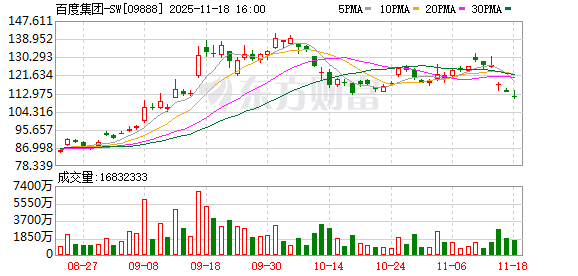
Core Viewpoint - Kunlunxin, a subsidiary of Baidu, is preparing for an IPO in Hong Kong, having completed a new financing round of $283 million, with a post-money valuation of $2.97 billion (approximately 21 billion RMB) [2][3][4] Group 1: IPO Plans and Market Reaction - The IPO preparation for Kunlunxin has entered the preliminary stage, with potential application to the Hong Kong Stock Exchange as early as Q1 2026 [3] - Following the IPO news, Baidu's stock price surged by 7.77%, indicating a market reassessment of its AI computing assets [3] - This is not the first time Kunlunxin has been rumored to go public, but the current preparations appear more substantial [4] Group 2: Company Background and Growth - Kunlunxin originated from Baidu's internal smart chip and architecture department, which became independent in 2021 with an initial valuation of approximately 13 billion RMB [4] - Over four years, Kunlunxin's valuation has increased by nearly 60%, reflecting changing market perceptions of domestic AI chip assets [4][6] - The latest financing round included state-owned entities, enhancing Kunlunxin's credibility for its IPO [5] Group 3: Strategic Considerations for Baidu - Baidu's decision to spin off Kunlunxin aims to unlock value, as the company's market valuation has been hampered by its advertising business [6] - An independent listing could allow Kunlunxin to be revalued according to technology stock metrics, potentially supporting Baidu's second growth curve [6] - The IPO coincides with a critical moment for domestic AI chip companies, as several are also pursuing public listings [6] Group 4: Technological Advancements - Kunlunxin's revenue is projected to exceed 1 billion RMB in 2024, outpacing competitors like Cambricon and Moore Threads [6] - The company showcased its technological capabilities at the Baidu World Conference, introducing new products optimized for large-scale inference and training [7] - The P800 series, a third-generation product, has achieved performance metrics that compete with international giants like NVIDIA [7][8] Group 5: Market Validation and Expansion - Kunlunxin secured a significant order from China Mobile for AI computing devices, marking a milestone in its market penetration [10] - The company has expanded its client base across various sectors, including telecommunications, finance, and energy [12] - Its unique position as a subsidiary of Baidu provides a testing ground for its products, facilitating market entry and product refinement [12][14] Group 6: Challenges and Competitive Landscape - Despite high valuations, concerns about the sustainability of Kunlunxin's revenue model and market competition persist [17][19] - The company faces challenges in building a robust developer ecosystem and competing with established players like NVIDIA [18][22] - Geopolitical and supply chain risks remain relevant, as Kunlunxin relies on global supply chains for chip manufacturing [20] Group 7: Future Outlook and Industry Impact - Kunlunxin's IPO is seen as a litmus test for the maturity of the domestic AI chip industry, with implications for future financing and market confidence [24] - The company must balance technological innovation, ecosystem development, and commercialization to convert valuation expectations into sustainable enterprise value [25]

AI领域进展持续,商业化加速 | 投研报告
Zhong Guo Neng Yuan Wang· 2025-11-19 08:31
Market Overview - The Shanghai Composite Index fell by 0.18% from November 10 to November 14, while the ChiNext Index dropped by 3.01% and the CSI 300 Index decreased by 1.08%. The computer (Shenwan) index declined by 3.03%, underperforming the Shanghai Composite by 2.86 percentage points, the ChiNext by 0.02 percentage points, and the CSI 300 by 1.95 percentage points, ranking 29th among all industries [1]. Weekly Insights - Baidu held its World 2025 Conference on November 13, showcasing significant advancements in AI capabilities. The newly released Wenxin 5.0 model features comprehensive upgrades in multi-modal understanding, instruction adherence, creative writing, factuality, and intelligent planning, achieving the top position in China's text capability rankings and second globally [2]. - Baidu also introduced the next-generation Kunlun chips and Tianchi products, with the Kunlun M100 chip designed for large-scale inference scenarios set to launch in 2026, and the M300 chip for ultra-large multi-modal model training and inference expected in 2027. The Tianchi 256 and 512 super nodes will be available next year, with the latter capable of training trillion-parameter models [2]. - The latest data indicates a surge in large model-related projects in China, with 1,810 projects awarded in the first half of 2025, totaling over 6.4 billion yuan, surpassing the total number of projects awarded in 2024 [2]. - In the competitive landscape, Baidu Intelligent Cloud led with 48 awarded projects and 510 million yuan in awarded amounts, dominating key sectors such as finance, energy, government, and manufacturing [2]. Competitive Developments - Alibaba is set to launch the international version of its AI assistant "Qwen," named "Qianwen," to compete directly with ChatGPT. This initiative is viewed as a critical battle in the AI era, leveraging Qwen's open-source technology to capture global market share [3]. - OpenAI released GPT-5.1 on November 12, enhancing user experience with two new models: GPT-5.1Instant, which is more responsive and empathetic, and GPT-5.1Thinking, designed for advanced reasoning tasks. GPT-5.1 is reported to be twice as fast on simple tasks compared to its predecessor [4]. Investment Recommendations - Companies to watch in the computing power sector include Cambrian, Haiguang Information, Zhongke Shuguang, Huafeng Technology, Shenling Environment, Yinvike, Oulutong, and Zhongheng Electric [4]. - In the AIDC sector, recommended companies are Kehua Data, Yunsai Zhili, Hongxin Electronics, Runjian Shares, Runze Technology, and Data Port [4]. - For AI applications, focus on Kingsoft Office, iFlytek, Foxit Software, Wanxing Technology, Dingjie Zhizhi, Hand Information, Nengke Technology, and Zhuoyi Information [4].


百度第三季度AI业务营收同比增长超50%
Zheng Quan Ri Bao· 2025-11-18 16:13
Core Insights - Baidu reported a strong Q3 2025 performance with total revenue of 31.2 billion yuan and core revenue of 24.7 billion yuan, driven by over 50% growth in AI business revenue, reaching 10 billion yuan [2] - The company emphasizes the transformative value of AI across its business, with a commitment to continue AI innovation to create significant value for users, enterprises, and society [2] AI Cloud Business - Baidu's AI cloud revenue grew by 33% year-on-year in Q3, with AI high-performance computing subscription revenue increasing by 128% [3] - The company detailed its AI business revenue structure for the first time, reporting AI application revenue of 2.6 billion yuan and a 262% increase in AI-native online marketing service revenue to 2.8 billion yuan [3] - Baidu maintains a leading position in the AI public cloud market with a 24.6% market share, according to IDC, marking six consecutive years as the market leader [3] Platform Strategy - The platform strategy is crucial for Baidu's smart cloud to expand its ecosystem, with the Qianfan platform now serving over 460,000 enterprise users and over 1.3 million agents developed [4] - Continuous iteration of the technology base supports cloud business growth, with the release of the new Kunlun chip and Tianchi supernode products [4] - Baidu has established a comprehensive self-research barrier in the AI sector, creating a sustainable business model through a three-pronged strategy of infrastructure, platform ecosystem, and industry scenarios [4] AI Application Growth - Baidu's AI restructuring strategy shows significant progress across multiple product lines, with AI search monthly active users reaching 382 million, a 18.63% quarter-on-quarter increase [5] - In content creation and knowledge management, Baidu's AI transformation in Baidu Wenku and Baidu Wangpan has led to over 80 million active users for Baidu Wangpan [5] - The digital human technology from Huibo Star demonstrated strong commercial capabilities during the "Double 11" shopping festival, with GMV increasing by 91% [5] Autonomous Driving - Baidu's autonomous driving service, "Luobo Kuaipao," achieved 3.1 million global ride services in Q3, a 212% year-on-year increase, with over 25,000 fully autonomous rides per week as of October [6] - The total mileage for autonomous driving exceeded 240 million kilometers, with a significant expansion into 22 cities globally [6] - The release of the Wenxin 5.0 model, featuring 2.4 trillion parameters, enhances the company's capabilities in multimodal understanding and generation [6]
百度三季度AI业务收入同比增50%超预期,2023年以来已向AI投入超1000亿元
IPO早知道· 2025-11-18 14:29
Core Viewpoint - Baidu is significantly increasing its investment in AI, showcasing strong growth in AI-related revenues and applications, which are transforming its business model and maintaining its leadership in the AI sector [1][2]. Financial Performance - In Q3 2025, Baidu reported total revenue of 31.2 billion yuan, with core revenue of 24.7 billion yuan. AI business revenue was disclosed for the first time, showing a year-on-year growth of over 50% [1]. - AI cloud revenue grew by 33%, while AI application revenue reached 2.6 billion yuan. AI native marketing service revenue surged by 262% to 2.8 billion yuan [1][7]. AI Business Transformation - Baidu's search engine has undergone a significant transformation, becoming the most aggressively AI-restructured search engine globally. As of Q3 2025, Baidu AI search had 382 million monthly active users, marking an 18.63% quarter-on-quarter increase [4]. - The company aims to shift search from a text and link-based application to a rich media content-driven AI application [5]. AI Applications and User Engagement - AI applications generated 2.6 billion yuan in revenue, with Baidu Wenku and Baidu Wangpan nearing 300 million total MAUs, making them the largest personal AI applications [6]. - The usage of Baidu APP's Wenxin Assistant has rapidly increased, with dialogue rounds growing approximately fivefold year-on-year, reaching nearly 10 million daily active users [6]. Subscription Model and Revenue Sustainability - Most of Baidu's AI applications utilize a high-stickiness subscription model, which is expected to provide sustainable high-quality revenue [7]. Autonomous Driving and Global Expansion - Baidu's autonomous driving service, "LuoBo Kuaipao," achieved 3.1 million global service instances in Q3, a 212% year-on-year increase. The service has expanded to 22 cities globally, with over 240 million kilometers driven [8]. Technological Advancements - Baidu is recognized as the only AI company besides Google with a full-stack self-research layout. Recent breakthroughs have been made across various dimensions, including chips, frameworks, and models [10][11]. - The newly released Wenxin 5.0 model ranks second globally in text task evaluations, demonstrating strong capabilities in multi-modal understanding and creative writing [11]. Future Product Development - Baidu plans to launch new products annually over the next five years, including the Kunlun chip series optimized for large-scale inference and multi-modal model training [12]. AI Cloud Growth - Baidu's AI cloud revenue grew by 33%, with subscription revenue from high-performance computing infrastructure increasing by 128% year-on-year. Baidu has maintained its position as the leader in China's AI public cloud market for six consecutive years [13].
国产芯片催化!芯片ETF(159995)宽幅震荡,北京君正涨4%
Mei Ri Jing Ji Xin Wen· 2025-11-17 03:45
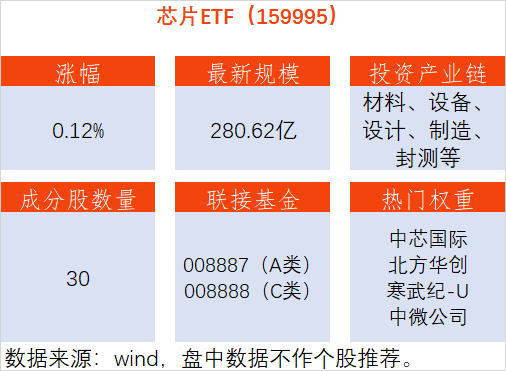
Group 1 - The A-share market experienced a collective decline on November 17, with the Shanghai Composite Index dropping by 0.47% during intraday trading. Sectors such as forestry, aerospace and military, and heavy machinery showed gains, while biotechnology and power generation equipment faced significant losses [1] - In the semiconductor sector, there was a mixed performance among chip technology stocks. The chip ETF (159995) rose by 0.12%, with constituent stocks like Beijing Junzheng increasing by 4.04%, Zhaoyi Innovation by 3.2%, and Jingjia Micro by 2.5%. However, stocks like Tuojing Technology and Jingsheng Mechanical & Electrical showed poor performance, declining by -4.82% and -3.01% respectively [1] Group 2 - Alibaba has secretly launched the "Qianwen" project, developing a personal AI assistant app named Qianwen APP, which aims to compete directly with ChatGPT. Meanwhile, Baidu Intelligent Cloud has released a new generation of Kunlun chips and announced a five-year product launch plan [3] - Huaxi Securities stated that the domestic AI chip development is a long-term trend, and the current period is the best time for the development of domestic chips. The firm remains optimistic about advancements in manufacturing processes and chip architecture upgrades, which are expected to enhance the overall domestic computing power share [3] - The chip ETF (159995) tracks the Guozheng Chip Index, comprising 30 leading companies in the A-share chip industry, including SMIC, Cambricon, Changdian Technology, and Northern Huachuang. The fund has both A-class and C-class options available [3]

百度重押AI应用,海外成下一代流量战场
Hua Xia Shi Bao· 2025-11-14 10:25
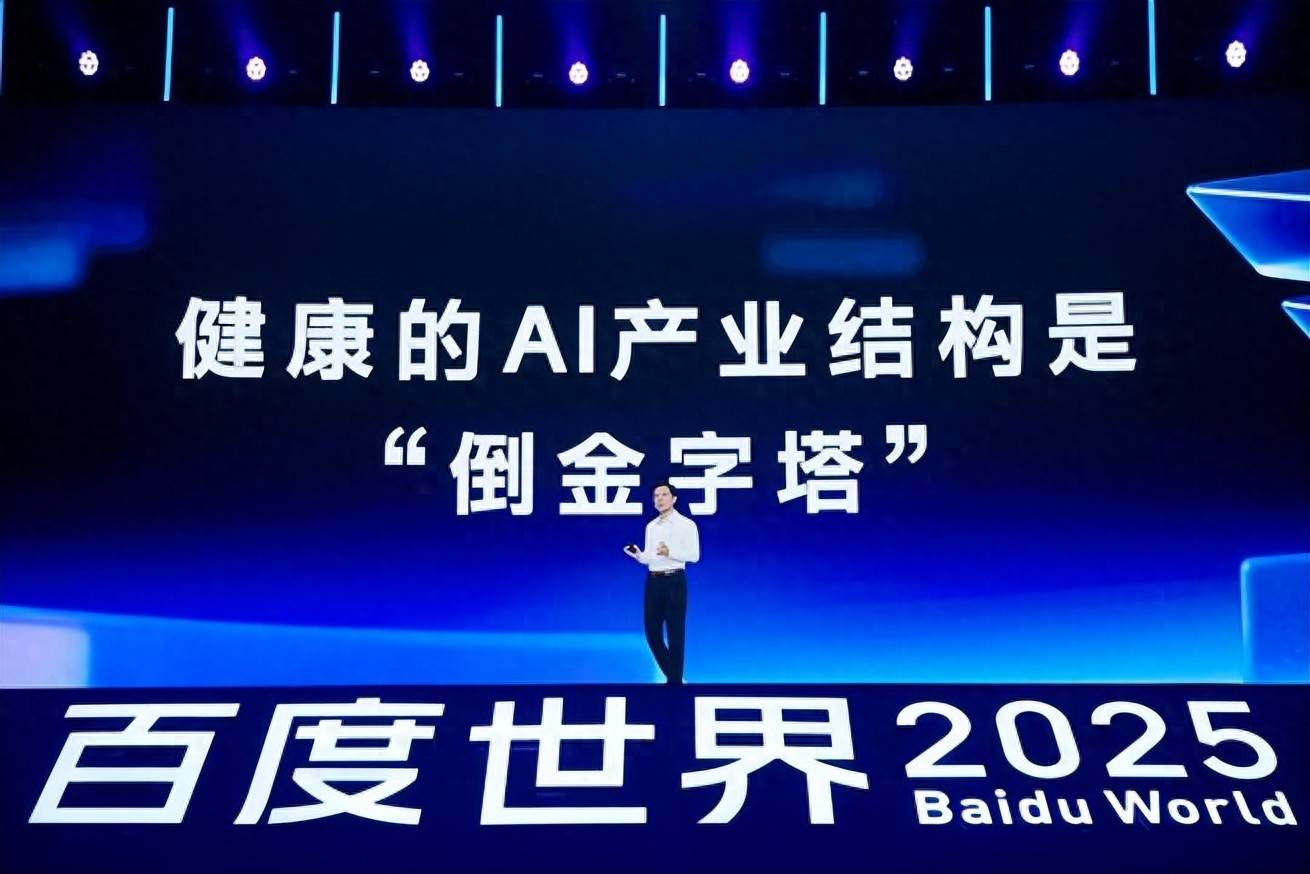
Core Insights - The competition for AI super applications is intensifying as companies aim to capture the next wave of traffic dominance [2][3] - Baidu's founder, Li Yanhong, highlighted a shift in the AI industry structure from an unhealthy "pyramid" to an inverted "pyramid," where AI applications can generate 100 times the value of chips [2][4] AI Model and Applications - Baidu released its Wenxin large model 5.0, featuring 2.4 trillion parameters and supporting multimodal understanding and generation capabilities [4] - The company is transitioning from "intelligent emergence" to "effect emergence," emphasizing the effectiveness of AI applications over mere model development [4][5] - Baidu's search engine has achieved a 70% coverage rate of rich media in search results, indicating a significant shift towards multimedia content [4] Market Competition and Challenges - Major players like Alibaba, Tencent, and ByteDance are also focusing on AI applications, leading to a highly competitive environment [6][7] - The AI application market is experiencing severe internal competition due to a lack of differentiation and reliance on generic large model APIs [7] - Many AI applications struggle to convert free users into paying customers, leading to unsustainable business models [7] User Trends and Market Dynamics - As of June, the mobile user base for AI applications reached 680 million, with AI search engines and comprehensive assistants leading the market [6] - The user base for mobile plugins grew to 630 million, while native app users declined, indicating a shift in user preferences [7] International Expansion - Chinese AI companies are increasingly targeting overseas markets, with Baidu's applications like "Luo Bo Kua Pao" and "Hui Bo Xing" expanding into regions like Southeast Asia and the U.S. [8][9] - The overseas market presents opportunities due to a more mature payment environment, allowing for quicker profitability [9] - Successful international expansion will depend on understanding local needs and regulatory compliance [10]
百度发布多项AI重磅成果,李彦宏称产业结构正在转变
Sou Hu Cai Jing· 2025-11-14 09:14
Core Insights - The core message emphasizes the integration of AI as an inherent capability that transforms it from a cost into a productivity driver for both enterprises and individuals [2][11]. AI Integration and Business Transformation - Baidu is actively restructuring its business through AI, with its search engine undergoing significant AI-driven transformations, focusing on rich media content [2][8]. - The AI industry structure is shifting from an unhealthy "pyramid" to a "reverse pyramid," where AI applications can generate 100 times the value compared to models, promoting a healthier ecosystem [2][3]. AI Product Developments - Baidu unveiled several AI advancements at the conference, including the Wenxin large model 5.0, which excels in multimodal understanding and creative writing, positioning it as a global leader [3][7]. - The latest generation of Kunlun chips and the Tianchi super nodes were introduced, with the Tianchi 512 super node capable of training trillion-parameter models [7][9]. - The autonomous driving service "Luobo Kuaipao" has achieved over 17 million global service instances, making it the leading service in the world [7][8]. Market Expansion and Global Reach - Baidu's AI products, including Luobo Kuaipao and digital human technologies, are accelerating their international expansion [5][14]. - The digital human technology "Huibo Xing" has seen significant adoption, with 83% of live stream hosts using it during the Double 11 shopping festival, indicating its commercial viability [11][14]. Innovative AI Applications - The newly released "real-time interactive digital human" enhances user interaction by understanding the real world and providing immediate feedback [14][16]. - The self-evolving intelligent agent "Famo" is designed to find global optimal solutions, simulating evolutionary algorithms to solve complex problems [16][18]. Future Outlook and Economic Impact - Baidu aims to internalize AI as a fundamental capability across industries, which is expected to trigger a productivity revolution and convert "intelligent dividends" into "social dividends" [16][18].
全面对标ChatGPT!传阿里秘密启动“千问”项目 算力、AI Agent等受关注(附概念股)
Zhi Tong Cai Jing· 2025-11-13 23:40
Core Insights - Alibaba has secretly launched the "Qianwen" project, developing a personal AI assistant app named Qianwen, aimed at competing with ChatGPT and monetizing from individual users [1] - The stock performance of Alibaba saw a significant increase, rising over 5% on November 13, following the announcement of this initiative [1] - The Qwen model's development began three years ago, and Alibaba plans to enhance the app with agentic-AI features to support shopping functionalities on its platforms [1] Company Developments - Alibaba has shifted its focus from B2B AI services to B2C, believing the timing is right to enter the consumer market with the Qianwen app [1] - Over a hundred engineers have been assigned to work on the Qianwen project, with dedicated office space established at Alibaba's headquarters in Hangzhou [1] - An international version of the Qianwen app is also in development to compete for overseas users, leveraging the Qwen model's global influence [1] Industry Trends - McKinsey predicts that the global AI To C market will reach $1.3 trillion by 2030, with an annual growth rate exceeding 35%, highlighting the importance of this sector for tech companies [2] - Other companies like ByteDance and Tencent are also making strides in the AI space, with significant user growth reported for their respective AI applications [2] - The industry consensus suggests a dual-driven approach of building brand reputation in B2C while focusing on commercial growth in B2B, emphasizing user acquisition and platform transformation capabilities [2] Related Companies - Baidu showcased various AI advancements at its 2025 World Conference, including the release of the Wenxin model 5.0 and new AI chips, indicating its commitment to AI development [3] - Alibaba's cloud services provided over 10 million CPU cores for the Double 11 shopping festival, demonstrating its robust AI infrastructure capabilities [3] - SenseTime is expected to benefit from the growth of generative AI and has formed strategic partnerships to enhance its AI computing capabilities [4]
百度越过临界点,开启价值重估
2 1 Shi Ji Jing Ji Bao Dao· 2025-11-13 13:43
Core Viewpoint - The recent surge in Baidu's stock price is interpreted as a delayed value reassessment rather than a simple rebound, indicating a significant transformation within the company [1][5][17]. Group 1: AI Strategy and Internal Transformation - Baidu has completed a core restructuring, integrating its AI strategy into its business framework, showcased during the Baidu World Conference 2025 with various product launches [2][3]. - The company is transitioning from being viewed merely as a search engine to being recognized as a comprehensive AI platform, having made early and substantial investments in AI technology [3][5]. - Baidu's AI capabilities have crossed a critical threshold, enabling it to empower other companies in the industry to effectively utilize AI [3][4]. Group 2: Financial Performance and Market Confidence - Since August, Baidu's stock has seen a notable increase, with a 50.61% rise in Hong Kong shares and a 59.6% increase in U.S. shares this year, prompting several institutions to upgrade their ratings to "buy" based on AI and cloud computing revenue prospects [5][6]. - The market's confidence stems from Baidu's decade-long investment in AI infrastructure, which is difficult to replicate in the short term [6][14]. Group 3: AI Product Development and Ecosystem - Baidu has developed a comprehensive AI technology stack, including the Kunlun chip series and the PaddlePaddle deep learning platform, which supports the entire AI application process [7][8]. - The newly launched Wenxin 5.0 model demonstrates advanced capabilities in multi-modal understanding and has achieved competitive performance in global benchmarks [8][10]. - Baidu's AI applications, such as AI search and the GenFlow 3.0 cloud service, have significantly enhanced user experience and engagement, leading to increased commercial value [10][11]. Group 4: External Empowerment and Market Expansion - Baidu's AI capabilities are being extended to external partners, with Baidu Smart Cloud becoming a preferred choice for numerous major enterprises [11][12]. - The autonomous driving service "Luobo Kuaipao" has achieved significant milestones, with over 250,000 fully autonomous orders weekly and a total of 17 million global ride services, marking Baidu as a leader in the field [15][16]. - The company's international expansion efforts include launching overseas versions of its AI products, indicating a strategic move to tap into global markets [15][16]. Group 5: Long-term Vision and Market Reassessment - The value reassessment of Baidu is not merely a return to form but signifies the emergence of a "new Baidu," characterized by a focus on core technologies and long-term strategies [17][18]. - The company's commitment to long-term investment in AI and its comprehensive technological ecosystem positions it favorably against competitors who may waver between model competition and short-term monetization [16][18].