小米17 Ultra

Search documents
小米集团(01810) - 2025 Q4 - 电话会议演示
2026-03-24 11:30
Xiaomi Corporation 2025 Fourth Quarter and Annual Results Disclaimer By attending the meeting where this presentation is made, or by reading the presentation materials, you agree to be bound by the following limitations: The information in this presentation has been prepared by representatives of Xiaomi Corporation (the "Company", and together with its subsidiaries, the "Group") for use in presentations by the Group and does not constitute a recommendation regarding the securities of the Group. No part of t ...

存储厂商高管疯狂扫货奢侈品
第一财经· 2026-03-05 10:57
Core Viewpoint - The storage industry is experiencing a significant shift due to the explosive demand for high bandwidth memory (HBM) driven by AI data centers, leading to a supply-demand imbalance that is causing memory costs to surge, ultimately impacting consumer electronics pricing [3][4][11]. Supply and Demand Dynamics - The demand for HBM is prioritizing server-side production, while DRAM and NAND supply for smartphones is tightening, resulting in a rapid increase in mobile LPDDR4/5 prices, which are expected to reach nearly three times the levels of Q3 2025 by Q2 2026 [4][11]. - Storage capacity expansion will take several quarters to translate into actual supply, with challenges expected to persist until the second half of 2027, particularly affecting low-end models [5][11]. Cost Implications - The rising storage prices are leading to increased costs for consumers, with smartphone manufacturers facing unprecedented cost pressures, which may result in higher retail prices for end products [3][5]. - Some Android OEMs have already raised prices by 10% to 20% as of January 2026, with the material cost of flagship models seeing a significant increase in the proportion attributed to storage [5][10]. Price Adjustments in the Market - Price increases are not just theoretical; several Android brands have raised prices by 10% to 20% for certain models, with some mid-range series seeing increases close to 20% [8][10]. - Samsung's Galaxy S26 series has seen price hikes of approximately $100 in overseas markets, with high-storage versions experiencing a 20% increase [8][10]. Competitive Landscape - Major brands like Huawei have not yet followed the trend of price increases, maintaining competitive pricing in a market where stability is becoming a competitive advantage [10]. - Apple is employing promotional strategies to stabilize sales, with some iPhone models seeing price reductions of about 11% to 14% to counteract the rising costs [10]. Future Outlook - Analysts predict that high storage prices will persist at least until the second half of 2026, with AI demand continuing to exert pressure on production capacity [11]. - The ongoing price dynamics are reshaping the competitive landscape for smartphone manufacturers, testing their pricing power, product capabilities, and supply chain management [11].


万人大厂因AI一夜爆裁4000人,「留下的压力也很大」;网友晒椰树广告图被指低俗:「女员工胸这么大」引争议;SpaceX最早3月秘密申请IPO
雷峰网· 2026-03-02 00:43
Group 1 - Block announced a layoff plan affecting over 4,000 employees, representing 40% of its workforce, primarily due to the rapid development of AI tools [4][5] - Jack Dorsey, the CEO, indicated that most companies will undergo similar structural adjustments in the coming year due to AI advancements [4] - Following the announcement, Block's stock price surged by 27%, adding approximately $3 billion to its market value, indicating a market reaction that values the company at $750,000 per laid-off employee [5] Group 2 - Coconuts Group faced backlash for a controversial advertisement that was deemed vulgar, highlighting ongoing issues with its marketing strategies [7][9] - The company has a history of similar controversies, having faced fines for previous advertisements that violated public decency standards [9] Group 3 - Tencent's TiMi Studio is reportedly undergoing project adjustments, with a smaller number of layoffs than initially rumored, and many employees are being offered internal transfer opportunities [17] - The adjustments are linked to the underperformance of a specific project, "Shan Hai Xun Ling," which did not meet expectations during a competitive release period [17] Group 4 - Meizu's AR brand StarV is seeking independent financing and may consider selling the brand, aligning with the company's strategic shift away from self-developed hardware projects [18][19] - The company aims to focus on high-potential innovative businesses while maintaining sales of existing products [19] Group 5 - Wahaha's precision machinery subsidiary has been dissolved, reflecting a strategic shift under the leadership of Zong Fuli to focus on core food and beverage operations [20] - This move indicates a departure from the previous diversification strategy, aiming to streamline operations and improve efficiency [20] Group 6 - Huawei's Mate 80 series flagship phones have achieved sales of approximately 3.78 million units, surpassing Xiaomi's 17 series in a competitive market [22] - The Mate 80 series has shown significant growth compared to its predecessor, indicating strong consumer demand [22] Group 7 - Xiaomi's Vision GT concept car was unveiled at the MWC 2026, showcasing the company's exploration into high-performance electric vehicles [23][24] - The concept car emphasizes advanced aerodynamics and integrates smart technology, reflecting Xiaomi's commitment to innovation in the automotive sector [24] Group 8 - Toyota reported a significant drop in net profit for Q3 of the 2026 fiscal year, primarily due to the impact of U.S. tariffs and rising operational costs [50][51] - The company is implementing cost-cutting measures and restructuring its leadership to address these financial challenges [51] Group 9 - Samsung announced plans to transform its manufacturing operations into AI-driven factories by 2030, focusing on optimizing production processes and enhancing efficiency [56] - This initiative aims to leverage AI technologies across the entire manufacturing chain, indicating a significant shift in the company's operational strategy [56]

宗馥莉砍掉娃哈哈机器人业务,精机公司解散清算;荣耀人形机器人Robot表演后空翻;小米携手Gran Turismo发布中国首款VGT概念超跑丨邦早报
创业邦· 2026-03-02 00:09
Core Viewpoint - The article discusses various developments in the technology and automotive sectors, highlighting significant corporate actions, product launches, and market trends. Group 1: Corporate Actions - Wahaha Precision Machinery Co., Ltd. has officially entered liquidation, with its operations focused on robotics and intelligent equipment being discontinued as part of a strategy to refocus on core food and beverage businesses under the leadership of Zong Fuli [2] - Geely Holding Group has been approved to independently recruit postdoctoral researchers, becoming one of the few private enterprises in China with this qualification, which will enhance its talent acquisition and research capabilities [10] - TCL Huaxing has completed the acquisition of Fujian Zhaoyuan Optoelectronics Co., Ltd., enhancing its LED display supply chain [13] Group 2: Product Launches - Honor unveiled its humanoid robot, Robot, at the MWC 2026, showcasing its capabilities through interactive performances [3] - Xiaomi launched three high-end flagship smartphones and introduced the Xiaomi Vision Gran Turismo, a concept supercar developed in collaboration with Gran Turismo [6] - BMW has initiated a pilot project integrating humanoid robots into its production line in Leipzig, collaborating with Swedish company Hexagon [8] Group 3: Market Trends - The automotive industry in China has seen a 6.76% year-on-year increase in vehicle sales for the first two months of 2026, with electric vehicle sales growing by 6.44% [13] - The 2026 film box office in China has surpassed 10 billion yuan, leading the global market with a total of 2.25 billion viewers [18] - Multiple provinces in China have released details on the 2026 vehicle replacement subsidy policy, offering significant incentives for consumers to purchase new energy vehicles [18]







恒指升668點,標普500跌71點
宝通证券· 2026-02-24 03:19
Market Performance - The Hang Seng Index (HSI) rose by 668 points or 2.5%, closing at 27,081 points[1] - The Hang Seng China Enterprises Index increased by 237 points or 2.7%, closing at 9,197 points[1] - The Hang Seng Tech Index gained 173 points or 3.3%, closing at 5,385 points[1] - Total market turnover for the day was HKD 172.963 billion[1] U.S. Market Reaction - The Dow Jones Industrial Average fell by 821 points or 1.7%, closing at 48,804 points[1] - The S&P 500 Index decreased by 71 points or 1%, closing at 6,837 points[1] - The Nasdaq Composite Index dropped by 258 points or 1.1%, closing at 22,627 points[1] Economic Developments - The U.S. Supreme Court rejected Trump's tariffs, leading to a significant rise in Hong Kong stocks[1] - The U.S. Customs and Border Protection announced the cessation of tariffs related to the International Emergency Economic Powers Act, effective February 24[2]


华为小米已成新“年货”,后国补时代市场热度几何?
财联社· 2026-02-12 03:25
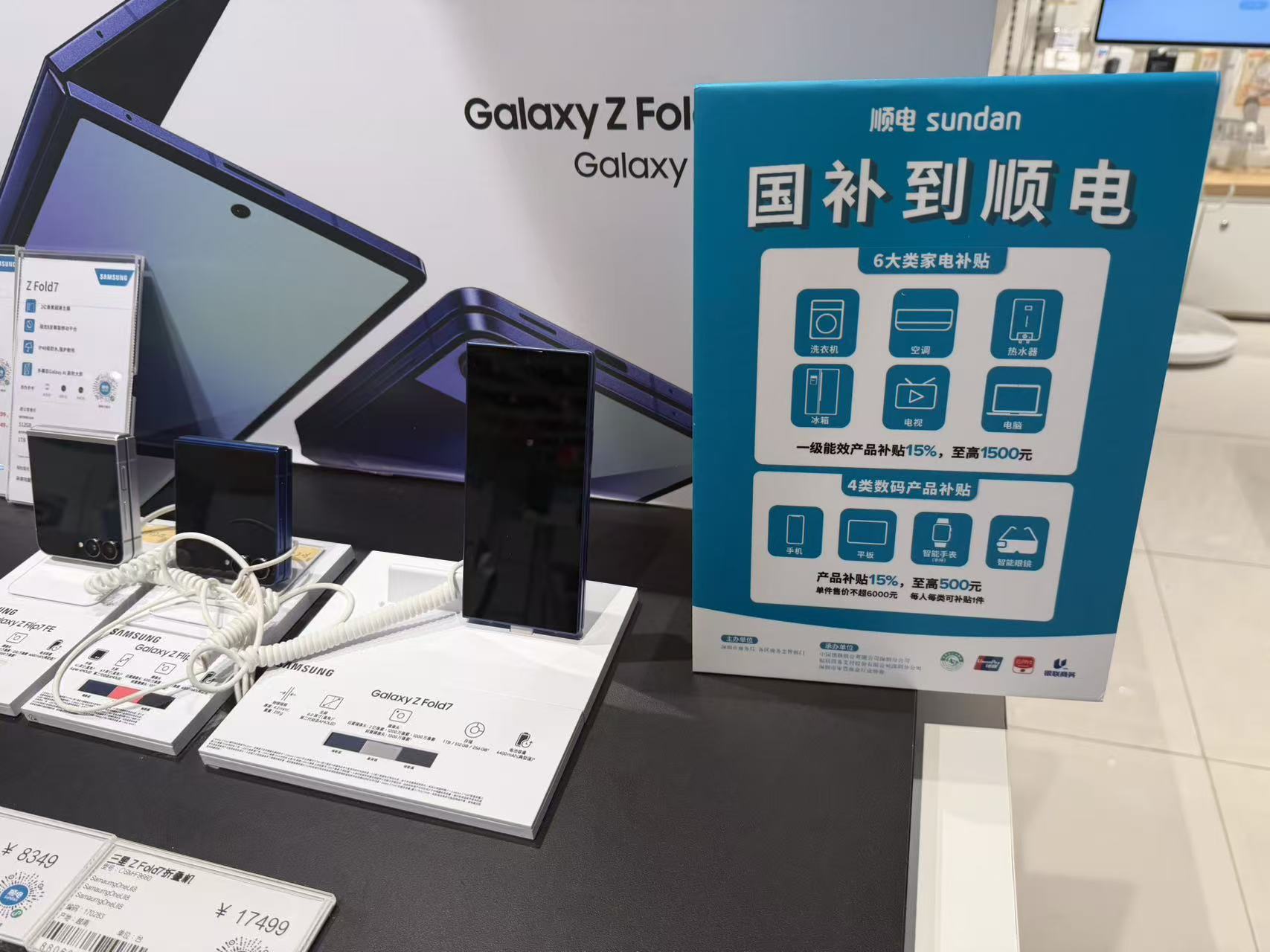
Core Viewpoint - The article discusses the impact of the new round of national subsidies on consumer electronics and home appliances during the upcoming Spring Festival, highlighting increased consumer demand and sales driven by these subsidies [2][15]. Group 1: National Subsidy Implementation - The Ministry of Commerce has allocated the first batch of 62.5 billion yuan in national subsidies, which will be distributed to local commerce departments to ensure consumers can claim these subsidies during the Spring Festival [1]. - Consumers can now apply for subsidies online for digital and smart products, with significant sales increases observed in various electronics stores [2][4]. - The new subsidies are expected to stimulate sales, particularly in the home appliance and 3C product sectors, with sales of air conditioners, refrigerators, washing machines, and televisions seeing over 90% month-on-month growth [2][11]. Group 2: Consumer Trends and Product Preferences - The demand for home appliances and 3C products has surged, with consumers increasingly seeking products that enhance efficiency and create a festive atmosphere [3][10]. - Popular products include smart appliances like automatic washing machines, large-capacity refrigerators, and high-end AI smartphones, reflecting a shift towards premium and technologically advanced items [3][16]. - The sales of energy-efficient appliances have risen significantly, with 92% of sales now comprising first-level energy/water efficiency products, indicating a trend towards greener and smarter home solutions [11][16]. Group 3: Market Dynamics and Manufacturer Strategies - Manufacturers are preparing for the Spring Festival by increasing inventory of energy-efficient products and optimizing supply chains to ensure product availability [12]. - Major brands like Huawei, Xiaomi, and OPPO are offering additional discounts alongside the national subsidies to enhance promotional efforts [12]. - Despite the positive impact of subsidies, rising costs of raw materials are leading to price increases for some products, which may affect overall sales volumes in the consumer electronics sector [13][14]. Group 4: Future Outlook and Challenges - The article notes that while national subsidies have boosted market confidence and consumer demand, the underlying issue of supply-demand mismatch remains a challenge [17]. - The effectiveness of subsidies may diminish as consumers become accustomed to them, necessitating a focus on product innovation and user engagement to sustain growth [17]. - Analysts express caution regarding the marginal benefits of subsidies in 2026, suggesting that manufacturers may prioritize high-margin products over volume sales, potentially impacting overall market performance [17].

一线实探!华为小米已成新“年货” 后国补时代市场热度几何?
Xin Lang Cai Jing· 2026-02-12 01:49
Core Viewpoint - The Chinese government has allocated 62.5 billion yuan in subsidies to stimulate consumer spending during the Spring Festival, with a focus on home appliances and 3C electronic products, leading to increased sales and market activity [1][2][6]. Group 1: Subsidy Implementation and Market Response - The Ministry of Commerce has released the first batch of 62.5 billion yuan in national subsidies, which will be distributed to local commerce departments to ensure consumers can claim these subsidies during the Spring Festival [1]. - Consumers can now apply for subsidies online for digital and smart products, with reports of increased sales activity in stores, particularly for mobile phones and home appliances [2][3]. - The combination of national subsidies, brand discounts, and platform incentives is driving consumer interest and sales, particularly in the home appliance and 3C product sectors [2][6]. Group 2: Sales Performance and Consumer Trends - Sales of major home appliances such as air conditioners, refrigerators, and washing machines have seen a month-on-month increase of over 90%, with high-end smartphones dominating the market [2][7]. - The demand for efficient and technologically advanced home appliances is rising, with products like smart air conditioners and large-screen TVs becoming popular choices for consumers during the festive season [2][7]. - The sales of energy-efficient appliances have surged, with 92% of sales being of first-level energy efficiency products, indicating a shift towards greener and smarter home solutions [7][13]. Group 3: Manufacturer Strategies and Market Dynamics - Manufacturers are preparing for the Spring Festival by increasing inventory of energy-efficient products and optimizing supply chains to ensure availability during peak demand [8][9]. - Major 3C brands are enhancing promotional efforts during the Spring Festival, with additional discounts and marketing campaigns to attract consumers [9]. - Despite the positive impact of subsidies, rising costs of raw materials are leading to price increases for some products, which may affect overall sales volumes in the future [10][11]. Group 4: Future Outlook and Industry Challenges - The effectiveness of subsidies may diminish as consumers become accustomed to them, and the market faces challenges related to supply-demand mismatches [14]. - Industry experts suggest that continuous growth will depend on product innovation and the ability to meet evolving consumer preferences, particularly in the context of AI integration in home appliances [12][14]. - The anticipated decline in smartphone sales in 2026 highlights the need for brands to adapt their strategies in response to changing market conditions and consumer behavior [11].
7 英寸大屏卷土重来:折叠屏与平板双重夹击,巨屏手机能否杀出「第三赛道」?
3 6 Ke· 2026-02-11 04:58
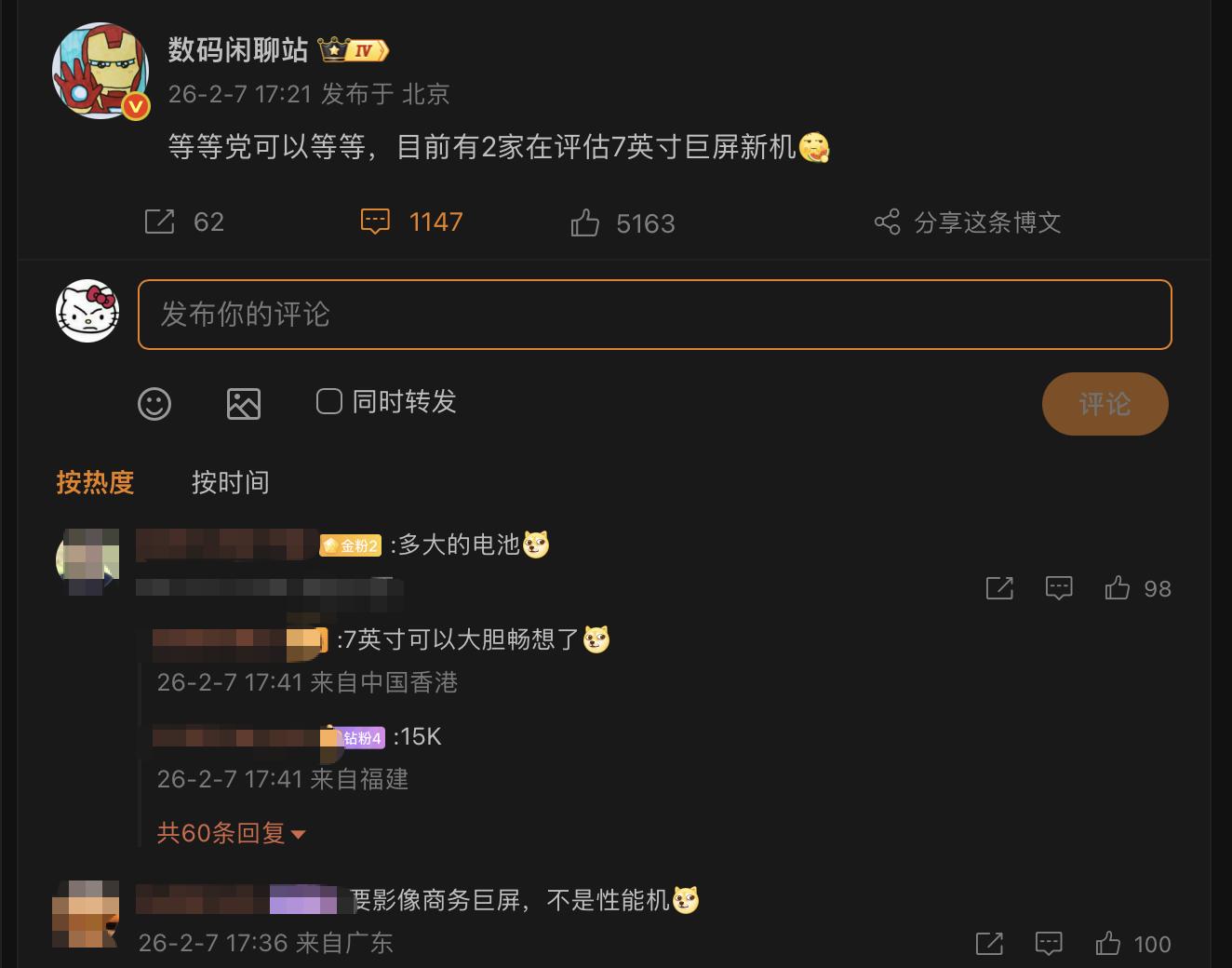
Core Viewpoint - The potential resurgence of 7-inch smartphones is being tested by two manufacturers, indicating a response to user demand for larger screens in a market filled with small tablets and foldable phones [1][4]. Group 1: Market Context - The current market already has 7-inch smartphones, such as Huawei's Mate70 Air, which measures 6.96 inches and has a width of 81.5mm, significantly wider than the Xiaomi 17 Ultra at 77.6mm, affecting user grip [1][4]. - The disappearance of large-screen smartphones in the past was attributed to usability issues, but the scarcity of large screens has diminished as technology has advanced [10][12]. Group 2: Reasons for Resurgence - The first reason for the revival of 7-inch smartphones is the increased internal space, allowing manufacturers to incorporate larger batteries, advanced imaging modules, and enhanced cooling systems [4][6]. - The second reason is the improved viewing experience, where a transition from 6.7 inches to 7 inches enhances information density, reading comfort, multitasking space, and video immersion [6][8]. Group 3: Challenges and Considerations - The main challenge for manufacturers is to ensure that the 7-inch device remains portable and user-friendly, maintaining single-handed usability and pocket storage [6][12]. - The device must provide a unique experience that differentiates it from foldable screens and small tablets, offering a straightforward large display without the need for unfolding or carrying an additional device [8][14]. Group 4: User Experience and Market Position - The 7-inch smartphone could become a "second mainstream" option for specific user groups, such as business professionals and heavy mobile gamers, rather than a universal choice [12][16]. - Manufacturers must focus on hardware weight distribution and software adaptation to fully utilize the larger screen, ensuring that it enhances user experience without compromising portability [14][18]. Group 5: Conclusion - The introduction of 7-inch smartphones represents an attempt by manufacturers to break away from market homogenization, aiming to redefine large-screen experiences without reverting to past trends [16][18].

从黄金到GPU:一条让你多花钱的隐秘供应链
Sou Hu Cai Jing· 2026-02-10 21:39
Group 1 - The IT industry is experiencing a cost storm due to soaring prices of precious metals, which is impacting the semiconductor supply chain and leading to a "digital inflation" crisis [1][4][5] - Gold prices reached a historical peak of nearly $5600 per ounce before experiencing significant volatility, with a record single-day drop of 40 years on January 30, followed by a rebound [2][4] - Silver has seen dramatic price fluctuations, with a single-day drop exceeding 35% on January 31, erasing all gains made since the beginning of the year, further contributing to cost pressures in the semiconductor industry [4][6] Group 2 - Silver's demand is increasing significantly in various industries, particularly in semiconductors, photovoltaics, and automotive sectors, due to its superior conductivity and thermal properties [8][10] - The photovoltaic industry now consumes nearly 30% of the global physical silver supply, as new technologies require almost double the amount of silver compared to older models [10][12] - The semiconductor packaging segment is highly sensitive to raw material price changes, with a 20% increase in gold costs potentially leading to a 5%-8% rise in packaging costs [12][14] Group 3 - The semiconductor industry is facing a supply-demand imbalance, with a projected 23% increase in global DRAM memory demand in 2026, particularly driven by data centers [14][15] - The AI boom is a significant factor driving the current price increase in the semiconductor sector, as the demand for computing power surges [14][15] - The limited capacity expansion in semiconductor manufacturing, with only a 5% increase expected in 2026, is insufficient to meet the explosive demand growth [14][15] Group 4 - Different players in the semiconductor ecosystem are experiencing varied impacts from the price increases, with domestic semiconductor equipment manufacturers benefiting from increased cash flow due to rising prices [15][17] - Chip design and hardware manufacturers are struggling to pass on rising costs to customers, risking customer loss while facing pressure from raw material price hikes [15][17] - The overall price increase across the semiconductor supply chain is likely to affect consumer electronics, leading to higher prices for end products [17][19] Group 5 - Major PC manufacturers have begun raising prices across their product lines, with increases ranging from 10% to 30% due to rising component costs [21][22] - The smartphone industry is also feeling the impact, with companies like Xiaomi and OPPO announcing price hikes for new models, driven by increased memory costs [22][24] - Cloud computing giants like AWS and Google Cloud have announced price increases for their services, marking a significant shift in the pricing paradigm of the industry [25][28] Group 6 - The rise in cloud service prices is expected to affect consumers directly, as software and application subscription costs are also increasing due to higher underlying computing costs [29][31] - The trend of charging for AI services is shifting from aggressive subsidies to more sustainable pricing models, with many companies adjusting their API prices upwards [31][34] - A significant portion of consumers is now willing to pay for AI functionalities that enhance productivity, indicating a shift in consumer attitudes towards software pricing [34][35]

AI进化论:天猫的新品答案
Tai Mei Ti A P P· 2026-01-19 10:11
Core Insights - The article emphasizes that AI is transforming the product innovation landscape, enabling brands to create and validate new products more efficiently and cost-effectively, leading to a higher likelihood of consumer acceptance [1][21]. Group 1: AI's Role in Product Development - AI accelerates the process of identifying consumer needs, generating creative ideas, and validating products, allowing brands to test new products at lower costs and higher frequencies [1][3]. - The TMIC (Tmall New Product Innovation Center) utilizes insights from 900 million consumers to enhance trend analysis and product development, significantly reducing the time required for market research from months to minutes [4][8]. - Over 8,000 brands have adopted TMIC's AI tools, resulting in an average increase of three times in new product development efficiency [4]. Group 2: Enhancing Consumer Experience - AI not only speeds up product creation but also improves consumer understanding of new products, making it easier for them to determine suitability and value [5][7]. - The introduction of AI-driven flagship stores, such as The Ordinary's, has led to significant consumer engagement, with over 1.1 billion visits and sales exceeding 10 million during promotional events [5]. - Brands like TOM FORD have successfully utilized AI to tailor communication strategies based on consumer preferences, resulting in the launch of highly successful products [5][9]. Group 3: Market Strategy and Execution - Tmall's strategy focuses on precise targeting and resource allocation for new product launches, moving from broad marketing to targeted campaigns [14][16]. - The collaboration with brands like Quark and Adidas demonstrates the effectiveness of AI in aligning product features with consumer interests, leading to substantial sales growth [16][20]. - Tmall aims to support over 16 million new product launches by 2025, with a projected 35% increase in the number of products achieving over one million in sales [17]. Group 4: Continuous Improvement and Feedback Loop - The integration of AI into the entire product lifecycle allows for a continuous feedback loop, enhancing product iterations based on consumer data and market trends [20][21]. - Tmall's approach transforms the platform into a critical entry point for technology brands, facilitating a deeper understanding of consumer needs and industry dynamics [20]. - The article concludes that AI is making the process of product innovation faster, clearer, and more replicable, establishing a sustainable growth engine for brands [21].