新能源基金

Search documents
周期洗牌,存款缩水股市被套!中国经济回暖背后,普通人如何避坑
Sou Hu Cai Jing· 2025-11-16 12:38
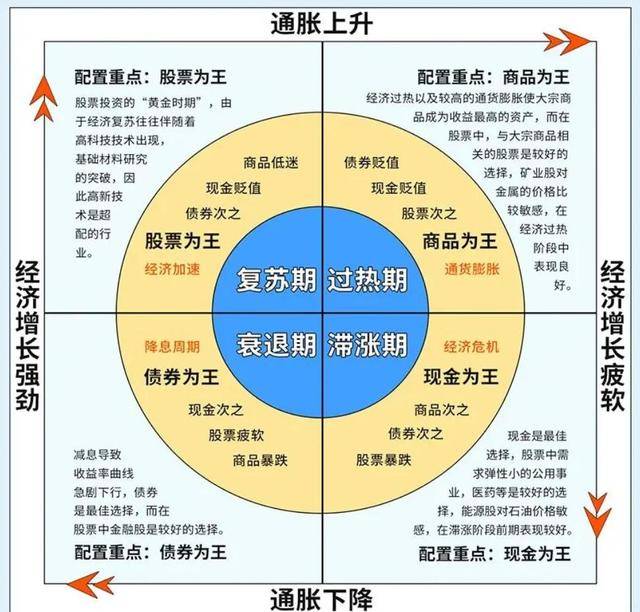
Group 1 - The article emphasizes that many individuals are struggling with their investments in 2025 due to a lack of understanding of market cycles, leading to poor financial decisions [1] - It highlights the contrasting economic conditions between China and the United States, with China experiencing economic stimulus and lower loan rates, while the U.S. faces stagnant orders and rising prices [3][5] - The article suggests that understanding economic cycles is crucial for making informed investment choices, as government policies shift between stimulating consumption and tightening fiscal measures [5][7] Group 2 - It advises that during economic recovery, investors should focus on sectors supported by government policies, such as green energy and infrastructure technology [7] - In times of market overheating, caution is advised against blindly chasing high prices, as this can lead to significant losses [7][8] - The article recommends a balanced investment strategy for ordinary families, combining low-risk assets like savings or bonds with a smaller portion allocated to high-growth sectors [10] Group 3 - The underlying principle for successful investing is to adapt to changing market conditions and avoid the temptation of quick profits [12] - Maintaining cash flow and understanding asset allocation are essential for long-term wealth growth, allowing investors to weather market fluctuations [12]

25Q3主动权益基金季报分析:主动权益基金规模再次突破四万亿,科技板块成为重点聚焦赛道
Shenwan Hongyuan Securities· 2025-10-29 08:45
1. Report Industry Investment Rating - Not provided in the given content 2. Core Viewpoints of the Report - In Q3 2025, the scale of active equity funds significantly increased, with the scale rising from approximately 3.35 trillion yuan in Q2 to over 4 trillion yuan, a growth rate of 19.75%. The performance also improved notably, with about 98% of active equity funds achieving positive returns and a median return of 23.00%. Active equity funds reduced their positions in consumer, financial, and real - estate sectors and increased their positions in the technology sector. Technology and new - energy funds outperformed other sectors, and the large - cap growth style dominated in Q3 [1][10][15] 3. Summary by Relevant Catalogs 3.1 Fund Three - Quarterly Report Investment Outlook Keywords - In Q3, active equity fund managers generally focused on technology, consumption, and growth. Trend keywords included "repair", "structural", and "recovery"; industry - sector keywords were "technology", "consumption", and "electronics"; theme keywords were "computing power", "robotics", and "dividends"; event keywords were "exports", "tariffs", and "easing" [1][7] 3.2 Performance and Scale Dimensions - **Scale Increase**: The scale of active equity funds increased significantly from Q2 to Q3 2025, with E Fund, China Europe Fund, and Fullgoal Fund having the largest active equity management scales, all exceeding 200 billion yuan. China Europe Fund, Yongying Fund, and E Fund had obvious scale growth, all exceeding 50 billion yuan [10][13] - **Performance Improvement**: Approximately 98% of active equity funds achieved positive returns in Q3, with a median return of 23.00%. Most funds' performance ranged from 7% to 47%, and 361 funds achieved returns exceeding 50% [15] - **Position and Heavy - Position Stock Allocation**: The overall position of active equity funds increased, with the average stock position rising to 88.72% (+1.34%), and the Hong Kong stock position slightly decreasing (- 0.09%). Heavy - position stocks reduced their allocation in CSI 500 component stocks and increased their allocation in CSI 300 and STAR Market stocks. In terms of industries, electronics had the highest allocation ratio and the largest increase, while banks had the most significant reduction [19][21] - **Large - Scale Funds**: E Fund Blue Chip Select remained the largest active equity fund. Some large - scale products had performance recoveries but declining shares, while several products reached over 10 billion yuan in scale in Q3 [24] - **Newly - Issued and Existing Funds**: The newly - issued scale of active equity funds rebounded. China Merchants Balanced Optimization, managed by Wu Xiao, was the largest newly - issued active equity fund this quarter, with a scale of 4.955 billion yuan. There were 6 newly - issued active equity funds with a scale exceeding 2 billion yuan [25] 3.3 Fund Company Dimension - **Performance**: Dongwu Fund had the best average performance of active equity funds in Q3 2025, with an average return of 40.58%. Other well - performing fund companies included Caitong Fund, E Fund, and Morgan Fund [32] - **Scale**: E Fund remained the largest active equity management company, and China Europe Fund and Yongying Fund had obvious scale growth in Q3 [34] - **Heavy - Position Stock Allocation**: Leading fund companies in performance over - allocated industries such as power equipment and communication and under - allocated industries such as pharmaceutical biology and food and beverage. Some companies also had significant over - or under - allocation in specific industries [35][36] 3.4 Investment Strategy Comparison - Technology and new - energy funds outperformed other sectors in Q3, while consumer, financial, and real - estate funds underperformed. The large - cap growth style dominated, with the median return of large - cap growth products leading among various products, reaching 43.73% in Q3, while small - cap growth products generally performed weaker [1][15]
探秘苏创投:从青砖黛瓦走出的三千亿资本如何撬动苏州产业变革
Shang Hai Zheng Quan Bao· 2025-10-14 18:27
Core Viewpoint - Suzhou Innovation Investment Group (苏创投) has established a comprehensive capital matrix covering 30 industrial chains, focusing on the "1030" industrial system in Suzhou, which includes 10 major industrial clusters and 30 key industrial chains [1] Group 1: Investment Scale and Focus - Since its establishment, Suzhou Innovation Investment Group has added over 150 billion yuan in cooperative fund scale, set up 8 mother funds, and directly invested in over 250 projects, with more than 70% of the funds directed towards hard technology fields within the "1030" industrial system [1] - The total scale of funds managed by Suzhou Innovation Investment Group has exceeded 300 billion yuan, with over 60 companies successfully listed among the directly invested projects [1] Group 2: Project Discovery and Investment Strategy - Suzhou Innovation Investment Group employs a unique "grid-based visit" mechanism to discover quality projects, with a professional investment team of nearly 200 members divided into 10 specialized groups covering Suzhou's ten districts [2] - Each investment team is required to have expertise in both finance and industry, conducting in-depth research in key sectors such as biomedicine, artificial intelligence, and new energy [2] - The company visits over 3,000 enterprises annually, selecting about 200 key projects for follow-up, ultimately investing in around 100 [2] Group 3: Post-Investment Services - Suzhou Innovation Investment Group has established a comprehensive post-investment service system covering six aspects, including corporate governance, financial management, management consulting, refinancing assistance, support for listing and mergers, and external relationship networking [3] - Regular activities such as "reporting to founders" are conducted to match enterprises with dedicated empowerment teams and connect them with government departments and industry resources [3] Group 4: Fund Matrix and Strategic Cooperation - The company has built a fund matrix that supports the entire lifecycle of enterprises, with specialized funds established for key industrial chains, such as a 5 billion yuan biomedicine fund and a 3 billion yuan digital emerging industry fund [4] - Suzhou Innovation Investment Group has collaborated with ten districts to establish and manage 16 funds totaling 35.5 billion yuan, creating a project development system that integrates government resources and regional collaboration [5] Group 5: Chain Master Fund Model - The introduction of the chain master fund model aims to elevate the industrial ecosystem, with 8 chain master funds established in collaboration with leading companies, totaling 2.28 billion yuan [6] - This model allows leading enterprises to have significant investment decision-making power, facilitating a shift from "capital seeking projects" to "industry selecting projects" [6] - The chain master funds not only provide financial investment but also enhance supply chain resilience and offer technical guidance and order opportunities for small and medium-sized enterprises [6][7]
924行情一周年:投资能不能赚钱,靠的不是牛市,而是这一点
雪球· 2025-09-25 08:08
Core Viewpoint - The article emphasizes the importance of having a personal investment system to navigate market fluctuations and make informed decisions, rather than relying on external advice or luck [6][10][14]. Group 1: Investment Strategies - Warren Buffett began reducing his holdings in Apple from Q4 2023, while George Soros increased his investment in the same stock during Q2 and Q3 of 2024, showcasing contrasting investment strategies [4][5]. - The differing decisions of Buffett and Soros stem from their unique investment philosophies: Buffett focuses on value investing and long-term holding, while Soros capitalizes on market momentum and the reflexivity principle [6][7][8]. Group 2: Importance of a Personal Investment System - A user’s experience illustrates the pitfalls of not having a personal investment system, as they missed out on gains during a bull market due to a lack of confidence and understanding of their investment decisions [10][12][14]. - Successful investors maintain a consistent investment system that aligns with their personal values and risk tolerance, which is crucial for long-term success [14]. Group 3: Asset Allocation as an Investment System - The article advocates for asset allocation as the most suitable investment system for ordinary investors, emphasizing the need for understanding the underlying investment philosophy and decision-making process [15][16]. - The "three-part method" of asset allocation is introduced, which includes determining what to buy, how much to invest based on risk tolerance, and when to buy and sell [17][18][20]. Group 4: Practical Application of Asset Allocation - The three-part method encourages diversification across various asset classes to mitigate risks and enhance overall returns, with a focus on long-term investment rather than timing the market [17][20]. - The method also includes a rebalancing feature, allowing investors to adjust their portfolio based on performance, which promotes disciplined investment practices [21].


连跌数年!新能源基金何时能回本?
Guo Ji Jin Rong Bao· 2025-09-23 05:55
Core Viewpoint - The renewable energy sector, once a golden opportunity in the A-share market, has faced significant downturns, but recent data indicates a potential recovery as production and sales of new energy vehicles (NEVs) show growth, suggesting a possible reversal in the market trend [1][4]. Group 1: Market Performance - Several renewable energy-related indices have shown a notable recovery this year, with the CSI New Energy Vehicle and CSI New Energy Vehicle Industry indices both increasing over 43% [2]. - Despite the recovery, investors have experienced poor holding performance due to significant drawdowns from 2019 to 2021, with maximum drawdowns exceeding 67% for key indices [2][3]. - The maximum drawdown for various renewable energy ETFs has surpassed 65%, leading to substantial losses for investors who bought at peak levels in 2021 [3]. Group 2: Industry Conditions - The new energy sector has seen a year-on-year increase in production and sales of NEVs by 37.3% and 36.7%, respectively, indicating strong end-user demand [5]. - The industry is experiencing technological advancements, particularly with solid-state batteries, which are optimizing the supply-demand structure and even leading to price increases in certain segments [5]. - The overall valuation of the sector is at historical lows, suggesting significant potential for recovery, especially as the market shifts towards growth sectors by 2025 [5]. Group 3: Future Outlook - There is uncertainty regarding whether the industry can achieve a full reversal this year, but certain conditions for recovery are present [4]. - Leading companies with technological and scale advantages are expected to navigate through the cycle successfully, with a focus on the rise of domestic brands and advancements in automation and autonomous driving [5].
一周快讯丨最高出资99%,北京经开区母基金招GP;广东南控一号产业投资基金招GP;20亿,上海张江发布人工智能基金
FOFWEEKLY· 2025-09-21 07:20
Core Insights - Various mother funds in regions such as Guangdong, Beijing, Zhejiang, and Hunan are focusing on investments in sectors like new energy, new materials, next-generation electronic information, biomedicine, and intelligent equipment [2][5][14]. Group 1: Fund Establishment and Focus Areas - Multiple funds have been established in cities including Suzhou, Guangzhou, Shenzhen, and Shanghai, primarily targeting artificial intelligence, new energy, new materials, emergency equipment, intelligent manufacturing, and low-altitude economy [2]. - The Guangdong Nankong No.1 Industrial Investment Fund has a total scale of 2 billion RMB and aims to promote industrial transformation in Foshan's Nanhai District, focusing on strategic emerging industries [3][4]. - The Hong Kong Innovation and Technology Fund is set to launch in 2026-2027, with a focus on sustainable development, energy, advanced manufacturing, and materials [5]. - The Wenzhou Science and Technology Innovation and Entrepreneurship Investment Fund aims to guide social capital into strategic emerging industries and high-tech sectors [6][18]. Group 2: Specific Fund Announcements - The Beijing Economic and Technological Development Zone is selecting management institutions for its second government investment guidance fund, focusing on biomedicine and medical devices, with a total scale of 10 billion RMB for each specialized fund [14][15]. - The Ningbo Blue Star Health Biomedicine Venture Capital Fund is the first mother fund in the biomedicine sector in Ningbo, with a focus on biotechnology projects [12]. - The Luoyang Economic Development Zone has established a 30 billion RMB mother fund to support high-quality development and industrial transformation [16]. Group 3: Government Initiatives and Support - The Ministry of Science and Technology plans to establish several mother funds and S funds, aiming to mobilize nearly 1 trillion RMB in social capital for strategic emerging industries [26][27]. - The Suzhou government is launching an AI fund group exceeding 50 billion RMB to enhance AI research and development [30][31]. - The Henan Aerospace Industry Fund has been established with a total investment of 2 billion RMB, focusing on private equity investments [33]. Group 4: Investment Strategies and Requirements - The Wenzhou fund requires management institutions to have a minimum registered capital of 10 million RMB and a proven track record in equity investment [6][18]. - The Beijing fund emphasizes that its investment in any single enterprise will not exceed 150 million RMB and aims to support projects within the development zone [15]. - The Shenzhen Sports Industry Fund aims to attract quality resources into sports technology and innovation sectors, with an initial scale of 100 million RMB [39].

又一新能源基金黯然离场!阴跌三年如何“找亮点”?
券商中国· 2025-06-25 04:39
Group 1 - The core viewpoint of the article highlights the challenges faced by new energy funds, with several funds being liquidated due to poor performance and failure to meet asset size requirements [1][4][6] - Among the actively managed equity funds with "new energy" in their names, less than half have positive returns since inception, indicating that many were launched at market peaks [2][5] - The article discusses the emergence of solid-state batteries as a potential investment opportunity within the new energy sector, driven by policy support and market demand [2][7][8] Group 2 - Four new energy-themed funds have been liquidated this year, all of which were initiated funds that failed to maintain an asset size above 200 million yuan after three years [1][4] - The performance of new energy funds varies significantly, with some funds experiencing declines of over 40%, particularly those launched during market highs in 2021 [5][6] - Solid-state batteries are identified as a promising area for investment, with expectations of significant market growth and technological advancements in the coming years [7][8]




我的5年养基翻身之路:外卖箱里藏着的赚钱密码!
天天基金网· 2025-04-30 08:56
Core Insights - The article narrates a personal investment journey, highlighting the challenges and learning experiences faced while investing in funds and stocks, particularly in the context of a gig economy job like food delivery [1][3][9]. Investment Strategies - The author employs a "buying groceries" approach to investing, indicating a methodical and cautious strategy in selecting funds [7]. - Emphasizes the importance of analyzing fund performance over a three-year period before making investment decisions [8]. - Suggests that high volatility funds should be approached with caution, akin to consuming spicy food in small amounts [8]. Market Observations - The article notes that an increase in food delivery orders can signal a good time to invest in index funds, reflecting a correlation between consumer behavior and market trends [7]. - The author observes that certain stocks, like those in the construction materials sector, can be influenced by external factors such as local events (e.g., moving trucks in the area) [12]. Personal Finance Management - The narrative includes a unique perspective on quantifying investment losses in terms of missed earnings from food delivery, illustrating the emotional and financial impact of investment decisions [12]. - The author maintains a disciplined approach to budgeting, allocating a third of monthly income to investments, which reflects a strategic financial planning mindset [8]. Learning and Adaptation - The article highlights the importance of continuous learning in investment, with references to reading materials and adapting strategies based on market conditions [5][9]. - The author shares insights on recognizing market trends, such as the rise in demand for certain stocks during specific weather conditions, indicating a proactive approach to investment [12].
从接近腰斩到年化收益超10%,我总结出了4大搞钱秘诀!
天天基金网· 2025-03-15 03:29
Core Viewpoint - The article emphasizes the importance of risk management and strategic investment in mutual funds, highlighting that chasing performance and popular fund managers can lead to significant losses [2][4][8]. Group 1: Investment Experiences - Initial investment in a money market fund resulted in a loss of 18% within three months due to market conditions [2][4]. - The experience of investing in a consumer-themed fund managed by a popular fund manager led to a realization that performance rankings can be misleading and that risk alignment is crucial [3][5]. - A subsequent attempt at dollar-cost averaging into an index fund resulted in a 23% loss during a market downturn, illustrating the psychological challenges of maintaining investment strategies [5][6]. Group 2: Lessons Learned - The article outlines key lessons learned from various investment experiences, including the importance of continuing to invest during market declines and the need for a diversified approach to sector funds [6][7]. - The author stresses that industry funds can amplify risks and recommends using a satellite approach with dynamic profit-taking strategies [7][8]. - The experience with a "line-drawing" fund manager highlights the risks of relying on star managers, as changes in management can lead to significant performance declines [8]. Group 3: Investment Strategies - After five years of experience, the author developed a stable annualized return of 10-12% through disciplined investment strategies, including dollar-cost averaging and balanced asset allocation [9][10]. - A structured asset allocation framework is proposed, dividing investments into three categories: liquid assets (20%), stable investments (50%), and long-term growth (30%) [11]. - The article suggests implementing a systematic approach to investment, including regular portfolio reviews and adjustments based on market conditions [11][12]. Group 4: Guidelines for New Investors - New investors are advised to conduct thorough research before investing, including understanding their risk tolerance and differentiating between short-term and long-term funds [15]. - The article encourages continuous learning and adaptation in investment strategies to improve decision-making and outcomes [15][16]. - The author concludes that successful investing is a long-term endeavor that requires patience and a focus on compounding returns rather than seeking quick profits [14][15].