
智能灯

Search documents
大幅下调!AI,突传重磅消息
凤凰网财经· 2026-02-21 11:04
Core Viewpoint - OpenAI has significantly reduced its capital expenditure target for computing infrastructure from $1.4 trillion to $600 billion, reflecting concerns about its expansion ambitions exceeding potential revenue [1][3]. Group 1: Financial Projections - OpenAI expects to generate $13.1 billion in revenue by 2025, surpassing its previous target of $10 billion, while its cash burn for the year is projected at $8 billion, lower than the anticipated $9 billion [3]. - The company forecasts total revenue exceeding $280 billion by 2030, with contributions from consumer and enterprise segments expected to be nearly equal [2][3]. Group 2: Funding and Investments - OpenAI is finalizing a funding round potentially exceeding $100 billion, with approximately 90% of the investment coming from strategic investors such as Nvidia, SoftBank, and Amazon, which could elevate OpenAI's valuation to over $850 billion [6]. - Nvidia is reportedly investing close to $30 billion in OpenAI as part of this funding round, replacing a previous $100 billion cooperation framework that was never formalized [7][8]. Group 3: Product Development and Market Position - OpenAI has formed a team of over 200 people to develop a range of AI hardware devices, including a smart speaker expected to launch in February 2027, priced between $200 and $300 [9]. - The company has entered the hardware sector by acquiring Jonathan Ive's startup for $6.5 billion, aiming to meet the growing demand for physical AI and augmented reality devices [10]. Group 4: Competitive Landscape - OpenAI's ChatGPT has over 900 million weekly active users, showing a recovery in user engagement after a slowdown last fall, amidst competition from companies like Google and Anthropic [4]. - OpenAI's programming product Codex has surpassed 1.5 million weekly active users, directly competing with Anthropic's Claude Code [5].



OpenAI计划2027年前推出人工智能智能音箱
Huan Qiu Wang Zi Xun· 2026-02-21 01:48
Core Viewpoint - OpenAI is accelerating its entry into the artificial intelligence hardware market, planning to launch a smart speaker with a camera by 2027, marking its first self-developed AI device [1][4]. Group 1: Product Development - A team of over 200 people is working on a range of AI hardware products, including the smart speaker, smart glasses, and smart lights [4]. - The smart speaker is expected to be available as early as February 2027, with a price range of $200 to $300, featuring a camera to capture multimodal information for enhanced user interaction [4]. - Smart glasses are anticipated to enter mass production by 2028 [4]. Group 2: Strategic Moves - To enter the hardware sector, OpenAI acquired io Products, a company founded by former Apple design chief Jony Ive, for $6.5 billion last year [4]. - This acquisition aims to align with market trends in physical AI and augmented reality technology, expanding OpenAI's ecosystem [4]. Group 3: Market Competition - The AI hardware market is becoming increasingly competitive, with Meta and Ray-Ban's smart glasses performing well due to their video recording and live streaming capabilities [4]. - Apple and Google are also reported to be developing their own AI smart glasses products [4].
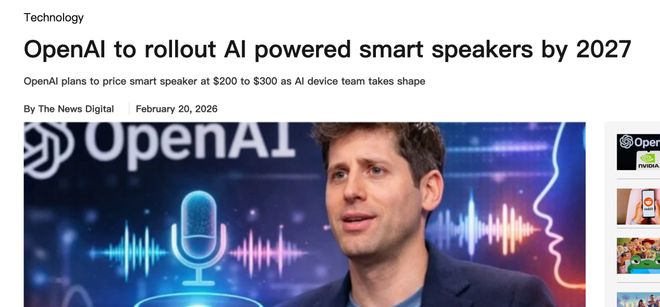
报道称Open AI在开发一系列基于人工智能技术的设备
Xin Lang Cai Jing· 2026-02-20 14:30
Core Insights - Open AI is developing a range of AI-based devices with a team of over 200 people [1] - The first device to be launched is a smart speaker, expected to be priced between $200 and $300 [1] - The smart speaker will feature a camera, enabling functionalities such as taking photos [1]
安克高管辞职卖灯带,年入40亿抢下80国中产
创业邦· 2026-02-17 10:32
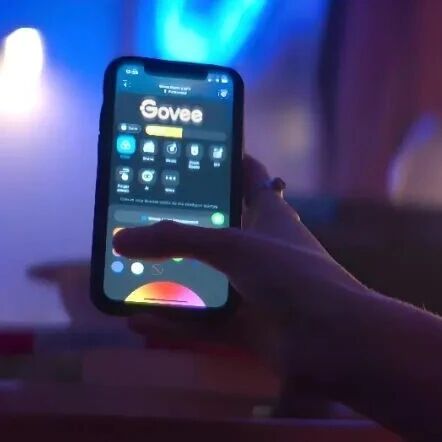
Core Viewpoint - The article highlights the emergence of former executives from major Chinese companies as competitive entrepreneurs, particularly focusing on Govee, a smart lighting brand founded by a former CTO of Anker Innovations, which has achieved significant growth and is on the path to an IPO [5][10][12]. Company Overview - Govee, established in January 2017, is a subsidiary of Shenzhen Zhiyan Technology Co., Ltd., with a registered capital of approximately 38.95 million RMB. The company is controlled by its founder, Wu Wendong, who holds 55% of the shares [6][7]. - Govee has successfully positioned itself in the smart lighting market, avoiding the traditional low-cost competition in general lighting and instead focusing on selling experiences and emotions through its products [7][12]. Market Dynamics - The global lighting market is experiencing a structural shift, with the market size reaching $83.6 billion and a projected compound annual growth rate (CAGR) of over 4.2% from 2025 to 2034. The growth drivers have shifted from real estate and infrastructure to smart cities and home upgrades [10][11]. - In 2024, China holds a 44% share of the global LED lighting market, but the overall lighting industry in China is facing challenges, with a 4.9% decline in market size to approximately 589 billion RMB [11][12]. Govee's Growth and Strategy - Govee's revenue reached 3 billion RMB in 2023 and is expected to grow to 4 billion RMB in 2024, with a net profit exceeding 400 million RMB. The company has initiated the IPO process in May 2025 [16][30]. - The brand's success is attributed to its focus on the North American and European markets, where it has established a strong presence on platforms like Amazon and TikTok, achieving significant sales and brand recognition [18][20]. Product and Technology - Govee's product line includes various smart lighting solutions designed for different environments, emphasizing emotional expression rather than mere functionality. The company has developed proprietary technology, including the CogniGlow™ AI algorithm, enhancing user interaction and experience [19][21]. - The company has a high R&D personnel ratio of over 70% and has filed more than 1,000 patents, which contributes to its competitive edge in the market [19][21]. Community Engagement and Marketing - Govee has effectively utilized social media and community engagement to enhance brand visibility and user loyalty. Initiatives like user-generated content (UGC) and collaborations with influencers have significantly increased user interaction and brand exposure [20][21]. - The company has built a user community within its app, allowing users to share creative lighting solutions, which fosters a sense of belonging and enhances customer retention [21]. Competitive Landscape - The smart lighting sector is becoming increasingly crowded, with over 110,000 related companies registered in China by 2024. Govee faces competition from established brands like Opple Lighting and emerging players like Yeelight and Casambi [23][25][30]. - Govee's reliance on online sales, particularly through Amazon, poses risks related to changing tariffs and platform regulations, necessitating a diversified sales strategy to mitigate these challenges [30].
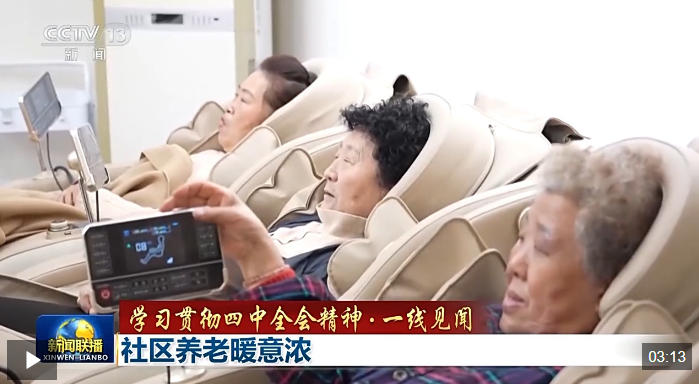
社区养老暖意浓!智慧康养设备加速融入银发生活
Yang Shi Xin Wen· 2025-11-22 05:36
Core Insights - The article emphasizes the proactive measures taken to address the aging population in China, particularly through the development of community-based elderly care services and the integration of new technologies in these services [2][3]. Group 1: Policy and Infrastructure Development - The "14th Five-Year Plan" aims to establish a national basic elderly care service system and accelerate the construction of a three-tier elderly care service system covering urban and rural areas [2]. - By the end of the "14th Five-Year Plan" period, 2,990 elderly-friendly communities and 500 community-based elderly care service networks have been established, with a total of 40,600 elderly care institutions and facilities [2]. - 224,000 households of elderly individuals with special difficulties have completed home modifications for aging in place, and 86,000 meal service points serve over 3 million elderly individuals daily [2]. Group 2: Community Initiatives and Technological Integration - In Lianyungang's Kuihua Community, a resource integration effort led to the establishment of an 800 square meter intergenerational care center, which includes a community canteen, rehabilitation therapy, and cultural activities [2]. - The community has equipped homes of elderly individuals with wheelchairs, nursing beds, smoke detectors, and fall alert devices, showcasing the integration of smart home technology [2]. - New technologies such as smart calling systems and elderly care robots are increasingly entering households, with a growing number of professionals engaging in the silver economy [3]. Group 3: Resident Experiences and Expectations - Residents of Kuihua Community report significant improvements in their quality of life, with affordable smart home installations enhancing their living conditions [3]. - The availability of various interest classes and advanced sports facilities has greatly satisfied the physical and mental needs of the elderly [3]. - There is a strong anticipation for the future of elderly care, with expectations for more information technology and high-tech solutions to be implemented in the community [3][4].
第3批国补启动!这类首次纳入补贴,仅剩130天
猿大侠· 2025-08-31 04:11
Core Viewpoint - The national subsidy program has resumed with a total funding of 69 billion yuan, allowing consumers to exchange old products for new ones, with a limited window for claiming subsidies until December 31, 2025 [1][4]. Summary by Sections National Subsidy Program - The third batch of national subsidies has been officially launched, with a total of 69 billion yuan allocated [1]. - Consumers can access the subsidy through platforms like Taobao and Tmall, with a specific focus on educational products during the back-to-school season [4]. Subsidy Details - The subsidy program has expanded to include educational items such as smart lamps, study desks, learning machines, and dictionary pens, offering up to 20% off [4][12]. - Consumers have a limited time of 130 days to claim these subsidies, emphasizing the urgency of participation [4]. Additional Discounts - Students can enjoy additional educational discounts on Taobao from August 25 to 31, with potential savings of up to 4,000 yuan, effectively reducing prices to as low as 50% [5]. - Various categories of products, including home appliances and 3C digital products, are eligible for subsidies ranging from 15% to 30% based on energy efficiency ratings [12][13]. Regional Subsidies - In addition to national subsidies, local governments in regions like Zhejiang, Guangdong, and Shanghai are offering additional consumption vouchers, enhancing the overall discount potential for consumers [15]. - Local subsidies can be combined with national ones, providing further financial incentives for consumers [15]. Market Dynamics - The popularity of the subsidy program has led to increased competition for claiming subsidies, with many consumers finding it challenging to secure funds due to high demand [16]. - The program is entering a critical phase, with the third batch of funds being rapidly consumed, indicating a limited opportunity for consumers to benefit from the subsidies [17]. Future Outlook - A fourth batch of funding is expected to be available in October, suggesting that consumers may want to wait for additional discounts during the upcoming Double Eleven shopping festival [18].

专访学而思执行总裁位晨:学习机等AI教育硬件进“国补” 智慧教育普及将促进教育资源均衡分配
Mei Ri Jing Ji Xin Wen· 2025-08-29 12:47
Group 1 - The core viewpoint of the article is that the inclusion of AI education hardware in the national subsidy program marks a shift from universal subsidies to structural optimization in the education hardware market [1][4] - The adjustment in the subsidy policy is expected to lower the consumption threshold for learning hardware, directly stimulating purchasing demand and promoting a positive cycle of technology upgrades, consumer demand, and policy support [6][4] - The market for learning machines is experiencing significant growth, with sales projected to increase from 3.342 million units in 2021 to 5.923 million units in 2024, representing a compound annual growth rate of 21% [6] Group 2 - The article discusses the challenges of product homogenization in AI education hardware, emphasizing the need for differentiation among manufacturers [6][7] - The competition in the learning machine market has intensified due to the entry of numerous educational companies, leading to a potential head effect where a few companies may dominate the market [7] - The development of smart education is seen as a crucial direction for educational reform, with AI reshaping traditional educational models rather than replacing human teachers [8][10] Group 3 - Smart education is expected to enhance educational efficiency and promote equity in resource distribution, making quality educational resources more accessible [9][10] - The integration of AI tools in education is facilitating personalized learning approaches, allowing teachers to focus on individual student needs while AI handles routine tasks [9][10] - The rapid acceptance of AI tools among younger students indicates a shift in learning dynamics, with students adapting to new technologies faster than their parents [9]


特朗普考虑限制留学生在美时间;泽连斯基:乌美代表团将在纽约会晤;美财长:美联储主席候选人有11位丨早报
Di Yi Cai Jing· 2025-08-28 00:14
Group 1 - The U.S. Secretary of the Treasury, Becerra, mentioned there are 11 strong candidates for the position of Federal Reserve Chair, with interviews starting after Labor Day [4] - The Ministry of Commerce in China plans to introduce several policy measures to expand service consumption in September, aiming to optimize service supply capabilities [6] - The Ministry of Commerce will also release a series of measures to promote service exports, focusing on financial and tax facilitation [7] Group 2 - The National Bureau of Statistics reported that manufacturing profits grew by 6.8% year-on-year in July, accelerating by 5.4 percentage points compared to June [8] - The Ministry of Industry and Information Technology announced plans to promote satellite communication business, aiming for over 10 million users by 2030 [9] - The Ministry of Transport reported that fixed asset investment in transportation reached 1.95 trillion yuan in the first seven months of the year [10] Group 3 - The China Council for the Promotion of International Trade stated that the number of newly established foreign-invested enterprises increased by 7% in the first half of the year [13] - The digital publishing industry in China is projected to reach a revenue of 1.7485 trillion yuan in 2024, marking an 8.07% increase from the previous year [16] - The third batch of national subsidies for the "old for new" program has been issued, expanding the range of subsidized products [15] Group 4 - Meituan reported a 89% decline in adjusted net profit for Q2, with revenue of 91.84 billion yuan, reflecting the impact of competition in the food delivery market [31] - The Shanghai real estate market saw two properties sell out immediately after the implementation of the "Six Measures" policy, which aims to address structural issues in the housing market [32]




淘宝天猫:第三批国补上线,智能学习用品首次纳入补贴
Guo Ji Jin Rong Bao· 2025-08-27 06:39
Group 1 - The third batch of national subsidies for the trade-in program has been launched, with a total funding of 69 billion yuan [1] - The subsidy application channel opened on August 26, allowing consumers in major cities like Beijing, Shanghai, Zhejiang, and Guangdong to easily access the benefits through the Taobao app [1] - The subsidy scope has expanded this year to include products such as smart lamps, study desks, and learning machines, with a maximum subsidy of 20% [1] Group 2 - Over 1,600 categories, more than 3,000 brands, and over 200,000 products have joined the national subsidy initiative on Taobao and Tmall, with daily visits to the subsidy section exceeding 150 million [2] - Local consumption subsidies have also been issued in various provinces, with specific discounts such as 15% for educational products in Hangzhou and 10% for home appliances and digital products in Nanjing [2] - Taobao and Tmall have upgraded logistics and installation services for large items, changing from "daily appointment" to "half-day precise appointment" [2]

第三批国补淘宝启动补贴申领,智能灯、学习桌椅、学习机等首次纳入补贴
Xin Lang Ke Ji· 2025-08-27 02:46
Core Insights - The third batch of national subsidies for trade-in programs has been launched, with Taobao and Tmall leading the initiative starting August 26 [1] - The subsidy range has expanded this year, particularly targeting back-to-school items such as smart lamps, study desks, and learning machines, with a maximum subsidy of 20% [1] - Consumers can receive additional discounts during the promotional period, with students eligible for up to 4000 yuan in combined educational discounts [1] Group 1 - The subsidy for 3C digital products, including smartphones and tablets priced under 6000 yuan, is set at 15%, with a maximum reduction of 500 yuan [1] - Over 1600 product categories, 3000 brands, and 200,000 items are available under the national subsidy program on Taobao and Tmall, attracting over 150 million daily visits to the subsidy section [1] - The subsidy for energy-efficient home appliances can reach up to 20% for first-level products and 15% for second-level products, with home modification products for elderly care receiving up to 30% [1] Group 2 - Local consumption subsidies are being issued in various provinces, including Zhejiang, Guangdong, Jiangsu, Anhui, and Shanghai, with specific discounts for educational products and home appliances [2] - Taobao and Tmall have upgraded their logistics and installation services to offer half-day precise appointment options, enhancing the consumer experience for national subsidy products [2] - A new "alarm reminder" feature has been introduced to assist consumers in redeeming national subsidies more conveniently [2]