
特斯拉FSD V14.2

Search documents
今天十点!一场关于自驾L4的圆桌探讨(斯年智驾/新石器/卡尔动力等)
自动驾驶之心· 2026-01-10 01:00
Core Insights - The article discusses the advancements in autonomous driving technology, particularly the transition from Level 2 (L2) to Level 4 (L4) automation, highlighting that high-level assisted driving has reached a "quasi-L4" stage by December 2025 [3] - It emphasizes the significant investment in the L4 sector, with over 30 billion yuan raised in the domestic autonomous driving industry in 2025, indicating a shift in focus towards L4 technology [3] - A roundtable event is planned to explore the technological and commercial realities of L4 autonomous driving, featuring insights from leading companies in the field [3] Group 1: Industry Developments - The technology pathways for L2 and L4 are converging, allowing for the reuse of the same model across both levels [3] - The article notes that the L4 sector is gaining renewed attention due to its potential to reach a critical development phase [3] Group 2: Event Details - A significant roundtable discussion on L4 autonomous driving will take place, featuring diverse perspectives from top companies in the industry [3] - The event aims to delve into the evolution of L4 technology, market dynamics, and future directions [3] Group 3: Key Speakers - He Bei, founder and chairman of Sinian Intelligent Driving, has extensive experience in autonomous driving and has published over 30 papers and holds more than 100 patents [4] - Miao Qiankun, CTO of New Stone Age Autonomous Vehicles, has over 15 years of experience in R&D and has led the development of L4 urban logistics delivery vehicles, which are operational in over 300 cities [5] - Wang Ke, VP of AI R&D at Karl Power, and Ma Qianli, Tech Lead at a top global automotive company, bring significant expertise in autonomous vehicle technology and commercial operations [6]

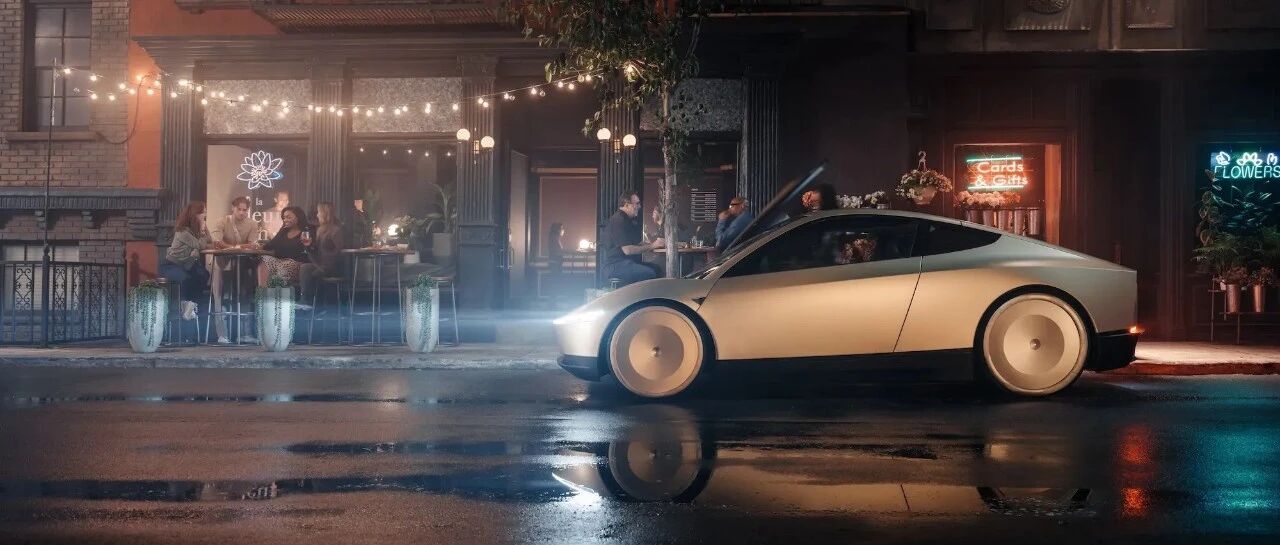
自动驾驶迎来头号玩家:英伟达亲自下场,行业盈利拐点已至
2 1 Shi Ji Jing Ji Bao Dao· 2026-01-08 05:53
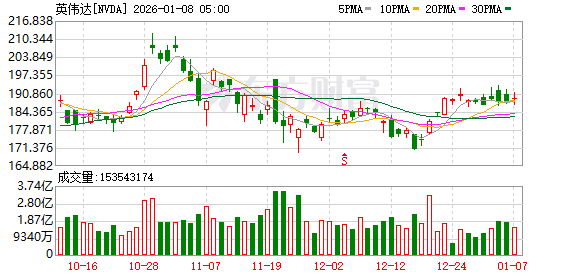
Group 1 - Nvidia's CEO Jensen Huang announced the Alpamayo platform at CES, enabling cars to perform "inference" in the real world, and open-sourced the first inference VLA model, Alpamayo 1, to accelerate the development of safe autonomous driving technology [2] - Huang emphasized that a significant shift from non-autonomous to autonomous vehicles could occur soon, predicting that a large portion of cars will be autonomous or highly autonomous within the next decade [2] - The first cars equipped with Nvidia technology are set to hit the roads in the US in Q1 2025, Europe in Q2, and Asia later in the year [2] Group 2 - Under the dual push of policy support and technological breakthroughs, the commercialization of autonomous driving is expected to accelerate, with Goldman Sachs forecasting the Chinese Robotaxi market to grow from $54 million in 2025 to $12 billion by 2030, with a fleet of 500,000 Robotaxis by 2030 [3] - Recent domestic policies have been introduced to facilitate the deployment of autonomous driving technology, including the issuance of product access permits for L3 autonomous vehicles, marking a significant step towards commercialization [4] - As of December 2025, the first batch of L3 autonomous vehicles, including models from Chang'an and BAIC's Arcfox, received access permits for trial operations in designated areas [4] Group 3 - XPeng Motors received an L3 autonomous driving road testing permit in Guangzhou, initiating regular L3 road tests [5] - BYD announced the start of comprehensive internal testing for mass-produced L3 autonomous driving in Shenzhen, having completed over 150,000 kilometers of real-world validation [6] - The capital market for autonomous driving is accelerating, with nearly 10 companies entering the secondary market since 2025, including the dual listings of WeRide and Pony.ai on the Hong Kong Stock Exchange [6] Group 4 - Pony.ai achieved a significant milestone by realizing single-vehicle profitability for its seventh-generation Robotaxi in Guangzhou, indicating the commercial viability of the unit economic model for autonomous driving in major cities [7] - The company plans to expand its Robotaxi fleet from 961 vehicles to over 3,000 by the end of 2026, while also reducing the cost of the autonomous driving kit by 20% [7] - WeRide has successfully launched its Robotaxi service in over 10 cities globally, with operations in Beijing, Guangzhou, and Abu Dhabi achieving pure unmanned commercial operation [8] Group 5 - Hesai Technology, a leader in the lidar sector, reported a significant turnaround to profitability, with Q3 2025 revenue reaching 800 million yuan, a 47.5% increase, and net profit climbing to 260 million yuan [8] - The overall performance of the autonomous driving sector has been strong, with the autonomous driving index showing a 45.35% increase for the year [8]

本周六!一场关于自动驾驶L4的圆桌探讨:通向L4之路已经清晰?
自动驾驶之心· 2026-01-08 01:53
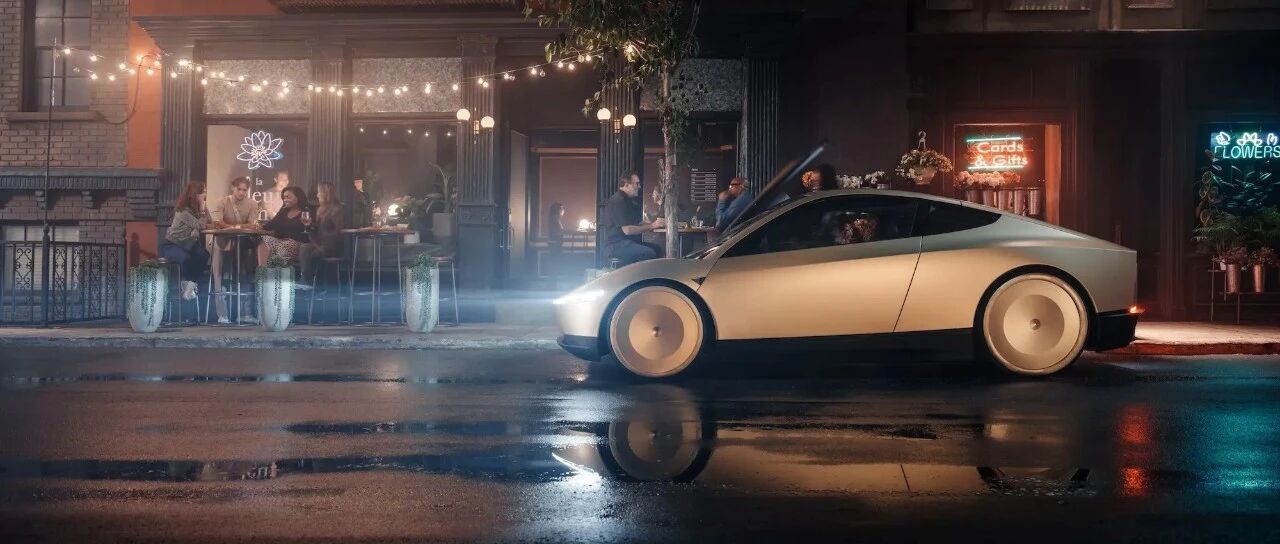
Core Insights - The article discusses the advancements in autonomous driving technology, particularly the transition from Level 2 (L2) to Level 4 (L4), indicating that high-level assisted driving has reached a "quasi-L4" stage, with the same model being applicable for both L2 and L4 [4] - The autonomous driving industry in China has seen over 30 billion yuan in financing in 2025, primarily focused on the L4 sector, suggesting a significant shift in industry attention towards L4 technology [4] - A roundtable discussion on L4 autonomous driving is scheduled, featuring leading companies in the field, to explore the technological and commercial realities of L4, including its evolution and future market landscape [4] Group 1 - The article highlights the comparison between Tesla's FSD V14.2 and Robotaxi, emphasizing the advancements in high-level assisted driving technology [4] - It notes that the L4 sector is gaining new attention due to recent changes, prompting discussions on whether it has reached a critical juncture [4] - The upcoming roundtable aims to provide diverse perspectives from top L4 companies, focusing on the interplay between technological ideals and commercial realities [4] Group 2 - Key speakers at the roundtable include industry leaders with extensive backgrounds in autonomous driving technology and research, such as He Bei, founder of Sinian Intelligent Driving, and Miao Qian Kun, CTO of New Stone Age Autonomous Vehicles [5][6] - The article mentions the impressive achievements of Miao Qian Kun's L4 urban logistics delivery vehicles, which have been widely deployed across over 300 cities in China and more than 10 countries, with a total of 15,000 vehicles delivered and over 60 million kilometers driven [6] - The discussion will also feature experts with significant experience in AI and autonomous vehicle development, ensuring a comprehensive exploration of the topic [7][8]
早报 | 2026年“国补”政策来了;个人销售购买2年以上住房免征增值税;特斯拉官网罕见发布悲观交付量预期;李蓓卖课遭遇连环怼
虎嗅APP· 2025-12-31 00:24
Group 1 - The Chinese government will implement a new subsidy policy for equipment updates and consumer goods replacement starting in 2026, optimizing support areas and subsidy standards [2] - The subsidy for updating old elevators will be adjusted to a tiered system based on the number of floors, while the car replacement subsidy will be based on a percentage of the car price [2] - The policy aims to support small and medium-sized enterprises and improve the application process to reduce investment thresholds [2] Group 2 - SoftBank has completed a $40 billion investment commitment to OpenAI, marking one of the largest private financings in history [3] - This investment aligns with SoftBank's strategy to focus on AI and related infrastructure, following the sale of its Nvidia shares for $5.8 billion [3] - After this round of investment, SoftBank's ownership in OpenAI exceeds 10% [3] Group 3 - Elon Musk confirmed that xAI has acquired a third building, increasing its AI training computing power to nearly 2 gigawatts [4] - The new facility is located in Southaven, Mississippi, adjacent to xAI's second data center, Colossus 2 [5] - xAI is actively seeking financing to support its expansion plans, having previously discussed raising $20 billion in debt and equity [5] Group 4 - Warner Bros. plans to reject Paramount's acquisition proposal again, as the board is concerned about the lack of increased offers [6] - Paramount's latest offer includes a commitment from billionaire Larry Ellison to guarantee $40.4 billion in equity financing [6] - The board will meet next week to discuss the proposal further [6] Group 5 - The Federal Reserve's December meeting minutes reveal significant internal divisions regarding future interest rate cuts, with some officials supporting a 50 basis point cut [7] - The Fed lowered the federal funds rate target range to 3.50% to 3.75%, with a vote of 9-3, marking the highest dissent since 2019 [7] - Some officials expressed uncertainty about the need for further cuts due to missing key economic data from a government shutdown [7] Group 6 - A new tax policy will exempt individuals from value-added tax (VAT) when selling homes purchased for over two years, effective January 1, 2026 [8][9] - Homes sold within two years will incur a 3% VAT [8] Group 7 - Tesla's website has published a pessimistic delivery forecast, predicting a 15% year-over-year decline in Q4 deliveries, totaling approximately 422,850 vehicles [10] - This decline is attributed to the expiration of U.S. tax credits and increasing global competition [10] - Tesla's total deliveries for 2025 are expected to be between 1.6 million and 1.65 million, marking an 8% year-over-year decrease [10] Group 8 - Disney has agreed to pay a $10 million civil penalty to settle allegations of violating the Children's Online Privacy Protection Act related to YouTube content [11] - The allegations state that Disney failed to properly indicate that its YouTube videos were directed at children, leading to unauthorized data collection [11] Group 9 - Ganfeng Lithium has been sent for prosecution due to alleged insider trading, with the company stating that its operations remain normal and the issue is historical [12][13] - Following the announcement, Ganfeng's stock fell by 3.78% in A-shares and 2.74% in Hong Kong shares [13] Group 10 - The first oral insulin application by Tianhui Biotech was not approved, with the company stating that the withdrawal was a strategic decision [23][24] Group 11 - The new generation of digital RMB system will officially launch on January 1, 2026, as announced by the People's Bank of China [30] Group 12 - Xiaopeng Motors' chairman, He Xiaopeng, predicts that true fully autonomous driving will arrive in 2026, skipping L3 and moving directly from L2 to L4 [32]



何小鹏和马斯克的共识:通向L4之路已经清晰
36氪· 2025-12-31 00:14
Core Viewpoint - Xiaopeng Motors, under the leadership of He Xiaopeng, is positioning itself among the global leaders in autonomous driving technology, closely monitoring advancements in AI and directly comparing its technology with Tesla's [1][2]. Group 1: Autonomous Driving Technology Development - The essence of autonomous driving is a physical AI problem, where the combination of "large computing power + large data + large models" has proven effective in accelerating AI evolution [2]. - He Xiaopeng's recent test drive of Tesla's FSD V14.2 revealed significant advancements, with the system transitioning from L2 to a "quasi-L4" stage, showcasing improved decision-making and responsiveness in complex scenarios [5][9]. - The testing route was consistent with previous experiences, allowing for a clear comparison of technological iterations [6]. Group 2: Technical Consensus Among Leading Companies - Leading companies in the industry are forming a consensus on technology, focusing on pure vision solutions and end-to-end design logic to enhance autonomous driving capabilities [11][13]. - Both Tesla and Xiaopeng Motors are committed to a pure vision approach, relying on camera data for driving decisions, which reflects a convergence in their technological paths [13][14]. Group 3: Xiaopeng's Second-Generation VLA - Xiaopeng's second-generation VLA has restructured the traditional "vision-language-action" framework, eliminating the language translation step, which enhances decision-making efficiency and responsiveness [19]. - The system demonstrates a deep understanding of the physical world, effectively recognizing and responding to various driving scenarios, including traffic signals and pedestrian movements [20][24]. - The training data for the second-generation VLA has reached nearly 100 million clips, simulating a vast array of driving conditions, which supports its continuous learning and self-evolution capabilities [24]. Group 4: Market Differentiation and Localization - Xiaopeng's focus on localizing its technology for Chinese road conditions provides a competitive edge, particularly in complex driving environments that differ significantly from those in Silicon Valley [14][15]. - The second-generation VLA is designed to handle a variety of scenarios, including narrow roads and mixed traffic, which enhances its performance in localized contexts [15]. Group 5: Future Plans and Milestones - Xiaopeng Motors has set a clear timeline for the rollout of its autonomous driving technology, with plans to launch the second-generation VLA in early 2026 and introduce multiple L4-level Robotaxi models [32][34]. - The company aims to achieve parity with Tesla's FSD V14.2 by August 30, 2026, demonstrating confidence in its technological capabilities [34][37]. - The industry is transitioning from theoretical discussions to practical validations of autonomous driving technologies, with both Tesla and Xiaopeng Motors leading the way in this evolution [38][39].

L4无人驾驶近在眼前!何小鹏试驾特斯拉FSD V14后发文
Xin Lang Cai Jing· 2025-12-30 11:04
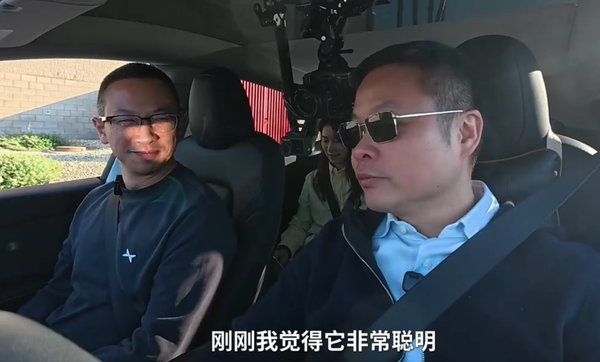
Core Insights - The founder of Xpeng Motors, He Xiaopeng, shared his experience of test-driving Tesla's FSD V14.2 in the U.S., indicating that while the 2024 FSD may still be considered "decent L2 assisted driving," the latest version brings L4 autonomous driving within reach [1][4] - He Xiaopeng believes that true fully autonomous driving will arrive in both the Chinese and U.S. markets by 2026, skipping the L3 stage and moving directly from L2 to L4 [3][8] - Xpeng's upcoming Ultra model will be based on a unified model to achieve full-scene autonomous driving and Robotaxi functionality, positioning it as the next generation of smart vehicles [3][8] Differences Between L2 and Full Autonomous Driving - He Xiaopeng summarized the core differences between L2 and fully autonomous driving into four aspects: capability, scenarios, reassurance, and efficiency, with "reassurance" being particularly critical [6][9] - He emphasized that the complexity of Chinese road conditions far exceeds that of the U.S., and the Xpeng VLA 2.0 test version performs smoothly in various driving situations, instilling confidence in drivers [6][9] - The VLA system is evolving rapidly, with advancements occurring at a pace of "one month equating to a year," and the VLA 2.0 is set to be officially released soon [6][9]
i8车主分享25年12月在美国开特斯拉FSD V14.2感受
理想TOP2· 2025-12-25 08:05
Group 1 - Tesla's FSD V14.2 provides a seamless driving experience, allowing users to complete trips without any manual intervention, highlighting its advanced automation capabilities [1] - The driving experience in Tesla vehicles is reported to be superior to that of competitors, particularly in terms of smoothness and reliability across various driving scenarios [1] - The overall driving conditions in the U.S. are noted to be simpler compared to domestic roads, with higher speeds and stricter adherence to traffic rules, which may facilitate the advancement towards Level 4 autonomy [2] Group 2 - The test drives included both urban and highway environments, with participants expressing a sense of safety and comfort, even allowing for moments of rest during traffic [2] - The infrastructure in the U.S. is described as older but generally well-maintained, contributing to a stable driving experience for automated systems [2]
何小鹏立“赌约”:明年8月底前达到特斯拉FSD效果
Mei Ri Jing Ji Xin Wen· 2025-12-13 06:46
Core Viewpoint - Xiaopeng Motors is set to release its VLA 2.0 (Vision-Language-Action) model in the next quarter, with significant pressure on its first version [1] - A bet was placed by Xiaopeng's chairman with the autonomous driving team, aiming to match Tesla's FSD V14.2 performance by August 30, 2026, or face a challenge [1] Group 1: VLA Model and Industry Perspectives - The VLA model is seen as an advanced end-to-end solution, integrating visual perception (V), action execution (A), and a language model (L) to enhance decision-making and environmental understanding [5][11] - The industry has shifted from relying on LiDAR and high-precision maps to adopting AI-driven models like VLA, with a notable divergence in development paths emerging by 2025 [4][11] - Li Auto's VP emphasized the importance of real-world data over model architecture, asserting that VLA is the best solution due to their extensive data collection from millions of vehicles [6][8] Group 2: Diverging Technical Approaches - Huawei's approach focuses on the World Action (WA) model, which bypasses the language processing step, aiming for direct control through visual inputs [8][10] - The World Model concept allows AI systems to simulate the physical world, enhancing predictive capabilities and decision-making in autonomous driving [9][11] - Companies like NIO and SenseTime are also exploring the World Model approach, indicating a broader industry trend [10] Group 3: Future Integration and Evolution - There is a growing trend towards integrating VLA and World Models, with both technologies not being mutually exclusive but rather complementary [11][12] - Xiaopeng's second-generation VLA model aims to combine VLA and World Model functionalities, enhancing data training and decision-making processes [14][15] - The automotive industry anticipates further iterations in autonomous driving technology architecture over the next few years, potentially stabilizing by 2028 [15]

输了裸奔,何小鹏打赌,明年8月要追上特斯拉FSD
3 6 Ke· 2025-12-12 12:12
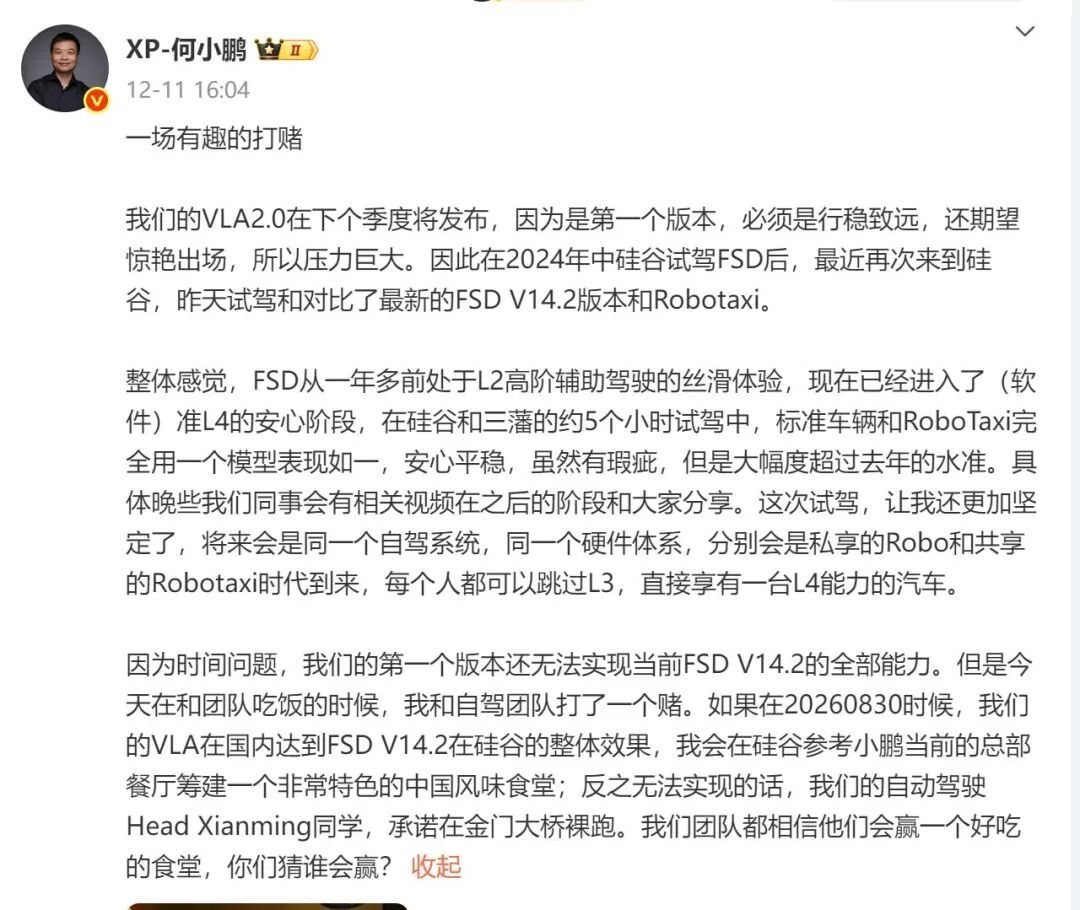
Core Viewpoint - He Xiaopeng, CEO of XPeng Motors, has placed pressure on the autonomous driving team by betting that the second-generation VLA will match Tesla's FSD V14.2 capabilities by August 30, 2026, or face a humorous consequence for the team leader [2][4]. Group 1: Autonomous Driving Development - XPeng Motors plans to officially launch the second-generation VLA in the first quarter of 2026, with a full rollout to Ultra models [4]. - He Xiaopeng expressed confidence that the second-generation VLA could potentially reach L4 capabilities, and possibly L5 with additional time [6]. - The VLA concept integrates visual, language, and action capabilities, aiming for a seamless execution of tasks without breaking them into multiple steps [8]. Group 2: Technological Advancements - The second-generation VLA will eliminate the language translation step, allowing for direct generation of action commands from visual signals [9]. - The model has been trained using nearly 100 million video clips, equating to the driving experience of a human driver over 65,000 years [9]. - XPeng's self-developed Turing AI chip boasts a computing power of 750 TOPS per chip, with a total of 2250 TOPS across three chips, significantly surpassing the industry standard [12]. Group 3: Competitive Landscape - Tesla's FSD has a significant advantage due to its extensive global testing network, with over 600,000 vehicles generating 1.6 billion frames of data daily and accumulating over 9.6 billion kilometers of driving experience [13]. - The latest FSD V14.2 version has improved system performance and resolved over 95% of hesitation and abnormal braking issues from previous versions [13]. - XPeng's second-generation VLA is still in development, and its actual performance remains to be seen [14].
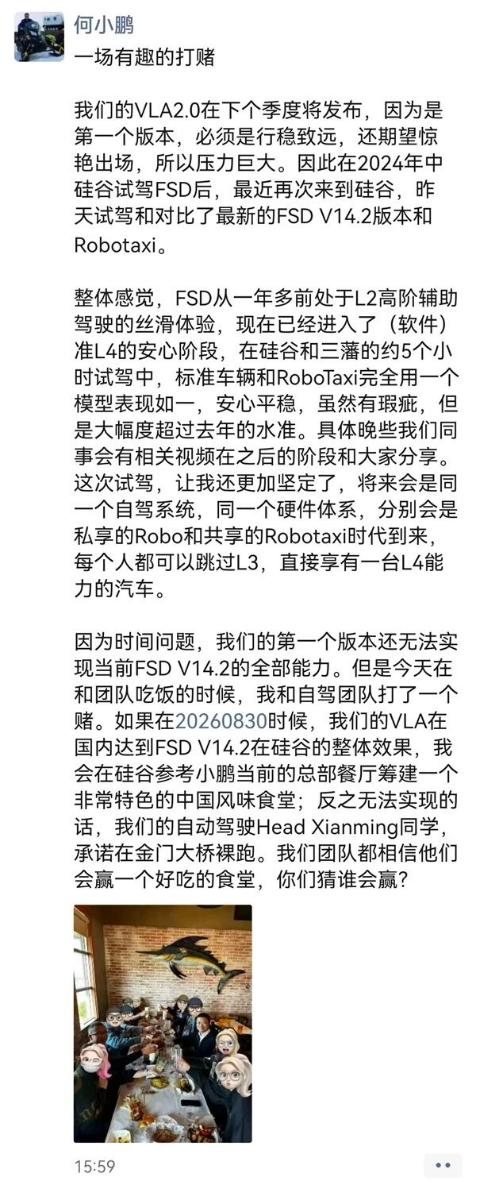
何小鹏与智驾团队打赌:如果明年达不到特斯拉FSD水平,智驾负责人将裸奔
Xin Lang Cai Jing· 2025-12-11 13:14
Core Viewpoint - The CEO of Xpeng Motors, He Xiaopeng, has made a bet with the autonomous driving team regarding the performance of the upcoming Xpeng VLA compared to Tesla's FSD V14.2 in Silicon Valley by August 2026 [1][4]. Group 1: Company Developments - Xpeng VLA 2.0 is set to be released in the next quarter, with high expectations for its performance and stability [1][3]. - The company is under pressure to ensure that the first version of VLA meets high standards, aiming for a remarkable launch [1][3]. Group 2: Industry Comparisons - During a recent test drive in Silicon Valley, the FSD V14.2 was found to have significantly improved, transitioning from L2 high-level assisted driving to a near L4 level of comfort and safety [1][3]. - The test drive lasted approximately 5 hours, during which standard vehicles and RoboTaxi operated seamlessly under a unified model, showing substantial improvement over the previous year's performance [1][3]. Group 3: Future Aspirations - The CEO expressed confidence in a future where a unified self-driving system and hardware platform will allow users to bypass L3 and directly access L4 capabilities in vehicles [1][3].