
猎鹰 9 号火箭

Search documents
十五五-军工哪些方向值得关注
2026-03-13 04:46
Summary of Key Points from the Conference Call Industry Overview - The focus of military investment logic is shifting towards "new quality combat power" with growth driven by military trade, commercial aerospace, military AI, and laser weapons by 2025 [1][2] - The military trade and unmanned equipment sectors are expected to experience significant growth, with China's military trade share currently at only 2.9%, indicating substantial room for improvement [1][11] - The domestic large aircraft C919 is entering a production ramp-up phase, with over 1,300 orders valued at nearly 1 trillion RMB, contingent on stable overseas engine supply [1][12] Core Insights and Arguments - The A-share military sector's performance from 2020 to 2025 can be divided into three phases: 1. A significant uptrend from 2020 to 2021 driven by defense policies and equipment construction, particularly in military aircraft and missiles [2] 2. A downward trend from 2022 to 2024 due to profit growth slowing and industry personnel changes [2] 3. A recovery phase in 2025, with improved orders for upstream companies and validation of Chinese equipment performance in conflicts [2][4] - The market favors sectors with high growth potential, particularly those transitioning from "1 to 100" growth phases, such as military trade and commercial aerospace [4] - Companies with "inflation logic" or those positioned as "chain leaders" in the industry are more attractive for investment, as they can provide greater profit elasticity and valuation upside [3][4] Investment Opportunities - Key investment opportunities include: - **Unmanned Equipment**: Recognized as a primary force in modern warfare, with significant growth potential in both domestic and international markets [10] - **Military Trade**: Seen as a crucial growth driver for domestic military companies, with potential for valuation uplift as international orders materialize [11] - **C919 Aircraft**: Investment opportunities in the supply chain, particularly in components with domestic production capabilities [12][13] - **Gas Turbines**: The market is projected to grow to $64.8 billion by 2035, with high demand for aftermarket services, particularly for hot-end components [14][15] Additional Important Insights - The commercial aerospace sector is experiencing intensified competition, with a focus on cost reduction and high performance, particularly in rocket recovery technologies and satellite capabilities [1][16] - The military industry is characterized by a dual structure of stable growth in traditional equipment and high growth in new quality combat power equipment [5] - The investment framework for the military industry should consider macroeconomic factors, geopolitical environments, and domestic military spending trends [5][6] - The importance of governance structures in military enterprises is highlighted, as improvements can lead to significant performance elasticity [7] Conclusion - The military industry is poised for growth driven by technological advancements and increased military spending, with specific sectors and companies offering promising investment opportunities. The focus should be on those with strong market positions, innovative technologies, and the ability to adapt to changing market dynamics.
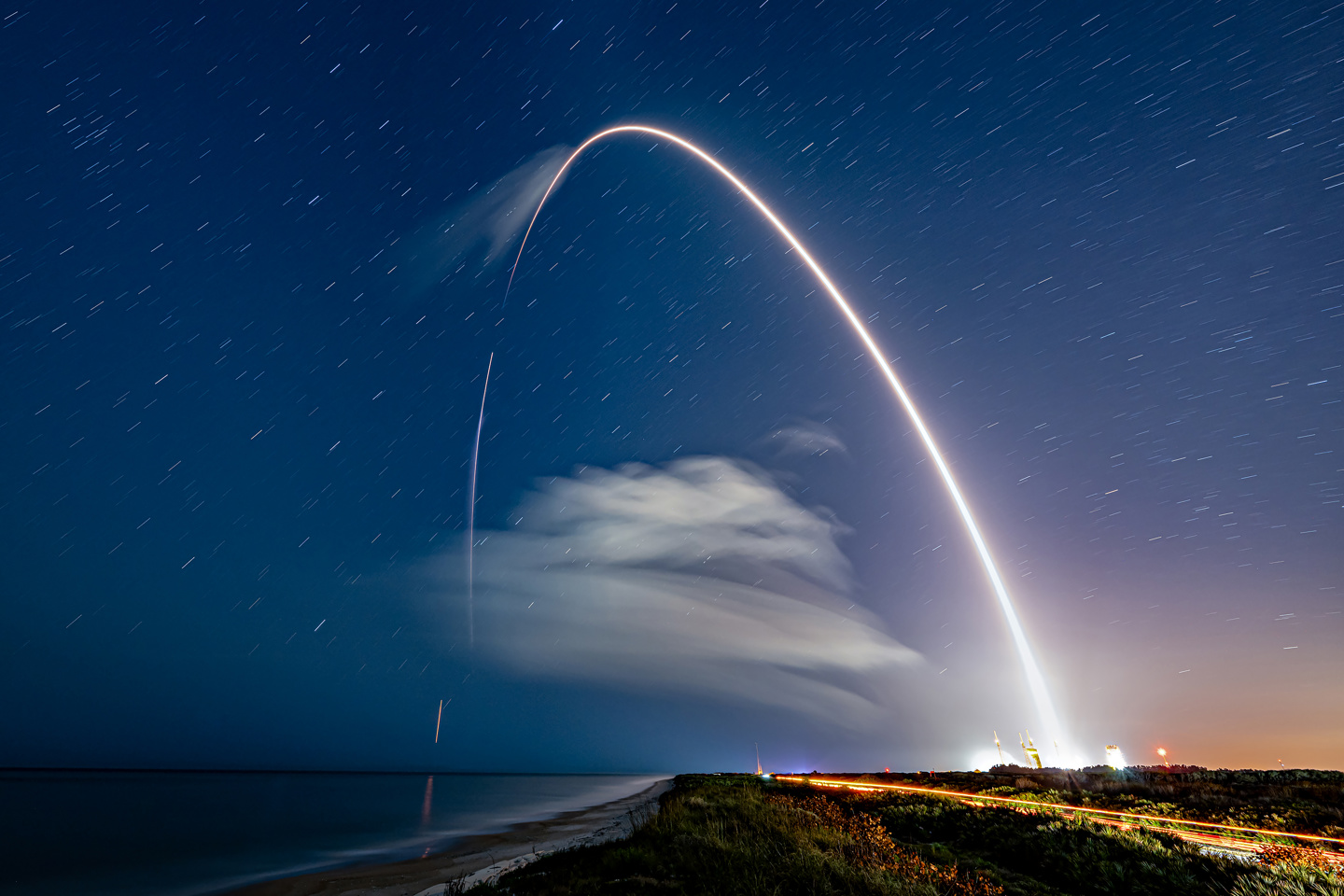
再次刷新火箭复用纪录:SpaceX 猎鹰 9 号完成第 33 次飞行及回收
Xin Lang Cai Jing· 2026-02-22 13:24
Group 1 - SpaceX successfully completed two launch missions on Saturday, marking a significant milestone with the Falcon 9 booster B1067 achieving its 33rd space round trip, moving closer to the goal of 40 reuses [1][3] - The Falcon 9 booster B1067 launched from Cape Canaveral Space Force Station, Florida, at 11:47 AM Beijing time, executing the Starlink 6-104 mission by deploying 28 internet satellites into low Earth orbit [3][6] - The booster successfully landed on the autonomous recovery ship "Of Course I Still Love You" (OCISLY) in the Atlantic Ocean, marking the 143rd recovery for this ship and the 575th overall for SpaceX [3][6] Group 2 - Another Falcon 9 booster, B1063, launched from Vandenberg Space Force Base in California, completing its 31st flight by sending 25 Starlink satellites into orbit and landing on the Pacific Ocean recovery ship [6] - These two missions represent SpaceX's 21st and 22nd Falcon 9 launches in 2026, contributing to a total of over 9,700 Starlink internet satellites currently in orbit [6]

不是失败,是胜利!中国火箭“掉海里”,却让马斯克都得重新算一笔账
Sou Hu Cai Jing· 2026-02-12 02:24
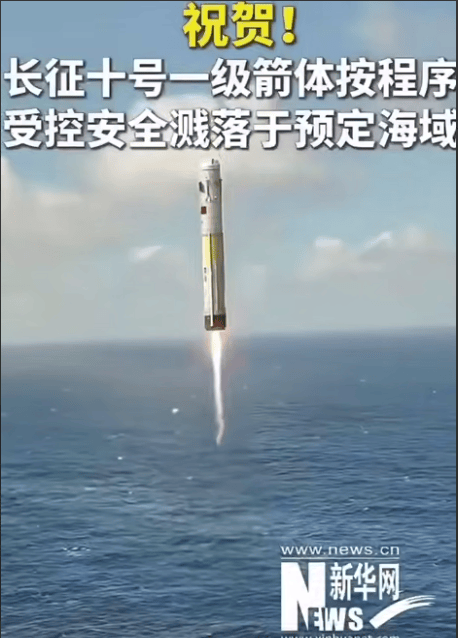
Core Viewpoint - The successful controlled splashdown of the Long March 10 rocket marks a significant milestone in China's space exploration efforts, demonstrating advanced technology and paving the way for future manned lunar missions [1][5][7]. Group 1: Historical Context - Previously, rocket stages falling into the ocean were seen as mission failures, representing uncontrolled descents that posed risks to civilian areas and marine environments [3]. - Early attempts at sea recovery by companies like SpaceX faced numerous challenges, highlighting the difficulties in achieving controlled landings [3]. Group 2: Technological Achievements - The Long March 10's splashdown was executed with extreme precision, with a deviation of less than 10 meters from the target, showcasing advancements in re-entry, trajectory control, and recovery technologies [5]. - The rocket maintained structural integrity during the splashdown, which is crucial for future reuse, indicating significant breakthroughs in core technologies [5]. Group 3: Future Implications - This test is a critical step towards achieving China's goal of manned lunar missions by 2030, ensuring astronaut safety and validating the escape capabilities of the spacecraft under maximum dynamic pressure [7]. - The development of reusable rocket technology could reduce launch costs by 40%-60%, making future space exploration more economically viable [7]. - The successful controlled splashdown reinforces China's position as a leading nation in space technology and responsible exploration [7].
低轨卫星行业跟踪点评(二):SpaceX计划部署百万颗算力卫星,商业航天需求空间再度扩容
EBSCN· 2026-02-02 03:34
Investment Rating - The report maintains an "Overweight" rating for the commercial aerospace sector [6]. Core Insights - SpaceX plans to deploy up to 1 million AI satellites to create the world's first space data center, expanding the demand for commercial aerospace [1][2]. - The new satellites will operate at altitudes of 500km, 1000km, and 2000km, providing large-scale AI inference and data center services to billions of users globally [1]. - The focus of competition in commercial aerospace is shifting from communication services to the development of orbital computing infrastructure [2]. Summary by Sections Satellite Deployment - SpaceX's initiative aims to establish a "space-based computing network" that leverages solar energy and the unique environment of space to handle high-intensity computing tasks, overcoming the limitations faced by terrestrial data centers [2]. Rocket Manufacturing and Launch Capabilities - SpaceX has reduced the cost of launching payloads to approximately $1400-$2000 per kilogram through the regular recovery and reuse of Falcon 9 rocket boosters, with plans to further decrease costs to $100 per kilogram with the next-generation fully reusable Starship [3]. Communication Infrastructure - Inter-satellite laser communication is critical for the SpaceX orbital data center system, facilitating all major data transmission and network routing tasks [4]. Strategic Asset Integration - Elon Musk is considering merging SpaceX with his AI company xAI or Tesla to enhance the space computing layout, potentially allowing SpaceX's orbital data centers to provide significant computing power to xAI [5]. Investment Recommendations - The report suggests focusing on companies in the rocket sector such as Chaojie Co., Gaohua Technology, and Zhongheng Design, as well as satellite companies like Shaanxi Huada, Shanghai Port, and others [5].
星辰大海:马斯克六大产业链映射
Huachuang Securities· 2026-01-21 10:07
Group 1: Commercial Space Industry - SpaceX - SpaceX is reshaping the cost structure of space launches through reusable rocket technology, with a potential IPO in 2026 valued at $1.5 trillion, aiming to raise over $30 billion [20] - In 2023, SpaceX achieved breakeven, with projected revenue of $15.5 billion in 2025, and plans to produce 10,000 Starship spacecraft annually, boosting its supply chain [20] Group 2: Autonomous Driving - Tesla's Full Self-Driving (FSD) technology is transitioning from an assistive tool to a reliable autonomous workforce, with the Robotaxi fleet expected to grow from 200 vehicles in 2025 to 1,000 in 2026 [2] - The commercialization of autonomous driving is accelerating as the industry approaches a critical inflection point [2] Group 3: Robotics - The third generation of Tesla's Optimus robot is set to be released in Q1 2026, with mass production expected by the end of the year, presenting significant growth opportunities for core suppliers [3] Group 4: Artificial Intelligence - xAI completed a Series E funding round in January, raising $20 billion from major investors like NVIDIA and Cisco, and is a crucial part of Musk's cross-industry collaborative network [4] - xAI leverages real-time data from social media and Tesla to train large models, with potential support from SpaceX's Starlink for computational needs, creating a closed-loop ecosystem [4] Group 5: Brain-Computer Interface - Neuralink plans to begin large-scale production of brain-computer interface devices within the year, focusing on simplifying surgical procedures to lower application barriers [5] Group 6: Underground Tunnel Network - The Boring Company aims to alleviate urban traffic congestion by constructing extensive underground tunnel networks, reducing construction costs and time, and promoting the development of underground transportation systems [6]
星链竞争对手Eutelsat与欧洲玛雅航天公司签署卫星发射协议
Xin Lang Cai Jing· 2026-01-16 13:20
Core Viewpoint - Eutelsat has signed an agreement with French space startup MaiaSpace to launch its future low Earth orbit (LEO) satellites, marking a strategic move to compete with SpaceX in the European market [1][5]. Group 1: Agreement Details - The agreement with MaiaSpace involves a multi-batch launch contract, with launch operations set to begin in 2027 [1][5]. - MaiaSpace is a subsidiary of the European rocket manufacturer ArianeGroup and is developing a partially reusable small launch vehicle, which would be the first of its kind in Europe if successful [2][7]. Group 2: Strategic Importance - Eutelsat owns OneWeb, which is currently the only operational LEO satellite constellation globally, aside from SpaceX's Starlink [6]. - OneWeb is considered a strategic asset by the French and UK governments, which are also major shareholders in Eutelsat [6]. Group 3: Market Context - French President Emmanuel Macron has called for Europe to accelerate its space strategy to counter Starlink, emphasizing the need for rapid deployment of LEO satellite constellations [7]. - Eutelsat's recent satellite launch tasks have relied on SpaceX and the Indian Space Research Organisation, following the termination of cooperation with Russia's Soyuz rocket after the Ukraine conflict [3][7]. - Eutelsat plans to launch 440 LEO satellites manufactured by Airbus in the coming years to expand its satellite constellation [3][7].
马斯克 SpaceX 连续第六年打破纪录:2025 共完成 167 次轨道任务,再创年度发射奇迹
Sou Hu Cai Jing· 2025-12-31 15:02
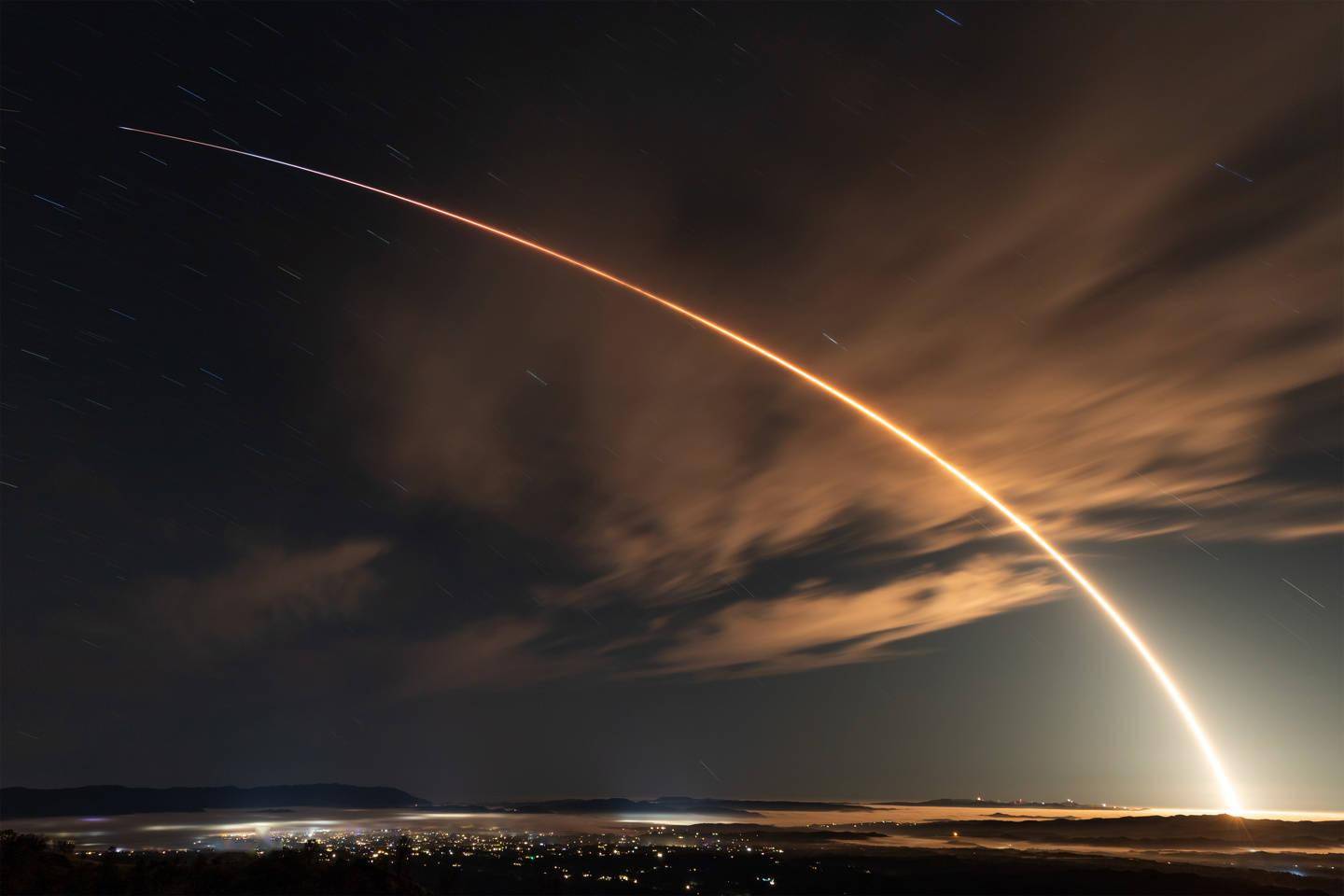
Core Insights - SpaceX set a new annual record for rocket launches in 2025, completing 167 orbital missions, which accounted for approximately 85% of the total U.S. orbital launches that year [1] - This marks the sixth consecutive year that SpaceX has broken its own record for annual launches [1] Launch Frequency - The number of annual orbital launches by SpaceX has been steadily increasing, from 25 launches in 2020 to 167 in 2025, averaging nearly one launch every two days in 2025 [3] Rocket Types and Performance - In 2025, SpaceX did not execute any Falcon Heavy launches, with all 167 missions being conducted using the Falcon 9 rocket [4] - The Falcon Heavy has not launched since October 2024, while the Starship conducted five test flights during the same period [4] Mission Details - Out of the 167 Falcon 9 missions, two were abandoned due to high-quality payloads, and one mission experienced a landing failure resulting in a fire [6] - The Starlink missions comprised 123 of the launches, successfully deploying over 3,000 satellites, bringing the total number of operational Starlink satellites to over 9,300 [8] Milestones Achieved - In 2025, SpaceX achieved several significant milestones, including the 500th rocket landing and the 500th reuse of a rocket [8] - The record for the number of reuses of a single Falcon 9 first stage booster was also broken multiple times, with the highest reuse count reaching 32 [8]
计算机周观察20251214:持续重视AI应用,关注商业航天
CMS· 2025-12-14 07:41
Investment Rating - The report suggests a focus on AI applications and commercial aerospace, indicating a positive outlook for these sectors [6][24]. Core Insights - The Ministry of Industry and Information Technology emphasizes the need for digital transformation in manufacturing and the acceleration of satellite internet development during the 14th Five-Year Plan [6][10]. - OpenAI has released GPT-5.2, which shows significant improvements in various capabilities, positioning it as a leading model in the competitive AI landscape [6][11]. - SpaceX is accelerating its IPO process, with a target valuation of approximately $1.5 trillion, driven by its core businesses in rocket launches and satellite internet services [20][21]. - Domestic and international tech giants are increasingly investing in space computing projects, highlighting the growing demand for data centers and AI infrastructure [20][22]. - The successful launch of the reusable Zhuque-3 rocket marks a significant milestone in China's commercial aerospace sector, with multiple reusable rocket plans set for launch in 2025-2026 [23][24]. Industry Overview - The industry comprises 286 listed companies with a total market capitalization of approximately 4,161.9 billion [2]. - The absolute performance of the computer sector shows a decline of 2.7% over one month, but a growth of 13.5% over six months and 8.3% over twelve months [4]. - The report highlights the increasing competition in the AI sector, particularly in the race for AI infrastructure and applications [6][20]. Investment Recommendations - The report recommends continued focus on AI applications, particularly companies like Alibaba, Kingsoft, and Hehe Information, as well as AI infrastructure firms such as Damo Data and Deepin Technology [6][24]. - In the commercial aerospace sector, it suggests monitoring companies like Jida Zhengyuan, Jiayuan Technology, and Aerospace Power [6][24].
SpaceX 敲定内部股票交易,估值达 8000 亿美元
Huan Qiu Wang Zi Xun· 2025-12-13 03:37
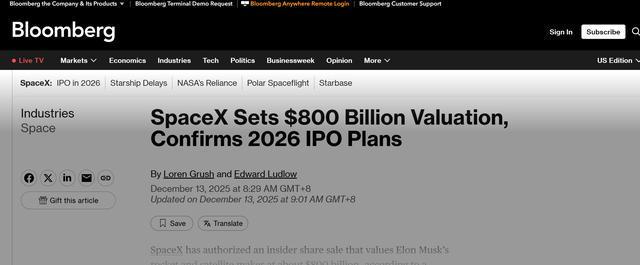
Core Insights - SpaceX has increased its internal valuation to approximately $800 billion, with internal share prices set at $421, nearly double the $212 price from July when the company was valued at around $400 billion [1][3] - The company is preparing for a potential IPO as early as 2026, which has garnered significant industry attention [1][3] Group 1: IPO Plans - SpaceX has indicated that the timing, final valuation, and whether the IPO will proceed remain uncertain [3] - The company aims to raise over $30 billion through the IPO, which could become one of the largest public offerings globally [3] - The overall target valuation for SpaceX is approximately $1.5 trillion, close to the record set by Saudi Aramco in 2019 [3] Group 2: Business Development - SpaceX is currently the leading commercial space company in terms of launch frequency, with its Falcon 9 rocket dominating satellite launches and crewed space missions [4] - The company provides high-quality satellite internet services to millions globally through its Starlink system, addressing coverage gaps in various regions [4] - SpaceX is actively developing the next-generation heavy-lift rocket, Starship, which is intended for large-scale Starlink deployments and critical missions to the Moon and Mars [4]
空天一体,临点已至
GOLDEN SUN SECURITIES· 2025-12-07 08:39
Investment Rating - The report maintains an "Increase" rating for the industry, indicating a positive outlook for investment opportunities [5]. Core Insights - The commercial aerospace industry is approaching a critical point for closing the loop, with expectations for rapid growth. The core component of this industry is satellites, and the launch speed is primarily determined by launch costs. The key bottleneck lies in reusable rocket technology. A breakthrough in this technology will significantly accelerate the launch speed of low-orbit satellites in China. Coupled with the ongoing development of the AI industry, the construction of space computing power is becoming a trend, leading to a substantial opening of the commercial aerospace application market [1][9]. - The Chinese government has placed significant emphasis on the development of commercial aerospace, with supportive policies emerging frequently. The industry has been included in government work reports for two consecutive years, highlighting its importance as a new growth engine [12][14]. - The successful launch of the Zhuque-3 rocket marks a significant milestone in China's reusable rocket technology, which is expected to progress from stage 1 to stage 10. This development is crucial for the industry to reach a volume production critical point [16][15]. Summary by Sections Commercial Aerospace Industry Development - The commercial aerospace industry is nearing a critical point for closing the loop, with expectations for rapid growth driven by advancements in reusable rocket technology and the increasing demand for space computing power [1][9]. - The Chinese government has prioritized commercial aerospace in its development plans, with multiple supportive policies and initiatives aimed at fostering industry growth [12][13]. Reusable Rocket Technology - The Zhuque-3 rocket's successful launch demonstrates the potential for reusable rocket technology in China, with future goals to reduce launch costs to approximately 20,000 RMB per kilogram [16][15]. - The report draws parallels with SpaceX's Falcon 9, which has achieved significant cost reductions through reusable technology, suggesting that similar advancements in China could lead to a sustained decrease in launch costs [17][18]. Space Computing Power - The report highlights the increasing trend of deploying computing power in space, with companies like Starcloud leading initiatives to establish space-based data centers. This shift is expected to alleviate the growing demands on terrestrial data centers [19][20]. - The anticipated advancements in rocket technology and the establishment of space computing infrastructure are expected to create a robust ecosystem for commercial aerospace applications [30][31].


