
鱼虾

Search documents
退渔还耕,2.45万亩盐碱地如何变良田?
Xin Lang Cai Jing· 2026-02-03 21:52
Core Viewpoint - The article discusses the successful execution of a project aimed at converting saline-alkali land back to arable land in Yancheng, Jiangsu Province, where 662 shrimp farming structures were dismantled to facilitate agricultural development, highlighting the collaborative efforts of various judicial bodies to balance ecological restoration and the livelihoods of local farmers [1][7]. Group 1: Project Background - A state-owned enterprise developed approximately 24,500 acres of saline-alkali land in the late 1990s, which was later leased to farmers for aquaculture [1]. - The project aims to "return fishing to farming" during the 14th Five-Year Plan period, with a focus on ensuring food security and high-standard farmland construction [1][2]. Group 2: Execution Challenges - The execution faced significant resistance from farmers who were reluctant to vacate 443 acres of land, leading to potential conflicts [2][3]. - The complexity of the situation was compounded by the presence of 662 shrimp ponds and multiple layers of sub-leasing among farmers [2][4]. Group 3: Collaborative Execution Strategy - The Jiangsu High Court implemented a "three-part method" to address the challenges, which included separate resolution of disputes, phased delivery of land, and step-by-step construction of agricultural land [4][5]. - The execution involved a collaborative effort among the Nanjing Maritime Court, Yancheng Intermediate Court, and Dongtai Court, leveraging their respective resources for effective execution [4][5]. Group 4: Resolution and Outcomes - By the autumn of the previous year, the involved parties had voluntarily dismantled the shrimp farming facilities and returned the land, allowing for the timely progress of the saline-alkali land restoration project [7]. - The first season of rice cultivation on the reclaimed land yielded an impressive average of 950 pounds per acre, demonstrating the successful transformation from saline-alkali land to high-standard farmland [7]. Group 5: Broader Implications - The article highlights Jiangsu's pioneering efforts in integrating execution with bankruptcy procedures, which has led to the successful rehabilitation of 328 distressed enterprises, positioning the province as a leader in this area nationally [8]. - The use of technology, such as electronic seals and IoT monitoring, has facilitated a more humane and efficient execution process, benefiting over 4,251 enterprises [9].
“生态赤字”如何变为“美丽经济”?这些乡村给出了答案
Yang Shi Xin Wen Ke Hu Duan· 2026-01-31 12:32
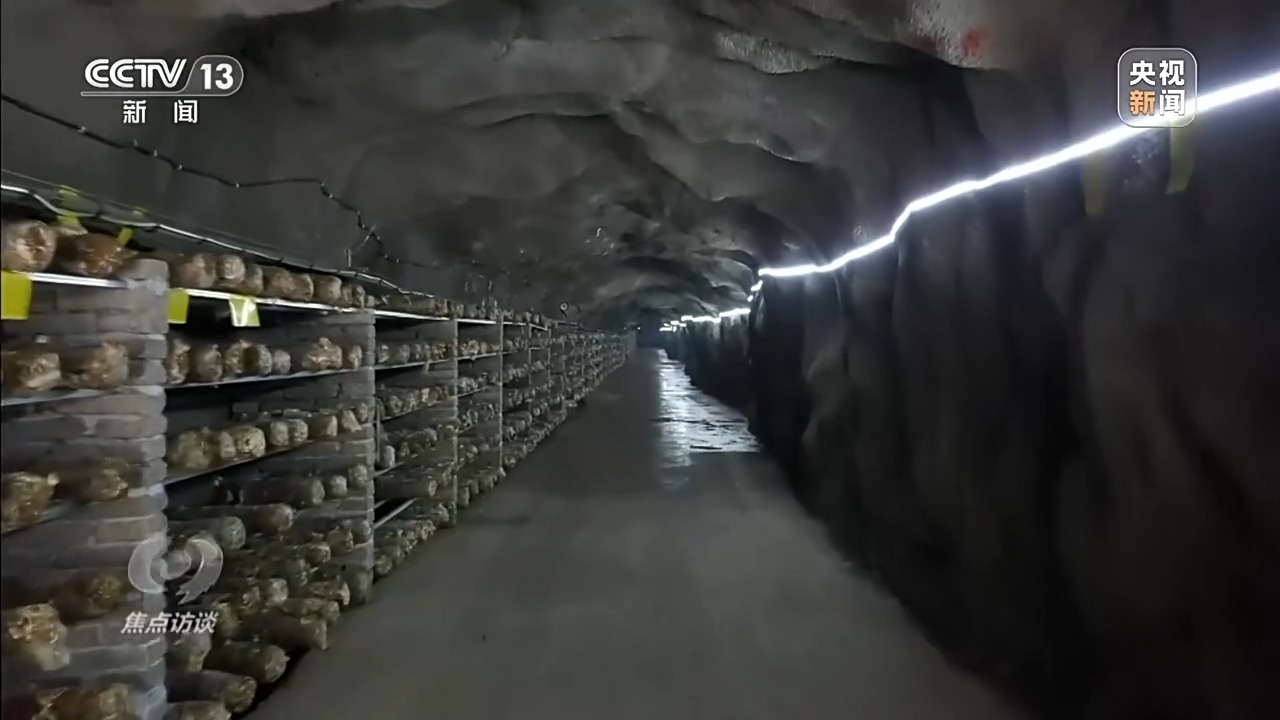
Core Viewpoint - The construction of beautiful rural areas is crucial for rural revitalization, the overall development of a beautiful China, and ecological civilization [13] Group 1: Beautiful Rural Areas and Ecological Development - The Ministry of Ecology and Environment has announced the first batch of beautiful rural pilot areas, which includes 23 counties (cities, districts) [13] - Beautiful rural areas are characterized by clean villages, effective sewage and waste management, and the elimination of black and odorous water bodies [9] - The pilot areas are expected to explore high-quality, low-cost environmental governance technologies and practices that can be replicated and promoted [11] Group 2: Case Study of Baokang County - Baokang County has transformed its economy from mining to edible mushroom production, utilizing abandoned mines for cultivation, achieving an annual output value exceeding 50 million yuan [5] - The county has implemented ecological restoration and improved rural living environments, with over 75% of rural sewage treated and 97% of household waste managed harmlessly [7] - The local tourism revenue is projected to reach 5.5 billion yuan by 2025, with a green GDP contribution rate of over 40% [7] Group 3: Integration of Urban and Rural Development - The development of beautiful rural areas is also aimed at promoting urban-rural integration and addressing the dual structure of development [15] - In Liyang, Jiangsu, the "Liyang No. 1 Road" connects various rural tourism points, enhancing the local tourism industry and increasing farmers' incomes [17][19] - The integration of cultural, sports, and tourism industries in rural areas has led to significant economic benefits for local communities [19] Group 4: Future Goals and Initiatives - By 2027, the goal is to support around 100 counties in building beautiful rural pilot areas, aiming for a 40% completion rate of beautiful rural areas across over 2,800 agricultural counties [27] - The quality of rural ecological environments is expected to improve continuously, with a target of 20% completion of beautiful rural areas by 2025 [27] - The emphasis is on creating high-quality living spaces in rural areas to enhance the sense of gain and happiness among farmers [27]

见证统一大市场的成长性——透过数据看潜能
Sou Hu Cai Jing· 2026-01-30 03:32
Group 1: Market Growth and Foreign Investment - The Chinese market is attracting foreign investment due to its strong growth potential, with cargo imports expected to reach 18.5 trillion yuan by 2025 [1] - Over 70% of surveyed American companies in China are optimistic about market growth and do not plan to relocate their operations, with nearly 60% intending to increase investments in China [1] Group 2: Consumer Demand and Economic Contribution - The growth is driven by new consumer demands, with policies like the trade-in program benefiting over 360 million people and generating sales exceeding 2.6 trillion yuan [2] - By 2025, domestic demand is projected to contribute over 67% to economic growth, with consumption accounting for 52%, an increase of 5 percentage points from the previous year [2] Group 3: Industrial Structure and Innovation - The optimization of industrial structure is fostering innovation, with significant growth in high-tech manufacturing and equipment sectors, where the added value of high-tech manufacturing reached 17.1% of total industrial output [2] - The production of civil drones and industrial robots increased by 37.3% and 28% respectively compared to the previous year [2] Group 4: Private Sector and Economic Vitality - The private sector is a key driver of high-quality economic development, with private enterprises accounting for 57.3% of total import and export value, growing by 7.1% to 26.04 trillion yuan [4] - Policies supporting private enterprises and improving the business environment are expected to enhance economic vitality and competitiveness [4] Group 5: Global Trade Relations - China is expanding its global trade relations, engaging with 249 countries and regions, and becoming a major trading partner for over 160 countries [5] - More than 90% of surveyed multinational companies plan to continue investing in China, reflecting confidence in the Chinese economy [5]
暖身不长肉!冬天提高代谢的3个饮食技巧
Xin Lang Cai Jing· 2026-01-06 04:00
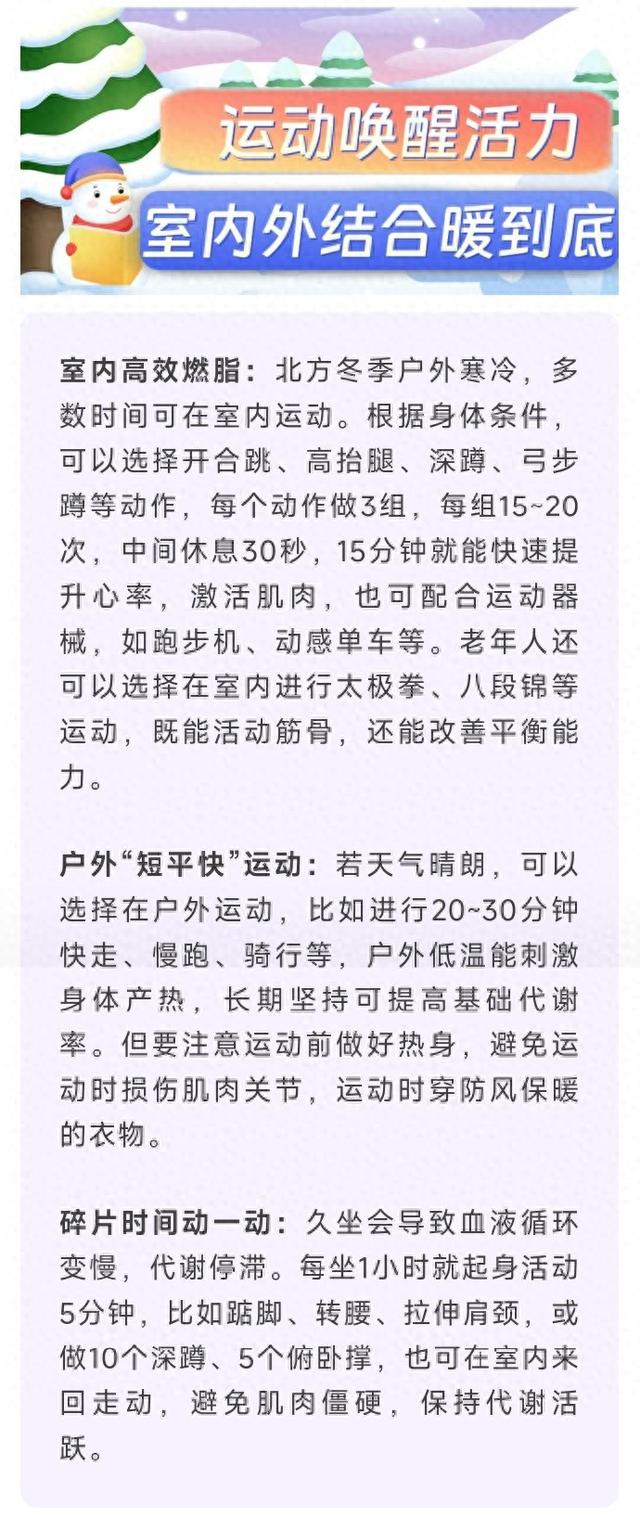
Group 1 - The article emphasizes the importance of maintaining a high metabolic rate during winter, suggesting dietary and lifestyle adjustments to counteract the body's natural tendency to enter "energy-saving mode" in cold weather [1][5] - It recommends a high-protein and warm diet, advising daily intake of quality protein equivalent to the size of a palm (e.g., lamb, beef, seafood, eggs, tofu) to enhance satiety and metabolic efficiency [7][8] - Adequate hydration is highlighted as crucial for metabolism, with a recommendation to consume 1500 to 2000 milliliters of warm water daily, supplemented with ginger, red dates, or goji berries for added warmth and hydration [7][8] Group 2 - The article suggests engaging in outdoor activities like brisk walking, jogging, or cycling for 20-30 minutes when the weather permits, as this can stimulate heat production and improve basal metabolic rate [3][5] - It advises incorporating short movement breaks every hour to counteract the effects of prolonged sitting, which can slow down metabolism [3][5] - Emphasis is placed on proper clothing to maintain warmth, particularly for the head, neck, waist, and extremities, to prevent the body from lowering its metabolic rate due to cold exposure [5][6] Group 3 - The article discusses the importance of adapting sleep patterns to winter conditions, recommending an earlier bedtime to align with natural light cycles, which can help maintain hormonal balance and support metabolism [5][6] - It warns against excessive consumption of high-fat and high-calorie foods during winter supplementation, advocating for a moderate approach to avoid unnecessary fat accumulation [8]
元旦食品抽检合格率99.53% 3问题需注意
Zhong Guo Jing Ji Wang· 2025-12-30 06:32
Core Viewpoint - The market regulatory authority in China conducted a special inspection of popular food items ahead of the New Year, revealing a high compliance rate of 99.53% for food safety, indicating overall good quality and safety of food products during the holiday season [1] Group 1: Inspection Overview - The inspection covered 31 provinces, focusing on high-traffic areas such as tourist attractions, large supermarkets, highway service areas, and train stations, as well as major online platforms like JD.com, Tmall, and Taobao [1] - A total of 634 batches of food products were sampled, including 10 categories of popular pre-packaged foods and common ingredients for family gatherings, such as beverages, alcoholic drinks, and various meats [1] Group 2: Testing Focus - The inspection emphasized testing for excessive use of food additives, microbial contamination, and pesticide residues, with 144 specific testing items [1] - No non-compliant samples were found in major food categories such as edible oils, dairy products, meat products, snacks, and alcoholic beverages [1] Group 3: Notable Findings - Traditional foods like dumplings and glutinous rice balls have not shown any non-compliant samples for three consecutive years [1] - Issues were identified in beverages regarding microbial contamination, soy sauce quality standards, and excessive veterinary drug residues in marine shrimp [1] Group 4: Regulatory Actions - The market regulatory authority has urged local regulatory departments to investigate and address the non-compliant samples found during the inspection to ensure food safety during the holiday season [1]
市场监管总局开展元旦热销食品专项抽检结果显示总体状况良好
Xin Lang Cai Jing· 2025-12-29 14:07
Core Viewpoint - The State Administration for Market Regulation conducted a special inspection of popular food items for the New Year, revealing a high compliance rate of 99.53%, indicating overall good quality and safety of food products [1]. Group 1: Inspection Overview - The inspection covered 31 provinces, focusing on high-traffic areas such as tourist attractions, large supermarkets, highway service areas, and train stations, as well as 10 online platforms including JD.com, Tmall, and Taobao [1]. - A total of 634 batches of pre-packaged foods were sampled, including 10 categories of popular holiday foods like beverages, alcoholic drinks, and snacks, as well as common ingredients for family gatherings such as fish, shrimp, chicken, and pork [1]. Group 2: Testing Parameters - The inspection focused on 144 testing items, including the excessive use of food additives, microbial contamination, and residues of agricultural and veterinary drugs [1]. - No non-compliant samples were found in major food categories such as edible oils, dairy products, meat products, snacks, and alcoholic beverages, with specific products like dumplings and glutinous rice balls showing consistent compliance over three years [1]. Group 3: Issues Identified - Despite the overall positive results, issues were noted in beverages regarding microbial contamination, soy sauce failing to meet quality standards, and shrimp showing excessive veterinary drug residues [1]. - The State Administration for Market Regulation has urged local regulatory authorities to investigate and address the identified non-compliant samples to ensure food safety during the holiday season [2].
中疾控:冬季减肥,这些变化要知道
Ren Min Wang· 2025-12-25 01:46
Core Viewpoint - Winter weight loss is particularly challenging due to physiological changes, seasonal activity reductions, dietary shifts, and psychological effects related to clothing [2][10]. Group 1: Physiological and Behavioral Challenges - Seasonal metabolic changes lead to a slight decrease in basal metabolic rate as the body enters "energy-saving mode" to cope with cold temperatures [2]. - Reduced outdoor activities during winter result in significant decreases in daily energy expenditure, compounded by lower exercise intensity due to heavy clothing [2]. - Increased availability of high-calorie foods during winter festivities and a natural increase in appetite for energy-dense foods contribute to weight gain [2]. Group 2: Nutritional Strategies - Optimizing the ratio of macronutrients is crucial for weight loss, with protein making up 15%-20%, carbohydrates 50%-60%, and fats 20%-30% of daily energy intake [3][4][5]. - Emphasis on high-fiber whole grains and healthy fats from sources like nuts and olive oil is recommended to enhance weight loss effectiveness [4][5]. Group 3: Hydration and Sleep - Adequate hydration is essential, with a recommendation of 1.5-1.7 liters of water daily to enhance satiety and metabolic function [6][7]. - Sufficient sleep, averaging around 7 hours per night, is necessary to regulate hunger hormones and reduce cravings for high-energy foods [7]. Group 4: Exercise Adjustments - Physical activity accounts for 15%-30% of total energy expenditure, making it vital to incorporate resistance training and high-intensity interval training to boost metabolism [8][9]. - Creating more opportunities for daily movement, such as household chores and taking stairs, can help counteract winter lethargy [9]. Group 5: Psychological Factors - Accepting minor fluctuations in weight during winter is normal, with a typical decrease of 0.1-0.2 kg per week being expected [10]. - Monitoring various indicators beyond weight, such as waist circumference and fitness levels, can provide motivation and a more comprehensive view of progress [10]. - Setting achievable process-oriented goals, like completing a certain number of workouts per week, can enhance motivation and success in weight management [10].
辉煌“十四五” 壮美新答卷 | 广西守稳不发生规模性返贫致贫底线
Guang Xi Ri Bao· 2025-11-16 02:40
Core Insights - The article highlights the successful transformation of Liuliu Village in Tiandong County, Guangxi, showcasing the effective connection between poverty alleviation and rural revitalization efforts [2][3] Infrastructure Development - The improvement of infrastructure, particularly the construction of industrial roads, has significantly enhanced the transportation of mangoes, reducing damage during transit and increasing market prices by 0.6 yuan per kilogram [2][3] - The village has seen a rise in living standards, with modern amenities and public facilities contributing to a better quality of life for residents [2] Agricultural Innovation - Liuliu Village has partnered with Xiangguang Agricultural Company to implement advanced agricultural techniques, leading to higher prices for mangoes, with premium fruits selling for 7 yuan per kilogram [3] - The village's dual production of mangoes and cherry tomatoes generates an annual output value of 38.7 million yuan [4] Employment and Income Generation - The collaboration with Xiangguang has created job opportunities for over 80 villagers, with an average annual income increase of 12,000 yuan per person [3] - In Guigang City, the development of facility agriculture has attracted 238 projects, creating employment for 23,000 rural workers and increasing farmers' income by over 6,800 yuan [5] Health and Social Support - Guangxi has established a layered support system for low-income populations, focusing on employment and community integration to prevent poverty recurrence [6] - The region has achieved a high success rate in treating chronic diseases, with a 99.99% treatment rate for major illnesses since 2021 [5][6]
拒绝暑假胖一圈 开心享瘦很简单
Bei Jing Qing Nian Bao· 2025-08-19 01:22
Group 1 - The core issue of childhood obesity during summer vacations is influenced by irregular eating habits, lack of physical activity, and misconceptions about healthy weight gain [2][3]. - Experts emphasize that summer is a critical period for managing children's weight and suggest establishing a regular routine, ensuring outdoor activities, and replacing snacks with fruits [2][3]. - Proper dietary choices are essential, including fresh fruits and vegetables, quality proteins, and balanced meals to avoid excessive weight gain [3][6]. Group 2 - Regular health check-ups are crucial for monitoring children's growth indicators, including height and weight, to assess their development accurately [4]. - The Body Mass Index (BMI) is a key metric for diagnosing overweight and obesity in children, with specific thresholds indicating potential weight issues [4]. - It is advised that children should not rely on dieting for weight loss, as it can lead to nutritional deficiencies and other health issues [5][6].