
DCS

Search documents
中国工业软件行业发展研究报告
艾瑞咨询· 2026-02-17 00:09
Core Insights - The industrial software industry is at a critical juncture, driven by the need for innovation and the urgency of development, particularly in the context of China's economic transformation and the push for self-sufficiency in core technologies [1][4][17] - The market for industrial software in China is projected to approach 300 billion by 2024, indicating robust growth despite challenges such as a hollowing out of core technologies and imbalanced industrial structures [1][17] - The evolution of industrial software is characterized by a shift from tools to systems, platforms, and eventually to a genetic level, focusing on data value and efficiency [2][48] Industry Dynamics - The industrial software market is large, with significant opportunities for companies to target head, mid, and long-tail customers, each with distinct needs and potential for revenue generation [2][50] - The core evolution path of industrial software is from tools to systems, then to platforms, and finally to genetic integration, emphasizing the importance of data flow and value efficiency [48][49] - The industry faces systemic challenges, including a lack of foundational technologies and difficulties in integrating into supply chains, which hinder the development of domestic industrial software [26][17] Product Development Trends - Current industrial software primarily focuses on product sales, but there is a shift towards selling "intelligence" as data assets are accumulated and utilized effectively [3][52] - The integration of AI and large models is expected to enhance the capabilities of industrial software, particularly in areas such as code generation and human-computer interaction [43][52] - Future products are anticipated to evolve into "digital engineers," capable of autonomous task execution and intelligent interaction, moving beyond traditional software tools [52] Market Characteristics - The industrial software market is characterized by a high degree of fragmentation, with varying levels of domestic replacement and integration needs across different customer segments [14][50] - The demand for industrial software is driven by practical applications in enterprises, government initiatives, and the integration of research institutions, each with unique procurement focuses [14][16] - The market is currently experiencing a transition from subsidy-driven growth to a more market-oriented approach, emphasizing the importance of innovation and self-sufficiency [19][12] Challenges and Opportunities - The industry is grappling with significant challenges, including a lack of core technologies in research and design software, which is critical for engineering optimization [23][17] - Companies are encouraged to leverage policy incentives and market opportunities to enhance their technological capabilities and address the "bottleneck" issues in core components [17][26] - The evolution of industrial software is expected to create new revenue streams through data value services, as companies adapt to the changing landscape of technology and market demands [30][52]


中控技术(688777):动态跟踪点评:全力投入工业AI,自动化龙头加速转型
Western Securities· 2026-02-13 10:33
Investment Rating - The investment rating for the company is "Buy" [5] Core Insights - The company has set ambitious revenue targets for 2026-2028, aiming for 10.5 billion, 14.5 billion, and 20 billion yuan respectively, with specific targets for its industrial AI business of 1 billion, 2.5 billion, and 5 billion yuan [5] - The company is expected to achieve a revenue of 7.64 billion to 8.44 billion yuan in 2025, reflecting a year-on-year decrease of 7.60% to 16.40%, and a net profit attributable to shareholders of 426 million to 524 million yuan, down 53.07% to 61.85% [5][2] - The company is focusing on industrial AI, with a "1+2+N" technology system to enhance its core control systems, achieving a 40.4% market share in the domestic DCS market by 2024 [2] - The company has launched a subscription model, signing 938 subscription clients in the first half of 2025, transitioning from traditional hardware sales to ongoing services [2] - The self-developed industrial AI product, TPT, generated 117 million yuan in revenue in the first half of 2025 and has been applied in 110 projects with major clients [2] Financial Projections - Revenue projections for 2025-2027 are 8.12 billion, 9.66 billion, and 11.47 billion yuan, respectively, with a forecasted growth rate of -11.2% in 2025, followed by 18.9% and 18.8% in the subsequent years [3] - The net profit attributable to shareholders is projected to be 495 million yuan in 2025, with a significant decline of 55.7%, followed by a recovery to 838 million and 1.36 billion yuan in 2026 and 2027, respectively [3] - The earnings per share (EPS) is expected to be 0.63 yuan in 2025, increasing to 1.06 yuan in 2026 and 1.71 yuan in 2027 [3]

中国工业软件行业发展研究报告
艾瑞咨询· 2026-02-04 00:08
Core Insights - The industrial software industry is at a critical juncture, driven by the need for innovation and the urgency of development, especially in the context of China's economic transformation and the push for self-sufficiency in core technologies [1][3][17] - The market for industrial software in China is projected to approach 300 billion yuan by 2024, indicating robust growth despite challenges such as a lack of core technologies and imbalanced industrial structure [1][17] - The evolution of industrial software is characterized by a shift from tools to systems, platforms, and eventually to a genetic level, focusing on data value and efficiency [2][48] Industry Dynamics - Industrial software serves as a critical enabler for innovation and transformation in the industrial sector, acting as the "brain" and digital foundation of new industrialization [3][9] - The market is large, with significant opportunities for domestic companies to replace foreign products, particularly in the context of national policies promoting self-reliance [2][50] - The development of industrial software is slow and requires patience, but it also presents opportunities amid ongoing changes and restructuring [1][17] Market Characteristics - The industrial software market is characterized by a significant gap in core technologies, particularly in research and design software, which is crucial for engineering optimization [17][23] - The market structure shows a strong presence of management software while engineering software remains weak, indicating a need for improvement in the latter [17][19] - The demand for industrial software is driven by practical needs from enterprises, government initiatives, and the integration of research and education [14][50] Technological Drivers - The advancement of large models and AI technologies is accelerating the development and application of industrial software, supported by government subsidies aimed at fostering innovation [12][14] - The integration of AI and big models is transforming the capabilities of industrial software, enhancing areas such as code generation and human-computer interaction [43][45] Future Directions - The industrial software industry is expected to transition towards a model that emphasizes selling "intelligence" rather than just software, with products evolving into "digital engineers" capable of autonomous task execution [52][48] - The focus will shift towards platformization and the internalization of industrial knowledge into parameters and codes, enhancing the efficiency of data flow and value extraction [48][52] - Companies are encouraged to leverage head clients and policy support to drive technological breakthroughs while also exploring opportunities in mid-tier and long-tail markets [50][52]

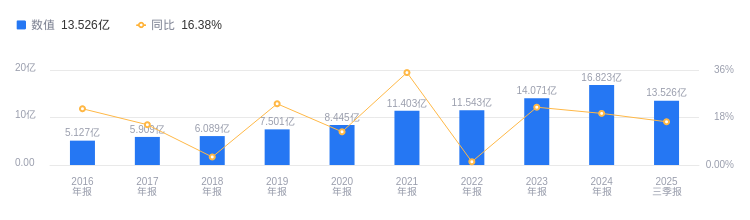
科远智慧的前世今生:2025年三季度营收13.53亿行业排38,净利润2.18亿行业排14
Xin Lang Cai Jing· 2025-10-30 23:40
Core Viewpoint - Koyuan Smart is a leading provider of industrial automation, information technology, and intelligent solutions in China, focusing on product research, development, and sales, with a strong emphasis on innovation and smart industrial solutions [1] Group 1: Business Performance - In Q3 2025, Koyuan Smart reported revenue of 1.353 billion yuan, ranking 38th out of 131 in the industry, significantly lower than the top competitor, Digital China, which had 102.365 billion yuan [2] - The company's net profit for the same period was 218 million yuan, ranking 14th in the industry, again lower than the leading competitor, Unisplendour, which reported 1.723 billion yuan [2] - The main business segments include industrial automation with revenue of 801 million yuan (81.72% of total), industrial internet and software at 136 million yuan (13.90%), and industrial robotics at 33.446 million yuan (3.41%) [2] Group 2: Financial Ratios - As of Q3 2025, Koyuan Smart's debt-to-asset ratio was 38.44%, down from 41.47% year-on-year and below the industry average of 38.93%, indicating improved debt repayment capability [3] - The gross profit margin for the same period was 40.84%, slightly up from 40.82% year-on-year and significantly higher than the industry average of 29.96%, reflecting strong profitability [3] Group 3: Executive Compensation - The chairman, Liu Guoyao, received a salary of 848,500 yuan in 2024, an increase of 50,300 yuan from 2023 [4] - The president, Hu Shemei, earned 862,900 yuan in 2024, up by 62,600 yuan from the previous year [4] Group 4: Shareholder Information - As of September 30, 2025, the number of A-share shareholders increased by 4.79% to 26,200, while the average number of shares held per shareholder decreased by 4.57% to 5,404.81 shares [5] - Notable changes among the top ten shareholders include an increase in holdings by Huaxia CSI Robotics ETF and the entry of new shareholders like Tianhong Yongli Bond A [5] Group 5: Market Outlook - Analysts from Hualong Securities noted significant year-on-year growth in revenue and net profit for the first three quarters of 2025, with improved cost control and accelerated downstream demand [6] - The company is focusing on integrating industrial AI with its expertise to create a second growth curve and is actively developing embodied intelligent product lines [6] - Projections for net profit from 2025 to 2027 are 320 million, 403 million, and 514 million yuan, respectively, with a maintained "buy" rating from analysts [6]

灯塔工厂:引领制造业智能化升级革新:计算机行业跟踪报告
Huachuang Securities· 2025-10-14 09:03
Investment Rating - The industry investment rating is "Recommended," indicating an expected increase in the industry index by more than 5% over the next 3-6 months compared to the benchmark index [16]. Core Insights - The report emphasizes the concept of "Lighthouse Factories," which are leading the intelligent upgrade of the manufacturing industry by integrating advanced technologies such as artificial intelligence, IoT, and big data analytics [6]. - A total of 201 factories have been recognized as Lighthouse Factories globally, with 85 located in China, showcasing their exceptional manufacturing capabilities and performance in areas like production efficiency and supply chain resilience [6]. - Industrial software is identified as the digital foundation for Lighthouse Factories, playing a crucial role in enhancing production intelligence and efficiency across four core areas: R&D design, manufacturing, operational management, and maintenance services [6]. - The report suggests focusing on companies that are positioned to benefit from the growth of industrial software and intelligent manufacturing, including Zhongwang Software, Huada Jiutian, and Yonyou Network, among others [6]. Industry Overview - The computer industry consists of 337 listed companies with a total market capitalization of approximately 60,881.53 billion and a circulating market value of about 55,021.98 billion [3]. - The absolute performance of the industry over the past 12 months has been 52.1%, while the relative performance against the benchmark index has improved by 33.9% [4].




什么是关键软件?美国为何对此出口管制?科技当自立!信创ETF基金一度涨超3%,大数据产业ETF逆市活跃
Xin Lang Ji Jin· 2025-10-13 06:07
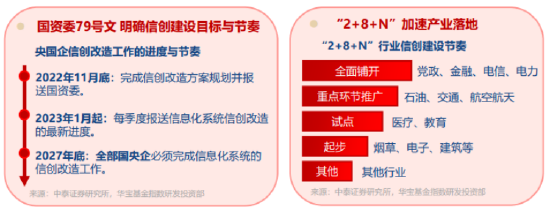
Group 1 - The U.S. President announced an additional 100% tariff on Chinese imports starting November 1, along with export controls on "critical software" [1] - Critical software includes operating systems, databases, and various industrial software, highlighting its strategic importance in national security and economic stability [1] - The move is expected to accelerate the domestic production of industrial and foundational software in China, as the country seeks to enhance its self-sufficiency in technology [1][2] Group 2 - The "信创" (Xinchuang) industry is transitioning from policy-driven to a dual-driven approach of policy and market, with significant growth expected in the coming years [2] - By 2026, the market size of the 信创 industry is projected to exceed 2.6 trillion yuan, with growth rates of 17.84% and 26.82% anticipated for 2025 and 2026, respectively [2] - Government procurement standards are being refined to support the replacement of foreign technology with domestic alternatives [2] Group 3 - The domestic software sector is experiencing active trading, with the 信创 ETF fund showing a price increase of over 3.1% at one point, indicating strong buying interest [4] - Key stocks in the sector, such as 华大九天 and 麒麟信安, have seen significant price increases, reflecting investor confidence in the domestic software market [4] - The 大数据产业 ETF is also showing positive performance, with stocks like 中国软件 and 中国长城 experiencing notable gains [6] Group 4 - The 信创 ETF fund tracks the core segments of the 信创 industry, which includes foundational hardware, software, and information security, and is characterized by high growth potential [8] - The current geopolitical climate and the push for self-sufficiency in technology are driving the demand for domestic solutions in the 信创 sector [8] - The 大数据产业 ETF focuses on data centers and cloud computing, with a strong emphasis on companies that are leading in the technology self-reliance movement [9]
工业设计软件逆势活跃 ,华大九天等创年内新高
第一财经· 2025-10-13 02:25
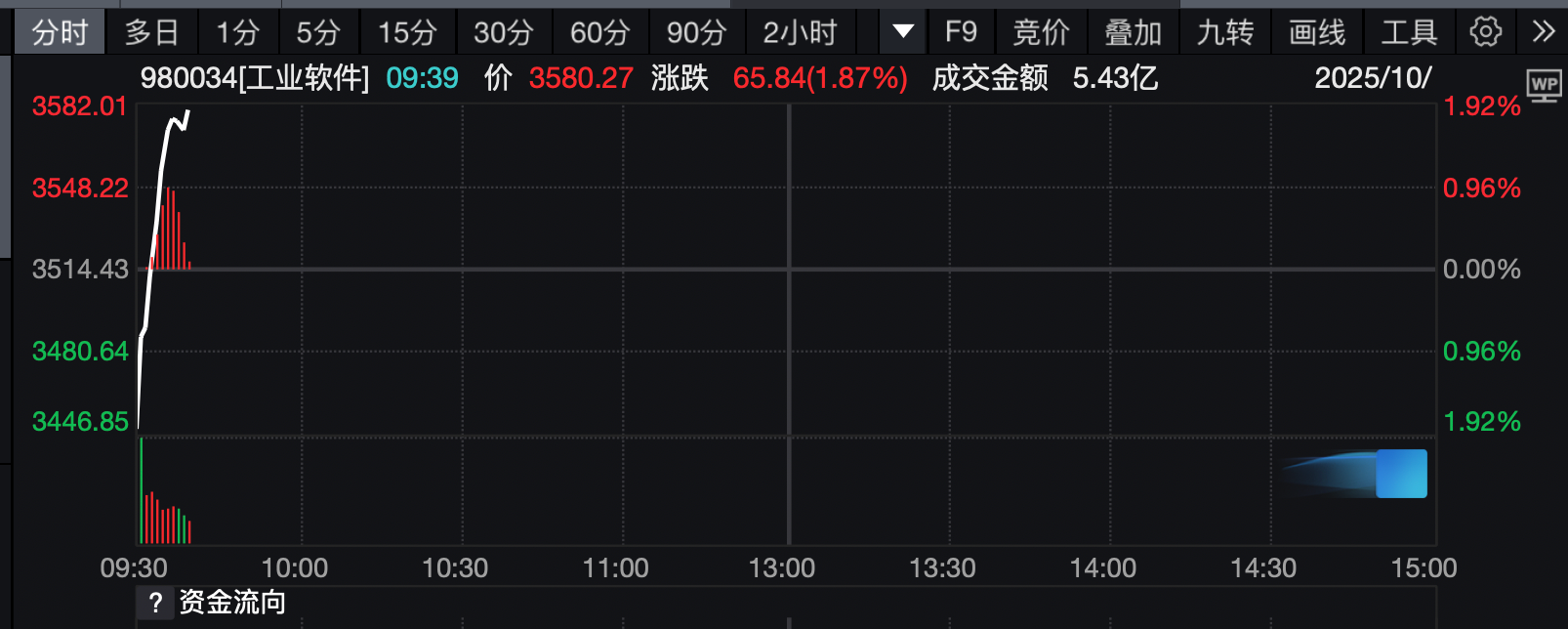
Core Viewpoint - The article highlights the active performance of domestic software stocks, particularly in the industrial software and Xinchuang sectors, with several companies reaching new highs in 2023 [5]. Group 1: Industrial Software Market - Industrial design software is described as the "soul" and "brain" of modern industry, encompassing critical software that supports national key sectors and ensures system security [6]. - The Chinese industrial software market reached a scale of 282.4 billion yuan in 2023, with a compound annual growth rate of 13.20% from 2019 to 2023. It is projected to grow to 319.7 billion yuan in 2024 and 339.0 billion yuan in 2025 [8]. Group 2: Company Performance - Huada Jiutian (301269.SZ) reported a revenue of 502 million yuan in the first half of 2025, a year-on-year increase of 13.01%, but a net profit of 3.07 million yuan, down 91.90% [6]. - Guanglian Da (002410.SZ) had a revenue of 2.784 billion yuan in the first half of 2025, a decrease of 5.23%, while its net profit increased by 23.65% to 237 million yuan [6]. - Huichuan Technology (300124.SZ) achieved a revenue of 20.51 billion yuan in the first half of 2025, up 26.7%, with a net profit of 2.97 billion yuan, an increase of 40% [7]. - Kingsoft (3888.HK) reported a second-quarter revenue of 2.307 billion yuan, down 6.7%, but a net profit of 532 million yuan, up 35.4% [7]. Group 3: Industry Trends - The domestic EDA industry has entered a turbulent period since the end of 2024, presenting significant opportunities for related companies [7]. - The report from Dongfang Securities indicates that the industrial design software sector has the largest growth potential, while the overall scale of the basic software sector is more substantial [7].

工业设计软件逆势活跃 ,华大九天等创年内新高
Di Yi Cai Jing· 2025-10-13 01:57
Group 1 - The trend of domestic chip import substitution is becoming evident, creating a more favorable development environment for domestic EDA companies [1][4] - In the A-share market, domestic software concepts are actively rising, with industrial software and Xinchuang sectors leading the gains, including stocks like China Software and Rongji Software hitting the daily limit [3][4] - The industrial design software sector is crucial for modern industry, encompassing key software types such as operating systems and various industrial software like CAD, CAE, CAM, and EDA [3][4] Group 2 - Huada Jiutian (301269.SZ) reported a revenue of 502 million yuan for the first half of 2025, a year-on-year increase of 13.01%, but a net profit of 3.07 million yuan, down 91.90% year-on-year [3][4] - Guanglian Da (002410.SZ) saw a revenue of 2.784 billion yuan for the first half of 2025, a decrease of 5.23%, while net profit increased by 23.65% to 237 million yuan [4] - Huichuan Technology (300124.SZ) achieved a revenue of 20.51 billion yuan, up 26.7% year-on-year, with a net profit of 2.97 billion yuan, a 40% increase [4] Group 3 - The domestic EDA industry is entering a turbulent period since the end of 2024, presenting significant opportunities for related companies [4] - The industrial software market in China reached a scale of 282.4 billion yuan in 2023, with a compound annual growth rate of 13.20% from 2019 to 2023, and is expected to grow to 319.7 billion yuan in 2024 and 339 billion yuan in 2025 [5]
“关键软件”成为中美博弈新热点,工业与基础软件国产化加速可期
Orient Securities· 2025-10-12 14:37
Investment Rating - The report maintains a "Buy" rating for the computer industry in China, indicating a positive outlook for the sector [6]. Core Insights - The U.S. plans to impose export controls on "critical software," which includes both foundational and industrial software, highlighting its strategic importance in the ongoing U.S.-China technological competition [9]. - The domestic market for industrial design software is expected to accelerate its localization process due to potential U.S. export restrictions, with significant growth opportunities identified in this area [3][9]. - The report emphasizes that while industrial design software has a low localization rate, the industrial control systems have a relatively higher domestic market share, particularly in DCS systems [9]. Summary by Sections Investment Recommendations and Targets - The report suggests that if the U.S. imposes export controls on foundational software, it will significantly boost the localization of industrial and foundational software. Key investment targets include: - Industrial Software: Zhongwang Software (688083, Buy), Huada Jiutian (301269, Buy), and others [3]. - Foundational Software: Dameng Data (688692, Not Rated), Dongtu Technology (300353, Not Rated), and others [3]. Industry Overview - The report discusses the strategic significance of critical software, which includes operating systems and databases, and notes that the domestic market share for PC operating systems has reached 20-25%, while server operating systems are at 40-50% [9]. - The report highlights that the localization rate for industrial operating systems is still low, at around 10-15%, but is expected to improve as domestic products gain traction [9].


中控技术(688777):公司信息更新报告:业绩短期承压,工业AI+机器人战略性突破
KAIYUAN SECURITIES· 2025-09-01 07:03
Investment Rating - The investment rating for the company is "Buy" (maintained) [1] Core Views - The company is experiencing short-term pressure on performance, but it is making strategic breakthroughs in industrial AI and robotics, which are expected to open long-term growth opportunities [1][4] - The company is a leader in process industrial intelligent manufacturing and is expected to benefit from equipment upgrade policies and overseas expansion opportunities [4][6] Financial Performance Summary - In the first half of 2025, the company achieved operating revenue of 3.83 billion yuan, a year-on-year decrease of 9.92%, and a net profit attributable to the parent company of 354 million yuan, down 31.46% year-on-year [5] - The company’s exchange loss was 13.40 million yuan, compared to a gain of 3.01 million yuan in the first half of 2024 [5] - After excluding the impact of exchange losses, the adjusted net profit was 294 million yuan, a decline of 25.82% year-on-year [5] Revenue and Profit Forecast - The revised profit forecast for 2025-2027 is 1.12 billion, 1.29 billion, and 1.55 billion yuan respectively, with EPS projected at 1.41, 1.63, and 1.96 yuan per share [4][8] - The current stock price corresponds to P/E ratios of 36.8, 31.9, and 26.5 for the years 2025, 2026, and 2027 respectively [4][8] Market Opportunities - The demand for process industrial equipment is continuously increasing, with significant growth in the energy, building materials, and paper industries, showing year-on-year increases of 9.32%, 82.58%, and 77.56% respectively [6] - The company is expanding its international strategy, achieving significant breakthroughs in regions such as Southeast Asia, the Middle East, and Central Asia, with notable progress in certification for core products in Saudi Arabia [6] Industrial AI and Robotics Development - The TPT software has entered a phase of large-scale application, generating revenue of 117 million yuan in the first half of 2025, with over 110 successful projects implemented in various industries [7] - The robotics business is also growing rapidly, with revenue of 110 million yuan in the first half of 2025 and new orders totaling 200 million yuan, surpassing the entire performance of 2024 [7]