Vera Rubin超级芯片

Search documents
盘点2025:谁是AI应用大牛股?12家企业年内股价翻倍,胜宏科技近6倍领涨
Sou Hu Cai Jing· 2025-12-31 09:37
Core Insights - The AI wave is transforming industries and capital markets, with significant investments from major companies and a shift in AI applications from novelty to necessity [1] - The AI application index in A-shares has risen by 34.58% this year, outperforming the CSI 300 index, indicating strong market interest and investor confidence in AI's future [3] - Major breakthroughs in AI technology have been observed this year, with significant product launches and advancements from companies like Nvidia and Google [3] Industry Trends - The AI application index consists of 115 companies, with over 75% of them seeing stock price increases this year, and 12 companies doubling their stock prices [4] - Notable performers include Shenghong Technology, whose stock price increased nearly sixfold, and Cambricon, which briefly became the highest-valued stock in A-shares [4][5] - Shenghong Technology has established itself as a leader in high-density printed circuit boards (PCBs) and is focusing on AI-related technologies [5][6] Company Developments - Shenghong Technology is expanding its production capacity in high-end HDI and multi-layer PCBs across multiple locations, including factories in Huizhou, Thailand, Vietnam, and Malaysia [6] - Chunzong Technology, a provider of audio-visual system solutions, is collaborating with a leading company in graphics technology and AI computing, although it faces uncertainties in revenue generation from its AI-related business [6][7] - Giant Network is integrating AI into its gaming products, with a new game achieving significant revenue since its launch [7][8] Market Dynamics - The emergence of domestic large models like DeepSeek has lowered development barriers for AI applications, leading to intensified competition among major internet companies [9] - Other companies in the AI application index, such as Shenghong Technology, Industrial Fulian, and others, are positioned to benefit from the growing demand for AI infrastructure and components [11][12] - The AI sector is expected to see continued growth, with companies like Meiri Interactive and G-bits leveraging AI for data services and gaming, respectively [13] Future Outlook - The advancements in AI technology are expected to penetrate various sectors, including smart manufacturing and precision medicine, with companies that address industry pain points likely to transition from concept stocks to value stocks [14] - The potential for AI applications to enhance productivity across multiple industries is significant, with ongoing technological progress indicating a promising future for competitive companies in the AI space [14]





建滔集团午后涨逾4% 机构称AI需求爆发推动PCB价值大幅提升
Xin Lang Cai Jing· 2025-12-23 05:04
Core Viewpoint - The article highlights the significant growth potential in the AI server market, particularly driven by Nvidia's upcoming product releases and the increasing capital expenditures from major AI and internet companies, which will benefit PCB suppliers like 建滔集团 [2][5]. Group 1: Company Performance - 建滔集团's stock price increased by nearly 5% during the trading session, closing up 3.60% at HKD 27.66, with a trading volume of HKD 63.35 million [2][5]. Group 2: Market Predictions - Market forecasts indicate that Nvidia's GB300 AI server cabinet shipments are expected to reach 55,000 units next year, representing a year-on-year growth of 129% [2][5]. - The next-generation Vera Rubin 200 platform is anticipated to start shipping in the fourth quarter of next year [2][5]. Group 3: Technological Advancements - The Vera Rubin super chip, showcased by Nvidia's CEO Jensen Huang at the GTC conference, features a CPU codenamed Vera and two large Rubin GPUs [2][5]. - The RubinUltra NVL576 will utilize the Kyber architecture, incorporating orthogonal backplane technology, which replaces copper cables with multi-layer PCB boards for direct connections in Switchtray, Midplane, and CX9/CPX [2][5]. Group 4: Industry Insights - 湘财证券 suggests that the substantial capital expenditure plans from AI and internet giants will drive the continuous expansion of computing power clusters [2][5]. - The transition from copper cables to PCBs and the upgrade of PCB materials in the new server architecture will significantly enhance the value of PCBs per server [2][5]. - 建滔集团 is recognized as a leading supplier in the domestic PCB sector, leveraging a vertically integrated supply chain from chemical raw materials to copper-clad laminates and PCBs, covering all categories including single, double, multi-layer, and HDI [2][5].

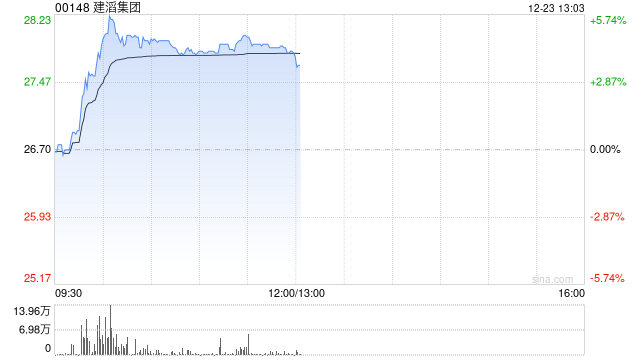
建滔集团涨近5% AI需求爆发推动PCB价值提升 公司为业内主流供应商
Zhi Tong Cai Jing· 2025-12-23 04:12
Group 1 - The core viewpoint of the article highlights the significant increase in the stock price of Kintor Pharmaceutical (00148), which rose nearly 5% to HKD 27.86, with a trading volume of HKD 62.02 million [1] - Market forecasts predict that NVIDIA's GB300 AI server cabinets are expected to ship 55,000 units next year, representing a year-on-year growth of 129% [1] - The next-generation Vera Rubin 200 platform is anticipated to begin shipping in the fourth quarter of next year, showcasing NVIDIA's advancements in AI technology [1] Group 2 - Xiangcai Securities believes that the substantial capital expenditure plans from major AI and internet companies will drive the continuous expansion of computing power clusters [1] - The new server architecture's shift from copper cables to PCB materials is expected to significantly enhance the value of PCBs per server [1] - Kintor Group is recognized as a leading supplier in the domestic PCB sector, with a vertically integrated supply chain covering chemical raw materials, copper-clad laminates, and PCBs across various categories [1]
ROKID发布AI眼镜,看好端侧需求起量及云厂引领下的AI生态完善
Tianfeng Securities· 2025-11-17 08:01
Investment Rating - The industry rating is maintained as "Outperform" [11] Core Insights - The report highlights the accelerating investment in AI infrastructure by major tech companies, indicating a robust demand for computing power and a positive outlook for the AI ecosystem [1][17] - The end-side AI market is expected to see significant growth, with key players like Apple, Nvidia, and Meta leading innovations and product launches [2][20][24] Summary by Sections AI Cloud Side - The ongoing US-China talks are easing tensions, leading to increased investments from major tech firms, which is expected to drive demand in the computing supply chain [1][17] - Meta has raised its capital expenditure forecast to $70-72 billion, driven by urgent needs in AI computing [1][18] - Microsoft's capital expenditure reached $34.9 billion in Q1 2026, with plans to double its data center capacity in the next two years [1][19] - Alphabet has adjusted its capital expenditure guidance for 2025 to $91-93 billion, focusing on expanding AI and cloud computing infrastructure [1][19] AI End Side - Apple reported record earnings, with iPhone revenue expected to grow by double digits in Q1 2026, and is increasing its AI R&D investments [2][20] - Nvidia's GTC Washington summit showcased the Vera Rubin superchip, with GPU shipment targets raised to 20 million by 2026 [2][24] - Meta's smart glasses have seen strong sales, with Reality Labs exceeding expectations, prompting increased production [2][26] - Industrial Fulian's net profit surged by 62% YoY in Q3, validating the profitability of its AI server business [2][29] - Luxshare Precision is leading innovations in AR technology and showcasing advanced optical interconnect solutions [2][32] - Google officially launched the seventh-generation TPU "Ironwood," expected to be available soon [2][41] - Rokid has introduced the new BOLON AI smart glasses, marking a significant collaboration in the smart wearable sector [2][8]





英伟达,盛极而衰?
Tai Mei Ti A P P· 2025-11-12 07:39
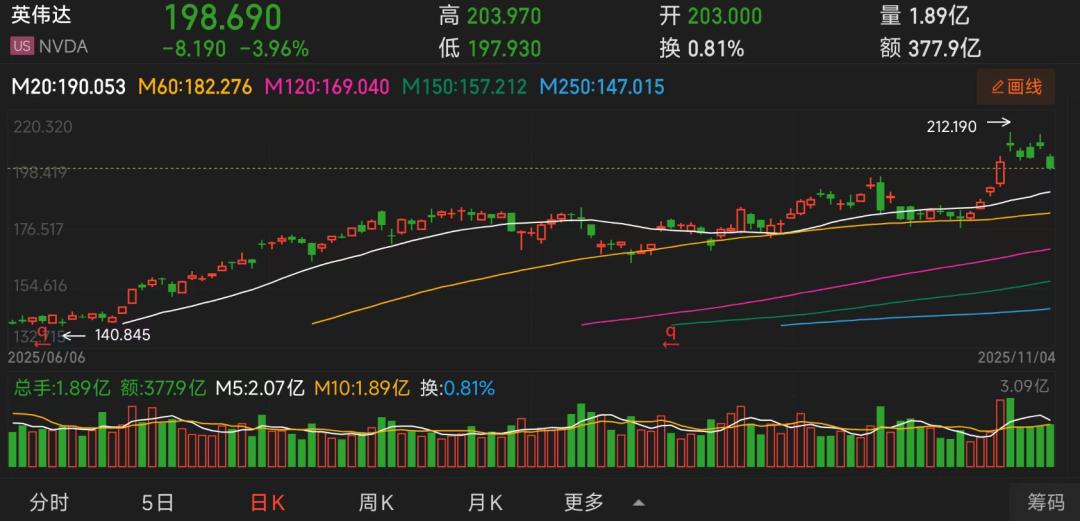
Core Insights - Nvidia's GTC conference in Washington D.C. marked a significant event where CEO Jensen Huang announced the next-generation Vera Rubin superchip and a $1 billion investment in Nokia, leading to a surge in Nvidia's stock price, which crossed $200 for the first time and made it the first company to reach a $5 trillion market cap [1][2] Stock Performance - Following the initial surge, Nvidia's stock experienced a decline from October 30 to November 6, with a maximum single-day drop of 3.7%, resulting in a market cap reduction of over $460 billion [2] - On November 10, Nvidia's stock rebounded with a 5.8% increase, marking the largest single-day gain since April [2] SoftBank's Actions - SoftBank announced it sold all its Nvidia shares in October, a move that sparked negative market sentiment, leading to a nearly 3% drop in Nvidia's stock price on the announcement day [3] - The sale, amounting to $5.83 billion, was interpreted as a signal of SoftBank's shift in focus towards investing in OpenAI, which SoftBank views as a future leader in the AI space [3][4] OpenAI Investment - SoftBank's investment in OpenAI, potentially up to $30 billion for a 5%-10% stake, indicates a strategic pivot towards AI, with OpenAI being a significant contributor to SoftBank's profits [4] - The anticipated IPO of OpenAI in 2027 could reach a valuation of $1 trillion, further emphasizing the potential of AI investments [4] Market Sentiment and Concerns - The market is experiencing heightened anxiety regarding the sustainability of AI valuations, drawing parallels to the internet bubble of the late 1990s [7] - Concerns are growing over potential oversupply in the AI chip market, as highlighted by recent underperformance from key players like TSMC and CoreWeave [8] - The competitive landscape is intensifying with the emergence of Chinese companies in the AI chip sector, posing a challenge to Nvidia's market position [8] Future Outlook - The ongoing debate about whether Nvidia will face a "big but not falling" scenario or a "prosperity followed by decline" situation is central to current market discussions [9] - Nvidia's future trajectory remains uncertain amid these market dynamics, with significant implications for investors and the broader tech industry [9]
天风证券:谷歌(GOOGL.US)正式发布第七代TPU 看好AI赛道成长性
Zhi Tong Cai Jing· 2025-11-10 23:52
Core Viewpoint - The ongoing US-China talks are easing relations, and the continued investment by three major tech giants indicates that global AI infrastructure development is accelerating, which is expected to drive demand in the computing supply chain for the long term [1][2]. Group 1: Cloud-side AI - The three major tech companies have significantly increased their capital expenditures (CapEx) to support AI infrastructure, with Meta raising its full-year CapEx forecast to $70-72 billion, and Microsoft reporting a 74% year-on-year increase in CapEx for Q1 FY2026 to $34.9 billion [2]. - Alphabet has also raised its full-year CapEx guidance to $91-93 billion, with Q3 capital expenditures exceeding market expectations, reinforcing its commitment to AI and cloud computing investments [2]. Group 2: Edge-side AI - The edge AI industry chain is heating up, with terminal manufacturers increasing investments in smart hardware and interactive innovations, leading to a rapid expansion of the ecosystem, with expectations for a significant year in edge AI by 2026 [3]. - Apple reported record earnings, with iPhone revenue expected to see double-digit growth in Q1 FY2026, driven by strong demand for the iPhone 17 series and ongoing investments in AI [4]. - Nvidia's GTC Washington Summit showcased the Vera Rubin super chip, with an adjusted GPU shipment target of 20 million units by 2026, indicating strong demand in the computing supply chain [5]. Group 3: Performance Highlights - Meta's smart glasses business exceeded expectations, with the AI glasses revenue becoming a key driver for Reality Labs' quarterly growth, prompting the company to increase production [6][7]. - Industrial Fulian reported a 62% year-on-year increase in net profit for Q3, driven by strong demand for AI servers and cloud computing, with overall revenue growth of 43% [8]. - Luxshare Precision showcased its leadership in the edge AI product innovation at the Optical Expo, highlighting breakthroughs in AI interconnection solutions [9]. Group 4: New Product Developments - Google officially launched the seventh-generation TPU "Ironwood," which is expected to enhance AI infrastructure capabilities significantly, with peak performance improvements of up to 10 times compared to previous models [10].


中国市场归0,套现70亿,被做空,黄仁勋指望「炸鸡外交」
36氪· 2025-11-06 09:51
Core Viewpoint - The article discusses the recent developments surrounding Nvidia, highlighting the founder Jensen Huang's significant stock sell-off, the actions of prominent investors like Michael Burry, and the implications of these moves on Nvidia's market position and valuation amid rising concerns about a potential bubble in the AI sector [4][20][38]. Group 1: Stock Sell-off and Market Reactions - Nvidia's market capitalization recently peaked at $5 trillion but faced a nearly 4% drop in stock price, bringing its value down to $4.83 trillion [4][6]. - Michael Burry has taken a substantial short position against Nvidia, holding put options worth over $1 billion, which constitutes 80% of his portfolio [6][9]. - Jensen Huang has sold over $1 billion worth of Nvidia stock since June, part of a pre-arranged plan to sell up to 6 million shares by year-end [7][11]. Group 2: Business Diplomacy and Strategic Alliances - Huang's recent visit to South Korea included a notable meeting with Samsung and Hyundai, where they agreed on a deal for Nvidia to supply over 260,000 Blackwell chips, increasing the total from 65,000 [27][28]. - This strategic alliance aims to solidify Nvidia's position as an indispensable supplier in the face of competition from companies like Microsoft and Google, which are developing their own AI chips [28][29]. - The partnership is expected to enhance supply chain resilience and ensure a steady flow of advanced chips to key partners in the region [29][31]. Group 3: Market Challenges and Future Outlook - Nvidia's share of the Chinese AI chip market has plummeted from 95% to nearly zero due to U.S. export restrictions, resulting in significant revenue losses and inventory write-downs [33][36]. - Huang has expressed concerns about the long-term viability of Nvidia's market position, especially as Chinese companies like Huawei advance in AI chip development [36][38]. - Despite 73 out of 80 analysts maintaining a "buy" rating, some analysts are warning of a potential bubble reminiscent of the 2000 internet bubble, suggesting that Nvidia's current valuation may not be sustainable [38][39].

中国市场归0,套现70亿,被做空,黄仁勋指望“炸鸡外交”
3 6 Ke· 2025-11-05 08:57
Core Viewpoint - Nvidia recently reached a historic market capitalization of $5 trillion but faced a significant stock price drop of nearly 4%, bringing its market value down to $4.83 trillion [1][3]. Group 1: Market Reactions and Leadership Actions - Investor Michael Burry is heavily shorting Nvidia, holding put options worth over $1 billion, which constitute 80% of his portfolio [3][5]. - Nvidia's founder, Jensen Huang, has seen his wealth increase by over $60 billion this year, ranking him ninth among the world's richest, yet he has sold over $1 billion worth of shares since June [3][5][6]. - Huang's stock sales are part of a pre-planned strategy under SEC Rule 10b5-1, allowing executives to sell shares without insider trading accusations [6][7]. Group 2: Financial Performance and Market Position - Despite the stock sales, Nvidia's fundamentals remain strong, with Q2 revenue reaching $46.743 billion, a 56% year-over-year increase, exceeding market expectations [9]. - The ongoing demand for AI technology is a key driver for Nvidia, with major tech companies planning substantial investments in AI infrastructure [9][10]. Group 3: Strategic Alliances and Market Expansion - Nvidia is expanding its influence through partnerships, including a recent agreement with South Korean companies to supply over 260,000 Blackwell chips, increasing their presence in the AI market [12][19]. - Huang's diplomatic efforts in South Korea aim to solidify Nvidia's position as an indispensable supplier amid competition from companies like Microsoft and Google [19][21]. Group 4: Challenges and Market Sentiment - Nvidia's market share in China has plummeted from 95% to nearly zero due to U.S. export restrictions, significantly impacting revenue [22][25]. - Analysts express concerns about Nvidia's high valuation, drawing parallels to the 2000 internet bubble, with some suggesting a potential market correction [27][29].
中国市场归0,套现70亿,被做空,黄仁勋指望“炸鸡外交”
首席商业评论· 2025-11-05 05:08
Core Viewpoint - The article discusses the recent developments surrounding Nvidia, highlighting the significant cashing out by its founder Jensen Huang, the bearish stance taken by investor Michael Burry, and the implications of these actions on Nvidia's market position amidst a changing landscape in AI and chip supply chains [2][3][7]. Group 1: Jensen Huang's Cashing Out - Jensen Huang has sold over $1 billion worth of Nvidia shares since June, indicating a strategic plan to reduce his holdings, which aligns with SEC Rule 10b5-1 that allows executives to pre-arrange stock trades [4][9]. - Huang's total cashing out since 2001 exceeds $2.9 billion, and despite the recent sales, he still holds 3.5% of Nvidia's shares, which remain valuable [11]. - The broader executive team at Nvidia has also been selling shares, with insider sales exceeding $2 billion in 2024, significantly higher than the $462 million in 2023 [11]. Group 2: Nvidia's Financial Performance - Nvidia reported a second-quarter revenue of $46.743 billion, a 56% year-over-year increase, surpassing market expectations, although data center revenue was slightly below analyst predictions [12]. - The ongoing demand for AI technology is driving significant investments from major tech companies, with Microsoft, Google, and Meta planning to invest substantial amounts in AI infrastructure [12]. Group 3: Strategic Alliances and Market Position - Huang's recent diplomatic efforts in South Korea, including a meeting with Samsung and Hyundai, resulted in Nvidia securing a deal to supply over 260,000 Blackwell chips to South Korea, increasing their presence in the region [19][24]. - The collaboration with South Korean firms aims to solidify Nvidia's position as an indispensable supplier in the AI market, especially as competition from self-developed AI chips by cloud giants intensifies [22][24]. Group 4: Market Concerns and Future Outlook - Despite Nvidia's strong fundamentals, concerns about overvaluation are rising, with some analysts drawing parallels to the dot-com bubble, suggesting that the current market enthusiasm may not be sustainable [30][32]. - The loss of market share in China due to U.S. export restrictions has severely impacted Nvidia, with its share in the Chinese AI chip market plummeting from 95% to nearly zero, leading to significant revenue losses [26][28]. - Investor sentiment is shifting, as evidenced by Michael Burry's bearish position on Nvidia, indicating a growing caution among market participants regarding the sustainability of Nvidia's high valuation [4][32].

计算机2025年11月研究观点:中美科技博弈缓和,算力应用链迎加速拐点-20251104
Haitong Securities International· 2025-11-04 05:19
Investment Rating - The report maintains an "Outperform" rating for the computer sector, suggesting a focus on semiconductor supply chains benefiting from eased export controls and AI commercialization driven by technological breakthroughs [4][10]. Core Insights - The easing of US-China tech tensions provides a one-year buffer for the global high-tech supply chain, with the US pausing the "50% penetration rule" and China delaying export controls on rare earths, creating certainty for the flow of key tech components [4][10]. - NVIDIA's GTC conference showcased significant advancements, including the launch of the Vera Rubin chip with a performance increase of 3.3 times, and plans for further enhancements by 2027 [4][10]. - Domestic breakthroughs in AI computing power are highlighted by Moore Threads' successful IPO, raising RMB 8 billion for AI chip development, marking a significant step towards technological autonomy [4][10]. Summary by Sections Investment Recommendations - Key investment targets include Wuxi Unicomp Technology, Beijing Kingsoft Office Software, Hand Enterprise, Hikvision, Newland Digital Technology, Autel, Hygon, with Dawning Information Industry as a related target [4][10]. Market Developments - The report notes that international cooperation and self-sufficiency are emerging as dual tracks in global AI computing power development, with NVIDIA's agreements in South Korea significantly boosting local AI infrastructure [4][10]. Financial Projections - The report includes earnings per share (EPS) forecasts for recommended companies, with notable figures such as Wuxi Unicomp Technology projected to have an EPS of 1.30 in 2025, and Hikvision with an EPS of 1.47 in the same year [5].