
Jing Ji Ri Bao

Search documents
巩固提升海洋装备制造业优势
Jing Ji Ri Bao· 2026-01-01 22:13
Core Viewpoint - The development of China's marine equipment manufacturing industry is crucial for enhancing the country's maritime capabilities, with a focus on upgrading towards green and low-carbon technologies [1][2]. Group 1: Industry Development - The marine equipment manufacturing industry is a significant part of China's marine economy and a key growth point for foreign trade, with shipbuilding completion and order volumes increasing by 6.7% and 25.7% year-on-year, respectively, in the first three quarters of 2025 [1]. - China's global market shares for new orders, shipbuilding completions, and hand-held orders are 63.5%, 47.3%, and 58.6%, respectively, maintaining a leading position worldwide [1]. Group 2: International Context - The 21st century is recognized as the century of the ocean, with marine equipment being a focal point for national strategic development among marine nations [2]. - Countries like South Korea and France are advancing their marine equipment sectors, focusing on nuclear-powered ships and seawater desalination, respectively [2]. Group 3: Strategic Advantages - China possesses unique advantages for developing its marine equipment manufacturing industry, including a complete industrial system and vast maritime territory, which provides a stable market demand [2]. - The new type of national system allows for resource integration and concentrated efforts in tackling key core technologies, supporting the industry's upgrade [2]. Group 4: Future Directions - To enhance the marine equipment manufacturing industry's advantages, there is a need for systematic and forward-looking development, focusing on innovation and collaboration between academia and industry [3]. - Emphasis should be placed on addressing areas with significant gaps compared to global standards and high import dependency, particularly in chips, industrial software, and advanced materials [3]. Group 5: Integration and Globalization - Promoting land-sea integration and connecting marine equipment manufacturing with other manufacturing sectors is essential for industry upgrade [4]. - Utilizing artificial intelligence to improve collaboration efficiency across the supply chain and enabling real-time data sharing among upstream and downstream enterprises will enhance industry resilience [4]. - Encouraging advanced manufacturing enterprises to engage in global layouts and integrate into the global division of labor will create greater growth opportunities for the marine equipment manufacturing industry [4].
长期护理保险扩面提标
Jing Ji Ri Bao· 2026-01-01 22:13
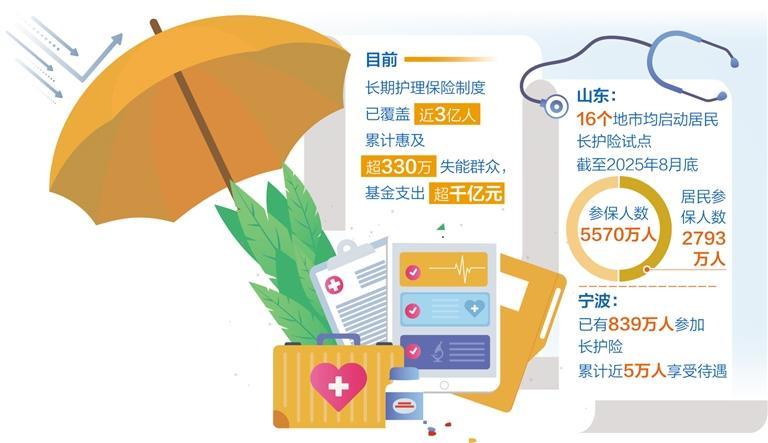
中央经济工作会议提出,实施康复护理扩容提升工程,推行长期护理保险制度,加强对困难群体的关爱帮 扶。长护险被称作继"养老、医疗、失业、工伤、生育"五大社会保险之后的"第六险"。从国外的实践以及国 内试点情况来看,建立长期护理保险制度,能够减轻失能失智人员家庭的生活照护压力,分担医疗护理的高 额费用,从而大幅度减轻个人或家庭的经济负担,有利于促进养老服务产业的发展。 试点范围持续扩大 在近日举行的2025年全国长期护理保险高质量发展大会上,国家医保局局长章轲介绍,长期护理保险制度已 覆盖近3亿人,累计惠及超330万失能群众,基金支出超千亿元。 服务待遇水平提升 长护险试点以来,各地因经济发展水平差异导致信息不对称、标准不统一、监管不到位等问题发生,制约着 这项制度从"点上突破"向"面上推广"跨越。 国家医保局秉持顶层设计、统筹规划、试点先行、平稳推进的基本原则,于2022年初启动长期护理标准研 究,明确标准体系需符合法律法规与专业要求,覆盖全业务范围、科学协调且动态完善,最终初步构建起包 含基础共性、管理工作、公共服务、评价监督四大子体系、23项标准的层次分明、功能完备的长护险信息业 务标准体系。 在山东,16个 ...

让更多“土专家”“乡创客”冒出来
Jing Ji Ri Bao· 2026-01-01 22:11
Core Viewpoint - The evaluation of professional titles for farmers should not be merely a "paper honor" but should include tangible material rewards and policy support to motivate farmers and enhance their career prospects [1][3]. Group 1: Importance of Title Evaluation - The evaluation of titles for farmers serves as a recognition and honor, helping to select "local experts" who can lead and cultivate a talent pool in rural areas [1][2]. - There is a pressing need to address the shortage of talent and skills in rural areas, making the professionalization of farmers a key strategy to retain and attract talent [1][2]. Group 2: Customizing Evaluation Criteria - A tailored evaluation system is necessary for new professional farmers, which should focus on practical skills and achievements rather than traditional academic qualifications [2][3]. - The evaluation process should be conducted in the field, emphasizing hands-on experience and the ability to lead agricultural innovation [2]. Group 3: Incentives and Support Mechanisms - Farmers with professional titles should receive real material rewards, such as priority in recruitment and access to training and new agricultural technologies [3]. - A comprehensive policy incentive system should be established, including education, certification, production support, social security, and financial credit, to enhance the visibility and value of farmers' skills [3]. - Continuous support and dynamic management should be implemented to ensure that title holders remain active and contribute to agricultural development [3].
中国潮玩加速布局海外市场
Jing Ji Ri Bao· 2026-01-01 22:04
Core Insights - China's trendy toys, known as "潮玩," have gained global popularity, with exports exceeding 50 billion yuan in the first three quarters of 2025, reaching over 200 countries and regions [1] Industry Overview - Guangdong province, particularly Dongguan and Shantou, has become a hub for toy manufacturing and exports, with Dongguan producing 85% of China's trendy toys and hosting over 4,000 production companies [3] - Dongguan's toy exports reached 17.52 billion yuan in the first three quarters of 2025, while Shantou's exports to the EU amounted to 2.81 billion yuan, reflecting a year-on-year growth of 11.4% [4] Company Developments - Companies like Kangda Toys have transitioned from OEM to owning multiple trendy toy IPs, showcasing advanced manufacturing capabilities and collaborations with international brands [2] - The rise of original trendy toy brands has been supported by favorable policies, including tax incentives and customs assistance, which have helped companies navigate international markets [6][7] Market Trends - The global demand for trendy toys is driven by cultural interest, with products inspired by Chinese folklore and modern aesthetics gaining traction among international consumers [4][10] - The trend of "cultural export" is becoming prominent, with companies focusing on not just selling products but also promoting Chinese culture and narratives through their toys [9][10] Policy Support - Since 2025, various policies have been implemented to assist trendy toy companies in overcoming challenges related to international standards and market entry [6][7] - The establishment of the first trendy toy service station in Dongguan aims to provide technical and trade support to local companies, enhancing their compliance and competitiveness in global markets [7] Future Outlook - The industry is shifting from a product-driven model to an ecosystem-driven approach, emphasizing the importance of design, cultural storytelling, and global operations [8][9] - Dongguan and Shantou are actively building platforms and ecosystems to ensure the long-term sustainability of China's trendy toy industry in the international market [8][9]
险企积极开展中期分红
Jing Ji Ri Bao· 2026-01-01 22:04
Group 1 - The core viewpoint of the articles highlights the strong capital strength and operational confidence of the insurance industry, as evidenced by the mid-term dividend distributions totaling approximately 29.336 billion yuan from four major A-share listed insurance companies [1] - China Ping An has the largest dividend distribution amounting to 17.202 billion yuan, while the overall mid-term dividend scale has increased by 8.8% compared to 2024, indicating robust financial performance [1] - The dividends are supported by stable investment performance, with insurance companies optimizing asset allocation to achieve a rebound in total investment returns, providing sufficient cash flow for dividends [1] Group 2 - The insurance industry's overall strength has been enhanced, with total assets reaching 40.40 trillion yuan, a year-on-year increase of 15.42% as of the end of Q3 2025 [2] - Insurance companies have adjusted their investment strategies, leading to a significant increase in investment returns, with the balance of insurance funds invested in the equity market rising substantially [2] - The optimization of liability structures within insurance companies has strengthened their risk resistance and dividend stability, transitioning from traditional life insurance products to dividend-type products [2] Group 3 - Recent policies, including the "New National Guidelines," have provided clear direction and institutional support for insurance companies to enhance dividend stability and frequency, making mid-term dividends a strategic priority [3] - The policies have not only stimulated the amount of single dividends but also encouraged more frequent distributions, thereby improving the timing structure of dividends [3] - Future recommendations include establishing a transparent and predictable long-term dividend framework and exploring a combination of cash dividends and stock buybacks to enhance shareholder value [3]




发挥“人工智能+制造”乘数效应
Jing Ji Ri Bao· 2026-01-01 22:01
日前举行的全国工业和信息化工作会议部署了2026年十大重点工作,提出推进"人工智能+制造"专项行 动,培育一批重点行业智能体、智能原生企业。前不久召开的中央经济工作会议强调深化拓展"人工智 能+","人工智能+制造"正是其中的主阵地。我国制造业总体规模连续15年保持全球第一,人工智能技 术全球领先,"人工智能+制造"若能叠加融合两大优势,发挥乘数效应,将为制造强国、网络强国建设 注入强劲动能。 人工智能是推动科技创新和产业创新深度融合的重要桥梁。从科技创新看,人工智能是引领新一轮科技 革命和产业变革的战略性技术。作为通用技术,人工智能贯穿基础研究、应用开发等创新全链条,能通 过算力提升、算法优化、数据要素流通等,提高科技创新的速度与广度;从产业创新看,人工智能具有 溢出带动性很强的"头雁"效应,能广泛应用、赋能大多数行业,倒逼科技创新聚焦产业痛点,把技术变 量变成产业增量。 "人工智能+制造"不是简单相加。在不少制造企业中,有的只把人工智能技术应用于某个环节或单一场 景,有的内部数据难以流通,有的采集了数据却不加分析应用,有的盲目照搬其他企业的人工智能应用 方案,这些都是把人工智能与制造简单相加的表现。虽然技 ...
制造业牵手绿色金融加快转型
Jing Ji Ri Bao· 2026-01-01 02:38
Core Viewpoint - The Ministry of Industry and Information Technology (MIIT) and the People's Bank of China have issued a notice to enhance green finance policies supporting the construction of green factories, aiming to improve energy efficiency, resource utilization, and overall green development levels in enterprises [1] Group 1: Green Factory Development - As of now, China has cultivated 6,430 green factories, 491 green industrial parks, and 727 green supply chains, with the output value of green factories increasing from 9% of total manufacturing output in 2020 to 20% [2] - Green industrial parks have energy and water consumption per unit of industrial added value at only two-thirds and one-fourth of the national average, respectively, with an average solid waste disposal utilization rate exceeding 95% [2] - The MIIT has accelerated the promotion of advanced technologies for energy conservation, carbon reduction, and resource utilization, integrating green development concepts into the entire industrial production process [2] Group 2: Financial Support Mechanisms - The notice emphasizes the need for financial institutions to develop financial products that support green manufacturing, increasing investment in energy-saving, low-carbon, and environmental protection initiatives [1][4] - The MIIT has established a working mechanism with 12 financial institutions to support green factory construction, aiming to increase the output value of green factories to 40% by 2030 [4] - The MIIT is implementing a green supply chain enhancement action to encourage large enterprises to support their suppliers in transitioning to green practices [4] Group 3: Green Financing Trends - Industrial green loans increased by 22.3% year-on-year, with new loans amounting to 73.56 billion yuan in the first 11 months of 2025 [6] - The MIIT has launched over 100 green financial products, including energy-saving loans and green factory loans, to enhance the precision and adaptability of financial support [6] - The notice requires financial institutions to optimize approval processes and develop tailored loan products for green factories, including long-term loans and no-repayment loans [8] Group 4: Future Directions - The People's Bank of China plans to utilize structural monetary policy tools to encourage financial institutions to increase credit support for green factories [9] - A risk-sharing mechanism will be established to incentivize local governments to set up financial support funds for green factories, ensuring that funds are directed towards green initiatives [9] - Continuous collaboration between financial institutions and industry departments will be emphasized to ensure effective financial support for green factories and prevent greenwashing practices [9]
能源转型迎来“光热时刻”
Jing Ji Ri Bao· 2026-01-01 01:56
Core Viewpoint - The development of concentrated solar power (CSP) is crucial for energy transition, aiming for a total installed capacity of approximately 15 million kilowatts by 2030, with electricity costs comparable to coal power [1][2]. Group 1: Importance of CSP - CSP acts as a stabilizer and regulator for the power grid, providing continuous and stable electricity supply even during nighttime or cloudy days [2]. - CSP is a new engine for industrial chain upgrades, involving high-end manufacturing and driving the development of precision machinery, special molten salts, and high-temperature heat collectors [2]. - China has successfully mastered mainstream CSP technologies and built a leading global CSP industry chain, with construction costs per kilowatt decreasing from approximately 30,000 yuan to 15,000 yuan over the past decade [2]. Group 2: Challenges and Policy Solutions - The initial investment for CSP is high, and market competitiveness is weak; policies aim to reduce costs through large-scale deployment and the establishment of supporting renewable energy stations [3]. - The reliance on imported core technologies and materials contributes to high project costs; policies encourage domestic production and performance optimization of key equipment [3]. - CSP needs to find its optimal role within the power system; policies clarify its role in multi-energy complementary bases and promote integrated projects with other energy sectors [3]. Group 3: Future Trends - The future will see a fusion of application scenarios, with CSP integrated with photovoltaic and wind power bases as a stable energy source [4]. - Diverse and refined technological routes will emerge, focusing on efficiency and cost reduction rather than just installed capacity [5]. - CSP companies will evolve from merely providing electricity to offering comprehensive energy services, including peak regulation and backup power [5].
PMI三大指数均升至扩张区间—— 我国经济景气水平总体回升
Jing Ji Ri Bao· 2026-01-01 01:52
Core Viewpoint - The overall economic sentiment in China is improving, as indicated by the rise in key indices for manufacturing and non-manufacturing sectors, suggesting a recovery in economic activity [1][2][4]. Manufacturing Sector - In December 2025, the Manufacturing Purchasing Managers' Index (PMI) reached 50.1%, marking its first entry into the expansion zone since April 2025, with 16 out of 21 surveyed industries showing improvement [1][2]. - The New Orders Index rose to 50.8%, increasing by 1.6 percentage points, indicating a significant recovery in market demand after five months below 50% [2]. - The Production Index increased to 51.7%, up by 1.7 percentage points, reflecting a positive expansion in manufacturing activities [2]. - High-tech manufacturing PMI was reported at 52.5%, up by 2.4 percentage points, indicating a favorable growth trend [2]. - Large enterprises' PMI reached 50.8%, up by 1.5 percentage points, with both production and new orders indices exceeding 52% [3]. Non-Manufacturing Sector - The Non-Manufacturing Business Activity Index rose to 50.2%, up by 0.7 percentage points, indicating an improvement in the non-manufacturing sector [4]. - The Business Activity Expectation Index for non-manufacturing reached 56.5%, reflecting a continuous upward trend and strong market expectations [4][5]. - The construction industry saw a significant improvement, with the Business Activity Index at 52.8%, up by 3.2 percentage points, driven by favorable weather and upcoming holidays [4]. Economic Outlook - Experts suggest that the combination of effective economic policies and market dynamics is fostering a positive outlook for the manufacturing sector, with expectations for steady qualitative and quantitative growth in 2026 [3][5].
“红色+”推动文旅产业发展
Jing Ji Ri Bao· 2026-01-01 01:49
Core Insights - The article discusses the integration of red tourism with modern cultural and tourism industries through digital technologies, enhancing the development and utilization of red resources since 2025 [1] Group 1: Development of Red Tourism - Red tourism has been experiencing comprehensive, sustainable, and rapid growth, supported by the extension of the red cultural industry chain and the use of advanced technologies like big data, AI, and VR [1] - Significant improvements have been made in smart scenic areas and immersive experience scenarios, with technologies such as AR/VR and holographic projection enhancing visitor interaction and emotional engagement [1] - Online platforms have been established for many red venues, offering virtual exhibitions and live broadcasts, while big data analytics are used to provide personalized content recommendations [1] Group 2: Challenges in the Industry - There are existing issues in the development of the red tourism industry, including ineffective sharing of digital resources, lack of a standardized system, and unclear relationships between technology and content [2] - Some projects exhibit a tendency to prioritize technology over the cultural and spiritual values of red culture, and outdated marketing strategies do not meet the needs of the digital age [2] Group 3: Future Strategies - The industry should focus on building a sustainable development ecosystem for red tourism, establishing a national digital standard system to break down data silos and promote resource sharing [3] - Emphasis should be placed on the organic integration of technology and content, with collaboration among historians, educators, and technical experts to ensure that technology serves the interpretation of red cultural values [3] - Development strategies should focus on deep exploration of specific cultural resources using AR/VR and narrative-driven digital experiences to create immersive emotional connections for visitors [3] Group 4: Marketing and Engagement - Operators should create an online and offline marketing matrix, utilizing social media, live streaming, and short videos to continuously produce quality red digital content [4] - Engaging activities such as online check-ins, knowledge competitions, and discussions should be organized to promote the highlights of digital experiences as core selling points [4] - Modern information technologies like big data and AI should be leveraged for the intelligent protection of red cultural relics and the smart operation of red scenic areas, enhancing visitor experiences [4]