
Ren Min Ri Bao Hai Wai Ban

Search documents
旅游演艺持续迭代升级,内涵与形式不断丰富——“老戏新演”也精彩
Ren Min Ri Bao Hai Wai Ban· 2025-11-13 23:58
Core Insights - The national tourism performance in the first three quarters of this year has shown significant growth in terms of performance, box office revenue, and audience numbers, indicating a vibrant market [1] - The tourism performance market is characterized by a rich supply of products and continuous release of market vitality, with traditional formats like real-scene performances and themed parks undergoing quality upgrades [1] Industry Developments - The large-scale historical dance drama "The Longing Song," which premiered in 2006, has performed over 6,500 shows, attracting 12.9 million viewers and generating over 3 billion yuan in revenue [3] - Shaanxi province, a major tourism hub, has been a pioneer in the domestic tourism performance industry, with notable performances dating back to 1982 [4] - The Ministry of Culture and Tourism has issued guidelines to promote the healthy development of the tourism performance industry, emphasizing innovation in operational models [4][6] Technological Integration - The integration of technology in performances, such as the use of hidden LED screens and special effects, enhances audience immersion, as seen in the recent performances at the Huaqing Palace [2][5] - The upgraded version of "The Underground War" incorporates interactive elements, allowing audience participation and deepening emotional engagement [5] Cultural Significance - Tourism performances serve as a vibrant medium for the public to experience cultural beauty, with a focus on high-quality content and the fusion of traditional and modern elements [6][7] - The "Dragon and Phoenix Dance of China" has been innovated to appeal to younger audiences by combining traditional cultural elements with modern stage technology [8] Regional Highlights - The "Impression Liu Sanjie" performance has been a significant contributor to the tourism industry in Guilin, with over 9,000 shows and 22 million viewers, continuously evolving to maintain high standards [9] - In Dunhuang, performances like "Seeing Dunhuang" and "Dunhuang Melody" have become key attractions, enhancing the local tourism experience [10][11] Economic Impact - The "performance + tourism" model is expanding, becoming a new driving force for regional economic growth, as evidenced by the substantial audience numbers and revenue generated from various performances [12][13]
民进党当局“凯子军购”遭挞伐
Ren Min Ri Bao Hai Wai Ban· 2025-11-13 22:52
Core Points - The Taiwanese government has spent significant amounts on advanced weaponry from the United States, but has faced severe delays in delivery, leading to public criticism of the government's effectiveness [1][2] - The procurement of 66 F-16V fighter jets, originally ordered during Tsai Ing-wen's administration for $8 billion, has yet to deliver any aircraft despite over 80% of the payment being made [2][4] - The Taiwanese defense department has acknowledged serious delays in delivery from the U.S., with other projects like AGM-154 missiles also experiencing similar issues [2][4] - Public sentiment in Taiwan has turned against the government, with many viewing the military purchases as a waste of taxpayer money, often receiving outdated equipment [3][4] - The Taiwanese government plans to increase its defense budget significantly, exceeding 3% of GDP, despite criticism that such spending does not improve security and primarily benefits U.S. arms manufacturers [4][6] - The military purchases are seen as a misguided strategy to seek independence through reliance on U.S. support, which many believe is unreliable [6][7] Summary by Sections Military Procurement - The Taiwanese military's procurement of F-16V jets has faced delays, with no deliveries made as of now, despite substantial payments [2][4] - Other military projects are also experiencing delays, attributed to production line issues and supply chain disruptions [2][4] Public Sentiment and Criticism - There is growing public frustration over the military spending, with many questioning the effectiveness of the purchases and labeling Taiwan as a "sucker" in these transactions [3][4] - Criticism is directed at the government for prioritizing military spending over social welfare for military personnel [4] Budget and Spending - The Taiwanese government plans to increase its defense budget to over 3% of GDP, with future goals of reaching 5% by 2030 [6] - The proposed budget includes a special allocation of 1.3 trillion NTD, which is expected to lead to further delays in weapon deliveries [6] Strategic Implications - The reliance on U.S. military support is viewed as a flawed strategy, with experts suggesting that Taiwan's military capabilities cannot match the strength of the Chinese military [7] - The notion that increased military spending can ensure security is challenged, with calls for improved cross-strait relations as a more viable path to peace [7]

山海相通 光影共谱文明乐章(深观察)
Ren Min Ri Bao Hai Wai Ban· 2025-11-13 22:52
Core Viewpoint - The seventh China-Arab States Broadcasting and Television Cooperation Forum held in Chongqing showcased the importance of cultural exchange and collaboration in the media industry, emphasizing the role of technology and youth in strengthening ties between China and Arab nations [3][8]. Group 1: Event Highlights - A spectacular drone light show featuring 5,000 drones was part of the forum, illustrating the theme of "Cultural Exchange and Audiovisual Innovation" [3]. - Approximately 300 representatives from China, 16 Arab countries, and 2 international organizations participated in the forum, fostering dialogue and emotional connections [3][4]. Group 2: Content Collaboration - The forum highlighted the value of collaboration in broadcasting, with a proposal from the Palestinian Broadcasting and Television Authority to form a joint production team for documentaries [4]. - Successful programs like "Mountain and Sea Love" have resonated with audiences in Arab countries, marking a shift from "one-way output" to "joint narrative" [4]. - Over 120 Arab media outlets have joined the Central Radio and Television Station's customized media service platform, enhancing content dissemination [5]. Group 3: Technological Advancements - Cutting-edge technologies such as ultra-high-definition and artificial intelligence were focal points of discussion, with suggestions for building a "China-Arab language corpus" to develop bilingual AI models [6]. - The forum showcased the potential of technology to enhance media digitalization in Arab countries, with examples of infrastructure support from China [6]. Group 4: Youth Engagement - The future of China-Arab friendship relies on youth, with over 20 media training sessions planned for Arab nations by 2025, focusing on emerging fields like AI and cybersecurity [7]. - The fourth China-Arab short video competition highlighted the stories of youth, with over 2,100 entries showcasing their creativity [7]. - Activities such as the "Hello Chongqing" media tour provided Arab guests with insights into Chinese culture and industry [7]. Group 5: Future Cooperation - The forum concluded with a joint declaration emphasizing strengthened news reporting, content collaboration, technological innovation, and personnel exchanges [7][8]. - More than 50 cooperation outcomes were announced, along with several memorandums and agreements signed during the event [7].

下一站,开启风物旅行
Ren Min Ri Bao Hai Wai Ban· 2025-11-13 22:52
Core Insights - The article discusses the growing trend of "cultural travel" in China, where tourists are increasingly seeking deep cultural experiences rather than just visiting scenic spots [5][9] - Local cultural elements, referred to as "fengwu," are becoming significant attractions for tourists, enhancing local tourism development [5][10] Group 1: Cultural Travel Trends - Tourists are shifting from merely "checking off" tourist spots to engaging in immersive cultural experiences that highlight local customs and traditions [5][6] - The concept of "fengwu" encompasses a region's unique cultural heritage, including local cuisine, festivals, intangible cultural heritage, and folk arts [5][6] - Young travelers, particularly those born after 2000, are driving the demand for cultural travel, showing a preference for authentic local experiences [9][10] Group 2: Economic Impact - Cultural travel is generating significant economic benefits for local tourism markets, with places like Shexian County seeing a 18.39% increase in tourist numbers and a 21.59% rise in tourism revenue during the recent Spring Festival [6][10] - The integration of cultural experiences into tourism is leading to increased visitor spending, with Shexian County attracting over 10 million tourists and generating more than 5 billion yuan in consumption over the past three years [10] - In Tongjiang, the introduction of cultural experience products has resulted in a 55.2% increase in tourism revenue, highlighting the economic potential of cultural travel [10] Group 3: Local Cultural Initiatives - Shexian County is enhancing its cultural tourism offerings by developing workshops, themed accommodations, and educational programs centered around local traditions like the fish lantern festival [10] - Tongjiang is promoting its unique cultural heritage through immersive experiences, such as traditional performances and hands-on workshops, to attract more visitors [7][10] - The rise of cultural travel is prompting local governments and tourism agencies to innovate and create engaging content that showcases their unique cultural narratives [10]

让出行更安全更轻松(汽车产业链上看创新)
Ren Min Ri Bao Hai Wai Ban· 2025-11-13 22:52
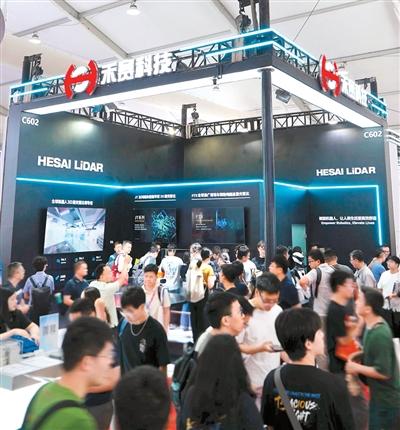
Core Viewpoint - The article highlights the rapid advancements in China's automotive industry, particularly in driving assistance systems, showcasing key players like Hesai Technology, Horizon Robotics, and Zhuoyue Technology, which are driving innovation and competition in this sector. Group 1: Hesai Technology - Hesai Technology showcased its latest lidar technology at the World Robot Conference, emphasizing the importance of lidar as the "eyes" of autonomous vehicles, which helps in accurately detecting surroundings, especially in low-light conditions [6][9]. - The company has made significant progress in the lidar market, reducing prices from approximately 200,000-300,000 RMB to the thousand-yuan level, achieving over 99% cost reduction, thus making lidar accessible to more consumers [8][9]. - Hesai has become the global leader in lidar shipments, collaborating with multiple domestic car models and a top European manufacturer, while also leading the development of domestic lidar technology standards [9]. Group 2: Horizon Robotics - Horizon Robotics focuses on developing specialized computing chips for driving assistance systems, positioning itself as a key player in the smart automotive sector [10][12]. - The company launched the "Journey 2" chip, marking a significant milestone as China's first mass-produced vehicle-mounted intelligent computing chip, which is crucial for the domestic autonomous driving ecosystem [13]. - Horizon has achieved substantial production milestones, with over 10 million units shipped and partnerships with more than 400 vehicle models, reflecting its rapid growth and commitment to R&D, with annual investments exceeding 3 billion RMB [14]. Group 3: Zhuoyue Technology - Zhuoyue Technology aims to provide advanced driving assistance systems for both fuel and electric vehicles, emphasizing that driving assistance should not be exclusive to electric vehicles [15][16]. - The company has developed a comprehensive driving assistance system through extensive parameter optimization and collaboration with component suppliers, resulting in partnerships with 10 car manufacturers and over 30 mass-produced models [16]. - Zhuoyue's approach focuses on "human-machine co-driving," ensuring that the driving assistance system enhances safety and comfort without fully replacing human drivers [18].

在香港,橄榄球奏响主场节拍(激情十五运)
Ren Min Ri Bao Hai Wai Ban· 2025-11-13 22:52
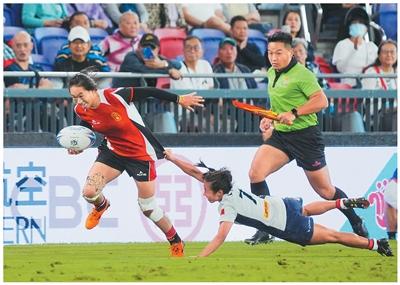
每当有球队达阵得分,场馆里还会响起专属的bgm(背景音乐):内蒙古男队是《鸿雁》、山东男队是 《好汉歌》、四川女队则是《奢香夫人》……局间休息时,《野狼Disco》的节奏让身旁几位香港记者 也随着旋律动了起来。体育的热情与城市的律动,在这一刻融为一体。 11月12日,山东队球员唐铭琳(左)在比赛中突破防守。当日,在香港举行的第十五届全国运动会七人 制橄榄球女子小组循环赛中,山东队31比12战胜香港队。新华社记者 朱炜摄 走进香港启德主场馆,首先入耳的是热闹的声音。 11月12日,十五运会七人制橄榄球比赛在这座能容纳5万名观众的场馆拉开帷幕。球场上,来自全国各 地的队伍在绿茵奔跑、对抗,普通话和粤语广播在看台上回荡,观众的欢呼与音乐的节拍此起彼伏。 "主场作战既紧张又兴奋" "这是我第一次在启德出场比赛,主场作战既紧张又兴奋。现场的气氛非常热烈,打球的时候根本听不 清队友在说什么,必须用力喊才行。"香港男队球员房杰锋说。 启德体育园是香港规模最大的体育综合体之一,于今年春天正式启用。主场馆配备可开合屋顶与环形看 台,是香港目前最大的体育场馆,既能办足球和橄榄球赛,也能举行演唱会。十五运会期间,这里成为 七人制橄 ...
这场体育盛会,“好劲”!
Ren Min Ri Bao Hai Wai Ban· 2025-11-13 22:10
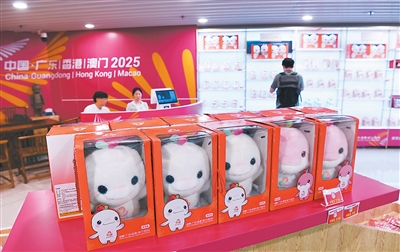
Group 1: Event Overview - The 15th National Games commenced on November 9 in Guangzhou, Guangdong, marking the first time the event is co-hosted by Guangdong, Hong Kong, and Macau [1][5] - The opening ceremony was praised for its creativity and aesthetic appeal, showcasing the cultural and sporting spirit of the Greater Bay Area [5][6] Group 2: Mascot Design and Popularity - The mascots "Xiyangyang" and "Lerongrong," inspired by the Chinese white dolphin, have gained significant popularity among netizens [1][3] - The design team from Guangzhou Academy of Fine Arts, known for creating the Beijing Winter Olympics mascot, emphasized the cultural significance of the dolphin in the region [3] - The mascots have led to a surge in related cultural products, with over 2,800 licensed items developed and more than 700 retail stores opened [4] Group 3: Sustainable Event Management - The event is notable for not constructing new large venues, with over 90% of competition venues being upgraded from existing facilities, significantly reducing costs [7][9] - The use of green electricity during the games is projected to exceed 188 million kilowatt-hours, equating to a reduction of approximately 160,000 tons of carbon emissions [8][9] - The Guangdong Olympic Sports Center underwent significant renovations to meet event requirements while promoting future urban development [8][9]
近八成企业盈利 上市公司“三季报”释放积极信号
Ren Min Ri Bao Hai Wai Ban· 2025-11-13 02:47
中国上市公司协会发布的数据显示,今年前三季度,A股上市公司合计实现营业收入53.46万亿元,净利 润4.7万亿元,全市场共4183家上市公司实现盈利,盈利面近八成。第三季度上市公司营收、净利润同 比增长3.82%、11.45%,环比增长2.40%、14.12%,增速较上半年显著提升,逐季向好态势继续巩固。 其中,新能源汽车、固态电池、超硬材料、影视院线、快递物流等多个行业表现突出。透过这份成绩单 会发现,中国上市公司业绩持续改善,科创引领作用凸显,产业结构焕新升级,高质量发展迈出坚实步 伐。 一年多次分红渐成常态 合计营业收入超53万亿元,近八成企业实现盈利—— 上市公司"三季报"释放积极信号 截至10月底,上市公司前三季度业绩报告基本披露完毕。 今年以来,中国经济发展顶住压力,取得了难能可贵的发展成绩。这在上市公司"三季报"中有明显体 现。 一方面,随着宏观政策发力显效,上市公司三季度业绩展现出良好势头。 据上海证券交易所相关负责人介绍,2025年前三季度,沪市上市公司合计实现营业收入37.58万亿元, 同比微增;实现净利润3.79万亿元,同比增长4.5%;扣非后净利润3.65万亿元,同比增长5.5%。特别 ...
“手到擒来”的微观“快递员”
Ren Min Ri Bao Hai Wai Ban· 2025-11-13 02:25
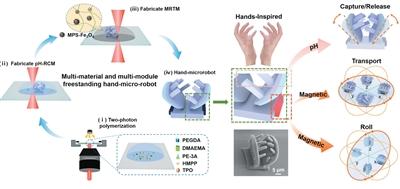
Core Insights - The article discusses the development of a 3D micro-nano robot by the Institute of Physics and Chemistry, Chinese Academy of Sciences, which can perform precise tasks in the microscopic world, paving the way for future advancements in precision medicine [1][7]. Group 1: Micro-Nano Robot Overview - Micro-nano robots are intelligent miniature machines that operate at the micro to nano scale, capable of movement, rotation, and manipulation of tiny particles or cells, thus enabling human interaction in the microscopic realm [2]. - The new design overcomes limitations of existing micro-nano robots, which often use single material systems and struggle with multi-step operations in complex environments [2][5]. Group 2: Design and Functionality - The micro-nano robot features a hand-like design that allows for flexible observation and manipulation of target particles, enhancing its operational capabilities [2]. - It is constructed using femtosecond laser direct writing technology, which allows for high-precision fabrication of various micro-nano structures with different functionalities [5]. Group 3: Operational Mechanism - The robot operates by responding to changes in pH levels in its environment, with its "hands" opening and closing like a flower in response to acidic or alkaline conditions [6]. - It can transport and release particles or cells with a maximum speed of 65.56 micrometers per second, demonstrating agility in navigating obstacles [6]. Group 4: Potential Applications - The micro-nano robot has significant potential in precision medicine, such as drug delivery and cellular manipulation, and could serve as an invisible assistant to doctors [7]. - Beyond medical applications, it can also be utilized in environmental remediation and micro-manufacturing, such as removing specific pollutants from water environments [7].
科技瞭望丨“手到擒来”的微观“快递员”
Ren Min Ri Bao Hai Wai Ban· 2025-11-13 02:23
Core Insights - The article discusses the development of a 3D micro-nano robot by the Chinese Academy of Sciences, which is capable of precise tasks such as grabbing, transporting, and releasing particles and cells in the microscopic world, paving the way for future advancements in precision medicine [1][5] Group 1: Micro-Nano Robots Overview - Micro-nano robots are defined as "intelligent micro-machines" that operate at the micro to nano scale, capable of movement, rotation, and manipulation of tiny particles or cells, thus enabling human interaction in the microscopic realm [2] - The current limitations of micro-nano robots include reliance on single material systems and challenges in multi-stimulus coordinated control in complex environments [2][3] Group 2: Design and Functionality - The new design approach involves multi-material and multi-module processing to create micro-nano robots, with a hand-like structure that allows for better observation and flexibility in operation [3] - The 3D hand-shaped micro-nano robot consists of two smart materials: a pH-responsive module that opens and closes in response to environmental changes, and a magnetic drive module that allows for remote control of movement [3][4] Group 3: Performance and Applications - The robot has demonstrated successful capabilities in grabbing and transporting particles, including 10-micron polystyrene microspheres and human kidney cancer cells, with a maximum movement speed of 65.56 microns per second [4] - The micro-nano robot shows potential for various applications, including drug delivery within the human body, serving as an "invisible assistant" for doctors, and offering possibilities for single-cell manipulation and targeted drug delivery [5] - Beyond medical applications, micro-nano robots can be utilized in environmental remediation and micro-manufacturing, such as removing specific pollutants from water environments and assembling micro-nano components [5]