
2 1 Shi Ji Jing Ji Bao Dao

Search documents
港股午评:市场低开低走 智谱、MINIMAX-WP创历史新高
2 1 Shi Ji Jing Ji Bao Dao· 2026-02-13 04:45
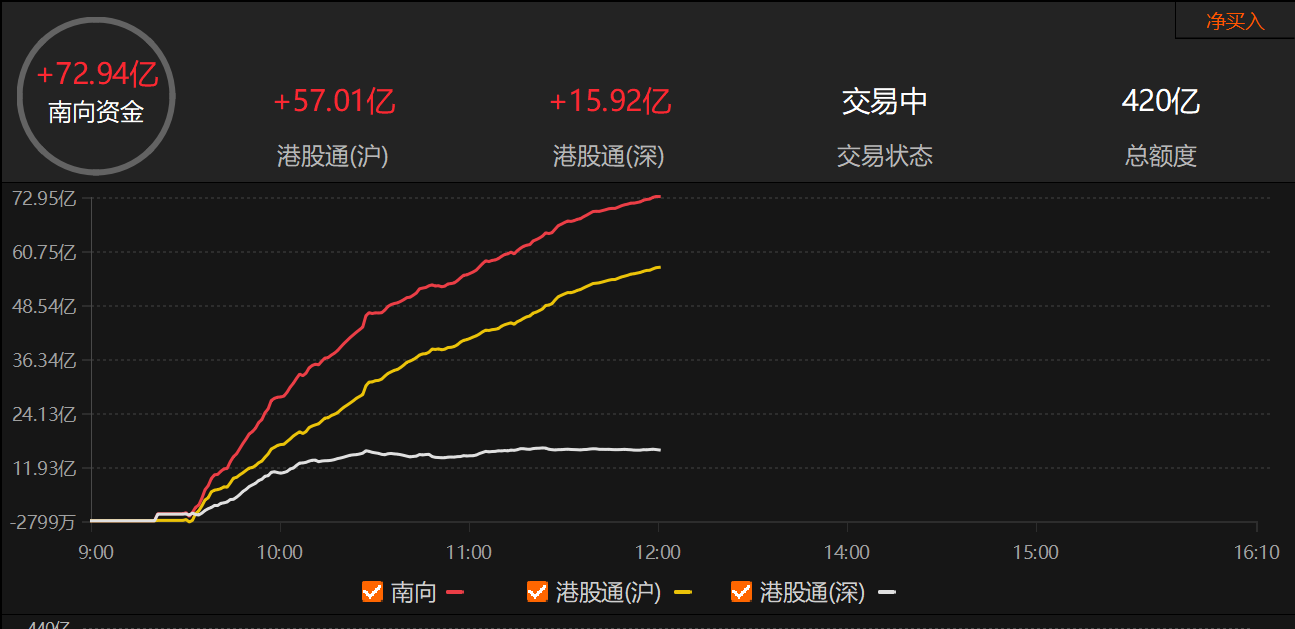
Market Performance - The Hong Kong stock market opened lower and continued to decline, with the Hang Seng Index dropping by 1.79%, the National Enterprises Index falling by 1.74%, and the Hang Seng Technology Index decreasing by 1.65% [1] AI Sector - The "AI dual giants" in Hong Kong, Zhizhu and MINIMAX-WP, both reached historical highs, with their market capitalizations surpassing HKD 200 billion [1] Semiconductor Sector - The semiconductor sector experienced a rebound, with Aixin Yuan Zhi rising over 15% and Tian Shuzi Xin increasing by more than 10% [1] Insurance Sector - Insurance stocks continued to weaken, with Prudential falling over 6%, and other companies like China Life, AIA, China Pacific Insurance, and China Taiping also experiencing declines [1] Gold and Precious Metals - The gold and precious metals sector showed low-level fluctuations, with companies such as Zijin Mining, Wan Guo Gold Group, and Shandong Gold experiencing declines [1] Capital Flow - Southbound funds recorded a net purchase of HKD 7.294 billion during the half-day session [1]

A股午评:创业板指跌近1%,半导体板块表现活跃
2 1 Shi Ji Jing Ji Bao Dao· 2026-02-13 04:23
Market Overview - The A-share market experienced a turbulent morning session with all three major indices declining, led by the ChiNext Index which fell by 0.96% [1][2] - The Shanghai Composite Index decreased by 0.7%, and the Shenzhen Component Index dropped by 0.67% [1][2] - Trading volume significantly shrank, with the total turnover in the Shanghai and Shenzhen markets reaching 1.2 trillion yuan, a decrease of 125.6 billion yuan compared to the previous trading day [1][2] Sector Performance - The semiconductor sector showed strong performance, with concepts related to photolithography machines and photolithography adhesives rapidly rising [1][2] - Guofeng New Materials achieved a notable performance with two consecutive trading limits in four days [1][2] - The semiconductor equipment concept continued to strengthen, with Shenghui Integration hitting the daily limit and setting a new historical high [1][2] - The paper-making sector also demonstrated resilience, with Wuzhou Special Paper reaching the daily limit [1][2] Declining Sectors - The port and shipping sector faced a collective downturn, with significant declines in stocks such as COSCO Shipping Energy and China Merchants Energy [1][2]





半导体集体爆发,港股科网股下挫,智谱5天狂飙超120%
2 1 Shi Ji Jing Ji Bao Dao· 2026-02-13 04:17
Market Overview - On February 13, A-shares experienced a collective decline, with the ChiNext Index leading the drop, closing down 0.96%. The Shanghai Composite Index fell by 0.7%, and the Shenzhen Component Index decreased by 0.67%. The total trading volume in the Shanghai and Shenzhen markets reached 1.2 trillion yuan, with over 2,600 stocks declining [1]. Sector Performance - The military industry sector showed strong performance, with Aystar Anchor Chain (601890) hitting the daily limit. The semiconductor sector was active, with concepts related to photolithography and photolithography adhesives rapidly rising. Guofeng New Materials (000859) achieved two consecutive trading limits in four days, while Fuchuang Precision rose over 12%. Semiconductor equipment concepts continued to strengthen, with Shenghui Integration (603163) hitting the daily limit and reaching a historical high [2]. - In contrast, the port and shipping sector saw a collective decline, with China Merchants Energy (600026) and China Merchants Shipping (601872) experiencing significant drops. The photovoltaic equipment sector weakened, with leading stock Shuangliang Energy (600481) hitting the daily limit and losing 2 billion yuan in market value in one day. Other stocks like GCL-Poly Energy (002506) fell over 8% [3]. Hong Kong Market - The Hong Kong market opened lower and continued to decline, with the Hang Seng Index down 1.8% and the Hang Seng Tech Index down 1.6%. Major tech stocks saw declines, with Tencent Music dropping over 10%, Meituan down over 4%, and Baidu Group down 4%. Other companies like JD.com, Bilibili, Li Auto, Alibaba, and Trip.com also experienced declines of over 2% [3]. - The semiconductor sector in Hong Kong showed strength, with Aixin Yuan Zhi rising over 16% and Tian Shu Zhi Xin increasing over 9%. Other stocks like Zhaoyi Innovation (603986) and Brain Hole Technology also saw gains. The large model concept stocks performed actively, with Zhipu Technology reaching a historical high of 492 HKD before narrowing its gains to 12%, having increased over 120% this week [3]. New Listings - The new stock Haizhi Technology Group had an impressive debut, rising over 268% during the day to 99.6 HKD, with a profit of 14,505 HKD per lot based on the issue price of 27.06 HKD per share. The public offering phase recorded an oversubscription of 5,065.06 times, ranking among the top in recent years for Hong Kong IPOs [4]. - Industrial analysts at Industrial Securities expressed optimism for the Hong Kong market, suggesting a "technology bottom + cyclical recovery + beta in dividends" approach to embrace the spring market. Current short-selling transactions account for about 19.2%, indicating that market sentiment has reached a relatively low point, providing momentum for a short-term rebound [4].
字节芯片团队已隐秘扩充;影石回应年会送房送车丨新鲜早科技
2 1 Shi Ji Jing Ji Bao Dao· 2026-02-13 03:52
Group 1: Technology Developments - ByteDance's chip team has expanded to over 1,000 members, with more than 500 focused on AI chips and around 200 on CPU development, indicating a strong emphasis on chip business due to increasing demand for computing power [2] - JD Technology has launched "JD AI Payment," which utilizes the JoyAI model for various hardware and software applications, enabling AI-assisted payment processes [4] - Baidu has officially launched OpenClaw, an e-commerce plugin that integrates its product knowledge graph with CPS supply chain capabilities, allowing for a streamlined shopping experience [5] - Gaode is set to release its self-developed embodied navigation base model, which has made significant advancements in handling complex tasks in open physical environments [6] Group 2: Corporate Announcements and Events - YingShi Innovation held an annual meeting where it rewarded employees with real estate and cars, showcasing the importance of material incentives alongside personal achievements [3] - Former Honor CEO Zhao Ming announced his new role at Qianli Technology, expressing excitement about contributing to AI business development [9] - Anthropic has completed a funding round at a valuation of $380 billion, raising $30 billion to enhance its enterprise products and models, with annual revenue now at $14 billion [11] - RoboScience has secured several hundred million in Pre-A financing, led by PwC Capital, indicating strong investor interest in machine science [12] Group 3: Product Launches and Innovations - Xiaomi has open-sourced its first-generation robot VLA model, which features 4.7 billion parameters and capabilities in visual language understanding and real-time execution [13] - MiniMax has launched its latest programming model, MiniMaxM2.5, which is positioned as a leading solution in various productivity scenarios, boasting a parameter count of only 10 billion for efficiency [14]
字节芯片团队已隐秘扩充;影石回应年会送房送车丨科技风向标
2 1 Shi Ji Jing Ji Bao Dao· 2026-02-13 03:49
Group 1: Technology Developments - ByteDance's chip team has expanded to over 1,000 members, with more than 500 focused on AI chips and around 200 on CPU development, indicating a strong emphasis on chip business amid increasing demand for computing power [2] - JD Technology has launched "JD AI Payment," which utilizes the JoyAI model for various hardware and software applications, enabling AI-assisted payment processes [4] - Baidu has officially launched OpenClaw, an e-commerce plugin that integrates its product knowledge graph with CPS supply chain capabilities, allowing for a streamlined shopping experience [5] - Gaode is set to release its self-developed embodied navigation base model, claiming to have built the largest embodied navigation data engine in the industry [6] - Xiaomi has announced the open-sourcing of its first-generation robot VLA model, which features 4.7 billion parameters and capabilities in visual language understanding [13] Group 2: Corporate Actions and Investments - Anthropic has completed a funding round, raising $30 billion at a valuation of $380 billion, nearly doubling its previous valuation and positioning it among the most valuable private tech companies globally [11] - RoboScience has announced the completion of a Pre-A round financing, raising several hundred million yuan, with participation from multiple investment firms [12] - Former Honor CEO Zhao Ming has joined Qianli Technology, expressing a long-term commitment to AI as a significant area for future investment [9] Group 3: Market Trends and Consumer Behavior - Taobao's flash sale platform reported that nearly half of the orders from its AI assistant, Qianwen, came from county-level cities, highlighting the growing adoption of AI in e-commerce [7] - Xiaohongshu has announced that AI-generated content must be clearly labeled, aiming to maintain user trust and transparency within the community [8] Group 4: Product Launches and Innovations - Insta360's CEO showcased the "Luna," a handheld gimbal camera set to launch in mid-2026, which is expected to be the first in the market with telephoto capabilities [3] - Samsung Electronics has begun mass production of HBM4 memory, anticipating a threefold increase in sales by 2025 and planning to expand HBM4 production capacity [10]
王兴兴:具身智能“不够热”,未来热度或是现在的1000倍
2 1 Shi Ji Jing Ji Bao Dao· 2026-02-13 03:03
Core Insights - The embodied intelligence sector is currently experiencing significant interest, driven primarily by advancements in AI technology [1] - The growth trajectory of the robotics and embodied intelligence industry is expected to steepen, with potential breakthroughs in large-scale applications of AI models and robotic technologies [1] - Future interest in embodied intelligence could surpass that of the mobile internet, with projections suggesting a potential increase in heat by at least 100 to 1000 times compared to the current phase [1] Industry Summary - The robotics and embodied intelligence industry is in a developmental phase, often described as a "climbing" or "platform" stage [1] - The current excitement surrounding the industry is not at its peak, indicating that further advancements and applications are anticipated in the coming years [1]
光伏龙头巨额封单跌停,市值一日蒸发20亿,昨日10分钟涨停
2 1 Shi Ji Jing Ji Bao Dao· 2026-02-13 03:01
Core Viewpoint - The stock of Shuangliang Energy (600481) experienced a significant drop following regulatory scrutiny over misleading information regarding overseas orders related to commercial space projects, leading to a substantial market value loss of 2 billion yuan in one day [1][2]. Group 1: Stock Performance and Market Reaction - On February 13, the A-share photovoltaic equipment sector declined, with Shuangliang Energy hitting its daily limit down, resulting in a market cap loss of 2 billion yuan [1]. - Following the announcement of three overseas orders, Shuangliang Energy's stock surged to a limit-up price of 10.71 yuan per share, with a trading volume of 1.762 billion yuan [1]. - Other companies in the sector, such as GCL-Poly Energy (002506) and Laplace, also saw declines, with GCL-Poly dropping over 7% [1]. Group 2: Regulatory Intervention and Company Response - The Shanghai Stock Exchange intervened due to concerns over the accuracy and completeness of Shuangliang Energy's disclosures, prompting the company to issue a corrective announcement [2]. - The corrected announcement revealed that the three orders were signed in late 2025 and early 2026, totaling approximately 13.923 million yuan, which is only 0.11% of the company's audited revenue for 2024 [2]. - The company clarified that it is not a direct partner with SpaceX and that its involvement in commercial space projects is limited and subject to uncertainty [2]. Group 3: Financial Performance and Business Outlook - Shuangliang Energy is facing significant financial challenges, with projected net losses for 2025 estimated between 780 million yuan and 1.06 billion yuan, marking the second consecutive year of substantial losses [3]. - The company previously reported a loss of 2.134 billion yuan in 2024, although the loss margin is expected to narrow this year [3]. - The "space photovoltaic" concept remains in the exploratory phase, with no substantial contributions to the company's current performance, as highlighted by the company in early February [3].

芯片板块ETF领涨,机构称行业进入上行周期丨ETF基金日报
2 1 Shi Ji Jing Ji Bao Dao· 2026-02-13 02:55
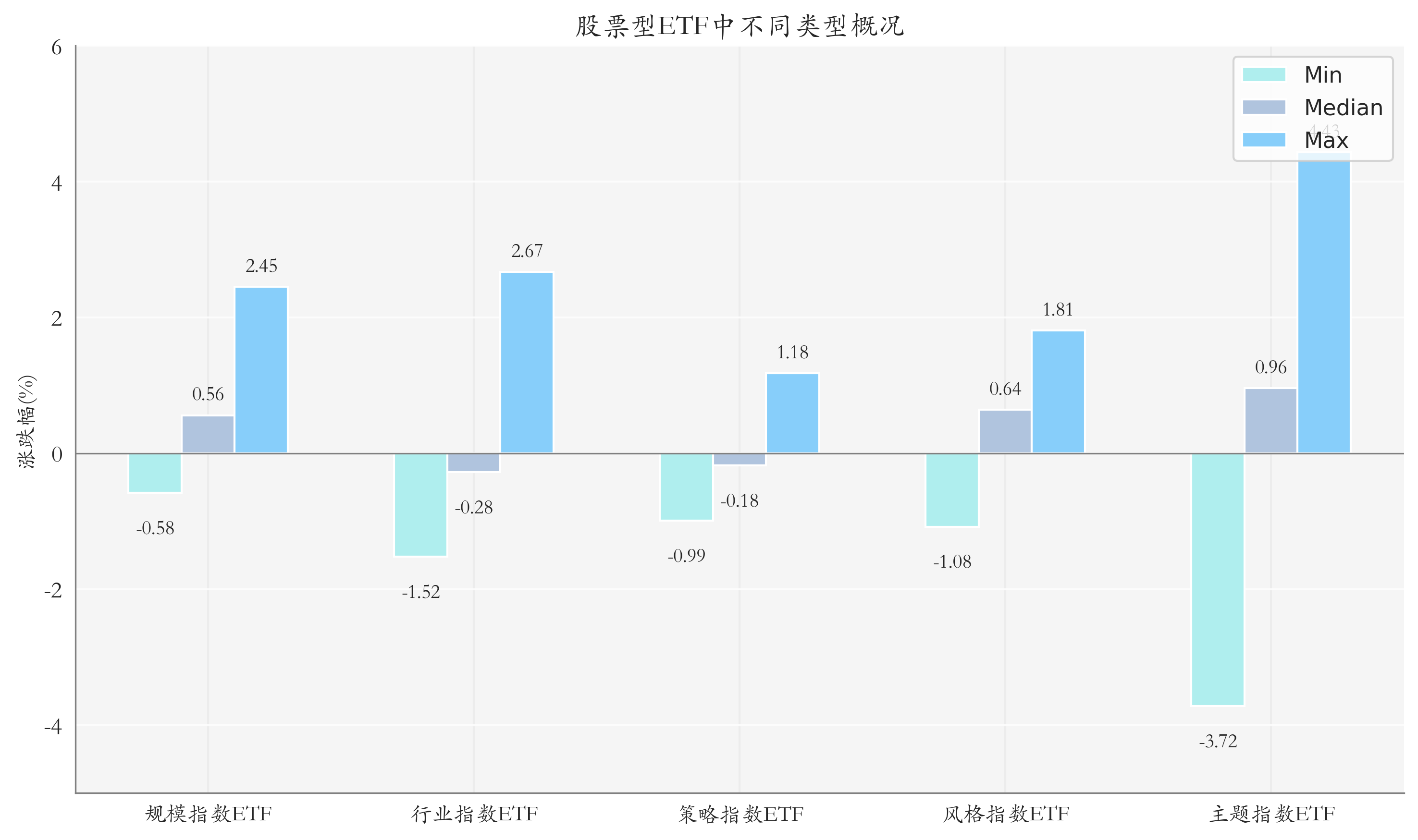
Market Overview - The Shanghai Composite Index rose by 0.05% to close at 4134.02 points, with a daily high of 4140.59 points [1] - The Shenzhen Component Index increased by 0.86% to close at 14283.0 points, reaching a high of 14296.48 points [1] - The ChiNext Index saw a rise of 1.32%, closing at 3328.06 points, with a peak of 3334.35 points [1] ETF Market Performance - The median return for stock ETFs was 0.56% [2] - The highest return among scale index ETFs was 2.45% for the Fortune China Science and Technology Innovation 200 ETF [2] - The highest return among industry index ETFs was 2.67% for the Bosera National Certificate Industrial Software Theme ETF [2] - The highest return among strategy index ETFs was 1.18% for the Qianhai Kaiyuan CSI 500 Equal Weight ETF [2] - The highest return among style index ETFs was 1.81% for the Wanji Shanghai Stock Exchange Science and Technology Innovation Growth ETF [2] - The highest return among theme index ETFs was 4.43% for the China Universal Shanghai Stock Exchange Science and Technology Innovation Chip Design Theme ETF [2] ETF Performance Rankings - The top three ETFs by return were: - China Universal Shanghai Stock Exchange Science and Technology Innovation Chip Design Theme ETF (4.43%) [6] - GF Shanghai Stock Exchange Science and Technology Innovation Chip Design Theme ETF (4.28%) [6] - E Fund Shanghai Stock Exchange Science and Technology Innovation Artificial Intelligence ETF (4.2%) [6] - The top three ETFs by decline were: - Guotai Junan CSI Film and Television Theme ETF (-3.72%) [6] - Yinhua CSI Film and Television Theme ETF (-3.5%) [6] - Huatai-PB CSI Animation and Game ETF (-2.31%) [6] ETF Fund Flows - The top three ETFs by fund inflow were: - Southern CSI 500 ETF (inflow of 1.124 billion) [9] - Southern CSI 1000 ETF (inflow of 819 million) [9] - Huaxia CSI 1000 ETF (inflow of 514 million) [9] - The top three ETFs by fund outflow were: - Huatai-PB CSI A500 ETF (outflow of 995 million) [11] - Huaxia Shanghai Stock Exchange Science and Technology Innovation 50 Component ETF (outflow of 842 million) [11] - Southern CSI A500 ETF (outflow of 839 million) [11] ETF Margin Trading Overview - The top three ETFs by margin buying were: - Huaxia Shanghai Stock Exchange Science and Technology Innovation 50 Component ETF (320 million) [12] - Guotai Junan CSI All-Index Securities Company ETF (263 million) [12] - E Fund ChiNext ETF (261 million) [12] - The top three ETFs by margin selling were: - Southern CSI 1000 ETF (10.2265 million) [14] - Southern CSI 500 ETF (5.3715 million) [14] - Huaxia Shanghai Stock Exchange Science and Technology Innovation 50 Component ETF (3.9157 million) [14] Institutional Insights - Open Source Securities indicated that the semiconductor chip industry is entering an upward cycle, driven by the growth of AI, smart connected vehicles, 5G, cloud computing, and IoT [15] - The global semiconductor packaging materials market is expected to exceed 26 billion by 2025, with a compound annual growth rate of 5.6% until 2028 [15] - Donghai Securities noted that storage prices have been rising, with the memory industry achieving record output, and AI remains a key narrative for the foreseeable future [16] - There is an expectation for continued acceleration in domestic semiconductor production, suggesting a focus on leading companies in specific segments [16]
两市ETF两融余额增加45.31亿元丨ETF融资融券日报
2 1 Shi Ji Jing Ji Bao Dao· 2026-02-13 02:55
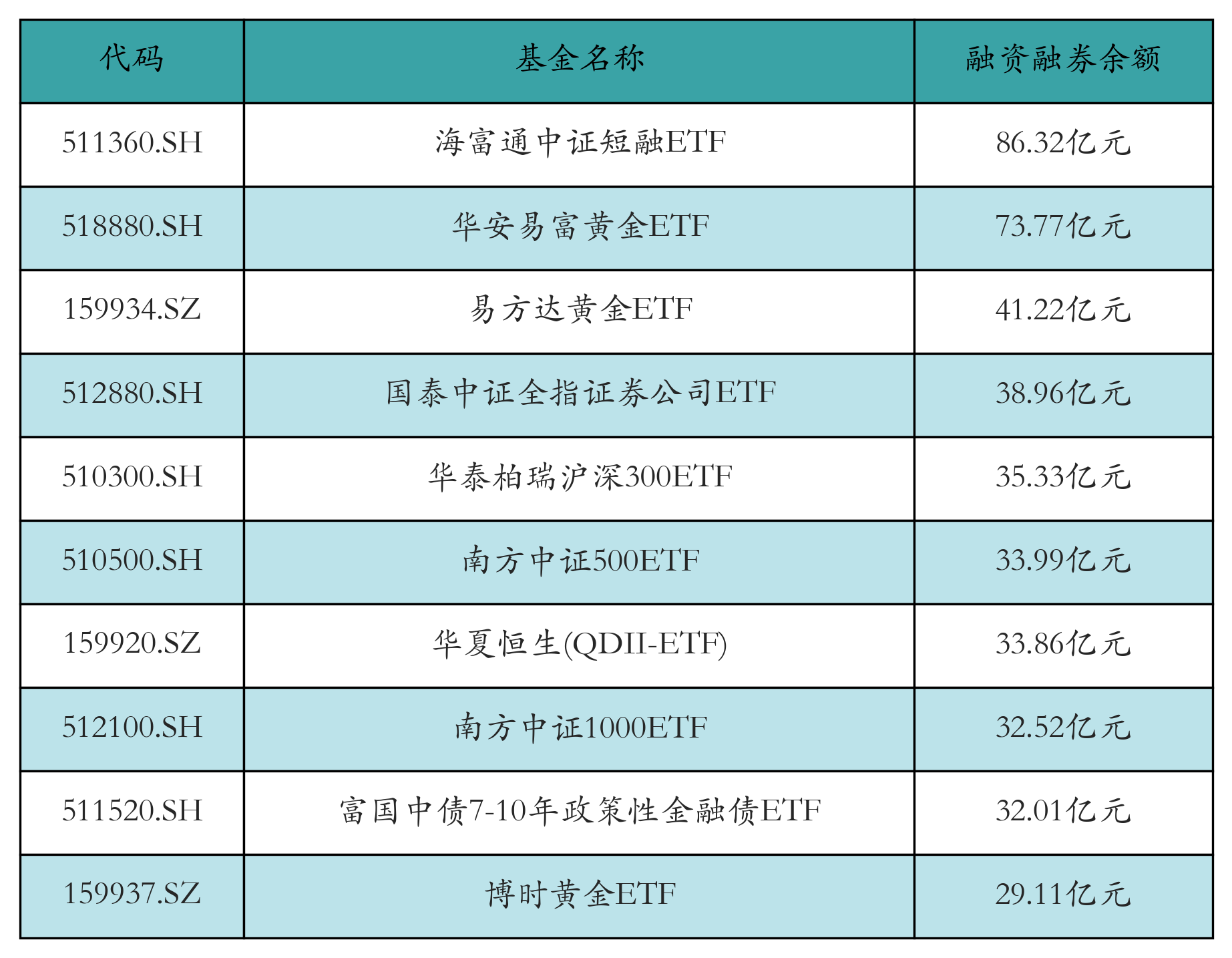
Market Overview - As of February 12, the total ETF margin balance in the two markets reached 125.347 billion yuan, an increase of 4.531 billion yuan from the previous trading day [1] - The financing balance was 117.82 billion yuan, up by 4.536 billion yuan, while the securities lending balance decreased by 4.2073 million yuan to 7.527 billion yuan [1] - In the Shanghai market, the ETF margin balance was 89.583 billion yuan, increasing by 4.501 billion yuan, with a financing balance of 83.011 billion yuan, up by 4.506 billion yuan [1] - The Shenzhen market's ETF margin balance was 35.764 billion yuan, increasing by 30.4641 million yuan, with a financing balance of 34.809 billion yuan, up by 29.959 million yuan [1] ETF Margin Balances - The top three ETFs by margin balance on February 12 were: - Hai Fu Tong Zhong Zheng Short Bond ETF (8.632 billion yuan) - Hua An Yi Fu Gold ETF (7.377 billion yuan) - Yi Fang Da Gold ETF (4.122 billion yuan) [2][3] ETF Financing Buy Amounts - The top three ETFs by financing buy amounts on February 12 were: - Hai Fu Tong Zhong Zheng Short Bond ETF (7.6 billion yuan) - Hua Tai Bai Rui Nan Fang Dong Ying Hang Seng Technology Index (QDII-ETF) (1.012 billion yuan) - Bo Shi Zhong Zheng Convertible Bonds and Exchangeable Bonds ETF (681 million yuan) [4][5] ETF Financing Net Buy Amounts - The top three ETFs by financing net buy amounts on February 12 were: - Hai Fu Tong Zhong Zheng Short Bond ETF (4.49 billion yuan) - Hua Tai Bai Rui Nan Fang Dong Ying Hang Seng Technology Index (QDII-ETF) (271 million yuan) - Hua Xia Hang Seng Technology (QDII-ETF) (144 million yuan) [6][7] ETF Securities Lending Sell Amounts - The top three ETFs by securities lending sell amounts on February 12 were: - Nan Fang Zhong Zheng 1000 ETF (1.02265 million yuan) - Nan Fang Zhong Zheng 500 ETF (537.15 thousand yuan) - Hua Xia Shang Zheng Ke Chuang Ban 50 Component ETF (391.57 thousand yuan) [8][9]
AI热潮再遇“当头棒喝”,纳指重挫逾2%
2 1 Shi Ji Jing Ji Bao Dao· 2026-02-13 02:38
Group 1: Market Trends - The recent AI hype has led to a three-year bull market in US stocks, but this trend is now facing challenges, with major indices like the Dow Jones, S&P 500, and Nasdaq experiencing declines of 1.34%, 1.57%, and 2.03% respectively [1] - Concerns over the disruptive potential of AI have shifted market sentiment, impacting various sectors including software, legal services, and wealth management, as investors reassess company valuations [1] Group 2: Capital Expenditure Concerns - Major tech companies including Google, Meta, Microsoft, and Amazon are projected to spend a total of $650 billion on capital expenditures this year, primarily for AI infrastructure expansion [2] - There are worries that these tech giants may not achieve sufficient returns from their high capital expenditures, leading to significant stock price declines for Microsoft and Amazon post-earnings reports [2] - UBS has downgraded the US information technology sector to a "neutral" rating, citing soaring capital expenditures and increasing uncertainty in the software industry, with expectations that capital spending by large US firms could reach $700 billion this year, quadrupling from three years ago [2] Group 3: Sector Rotation - A noticeable trend of sector rotation is occurring in the US stock market, with funds moving from AI-related stocks to value stocks as concerns about tech giants' capital expenditures grow [3] - Bank of America suggests that the leadership of tech giants in the stock market is facing significant threats, especially with the upcoming midterm elections, prompting a shift towards small-cap stocks [3] - Despite the challenges, some analysts remain optimistic about the tech sector's future, citing strong revenue prospects supported by the AI boom and attractive buying opportunities in stocks like Microsoft and Intuit following recent declines [3][4] Group 4: Future Outlook - Analysts believe that the fundamental benefits of AI-enabled sectors remain positive, and companies applying AI to core business operations, rather than just developing technology and infrastructure, present more investment opportunities [4]



