Guan Cha Zhe Wang

Search documents
天数智芯募资37亿港元,“国产GPU四小龙”齐聚资本市场
Guan Cha Zhe Wang· 2026-01-08 06:26
Core Viewpoint - TianShuZhiXin Semiconductor Co., Ltd. officially listed on the Hong Kong Stock Exchange, marking the gathering of the "Four Little Dragons" of domestic GPUs in the capital market [1][2] Group 1: Company Overview - TianShuZhiXin was founded in 2015 in Nanjing, initially focusing on computing acceleration hardware and software, later shifting to general-purpose GPU chips and AI computing solutions [2] - The company’s CEO, Gai Lujian, has 17 years of financial and investment experience and joined TianShuZhiXin in July 2020 [2] Group 2: Financial Performance - Revenue projections for TianShuZhiXin from 2022 to 2024 are 189 million, 289 million, and 540 million yuan, respectively, with a compound annual growth rate of 68.8% [2] - The company reported net losses of 553 million, 817 million, and 892 million yuan for the same period, with a projected net loss of 609 million yuan for the first half of 2025 [2][3] - R&D expenditures from 2022 to 2025 are approximately 456 million, 616 million, 773 million, and 451 million yuan for the first half of 2025, representing over 200% of total revenue in the initial years [3] Group 3: Product Development - TianShuZhiXin has launched two product lines: "TianVai" for training and "ZhiKai" for AI inference optimization [3] - The average selling price of training GPUs decreased to 30,400 yuan, with a gross margin drop to 32%, both down over 20% year-on-year [3][4] - Upcoming products include TianVai Gen 4 expected in Q2 2026 and TianVai Gen 5 in Q1 2027, focusing on advanced training and high cost-performance deployment [4] Group 4: Market Position - The company’s shipment volume increased from 7,800 units in 2022 to 16,800 units in 2024, with a market share of 0.7% in training chips and 0.2% in inference chips as of the first half of 2025 [5] - The domestic general-purpose GPU market share surged from 8.3% in 2022 to 17.4% in 2024, with expectations to exceed 50% by 2029 [5]
雷军回应念错“玄戒O1”
Guan Cha Zhe Wang· 2026-01-08 05:42
Core Viewpoint - Xiaomi's founder and CEO Lei Jun addressed recent controversies during a live stream, emphasizing the company's commitment to protecting its users and the need for accountability within its public relations team [1][3]. Group 1: Controversy and Response - Xiaomi faced criticism for engaging with a KOL perceived as a "Mi-hater," leading to public backlash and an apology from the company's public relations manager [1]. - The company announced disciplinary actions against its CMO and public relations manager for their handling of the situation, which included performance and bonus deductions [1]. - Lei Jun highlighted the severity of the situation, stating that the KOL's derogatory comments towards Xiaomi users were unacceptable and that the company must stand firm in protecting its community [1]. Group 2: Marketing and Public Perception - Lei Jun responded to criticisms regarding the company's marketing strategies, clarifying that past statements about avoiding promotional spending were made in a different context when Xiaomi was a startup [3]. - The public relations manager provided clarification on the number of meetings held regarding product discussions, emphasizing that discussions included various important topics beyond just one product [3]. - Lei Jun expressed discomfort with the label of "marketing master," stating that it has been misused and that marketing should be viewed as a neutral term rather than a negative connotation [5]. Group 3: Personal Accountability and Social Media - Lei Jun acknowledged a recent drop in his social media following, attributing it to a challenging period for the company and a lack of video content [5]. - He addressed a specific incident where he mispronounced a product name during a meeting, which was recorded and shared online, leading to public scrutiny [5].



马斯克再谈中国:AI算力将领跑全球,电力输出将达美国三倍
Guan Cha Zhe Wang· 2026-01-08 05:05
Group 1 - Elon Musk predicts that by 2026, China's power generation will exceed that of the United States by three times, and it will also resolve chip issues [3][4] - Musk emphasizes the importance of solar energy, stating that it is fundamental to everything, and compares other energy sources to primitive methods of using fire [2][3] - China is recognized for its impressive achievements in solar energy, battery pack production, and electric vehicle manufacturing, which Musk believes the U.S. should have accomplished [2][3] Group 2 - Musk asserts that, based on current trends, China will far surpass other regions in AI computing power [4] - He envisions a future where AI will no longer be limited by human capabilities, describing it as an independent system generating productivity [5]
“十全大补”面膜神话落幕:又一外资护肤品撤离中国
Guan Cha Zhe Wang· 2026-01-08 04:45
Core Insights - Filorga, a well-known French skincare brand, announced its withdrawal from the Chinese market, closing its Tmall flagship store on January 31, 2026, along with its 3.03 million followers and popular products like the "Ten Full Nourishing Mask" [1] - The exit of Filorga is part of a broader trend, with over 60 foreign beauty brands leaving the Chinese market between 2024 and 2025, indicating a significant retreat of foreign skincare brands [1] - Domestic beauty brands have gained market share, surpassing foreign brands for the first time in 2023, with Proya becoming the first domestic brand to exceed 10 billion yuan in revenue [1] Group 1: Filorga's Market Performance - Filorga entered the Chinese market in 2015 and quickly gained popularity, achieving a sales record of over 1 billion yuan during the 2018 Double Eleven shopping festival, with a year-on-year growth of 148% [2] - However, growth slowed significantly after 2020, attributed to ineffective pricing strategies and a lack of competitive advantage against domestic brands [2][3] - The brand's high-priced star product, the mask priced at 599 yuan, failed to maintain its premium image due to frequent discounts, while domestic competitors offered more affordable alternatives [2] Group 2: Challenges in Channel Operations - Filorga's online sales performance was poor, with only 2.5 million to 5 million yuan in sales on Douyin in 2025, indicating a lack of effective online marketing strategies [3] - The closure of physical stores resulted in a loss of high-end brand image and direct consumer engagement opportunities [3] - In contrast, other brands under the L'Oréal group, such as La Roche-Posay and Kiehl's, maintained strong market positions through effective product offerings and operational strategies [3] Group 3: Broader Industry Trends - The withdrawal of Filorga aligns with Colgate's global strategy to streamline operations, as the company's personal care segment saw a 2.05% decline in net sales in the first half of 2025 [4] - Similar strategic adjustments are occurring across the foreign beauty sector, with brands like Shiseido and LVMH also closing stores or withdrawing from the market due to declining performance [5] - Domestic brands like Proya and Winona have shown significant growth, with Proya achieving over 10.778 billion yuan in revenue in 2024, marking a year-on-year increase of over 20% [5] Group 4: Future Outlook - Analysts suggest that the challenges faced by foreign brands are not solely due to their foreign status but rather their inability to adapt to the Chinese market and consumer preferences [6] - L'Oréal's success is attributed to its localized operations, contrasting with Filorga's failure to establish a coherent market strategy in China [6] - The Chinese high-end beauty market is expected to continue facing challenges, but opportunities remain for brands that can effectively engage with local consumers [6]
出征CES 2026:无人物流车爆发来到临界点?
Guan Cha Zhe Wang· 2026-01-08 03:12
Core Insights - The article highlights the rapid development of AI technology and China's manufacturing capabilities, showcasing the emergence of new products and brands at CES 2026, particularly focusing on Neolix's advancements in autonomous logistics vehicles [1][11]. Group 1: Neolix's Innovations - Neolix debuted its AI-driven next-generation autonomous logistics solutions at CES 2026, featuring a full range of RoboVan products with cargo capacities from 0.5 to 12 cubic meters, marking a significant milestone in the global smart logistics industry [1]. - The company’s founder and CEO, Yu Enyuan, emphasized that the autonomous logistics sector is transitioning from pilot projects to large-scale commercial deployment, with 2025 being a pivotal year for achieving significant operational milestones [1]. Group 2: Technological Advancements - Neolix's next-generation logistics solution employs a dual-engine architecture designed to optimize large-scale autonomous vehicle fleets, including a global intelligent scheduling system capable of supporting over 100,000 L4 autonomous vehicles, improving fleet efficiency by 30% [3]. - The company has developed a commercial L4 autonomous driving technology that does not rely on high-precision maps, significantly reducing deployment costs and enhancing adaptability in complex urban environments [3]. Group 3: Commercial Deployment and Market Expansion - Neolix has deployed over 16,000 L4 autonomous vehicles, accumulating nearly 80 million kilometers in total driving distance, with operations in Qingdao representing the largest and densest autonomous vehicle fleet globally [5]. - The company plans to establish offices in key regions such as Europe, America, Australia, and Southeast Asia, aiming to deliver over 50,000 autonomous vehicles overseas by 2027 [6]. Group 4: Industry Growth and Market Potential - The autonomous logistics vehicle industry is expected to see significant growth, with an estimated shipment of 150,000 units in 2026 and a potential market size exceeding 100 billion yuan by 2030 [7][9]. - The market for autonomous delivery vehicles is projected to exceed 1.12 trillion yuan when the penetration rate in the express delivery sector reaches 50% [9]. Group 5: Policy and Demand Drivers - National policies are evolving to support a comprehensive ecosystem for autonomous vehicles, while increasing demand for centralized logistics and high-frequency delivery scenarios provides a fertile ground for the growth of autonomous delivery solutions [10]. - The advancements in autonomous driving technology and cost optimization are leading to a shift from technical demonstrations to large-scale commercial applications, potentially reshaping urban logistics systems [10].
CES 2026群雄逐鹿,海信首创玲珑4芯突围
Guan Cha Zhe Wang· 2026-01-08 02:51
Core Viewpoint - The CES 2026 showcases a competitive landscape in display technology, with major brands like Samsung, LG, Sony, TCL, and Hisense unveiling their latest innovations, particularly in RGB-MiniLED and OLED technologies [1][2]. Group 1: Display Technology Developments - The CES 2026 features a competitive environment characterized by the "explosion of RGB-MiniLED and continuous iteration of OLED" technologies [2]. - Samsung introduces its "Micro RGB" technology, offering a product range from 55 inches to 115 inches, achieving 100% BT.2020 color coverage with its Micro RGB AI Engine Pro chip for precise color temperature control [2]. - LG adopts a dual strategy by upgrading its OLED product line and entering the RGB-Mini LED market with its Micro RGB evo series, achieving near-OLED light control precision [2]. - Sony focuses on commercializing RGB-Mini LED technology with its Bravia 9 II and Bravia 7 II series, featuring "True RGB" backlight technology and peak brightness of 4000 nits [2]. - TCL emphasizes its Mini-LED offerings with the X11L SQD Mini-LED TV, achieving 100% BT.2020 color coverage and peak brightness of 10000 nits [3]. Group 2: Hisense's Innovations - Hisense's new RGB-Mini LED technology features a groundbreaking "玲珑4芯真彩背光" architecture, enhancing color gamut and achieving 110% BT.2020 color coverage, surpassing current QD-Mini LED and QD-OLED technologies [4][5]. - The introduction of the信芯AI画质芯片H7 enhances color precision to 134 bits, allowing for superior color performance across various brightness levels while reducing harmful blue light by 60% compared to QD-OLED [6][7]. - Hisense's RGB-Mini LED technology includes a comprehensive color management system, ensuring accurate color reproduction and enhancing the viewing experience for consumers [7]. Group 3: Market Positioning and Launch Plans - Major brands are adopting differentiated strategies for product positioning, with Samsung aiming to make Micro RGB TVs more accessible, while TCL has already launched its X11L model [9]. - Hisense plans to launch its UX series TV, featuring the new 玲珑4芯 technology, in March 2026, following its recognition at CES 2026 [9]. - The 116-inch version of Hisense's UX series has garnered significant attention, positioning it as a strong competitor in the high-end TV market [9].

围栏封门、断水断电……卓悦中心与KKV陷入“业绩租金”罗生门
Guan Cha Zhe Wang· 2026-01-08 01:51
Core Viewpoint - The conflict between KKV and Shenzhen One Avenue has escalated, leading to the termination of the lease agreement due to KKV's failure to meet performance standards and pay agreed-upon rent [1][3][4]. Group 1: Lease Termination - Shenzhen One Avenue announced the formal termination of the lease with KKV, citing KKV's long-term failure to pay performance-based rent as the reason for exercising their right to terminate the contract [1][3]. - The management of One Avenue stated that they had fulfilled their obligation to inform KKV and had engaged in multiple rounds of communication over the past three months regarding the lease termination [3][4]. - The termination was executed in accordance with the lease agreement and relevant legal provisions, aiming to maintain normal operations and protect the interests of compliant tenants [4]. Group 2: Background and Previous Incidents - This incident marks the second forced closure of the KKV store within a month, with the first closure occurring on December 14, 2025, due to alleged contract violations by One Avenue [5][7]. - KKV's parent company, KK Group, indicated that the store had been one of the better-performing outlets in the area despite low foot traffic and claimed that One Avenue had not previously raised concerns about unpaid rent during the four years of operation [7][8]. - The management of One Avenue had previously provided various forms of operational support to KKV, totaling approximately 440,000 yuan, despite KKV's failure to pay performance rent [8]. Group 3: Market Dynamics and Future Plans - The ongoing dispute may be influenced by the urgent need for One Avenue to adjust its tenant mix, as it has recently introduced popular dining brands to attract higher foot traffic [9]. - KKV has announced plans to open its 700th store globally in Malaysia, indicating that the dispute will not affect its overall operational strategy [9].

特朗普盯上委内瑞拉石油,为什么市场无动于衷?
Guan Cha Zhe Wang· 2026-01-08 01:47
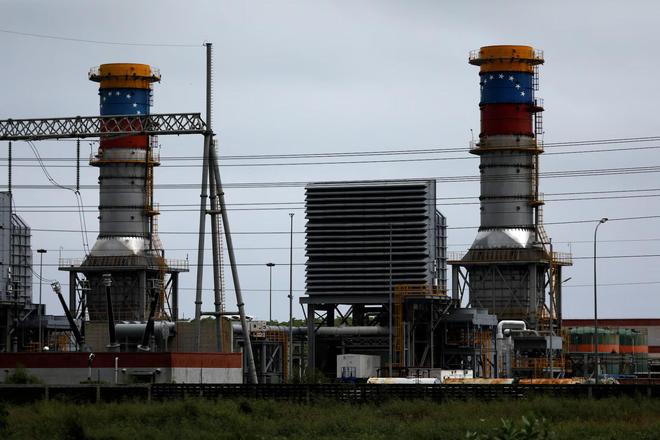
【文/约翰·拉普利,翻译/鲸生】 当全球原油市场在上周日(1月4日)深夜重新开盘交易时,油价几乎纹丝未动。这个小小的数据其实已 经说明了一切:如果唐纳德·特朗普这次对委内瑞拉的大胆行动真的是为了石油,那它从一开始就算不 上成功。 自从美国发起军事行动,将尼古拉斯·马杜罗从加拉加斯掳走并送往美国受审以来,各种说法不绝于耳 ——这次行动将如何重塑地缘政治格局、冲击世界经济,等等。中国每天从委内瑞拉进口大约50万桶原 油,如今失去了一个关键战略伙伴。在中美竞争中,华盛顿似乎一下子掌握了优势。 与此同时,委内瑞拉那被反复提及的"全球最大"石油储备也已落入美国之手。有了这种程度的控制权, 美国就能手握大量廉价能源,用来让本国石油公司获利、推动工业复兴,并在全球能源市场上只手遮 天。 但如果这一切都成为事实,我们本该看见市场的剧烈反应。在人们消化新闻的过程中,中国股市理应随 着增长前景受挫而大跌;油价要么因预期大量新增供应而暴跌,要么因冲突风险上升、供应中断的隐忧 而飙升;投资者也会蜂拥而入地追求美国国债和美元等"避险资产",为可能扩大的冲突做准备。 现实恰恰相反。多年的失修导致委内瑞拉的石油基础设施几近崩溃;长期腐败和 ...
重庆啤酒1亿和解,但山城啤酒的“雷”留到了3年后
Guan Cha Zhe Wang· 2026-01-08 01:20
Core Viewpoint - The long-standing dispute between Chongqing Beer and its affiliate Chongqing Jiawei Beer has reached a resolution through a mediation agreement, halting ongoing litigation and establishing a three-year transitional cooperation period [1][3][29] Financial Summary - Chongqing Beer will make a one-time payment of 100 million yuan (excluding tax) to Jiawei to settle all disputes related to "volume-price difference settlement" before December 31, 2025 [3][5] - The payment will not impose significant financial pressure on Chongqing Beer, which had a cash balance of 2.46 billion yuan as of June 2025 [7] - The agreement is expected to increase Chongqing Beer's total profit by approximately 37.11 million yuan and net profit attributable to shareholders by about 19.08 million yuan for the year 2025 [5][16] Operational Summary - During the three-year transitional period, Chongqing Beer will purchase 142,600 hectoliters of beer annually from Jiawei at an average price of 4,000 yuan per hectoliter [5][20] - If Jiawei's annual sales fall short of the agreed volume, Chongqing Beer has the right to demand compensation based on the shortfall [5][20] - The agreement aims to stabilize Chongqing Beer's production capacity and supply chain, allowing the company to focus on high-end product development and market penetration [16][21] Strategic Summary - The mediation agreement allows Chongqing Beer to regain control over the "Shancheng" brand and Jiawei's production capacity after the contract expires in 2028 [17][20] - The resolution of disputes over brand usage rights and sales agreements is crucial for both companies as they navigate the competitive landscape of the beer industry [12][29] - The agreement does not address the ownership of the "Shancheng" trademark, leaving potential future conflicts unresolved [22][29] Industry Context - The Chinese beer industry has seen a decline in production volume from 50.62 million hectoliters in 2013 to 37.89 million hectoliters in 2023, despite an increase in revenue from 167.8 billion yuan to 203 billion yuan [12] - The shift towards premium products has become a key growth area, with Chongqing Beer successfully increasing its price per ton from 2,700 yuan in 2013 to 4,820 yuan in 2023 [13] - The ongoing competition in the industry highlights the challenges faced by brands like "Shancheng," which struggle to maintain profitability amid rising costs and changing consumer preferences [14][20]

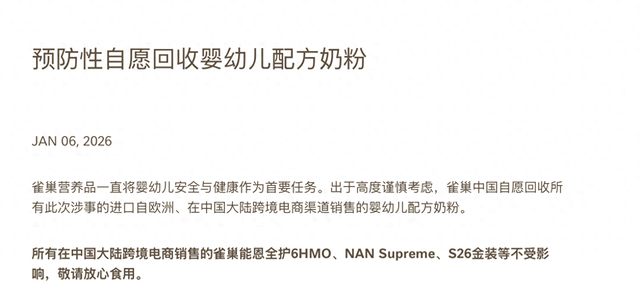
4品牌30批次在列,雀巢中国紧急回收涉事婴幼儿奶粉
Guan Cha Zhe Wang· 2026-01-07 14:24
Core Viewpoint - Nestlé has initiated a voluntary recall of certain batches of infant formula in 31 countries due to the detection of trace amounts of Cereulide, a toxin produced by Bacillus cereus, in ARA oil supplied by vendors [1][3]. Group 1: Recall Details - The recall affects 30 batches of four major brands in mainland China and 41 batches of imported products through cross-border e-commerce [1][3]. - The affected batches represent less than 0.5% of Nestlé's annual sales, estimated at approximately 4.57 million Swiss francs (around 400 million RMB) [3][4]. Group 2: Company Response - Nestlé China has emphasized that it has not received any reports of adverse effects related to the recalled products and that other infant formula products in the Chinese market remain unaffected [3]. - The company views the recall as a responsible action to prevent potential consumer harm, aligning with industry standards for proactive measures [5][6]. Group 3: Industry Context - ARA oil is a common ingredient in infant formula, with a limited number of suppliers controlling 90% of global production, indicating that issues with any single supplier can escalate into a broader industry crisis [7]. - The toxin Cereulide is heat-resistant and can cause acute nausea, vomiting, and diarrhea, highlighting the importance of stringent safety measures in food production [11]. Group 4: Supplier Information - One of Nestlé's ARA suppliers, "Jiabiyou," is currently conducting tests on the affected raw materials, with results pending [8][9]. - Jiabiyou reported a revenue of 428 million RMB for the first three quarters of 2025, reflecting a year-on-year growth of 10.54% [9]. Group 5: Regulatory Insights - The presence of Bacillus cereus and its toxins is not typically included in mandatory testing lists in many countries, suggesting a gap in current food safety regulations [12][13]. - Experts recommend that companies adopt proactive monitoring and risk assessment mechanisms for non-mandatory pathogens to enhance food safety [13].