Hua Xia Shi Bao

Search documents
商务部:第八届进博会将有138个国家和地区企业参展,8位诺奖得主参加虹桥论坛|快讯
Hua Xia Shi Bao· 2025-10-28 05:59
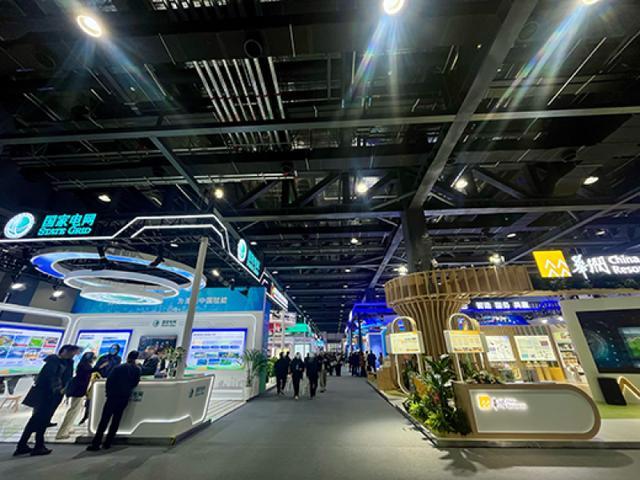
Core Points - The 8th China International Import Expo (CIIE) will be held from November 5 to 10 in Shanghai, featuring participation from 155 countries, regions, and international organizations, with 4,108 foreign enterprises exhibiting, marking a record high in overall exhibition area exceeding 430,000 square meters [2] - The event will showcase 461 new products, technologies, and services, including innovations in low-altitude economy and humanoid robots, reflecting the commitment of the international community to China's economic prospects [2] - The Hongqiao International Economic Forum will host 33 sub-forums and closed-door meetings, with participation from eight Nobel laureates and over 400 prominent figures from politics, business, and academia discussing global governance and open cooperation [2] Industry Insights - China has maintained its position as the world's second-largest import market for 16 consecutive years, with imports of goods and services expected to exceed $15 trillion during the 14th Five-Year Plan period [3] - The potential of the vast market is underscored by the projected growth of the middle-income group, which is expected to exceed 800 million in the next decade [3] - The CIIE has facilitated over $500 billion in intended transactions over its first seven editions, demonstrating China's commitment to sharing market opportunities and providing certainty amid global market fluctuations [3]

工商银行正式收购锦州银行,中小银行改革化险出现新模式
Hua Xia Shi Bao· 2025-10-28 05:14
Core Points - On October 26, Jinzhou Bank officially announced that its assets, liabilities, business, branches, and personnel would be acquired by Industrial and Commercial Bank of China (ICBC) [2][3] - The acquisition marks a new phase in risk management for Jinzhou Bank, which has been under reform since 2019 due to its classification as a high-risk financial institution [5][6] - The move is seen as a significant step in stabilizing regional financial systems and enhancing the efficiency of financial risk management [2][4][8] Group 1: Acquisition Details - ICBC will continue to provide banking services to Jinzhou Bank's customers, ensuring that the rights of depositors remain unaffected [3][4] - The business migration will involve transferring various services, including unit and personal customer business, credit card services, and payment services to ICBC's platforms [4] - Customers are advised to replace old savings cards and redeem funds held with Jinzhou Bank as part of the transition [2][4] Group 2: Background and Context - Jinzhou Bank was established in January 1997 and has faced significant challenges, including a decline in stock price and trading volume since its listing in 2015 [5][6] - The bank has been undergoing restructuring since 2019, which included disposing of risky assets and enhancing its capital base [5][6] - Since 2021, Jinzhou Bank has closed approximately 33 branches as part of its downsizing efforts [7] Group 3: Implications for the Industry - The acquisition by a large state-owned bank is viewed as an innovative approach to resolving risks in smaller financial institutions [4][8] - The involvement of large banks like ICBC is expected to provide substantial support to smaller banks, leveraging their financial strength and expertise in risk management [8] - This trend reflects a broader strategy in China to address the challenges faced by smaller financial institutions through market-oriented and legal frameworks [7][8]


前三季度营收同比增10.59%,盈康生命高质量发展韧性凸显
Hua Xia Shi Bao· 2025-10-28 03:29
Core Insights - The company reported a revenue of 1.358 billion yuan for the first three quarters of 2025, reflecting a year-on-year growth of 10.59% [1] - Net profit reached 93.807 million yuan, up 12.75% year-on-year, while the net profit attributable to shareholders was 86.839 million yuan, growing by 5.20% [1] - The company’s non-recurring net profit attributable to shareholders increased by 12.53% year-on-year, indicating strong operational resilience [1] Financial Performance - The company’s operating cash flow has shown continuous improvement, with a net cash flow from operating activities of 68.68 million yuan in Q1, increasing to 79.94 million yuan in Q2 (a growth of over 16.4%), and reaching 99.11 million yuan in Q3 (a growth of 23.97%) [2] - The total net cash flow for the first three quarters amounted to 248 million yuan, providing a solid financial foundation for future development [2] Strategic Focus - The company is focused on building a comprehensive pre-diagnosis and treatment ecosystem, particularly in oncology, supported by AI integration [3] - The company is advancing its oncology ecosystem and differentiating its services while enhancing its competitive edge through continuous AI empowerment [3] - The overseas revenue grew by 35% year-on-year, driven by a targeted strategy for international markets [3] Industry Context - The private hospital sector is facing challenges such as slower recovery in treatment demand, stricter medical insurance controls, high operational costs, and increased public hospital bed capacity [1] - The company’s AI-driven approach positions it favorably within the healthcare industry, allowing it to maintain a steady growth trajectory despite industry challenges [3]

「机器人+」低价只是前奏?构建人形机器人闭环生态,加速进化欲做AI时代的苹果
Hua Xia Shi Bao· 2025-10-28 03:14
Core Insights - The entry of humanoid robots into the "Double 11" shopping festival signifies a shift in consumer goods, with companies like Accelerated Evolution and Songyan Power introducing competitively priced models [2][3] - Accelerated Evolution aims to create an ecosystem around its humanoid robot, Booster K1, which includes a comprehensive educational and event solution, indicating its ambition to become a leading player in the AI era [2][5] Pricing Strategy - Accelerated Evolution's Booster K1 is priced at 29,900 yuan, while Songyan Power's Bumi is priced at 9,998 yuan, marking a significant reduction in the cost of high-performance humanoid robots [3][4] - Both companies emphasize that their pricing strategies are not indicative of a price war but rather a means to promote market penetration and accessibility [3][4] Industry Trends - The humanoid robot industry is experiencing a "Moore's Law" effect, with increasing functionality and flexibility while prices continue to decline, driven by capital influx and supply chain optimization [4][6] - The current focus of small humanoid robots is on entertainment and education rather than industrial applications, with potential future developments in full-sized humanoid robots [4][6] Ecosystem Development - Accelerated Evolution's "2025 Ecosystem Conference" highlighted its commitment to building a developer ecosystem, launching initiatives like the "Sailing Plan" to support developers with tools and funding [5][6] - The company aims to establish a complete educational solution around the Booster K1, targeting partnerships with over 10,000 schools globally within three years [5][6] Market Position and Ambitions - Accelerated Evolution aspires to be the "Apple of the AI era," focusing on standard hardware and a robust ecosystem to lower industry entry barriers and enhance market solutions [6][7] - The company has successfully shipped over 700 units globally, with a significant portion of its market share in overseas markets, indicating strong demand and growth potential [7][8]


募资27亿港元!老铺黄金5个月内两度出手,加速扩张还是资金告急?
Hua Xia Shi Bao· 2025-10-27 13:22
Core Viewpoint - The company, Laopu Gold, has announced a new share placement plan to raise approximately HKD 2.7 billion, primarily for inventory reserves, store expansion, and working capital, following a previous fundraising effort earlier this year [2][3]. Fundraising Details - Laopu Gold plans to issue 3.71 million new H-shares at a price of HKD 732.49 per share, representing a 4.5% discount to the market price [2][3]. - The company had previously raised around HKD 2.7 billion in May, with 80% allocated to expanding and upgrading stores in mainland China [3]. - The net proceeds from the current placement are expected to be approximately HKD 2.7 billion after deducting commissions and estimated expenses [3]. Financial Performance - Laopu Gold reported a significant increase in revenue and net profit for the first half of the year, with revenue reaching HKD 12.354 billion, a year-on-year increase of 251%, and net profit of HKD 2.268 billion, up 285.8% [4]. - The rapid consumption of funds raised in the previous placement has raised concerns about the efficiency of capital use and future funding needs [4]. Strategic Considerations - Analysts suggest that the company's high growth in performance and high financing are not contradictory but rather a reflection of the capital-intensive nature of the gold and jewelry industry [4]. - The management aims to address future funding gaps proactively to avoid potential market volatility affecting financing opportunities [4]. Expansion and Inventory - The current fundraising will support inventory reserves and store expansion, with 70% of the funds allocated for inventory [5][6]. - Laopu Gold has expanded its physical presence by opening five new stores and upgrading three existing ones since July 2025, increasing its coverage in high-end shopping areas [5][6]. - The company's inventory has significantly increased to approximately RMB 8.685 billion, a 112.5% rise from the previous year, driven by business growth and market demand [6]. Market Conditions - The company is taking advantage of the current upward trend in gold prices by securing inventory, which could yield additional profits through appreciation [6]. - However, there are concerns about potential pressures from high inventory costs and fixed expenses if consumer sentiment declines or gold prices drop sharply [7].

央行行长潘功胜:继续完善货币政策框架,强化货币政策执行和传导|快讯
Hua Xia Shi Bao· 2025-10-27 12:21
Core Viewpoint - The People's Bank of China (PBOC) is committed to maintaining a supportive monetary policy stance to foster economic recovery and stabilize financial markets amid complex domestic and international conditions [2] Group 1: Monetary Policy Implementation - The PBOC has utilized various monetary policy tools, including quantity, price, and structure, to ensure ample liquidity in the financial system [2] - The central bank plans to continue implementing moderately accommodative monetary policies while enhancing the monetary policy framework and execution [2][3] Group 2: Macro-Prudential Management - The PBOC aims to establish a comprehensive macro-prudential management system that effectively links macroeconomic performance with financial risk [3] - There is a focus on monitoring and assessing the dynamics of economic growth, structural adjustments, and financial risk prevention to support high-quality economic development [3] Group 3: Coverage of Financial Markets - The PBOC intends to expand the coverage of macro-prudential management to adapt to changes in financial markets and enhance the resilience of the financial system [4] - The central bank will assess and identify systemically important financial institutions and implement additional regulatory measures commensurate with their significance [4] Group 4: International Financial Risks - The PBOC will also address the cross-border transmission of risks from international economic and financial markets [5] - The central bank is exploring mechanisms to provide liquidity to non-bank institutions under specific circumstances while balancing market stability and preventing moral hazards [5]

茅台集团再换帅,巨头转型正处关键期|快讯
Hua Xia Shi Bao· 2025-10-27 12:15
Core Viewpoint - The recent leadership change at Kweichow Moutai Group comes just before the release of its third-quarter report, highlighting the company's ongoing challenges in maintaining growth amid a shifting market landscape [2][4]. Group 1: Leadership Change - On October 27, the Guizhou Provincial Government announced the recommendation of Chen Hua as the new Chairman and Director of Kweichow Moutai Group, replacing Zhang Deqin, who has held the position for only a year and a half [2]. - Zhang Deqin's tenure saw Moutai's product prices under pressure while the company pursued transformation strategies [2]. Group 2: Financial Performance - In the first half of 2023, Kweichow Moutai reported total revenue of 91.094 billion yuan, a year-on-year increase of 9.16%, and a net profit attributable to shareholders of 45.403 billion yuan, up 8.89% year-on-year [2]. - Despite maintaining double-digit growth in 2023 and 2024, the company is at a critical juncture for growth momentum, especially given the current economic pressures and changing consumer behavior [2]. Group 3: Strategic Focus - Kweichow Moutai has outlined a strategic direction for 2025, focusing on consumer-centric approaches and three key transformations: targeting new business demographics, expanding dining scenarios tailored to various industries, and enhancing service to meet diverse consumer needs [3]. - The company aims to shift from merely selling liquor to promoting a lifestyle, which is crucial for optimizing consumer experience [4]. - The new leadership will need to address the challenges of maintaining Moutai's high-end brand value while finding new consumer scenarios and demographics amidst a general price decline in the high-end liquor market [4].


金融监管总局局长李云泽:加快构建与房地产发展新模式相适应的融资制度|快讯
Hua Xia Shi Bao· 2025-10-27 12:15
Core Viewpoint - The Financial Regulatory Administration emphasizes the need to balance financial development and security to ensure a new development pattern, addressing the unprecedented challenges facing global economic and financial stability [2]. Group 1: Financial Risk Management - The Financial Regulatory Administration will prioritize risk prevention, aiming to maintain a bottom line against systemic financial risks [2]. - There will be a focus on consolidating risk disposal achievements and promoting the merger and restructuring of small and medium-sized financial institutions in a steady and orderly manner [2]. - Efforts will be made to enhance the disposal of non-performing assets and capital replenishment, ensuring a robust financial system [2]. Group 2: Regulatory Efficiency and Framework - The administration plans to accelerate the reform of financial laws and regulations, establishing a clear and effective tiered regulatory framework [2]. - There will be an emphasis on leveraging technology to optimize resource allocation and support the five major regulatory areas [2]. - Strengthening collaboration between central and local authorities, as well as inter-departmental coordination, is essential to enhance regulatory effectiveness [2]. Group 3: Global Financial Cooperation - The administration aims to strengthen multilateral and bilateral coordination to improve cross-border risk monitoring, early warning, and response mechanisms [2]. - Enhancing international regulatory cooperation and crisis management efficiency is crucial for addressing major risks and challenges [2]. - The ultimate goal is to work collectively to maintain global financial stability [2].

10月28日起摘牌,“浦发转债”转股比例超99%
Hua Xia Shi Bao· 2025-10-27 11:18
Core Viewpoint - The Shanghai Pudong Development Bank's convertible bond (浦发转债) will be delisted on October 28, marking the end of its conversion period, with a conversion rate reaching 99.67%, significantly higher than market expectations [2][5]. Group 1: Convertible Bond Details - The浦发转债 was issued in November 2019 with a total scale of 50 billion yuan, making it the largest convertible bond issuance at that time [2]. - As of October 27, the未转股 (unconverted) proportion was only 0.33%, indicating a successful conversion process [5]. - The bond faced challenges earlier in the year, with a未转股 proportion of 99.9971% as of March 31, and 49.14% as of September 30 [3]. Group 2: Capital Support and Conversion - Major investors, including China Mobile and China Orient Asset Management, have actively participated in the conversion process, providing capital support to浦发银行 [4][5]. - China Mobile increased its stake in浦发银行 from 17% to 18.18% after converting 56.31 million convertible bonds into 450 million shares [4][5]. - The conversion of浦发转债 is expected to enhance浦发银行's core Tier 1 capital adequacy ratio, which stood at 8.91% as of June 30, 2025 [5]. Group 3: Market Impact - Following the delisting of浦发转债, only six bank convertible bonds will remain in the market, with a total market size reduction of over 90 billion yuan since the beginning of the year [6]. - The trend of convertible bonds in the banking sector has seen no new issuances in 2023, with several bonds exiting the market due to strong redemption clauses being triggered [6][7]. - The conversion of convertible bonds is viewed as a strategic move to bolster banks' capital strength and support business expansion [7].


从“附加题”到“必答题”,A股上市公司披露ESG报告达46.8%
Hua Xia Shi Bao· 2025-10-27 11:17
Group 1 - The first ESG International Expo showcased innovative low-carbon products, emphasizing the practical application of the ESG concept in daily life [2] - The Chinese government is committed to transforming ESG from a compliance requirement into a development engine, promoting collaborative efforts across the entire supply chain [2][5] - The ESG development level of Chinese listed companies is on par with international standards, with 32.4% of companies in the leading category [5] Group 2 - As of August 2025, 2,521 A-share listed companies have published ESG reports, achieving a disclosure rate of 46.8%, indicating a robust growth trend in ESG information disclosure [5] - The theme of the ESG China Innovation Conference 2025 is "Full Chain Innovation Leading the Way, Green Transformation Future," focusing on collaborative innovation across the entire industry chain [7] - The demand for ESG talent is increasing, with the CFA Association launching a Chinese version of the Sustainable Investment Fundamentals Certificate exam in July 2025 to meet market needs [13] Group 3 - Companies like China Resources Beer are implementing green packaging innovations, such as lightweight glass bottles, which reduce CO₂ emissions by approximately 29,550 tons annually [10] - The Shougang Group is actively integrating ESG into its operations and has established a carbon emission management platform, achieving carbon footprint certification for 26 products [11] - The "foldable" tent showcased at the expo demonstrates advanced technology with practical applications in outdoor activities and disaster relief [13]