
Feng Huang Wang

Search documents
涨幅最高20%,戴尔、联想等PC厂计划涨价 存储成本压力“扛不住了”
Feng Huang Wang· 2025-12-07 03:04
随着存储涨价潮持续发酵,手机厂商之后,PC和笔电厂商也开始感受到压力。综合多家媒体消息,联 想、戴尔、惠普等都计划涨价,涨幅最高达到20%。 其中,联想已开始通知客户即将进行涨价调整。当前所有的服务器和电脑的报价将于2026年1月1日到 期,届时新的报价将会大幅涨价。 联想表示,一方面,全球供应链压力推高内存成本,连带推动整体硬件价格上涨;另一方面,企业竞相 部署AI应用,高性能系统需求激增,进一步加剧供应紧张,推动价格继续走高。因此,联想建议客户 尽早下单,以当前价格锁定采购,避免因未来价格调整而增加额外成本。 戴尔同样向客户发出了涨价预警。业内人士表示,戴尔正考虑对PC和服务器产品涨价,预计涨幅至少 15%–20%,涨价最快可能在12月中旬生效。此前戴尔首席运营官Jeff Clarke曾警告,他"从未见过内存 芯片成本涨得这么快",各产品线的开支都在攀升。 惠普CEO Enrique Lores则警告称,2026年下半年"可能尤其艰难",必要时将上调价格。他指出,内存芯 片约占一台PC成本的15%–18%。 据悉,由于内存价格上涨,PC 厂商正面临不断上升的利润压力。联想、惠普、戴尔、三星电子与LG电 子 ...



高管离职潮!苹果芯片负责人考虑离职
Feng Huang Wang· 2025-12-07 02:33
Core Insights - Apple has recently experienced significant executive turnover, losing key figures such as AI chief John Giannandrea, design head Alan Dye, legal chief Katherine Adams, and government affairs chief Lisa Jackson, all of whom reported directly to CEO Tim Cook [1] - The potential departure of hardware technology senior vice president Johny Srouji, a crucial player in Apple's chip strategy, raises concerns about further instability within the company [1] Group 1 - The recent executive changes at Apple are unprecedented in the company's history, indicating a potential shift in leadership dynamics [1] - Srouji, known for his pivotal role in the development of M-series and A-series chips, has significantly contributed to Apple's competitive edge in performance and efficiency [1] - Apple's market share in the PC industry has notably increased following the transition to in-house chip production, largely attributed to Srouji's efforts [1] Group 2 - There are proposals within Apple to promote Srouji to Chief Technology Officer (CTO), which would position him as the second most powerful executive in the company [2] - Implementing the CTO role faces challenges, particularly the need to establish hardware engineering head John Ternus as CEO before transferring reporting lines to Srouji [2] - Srouji desires a position with substantial autonomy, preferring not to report directly to the CEO, which poses difficulties given Apple's established hierarchical structure [2]

对话联想基础设施业务群黄山、周韬:单纯算力中心面临生存危机,AI工厂如何重构商业闭环
Feng Huang Wang· 2025-12-07 02:08
Core Insights - The article discusses the transition of China's AI industry from a phase of intense competition to a focus on practical applications, highlighting Lenovo's initiatives in this transformation [1][10] Group 1: AI Factory Concept - Lenovo introduced the "AI Factory" concept as a reconstruction of the computing infrastructure business model, moving beyond mere computing power to address complex industry needs [2][3] - The shift from traditional computing centers to AI factories is seen as essential for reducing costs and enhancing efficiency for small and medium enterprises [2][3] Group 2: Business Model Innovation - Lenovo aims to fill the capability gaps of its clients by providing a comprehensive suite of services, including consulting, data governance, and AI production management, thus lowering the barriers for SMEs [3][4] - The company emphasizes the importance of ecosystem collaboration to enhance operational efficiency and competitiveness [3] Group 3: Standardization Efforts - The lack of industry standards for AI training and inference efficiency is identified as a significant challenge, prompting Lenovo to collaborate with various institutions to establish integrated training and inference standards [4] - This initiative aims to eliminate information asymmetry in the computing service market, allowing clients to better understand the return on investment for their expenditures [4] Group 4: Hardware Innovations - Lenovo's new server, the WA8080a G5, is designed to address the challenges posed by the rapid evolution of GPU technology, which has seen power consumption exceed 1000 watts [5][6] - The company has adopted a modular design strategy to accommodate the fast-paced changes in GPU architecture, ensuring long-term investment protection for clients [7] Group 5: Software and Performance Optimization - Lenovo's Wanquan Heterogeneous Computing Platform 4.0 has been optimized to address emerging technology trends, particularly in handling long sequences in model training [8] - Innovations in network load balancing have been implemented to tackle bandwidth degradation issues in large-scale clusters [8] Group 6: Market Observations - Despite technological advancements, the commercial viability of AI applications remains a challenge, with only a small percentage of clients willing to pay for models [9] - The current market is compared to the mobile internet era, indicating that the ecosystem for AI applications has not yet reached a stage of widespread willingness to pay [9] Group 7: Conclusion - Lenovo's initiatives signal a significant shift in the AI computing industry towards standardized, measurable, and profitable services, marking a deep transformation in production efficiency and business models [10]


吴清的一次重要讲话,明确这些改革方向
Feng Huang Wang· 2025-12-06 15:17
Core Viewpoint - The speech by Wu Qing, Chairman of the China Securities Regulatory Commission (CSRC), emphasizes the responsibility of the financial sector in national development and outlines a path for high-quality development in the securities industry, focusing on the concept of "functionality" as a key driver [3][4]. Group 1: Regulatory Policies - The CSRC will implement differentiated supervision, easing restrictions on capital and leverage for high-quality institutions while optimizing risk control indicators to enhance capital utilization efficiency [4]. - The approach includes supporting small and foreign brokerages through differentiated evaluation and business access, promoting specialized development [4][9]. Group 2: Industry Responsibilities - The securities industry is tasked with four major responsibilities during the 14th Five-Year Plan: serving the real economy, optimizing asset allocation for residents, contributing to the construction of a financial powerhouse, and promoting high-level institutional openness [5]. - Securities firms are encouraged to align their services with diverse investor needs, focusing on long-term and value investments [5]. Group 3: Market Fundamentals - Investor confidence and expectations have improved, with the A-share market showing resilience and risk management capabilities, achieving a total market value exceeding 100 trillion yuan [6]. - The total assets of 107 securities firms reached 14.5 trillion yuan, with net assets growing over 60% in four years [6]. Group 4: Mergers and Acquisitions - The industry has seen successful mergers, such as the merger of Guotai Junan and Haitong, which has begun to yield positive results [7]. - Leading firms are increasingly taking on a guiding role, while smaller firms are focusing on niche markets to differentiate themselves [7][8]. Group 5: Reputation Management - The industry must prioritize reputation management and cultural development, addressing past issues of misconduct among professionals [10]. - Firms are encouraged to integrate corporate culture and values into brand building and actively manage public perception through new media [10]. Group 6: Investor Protection - There is a strong emphasis on protecting investors' interests, with a focus on maintaining market order and promoting value investment principles [11]. - The industry is urged to develop a core evaluation system centered on investor returns and to transition from service-oriented to profit-sharing models [11]. Group 7: Internationalization and Cross-Border Finance - The industry should enhance its cross-border financial services and promote internationalization, particularly along the Belt and Road Initiative [12][13]. - Foreign firms are encouraged to leverage their parent company's strengths to integrate into the Chinese capital market [13]. Group 8: Compliance and Risk Management - The importance of compliance and risk management is highlighted, with a focus on preventing illegal arbitrage and maintaining trading order [14]. - Firms are urged to strengthen governance and risk management practices to mitigate potential risks in various business areas [14]. Group 9: Financial Technology Innovation - The industry is encouraged to embrace financial technology innovations while ensuring regulatory oversight to prevent risks from unregulated innovations [15]. - The CSRC will facilitate innovation pilot programs and enhance monitoring mechanisms for new financial activities [15]. Group 10: Risk Resilience - The industry is tasked with addressing risks in asset management and stock pledges, ensuring financial stability [16]. - Firms are encouraged to enhance their professional capabilities and improve their service offerings in IPOs and mergers [16].
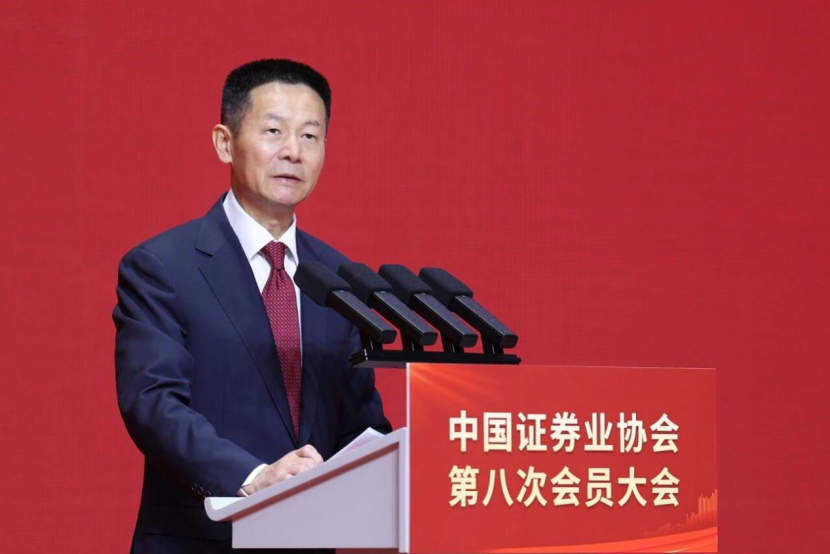
吴清:发挥首席经济学家及行业研究团队作用 讲好中国股市叙事
Feng Huang Wang· 2025-12-06 08:37
Core Viewpoint - The chairman of the China Securities Regulatory Commission, Wu Qing, emphasized the importance of value investment principles in the securities industry, advocating for a focus on cross-cycle and counter-cyclical strategies to enhance investment stability and value judgment capabilities [1] Group 1 - Securities industry institutions are encouraged to lead in practicing value investment concepts [1] - There is a call for the effective use of chief economists and industry analysts to provide rational analysis in response to irrational market sentiments and hot topics [1] - The need to actively resist the spread of false information and emotional speculation is highlighted [1] Group 2 - The importance of promoting a positive narrative about the Chinese stock market is stressed [1] - Creating a favorable public opinion environment is essential for the industry [1] - There is a collective responsibility to counter irrational rumors [1]
吴清:严防非法交易与市场秩序扰乱行为
Feng Huang Wang· 2025-12-06 08:04
Core Viewpoint - The Chairman of the China Securities Regulatory Commission, Wu Qing, emphasized that safety development is the industry's bottom line, urging institutions to strengthen compliance and risk management awareness [1] Group 1: Compliance and Governance - Institutions need to enhance compliance risk awareness and establish rigid requirements for corporate governance and employee management [1] - Clear delineation of responsibilities and authority is necessary to prevent internal interference [1] Group 2: Risk Management - There is a focus on managing related party transactions and compliance education to improve fairness in trading services [1] - The industry must be vigilant against illegal trading and disruptions to market order [1] - Key risk areas include margin financing, over-the-counter business, credit, liquidity, and compliance [1] Group 3: Industry Adaptation - The industry should strengthen analysis of new business models and respond promptly to market concerns [1]
吴清:深化市场改革,证券业肩负四大使命
Feng Huang Wang· 2025-12-06 08:04
Core Viewpoint - The Chairman of the China Securities Regulatory Commission, Wu Qing, outlined four major missions for the securities industry during the 14th Five-Year Plan period, emphasizing the importance of high-quality development and risk management in the sector [1] Group 1: Missions of the Securities Industry - The securities industry will focus on serving the real economy, optimizing asset allocation for residents, supporting the construction of a financial powerhouse, and promoting a high level of openness [1] - The industry aims to deepen market reforms, moving away from simple scale expansion and ranking orientation, and instead concentrating on high-quality development [1] Group 2: Risk Management and Stability - The securities sector has significantly enhanced its ability to prevent and mitigate risks, particularly in managing risks related to stock pledges, thereby contributing to financial stability [1] - The industry has played a crucial role in safeguarding financial security during complex situations, demonstrating improved risk resistance capabilities [1] Group 3: Investment Products and Demand - The securities industry will leverage its professional advantages to meet diverse investment needs and enrich long-term investment products [1] - There is a focus on enhancing compliance and risk control to elevate core competitiveness and market leadership [1]
吴清:A股市场总体稳健活跃 市场韧性与抗风险能力明显提升
Feng Huang Wang· 2025-12-06 08:04
Core Viewpoint - The A-share market in China has shown overall stability and activity in 2023, with market capitalization exceeding 100 trillion yuan since August, indicating significant growth in both volume and quality, along with improved resilience and risk management capabilities [1] Group 1: Market Performance - The A-share market has demonstrated a vibrant growth in trading volume and quality improvements throughout the year [1] - Market capitalization surpassed 100 trillion yuan starting from August, reflecting a robust market environment [1] - Investor confidence and expectations have continuously improved, contributing to the market's overall stability [1] Group 2: Industry Developments - The securities industry has actively integrated into the broader economic and social development, exemplified by significant restructuring cases such as the merger of Guotai Junan and Haitong [1] - The merger has achieved a preliminary "1+1>2" effect, indicating enhanced operational efficiency and market positioning [1] - Smaller institutions are focusing on niche markets, transitioning from homogeneous operations to differentiated development strategies [1] Group 3: Foreign Investment - Foreign institutions are accelerating their presence in the Chinese market, with 11 foreign securities companies already conducting business [1]
720亿大收购背后:Netflix如何击败大热门派拉蒙抢走华纳兄弟?
Feng Huang Wang· 2025-12-06 07:39
Core Viewpoint - Netflix unexpectedly won the bidding to acquire Warner Bros for $72 billion, defeating Paramount, which was previously considered the frontrunner [1]. Group 1: Acquisition Details - Netflix's acquisition includes Warner Bros' film and television studios, HBO, and HBO Max streaming services [1]. - Warner Bros Discovery (WBD) CEO David Zaslav successfully initiated a bidding war, boosting the company's stock price and securing his position [1]. - The bidding process was initiated in October, with WBD's board recognizing the need for swift action to maintain control [2]. Group 2: Competitive Landscape - David Ellison of Paramount was aggressively pursuing the acquisition, supported by significant financial backing from his father, Larry Ellison, and Apollo Global Management [3]. - Netflix downplayed its acquisition intentions, emphasizing a builder mindset rather than a traditional acquirer approach [4]. - WBD set a tight timeline for bids, leading to intense negotiations and emergency meetings among board members [4]. Group 3: Netflix's Strategy - Netflix's proposal was deemed fully executable, meeting all of WBD's requirements, while competitors were still negotiating terms [6]. - Netflix's team worked diligently to address all requests and agreed to a $5.8 billion breakup fee, one of the highest in history [5]. - Even within Netflix, there was initial skepticism about their chances of winning the bid due to Paramount's early and aggressive involvement [7]. Group 4: Regulatory Considerations - The acquisition is expected to face significant antitrust hurdles, potentially prolonging the approval process beyond the anticipated 12 to 18 months [8]. - Netflix executives expressed confidence in overcoming antitrust concerns, citing the diverse and expansive entertainment market [8]. - If successful, the deal could position Netflix as a dominant player in the streaming service sector, potentially transforming the entertainment industry [8].


11月多地二手房成交量上涨 市场有望量价趋稳
Feng Huang Wang· 2025-12-06 03:38
Group 1 - The core viewpoint of the articles indicates a significant recovery in the second-hand housing market across multiple cities in November, with first-tier cities showing particularly strong performance, as transaction volumes reached new highs since May, with a month-on-month increase of 20% [1][2][8] - In November, the total transaction area of second-hand houses in 30 monitored key cities was approximately 17.04 million square meters, reflecting a month-on-month growth of 14%, and a cumulative year-on-year increase of 3% for the first 11 months [2] - First-tier cities saw a total of 49,000 second-hand residential transactions in November, marking a 20% month-on-month increase, surpassing the transaction levels of the traditional peak season in September [2] Group 2 - The second-hand housing market in second-tier cities also showed positive trends, with a total transaction area of 11.13 million square meters, representing a month-on-month increase of 13% [3] - In November, the transaction volume in Chengdu reached 1.74 million square meters, leading among second-tier cities, while Wuhan experienced a month-on-month increase of 12% and a year-on-year increase of 31% [3] - The transaction volume in third and fourth-tier cities stabilized, with a total of 189,000 square meters transacted, reflecting a month-on-month increase of 37% and a year-on-year increase of 3% [3] Group 3 - The demand for both affordable and high-end properties is rising simultaneously in core cities, with significant structural differentiation observed in the Shanghai market, where core districts are experiencing increased demand and price appreciation [4][5] - In Shanghai, the proportion of second-hand homes sold for under 3 million yuan has risen to 60%, continuing a three-month upward trend, while the segment under 5 million yuan remains stable at around 80% [4] - In Shenzhen, the second-hand housing market is characterized by strong demand from both first-time buyers and high-end property seekers, with second-hand transactions consistently dominating the market [5][6] Group 4 - The real estate market is expected to transition towards a "stable volume and price" phase, as local housing policies have largely been exhausted, with over 560 policy measures introduced this year [7] - Analysts predict that short-term real estate policies will focus on stabilizing the market, while long-term strategies will aim for high-quality development and the implementation of various reform measures [7] - The second-hand housing market in first-tier cities is anticipated to develop positively, supported by improved buyer confidence and a favorable price adjustment, leading to increased transactions and a more active market [8]