
Qi Huo Ri Bao Wang

Search documents
国富期货成功举办防范非法期货与甲醇期货分析线上培训
Qi Huo Ri Bao Wang· 2025-08-21 07:19
2024年9月27日上午,由国富期货有限公司主办的"防范非法期货及甲醇期货知识培训会"——"郑商所 2024年度投资者教育专项活动"线上专场顺利举办。本次活动特邀大连海大益乐教育科技有限公司法务 主管赵子朋老师与杭州亿嘉柏和投资管理有限公司基金经理金杰老师担任主讲,围绕非法期货识别防范 和甲醇期货基本面分析,为投资者带来实用知识与风险提示。 赵子朋老师系统讲解了非法期货交易的定义、典型特征与严重危害,结合真实案例揭示了虚假宣传、市 场操纵等常见欺诈手法。他建议投资者增强自我保护意识,理性判断、审慎决策,不轻信"高收益"承 诺,并通过持续学习法律法规、关注监管动态提升辨识能力。他还介绍了监管部门在立法完善、执法强 化与投资者教育等方面的重要举措,强调了健全适当性管理、补偿机制等投资者权益保护措施的必要 性。 金杰老师聚焦甲醇期货品种特性与市场分析框架,指出我国甲醇生产以煤炭为主要原料,因此与焦煤、 焦炭价格关联密切。他从供需两端解析甲醇市场:供应端需关注煤制成本变动和进口情况(进口依赖度 约15%),需求端重点跟踪MTO装置(甲醇制烯烃)开工状况,特别是华东沿海地区运行情况,因其 占下游需求一半以上。此外,他强 ...
助力高校人才培育,国富期货开展“郑商所杯”期货知识进校园线上活动
Qi Huo Ri Bao Wang· 2025-08-21 07:17
Group 1 - The event aimed to enhance university students' understanding of the futures market and promote financial education through a collaboration between Guofu Futures and Southern Medical University [1][2] - The first online promotional activity of the "Zhengshang Cup" National College Student Financial Simulation Trading Competition was successfully held, focusing on futures knowledge [1] - The event included detailed explanations of competition rules, registration processes, and practical trading system operations to prepare students for participation [1] Group 2 - The activity was part of a broader initiative to promote financial literacy and risk management concepts among students, significantly improving their awareness of futures and financial derivatives [2] - Guofu Futures plans to continue fostering cooperation between universities and enterprises, providing more opportunities for students to engage with the market and develop skills [2] - The event received positive feedback, with students expressing anticipation for future competitions and practical activities related to futures [2]
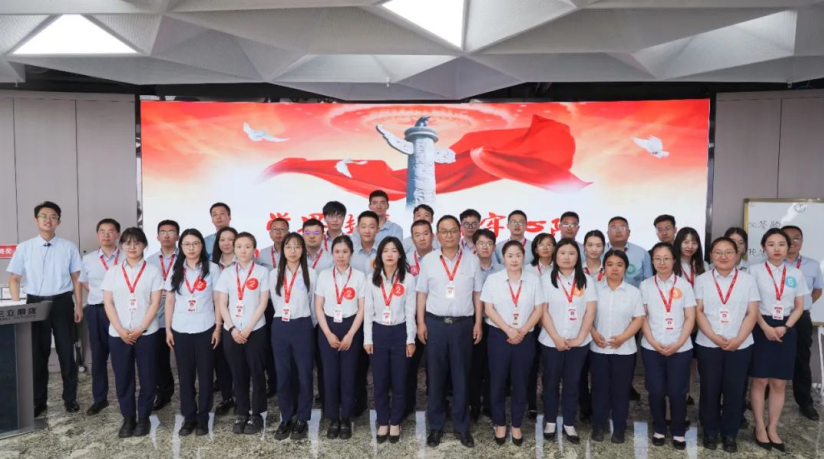
三立期货党支部领航廉洁教育新实践 举办“学思践廉、筑牢心防”知识竞答活动
Qi Huo Ri Bao Wang· 2025-08-21 03:28
Core Viewpoint - The company is promoting the integration of clean culture and corporate governance through a knowledge competition focused on integrity in the futures industry, aiming to enhance the ethical standards and compliance within the organization [2][4]. Group 1: Event Overview - The event was held at the headquarters of the company, with participation from all employees and party members, emphasizing that integrity is essential for long-term development and professional dignity [4]. - The theme of the event combined elements of Jinshang culture with modern integrity requirements, creating an educational environment that reflects both historical significance and contemporary innovation [4]. Group 2: Competition Structure - The competition included three modules: mandatory questions, rapid response questions, and risk questions, covering laws and guidelines relevant to the futures industry [6]. - Teams competed based on theoretical knowledge, response speed, and strategic decision-making, with a scoring system that penalized incorrect answers to enhance risk management thinking [6]. Group 3: Innovative Elements - The competition featured innovative "red integrity" scenario questions that connected historical wisdom with modern financial practices, demonstrating a deep integration of cultural values [9]. - The results highlighted that the event was not just a knowledge contest but also an exploration of the company's unique path towards integrity [9]. Group 4: Future Initiatives - The company plans to transform the competition's question bank into online learning resources, establishing a "micro-classroom" for ongoing integrity education, shifting from a concentrated approach to a more regularized one [9]. - As part of the innovative practices in the financial sector of Shanxi, the company aims to embed the integrity genes of Jinshang spirit into modern corporate governance, promoting a culture of integrity among all employees [11].

中国出口市场韧性十足
Qi Huo Ri Bao Wang· 2025-08-21 01:28
Core Viewpoint - The article highlights China's resilience in export trade despite the pressure from the U.S. tariffs, showcasing a diversified export structure and strong adaptability in various markets [1][7]. Export Market Structure - China's export market has become increasingly diversified, reducing reliance on the U.S. market, which previously accounted for over 20% of total exports [1]. - In the first seven months of 2025, China's total exports reached $2.13 trillion, with imports totaling $1.45 trillion, resulting in a trade surplus [1]. - The top ten export destinations for China in 2025 included ASEAN, EU, U.S., Hong Kong, Latin America, Africa, Japan, South Korea, India, and Russia, collectively accounting for over 80% of total exports [2]. Changes in Export Destination - Compared to 2000, Asia's share of China's exports increased by approximately 3 percentage points, while North America's share decreased by about 9 percentage points [2]. - In the first seven months of 2025, exports to the U.S. decreased by $35.5 billion, but exports to ASEAN surged by $45.2 billion, indicating a shift in trade dynamics [2][3]. Export Growth Rates - Africa led the growth in export amounts with a 24.5% increase, followed by ASEAN at 13.5% and India at 13.4% [3]. - The U.S. experienced a decline in exports of -12.6%, highlighting the contrasting performance of different regions [3]. Product Structure of Exports - The export product structure is characterized by a balance between traditional manufacturing and high-tech products, with mechanical and electrical products making up 60% of total exports [4]. - Traditional manufacturing goods, including clothing and household items, still hold significant export value, contributing to 9% and 8% of total exports, respectively [6]. Supply Chain Advantages - China's manufacturing sector benefits from a robust supply chain, characterized by extensive raw material supply, efficient logistics, and a stable social environment, making it a dominant player in global manufacturing [5]. - The transition towards "smart manufacturing" is expected to enhance the competitiveness of traditional manufacturing sectors, keeping a significant portion of production within China [6]. Conclusion - Despite the challenges posed by U.S. tariffs, China's well-established manufacturing infrastructure and diversified export strategies position it to maintain strong export performance, which remains a crucial driver of economic growth [7].
外汇风险管理工具需求激增 企业呼吁加快推出外汇期货产品
Qi Huo Ri Bao Wang· 2025-08-21 01:25
Core Insights - The demand for efficient and convenient foreign exchange risk management tools among domestic enterprises is unprecedented due to the increasingly complex global economic environment and growing cross-border trade and investment activities [1][2]. Group 1: Market Trends - As of January to July 2025, 1,114 listed companies in China have engaged in futures and derivatives business, with over 80% (902 companies) involved in foreign exchange hedging, indicating a rapid increase in demand for foreign exchange risk management as China's economy becomes more globalized [1][2]. - Approximately 33% (364 companies) of companies have engaged in commodity futures hedging, and about 15% (162 companies) are involved in both commodity futures and foreign exchange derivatives, with manufacturing companies being the main force in hedging activities [2]. Group 2: Risk Management Evolution - Risk management capabilities have shifted from being a "bonus" to a "survival" necessity for enterprises, highlighting the importance of managing various risks during development [3]. - The use of futures and derivatives has become essential for modern enterprises to manage risks and achieve stable operations, reflecting a qualitative leap in risk management awareness among Chinese companies [3]. Group 3: Need for Comprehensive Risk Management - Companies are encouraged to integrate foreign exchange risk management into a comprehensive risk management system, moving away from conservative attitudes and avoiding reckless speculation [5]. - The cultivation of specialized talent in derivative risk management is crucial, as it requires a combination of knowledge in spot trading, financial theory, and risk control experience [5]. Group 4: Product Development and Market Growth - The introduction of foreign exchange futures products is expected to provide more options, improve the efficiency and transparency of foreign exchange risk management, and reduce hedging costs for enterprises [4]. - As of July 2025, the total capital in the futures market is approximately 1.82 trillion yuan, reflecting an 11.6% increase from the end of 2024, indicating a growing market and increasing demand from enterprises [6].
思维碰撞 启迪未来
Qi Huo Ri Bao Wang· 2025-08-21 01:09
Group 1 - The forum held in Zhengzhou from August 19-20, 2025, is one of the most influential annual events in China's futures market, attracting participants from domestic and international trading firms, financial institutions, and industry representatives [1] - The theme of this year's forum is "Empowering the Real Economy, Supporting National Strength Construction," highlighting the core mission of the futures market as a stabilizer and navigator for modern market economy [2] - The forum has seen increased participation from industry clients, financial technology companies, and international institutions, indicating a growing internationalization and integration of the futures market [3] Group 2 - Industry representatives noted that the forum's topics have become more diversified, addressing real issues faced by industry enterprises and providing practical solutions [1][2] - The forum serves as a platform for deep and broad discussions, featuring diverse perspectives from macroeconomic analyses to micro-level case studies, enhancing understanding of market dynamics beyond mere price fluctuations [2] - Zhengzhou is recognized as a central hub for futures trading and information exchange, leveraging its geographical advantages to become a logistics hub for global trade [3]
益海嘉里郭立君:我国花生产业处于转型升级关键时期
Qi Huo Ri Bao Wang· 2025-08-21 01:09
8月20日,由郑州商品交易所、芝加哥商业交易所集团联合主办的2025中国(郑州)国际期货论坛正式 召开。在当天下午举行的农产品(油脂油料)论坛上,益海嘉里粮食业务部花生业务总监郭立君表示, 我国花生市场存在产业链短、竞争力弱的问题,面临转型升级挑战。 "从2015年到2024年的近10年时间看,全球花生产量整体增长,年均增长率为2.3%。我国是世界上最大 的花生生产国,也是全球最大的花生消费国,2024年产量占全球的37.7%。此外,我国花生油的产量和 消费量,均占据全球市场的半壁江山。"郭立君说。 郭立君介绍,当前我国花生产业呈现五个特点。一是种植面积稳定。补贴政策有助于维持农户种植花生 的积极性。二是产业结构优化。产业链延伸政策促进花生加工业的升级。三是市场供给多元化。进口政 策的调整拓宽了国内市场的供给渠道。四是质量安全水平提升。标准的完善推动了行业整体质量的提 高。五是国际竞争力增强。综合政策支持有助于提升我国花生产业的国际竞争力。 展望全球市场发展趋势,郭立君认为,市场规模在扩大、消费结构在变化、新兴市场在崛起、创新技术 逐渐用于种植和加工环节,花生产业将向高质量、高附加值、可持续发展方向转型,产业 ...
国务院发展研究中心原副主任余斌:立足四大优势积极识变应变求变
Qi Huo Ri Bao Wang· 2025-08-21 01:02
Core Viewpoint - The current economic foundation of China is stable, with multiple advantages, strong resilience, and significant potential, supporting a long-term positive trend in the economy [1][2] Group 1: Domestic Demand and Consumption - Emphasis on boosting consumption to expand domestic demand, focusing on income, wealth, and expectations to steadily improve the income levels of citizens and enhance consumption capacity [1] - Service consumption has become a major driver of resident consumption growth, with an annual growth rate of 8.7% from 2013 to 2023, surpassing the 2.4% growth rate of goods consumption [2] - The proportion of service consumption in per capita consumption increased from 39.7% to 45.2% from 2013 to 2023, with a further increase to 46.1% expected in 2024 [2] Group 2: Economic Policy Focus - Economic policies should shift more towards benefiting people's livelihoods and promoting consumption, creating new economic growth points through the improvement of living standards [1] - Continuous optimization of expenditure structure is necessary, with a focus on benefiting people's livelihoods and promoting consumption while ensuring the government operates within tighter budgets [1] Group 3: Competitive Advantages - China's economic advantages include institutional benefits, a super-large market, a complete industrial system, and abundant talent resources, which should be leveraged to gain strategic advantages in international competition [2] - The goal is to achieve qualitative improvements and reasonable quantitative growth in the economy, promoting comprehensive development and common prosperity for all citizens [2]
做企业“压舱石” 守护“油瓶子”安全
Qi Huo Ri Bao Wang· 2025-08-21 00:57
Group 1 - The forum focused on how the futures market can assist the oilseed and oil industry in responding to trade changes, emphasizing the importance of oilseed safety as a critical component of food security in China [1][2] - The China Zhengzhou Commodity Exchange (CZCE) aims to provide a high-quality risk management system for the industry, adapting to the current global economic adjustments and increasing trade uncertainties [1][2] - The oilseed and oil market in China plays a significant role globally, being the second-largest importer and the largest consumer of rapeseed oil and meal, as well as the largest importer and consumer of peanuts [2] Group 2 - COFCO Oils has been actively using futures and derivative tools to mitigate price volatility risks, ensuring stable operations within the industry [3] - The oilseed and oil sector has developed a relatively complete derivative system, which serves as a valuable risk management tool for the industry [3] - Discussions at the forum included topics such as changes in global oilseed trade patterns, challenges and opportunities for import and processing enterprises, and the use of futures derivatives to support stable operations and national oil supply security [3]
我国油脂油料行业风险和机遇并存
Qi Huo Ri Bao Wang· 2025-08-21 00:57
Group 1 - The current risks faced by the domestic oilseed industry are primarily due to changes in international trade policies, leading to adjustments in the global supply chain [1] - China’s Ministry of Commerce has initiated an anti-dumping investigation against imported canola seeds from Canada, with a preliminary determination of dumping and a temporary anti-dumping measure involving a 75.8% deposit [1] - The resilience of China's oilseed supply chain is improving, with Australian canola seeds potentially filling the import gap left by Canada, as Australia produces between 6 million to 8 million tons, half of which are non-GMO varieties [1] Group 2 - Oilseed processing companies need to actively respond to policy changes to mitigate risks, with flexible production capabilities in southern and southwestern regions allowing for diversified operations [2] - The import of soybean meal from Argentina has significantly increased, although the absolute quantity remains low, indicating a need for further observation [2] - The import landscape for peanuts is changing, with zero tariffs and low shipping costs enhancing the competitiveness of African peanuts in the Chinese market [2] Group 3 - The shift in the import structure is prompting a three-dimensional restructuring of the domestic peanut industry, with a 63% reduction in production capacity from Africa due to the Sudan conflict, leading to a 77.7% decrease in exports to China [2] - Domestic planting area for peanuts has increased by 5%, with oilseed processing companies now sourcing 80% of their peanuts from domestic production [2] - The current market dynamics are seen as a starting point for the revaluation of the peanut industry, with short-term strategies focusing on domestic supply and risk management through futures [3]