Qi Huo Ri Bao Wang

Search documents
套期保值助力上市公司平稳发展
Qi Huo Ri Bao Wang· 2025-08-19 18:17
Core Viewpoint - The development quality of listed companies is crucial for the stability of the capital market, and effective risk management is a key dimension of this quality [1][2]. Group 1: Risk Management Trends - In 2025, from January to July, 1,114 listed companies engaged in futures and derivatives business, with approximately 80% (902 companies) involved in foreign exchange hedging, 33% (364 companies) in commodity futures hedging, and 15% (162 companies) in both [1]. - Manufacturing companies are the main participants in the futures market for hedging, particularly in the chemical and agricultural processing sectors, facilitating industry upgrades and overseas expansion [2]. - There is a growing trend towards systematic, refined, and global risk management among listed companies, with an increasing awareness of proactive hedging [2]. Group 2: Role of Associations and Guidelines - The China Listed Companies Association plays a pivotal role in guiding companies in rational participation in hedging, enhancing their quality of development [3]. - The Shanghai and Shenzhen Stock Exchanges have issued guidelines for the disclosure of hedging business information, leading to improved transparency and understanding of hedging effectiveness among investors [2][3]. Group 3: Recommendations for Companies - Companies are encouraged to establish a strong risk management awareness, avoid both conservative and speculative behaviors, and engage in regulated operations [4]. - It is essential for companies to develop a rigorous and efficient risk control system, including scientific decision-making and risk warning mechanisms [4]. - The cultivation of professional talent in derivatives risk management is critical, requiring a blend of knowledge in spot operations, financial theory, and risk control experience [4].
强化主体责任 营造良好生态
Qi Huo Ri Bao Wang· 2025-08-19 18:12
Core Viewpoint - The introduction of the new regulations for algorithmic trading in China's futures market aims to enhance regulatory oversight, improve market stability and fairness, and optimize the structure of market participants [1][2][3]. Regulatory Framework - The State Council and the China Securities Regulatory Commission (CSRC) have emphasized the need for comprehensive regulation of high-frequency trading, leading to the implementation of the "Procedural Trading Management Regulations" starting October 9, 2023 [1]. - Five futures exchanges have released their own procedural trading management measures, which will take effect on October 9, 2025, establishing a multi-layered regulatory system for algorithmic trading [1][2]. Compliance and Internal Governance - The regulations require entities engaged in algorithmic trading to complete compliance rectification within six months of the regulations taking effect, alleviating concerns about a one-size-fits-all approach [2]. - Organizations must appoint responsible personnel for compliance and risk management, shifting the focus from external penalties to internal controls [2][4]. Impact on Market Participants - The regulations are expected to significantly increase compliance costs and technical upgrade pressures for quantitative trading firms, raising the overall industry threshold [4]. - Futures companies will face enhanced responsibilities, including establishing internal systems, verifying client information, and regularly reporting to exchanges [4][5]. Market Stability and Functionality - The regulations aim to reduce potential market manipulation and ensure a fair competitive environment, leading to a more stable and orderly market operation [3][5]. - The new framework is designed to support the real economy by providing reliable risk management tools, allowing companies to better manage their hedging strategies and respond to market changes [5].
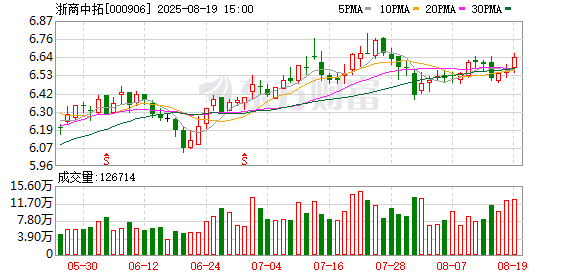
浙商中拓雷衍升:开展套期保值必须坚守风险对冲初心
Qi Huo Ri Bao Wang· 2025-08-19 18:10
Core Viewpoint - The importance of establishing an internal control and risk management system for futures derivatives business in enterprises is emphasized, highlighting that internal control is essential for effective risk management [1][2]. Group 1: Internal Control and Risk Management - Internal control consists of policies, systems, and processes designed to ensure normal operations, reduce errors, and prevent asset loss [1]. - Risk management is a systematic approach to identify, assess, monitor, and control various risks faced by enterprises, aiming for sustainable development under different risk conditions [1]. - The risk management framework is built upon the internal control framework, making internal control a crucial part of risk management [1]. Group 2: Hedging and Operational Guidelines - The centralized operation and management of futures and derivatives trading should be conducted by the enterprise headquarters, ensuring separation of key roles such as decision-making, order placement, risk control, compliance supervision, and market research [1]. - The primary goal of engaging in futures market hedging is to mitigate market operational risks, necessitating the establishment of a supervision system and checks and balances for operational procedures [1]. - It is essential to standardize operations in decision-making, authorization, and trading processes to enhance the enterprise's risk resistance capabilities in the futures market [1]. Group 3: Trading Motivation and Behavior - The understanding of concepts influences trading motivations, which in turn determines trading behavior; poor trading motivations can amplify trading risks [2]. - Enterprises must adhere to the original intention of risk hedging, focusing on the physical market and avoiding speculation, while accepting imperfect hedging [2]. - Fine management of basis is necessary to optimize the hedging effect [2].

六部门进一步规范光伏产业竞争秩序
Qi Huo Ri Bao Wang· 2025-08-19 18:09
Core Viewpoint - The meeting held by multiple government departments emphasizes the importance of regulating competition in the photovoltaic industry for its high-quality development and sustainable growth [1] Group 1: Industry Regulation - The meeting highlighted the need for all parties in the photovoltaic industry to recognize the significance of a regulated competitive order for the industry's development [1] - There is a call for enhanced industry regulation and investment management for photovoltaic projects, promoting the orderly exit of outdated production capacities through market-oriented and legal methods [1] - The meeting aims to curb disorderly low-price competition and establish a robust price monitoring and product pricing mechanism [1] Group 2: Compliance and Enforcement - The government plans to combat illegal activities such as selling below cost and false marketing practices within the photovoltaic sector [1]
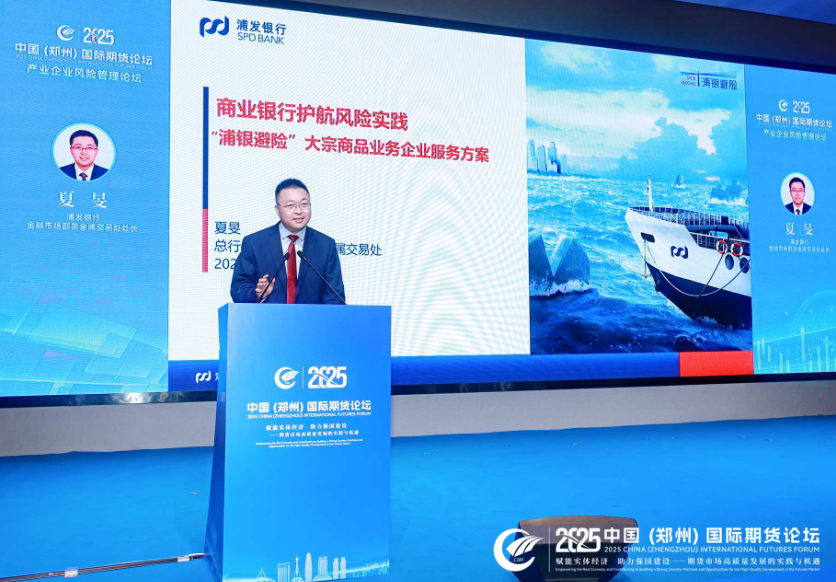
浦发银行金融市场部贵金属交易处处长夏旻:依托仓单平台 服务企业风险管理
Qi Huo Ri Bao Wang· 2025-08-19 10:01
Group 1 - The core viewpoint of the article highlights the role of commercial banks in assisting commodity enterprises with risk management through various service models [1] - Banks can participate in commodity trading via exchange warehouse receipt trading platforms, helping enterprises reduce capital costs and operate with lighter assets [1] - In the entrusted sales model, banks address supply-demand mismatches in the industry chain, supporting liquidity at minimal costs while converting inventory into cash assets [1] Group 2 - In the entrusted supply model, banks can help enterprises lock in raw material procurement costs with minimal capital outlay [1] - Banks can integrate into the production and operation chain of clients, providing transitional liquidity support for large-scale procurement [1]


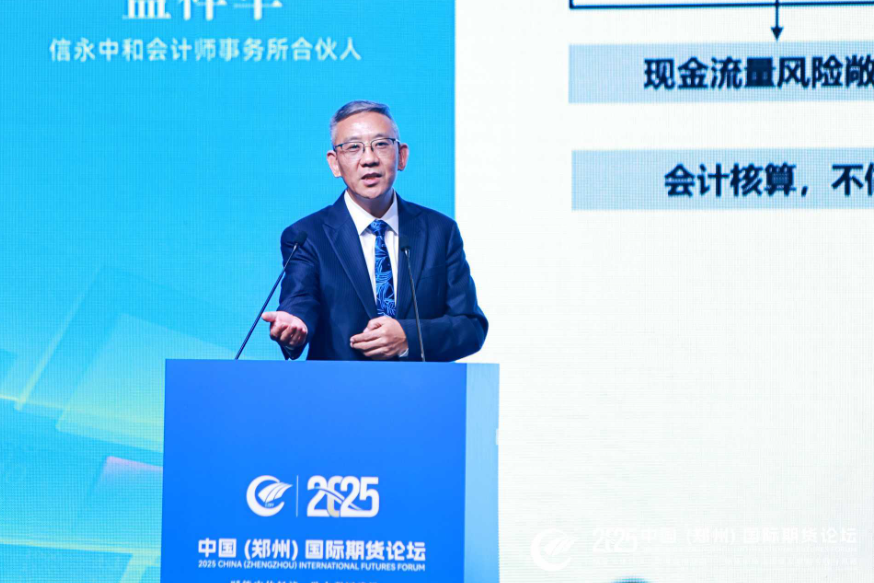
信永中和会计师事务所合伙人孟祥军:运用套期会计减少利润错配和波动
Qi Huo Ri Bao Wang· 2025-08-19 09:54
Group 1 - The 2025 China (Zhengzhou) International Futures Forum was officially opened on August 19, organized by Zhengzhou Commodity Exchange and Chicago Mercantile Exchange Group [1] - During the forum, Meng Xiangjun, a partner at Xinyong Zhonghe Accounting Firm, detailed the financial treatment and audit compliance points of commodity hedging [1] - Hedging accounting is a technique that adjusts the recognition basis of income and expenses (or gains and losses) of hedging instruments and the hedged items, allowing both to be included in the same reporting period [1] Group 2 - The charm of hedging accounting lies in its ability to resolve mismatches between corporate risk management activities and traditional accounting standards [1] - By implementing hedging accounting, companies can visually reflect the impact of risk management activities on financial statements, reducing profit mismatches and volatility [1]
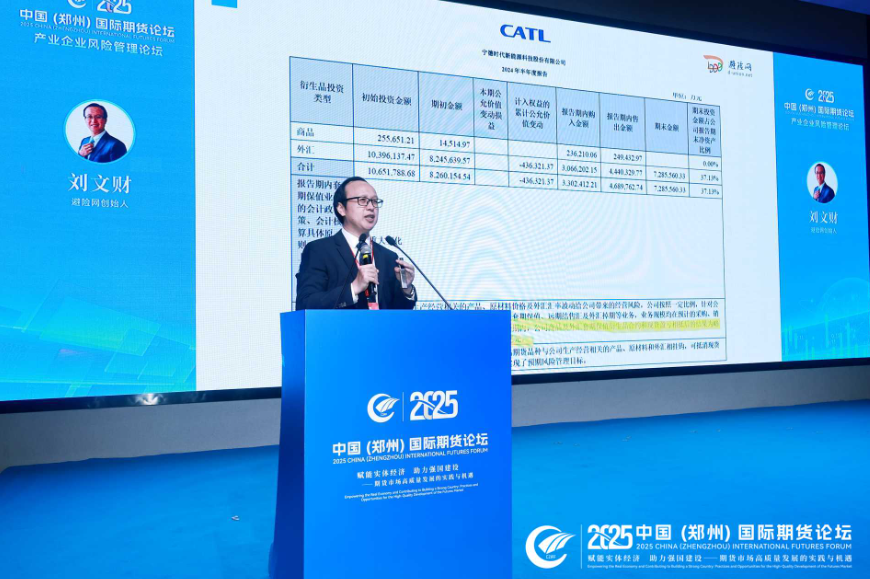
避险网创始人刘文财:上市公司有效套期保值理念已经形成
Qi Huo Ri Bao Wang· 2025-08-19 09:47
Core Insights - The 2025 China (Zhengzhou) International Futures Forum was held, focusing on risk management in industries, highlighting the growing importance of hedging strategies among listed companies [1] - In 2024, the total hedging amount announced by A-share listed companies in the real economy is approximately 3.4 trillion yuan, with commodity hedging at about 289 billion yuan, foreign exchange hedging at around 3 trillion yuan, and interest rate hedging at 5 billion yuan [1] - Companies are increasingly utilizing futures and options for hedging, with a specific case demonstrating a copper company's successful strategy that resulted in a profit of approximately 3.5 million yuan through effective use of options [2] Summary by Category Hedging Strategies - The concept of effective hedging has been established among listed companies, with a significant total hedging amount reported [1] - The distribution of hedging amounts shows that most companies have hedging amounts between 100 million to 1 billion yuan, with commodity hedging typically below 100 million yuan [1] Market Trends - The copper market experienced historical price highs in May 2023, prompting companies to reconsider their hedging strategies [1] - The combination of futures and options is seen as a beneficial tool for companies to enhance profits and manage risks effectively [2] Case Study - A copper company utilized a strategy involving buying call options instead of futures to hedge against price declines, resulting in a loss of the premium but avoiding larger losses from futures [2] - The specific transaction involved a hedge with an execution price of 84,000 yuan per ton and a premium of 1,552 yuan per ton, leading to a net gain of approximately 3.5 million yuan [2]
浙商中拓经营管理部副总经理雷衍升:企业套保必须坚守风险对冲初心
Qi Huo Ri Bao Wang· 2025-08-19 09:01
Core Viewpoint - The 2025 China (Zhengzhou) International Futures Forum emphasizes the importance of establishing a robust internal control and risk management system for enterprises engaging in futures and derivatives trading [2] Group 1: Risk Management Framework - Enterprises should centralize the operation and management of futures and derivatives trading at the headquarters level, ensuring separation of key roles such as trading decision-making, order placement, risk control, compliance supervision, and market research [2] - A supervisory system for operational risks and a power balance mechanism should be established specifically for hedging activities, ensuring standardized operations in decision-making, authorization, and trading processes [2] - Enhancing the subjective initiative of operators at all levels is crucial for improving the enterprise's risk resistance in the futures market [2] Group 2: Trading Motivation and Behavior - The understanding of risk management influences trading motivation, which in turn determines trading behavior; poor trading motivation can amplify trading risks [2] - Enterprises must adhere to the original intention of risk hedging, focusing on the physical commodity market and avoiding speculative practices [2] - Accepting imperfect hedging and optimizing the hedging effect through refined management of basis is essential for effective risk management [2]
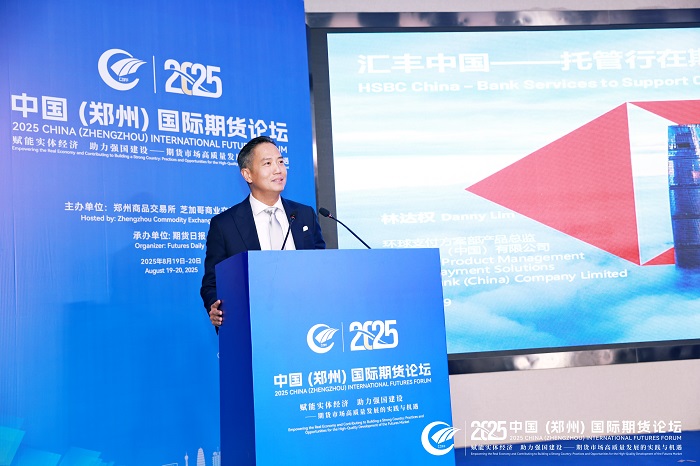
汇丰银行环球支付方案部产品总监林达权:以专业服务助力中国期货市场对外开放
Qi Huo Ri Bao Wang· 2025-08-19 08:49
作为首批外资托管银行,汇丰银行积极参与中国期货市场开放,托管的QFI客户达276家,占全市场的 31%,完成首单QFI商品期货交易,也是首批参与QFI品种扩容交易的机构。 期货日报网讯(记者 吕双梅)8月19日,由郑州商品交易所、芝加哥商业交易所集团联合主办的2025中 国(郑州)国际期货论坛正式开启。在当日下午举行的对外开放论坛上,汇丰银行环球支付方案部产品 总监林达权深入剖析了托管行在期货市场对外开放进程中的关键角色与定位。 林达权表示,境外客户高度关注交易品种、开户效率、资金结算能力及服务水平。其中,产业客户侧重 所需套期保值的品种,投资类客户看重品种数量与覆盖面,QFI渠道因覆盖品种范围广较受青睐。同 时,开户周期、操作便利性以及银行全球化服务能力也是重要考量,境外客户习惯通过主办银行集中管 理资金,重视长期合作与服务响应速度。 林达权表示,未来汇丰银行将继续以市场服务提供者的身份,为境内外企业客户提供期货交易及日常支 付服务;持续深化与交易所合作,通过线上线下活动向境外推广中国期货市场。同时推进存管银行资格 申请,发挥全球网络优势,助力引入更多境外资金,为中国期货市场对外开放及长期发展贡献力量。 ...

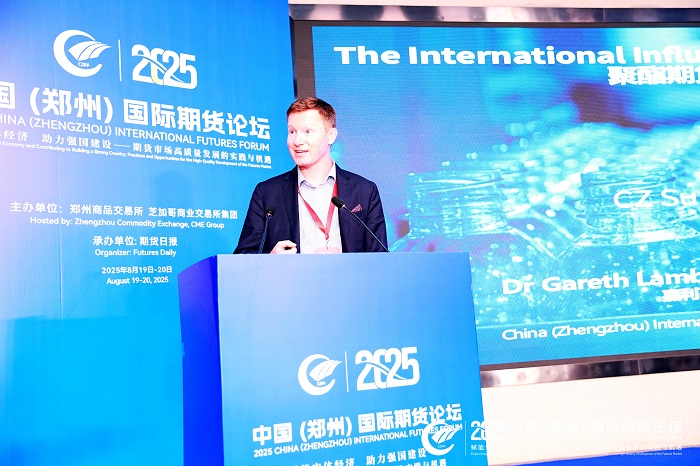
嘉利高全球包装部经理加雷斯・兰姆:积极推动郑商所期货产品跨境使用
Qi Huo Ri Bao Wang· 2025-08-19 08:34
期货日报网讯(记者 韩乐)8月19日,由郑州商品交易所、芝加哥商业交易所集团主办的2025中国(郑 州)国际期货论坛在郑州开启。在当天下午的对外开放论坛上,嘉利高全球包装部经理加雷斯・兰姆表 示,全球不确定性持续增强更加凸显了PTA、瓶片期货的重要性,相关交易者参与郑商所期货产品交 易,可对12个月内的价格波动进行风险对冲,由此建立行业信心。 加雷斯・兰姆表示,2025年全球市场受多重不确定性冲击。尽管受到贸易战和地缘局势冲击,但全球贸 易增长可期。全球瓶片的需求仍具韧性,中国以29%的全球瓶片需求占比成为核心驱动力。而需求增长 与市场波动加剧,让瓶片贸易参与者对稳定、透明的风险管理工具的需求更加迫切。 据加雷斯・兰姆介绍,在过去的12个月中,嘉利高已多次运用瓶片期货进行套期保值,锁定跨境价格波 动风险。目前,嘉利高正在积极推动郑商所期货产品跨境使用,引导PTA买家从固定价转向期货定价, 为无法直接接入郑商所系统的国际实体企业(尤其是中小贸易商、加工商)定制风险管理方案,搭建对 接桥梁,让更多参与者共享中国期货市场价值。 ...