Qi Huo Ri Bao Wang

Search documents
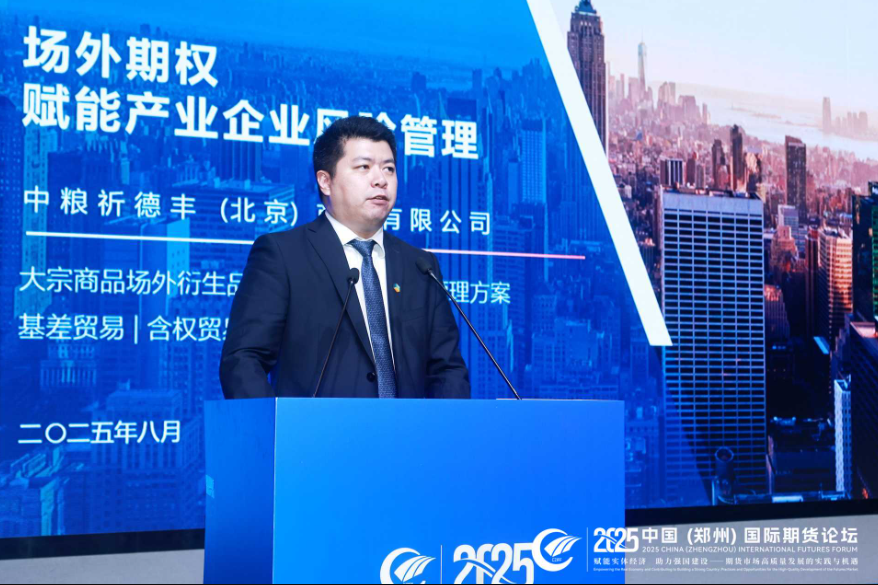
中粮祁德丰总经理冯昊:产业风险管理方式趋于多样化
Qi Huo Ri Bao Wang· 2025-08-19 08:27
Core Viewpoint - The development of risk management in the industry has evolved through multiple stages, with a focus on enhancing comprehensive operational capabilities, innovative business models, and refined management practices to secure the future of enterprises [1] Summary by Relevant Sections Risk Management Development Stages - Before 2010, the industry faced a futures hedging opportunity period with low hedging ratios and favorable basis safety margins - From 2010 to 2020, the industry entered a futures hedging challenge period, where the hedging ratio increased but basis safety margins deteriorated, making hedging more difficult - Post-2020 marks the development period of risk management tools, characterized by complex industry cycles and external environments, where poor basis safety margins became the norm and off-exchange options tools diversified [1] Changes in Commodity Trading - The transition in bulk commodity trading has shifted from spot trading to basis trading and rights-inclusive trading - The integration of futures and spot trading has been widely promoted, enhancing risk management concepts [1] New Profit Sources in the Industry - In the new era, industry profits are no longer solely derived from processing and price differences but also from profits generated through hedging/basis, optimizing business structures, risk management services, and premiums obtained through strategies and tools [1]

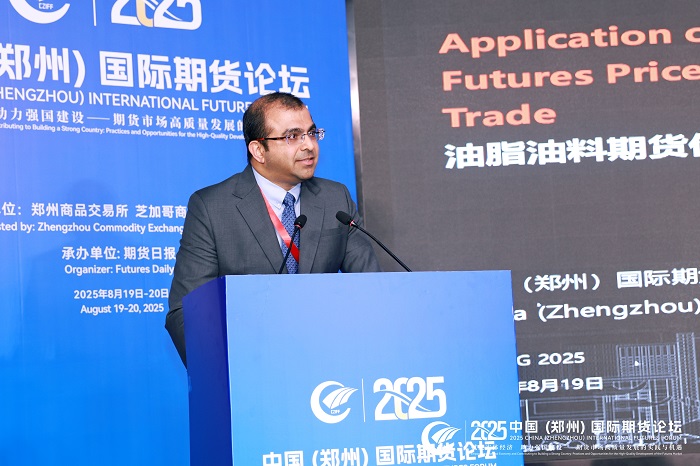
翱兰农业中国及东盟区总裁贺满袖:中国交易所在农产品期货领域的影响力持续攀升
Qi Huo Ri Bao Wang· 2025-08-19 08:20
Group 1 - The global derivatives market is undergoing profound changes, with Asian exchanges emerging as dominant players in commodity trading [3] - Chinese exchanges have significantly increased their influence in the agricultural futures sector, holding four positions in the top ten global commodity exchanges as of 2023 [3] - From 2012 to 2024, Asian agricultural futures and options trading volumes have experienced exponential growth, establishing Asia as the core growth area for global agricultural derivatives trading [3] Group 2 - The Zhengzhou Commodity Exchange is presented with a substantial opportunity to enhance the international influence of bulk commodity pricing [3] - As market openness deepens and infrastructure improves, Chinese futures prices are expected to play a more critical role in the global bulk commodity pricing system, providing efficient and transparent pricing benchmarks and risk management tools for cross-border trade [3]


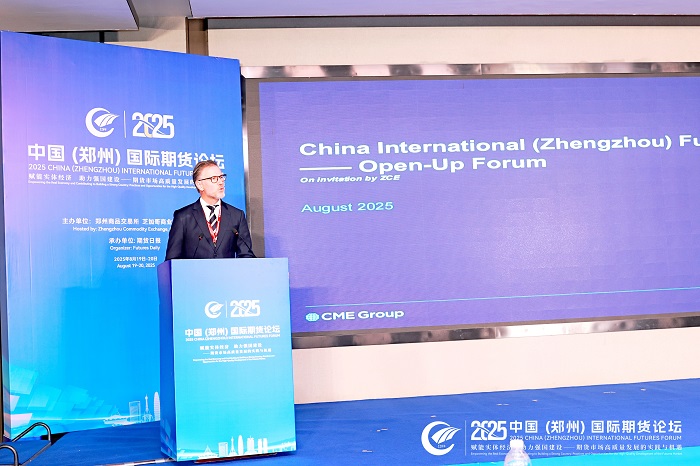
芝商所蒂姆・史密斯:在不确定性和波动性加剧时期 风险管理尤为重要
Qi Huo Ri Bao Wang· 2025-08-19 07:28
Group 1 - The 2025 China (Zhengzhou) International Futures Forum was co-hosted by Zhengzhou Commodity Exchange and Chicago Mercantile Exchange Group, emphasizing the importance of risk management in financial markets [1][3] - Tim Smith highlighted that the role of exchanges is to provide standardized, transparent, and liquid tools for risk hedging across major asset classes, acting as a central market for price discovery and risk transfer [3] - The increasing market volatility tests the strength and resilience of the global financial system, with derivative exchanges playing a crucial role in maintaining market stability through reliable risk management tools [3] Group 2 - The Chinese futures market continues to develop and innovate to meet the evolving and complex risk management needs of various institutions, including producers, consumers, and the entire financial industry [3] - The company is committed to innovation, enhancing transparency, and developing products and tools necessary for risk management amid ongoing economic and geopolitical uncertainties [3] - The focus remains on providing products, services, and efficient solutions to meet the risk management demands of global and Chinese clients [3]

中国上市公司协会纪委书记许国新:制造业上市公司是套保的主力军
Qi Huo Ri Bao Wang· 2025-08-19 07:21
Group 1 - The 2025 China (Zhengzhou) International Futures Forum highlighted new trends in risk management among listed companies, particularly in the manufacturing sector, which is leading in hedging activities across industries such as chemicals and agricultural products [1] - Listed companies are increasingly using derivatives to manage risks related to exchange rates, interest rates, and commodity price fluctuations, with a growing trend towards comprehensive management of financial asset price volatility [1] - There is a noticeable increase in the awareness of proactive risk avoidance among listed companies, with a trend towards systematic, refined, and globalized risk management practices [1] Group 2 - Since the release of the hedging disclosure guidelines, listed companies have been optimizing their disclosure content, providing detailed information on hedging effects and emphasizing the relationship between spot and futures markets [2] - More entities are adhering to hedging accounting standards, aligning more closely with the essence of risk management [2] - Overall, hedging has played a crucial role in ensuring the stable development of listed companies [2]
全市场公告开展期货和衍生品业务的实体上市公司已达1114家
Qi Huo Ri Bao Wang· 2025-08-19 07:21
Core Viewpoint - The development of China's futures and derivatives market is accelerating, providing essential risk management tools for companies amid complex economic conditions and significant commodity price fluctuations [1] Group 1: Market Development - The 2025 China (Zhengzhou) International Futures Forum was held, highlighting the importance of risk management in the current economic climate [1] - The supply speed of risk management tools is increasing, and the product and service system is continuously improving [1] Group 2: Company Engagement - As of January to July 2025, 1,114 listed companies have announced their engagement in futures and derivatives business [1] - Over 80% (902 companies) are involved in foreign exchange hedging, while approximately one-third (364 companies) are engaged in commodity futures hedging [1] - About 15% (162 companies) are simultaneously involved in both commodity futures and foreign exchange derivatives [1]
郑商所:多维服务助力数万企业筑牢风险防线
Qi Huo Ri Bao Wang· 2025-08-19 06:53
Group 1 - The 2025 China (Zhengzhou) International Futures Forum was held in Zhengzhou, focusing on risk management for industrial enterprises through futures markets [1] - Zhengzhou Commodity Exchange (ZCE) emphasizes the importance of a "standardized, transparent, open, vibrant, and resilient" futures market as a stabilizing anchor and a driving force for industrial enterprises to enhance market competitiveness [1] - As of now, ZCE has listed 47 varieties, forming multiple product sectors such as polyester, coal chemical, salt chemical, oilseeds, soft commodities, and fruits, providing a comprehensive tool system for risk management [1] Group 2 - ZCE adopts a market-first service philosophy, addressing the pain points of industrial enterprises in participating in the futures market by creating a "point-chain-surface" service matrix [2] - To facilitate enterprise participation, ZCE has conducted executive visits and customized training for over 4,000 enterprises, and implemented a five-year industrial development project [2] - ZCE collaborates with 167 leading enterprises to establish industrial-financial bases, conducts thousands of industry activities, and organizes executive training programs in partnership with universities to enhance risk management capabilities [2] - Since 2023, ZCE has conducted over a thousand nurturing activities benefiting tens of thousands of central enterprises, state-owned enterprises, listed companies, and small and medium-sized enterprises [2] - ZCE actively utilizes a big data platform for risk monitoring of key varieties, maintaining market stability and creating a favorable environment for enterprises [2]
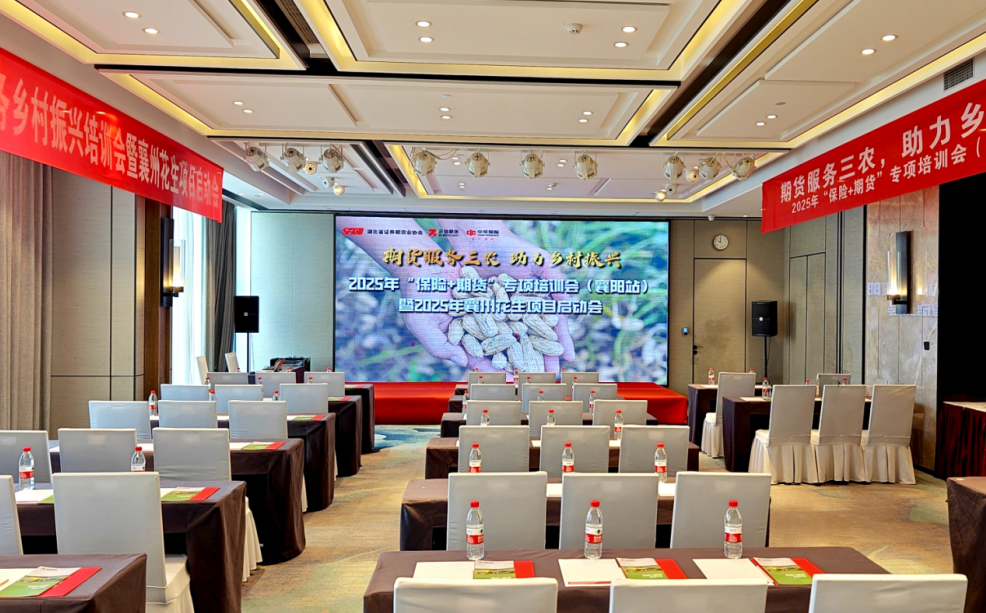
“期货服务三农,助力乡村振兴”——2025年“保险+期货”专项培训会(襄阳站)暨襄州花生项目启动会成功举办
Qi Huo Ri Bao Wang· 2025-08-19 01:31
Core Insights - The event focused on risk management in the peanut industry through the innovative "insurance + futures" financial tools, aiming to inject new momentum into the stable development of agriculture in Xiangyang [1][9] - The "insurance + futures" model effectively combines the risk hedging function of the futures market with the agricultural insurance mechanism, serving as a stabilizer for farmers to avoid price volatility risks and support rural revitalization [3][9] Group 1: Event Overview - The training session attracted nearly 40 agricultural enterprises, peanut growers, and cooperative representatives from Xiangyang [3] - The successful hosting of the training and project launch marks the official start of the 2025 Xiangzhou peanut "insurance + futures" project [8] Group 2: Expert Contributions - Industry experts provided in-depth insights on peanut futures trading rules, delivery standards, and market risk hedging strategies, demonstrating how futures tools can help farmers lock in profits [5] - The project operation principles of "insurance + futures" were detailed, along with experiences from multiple national projects, and the implementation plan for the Xiangzhou peanut project was introduced [5] Group 3: Project Details - The project is designed to provide comprehensive risk protection for peanut growers, supported by the Hubei Provincial Department of Agriculture and Rural Affairs, and involves a premium-sharing mechanism where farmers only bear 10% of the premium (750,000 yuan) [8] - The project aims to create a closed-loop guarantee for production and sales by involving order enterprises to purchase peanuts based on futures prices [8] Group 4: Future Directions - The successful implementation of the Xiangzhou peanut project is seen as a valuable experience for exploring financial support for regional characteristic agricultural industry development and aiding rural industry revitalization [9] - The organizers plan to deepen cooperation with local governments, industry associations, and agricultural operators to promote the application of the "insurance + futures" model across a wider range of products [9]
硅料生产加工企业为现货库存上“保险”
Qi Huo Ri Bao Wang· 2025-08-19 01:04
Core Insights - The article discusses the rapid development opportunities for China's polysilicon industry due to increasing global demand for renewable energy, highlighting its position as a core product in the silicon industry chain and its applications in the photovoltaic and semiconductor industries [2] - The listing of polysilicon futures on December 26, 2024, provides upstream and downstream companies with effective risk management tools, facilitating reasonable profit distribution within the industry chain [2] - The case of Xinjiang Zhongsilicon Technology Co., Ltd. illustrates the application of out-of-the-money put options to manage inventory devaluation risks amid falling polysilicon prices [3][4] Industry Overview - Polysilicon is recognized as a key raw material in the photovoltaic industry and is considered a representative of green low-carbon technology [2] - China's polysilicon production capacity ranks first globally, but the industry faces challenges such as significant price fluctuations and concentrated capacity investments [2] Company Case Study - Xinjiang Zhongsilicon, located in a major polysilicon production area, faced risks of inventory devaluation due to falling prices and sought efficient risk management tools [3] - The company adopted a bear spread put option strategy to manage its inventory risks, which involved buying and selling put options at different strike prices [4][5] Risk Management Strategy - The bear spread put option strategy was structured with a buy option at a strike price of 40,000 CNY/ton and a sell option at 39,000 CNY/ton, resulting in a net premium payment of 3,016.17 CNY [5][6] - This strategy allows for a defined risk-reward framework, with maximum loss limited to the net premium paid and maximum profit achievable if the price falls below the lower strike price [8] Trading Execution and Monitoring - On the listing day of polysilicon futures, the PS2506 contract opened at 44,000 CNY/ton, and the company established its option positions based on market conditions [10] - A futures risk management company monitored price fluctuations and provided timely risk alerts and adjustment suggestions to ensure compliance and risk control [10] Direct Effects and Innovations - Xinjiang Zhongsilicon achieved a profit of 260.64 CNY/ton on the first day of options trading, successfully hedging against inventory devaluation risks [11] - The case represents an innovation in risk management tools, being one of the first applications of bear spread strategies in polysilicon inventory risk management [12] Industry Implications - The case highlights the importance of recognizing the value of derivative tools and encourages companies to adopt personalized risk management strategies [13] - The integration of futures and physical markets through out-of-the-money options provides new pathways for risk hedging in emerging industries like renewable energy [13] Promotion and Replication Value - This case enhances market awareness and acceptance of out-of-the-money options, encouraging more companies to engage in derivative trading, particularly in the rapidly developing green energy sector [14] - The bear spread put option strategy can be replicated in other sectors such as metals and chemicals, demonstrating its versatility [15] Conclusion - The integration of out-of-the-money options with the polysilicon industry supports stable operations and accelerates industry upgrades, contributing to the achievement of carbon neutrality goals [16][17]

全球丙烯产业发展图景展望
Qi Huo Ri Bao Wang· 2025-08-19 01:04
Core Insights - The article discusses the characteristics, industrial chain structure, production patterns, consumption, trade dynamics, and future trends of the propylene industry, highlighting its significance in the global chemical market [2][3][4][11][17]. Group 1: Basic Characteristics and Industrial Chain Structure - Propylene, with the chemical formula C3H6, is a leading chemical product globally, characterized as an unsaturated olefin with a planar triangular molecular structure [2]. - The physical properties of propylene include a melting point of -185.2℃, a boiling point of -47.7℃, and a liquid density of approximately 0.5139 g/cm3 at 20℃ [2]. - The propylene industrial chain is structured as a pyramid, comprising upstream diverse supply, midstream global circulation, and downstream extensive applications, with each segment closely linked [3][4]. Group 2: Production Patterns and Technological Pathways - Global propylene production capacity has expanded significantly from 56 million tons per year in 2000 to 168 million tons per year by 2024, with a compound annual growth rate of 4.5% [6]. - Northeast Asia accounts for 57% of global propylene production, with China contributing approximately 80% of the capacity increase in this region [6]. - The Middle East has seen an 837% increase in production capacity from 2000 to 2024, leveraging low-cost oil and gas resources [6]. - North America has developed a propylene production belt along the Gulf Coast, utilizing shale gas resources and propane dehydrogenation (PDH) technology [7][9]. Group 3: Consumption and Trade Dynamics - Northeast Asia is the core region for propylene consumption, accounting for 51.9% of global consumption in 2023, with China being the primary market [11]. - The consumption structure in North America shows a stable 11.8% share, with high-end polypropylene products making up 40% of the region's consumption [11]. - Global propylene trade exhibits a "multipolar cycle" characteristic, with China reducing its import dependency from 14% in 2019 to 3.5% in 2024 [12]. Group 4: China's Propylene Industry - China's propylene industry has undergone three development phases, significantly altering the global supply-demand landscape [14][15]. - The current phase is characterized by a shift towards quality improvement, with a diverse production structure including PDH (35%), steam cracking (29%), coal-to-olefins (18%), and catalytic cracking (18%) [15]. Group 5: Future Trends and Challenges - Global propylene capacity is expected to continue expanding, reaching 180 million tons by 2026, with China accounting for over 45% of this capacity [17]. - The fluctuation in raw material prices, particularly the price difference between propane and naphtha, significantly impacts the economic viability of production methods [17]. - The industry faces challenges in balancing raw material security, cost control, and low-carbon transformation, which will reshape the competitive landscape of the international energy and chemical markets [17].

A企业靠期货套保操作破困局
Qi Huo Ri Bao Wang· 2025-08-19 00:57
Core Viewpoint - The article discusses the challenges faced by feed companies, particularly in managing raw material inventory during a period of falling prices due to a bumper harvest cycle, and highlights the strategic use of futures hedging to mitigate risks and enhance profitability [2][10]. Group 1: Industry Challenges - Since the second half of 2023, corn prices have declined significantly due to the bumper harvest of staple crops, leading to a rapid narrowing of basis [2]. - Feed companies, accustomed to stockpiling, are experiencing a dilemma: the value of corn inventory established at high prices has plummeted, while the profits from downstream livestock operations are under pressure, squeezing operational margins [2][11]. - Companies like A Enterprise, which procures nearly 200,000 tons of raw materials annually, are struggling with high production costs from previously locked-in prices, even as downstream profits improve [4][11]. Group 2: Risk Management Strategies - A Enterprise has signed contracts for 2,000 tons of corn, locking in prices despite the risk of price declines before the inventory is received [5]. - The company employs a futures hedging strategy to manage price risks, establishing short positions in the corn futures market to offset exposure [6][10]. - By April 2025, the basis for the corn futures contract had expanded, allowing A Enterprise to benefit from the hedging strategy, ultimately saving over 300,000 yuan in procurement costs [8][10]. Group 3: Strategic Upgrades - The raw material inventory hedging strategy not only addresses risk management needs but also supports stable operations and business model upgrades for A Enterprise [10]. - The hedging approach allows A Enterprise to build sufficient inventory based on production plans, mitigating the risks associated with price fluctuations and inventory management [11]. - By transforming absolute price risks into relative basis risks, A Enterprise can strategically increase trade inventory and capitalize on favorable market conditions, thereby enhancing operational profits and establishing a competitive edge in the industry [12].