
Zhong Guo Huan Jing Bao

Search documents
呦呦鹿鸣 | “大地文心”征文展登
Zhong Guo Huan Jing Bao· 2025-05-15 04:19
Core Viewpoint - Yeludang is not just a geographical name but a harmonious coexistence of humans and nature, representing an ideal ecological paradise [2][4]. Group 1: Location and Characteristics - Yeludang is located in Dafeng District, Yancheng City, Jiangsu Province, within the "China Yellow (Bo) Sea Migratory Bird Habitat (Phase I)" World Natural Heritage site, and is a coastal wetland [2]. - The area covers 200 hectares and is characterized by a flat coastal plain with interlaced ditches and abundant reeds, serving as a habitat for over 8,000 wild milu deer [2][9]. - The region has maintained its original features with minimal development, allowing for a natural environment where wild milu deer thrive [2]. Group 2: Historical Context - The land has undergone significant geological changes, with the coastline advancing due to sediment from the Yellow River, transforming from ocean to land over the past 200 years [4]. - Yeludang has experienced at least three cycles of land-sea transformation, reflecting the historical evolution of the area [4]. Group 3: Conservation Efforts - The creation of Yeludang involved six elderly individuals who self-funded the project, transforming barren land into a thriving ecosystem by clearing waterways and planting vegetation [9]. - Yeludang has become a major habitat for wild milu deer and a wintering ground for hundreds of thousands of migratory birds, including the red-crowned crane and black-faced spoonbill [9][12]. Group 4: Educational Initiatives - Since 2020, Yeludang has hosted a Nature Lecture Hall, offering over 400 educational sessions on various ecological topics to engage youth and promote environmental awareness [14]. - The initiative aims to inspire the younger generation to appreciate and protect their ecological heritage [15]. Group 5: Recognition and Future Goals - In August 2023, Yeludang was recognized as a national beautiful bay, highlighting its successful conservation efforts [9]. - Yeludang has been designated as a dark sky sanctuary, allowing for clear stargazing opportunities, with an average of 238 days per year suitable for observing the night sky [12][13].


北川羌族自治县县长周福兰:生态立县绘就高质量发展新画卷
Zhong Guo Huan Jing Bao· 2025-05-15 03:12
Core Viewpoint - Beichuan Qiang Autonomous County prioritizes ecological preservation as a foundation for development, striving for a harmonious balance between economic growth and environmental protection [1] Group 1: Ecological Protection Efforts - Beichuan has established a comprehensive ecological governance system involving government, enterprises, and society, promoting green and low-carbon development [2] - The county has invested a total of 367 million yuan in ecological protection over the past three years, emphasizing the consensus that development must not come at the expense of the environment [2] - Strict measures are in place for air pollution control, with 136 monitoring points under continuous surveillance and the implementation of a river and lake chief system for rural wastewater management [2] Group 2: Technological and Systematic Governance - The county is transitioning from traditional to scientific regulation, utilizing drones and portable detection devices to enhance monitoring efficiency [3] - A digital platform has been established for air pollution source management, enabling precise monitoring and control of pollution sources [3] - Collaborative efforts with neighboring regions have been initiated to implement a joint pollution control system for major river basins [3] Group 3: Green Economic Development - Beichuan is committed to ecological protection while promoting economic growth, with 976.52 square kilometers designated as ecological protection red lines, covering 31.66% of the county's total area [5] - The county is investing nearly 1 billion yuan in national reserve forest projects, maintaining over 4 million acres of forest land and achieving an annual carbon sequestration of over 1.5 million tons [5] - The development of high-quality agriculture and tourism is being emphasized, with significant income generated from eco-friendly products and tourism activities [5]
改变“排查整改两张皮”,要做好这几点!
Zhong Guo Huan Jing Bao· 2025-05-15 01:32
虽然相关法规明确要求将生态环境风险防控纳入企业主体责任范畴,但现实中,个别企业仍存在"重效 益、轻安全""排查整改两张皮"等问题。要切实推动企业落实生态环境安全隐患排查工作,笔者认为, 需在以下几方面发力。 强化专业支撑。建立分级分类培训认证制度,培育专业化、职业化的环境安全工程师队伍。鼓励环保服 务机构提供"环保管家""安全体检"等定制化服务,为企业提供生态环境安全隐患排查解决方案。推广应 用红外检测、光谱分析等先进技术装备,建立企业环境风险电子档案,实现隐患识别从经验判断向科学 诊断转变。 完善闭环机制。建立全周期管理流程,构建"排查建档—分级处置—整改销号—跟踪复核"的工作链条, 实行生态环境隐患整改动态清单管理,确保每个环节责任可追溯。强化智能监管赋能,建设企业环境安 全智慧监管平台,实现风险实时监测预警,推动"人防+技防"深度融合。建立隐患风险"重大、较大、一 般"三级管控机制,对排查中发现的重大风险问题实行挂牌督办、限时整改、到期验收,还可将整改成 效纳入企业信用评价体系。 培育安全文化。构建常态化教育体系,将生态环境安全纳入企业发展战略,定期开展全员安全培训,通 过线上培训、情景模拟、VR实训等 ...
德州市生态环境局党组书记、局长岳红星:以高水平保护支撑高质量发展
Zhong Guo Huan Jing Bao· 2025-05-15 01:21
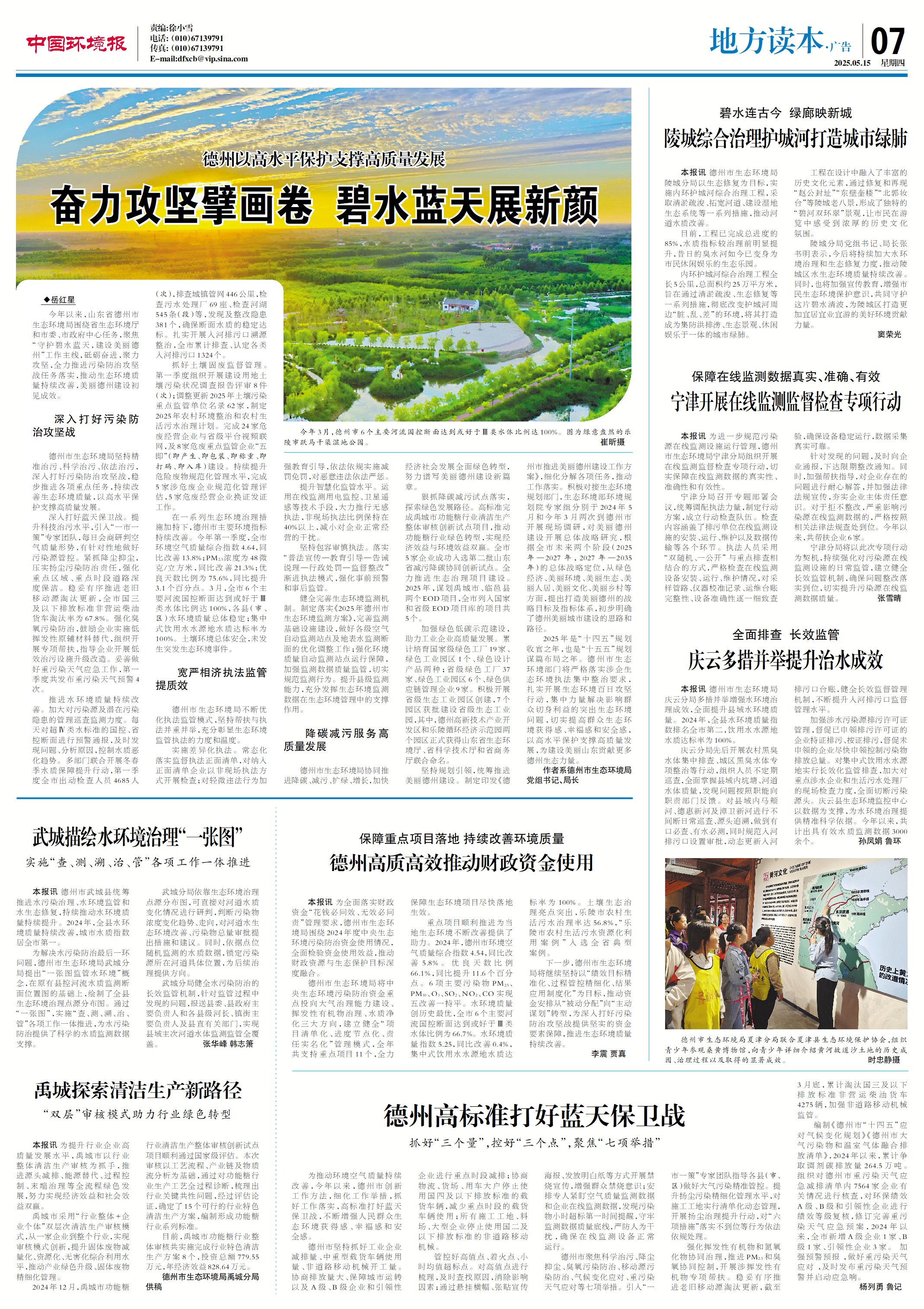
Core Viewpoint - The article emphasizes the efforts of Dezhou City in Shandong Province to improve ecological environment quality through pollution prevention and control measures, highlighting the initial success in building a beautiful Dezhou [2][14]. Group 1: Pollution Prevention and Control - Dezhou's ecological environment bureau is focused on precise, scientific, and legal pollution control, making steady progress in key tasks to improve ecological quality [3][15]. - The city has implemented a "one city, one policy" approach with expert teams to monitor air quality and manage pollution sources effectively [3][16]. - The elimination rate of non-operational diesel trucks meeting National III and below emission standards is 67.8% [3][16]. Group 2: Air Quality Improvement - In the first quarter, the comprehensive air quality index was 4.64, showing a year-on-year improvement of 13.8%, with PM2.5 concentration at 48 micrograms per cubic meter, improving by 21.3% [4][19]. - The proportion of good air quality days reached 75.6%, an increase of 3.1 percentage points year-on-year [4][19]. Group 3: Water Quality Management - The city has conducted extensive inspections, including 446 kilometers of urban pipelines and 69 sewage treatment plants, identifying and rectifying 381 hazards [3][16]. - All six major river monitoring sections in the city met or exceeded Class III water quality standards [4][19]. Group 4: Soil and Waste Management - The first quarter saw the review of eight soil pollution status reports and the adjustment of the 2025 soil pollution key regulatory unit list [4][17]. - The city has improved hazardous waste management, completing evaluations for five hazardous waste enterprises [4][17]. Group 5: Regulatory and Monitoring Enhancements - The ecological environment bureau has optimized enforcement models, balancing support and enforcement, and implementing differentiated enforcement strategies [20]. - The use of online monitoring and satellite remote sensing technologies has increased non-intrusive enforcement to over 40% [20]. Group 6: Green Development Initiatives - Dezhou is promoting green development through the establishment of national and provincial-level green factories and industrial parks [21]. - The city has initiated projects aimed at reducing carbon emissions and pollution while enhancing economic growth [21]. Group 7: Strategic Planning for Future Development - The city has developed a comprehensive plan for building a beautiful Dezhou, focusing on green economy and environmental sustainability [22]. - The ecological environment department aims to address significant ecological issues affecting residents' quality of life, enhancing their sense of security and happiness [22].
重点行业氮氧化物治理过程中,氨逃逸问题不容忽视!
Zhong Guo Huan Jing Bao· 2025-05-15 00:10
Core Viewpoint - The article emphasizes the importance of precise and scientific nitrogen oxide (NOx) emission control in industries, highlighting the risks associated with excessive ammonia (NH3) injection and the need for systematic pollution management [1][2][3]. Group 1: Current Issues in NOx Control - Some companies are resorting to blindly increasing ammonia injection to reduce NOx concentrations, leading to significant ammonia escape issues that require urgent attention [1][2]. - Ammonia escape not only affects environmental quality but also increases operational costs for companies, with estimates suggesting that a typical daily glass production facility could waste 25% of ammonia, leading to additional costs exceeding 200,000 yuan annually [2][3]. Group 2: Consequences of Ammonia Escape - Escaped ammonia reacts with sulfur oxides to form ammonium sulfate, which can cause blockages and corrosion in downstream equipment, increasing maintenance costs and reducing operational efficiency [3][4]. - Local regulations are being established to limit ammonia emissions, as evidenced by a recent fine imposed on a cement company for exceeding ammonia concentration limits [3]. Group 3: Solutions for Ammonia Escape - To mitigate ammonia escape, companies should implement automatic reagent addition systems and real-time monitoring of ammonia emissions, adjusting ammonia injection based on various operational parameters [5]. - Enhancing the performance of denitrification catalysts and ensuring optimal operating conditions for denitrification equipment are crucial for minimizing ammonia escape and achieving stable NOx emission standards [4][5].
如何进一步提升钢铁行业运输清洁化水平?
Zhong Guo Huan Jing Bao· 2025-05-14 23:25
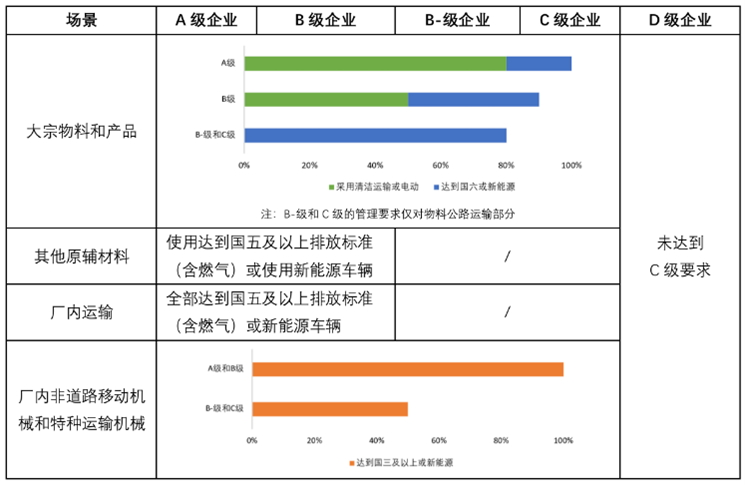
Core Viewpoint - The steel industry is a crucial sector for the national economy and plays a key role in pollution reduction and carbon emission reduction, particularly in the logistics segment, which has seen significant growth in freight volume from 3.62 billion tons in 2015 to 4.56 billion tons in 2023, with a compound annual growth rate of approximately 3% [1] Policy Perspective - The implementation of ultra-low emission transformation is a vital starting point for promoting clean transportation in the steel industry, with a target of at least 80% of bulk material and product transportation using clean methods by 2025 [2] - The State Council has set a goal for over 80% of steel production capacity to complete ultra-low emission transformation by 2025, with some regions aiming for even higher standards [2] Emission Reduction Achievements - As of the end of 2024, 171 steel enterprises have completed or partially completed ultra-low emission transformations, covering a crude steel capacity of approximately 721 million tons, leading to significant reductions in nitrogen oxides and particulate matter emissions [3] Performance Management - The performance grading management for key industries during heavy pollution weather encourages steel enterprises to enhance their environmental performance, with A-grade enterprises required to use clean transportation methods for at least 80% of their bulk materials [4] Regional Initiatives - Various provinces have established more detailed performance indicators for transportation methods based on the technical guidelines, with incentives for A-grade enterprises to adopt new energy vehicles and improve their transportation methods [9] Industry Development - The use of new energy heavy trucks in key industries has surpassed 20,000 units, accounting for about half of the new energy heavy truck market, with significant advancements in clean transportation practices in provinces like Hebei [10] Multi-Dimensional Empowerment - The combination of ultra-low emission transformation and performance grading management is driving the optimization of transportation structures and equipment upgrades in the steel industry, while also providing a replicable model for other industrial sectors [11] Technological and Policy Innovations - Future improvements in clean transportation will require enhanced policy incentives, technological applications, and tailored guidance based on regional characteristics to address the unique challenges faced by the steel industry [12][13]
青海省省长罗东川调研时强调 切实加大祁连山自然生态系统保护和建设力度
Zhong Guo Huan Jing Bao· 2025-05-14 09:03
Group 1 - The core viewpoint emphasizes the importance of ecological priority and green development in Qinghai Province, aiming to enhance environmental protection while promoting characteristic industries for high-quality development [1] - The provincial government is focusing on leveraging unique ecological tourism resources to optimize tourism planning and enhance the quality of tourism experiences, thereby promoting the "Heavenly Realm of Qilian" tourism brand [1] - There is a commitment to integrated protection and systematic governance of natural ecosystems, particularly in the Qilian Mountains, to strengthen ecological functions such as water conservation and biodiversity [2] Group 2 - The government aims to establish Qinghai as a green and organic agricultural product hub, focusing on the development of unique agricultural industries like barley, rapeseed, and yak [2] - There is an emphasis on innovation and deep processing of agricultural products to enhance the agricultural industry's scale and modernization, which is crucial for rural revitalization [2] - Support for leading agricultural enterprises and the establishment of mechanisms to connect farmers with agricultural development is a priority to improve agricultural efficiency and quality [2]
突发环境事件要准确界定责任
Zhong Guo Huan Jing Bao· 2025-05-14 06:43
Group 1 - The article discusses two types of environmental emergencies: those caused by pollution control facility failures and those resulting from secondary environmental hazards due to other safety production accidents [1] - Japan adheres to the principle of "polluter pays," holding the responsible parties accountable for environmental pollution, which leads to a culture of responsibility among companies [1] - In contrast, China's approach prioritizes public welfare and mobilizes administrative and social resources to control incidents, but lacks stringent penalties for companies, leading to some firms taking risks [1] Group 2 - Accurately defining responsibilities is crucial to reducing the occurrence of environmental emergencies, as awareness of consequences encourages diligence in routine work [2] - Administrative responsibilities for environmental emergencies are divided into two levels: preventing incidents and addressing improper actions during the response [2] - A fault-tolerant mechanism is suggested to protect frontline workers' innovative spirit, as long as their actions are based on expert validation and collective research [2]
佛山绿健公司打造医疗废物全流程智能化处置体系
Zhong Guo Huan Jing Bao· 2025-05-14 06:41
Core Viewpoint - Guangdong Lujian Medical Waste Treatment Technology Research Co., Ltd. focuses on the research and development of medical waste treatment technology and project operations, aiming to become a competitive technology-driven environmental protection enterprise [1] Group 1: Company Overview - The company is a mixed-ownership state-controlled enterprise, primarily held by Foshan Environmental Protection Investment Co., Ltd. [1] - It actively expands into medical wastewater and sludge disposal, striving to achieve its strategic goal of becoming a "medical environmental protection steward" [1] Group 2: Operational Collaboration - The company collaborates closely with its sister company, Foshan Lujian Medical Waste Disposal Co., Ltd., to promote high-quality development in the medical waste treatment industry [2] Group 3: Project Overview - The project addresses challenges in the medical waste disposal industry, such as fragmented collection and insufficient safety, by creating an intelligent solution covering collection, disposal, and customer service [3] - The project has established 76 intelligent collection stations to enhance efficiency and safety in waste management [3] Group 4: Technological Features - The project implements full-chain data traceability, ensuring that medical waste types, weights, and sources are recorded in real-time [4] - Automation in waste disposal is achieved through robotic unloading systems, reducing human intervention and infection risks [4] - The use of big data analytics supports personalized management and enhances regulatory efficiency [4] Group 5: Project Characteristics - The project serves as an innovative model for intelligent management of medical waste, effectively solving collection challenges for small medical institutions [5] - The successful implementation in Foshan provides a replicable model for the construction of "waste-free cities" nationwide [5] Group 6: Benefit Analysis - Ecological benefits include significant reductions in environmental pollution and contributions to carbon neutrality goals, with the robotic unloading system minimizing infection risks [6] - Economic benefits are evident through reduced collection and labor costs, leading to increased contracts with small medical institutions [7] - Social benefits include a lower probability of infectious disease transmission and enhanced public health safety through comprehensive waste management [7]
康源环保技术创新驱动VOCs治理系统转型升级
Zhong Guo Huan Jing Bao· 2025-05-14 06:37
Core Viewpoint - Guangdong Kangyuan Environmental Protection Equipment Co., Ltd. has successfully developed the "Intelligent and Efficient Composite Biological Filter Bed Technology," overcoming traditional VOCs treatment technology limitations and demonstrating significant ecological and economic benefits across various industries [1] Technology Innovation - The traditional VOCs treatment technologies face issues such as low efficiency, high energy consumption, and secondary pollution. After five years of research, Kangyuan's team achieved breakthroughs in three areas: biological degradation, intelligent control, and material processes [3] - In biological degradation, a high-adaptability composite microbial community was cultivated, achieving a VOCs removal rate consistently above 90%. Compared to traditional methods, microbial activity increased by 50%, and removal efficiency improved from 30% to over 90%, with shock load resistance enhanced by 2.3 times [3] - The intelligent monitoring system integrates IoT sensing, big data analysis, and AI algorithms, allowing real-time collection of 12 key parameters. This innovation reduced energy consumption by 35% compared to traditional methods, while maintaining treatment efficiency fluctuations within ±2% [3] Material and Process - The composite filler developed by the team has a specific surface area of 1800 m²/m³ and a porosity of 85%. The gas retention time is extended to 1.8 times that of traditional technologies, leading to a 30% reduction in microbial film formation time and a decrease in system startup time from 15 days to 10 days [4] Multi-Dimensional Advantages - The technology avoids explosion risks associated with RTO/RCO technologies, achieving an explosion-proof rating of ExdⅡBT4. Operating costs are reduced by over 70% compared to activated carbon adsorption, with a filler lifespan exceeding 8 years and a 70% reduction in maintenance frequency [6] - The process generates no secondary pollution, with degradation products primarily being CO2 and H2O. Noise levels are kept below 65 dB(A), and overall carbon emissions are reduced by 82% compared to combustion methods [6] - The remote monitoring platform allows for 24/7 unattended operation, with a fault self-diagnosis accuracy of 95% and a maintenance response time of two hours. The introduction of a big data prediction model enables a 72-hour advance prediction of filler layer status changes, reducing user maintenance costs by 70% [6] Application Practice - The technology has shown significant results across various industries. In the printed circuit board industry, it effectively addressed complex benzene pollution, maintaining VOCs emissions below 10 mg/m³ and saving annual operating costs of 6.78 million yuan. In the lithium battery industry, a specialized microbial combination achieved a treatment efficiency of 93.5% for NMP recovery tail gas [8] - The technology has standardized modular designs, with a single system capable of handling 5000 m³/h to 100,000 m³/h. As of last year, 23 engineering cases have been implemented across 8 sub-industries, with an online equipment rate of 98.7% [9] - The project has received high praise from experts for its three major innovations: the introduction of AI predictive control technology into biological filter systems, the development of composite fillers with both physical adsorption and biological affinity, and the establishment of a cross-industry VOCs characteristic database. The technology has been granted 3 invention patents and 13 utility model patents, forming a complete technical standard system [9]
