
Zhong Guo Huan Jing Bao

Search documents
生态治理螃蟹致富,南京浦口区探索“两山”转化新路径
Zhong Guo Huan Jing Bao· 2025-12-25 09:12
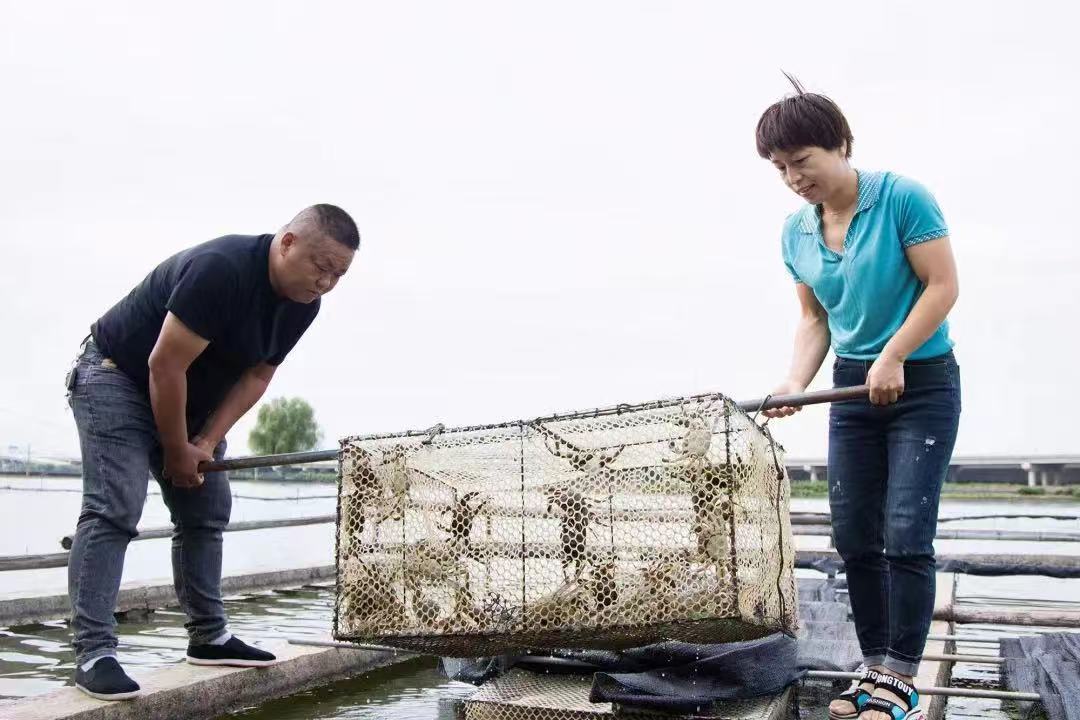
"以前因为交通闭塞、村集体经济薄弱,我们村人均年收入不到2000元,如今,依靠螃蟹养殖,今年村集体收入已经有了600万元。"江苏省南京浦口区 星甸街道后圩村村书记李巧对记者说道。 后圩村位于滁河入苏之始,依托滁河流域优良的生态本底,螃蟹养殖致富的故事得以在此展开。滁河也统筹串联起了包括星甸街道以外的汤泉街道、永 宁街道等4个沿河街镇,当地以滁河生态治理为基底、以螃蟹产业为特色、以科技赋能为引擎,走出了一条都市近郊型乡村的振兴之路。 这样的高产,源自浦口区在螃蟹养殖领域持续推进技术创新与产业升级,通过智能化管理、生态改造和模式优化,不断提升养殖效益与可持续性。 图为后圩村螃蟹养殖 协同治理,建立双向生态补偿机制 滁河(浦口段)全长36.7公里,其中24公里为苏皖省界河道,既是通江达流的天然纽带,为周边城镇村庄提供水源,也是连接两省的生态廊道,影响着 两地的生态环境。 一河流经两省,如何协同治理,解决跨省流域治理责任难厘清、行动难同步、水质难保障等共性问题,成为江北新区思考的问题。为此,浦口区主动打 破行政壁垒,与安徽省滁州市南谯区、安徽省马鞍山市和县等地创新建立"信息互通、数据共享、联合监测、应急联动"的跨省联 ...

黑龙江绿水青山的“十四五”答卷
Zhong Guo Huan Jing Bao· 2025-12-25 00:57
库尔滨雾凇。 "北国好风光,美在黑龙江"。在黑龙江省的生态版图上,大森林、大草原、大湿地、大湖泊、大界江、大冰雪……丰富的自然资源和良好的生态环境, 既是黑龙江作为生态大省建好建强祖国北方生态安全屏障的生动展现,也是实现高质量发展、全方位振兴的坚实支撑。"十四五"期间,黑龙江省牢固树立和 践行绿水青山就是金山银山理念,以精准治污破解民生关切的环境难题,全省生态环境质量稳居全国第一梯队,污染防治攻坚战成效考核连续获评国家优 秀。绿色,已经成为全省高质量发展的亮丽底色。 深入打好污染防治攻坚战,打造人与自然和谐共生的绿色龙江样板 奔流不息的松花江,是抚育龙江大地的"母亲河"。放眼望去,松花江畔,水天一色、百鸟翔集的生态美景如画,成为热门的旅游打卡地。而这背后,是 一场场敢啃"硬骨头"的碧水保卫战。 治水之要首在清源,也就是"排口水",入河排污口整治成为关键一役。2022年3月,黑龙江省历时3个月,开展了以松花江干流为重点的全省入河排污口 排查整治,同步建立了"县区周巡查、地市月核查、省级季抽查"和"局长查现场"的常态化管理机制,全省入河排污口排查溯源率达100%,整治率达97%。 黑龙江省还稳定优化"干流水",加 ...

江苏省厅第一监察专员办第二党支部:党建业务在督察一线深度融合
Zhong Guo Huan Jing Bao· 2025-12-25 00:38
Core Viewpoint - The Jiangsu Provincial Ecological Environment Department's Second Party Branch has been recognized as one of the "Top Ten Party Branches" in Jiangsu for its effective integration of party building and environmental protection duties, showcasing a commitment to high-quality development [1] Group 1: Party Building and Theoretical Education - The Second Party Branch emphasizes party leadership and theoretical education, integrating ideological training into business operations through regular learning sessions and practical activities [1] - Activities include "First Agenda" learning and "micro-class" sessions to enhance theoretical understanding among members [1] - Joint activities with the East China Inspection Bureau have been conducted to address prominent issues in environmental protection [1] Group 2: Environmental Oversight and Problem Resolution - During the 2024 provincial inspection in Nanjing, the Second Party Branch identified a significant illegal waste dumping issue, leading to the discovery of 14,800 tons of solid waste and the occupation of 220 acres of farmland [2] - The branch's proactive measures resulted in administrative and criminal penalties for responsible parties, demonstrating effective oversight [2] - The branch has conducted multiple inspections, uncovering illegal storage sites and providing actionable reports that have been recognized by provincial leadership [3] Group 3: Community Engagement and Practical Solutions - The Second Party Branch has established the "Clear and Tranquil" brand to promote environmental quality and address community concerns, achieving a 63% reduction in odor complaints in specific areas [4] - Initiatives include addressing noise pollution issues, with a reported 93.5% decrease in complaints after implementing noise reduction measures [4] - The branch has traveled 137,000 kilometers in two years to ensure community engagement and effective environmental monitoring [4]
重庆市首个数智化低排放工地“智能门禁”控扬尘|长江奔涌看巴渝
Zhong Guo Huan Jing Bao· 2025-12-24 11:09
Core Viewpoint - The Chongqing Medical University First Affiliated Hospital's second phase project has implemented a low-emission digital supervision system, marking a significant advancement in pollution control in construction sites in Chongqing, enhancing the city's digital governance capabilities [1][4]. Group 1: Implementation of Digital Supervision System - The project is the first in Chongqing to fully apply a low-emission digital supervision system, addressing the challenges of dust and vehicle emissions in construction sites [1][4]. - The system utilizes GIS technology to establish electronic fences, allowing for automatic vehicle verification and significantly improving regulatory efficiency [2][3]. - The project has already monitored over 780 dump trucks and 9,000 vehicle trips, achieving comprehensive vehicle identification and behavior analysis [2]. Group 2: Dust Control Measures - The system integrates GPS and sensors on construction machinery and dust control equipment, enabling real-time tracking of operations and dust suppression measures [2]. - Dust control devices are activated simultaneously with the operation of heavy machinery, effectively reducing dust emissions at the source [2]. Group 3: Regulatory Effectiveness and Outcomes - The system has established a 24/7 monitoring capability, identifying violations such as uncovered loads and excessive emissions, and facilitating rapid response mechanisms across multiple departments [3]. - Since the system's implementation, there has been a notable improvement in the emission structure of freight vehicles, with a 15% increase in compliance with National VI emission standards [4]. - The air quality in the region has improved, with a decrease in PM10 concentrations, leading to increased public satisfaction regarding air quality [4]. Group 4: Future Developments - The Chongqing ecological environment bureau plans to further optimize the digital supervision system and expand its application across various construction sites and transportation hubs [4]. - The initiative aims to create a new framework for mobile source pollution control characterized by intelligent perception, precise regulation, and collaborative governance [4].
聚焦“无废城市”建设 绘制绿色未来蓝图
Zhong Guo Huan Jing Bao· 2025-12-24 09:11
Group 1: Core Concept - The construction of "waste-free cities" is a significant initiative to establish a "waste-free" philosophy, cultivate "waste-free" habits, and engage society in solid waste management [1] Group 2: Progress and Innovations - Over 200 cities in China have initiated "waste-free city" construction, transitioning from pilot projects to nationwide implementation [2] - The Chengdu-Chongqing region has signed a cooperation agreement to establish a "waste-free city" collaborative mechanism by 2025, aiming to enhance solid waste management capabilities [2] - The Ministry of Ecology and Environment has established a coordination mechanism involving 17 departments to promote resource integration for "waste-free city" construction [2][3] Group 3: Best Practices and Case Studies - More than 500 best practices have been summarized across various sectors, including industrial, agricultural, and construction waste management [3] - In Ordos, Inner Mongolia, the comprehensive utilization rate of industrial solid waste increased from 37% to 71% through ecological restoration projects [3] - Changzhou, Jiangsu Province, achieved over 99% resource utilization of construction waste through a combination of fixed and mobile processing methods [3] Group 4: Corporate Involvement - Companies are increasingly participating in green transformation and "waste-free city" initiatives, focusing on reducing waste and enhancing resource utilization [4] - Mengniu Group is actively pursuing green packaging strategies to align with international standards and reduce environmental pollution [4][5] Group 5: Community Engagement and Public Participation - Public engagement in "waste-free" initiatives is growing, with various programs and platforms established to facilitate recycling and waste reduction [6] - The "Green Printing Action" project in Zhuhai aims to integrate the waste-free concept into industry and community governance [5][6] - Volunteer initiatives in Shandong have mobilized over 1,000 volunteers, engaging millions in waste reduction activities [6] Group 6: Events and Media Role - Major events like the Asian Games in Hangzhou have incorporated "waste-free" principles, showcasing innovative waste management practices [7] - Media plays a crucial role in promoting the "waste-free" concept and supporting environmental governance efforts [7]
终结“纸上把关”,新规推动排放检测签字人走向操作一线
Zhong Guo Huan Jing Bao· 2025-12-24 07:54
今年5月1日,新修订的《检验检测机构监督管理办法》正式实施,要求检验检测机构应当落实主体责 任,明确了包括授权签字人在内的管理人员职责,以规范检验检测从业人员的行为。 对此,笔者建议各地应进一步优化能力考核方式,将实际操作纳入考核内容,培养一批既懂理论又会操 作的授权签字人,切实承担起机动车尾气排放检验报告的"最终把关人"的责任。 近日,笔者在多家机动车检验机构开展执法检查时发现,原本很少在检测车间出现的授权签字人纷纷现 身尾气排放检测线,亲自进行尾气排放检验操作。问其原因,根据日前市场监管总局联合生态环境部印 发的《机动车检验机构排放检验设备和人员能力现场评审指导书》,在对机动车排放检验机构进行资质 认定评审,要对授权签字人进行操作技能考核。根据考核要求,授权签字人应至少随机挑选一辆汽、柴 油车对外观检验、OBD检查以及排气污染物检测等三项进行实际操作演示。 机动车排放检测机构授权签字人是检测报告的最终审核签发者,一旦签字就意味着检测报告具有了相应 的法律效力,同时也意味着授权签字人从签字的那一刻起就需要对检测报告的真实性承担相应的法律责 任。从各地近年通报的机动车排放检测机构弄虚作假典型案例来看,检测报告 ...
湖南用“小快灵”立法管住噪声
Zhong Guo Huan Jing Bao· 2025-12-24 06:51
Core Viewpoint - The implementation of the "Small, Fast, and Flexible" legislation, exemplified by the "Hunan Province Noise Pollution Prevention Regulations," aims to address specific, frequently occurring issues in social management, enhancing local governance efficiency [1][2]. Group 1: Legislative Framework - The "Hunan Province Noise Pollution Prevention Regulations" will take effect on January 1, 2026, addressing a significant public concern regarding noise pollution, which has consistently ranked high in environmental complaints [1]. - The regulations clarify the responsibilities of local governments in managing noise pollution and establish a coordination mechanism among various departments, ensuring effective collaboration and information sharing [1]. Group 2: Specific Provisions - The regulations respond to common noise complaints from the public, including noise from decoration and renovation activities, public square dancing, mahjong parlors, and nighttime construction [2]. - Specific measures are outlined for controlling traditional noise sources such as industrial, transportation, and construction noise, as well as new types of noise pollution from electronic devices and wind power generation [2]. Group 3: Management and Enforcement - The regulations require community committees and property management to intervene in noise disputes, with provisions for reporting unresolved issues to law enforcement [2]. - Public reporting channels will be established, and a supervision mechanism will be explored to address urgent community concerns effectively [2].
积雪缓扫,为百姓留一份冬趣
Zhong Guo Huan Jing Bao· 2025-12-24 03:19
冬雪为大地披上静谧的盛装,却也给市民出行、城市交通带来诸多不便。为此,不少地方将"雪停路 净"确定为治理目标。笔者认为,在保障城市安全运行的基础上,可以适度保留一些雪景,让更多人能 够亲近冰雪,感受冬日之美。 冬雪是滋养万物的天然馈赠。于农业而言,"冬日麦盖三层被,来年枕着馒头睡"的农谚流传已久,积雪 如同松软的保温屏障,能为小麦等越冬农作物锁住地温,有效减轻冻害对农作物根系的影响;融雪时的 持续低温,还能冻死土壤表层的害虫卵与致病菌,为来年春耕生产和粮食丰收筑牢基础。于生态而言, 雪水中含有的天然氮化物融化后可成为土壤有机肥料,其疏松的堆积结构能减少土壤水分蒸发、庇护土 壤微生物群落,缓慢消融的过程则能循序渐进润泽春泥、补给地下水。 雪花飘落的过程中,还能高效吸附空气中的PM2.5、扬尘等污染物,低温环境更能抑制细菌、病毒等有 害微生物的繁殖传播,如同覆盖城市的巨型"空气滤网",让空气更清新。寂静的雪被之下,是麻雀、喜 鹊等常见鸟类,松鼠、野兔等小型哺乳动物觅食、避寒与栖息的天然庇护所,既维系了城市及周边的生 物多样性,更守护着它们减缓代谢、积蓄生机的微观生态世界。 更重要的是,要积极推动全社会公共意识的转 ...
把“碳排放限值”纳入政府采购需求,宁波绿色采购探索值得借鉴
Zhong Guo Huan Jing Bao· 2025-12-24 01:59
Core Viewpoint - Ningbo City in Zhejiang Province is initiating a pilot program for green low-carbon building materials in government procurement, incorporating "carbon emission limits" into procurement requirements [1][2] Group 1: Pilot Program Details - The pilot focuses on concrete, setting a carbon emission limit of 251 kgCO2e per cubic meter of concrete produced, which covers approximately 48% of the city's production capacity [1] - The emission limit is designed to balance environmental constraints with local production capabilities, avoiding overly lenient or strict standards [1] Group 2: Regulatory and Technological Framework - A digital regulatory platform for building materials has been launched, requiring companies to upload raw material composition data for each batch of concrete, enabling traceability of carbon emissions [2] - The new regulatory model addresses the challenges of quantifying low-carbon procurement and accountability, transforming abstract carbon reduction goals into concrete, enforceable metrics [2] Group 3: Industry Implications - The government's procurement demands signal a clear direction for industries, encouraging companies to invest in technological upgrades and develop low-carbon production methods [2] - This approach aligns with the broader strategy of using green procurement to drive industry-wide carbon reduction, providing a model for low-carbon transformation in the building materials sector [2]
时间不等人!抢救生态环境科技记忆刻不容缓
Zhong Guo Huan Jing Bao· 2025-12-24 00:33
"老科学家学术成长资料采集工程" 是根据国务院领导同志的指示精神,由中国科协牵头联合11个部委 共同实施的一项抢救性工程,旨在系统抢救和保存中国现当代科学家的珍贵历史资料。这一工程于2010 年正式启动,截至2024年底,已成功为700多位科学家建立了学术档案,将散落各处的第一手资料集中 到中国科学家博物馆永久珍藏,系统性转化为国家永久保存的公共资源,让科学家们的故事走出实验 室,成为激励全社会的精神财富。 2025年,我国环境科学界的老科学家代表刘鸿亮院士和任阵海院士的资料采集工作正式立项。在为老院 士们整理学术资料时,一页页泛黄的手稿、一张张定格历史的老照片无声地诉说着新中国生态环境科技 从无到有、从弱到强的艰辛历程。遗憾的是,任阵海院士没能等到他的传记出版。这也提醒我们,我国 第一代生态环境科技工作的开拓者和亲历者们正在老去,已有多人相继离世,他们亲身经历的历史细 节、他们脑海中的记忆、尚未系统整理的经验结晶,正不可避免地随着时间流逝。抢救这些记忆,已是 一项迫在眉睫的使命。 这些宝贵记忆记录了鲜活的生态环境科技史。生态环境科技史不同于侧重社会影响的环境史,而是环境 知识、技术方法和工程体系的内在演进发 ...