Zhong Guo Huan Jing Bao

Search documents
陕西发布上半年生态环境“成绩单”
Zhong Guo Huan Jing Bao· 2025-08-19 01:33
Core Viewpoint - The ecological environment quality in Shaanxi Province has shown continuous improvement in the first half of 2025, with better air quality, stable soil quality, and overall good river water quality [2][11]. Group 1: Air Quality Improvement - The air quality index for the 10 national monitoring cities in Shaanxi improved by 2.9% year-on-year, with a comprehensive index of 4.08 [14]. - The average concentration of PM2.5 improved by 3.2% year-on-year, with the five cities in the Guanzhong area showing a comprehensive index of 4.48, improving by 4.7% [14]. - The number of good air quality days increased by 46 days compared to the same period last year, averaging 119 good days [14]. Group 2: Water Quality Management - In the Han-Dan River basin, all 35 national control sections maintained water quality at Class II or above, with 12 sections achieving Class I quality, accounting for 34.3% [15]. - The Han River, a major tributary of the Yangtze River, is crucial for the South-to-North Water Diversion Project, and efforts have been made to ensure its water quality remains stable [15][16]. - A total of 31 wastewater treatment plants in the basin achieved Class A discharge standards, with 1,053 administrative villages completing wastewater treatment [15]. Group 3: Soil and Groundwater Management - The soil and groundwater quality in Shaanxi has remained stable, with effective management of contaminated farmland and key construction sites [17]. - A comprehensive plan for soil pollution source prevention has been developed, focusing on agricultural land and involving 61 enterprises in pollution source remediation [17][18]. - The province has initiated investigations and remediation plans for groundwater pollution in chemical parks, with 20 parks starting their assessment and remediation processes [18]. Group 4: Industry and Emission Control - The province has eliminated over 30,000 old diesel trucks and has a significant number of new energy vehicles, ranking 14th nationally in terms of ownership [13]. - 82% of the steel industry capacity has completed ultra-low emission transformations, with 110 out of 268 planned modifications in the cement industry already completed [13][14]. - The province has implemented a performance upgrade program for enterprises, resulting in 43 new enterprises achieving B-level or above performance ratings this year [13].

武汉奏响绿色“协奏曲” 共谱生态“新乐章”
Zhong Guo Huan Jing Bao· 2025-08-19 01:33
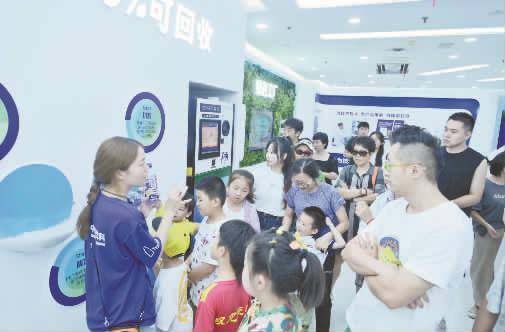
Core Viewpoint - Wuhan City has been actively promoting ecological civilization and environmental protection through innovative initiatives and community engagement, significantly enhancing public awareness and participation in ecological efforts [2][8]. Group 1: Ecological Initiatives - Wuhan has implemented the "Beautiful China, I am an Actor" campaign, leading to increased public consciousness about ecological civilization and environmental protection [2][8]. - The city has received national recognition, with two individuals awarded as the most beautiful ecological environment volunteers and one case selected as an advanced model in the national campaign [8][10]. Group 2: Media and Communication Strategies - The city has developed a "1+N" news release model, integrating ecological news into the annual government press release plan, resulting in over a thousand ecological news reports each year [10][11]. - A unified media center has been established to enhance resource sharing and create high-impact promotional content, maintaining a leading position in positive ecological exposure among similar cities [10][11]. Group 3: Community Engagement and Education - The city has formed a comprehensive volunteer service network for ecological protection, conducting over 1,300 volunteer activities since the start of the "14th Five-Year Plan" [14]. - Environmental education initiatives have been launched, distributing nearly 794,000 environmental education materials to students and promoting ecological awareness through various community activities [15]. Group 4: Innovative Technology and Outreach - Wuhan has pioneered the online and offline coverage of eight types of environmental facilities, facilitating over 2,000 open activities and attracting significant public engagement through VR tours [15]. - The city has successfully utilized new media strategies, achieving high engagement rates with over 120,000 viewers participating in live-streamed events [11][12].
为“美丽武汉”建设汇聚广泛志愿力量
Zhong Guo Huan Jing Bao· 2025-08-19 01:33
Core Viewpoint - Wuhan City in Hubei Province is actively promoting ecological environment volunteer services through the "Beautiful Wuhan, Volunteer with Me" implementation plan for 2025-2027, focusing on community engagement and environmental protection [1][2]. Group 1: Volunteer Service Initiatives - The city has launched ten major actions for ecological environment volunteer services, emphasizing the importance of community participation and cultural leadership [1]. - Annual exchange activities are organized for environmental organizations and volunteers to share experiences and foster collaboration [1]. - On International Volunteer Day, comprehensive promotional activities are conducted to summarize the year's volunteer efforts and recognize outstanding volunteers and cases [1]. Group 2: Support and Development - The government provides support through policies, service purchases, training, and guidance to cultivate professional and youthful volunteer talent [2]. - Various impactful volunteer projects have been developed, such as "Caring for Nature, Protecting Rivers and Mountains" and "Green Water and Green Mountains Volunteer Red" [2]. - Platforms like "Wuhan Ecological Environment Volunteer Home" and "Wu Xiaohuan Volunteer Service" WeChat mini-program have been established to support volunteers [2]. Group 3: Community Engagement and Influence - Prominent public figures have been recruited to join the volunteer service and observation teams, enhancing community involvement in environmental protection [2]. - The movement has transformed ecological volunteer service into a fashionable and respected activity, encouraging more individuals to participate in protecting the environment [2].
武汉让环保设施成为公众“好邻居”
Zhong Guo Huan Jing Bao· 2025-08-19 01:33
Group 1 - The core idea of the articles revolves around the promotion of environmental protection facilities in Wuhan, emphasizing public engagement and transparency in ecological governance [1][2]. - Wuhan has implemented an open system for environmental facilities, expanding from the "old four categories" to "new four categories," achieving comprehensive coverage of eight types of facilities [1]. - Since the launch of the public open initiative in 2017, Wuhan has produced various promotional materials, including videos and posters, to raise awareness about the importance of environmental facilities [1]. Group 2 - To support the opening of environmental facilities to the public, Wuhan organizes annual ecological civilization advocacy activities and discussions to enhance the engagement of these facilities [2]. - The city has developed a "Good Neighbor" VR platform for virtual tours of environmental facilities, allowing the public to access information anytime and anywhere [2]. - As of now, 21 enterprises have opened their environmental facilities to the public, facilitating a new communication channel between the government, businesses, and the public [2].
让环境教育扎根武汉河湖乡间
Zhong Guo Huan Jing Bao· 2025-08-19 01:33
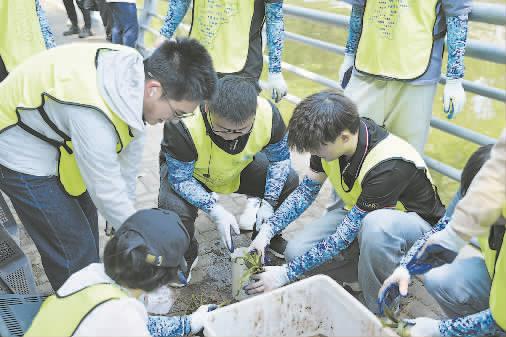
Group 1 - The core viewpoint highlights the integration of ecological education into the curriculum of schools in Wuhan, promoting environmental awareness among students through hands-on experiences in nature [3][4] - Wuhan's schools are utilizing local natural resources, such as East Lake and Zhangdu Lake, as outdoor classrooms to teach students about ecology and environmental protection [3] - The initiative includes the establishment of various ecological education facilities, such as the first wetland ecological education museum in Jianghan District and a "zero-carbon campus" in Qiaokou District [3] Group 2 - The city of Wuhan is actively engaging in rural revitalization efforts by organizing activities aimed at caring for left-behind children and fostering a love for nature through ecological education [4] - Over 20 sessions of youth ecological environment practice activities have been conducted, resulting in the emergence of over 10,000 young environmental ambassadors in Wuhan [4] - The recognition of 59 schools and kindergartens as "International Eco-Schools Green Flag" and the establishment of numerous provincial and municipal green schools reflect the city's commitment to ecological education [4]
以重大工程推进生物多样性系统保护|生物多样性治理系列解读⑤
Zhong Guo Huan Jing Bao· 2025-08-19 00:19
Core Viewpoint - Biodiversity has become a global focus for environmental and development issues, with countries increasing governance efforts to achieve a balance between economic development and ecological protection, particularly highlighted by China's systematic policy deployment in response to the "Kunming-Montreal Global Biodiversity Framework" [1][9]. Policy Framework - The Chinese government has prioritized biodiversity protection as a key component of ecological civilization, with the release of the "Biodiversity Protection Major Project Implementation Plan (2025-2030)" which outlines seven major projects and 24 initiatives aimed at enhancing biodiversity protection [2][3]. - The implementation plan emphasizes a systematic approach to address existing gaps in biodiversity protection, focusing on institutional frameworks, technical support, and capacity building [2]. Engineering Initiatives - The seven major engineering projects include: 1. On-site protection focusing on optimizing natural reserves and restoring habitats for endangered species 2. Off-site protection centered on botanical gardens and genetic resource banks 3. Biological safety measures to control invasive species and disease risks 4. Sustainable utilization promoting biodiversity-friendly industries 5. Assessment systems for monitoring biodiversity changes 6. Collaborative efforts integrating climate change and pollution control 7. Mainstreaming biodiversity awareness among the public and financial institutions [4][5]. Technological Empowerment - The plan aims to enhance biodiversity monitoring through advanced technologies such as remote sensing, AI recognition, and eDNA analysis, addressing current limitations in manual monitoring methods [6][7]. - A national biodiversity big data platform will be established to integrate various data sources, facilitating scientific governance and decision-making [7]. Social Collaboration - The implementation of biodiversity protection requires multi-stakeholder engagement, with proposed mechanisms for dynamic management, cross-department coordination, and financial support systems [8]. - Encouragement of public participation and the establishment of ecological public welfare positions aim to raise awareness and foster community involvement in biodiversity initiatives [8]. International Contribution - The implementation plan is a key measure for China to fulfill its commitments under the "Kunming Framework," aiming to enhance global cooperation in biodiversity governance and contribute to international goals for biodiversity protection [9].
引入生态产业核算制度 助力生态产品价值实现
Zhong Guo Huan Jing Bao· 2025-08-18 23:15
Core Concept - The article emphasizes the importance of implementing the "Two Mountains" concept, which advocates for high-level ecological protection and the transformation of ecological value into economic benefits, as a fundamental requirement of Xi Jinping's ecological civilization thought [1]. Summary by Sections Ecological Product Value Realization - Significant progress has been made in realizing the value of ecological products, including the establishment of a clearer conceptual system, the improvement of ecological product catalogs, and the formation of policy mechanisms [1]. - Over 40% of cities at the prefecture level and above have conducted GEP (Gross Ecosystem Product) accounting, with 12 national pilot regions identified to explore various value realization pathways [1]. Definition and Classification of Ecological Products - The definition of ecological products should evolve, with the 2022 GEP accounting framework categorizing them into three types: material supply, regulation services, and cultural services [2]. - Current GEP accounting does not fully capture the market value of processed ecological products, leading to a lack of comparability in value realization efforts [2]. Ecosystem Product Types - Ecological products can be classified into two categories: ecological regulation products and ecological economic products, with the latter focusing on the value-added process of primary ecological products [3]. - The introduction of the GEP-E (Gross Ecosystem Product-Economy) concept aims to account for the market value of processed ecological products, emphasizing the importance of capital, labor, and technology in driving ecological industrialization [4]. Government Role and Measurement - GEP-R (Gross Ecosystem Product-Regulating) is proposed to measure the monetary value of non-market ecological regulation products, reflecting government performance in ecological protection [5]. - A structured ecological industry accounting system is necessary, including the development of an ecological economic product list and an ecological industry list [6][7]. Implementation of Ecological Industry Accounting - The establishment of technical standards for ecological industry accounting is essential, along with the integration of these standards into the national economic accounting system [8]. - Key indicators such as ecological industry value added, growth rate, and their share of GDP will serve as core metrics for assessing the effectiveness of ecological product value realization [8]. Application of Ecological Industry Accounting - The results of ecological industry accounting can quantify the effectiveness of ecological product value realization and support the formulation of planning goals [9]. - GEP-E and GEP-R can be utilized in government performance evaluations and as a basis for developing industry policies [9][10]. Encouragement of Stakeholder Engagement - Stakeholders, including government departments and financial institutions, are encouraged to leverage ecological product value accounting results to promote sustainable practices and financial support for ecological industrialization [10].
活性炭还能循环利用?真香!
Zhong Guo Huan Jing Bao· 2025-08-18 03:24
Core Viewpoint - The article emphasizes the importance of activated carbon regeneration and recycling in the treatment of volatile organic compounds (VOCs) emissions, highlighting its environmental and economic benefits while addressing the challenges associated with waste activated carbon disposal [1][2][3]. Group 1: Current Challenges in Activated Carbon Usage - The increase in activated carbon adsorption facilities has led to issues such as improper usage, including substandard materials and inadequate replacement, which negatively impacts pollution control effectiveness [2]. - Waste activated carbon, often classified as hazardous waste, poses disposal challenges and increases treatment costs for companies, as they must pay third-party services for proper disposal [2]. Group 2: Benefits of Activated Carbon Recycling - Recycling waste activated carbon can significantly reduce treatment costs, as regenerated carbon costs about 80% of new carbon, leading to a potential cost reduction of approximately one-third [3]. - The recycling process helps avoid secondary pollution from waste disposal and promotes a lifecycle management mechanism for activated carbon, enhancing overall pollution control effectiveness [3]. - Utilizing recycled activated carbon can substantially decrease coal consumption and carbon emissions, as producing one ton of activated carbon requires about three tons of high-quality raw coal [3]. Group 3: Recommendations for Promoting Activated Carbon Recycling - The article suggests establishing centralized regeneration centers for activated carbon, tailored to local industrial characteristics, to enhance economies of scale and cost advantages [4]. - It advocates for stronger policy guidance and financial support for activated carbon regeneration projects, including access to green financing options and tax incentives for companies using regenerated carbon [5]. - The promotion of technological innovation and collaboration between industry, academia, and research institutions is essential for developing new technologies and standards for activated carbon recycling [6].
大别山深处的英山县如何探索两山转化路径?
Zhong Guo Huan Jing Bao· 2025-08-18 02:04
Core Viewpoint - Yingshan County in Hubei Province is leveraging its ecological advantages to transform its economy through green development, focusing on特色农业 (characteristic agriculture), ecological tourism, and cultural heritage [1] Group 1: Ecological Protection and Management - Yingshan County is actively engaged in environmental protection initiatives, including the Blue Sky, Clear Water, and Clean Land campaigns, with measures such as emission reduction and pollution control [2] - The county has implemented a river and lake management system, addressing 19 pollution sources in the Bai Lian River basin, and has achieved a rural sewage treatment rate of 63.67% [2] - A long-term protection mechanism for the rare species of the Dabie Mountain region has been established, enhancing biodiversity conservation efforts [2][3] Group 2: Industrial Development and Innovation - The county is promoting the construction of high-quality tea bases, with significant investments in ecological tea gardens and certifications for organic practices [4] - Yingshan County is developing eco-tourism by integrating cultural and environmental resources, exemplified by the Shenfeng Mountain Villa, which has been recognized as a model for rural revitalization [4] Group 3: Economic Integration and Brand Development - The county is enhancing cross-border cooperation to establish a tea distribution center, aiming for a global logistics system for tea exports, with projected earnings of $1.6 million from exports to Malaysia and Australia by 2025 [5] - The brand value of Yingshan Yunwu tea has reached 5.123 billion yuan, reflecting a significant increase of 1.644 billion yuan, or 47.25%, from the previous year [5]
攻坚筑牢生态支点美丽湖北厚植发展“含绿量”
Zhong Guo Huan Jing Bao· 2025-08-18 01:43
Core Viewpoint - Hubei Province is committed to ecological priority and green development, aiming to enhance its ecological carrying capacity while achieving economic growth, with a focus on pollution prevention and environmental protection [2][15]. Group 1: Ecological Protection and Development - Hubei Province has established a long-term mechanism for ecological environment protection, ensuring high-level protection and high-quality development [6][18]. - The province has implemented the "Ten Major Actions for High-Quality Protection of the Yangtze River," prioritizing ecological restoration [18]. - Hubei's economic output surpassed 6 trillion yuan in 2024, with a growth rate of 5.8%, supported by a focus on green and low-carbon development [21]. Group 2: Pollution Prevention Efforts - Hubei has made significant progress in pollution prevention, with continuous improvement in ecological quality and the establishment of a comprehensive water pollution prevention strategy [11][20]. - The province has achieved 100% compliance in drinking water source protection at the county level, with overall water quality in major rivers rated as good [11][20]. - Air quality has improved significantly over the past three years, with collaborative efforts in air pollution control across provinces [20]. Group 3: Community Engagement and Volunteerism - Hubei has seen a rise in environmental volunteerism, with over 24,000 volunteers participating in various ecological protection activities [13]. - The province has developed a robust volunteer service mechanism, enhancing community involvement in environmental protection [13][14]. - The spirit of volunteerism is becoming a cultural norm in Hubei, contributing to the overall ecological conservation efforts [14]. Group 4: Innovative Financial Solutions for Green Development - Hubei has pioneered the integration of carbon trading with financial services, allowing companies to use carbon credits as collateral for loans to purchase green electricity [23]. - The province's carbon market has achieved a transaction volume exceeding 10 billion yuan, facilitating the transition from ecological benefits to economic gains [23]. - Innovative projects, such as the collaboration between the Wuhan Carbon-Financial Service Center and local companies, are driving energy efficiency improvements and carbon reduction [21][23].