
Zhong Guo Huan Jing Bao

Search documents
“互换大气污染物总量指标”为区域高质量发展和高水平保护注入新动能
Zhong Guo Huan Jing Bao· 2025-06-27 00:14
Core Viewpoint - The recent agreement between Chengdu's Wenjiang District and Qingbaijiang District to exchange air pollutant emission quotas is a strategic move to optimize environmental capacity while supporting economic development and improving air quality [1][2]. Group 1: Agreement Details - Wenjiang District exchanged 90 tons of volatile organic compounds (VOCs) for 60 tons of nitrogen oxides (NOx) from Qingbaijiang District, facilitating the efficient matching of emission quotas with construction projects [1]. - The exchanged NOx quotas will support major projects with a total investment exceeding 3 billion yuan, while the VOC quotas will back projects totaling approximately 15 billion yuan [1]. Group 2: Mechanism and Benefits - The new "bulk exchange" mechanism, introduced by the recent regulations, allows districts meeting specific air quality standards to optimize their emission quotas based on actual development needs [1][2]. - This mechanism simplifies the process of securing necessary emission quotas, significantly accelerating the implementation of air-related construction projects [2]. Group 3: Regional Implications - The practice in Chengdu serves as a model for other regions facing environmental capacity constraints, encouraging them to explore similar quota exchange systems [2]. - Effective implementation of the exchange mechanism requires thorough preliminary research to assess the impact on local air quality, ensuring compliance with air quality standards [2][3]. Group 4: Governance and Oversight - Strengthening policy guidance and clear communication regarding the exchange process is essential for the successful operation of the quota exchange mechanism [3]. - There is a need for comprehensive monitoring and regulation to prevent fraudulent activities during the exchange process, ensuring the integrity of environmental quality improvements [3]. Group 5: Economic and Environmental Value - The quota exchange mechanism highlights the dual value of emission quotas, emphasizing the importance of proactive emission reduction efforts even in areas with surplus environmental capacity [3]. - This approach not only meets local development needs but also opens new economic growth opportunities through market transactions and regional exchanges [3].
如何守牢自媒体流量的“堤坝”?
Zhong Guo Huan Jing Bao· 2025-06-26 23:12
近日,湖南省张家界市慈利县岩溶洞穴废弃物和水资源污染问题受到社会各界广泛关注,属地政府对涉 嫌环境违法问题立案查处,并迅速采取相关治理措施。这一污染事件得到属地政府高度重视并高效处 理,抖音博主"渔猎齐哥"的实地调查与曝光发挥了重要作用。 "渔猎齐哥"目前已有近250万粉丝,今年以来,在生态环境领域公众监督方面发挥了一定作用。他依据 粉丝提供的线索,陆续曝光了江西乐平工业园区废气扰民问题、湖北天门河污染问题等,有力地推动了 污染问题妥善解决。 近些年,自媒体平台蓬勃发展,为各类网红崛起提供了肥沃土壤,其中不少环保网红已成为自媒体时代 的生态新声。 抖音上的"理想青年—小辛"带领义工在长江、澜沧江清理白色垃圾,一年多来捡拾垃圾60余吨。B站UP 主"无穷小亮的科普日常",虽然并非纯粹的生态环保主题博主,但他凭借对动植物知识的专业讲解,让 公众意识到保护生物多样性的重要性。微信平台上,"阿拉善SEE生态协会"长期聚焦荒漠化防治、生态 保护项目进展等内容,引导公众关注沙漠生态修复。 众多环保网红活跃在自媒体平台上,以生动有趣、贴近生活的方式,将专业性很强的生态环境知识转化 为群众易于理解和接受的内容。或者通过曝光, ...
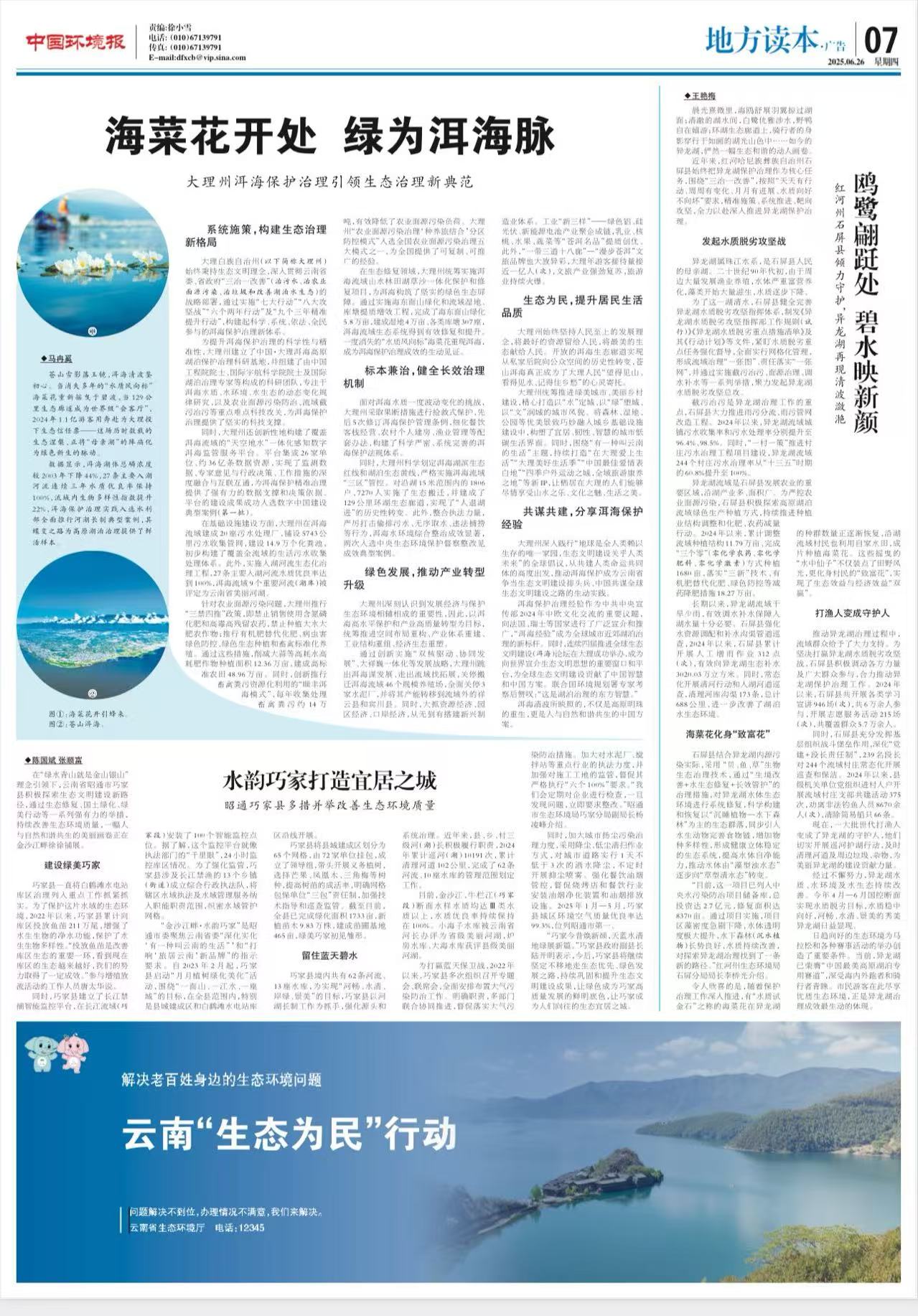
鸥鹭翩跹处 碧水映新颜
Zhong Guo Huan Jing Bao· 2025-06-26 01:43
Core Viewpoint - The article highlights the comprehensive efforts made by Shiping County in Yunnan Province to protect and restore the ecological environment of Yilong Lake, focusing on water quality improvement and sustainable management practices. Group 1: Water Quality Improvement - Yilong Lake, part of the Pearl River system, has faced severe eutrophication due to extensive fish farming since the early 1990s, leading to declining water quality [2] - Shiping County has established a command system for water quality improvement, implementing various measures such as pollution interception and treatment, resulting in urban sewage collection and treatment rates of 96.4% and 98.5% respectively since 2024 [2] - The county has also achieved a 100% sewage treatment rate for 244 villages in the Yilong Lake basin, up from 60.8% during the 13th Five-Year Plan period [2] Group 2: Agricultural Practices and Pollution Control - To control agricultural non-point source pollution, Shiping County has adjusted the planting structure over 117,900 acres and implemented zero-chemical farming practices on 1,680 acres since 2024 [3] - The county has conducted artificial rainfall operations at 312 points, effectively supplementing 30.2 million cubic meters of water to Yilong Lake [3] - Regular river cleaning and inspections have been carried out, clearing 173 rivers and channels totaling 688 kilometers to improve the lake's ecological environment [3] Group 3: Ecological Restoration Initiatives - The county has adopted biological ecological governance techniques, including the introduction of aquatic animals and the restoration of submerged plant communities, with a total investment of 270 million yuan for a project covering 8,370 acres [4] - The project has led to a significant decrease in algal density and an increase in water transparency, contributing to the recovery of the aquatic plant species known as sea vegetable flowers, which have become economically beneficial for local villagers [4] Group 4: Community Engagement and Support - Shiping County has mobilized community support for the lake's protection, conducting 946 educational sessions with over 60,000 participants and 215 volunteer activities reaching more than 57,000 people since 2024 [5] - The county has implemented a "Party Building + Segment Responsibility System," with 239 segment leaders conducting regular inspections and clean-up activities in 244 villages [6] - The transformation of local fishermen into lake guardians has been a significant outcome, contributing to the ongoing efforts to maintain the lake's cleanliness and ecological health [6] Group 5: Achievements and Future Prospects - Continuous efforts have led to improved water quality and environmental conditions, with the lake achieving its water quality improvement targets between April and June this year [6] - The enhanced ecological environment has facilitated the hosting of various events, including marathons, and Yilong Lake has been recognized as "China's Most Beautiful Plateau Lake Race Track," attracting both domestic and international visitors [6]
海菜花开处 绿为洱海脉—— 大理州洱海保护治理引领生态治理新典范
Zhong Guo Huan Jing Bao· 2025-06-26 01:43
Core Viewpoint - Dali Prefecture is establishing a new model for ecological governance through systematic policies and actions aimed at protecting and restoring the Erhai Lake ecosystem, while balancing economic development and environmental sustainability [1][14][20]. Group 1: Ecological Governance and Protection Measures - Dali Prefecture has implemented the "Three Treatments and One Improvement" strategy, focusing on water pollution, agricultural non-point source pollution, and waste management, alongside improving lake ecology [1][14]. - The establishment of the China Dali Erhai Plateau Lake Protection Research Base and a scientific team of experts aims to enhance the precision and scientific basis of ecological governance [1][14]. - A digital monitoring platform integrating data from 26 agencies has been developed to support precise governance of the Erhai Lake ecosystem [1][15]. Group 2: Infrastructure Development - Dali has constructed 20 sewage treatment plants, laid 5,743 kilometers of sewage collection pipelines, and built 149,000 septic tanks to create a comprehensive sewage treatment system [15]. - The ecological restoration of rivers entering the lake has achieved a 100% water quality rate for 27 major inflow rivers [15]. Group 3: Agricultural Pollution Control - Dali Prefecture has adopted a "Three Bans and Four Promotions" policy to reduce agricultural pollution, including banning certain fertilizers and pesticides, and promoting organic farming practices [15]. - The area of high-water and high-fertilizer crop cultivation has been reduced by 123,600 acres, and 489,600 acres of high-standard farmland have been established [15]. Group 4: Ecological Restoration Initiatives - The implementation of integrated protection projects for mountains, rivers, forests, fields, lakes, and grasslands has led to the greening of 58,000 acres and the establishment of 40,000 acres of wetlands [16]. - The resurgence of the "water quality indicator" seaweed flower in Erhai Lake symbolizes the success of ecological restoration efforts [16]. Group 5: Long-term Governance Mechanisms - Dali has revised the Erhai protection management regulations five times to create a comprehensive legal framework for ecological governance [17][19]. - The establishment of ecological red lines and strict management zones has led to the relocation of 7,270 people from the lakeshore, promoting a "people retreating, lake advancing" approach [19]. Group 6: Economic Development and Industrial Transformation - Dali Prefecture recognizes the interdependence of economic development and ecological protection, focusing on high-quality industrial transformation while protecting the Erhai ecosystem [20]. - The closure of 46 large-scale aquaculture farms and three cement plants has been part of the strategy to reduce environmental impact [20]. Group 7: Enhancing Quality of Life - Dali Prefecture emphasizes a people-centered development approach, transforming private ecological spaces into public areas for community enjoyment [21]. - Urban and rural development initiatives aim to create a harmonious living environment that integrates natural beauty and cultural heritage [21]. Group 8: Sharing Ecological Protection Experiences - Dali Prefecture promotes its ecological governance experiences as a model for global ecological civilization, participating in international exchanges and forums [22]. - The "Erhai Experience" has been recognized as a benchmark for urban lake management, contributing to global ecological governance discussions [22].

象山韭山列岛迎来首批中华凤头燕鸥“外籍观察官”
Zhong Guo Huan Jing Bao· 2025-06-26 01:23
"我曾见过它们的图片,现在我终于真正见到这些鸟儿们了。它们比我想象中要更小一些,但更美丽灵动,像是白色的海上精灵,太美了!"站在浙江象 山韭山列岛国家级自然保护区的中铁墩屿上,欧布难掩激动神情,眼神追随着天际飞舞的一群洁白身影——那些被誉为"神话之鸟"的中华凤头燕鸥。 中华凤头燕鸥是一种极度濒危的珍稀鸟类,一度被认为已经灭绝,直到2000年,才在马祖列岛被重新发现。因为头顶那一撮独特的黑色羽冠,以及迁徙 路线复杂、生存环境要求苛刻,被称为"神话之鸟"。这次,欧布作为"中华凤头燕鸥全球观察官",亲身踏上了这片神奇的海岛,与这些传说中的鸟类零距离 接触。 欧布出生在美国,父母是叙利亚人,目前在宁波诺丁汉大学攻读博士学位。在听说象山韭山列岛国家级自然保护区首次面向全球招募"外籍观察官"的消 息后,他毫不犹豫地提交了申请材料。"我看到报名信息的第一反应是,这是一次千载难逢的机会。"他说。经过严格的遴选,欧布最终从数位申请者中脱颖 而出,成为本次活动的4名"外籍观察官"之一。 图为外籍观察官认真听岛上志愿者的介绍。乐承斌摄 "在登岛之前,我做了一些功课,这种鸟的全球种群数量曾经不足50只,是韭山列岛保护区的工作人员和一 ...

深圳发布2024年应对气候变化白皮书
Zhong Guo Huan Jing Bao· 2025-06-26 01:16
Core Insights - Shenzhen has launched the "Climate Change White Paper (2024)" showcasing its efforts in climate governance and sustainable development as a national model city [1][3] Group 1: Achievements in Carbon Neutrality - Under the "dual carbon" goals, Shenzhen has made significant progress in green and low-carbon transformation, with strategic emerging industries accounting for 42.3% of GDP and green low-carbon industries contributing 243.9 billion yuan [3] - The clean energy installed capacity has surpassed 80%, with renewable energy outpacing coal power for the first time [3] - The penetration rate of new energy vehicles reached 76.9%, and the area of green buildings reached 210 million square meters, leading the nation [3] - Shenzhen has created 134 national-level green factories and has enhanced its carbon sink capacity, with forest stock exceeding 4.69 million cubic meters [3] Group 2: Carbon Market and Green Finance - As the first city in China to pilot carbon emissions trading, Shenzhen has expanded its carbon market to cover 38 industries and 708 key emission units, with a cumulative trading volume of 10.8 million tons and a transaction value of 2.475 billion yuan by the end of 2024 [3][4] - The balance of green credit has surpassed 1 trillion yuan, and 293 climate financing projects have been launched [3] Group 3: Climate Adaptation and Resilience - Shenzhen has significantly improved its monitoring and early warning capabilities, establishing comprehensive risk maps and a dense meteorological observation network [5][6] - The city has advanced ecological restoration projects, with 43 projects completed, including the creation and restoration of mangrove forests [6] - Infrastructure resilience has been enhanced, with flood control capabilities rated for 100-200 year events and urban water supply capacity at 85 days [7] Group 4: Policy Framework and Support - The city has developed a robust policy framework, including the "National Carbon Peak Pilot (Shenzhen) Implementation Plan" and the "Shenzhen Climate Change Adaptation Plan (2023-2035)" [8] - Shenzhen is advancing a multi-level greenhouse gas emission accounting system and has established a high-precision greenhouse gas monitoring network [8] Group 5: Community Engagement and Future Outlook - There is a growing public engagement in green initiatives, with campaigns promoting low-carbon lifestyles and participation in international climate discussions [9] - Looking ahead, Shenzhen aims to enhance carbon emission control, accelerate green development, and contribute to global climate governance [9]

潍柴低碳多元动力助力新疆绿色矿山建设
Zhong Guo Huan Jing Bao· 2025-06-26 01:04
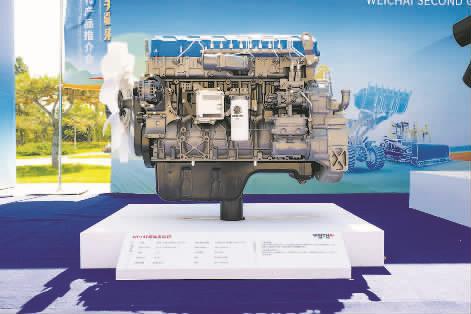
Core Viewpoint - The event showcased the launch of Weichai's second-generation mining power products, marking a significant step towards green mining solutions in Xinjiang, China, with the first delivery of the WP17T methanol-powered excavator [1][2]. Group 1: Product Launch and Features - The WP17T methanol engine has a maximum power of 650Ps and a maximum torque of 2900N·m, with a minimum alcohol consumption of 410g/kW·h, suitable for various mining applications [3]. - Weichai invested 120 million yuan over ten years to develop the WP17T engine, achieving 100% technological independence in its core components and control systems, filling a domestic gap in high-power methanol engines [3][4]. - The methanol engine's operational economy is over 40% more efficient compared to diesel engines of the same displacement, validated through two years of reliability testing in mining conditions [3][4]. Group 2: Industry Context and Strategic Importance - Xinjiang, as a major coal production area, is accelerating green mining initiatives under the "dual carbon" goals, providing a solid foundation for the application of green energy [4]. - Weichai's diverse fuel solutions encompass traditional, clean, and new energy applications, contributing to high-quality development in Xinjiang's mining sector [1][4]. Group 3: Technological Advancements and Market Position - Weichai's M series engines have successfully adapted to various mining equipment, breaking foreign monopolies in large mining machinery [7][11]. - The WP14T, WP15H, and WP17T engines are designed for wide-body dump trucks, meeting the increasing demand for efficient transportation in mining operations [12][11]. Group 4: Service and Support Initiatives - Weichai launched the "Mining Service 2.0" program, offering comprehensive lifecycle support and customized solutions to enhance customer satisfaction and operational efficiency [13][14]. - The program includes a commitment to high-value service, with no mileage limits for certain equipment and a significant investment in spare parts and service personnel in mining areas [14][15].
拓璞环保AI+遥感赋能“三水统筹” 实现琼江清水出安居
Zhong Guo Huan Jing Bao· 2025-06-26 01:04
Core Insights - Sichuan Tuopu Environmental Technology Co., Ltd. (Tuopu Environmental) focuses on comprehensive water environment governance, specializing in industrial wastewater treatment, rural environmental remediation, and watershed ecological protection [1] - The company emphasizes technological research and innovation, having established partnerships with universities and obtained numerous patents and software copyrights [1] Project Overview - The Qiongjiang River, a key tributary of the Yangtze River, is crucial for ecological protection in the region, with significant improvements in water quality achieved through collaboration with Tuopu Environmental [2] Technical Features and Project Advantages - The project integrates remote sensing technology and intelligent analysis, enhancing pollution control and regulatory efficiency compared to traditional methods [3] - A comprehensive monitoring system has been developed, achieving significant reductions in pollutants and improving water quality and ecology [3][5] - The project employs a multi-source remote sensing system for monitoring algal blooms, utilizing machine learning to enhance monitoring precision and reliability [3][5] Effectiveness of Governance - The governance model has led to improved water quality, a balanced aquatic ecosystem, and a more than 30% increase in water resource management efficiency [4] Engineering Innovation and Benefit Analysis - The project utilizes a multi-spectral monitoring system for high-precision monitoring of pollution sources, significantly improving efficiency and data reliability [5] - An integrated intelligent platform has been developed for real-time monitoring and decision-making, reducing project design cycles by 40% [5] Benefit Analysis - The Qiongjiang River has seen a 100% compliance rate for the monthly average concentration of permanganate index by 2024, with significant reductions in pollutant concentrations compared to 2023 [6] - The ecological revival is evident with the return of species and improved vegetation coverage, achieving a stable water quality meeting Class III surface water standards for five consecutive years [6]
生态环境损害赔偿的另一种方式,苏州“少年环保导师”制可供借鉴
Zhong Guo Huan Jing Bao· 2025-06-25 08:10
Group 1 - The core idea of the news is the introduction of the "Youth Environmental Mentor" system in Suzhou, which allows companies responsible for minor ecological damage to participate in environmental education for students as a form of compensation, thereby reducing or eliminating monetary penalties [1][2]. - This innovative approach connects ecological damage compensation with environmental education for students, leading to greater social benefits compared to traditional monetary compensation methods [2]. - The "Youth Environmental Mentor" system has received positive feedback from companies, schools, and the public, enriching the content and diversity of environmental education activities for students [2]. Group 2 - Companies participating in the program are encouraged to reflect on their environmental management practices, which can enhance their management levels and reduce the risk of future ecological violations [2]. - The system is considered a form of labor compensation for ecological damage, which may lower the financial burden on companies, especially those facing economic difficulties [2]. - Local environmental authorities are advised to conduct thorough assessments of companies' willingness and ability to compensate through labor, prioritizing those that are economically challenged but willing to participate in the program [2][3]. Group 3 - There is a need for strict selection and training of "Youth Environmental Mentors" to ensure they possess the necessary ecological knowledge and communication skills [3]. - Before participating in educational activities, relevant departments should provide targeted training to mentors based on the content of the activities to ensure effectiveness [3]. - Feedback from students on the mentors' teaching activities should be collected to encourage continuous improvement in teaching methods [3].
为什么新物种总能在自然保护地被发现?
Zhong Guo Huan Jing Bao· 2025-06-25 03:12
Core Insights - The discovery of new species in China highlights the rich biodiversity and ecological value of the region, emphasizing the importance of species for ecosystem stability and sustainable development [1] - New species are not newly created but have existed for a long time, only recently identified due to extensive field studies and advancements in classification science [1] Group 1: Importance of Biodiversity - Biodiversity is crucial for ecological stability, ecosystem services, and sustainable socio-economic development, making the discovery of new species a significant achievement [1] - The existence of unknown species is vital, and they should be protected as important members of the biodiversity family [1] Group 2: Role of Protected Areas - Many new species have been discovered in long-established natural reserves, indicating the value of preserving original habitats [2] - Specific examples include the discovery of 75 new species in Hainan Tropical Rainforest National Park and 65 new species in Zhejiang Qianjiang Source-Baishanzu National Park [2] - Protecting natural areas can mitigate human activity threats and help prevent species extinction, particularly for undiscovered species [2] Group 3: Conservation Efforts - The complexity of nature requires careful and prolonged efforts to understand and discover new species, testing the effectiveness of the national park system in protecting wilderness [3] - Even in developed areas, there are original ecological zones worth protecting, as they may harbor unique biodiversity [3]