Jing Ji Wang

Search documents
千亿市场,再扩容
Jing Ji Wang· 2025-11-18 00:21
Core Insights - The personal pension system has shown steady growth in product offerings, account numbers, and investment scale, with a total balance of 110.36 billion yuan in personal pension financial products as of June this year [1][2][4] - The recent notification from the National Financial Regulatory Administration to expand the pilot areas for pension financial products nationwide is expected to inject strong momentum into the development of the pension financial business [1][7] Investment Performance - Personal pension financial products have generated over 390 million yuan in returns for investors, with an average annualized return rate exceeding 3.4% [1][4] - The performance of these products is attributed to sound investment strategies, optimized asset allocation, and strict risk control systems, supported by favorable policies [4][7] Market Expansion - The number of personal pension financial products has reached 37, indicating a rich and diverse product shelf that aids clients in achieving stable returns [2][3] - The number of account holders has surpassed 70 million, reflecting a multi-layered and widely covered market structure [2][3] Future Directions - The industry is encouraged to enhance the diversity of product offerings and to consider increasing the allocation of equity assets to improve the attractiveness of financial products [4][5][6] - There is a call for the exploration of innovative products with longer durations and targeted dates to enhance the investment experience for clients [8]
事关美股QDII,头部公募集体发声
Jing Ji Wang· 2025-11-18 00:21
Core Insights - Multiple public funds have issued warnings regarding the premium risk associated with US stock QDII products, as retail investors and speculators increasingly favor these investments, leading to significant premiums between secondary market prices and net asset values [1][2][3] Group 1: Premium Risks - On November 17, major fund companies including E Fund, GF Fund, and others alerted investors about the premium risks in their US stock-themed QDII products, emphasizing that high premiums could lead to substantial losses [1][2] - E Fund's Nasdaq 100 ETF (QDII) reported a closing price of 1.767 yuan on November 14, reflecting a premium of 7.47% over its net asset value [2] - Other QDII funds, such as the S&P Consumer Select QDII and the S&P 500 Index QDII, have also issued similar warnings regarding premium risks and the potential for temporary trading halts [3] Group 2: Investment Trends - The narrative surrounding new technologies like AI, chips, and innovative pharmaceuticals has made US stock QDIIs particularly attractive, drawing significant capital compared to Hong Kong stock QDIIs [4] - Despite conservative returns, US stock QDIIs have shown strong capital inflow, with E Fund's Nasdaq 100 QDII growing from 1.4 billion yuan at the beginning of the year to 3.7 billion yuan by the end of September [4] - Fund managers have been reducing their positions in Hong Kong stocks while increasing their allocations to US stocks, with some funds completely exiting Hong Kong positions to focus on US markets [7] Group 3: Performance and Strategy - Fund managers have reported significant performance improvements after reallocating to US stocks, with some QDII funds achieving over 85% returns year-to-date [7] - The focus on US technology stocks is driven by expectations of continued growth in sectors like AI and high-performance computing, which are seen as critical for future investment opportunities [8][9] - The Nasdaq 100 index, representing leading tech companies, is expected to outperform other indices and serve as a key tool for investors looking to capitalize on US tech sector growth [9]
收评:沪指低开低走跌0.46% AI应用等概念活跃
Jing Ji Wang· 2025-11-17 08:22
Core Points - The Shanghai Composite Index closed at 3972.03 points, down 0.46%, with a trading volume of 805.733 billion [1] - The Shenzhen Component Index closed at 13202.01 points, down 0.11%, with a trading volume of 1105.058 billion [1] - The ChiNext Index closed at 3105.20 points, down 0.20%, with a trading volume of 486.644 billion [1] Sector Performance - Sectors such as insurance, banking, brokerage, pharmaceuticals, and electricity experienced declines [1] - Conversely, sectors including military industry, coal, and real estate saw gains [1] - Active sectors included lithium mining, AI applications, and Huawei's computing concepts [1]
全球投资仍未走出低谷
Jing Ji Wang· 2025-11-17 01:39
Global Investment Trends - Global investment conditions remain sluggish in the first half of 2025, with foreign direct investment (FDI) declining by 3%, marking the third consecutive year of decline [1][2] - Geopolitical tensions, trade frictions, and companies reassessing supply chain risks contribute to cautious investment sentiment [1][2] Greenfield Investment - Greenfield investment, a key indicator of new capital expenditure and future production capacity, has seen a significant decline, with a 17% drop in global projects [2] - Developed and developing countries experienced declines of 20% and 12% respectively, contrasting with the recovery period from 2023 to 2024 [2] - Manufacturing greenfield projects decreased by 26%, particularly in sectors related to global supply chains such as electronics, machinery, automotive, and textiles [2] International Project Financing - International project financing, primarily in infrastructure sectors like energy and transportation, has sharply decreased due to high interest rates and rising geopolitical risks [3] - Renewable energy projects saw a 9% decline, while other electricity projects experienced a 38% drop in project numbers and a 52% decrease in investment amounts [3] - Domestic project financing has increased by 39% in number and 29% in amount, indicating a shift as local capital attempts to fill the gap left by international capital withdrawal [3] Cross-Border Mergers and Acquisitions - Cross-border M&A activity has significantly decreased, with total deal value dropping from $448 billion in 2024 to $172 billion in 2025 [4] - The U.S. and U.K. saw declines of 33% and 59% respectively, with overall European M&A activity down by approximately 1% [4] - There is an increase in divestitures and withdrawals, leading to instability in M&A activities in developing countries [4] Sustainable Development Goals Impact - The weak international investment climate negatively affects the achievement of sustainable development goals, with related project numbers declining by 10% and investment amounts down by 7% [4] - This trend indicates a reduction in both the number of projects and the average size of individual projects, further weakening capital formation capabilities in developing countries [4] Future Investment Landscape - The global investment landscape is expected to become more "regionalized" and "friend-shored," with investments favoring politically friendly countries [5] - Manufacturing related to supply chains will continue to face pressure, with developed countries likely to repatriate critical manufacturing processes [5] - Digital economy and artificial intelligence are projected to be the only bright spots for global investment growth, driven by strategic emphasis on AI and semiconductor development [5]
工业经济高质量发展扎实推进
Jing Ji Wang· 2025-11-17 01:39
Group 1 - The industrial added value of large-scale enterprises in China increased by 6.1% year-on-year from January to October, which is 0.3 percentage points higher than the same period last year, indicating a sustained rapid growth trend [1] - In October, the industrial added value increased by 4.9% year-on-year, with a month-on-month increase of 0.17% after seasonal adjustment. Among the three major sectors, manufacturing increased by 4.9%, mining by 4.5%, and electricity, heat, gas, and water production and supply by 5.4% [2] - In October, 29 out of 41 major industrial categories saw year-on-year growth, resulting in a growth coverage of 70.7%. Additionally, 313 out of 623 major industrial products experienced production increases, with a growth coverage of 50.2% [2] Group 2 - The equipment manufacturing industry saw a year-on-year increase of 8.0% in October, with all eight sub-sectors achieving growth. The automotive and electronics sectors grew rapidly at rates of 16.8% and 8.9%, contributing 22.8% and 19.3% to the overall industrial growth, respectively [2] - The high-quality development of the industrial economy is reflected in the continuous improvement of industrial enterprise competitiveness, as seen in various companies optimizing their production processes and enhancing product safety and reliability [3][4] - In October, the manufacturing purchasing managers' index was at 49.0%, while the business activity expectation index was at 52.8%. Industrial investment from January to October grew by 4.9%, contributing 1.7 percentage points to total investment growth [5] Group 3 - Local governments are implementing practical measures to strengthen the foundation for the industrial economy's positive trajectory, focusing on high-end, intelligent, green, and cluster development [6][7] - Experts indicate that China's economic foundation is stable, with numerous advantages and strong resilience, suggesting that favorable factors supporting economic growth are abundant. Continued policy efforts are expected to further stabilize and rebound the industrial economy [7]
铂、钯期货和期权,即将亮相
Jing Ji Wang· 2025-11-17 01:30
Core Insights - The Shanghai Futures Exchange (SHFE) has announced the listing of platinum and palladium futures and options, set to begin trading on November 27 and 28, 2025, respectively [1][2]. Group 1: Market Context - Platinum and palladium are considered strategic metals due to their significant roles in hydrogen energy, automotive catalytic converters, and renewable energy manufacturing [1]. - The global expansion of the renewable energy industry has led to increased supply constraints and price volatility for platinum and palladium, making the upcoming listings highly anticipated by the industry [1][4]. Group 2: Trading Details - The first batch of platinum futures contracts will include PT2606, PT2608, and PT2610, while palladium futures will include PD2606, PD2608, and PD2610 [2]. - The trading unit for both platinum and palladium futures is set at 1,000 grams per contract, with a minimum price fluctuation of 0.05 yuan per gram [2][3]. - Initial margin requirements for trading will be 9% of the contract value, with a price limit of 14% on the first trading day [2]. Group 3: Fee Structure and Trading Mechanism - Trading fees for platinum and palladium futures will be 0.01% of the transaction amount, with no fees for intra-day closing trades [3]. - Options contracts will have a trading fee of 2 yuan per contract, with similar conditions for intra-day trades [3]. Group 4: Strategic Importance - The global supply of platinum and palladium is highly concentrated, with 71% of platinum and 40% of palladium sourced from South Africa and Russia, respectively [4]. - China relies heavily on imports for both metals, with 80% of platinum and 55% of palladium being imported, highlighting significant supply chain risks [4]. Group 5: Pricing Power and Market Impact - Currently, the pricing power for platinum and palladium is dominated by the London and New York markets, respectively [5]. - The introduction of these futures and options in RMB aims to establish a new pricing benchmark in Asia, enhancing China's influence in the global market [5]. - This move is expected to improve risk management for domestic enterprises and strengthen China's financial autonomy in commodity trading [5].
收评:沪指低开高走涨0.73% 锂电池产业链爆发
Jing Ji Wang· 2025-11-14 01:29
Core Points - The A-share market experienced a collective rise on November 13, with the Shanghai Composite Index closing at 4029.50 points, up 0.73%, and a trading volume of 876.40 billion yuan [1] - The Shenzhen Component Index closed at 13476.52 points, up 1.78%, with a trading volume of 1165.56 billion yuan [1] - The ChiNext Index closed at 3201.75 points, up 2.55%, with a trading volume of 522.92 billion yuan [1] Industry Highlights - The lithium battery industry chain saw significant growth, with stocks like Shengxin Lithium Energy and Rongjie Co., Ltd. hitting the daily limit [1] - The organic silicon concept also strengthened, with companies such as Xin'an Chemical and Sanyou Chemical reaching the daily limit [1] - The Fujian sector was notably active, with stocks like Pingtan Development and Xiamen Construction hitting the daily limit [1] - Phosphate and fluorine concepts rose, with companies like Taihe Technology and Furui Textile reaching the daily limit [1] - Alibaba-related stocks experienced a late surge, with Data Port hitting the daily limit [1] - Sectors such as electrical equipment, non-ferrous metals, chemicals, tourism, and mineral products showed strong gains, while telecommunications, transportation facilities, and banking sectors faced declines [1]


并购贷款激活投资新动力
Jing Ji Wang· 2025-11-13 08:47
Core Viewpoint - The new regulations on merger loans, as outlined in the draft management measures by the National Financial Supervision Administration, aim to enhance the efficiency and safety of financial flows into industries aligned with national strategic directions, thereby injecting new investment momentum into economic restructuring [1][3]. Group 1: New Regulations on Merger Loans - The draft management measures introduce "equity participation merger loans," allowing companies to acquire at least 20% equity in target companies through loans, expanding financing channels for strategic investments [3][4]. - The maximum loan-to-value ratio for controlling mergers has been increased to 70%, allowing companies to finance a significant portion of their acquisitions through loans [4]. - For equity participation mergers, up to 60% of the transaction amount can be financed through loans, with a maximum loan term of 7 years [4][5]. Group 2: Support for Technology Enterprises - The regulations provide preferential treatment for technology companies, allowing up to 80% of the transaction price to be financed through loans, with loan terms extended to 10 years [5]. - The measures emphasize that loans must support mergers with high industry relevance or strategic synergy, reflecting a clear industrial policy direction [5]. Group 3: Market Response and Trends - The merger market is preparing for the new regulations, with expectations of increased merger activity, potentially surpassing IPOs in scale [6]. - Recent statistics indicate a significant rise in major asset restructuring projects, with the number of approvals doubling compared to the previous year [6]. - The shift in focus from IPOs to mergers is noted, as companies reassess their positions and capabilities in the market [7].



固态电池何时“上车”
Jing Ji Wang· 2025-11-13 08:25
Core Insights - Solid-state batteries are reaching a critical stage with significant advancements in technology, production capacity, and commercialization [1][3][6] - The technology utilizes solid electrolytes instead of traditional liquid ones, addressing issues like range and fire hazards, and is considered the "ultimate solution" for power batteries [3][6] Technological Breakthroughs - Recent developments include a high-energy density solid-state battery module from Chery Automobile, achieving 600Wh/kg and a range of 1200-1300 kilometers, with plans for validation by 2027 [3] - A new polymer solid-state battery from Xinwanda boasts an energy density of 400Wh/kg and a cycle life of 1200 weeks under low pressure, demonstrating high safety standards [4] - Research teams have developed an anion regulation technology that enhances the contact between the electrolyte and lithium electrode, crucial for practical solid-state battery applications [5] Production and Commercialization - Dongfeng Motor has successfully mass-produced solid-state batteries and aims for vehicle integration by 2026 [3] - Toyota and Nissan are also advancing their solid-state battery projects, with Toyota targeting 2027-2028 for its first mass-produced model and Nissan achieving double the current battery range with plans for 2028 mass production [4] - BMW and Mercedes-Benz are making strides in solid-state battery testing, with BMW's i7 and Mercedes' Solstice battery showing promising results [4] Market Dynamics - The solid-state battery sector has seen explosive growth, with the index rising from 1552.99 points on May 30 to 2390.20 points by November 4, indicating strong investor interest [6] - The potential for solid-state batteries to exceed 500Wh/kg energy density could lead to electric vehicles achieving over 1000 kilometers of range, surpassing traditional fuel vehicles [6] Cautionary Perspectives - Despite the positive developments, some experts remain cautious about the maturity of solid-state battery technology and the lack of significant actions from leading battery companies [7] - The complexity of commercializing solid-state batteries, including cost and supply chain readiness, suggests that large-scale production may not occur until after 2030 [7]

推进大规模设备更新,有力促进企业高质量发展
Jing Ji Wang· 2025-11-13 08:16
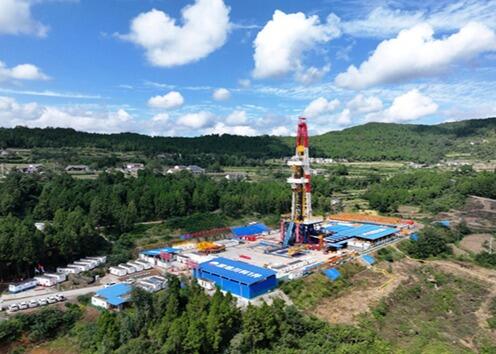
Core Viewpoint - The Chinese government has made a significant decision to promote large-scale equipment upgrades and consumer product exchanges to support high-quality economic development, with China National Petroleum Corporation (CNPC) playing a crucial role in implementing these initiatives [1][3]. Group 1: Importance of Large-Scale Equipment Upgrades - Large-scale equipment upgrades are essential for industrial upgrading and digital transformation, significantly contributing to investment and economic growth [3][4]. - CNPC is a key player in ensuring national energy security, accounting for approximately 50% of domestic crude oil and 66% of natural gas production, with market shares of 33% in refined oil and 61% in natural gas [3][4]. - Upgrading equipment can enhance production efficiency, mitigate major safety risks, and improve the resilience and safety of supply chains [3][4]. Group 2: Achievements in Equipment Upgrades - During the 14th Five-Year Plan period, CNPC has effectively advanced equipment upgrades through improved management systems and organizational leadership [6]. - The company has established a leadership group for equipment upgrades and implemented a three-tier management model to optimize workflows [6]. - Investment in equipment upgrades is projected to increase by approximately 5.5% year-on-year by 2025, supporting the expansion of upgrade efforts [6]. Group 3: Future Directions for Equipment Upgrades - In the 15th Five-Year Plan period, CNPC aims to build a world-class enterprise by focusing on efficiency, advanced capacity, and self-control capabilities [9][10]. - The company plans to enhance equipment upgrades through technological innovation, digital empowerment, and green development, targeting a significant increase in the application of high-quality technology and equipment [11][12]. - By 2030, CNPC aims to achieve a 20% electrification rate for end-use energy and promote the development of a low-carbon energy ecosystem [12].