3 6 Ke

Search documents
张笑宇:我为什么成了坚定的AI“降临派”?
3 6 Ke· 2026-02-03 11:14
读过《三体》的朋友应该都知道,"降临派"同时有两个含义:第一个含义是,他们的立场不站在人类这边,人是要毁灭的;第二个含义是,主不在乎,因 为人太弱小了,主太强大了,所以主不在乎。 今天我们讲 AI 降临派。对于第一点,我不太可能不站在人类这边,因为暂时还没有什么证据 AI 要接纳我;第二点,我觉得 AI 的强大程度确实到了一个 像"主"一样的状态。 AI 强大的原因很简单,就是两个字:数学。我们做科技史研究,基本上还是会从数学逻辑出发,去理解技术对社会的影响。所以今天会跟大家分享这段 时间我一直在思考的三个数学等式。 第一个数学等式叫"人类当量" 刚才司晓院长也讲到了人类当量。我们知道原子弹有当量,一枚原子弹相当于多少万吨 TNT。简单来说,人类当量,就是计算大模型的智力输出相当于 多少人类。我估计一千倍不成问题。 我在这里跟大家演讲,本质上就是一种智力输出。我们把人看作是生产智能的机器,我输出智能的效率大概是每分钟 200 个 token,我一天不停地讲,差 不多 20 万个 token 封顶。而大模型可以输出 100 万 token,具体多少时间不重要,一秒、一分钟不重要,重要的是价格。100 万 tok ...


从ClawdBot爆火看AIoT万物智行的底层逻辑:为什么"技能"比"智能体"更重要?
3 6 Ke· 2026-02-03 11:14
Core Insights - ClawdBot's success signifies a shift in AI from conversational to execution-oriented capabilities, highlighting a significant demand gap for AI that can perform tasks effectively [1][4] - The focus of AIoT competition is expected to shift from the intelligence of agents to the ecosystem of skills, emphasizing the importance of practical skills over general intelligence [7][8] Group 1: ClawdBot Phenomenon - ClawdBot has gained immense popularity due to its ability to integrate various services and execute tasks, demonstrating the market's need for functional AI [1][17] - The rise of ClawdBot indicates a collective misunderstanding in the industry, where the focus has been on creating all-knowing AI rather than practical skills that interact with the physical world [3][5] Group 2: Skills vs. Agents - Agents are AI systems with decision-making capabilities, akin to project managers, while skills are standardized, reusable units that complete specific tasks, similar to specialized engineers [5][6] - The value of an agent lies in its ability to utilize high-quality skills, suggesting that practical skills are more valuable than the intelligence of the agent itself [6][10] Group 3: Future of AIoT - The future of AIoT may involve a shift towards a skill network, where devices expose their capabilities rather than each having redundant intelligence [8][16] - The introduction of standardized protocols like MCP will facilitate the integration of skills across devices, making the competition about the richness of the skill ecosystem rather than the intelligence of individual devices [9][12] Group 4: Application of Skills - Skills can be likened to apps for AI, allowing agents to complete tasks without the need for users to write prompts or debug tools [10][11] - The technology stack of AIoT can be divided into three layers: protocol layer (MCP), capability layer (skills), and scheduling layer (agents) [11][12][14] Group 5: Skills in Physical AI - The combination of skills with physical AI presents significant opportunities, such as in retail where devices can autonomously manage inventory and customer interactions [18][19] - The evolution of sensors from passive data reporters to active decision-support nodes illustrates the potential of skills in enhancing operational efficiency [19] Group 6: Conclusion - ClawdBot represents just the beginning of a broader transformation in the physical world, emphasizing that users are willing to invest in AI that can perform tasks effectively [20] - The integration of skills will elevate AIoT from basic infrastructure collaboration to value exchange collaboration, aligning with policy initiatives aimed at creating a fully interconnected smart environment [20]
喜欢冰箱贴的人注意了,长期不挪它,会造成这种问题
3 6 Ke· 2026-02-03 11:11
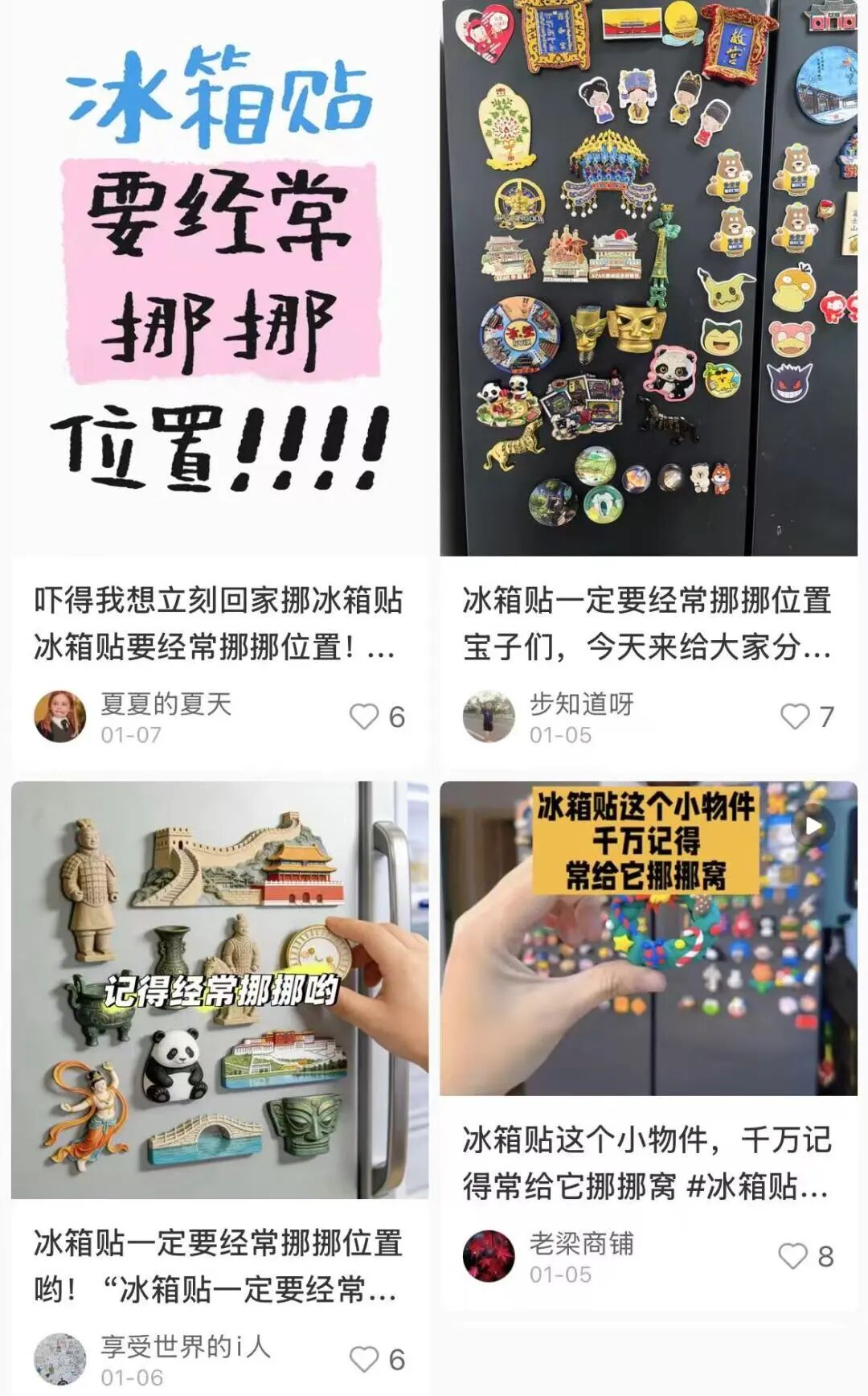
Group 1 - The claim that refrigerator magnets cause the surface to become uneven is false; it is due to the refrigerator's own issues such as insufficient strength or improper installation [7] - Long-term placement of refrigerator magnets can lead to discoloration of the refrigerator door due to UV exposure, which damages the surface coating [9] - The idea that magnets become stronger over time is incorrect; it is actually dirt accumulation that makes them harder to remove [13] Group 2 - Refrigerator seals are responsible for maintaining airtightness, and magnets do not affect this unless placed on the seal itself [16] - The impact of magnets on heat dissipation depends on their placement; they should not be placed on the cooling areas to avoid efficiency loss [18] - Not all refrigerators have metal surfaces, and magnets can adhere to any iron-containing surface [20]
人类最后的2000天,文科生绝地反击?
3 6 Ke· 2026-02-03 11:11
Core Insights - The article discusses the evolving perception of humanities in the tech industry, highlighting a shift from marginalization to appreciation as technical roles face challenges from AI advancements [1][3][12]. Group 1: Changing Perceptions of Humanities - There is a growing admiration for humanities skills among technical professionals, driven by the need to complement technical expertise with creativity and communication [1][3]. - The demand for roles that require humanities skills, such as AI storytellers and ethicists, is increasing as companies adopt AI technologies [9][11]. Group 2: AI's Impact on Job Markets - AI is rapidly transforming job markets, leading to the erosion of traditional roles for humanities graduates, particularly in white-collar positions [18][19]. - The rise of AI has created new job categories that favor humanities skills, indicating a potential resurgence in the value of these disciplines [9][11]. Group 3: Integration of Disciplines - There is a movement towards integrating humanities and technical education, as seen in initiatives that combine STEM with arts and design [29][31]. - Companies are recognizing the necessity of blending technical and humanities skills to navigate the complexities introduced by AI [24][32]. Group 4: Future Outlook - The future of humanities in the tech landscape remains uncertain, with the potential for both opportunities and challenges as AI continues to evolve [32][33]. - The urgency for humanities to redefine their value in the context of AI is emphasized, as the timeline for adaptation is limited [33].

苹果或推廉价MacBook
3 6 Ke· 2026-02-03 11:10
Core Insights - Apple is set to launch a range of new products in 2026, including a budget MacBook and M5 Pro/Max MacBook Pro, marking the 20th anniversary of the MacBook line [1][9] - The product strategy for 2026 is aggressive, targeting both entry-level and high-end markets, which presents both opportunities and challenges for Apple [1][2] Product Launches - The upcoming MacBook lineup includes a professional-grade MacBook Pro with M5 Pro/Max chips and a long-rumored budget MacBook aimed at entry-level consumers [2][4] - The new MacBook Pro will maintain the existing 14-inch and 16-inch designs, focusing upgrades on chip performance, particularly in graphics, with a 35%-50% improvement over the M4 chip [2][4] Chip Technology - The M5 Pro/Max chips will utilize TSMC's new SoIC-MH packaging technology, allowing for independent design of CPU and GPU areas, enhancing flexibility, yield, thermal performance, and memory bandwidth [4] - The M5 Pro is expected to support at least two 6K external displays, while the M5 Max can support four, with upgraded networking capabilities through the new N1 chip [4] Budget MacBook Details - The budget MacBook will feature the A18 Pro chip, a 12.9-inch screen, and a design similar to the MacBook Air, available in multiple colors [4][5] - Priced at approximately $599, this model is targeted at students and entry-level users, providing a more affordable entry point into the Mac ecosystem [5] Historical Context - The MacBook Pro celebrates its 20th anniversary in 2026, having evolved significantly since its introduction in 2006, transitioning from PowerPC to Intel and now to Apple Silicon [6][8] - Key innovations over the years include the introduction of Retina displays, SSDs, and the M1 chip, which marked a significant shift in performance and efficiency [7][8] Broader Product Strategy - Apple plans to release over 20 new hardware products in 2026, covering a wide range of categories including smartphones, computers, tablets, wearables, and smart home devices [9][12] - The Home Hub smart device is expected to debut, enhancing Apple's smart home ecosystem with features like video calling and security integration [12]


在“短期世界”中,成为“长期思考者”还有意义吗?
3 6 Ke· 2026-02-03 10:54
身陷"执行模式"的HR 作为HR,大家每天的工作状态是什么样的?是不是被一件件繁杂的琐事所裹挟,应接不暇?从招聘邀 约、到绩效核算、到员工沟通、到合规排查,终日步履匆匆、身心俱疲。我们总感觉有接不完的任务、 做不完的项目、赶不完的进度、理不完的问题,这让我们能够静下心来,好好复盘思考,都已经成为一 件奢侈的事情。 不只如此,我们还常常被同行的成功实践、行业地位、职业成就、甚至丰厚回报扰乱心绪,急于寻找所 谓的"最优管理秘笈"、"高效工作捷径",盲目跟风照搬他人经验,却忽略了企业的实际需求与自己的职 业节奏。 这种"追赶"的状态往往让我们喘不过气,总担忧自己跟不上节奏。而这背后的根源,正是我们陷入了一 种被动的"执行模式",习惯于高效执行的闭环。个人的时间与精力被各种琐事和纷扰彻底填满,唯独没 有给"思考"留出足够的"空间", 停下来想一想:我们有没有对那些看似"正确的、不得不做的事情"学会 说不,拒绝无效内耗?我们有没有放下无谓的比较,摒弃"快速拿到结果"的心态,以耐心来沉淀专业价 值。我们有没有找到属于自己的职业坐标,定义贴合自身的成功标准,按自己的节奏稳步前行?我们真 正追求的职业成长与生活状态究竟是什么 ...
北漂专为“黑色羽绒服”办了场选美大赛,这169元有9个兜的牛马市服艳压始祖鸟?
3 6 Ke· 2026-02-03 10:48
最爱黑色羽绒服的北京打工人,决定为这件陪自己扛过无数寒冬的「务实战袍」,办一场选美大赛。 "让黑,黑出层次,黑他个五彩斑斓。" 北京还是能人多,赛场上啥想得到的想不到的都来了:有身披九个兜的性价比之王,兜里能轻松塞进iPad和2瓶900ml的东方树叶,仅售169元,引得全场 高呼"上链接";还有号称"从10年前下单开始就是为今天的比赛而生"的选手,2016年的掐腰款配上毛领,时至今日看来依旧端庄优雅;更有北影、中戏的 明日之星们穿着自己的「校服」、操着一口标志性的播音腔入场,恍惚间真以为来到了直播带货的现场。 2026年1月31日晚,氢商业也来到了跳海酒吧海淀大钟寺店门口,围观北京第一届黑色羽绒服选美大赛,看看究竟啥样的黑色羽绒服,才能成为「北京牛 马严选」? 01 黑羽绒服选美大赛,北京打工人才懂"有九个兜"的含金量 黑色羽绒服,从未在时尚史上如此闪耀过。 2026年1月的最后一天,温度直逼零下的北京夜里,三百多号牛马裹着压箱底的黑色羽绒服,哆哆嗦嗦地齐聚在跳海酒吧门口,只为给这件在北京时尚史 (如有)上留下浓墨重彩一笔的「市服」,办一场正儿八经的选美大赛。 起因是发起人@没班味的樊小书在小红书上随口说了一 ...

在销量最冷的季节,为什么国产豪华车反而卖得更好?
3 6 Ke· 2026-02-03 10:31
Group 1: Market Trends - The Chinese automotive industry is experiencing a seasonal overall decline, with major automotive groups like BYD and Chery reporting a year-on-year sales drop of 30% and nearly 11% respectively in January [1] - New energy vehicle sales from companies like XPeng and Li Auto also saw significant declines, with year-on-year decreases of 34% and 7.5% respectively [1] - Despite some companies achieving year-on-year growth, the growth rates have significantly narrowed, with declines of 30%-60% observed in month-on-month comparisons [1] Group 2: Luxury Vehicle Demand - The luxury vehicle segment is witnessing a "golden age," with NIO's ES8 model showing a remarkable year-on-year delivery increase of 96.1% in January, contributing to nearly 64.9% of NIO's total deliveries [3] - The demand for high-priced models is driven by new national subsidy policies favoring vehicles priced above 16.67 million yuan, which incentivizes consumers to opt for higher-end models [4] - The trend is reflected across various brands, with BYD's high-end models like the Fangchengbao experiencing a 247% increase in sales, while GAC's premium brand Aion also saw a 171.63% growth [6] Group 3: Supply Chain Challenges - The automotive industry is facing rising costs for key components and electronic parts, with memory chip prices expected to significantly impact profit margins [12] - The price of essential raw materials such as copper, aluminum, and lithium carbonate has also surged, potentially leading to increased vehicle prices or reduced profit margins for manufacturers [14] - Companies are aware that the rising costs may not be fully absorbed by the supply chain, leading to potential price hikes or margin compression if sales volumes do not stabilize [14] Group 4: Future Product Plans - Several automotive companies have announced new product plans for their 8-series and 9-series models in 2026, indicating a continued focus on high-end offerings [10] - NIO plans to launch the ES9, while other brands like Zeekr and Xiaomi are also preparing to introduce new high-end models [10] - The introduction of L3-level assisted driving technology and changes in subsidy policies are expected to further benefit high-end vehicle market penetration [14]


快时代的慢公司——长期主义者的艰辛之旅
3 6 Ke· 2026-02-03 10:31
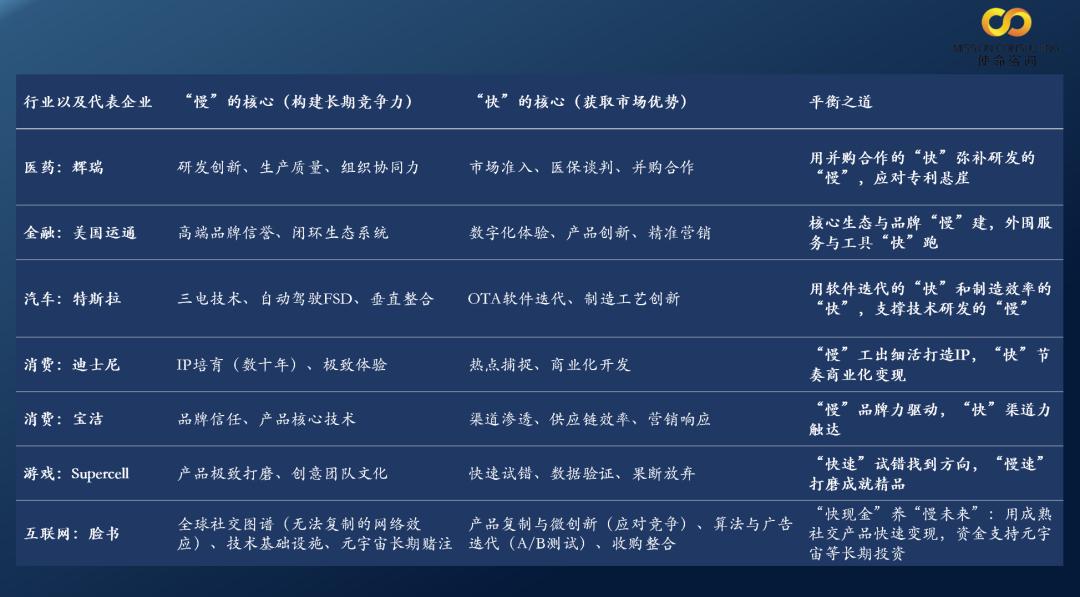
Core Concept - The article emphasizes the importance of "slow companies" in China, advocating for a balance between speed and depth in business strategies, where "slow" represents foundational strength and "fast" signifies market agility [1][4][72]. Group 1: Fast vs. Slow in Business Strategy - "Slow" refers to long-term investments in core competencies such as technology, brand value, and organizational culture, which require time and cannot be rushed [1][3]. - "Fast" indicates the need for agile responses to market demands, including product iterations and capturing market opportunities quickly [2][3]. - Successful companies master the combination of "fast" and "slow," using "slow" to build a solid foundation while leveraging "fast" to seize market opportunities [3][4]. Group 2: Global and Chinese Examples of Slow Companies - Pfizer exemplifies the pharmaceutical industry's balance of "slow" drug development and "fast" market entry strategies, often relying on acquisitions to fill gaps in their pipeline [5][6][10]. - American Express focuses on building a strong brand and ecosystem slowly while rapidly innovating in digital experiences and product offerings [12][16]. - Tesla invests heavily in long-term technology development while maintaining rapid product iterations and manufacturing innovations to capture market share [17][22]. - Disney and Procter & Gamble illustrate the consumer sector's balance, with Disney cultivating IP over decades while quickly monetizing it, and P&G focusing on brand trust and product technology while ensuring efficient market penetration [23][24]. - Supercell emphasizes quality through meticulous product development while employing rapid testing and iteration to find successful game concepts [25][30]. Group 3: Characteristics of Founders and Teams in Slow Companies - Founders of slow companies often exhibit traits such as strategic patience, deep focus, and a mission-driven approach, which guide their long-term decision-making [72][97]. - Teams in these companies are structured to ensure stability and cultural alignment, often combining diverse skills to achieve a common mission [98]. Group 4: Education and Talent Development for Slow Companies - The article discusses the need for educational reforms to cultivate leaders with a long-term vision, emphasizing the importance of foundational knowledge and craftsmanship in training [77][78]. - Innovative educational practices, such as problem-based learning and dual mentorship systems, are highlighted as methods to develop future leaders capable of sustaining slow company principles [79][82].
国产SoC六小龙,谁在认真做AI?
3 6 Ke· 2026-02-03 10:31
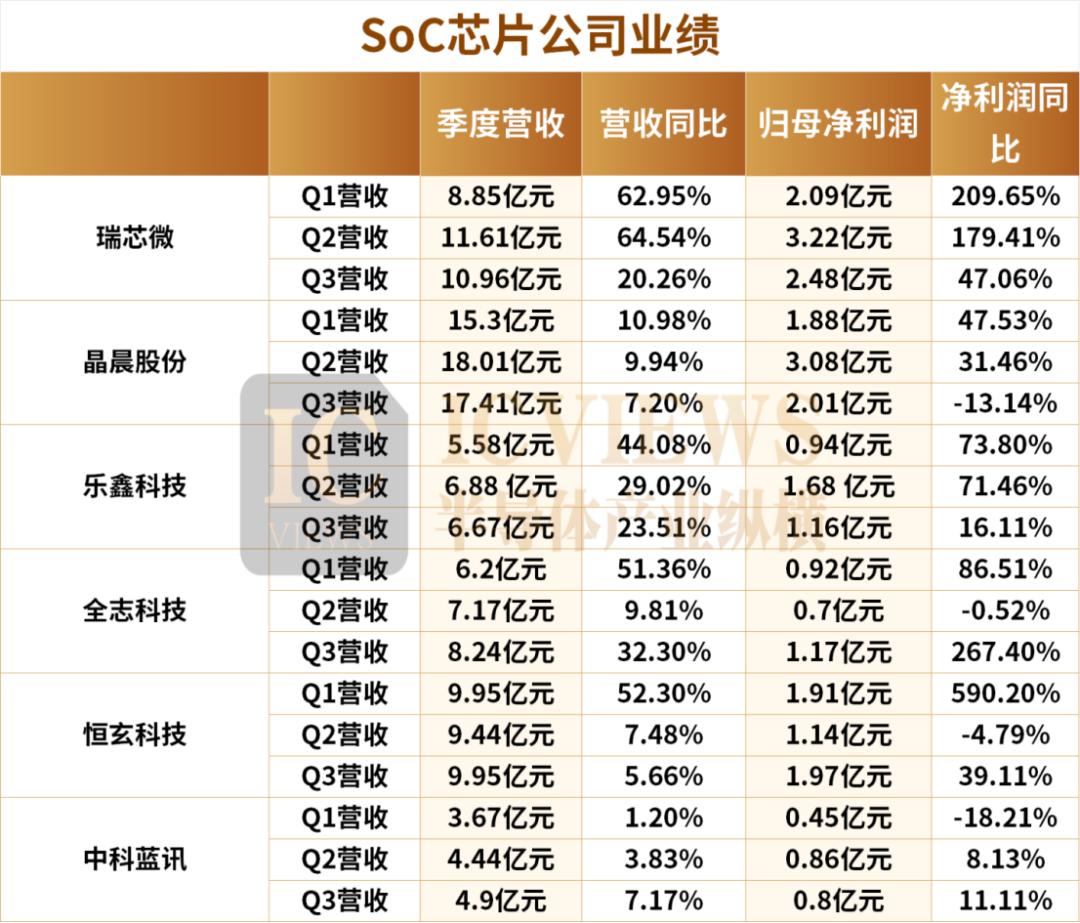
Core Insights - The article discusses the transformation of the technology industry driven by the integration of AI into various end-user devices, highlighting the critical role of domestic System-on-Chip (SoC) manufacturers in this shift [1][2]. Group 1: AI Migration to Edge Devices - The migration of AI capabilities from cloud to edge devices is driven by technological maturity, demand pressures, and cost optimization [2][3]. - Technological advancements, particularly in specialized Neural Processing Units (NPU), have enabled significant improvements in edge device performance, overcoming previous limitations related to power consumption and size [2][3]. - Consumer demand for personalized and real-time AI experiences, along with stringent requirements in industrial applications, has accelerated the adoption of edge AI solutions [2][3]. Group 2: Cost Optimization and Market Growth - The reduction in production costs due to semiconductor industry maturation has made edge AI more economically viable, fostering a positive cycle of cost reduction and widespread adoption [3]. - The year 2023 marks the beginning of edge AI technology deployment, with significant growth expected in 2024 and a projected explosion in market size by 2025, which is anticipated to be recognized as the "Year of Edge AI" [3][4]. Group 3: Performance of Domestic SoC Companies - Six domestic SoC companies, referred to as the "Six Little Dragons," have shown robust performance in the first three quarters of 2025, with most achieving revenue and net profit growth [4][5]. - Notable companies include: - **Rockchip**: Projected revenue of 43.87 to 44.27 billion yuan for 2025, with a net profit increase of 71.97% to 85.42% [6]. - **Allwinner Technology**: Expected net profit growth of 50.53% to 76.92% for 2025 [6]. - **Zhongke Blue Communication**: Anticipated revenue growth of 0.60% to 1.70% for 2025 [6]. Group 4: Company-Specific Insights - **Rockchip**: Positioned as a leader in edge AI with a comprehensive AI development ecosystem, serving major clients like SONY and Xiaomi [7]. - **Amlogic**: Dominates the smart home terminal market, with significant revenue from multimedia SoC chips and a strong client base including Xiaomi and Haier [8][9]. - **Espressif Systems**: Focuses on smart home applications, utilizing an open-source model to lower AI development barriers for clients [10][11]. - **Allwinner Technology**: Specializes in visual AI applications, leveraging its expertise in multimedia chips for various consumer and industrial applications [12]. - **Hengxuan Technology**: A leader in audio AI, providing low-power wireless SoC chips for a range of smart devices [13]. - **Zhongke Blue Communication**: Competes in the audio AI SoC market with a focus on cost control and high value [14]. Group 5: Future Trends in Edge AI - AI glasses are identified as a key application area for edge AI, with the potential for significant market growth as technology matures [15][16]. - Various SoC solutions for AI glasses are emerging, including high-performance systems and cost-effective MCU-based designs, indicating a competitive landscape among domestic manufacturers [16][17].