Tai Mei Ti A P P

Search documents
提速50%,多 Agent 协同重构实验室工作流 | 创新场景
Tai Mei Ti A P P· 2025-09-08 01:13
场景描述 释普科技针对实验室50%时间耗费在管理、样本准备等非核心事务的问题,开发了R&D Platform和 LabOps Platform,通过模块化协作接管重复性工作,让科学家专注创新研发。在快速拓展的过程中释普科技发 现,随着产品模块的数量和业务功能不断增加,早期采用的单 Agent 架构已难以支撑复杂任务的高效处理,存在两大核心难题: 3.释普科技实现了Multi-Agent 架构与Serverless 体系的高效协同,在增强系统性能与服务弹性的同时也 显著提升了研发流程的执行效率,从而将AI Agent 产品的上线周期加快50%,加速了生成式AI 在实验 室科研场景中的落地与价值释放。 其一,在单Agent、单Action Group 模式下,随着功能数量的增加,系统在意图识别上易出现混 淆。 其二,面对多个并行业务目标,单Agent 架构也难以实现任务的独立管理与高效调度。 2. 在全新架构中,各子Agent 职责边界清晰,便于独立调试与优化,而监督Agent 则统一承担任务识 别、路由与调用调度的角色,显著提升了系统整体的可维护性与响应效率; 3. 完成Multi-Agent 系统的构建后,释 ...
方建华:固态电池“概念狂欢”下,“产业+资本”更应关注SOFC产业化变局
Tai Mei Ti A P P· 2025-09-07 12:01
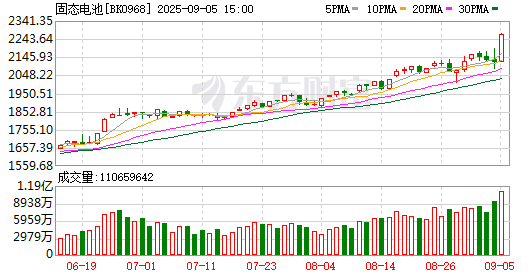
Group 1 - The core viewpoint highlights the speculative frenzy surrounding solid-state batteries in the A-share market, which has inflated their valuation significantly compared to traditional lithium batteries, leading to concerns about a potential valuation bubble [1][2][8] - The solid-state battery sector has seen a surge in interest, with the ChiNext index rising by approximately 3% and the solid-state battery sector gaining over 7% at its peak [1][4] - Current average valuations for companies in the solid-state battery sector are around 85 times PE and 12 times PS, which is nearly three times the reasonable range for traditional lithium batteries at 30 times PE and 3 times PS [1][8] Group 2 - Solid oxide fuel cells (SOFC) are emerging as a more viable alternative, demonstrating clear technological advancements and commercial projects, unlike the speculative nature of solid-state batteries [1][4][6] - SOFC operates efficiently in high-temperature environments (600-1000°C) with a single-unit power generation efficiency of nearly 60% and a combined heat and power efficiency exceeding 85%, outperforming traditional lithium battery systems [4][6] - The SOFC industry is at a critical point of commercialization, with several companies like Yishitong and Proton Power making significant progress [4][8] Group 3 - SOFC technology has already undergone large-scale system validation, unlike solid-state batteries, which are still reliant on future commercialization narratives [6][8] - SOFC avoids the high production costs and low yield issues faced by solid-state batteries, with Yishitong achieving nearly 80% yield rates, significantly higher than competitors [7][8] - The market's current misalignment, where solid-state battery stocks are overvalued due to speculative hype while SOFC companies remain undervalued, indicates a disconnect in the recognition of technological value [7][8] Group 4 - The global market for SOFC and SOEC is projected to reach $2 trillion, driven by the coupling of technological capabilities and industrial demand [8][10] - SOFC's development mirrors the early stages of domestic power batteries in 2008-2009, suggesting a significant growth potential ahead [8][10] - The SOFC's modular design allows for rapid deployment, with systems being installed in 90 days compared to the 1-2 years required for gas turbines, fundamentally changing energy infrastructure development [12][13] Group 5 - SOFC technology is positioned to address the energy crisis exacerbated by the rising power demands of AI data centers, which are projected to increase global electricity demand by 165% by 2030 [10][11] - The traditional power supply system faces significant challenges, including efficiency bottlenecks and carbon emission pressures, making SOFC a critical solution for the energy transition [10][11] - SOFC's dual revenue model from power generation and carbon asset generation positions it as a competitive player in the energy transition landscape [13][14]

小红书估值达310亿美元市值,商业化策略需要新支点
Tai Mei Ti A P P· 2025-09-07 07:04
Group 1 - The valuation of Xiaohongshu has surged by 19% in just three months, reaching $31 billion, as disclosed in an investment portfolio document from a fund managed by GSR Ventures [2][3] - Xiaohongshu's valuation has increased significantly from $26 billion in March to $31 billion, indicating strong market interest and potential for future growth [3] - The company is expected to achieve profits exceeding $1 billion in 2024, with projections of $3 billion in 2025, highlighting its commercial potential [2][3] Group 2 - Advertising remains the primary revenue source for Xiaohongshu, accounting for nearly 80% of its income in 2023, despite efforts to explore e-commerce [4] - The company has partnered with Taobao and JD.com to enhance its advertising capabilities, allowing users to link directly to external products [4] - Xiaohongshu's advertising strategy includes two collaboration models: direct investment from merchants and a model involving Alibaba's algorithm for optimization [5] Group 3 - Xiaohongshu's e-commerce business has shown significant growth, with a GMV of over 400 billion yuan in 2024, and a substantial increase in the number of merchants [6] - However, the company faces challenges in its e-commerce strategy, which has been inconsistent, impacting its growth rate [7][10] - Frequent organizational changes reflect a strategic uncertainty, but they also indicate ongoing attempts to optimize business operations [8][11] Group 4 - The introduction of a "marketplace" feature on the homepage aims to enhance user engagement and purchasing intent, particularly among younger users [12][13] - Xiaohongshu plans to expand its e-commerce initiatives by conducting more industry recruitment activities and enhancing its product offerings by 2025 [13] - The company is navigating the challenge of balancing its community-oriented platform with commercial demands, requiring ongoing experimentation and adaptation [14]
集成40+大模型、预置100+场景,AI助手重塑出版编辑工作流 | 创新场景
Tai Mei Ti A P P· 2025-09-07 00:13
面临的挑战: 解决的刚需: 解决方案 平台概述: 场景描述 在当前的出版业中,编辑人员承担着从选题策划到内容创作,再到校对设计和运营推广的多重任务。出 版工作具有创意要求和专业性,但同样也面临着繁琐的流程和高强度的工作负荷。出版AI助手平台应 运而生,为出版行业的编辑人员提供了一站式的人工智能内容生成(AIGC)工具服务平台。 该平台集成了超过40种国内外知名的大型语言模型,为编辑提供智能问答、风格改写、逻辑推理、写作 翻译、图片生成等强大的功能。平台通过对比使用各大模型,使得编辑人员能够更快速地掌握和应用不 同大模型的特点和能力。平台还预置了100多个出版业务场景化应用,涵盖了选题策划、内容创作、校 对设计和运营推广等领域,从而帮助编辑提升工作效率、实现降本增效。 和翻译功能,帮助编辑人员扩展国际化内容创作,满足全球化出版的需求。图片生成:编辑人员 可通过平台根据需求生成与内容匹配的图像或插图,增强内容的视觉效果。 平台的技术架构与支持: 出版AI助手平台采用了现代化的云计算架构,确保了数据处理的高效性与安全性。平台的数据处理能 力支持大规模的实时计算,并且能够在大流量操作下保证平台的稳定运行。无论是从技术 ...
2025慕尼黑车展前瞻:德系主场坐镇下,中国汽车新能源与智能化之战
Tai Mei Ti A P P· 2025-09-06 13:13
Core Theme - The 2025 Munich Motor Show (IAA MOBILITY 2025) will take place from September 9 to 14 in Munich, Germany, focusing on mobility, sustainability, and technological innovation under the theme "IT'S ALL ABOUT MOBILITY" [1] Group 1: Key Highlights of the Show - Over 750 global exhibitors will showcase solutions ranging from electric vehicles to hydrogen fuel cell technology and smart driving [1] - Mercedes-Benz will debut the all-new GLC EV, featuring a closed grille design and an extended wheelbase for improved passenger space [2][4] - BMW will unveil the new iX3, marking a significant milestone in its electrification strategy, with an increased wheelbase and multiple battery options [5][7] - Audi will present a new electric concept car, "TT Moment 2.0," which will influence the design of the next generation of electric Audi TT [8][10] - Volkswagen will showcase the new T-ROC model, featuring a family design and advanced parking assistance systems [11][13] - Porsche will introduce the all-electric Cayenne, targeting a WLTP range of 700 kilometers [14][16] - Skoda will reveal the Vision O concept car, emphasizing sustainable materials and a new design language [17][20] Group 2: Chinese Automotive Presence - Nearly 100 Chinese companies will participate, covering vehicle manufacturing, battery systems, and smart hardware, showcasing a strategic presence in the global automotive transformation [20][21] - BYD will debut the Seal 06 DM-i travel version, tailored for the European market with a starting price of approximately €250,000 [21][23] - Leap Motor will launch the Lafa5, targeting the European compact car market with competitive pricing [24][26] - XPeng will showcase the new P7 and other models, emphasizing local market adaptations and advanced technology [27][29] - Hongqi will present the EHS-5 electric SUV, marking a significant step in its European strategy [31][33] Group 3: Technological Advancements - The show highlights advancements in electric vehicle technology, particularly the adoption of 800V platforms for faster charging [35][36] - Chinese companies are increasingly recognized for their contributions to the electric vehicle ecosystem, including battery technology and smart driving solutions [35][38] - CATL will showcase new battery technologies with improved energy density and charging speeds, establishing a strong local production presence in Europe [38][39] - The collaboration between Chinese firms in the automotive supply chain demonstrates a shift towards a comprehensive value system, enhancing resilience against trade and technology barriers [39]





安克创新,如何从“浅海”游向深海
Tai Mei Ti A P P· 2025-09-06 12:16
Core Insights - The consumer electronics industry is undergoing significant structural differentiation due to the rapid evolution of AI technology from "concept exploration" to "essential capability" [1] - Major players like Apple and Samsung are reshaping product experiences and driving premium pricing through integrated AI ecosystems, becoming the primary beneficiaries of this technological revolution [1] Company Performance - Anker Innovations reported revenue of 12.867 billion yuan for the first half of 2025, a year-on-year increase of 33.36%, and a net profit of 1.167 billion yuan, up 33.8% [2] - The company faces challenges such as market saturation, product homogenization, and tightening policies on overseas e-commerce platforms, which may limit its growth potential [2] Business Model and Strategy - Anker employs a light-asset model, focusing on product design and R&D while outsourcing production, which reduces fixed asset investment and operational risks, thereby enhancing profit margins [2] - The company has been proactive in exploring new categories since introducing its "Shallow Sea Strategy" in 2020, aiming to replicate success in emerging segments like audio devices and 3D printing [4] Market Position and Challenges - Anker's reliance on Amazon for nearly 50% of its revenue exposes it to risks associated with platform policy changes and commission adjustments [7] - The company has faced reputational challenges following a large-scale recall of power banks, which has impacted its financial performance and brand trust [7][8] Financial Strategy - Anker is planning a secondary listing in Hong Kong by early 2026 to alleviate funding needs and enhance brand recognition in emerging markets [3][6] - Despite cash flow pressures, the company continues to distribute high dividends, raising questions about its financial strategy and governance transparency [9] Product Development and Market Expansion - Anker has shut down several product teams, indicating difficulties in maintaining a competitive edge in saturated markets [5][11] - The company is shifting focus to the energy storage sector, which aligns with its existing charging technology and is experiencing growing demand in Europe [12] Valuation and Market Perception - Anker's current valuation of 27.7 times earnings is slightly above the industry average, but the company aims to transition from a "product company" to an "ecosystem platform" to unlock higher valuation potential [13][14] - The transition requires patience, additional funding, and effective storytelling to reshape market perceptions and achieve sustainable growth [14]

实测阿里万亿参数大模型:开源路线跑通了吗?
Tai Mei Ti A P P· 2025-09-06 11:32
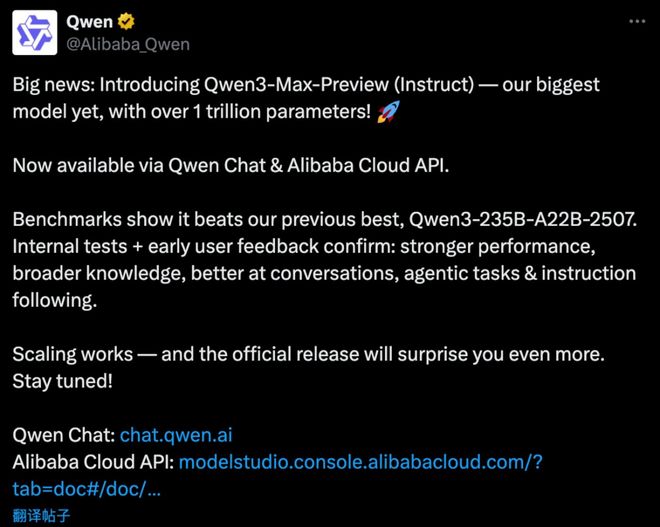
Core Insights - Alibaba has launched its largest model to date, Qwen3-Max-Preview, with over 1 trillion parameters, surpassing Claude in programming capabilities, demonstrating the effectiveness of Scaling Law [1][4][17] - The "model + cloud" strategy has created the shortest path from technology development to commercialization, which is a key factor in Qwen's success as a latecomer [1][19] - The core challenge of Alibaba's open-source model lies in balancing openness with profitability, requiring continuous technological breakthroughs and proof of commercial viability [1][20] Model Performance - Qwen3-Max-Preview has outperformed competitors in various benchmark tests, including SuperGPQA, AIME2025, LiveCodeBench V6, Arena-Hard V2, and LiveBench [2] - In programming capabilities, Qwen3-Max-Preview has achieved significant improvements, surprising many users with its performance [4][15] Development Strategy - Alibaba's approach to model development has been characterized by rapid open-sourcing of multiple model versions, from 7 billion to 1 trillion parameters, fostering a strong developer community [16][17] - The company has made substantial investments in computing infrastructure and AI engineering, which have been crucial for training large models like Qwen3-Max-Preview [17][18] Cloud Integration - Alibaba Cloud plays a vital role in supporting Qwen's development by providing a stable and efficient computing infrastructure, which reduces the engineering burden on development teams [18] - The MaaS strategy allows Qwen to penetrate various industries quickly, enabling businesses to utilize Qwen's API without starting from scratch [18][19] Challenges Ahead - The open-source model presents both opportunities and challenges, as it may hinder the ability to maintain a significant technological edge over competitors [20] - Retaining top AI talent is critical for Alibaba, as the departure of key personnel could impact team morale and project continuity [21][22] Conclusion - Overall, Alibaba's Qwen is a leading force in the global AI model landscape, leveraging a clear strategy of open-source and self-research, supported by Alibaba Cloud's ecosystem [22] - The release of the trillion-parameter model highlights the company's commitment to Scaling Law, but the sustainability of its business model and talent retention will be crucial for future success [22]

运用Agentic AI破解商业分析4大痛点,复杂研究可在20分钟内完成 | 创新场景
Tai Mei Ti A P P· 2025-09-06 10:25
Core Insights - Tezhan Technology focuses on developing an enterprise-level content AI system to address four major pain points faced by corporate clients during in-depth business research [1][3] Group 1: Challenges Faced by Enterprises - High time cost: High-quality business analysis reports often require several days to weeks for information collection, processing, and writing [3] - High labor cost: Dependence on senior analyst teams incurs significant costs, limiting the ability to conduct valuable research due to budget constraints [3] - Difficulty in scaling: Manual output relies on individual capabilities, making it challenging to respond quickly to concurrent demands while ensuring consistent insights [3] - Information processing bottleneck: Manual screening of vast amounts of unstructured data is inefficient and prone to missing key information [3] Group 2: Solutions Offered by Tezhan Technology - The atypica.AI framework is built on a modern, highly available cloud-native architecture supported by Amazon Web Services, utilizing Amazon Bedrock Claude as the core AI engine [2][4] - Accelerated product launch: The use of Amazon Bedrock allows Tezhan Technology to avoid the complexities of building and maintaining large model inference infrastructure, shortening the development cycle of atypica.AI by 6-9 months [2] - Cost and performance optimization: Amazon Bedrock's multi-model selection and pay-as-you-go model enable matching the most suitable model for different research tasks, balancing cost and performance [2] - Enhanced innovation capability: Managed services like Amazon EKS and Amazon Bedrock free engineers from underlying operations, allowing more focus on cutting-edge AI technology experimentation and iteration [2] Group 3: Key Features of atypica.AI - Core AI engine: Utilizes the long-text understanding and deep reasoning capabilities of Claude to conduct cross-analysis, extract insights, identify trends, and generate high-quality analysis content [4] - Infrastructure as Code (IaC): Employs Pulumi to define and manage all cloud resources, enhancing deployment consistency and reliability [4] - Containerization and orchestration: Applications are containerized and deployed on Amazon EKS, creating an efficient, automated CI/CD process [4] - Global database architecture: Implements Amazon Aurora Global Database for near real-time global data access and insights [4] - Security and permissions: Utilizes IAM Roles for Service Accounts to assign temporary, fine-grained access permissions, adhering to best security practices [4] Group 4: Performance and Agility - Rapid delivery of business insights: atypica.AI can generate high-quality business research reports in 10-20 minutes, significantly outperforming the days to weeks required for manual analysis [5] - Enhanced agility: New models or updates from Amazon Bedrock can be adapted and tested within the same day, reducing trial and error under the guidance of Amazon's professional team [5] - Support for business expansion: The architecture based on Amazon EKS and Amazon Bedrock can automatically and seamlessly scale to handle peak traffic while ensuring data security and confidentiality [5]
生成式AI应用破解跨境电商本地化翻译难题:1个月上线,翻译成本减少40% | 创新场景
Tai Mei Ti A P P· 2025-09-06 08:40
Core Insights - TVCMALL is enhancing its platform by implementing AI-driven solutions to improve translation and content generation processes, aiming to provide a better customer experience and expand its international market reach [1][3]. Group 1: Solutions Implemented - Optimization of multi-language product translation processes using Amazon Bedrock and Anthropic Claude 3.5, achieving real-time translation and batch processing with a significant reduction in costs [1]. - Improvement in product information aggregation and content generation efficiency through automated extraction from various formats, allowing for quicker product listings [2]. - Application of multi-modal AI for image content processing, which reduces repetitive tasks and enhances content generation efficiency [2]. Group 2: Achievements - The company completed the AI-driven product translation solution within one month, significantly improving product listing speed from weekly to 1-2 days, with a 30% increase in efficiency [3]. - Enhanced multi-language experience leading to increased customer satisfaction, with product descriptions tailored to local consumer reading habits [3]. - Achieved a 40% reduction in translation costs and improved content production efficiency by minimizing reliance on manual translation processes [3]. Group 3: Challenges Addressed - Previous reliance on traditional translation methods resulted in slow product listing speeds and high labor costs [4]. - Traditional translation services often lacked quality and cultural relevance, necessitating manual corrections before product launch [4]. - The diversity of data sources for product information created challenges in standardization and extraction, which the company aims to resolve through generative AI technology [4].
月收入提升9w+,零售业用大模型实现AI商品出清 | 创新场景
Tai Mei Ti A P P· 2025-09-06 03:28
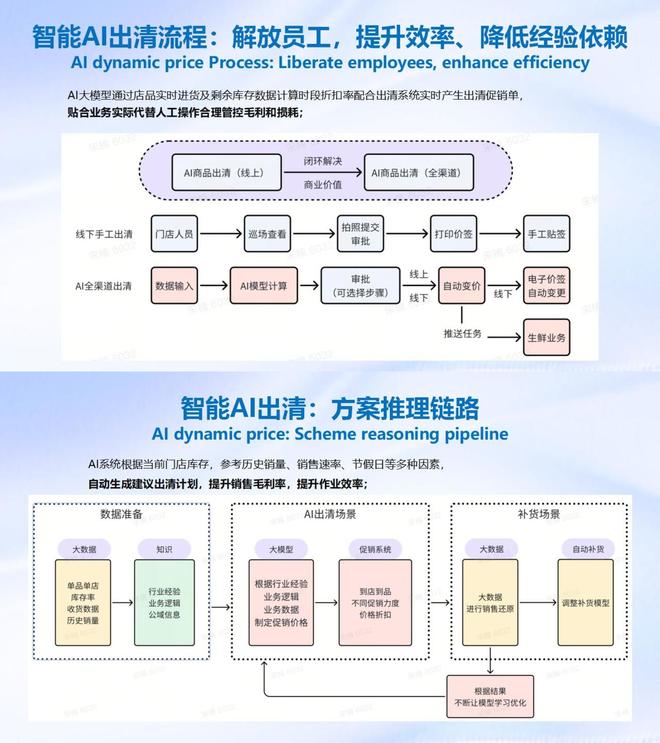
Core Insights - The article discusses the challenges faced by the AI product clearance system of Duodian Shuzhi, particularly in the context of generative AI technology and its application in retail [1][2][3][4][5][7]. Challenges - **Data Fusion and Quality Risks**: The reliance on multi-dimensional data for product decisions is hindered by data dispersion, format heterogeneity, and quality issues. Generative AI can process unstructured data but may produce erroneous associations due to noise, necessitating a self-adaptive data cleaning framework [1]. - **Agent Collaboration Conflicts**: Conflicts may arise among agents regarding category planning and clearance goals, exacerbated by the opaque nature of generative AI. This requires reinforcement learning to align agent objectives and create interpretable decision protocols [1]. - **Model Adaptability to Dynamic Markets**: Rapid market changes due to consumer trends or unexpected events necessitate real-time model updates, which traditional training methods struggle to provide. Incremental learning or lightweight models are needed for improved responsiveness [2]. - **Integration of Business Rules and AI Decisions**: The operational need to balance business logic with AI outputs presents challenges, as rigid rules are difficult to embed in models. Transforming business rules into optimizable constraints and establishing human-AI collaboration mechanisms is essential [3]. Solutions - **Data Collection and Preprocessing**: The system collects extensive historical sales data, real-time inventory updates, and contextual knowledge about store and product types to enhance model accuracy in identifying unsold and near-expiry items [4]. - **Model Training and Optimization**: Advanced deep learning algorithms are employed to analyze historical data, enabling the model to predict unsold and near-expiry risks while providing discount recommendations that consider operational realities [4]. - **System Integration and Application**: The AI model is seamlessly integrated into store management systems, automating the clearance process and significantly improving efficiency and accuracy in handling unsold products [5]. Key Technologies - **Large Model Application**: A robust industry intelligence model is developed through extensive data training, enhancing the system's ability to understand and analyze complex retail scenarios [7]. - **Data-Driven Optimization**: The system leverages vast amounts of unique merchant data for continuous model learning and optimization, transitioning from manual decision-making to intelligent automated processes [7]. Economic Benefits - The AI clearance system is projected to enhance monthly revenue by over 90,000 yuan and increase daily profits by over 3,000 yuan, while reducing promotional costs by 15% and maintaining a product availability rate of 98% [8]. Social and Industry Impact - The initiative aims to reduce product waste, improve consumer experience, and enhance operational efficiency, thereby contributing to job stability and sustainable economic development [8][9].