Tai Mei Ti A P P

Search documents
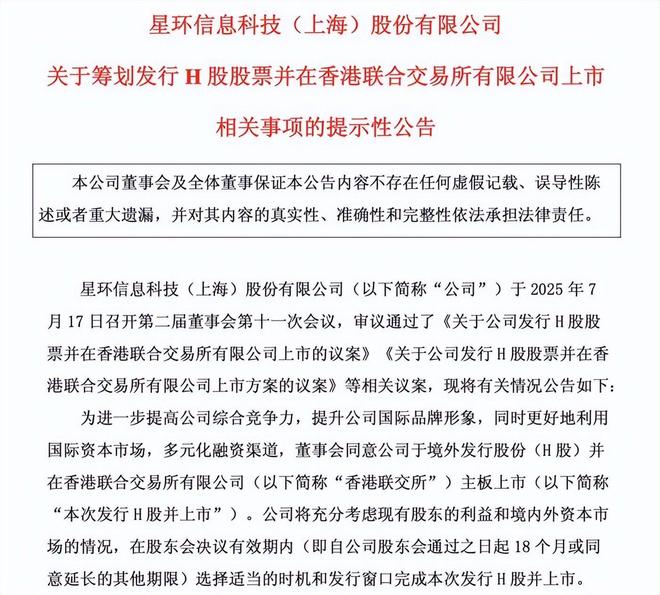
腾讯套现离场,星环科技赴港IPO,国产大数据第一股能否迎来奇迹?
Tai Mei Ti A P P· 2025-07-18 10:53
Group 1 - Star Ring Technology plans to issue H-shares and list on the Hong Kong Stock Exchange within 18 months to enhance its competitiveness and international brand image [1][3] - The company has accumulated losses of 1.9 billion yuan over seven consecutive years, with a total revenue of 371 million yuan in 2024, down 24.31% year-on-year [5][10] - The company has faced high R&D and marketing expenses, with R&D costs accounting for 61.18% of revenue in 2024, up from 45.42% the previous year [6][5] Group 2 - Star Ring Technology's revenue from 2019 to 2021 was 174 million yuan, 260 million yuan, and 331 million yuan, while net profits were -211 million yuan, -184 million yuan, and -245 million yuan respectively [5] - The company has seen a steady increase in accounts receivable, which has added to its financial pressure, with accounts receivable reaching 173 million yuan in 2021 [7] - The company aims to leverage the Hong Kong market for new financing opportunities, despite the risk of valuation discounts compared to its A-share market [8][10] Group 3 - The company has developed a comprehensive software matrix for big data and AI, covering the entire data lifecycle [4][9] - Star Ring Technology's high R&D investment has not yet translated into proportional returns, as evidenced by a decline in overall gross margin from 60.69% in 2019 to 48.23% in mid-2022 [6][10] - The strategic move to list in Hong Kong is seen as a pragmatic step to alleviate financial pressure and enhance brand influence, potentially positioning the company for growth in the AI infrastructure market [10]


扎克伯格开启“无限金币”游戏:Meta猛砸钱,苹果被“偷家”
Tai Mei Ti A P P· 2025-07-18 09:33
Group 1: Apple AI Team Departures - Apple's AI team is experiencing significant departures, including Ruoming Pang, who is leaving for Meta with a compensation package exceeding $200 million [2] - Meta has also recruited two more experts from Apple's AI team, Mark Lee and Tom Gunter, both of whom were previously under Pang's leadership [2] Group 2: Meta's Investment in AI - Meta is investing heavily in building a "superintelligent team," with founder Mark Zuckerberg stating that the company will spend "hundreds of billions" on computing to create advanced AI [3] - Meta has hired prominent figures such as former GitHub CEO Nat Friedman and Scale AI co-founder Alexandr Wang to lead this initiative, acquiring 49% of Scale AI for nearly $15 billion [4] Group 3: Compensation Strategies - Meta's compensation packages for its AI team are significantly higher than those offered by Apple, with Tom Gunter's multi-year salary exceeding $100 million [5] - The compensation structure at Meta includes base salary, signing bonuses, and stock options, with stock being the most critical component [6] Group 4: Challenges for Apple Intelligence - The departure of key personnel has left Apple's AI project, Apple Intelligence, in a precarious position, with no significant breakthroughs reported [8] - Apple is attempting a dual strategy of developing its own foundational models while also integrating third-party models like OpenAI's GPT, but the foundational team is becoming marginalized [8][9] Group 5: Apple's AI Strategy in China - Apple has faced challenges in establishing partnerships for AI models in China, initially collaborating with Baidu but encountering disagreements over data usage [10] - Currently, Apple is in discussions with other Chinese firms like ByteDance, Alibaba, and Tencent, but Apple Intelligence has not yet launched in the Chinese market [11]



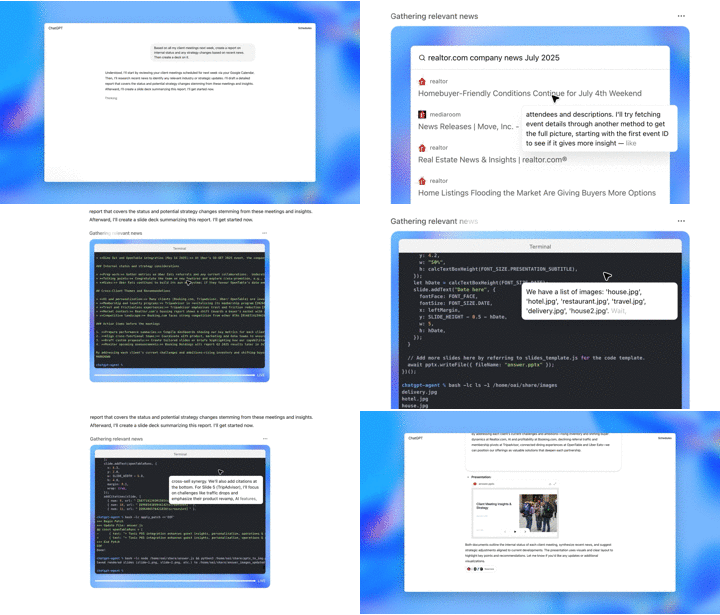
OpenAI发布ChatGPT Agent:AI"代理人"已至,人类准备好交出操作权了吗?
Tai Mei Ti A P P· 2025-07-18 05:07
Core Insights - OpenAI has launched ChatGPT Agent, an AI system capable of autonomously executing complex tasks, moving beyond simple dialogue to perform a range of functions including searching, filtering, and executing tasks [1][19] - The ChatGPT Agent integrates multiple tools, including a terminal, text browser, and visual browser, creating a comprehensive intelligent system that can operate like a controlled remote virtual operating system [1][2] Functionality and Capabilities - The ChatGPT Agent features three core components: a text browser for information processing, a visual browser for interface interaction, and a terminal for executing code and generating complex files [2][4] - The collaborative capabilities of these components enable a complete "perception-decision-execution" workflow, significantly enhancing task efficiency compared to human processing [6][8] Performance Metrics - ChatGPT Agent has demonstrated superior execution capabilities, achieving a score of 41.6% in the "Humanities Last Exam," nearly double that of models without tools [11] - In the WebArena assessment, the Agent's scores are approaching human levels, and it achieved a score of 45.5% in the SpreadsheetBench evaluation, indicating a twofold improvement over GPT-4o [14] - The Agent outperformed all previous state-of-the-art models in the DSBench test, showcasing its strength in real-world data analysis tasks [16][17] Integration of Previous Products - ChatGPT Agent represents the integration of OpenAI's Operator and Deep Research products, combining execution and content analysis capabilities into a unified model [17][18] - The development process involved reinforcement learning to teach the model effective tool usage, enhancing its operational intelligence [18] Future Implications - The introduction of ChatGPT Agent signifies a shift in AI's role from an assistant to an agent capable of executing tasks autonomously, marking a potential evolution in human-AI collaboration [19] - OpenAI plans to extend these capabilities to various service tiers, indicating a strategy to democratize access to advanced AI functionalities and expand its influence in the large model landscape [19]
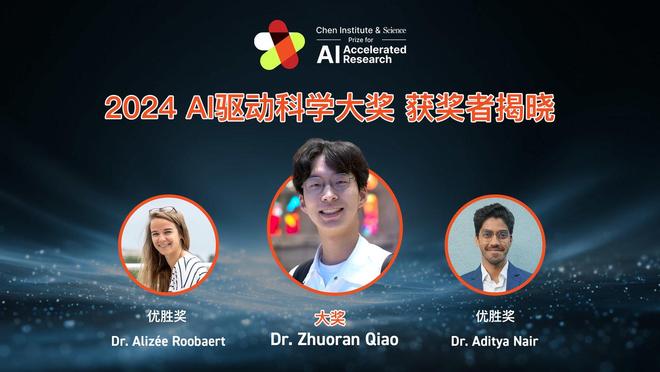
天桥脑科学研究院与AAAS宣布 2024 年 AI 驱动科学大奖获奖名单
Tai Mei Ti A P P· 2025-07-18 04:59
Core Points - The Tianqiao and Chrissy Chen Institute and the American Association for the Advancement of Science (AAAS) announced the winners of the inaugural "AI-Driven Science Award" aimed at recognizing innovative research utilizing AI for scientific discoveries [2] - The total cash prize of $50,000 will be shared among the three winners, with their research papers published in the journal Science [2] Winners and Research Highlights - Grand Prize Winner: Dr. Zhuoran Qiao, a machine learning scientist and founder of Chai Discovery, recognized for his groundbreaking work in biochemistry using AI [3] - Honorable Mentions: - Dr. Aditya Nair, a postdoctoral researcher at Caltech and Stanford, focusing on the integration of AI and neuroscience [4] - Dr. Alizée Roobaert, a researcher at the Flanders Marine Institute, who developed innovative AI solutions to monitor ocean climate dynamics [4] Research Contributions - Dr. Qiao's research involves using generative AI to predict protein folding and create dynamic models that demonstrate how folded proteins change over time and interact with smaller molecules, providing a powerful new tool for drug discovery [5][6] - Dr. Nair's work reveals hidden interactions among neurons that form persistent patterns, which can encode and regulate long-lasting psychological or emotional states, mediated by neuropeptides [7] - Dr. Roobaert's high-resolution model of coastal carbon absorption integrates global satellite data and 18 million data points from coastal CO2 measurements, offering a comprehensive overview of the ocean's health and its role in climate science [8] Award Structure and Future Events - Dr. Qiao receives a cash prize of $30,000, while Dr. Nair and Dr. Roobaert each receive $10,000, with their papers published in the online version of Science [9] - All winners will receive a five-year subscription to Science and become honorary Chen Scholars [9] - The winners will present their research at the inaugural "AI-Driven Science Symposium" in San Francisco on October 27-28, 2025, alongside Nobel laureates and other leading scholars [9] Future Opportunities - The application window for the 2025 AI-Driven Science Award will open in August, inviting young scientists working in AI-related fields to apply [11]
API攻击激增,安全智能体何以安全?丨ToB产业观察
Tai Mei Ti A P P· 2025-07-17 11:36
Group 1: AI and Cybersecurity Risks - AI has introduced greater risks to enterprise cybersecurity, with 57% of privacy and data security issues and 55% of AI-driven cyberattacks being attributed to generative AI cloud security concerns, yet only 7% of IT decision-makers believe there are no related security risks [2] - The complexity of attack methods has increased, with attackers leveraging a larger internet exposure as an entry point, utilizing AI capabilities for social engineering phishing attacks and supply chain attacks, leading to full-chain attacks [3] - Gartner predicts that by 2025, the adoption of generative AI will increase the need for cybersecurity resources in enterprises, resulting in a more than 15% rise in application and data security spending [3] Group 2: API Security Concerns - In the past year, China spent the highest cost on resolving API security incidents, amounting to $778,000 (approximately 5.68 million RMB), with a total of 108 billion API attacks recorded in the Asia-Pacific region from January 2023 to June 2024, accounting for 15% of all web attacks [4] - Over 60% of web attack traffic is focused on API interfaces, with attack volume increasing by 23% year-on-year, driven by the new threat exposure brought by the large-scale implementation of generative AI technology [4] - Common API vulnerabilities include misconfigurations, network firewalls not intercepting, and authorization flaws, with API misconfiguration being the most prevalent at 22.3% [5] Group 3: Web Security Trends - Web vulnerability exploitation attacks are expected to increase by 68% in 2024, with a significant rise in attacks targeting AI application vulnerabilities [6] - The concept of using AI to combat AI is gaining traction, with security service providers launching corresponding large model services to enhance threat detection and response capabilities [7][8] - The evolution of web security defense has shifted from static rule-based defenses to dynamic game-theoretic defenses, with AI becoming the central component of security systems [9] Group 4: Systematic Defense Strategies - Enterprises are moving towards a systematic defense approach, integrating various security tools into a cohesive defense mechanism, breaking down data silos and policy fragmentation [11] - For API security, companies need to establish a comprehensive API security strategy, including continuous discovery of vulnerabilities, threat management systems, and proactive testing [12] - The demand for security operations is driving the development of security service providers, focusing on asset, vulnerability, threat, intelligence, and security policy operations [13]

藏格矿业锂资源开采被叫停引爆锂矿行情,上月青海刚对盐湖资源无序扩张追责问责
Tai Mei Ti A P P· 2025-07-17 11:33
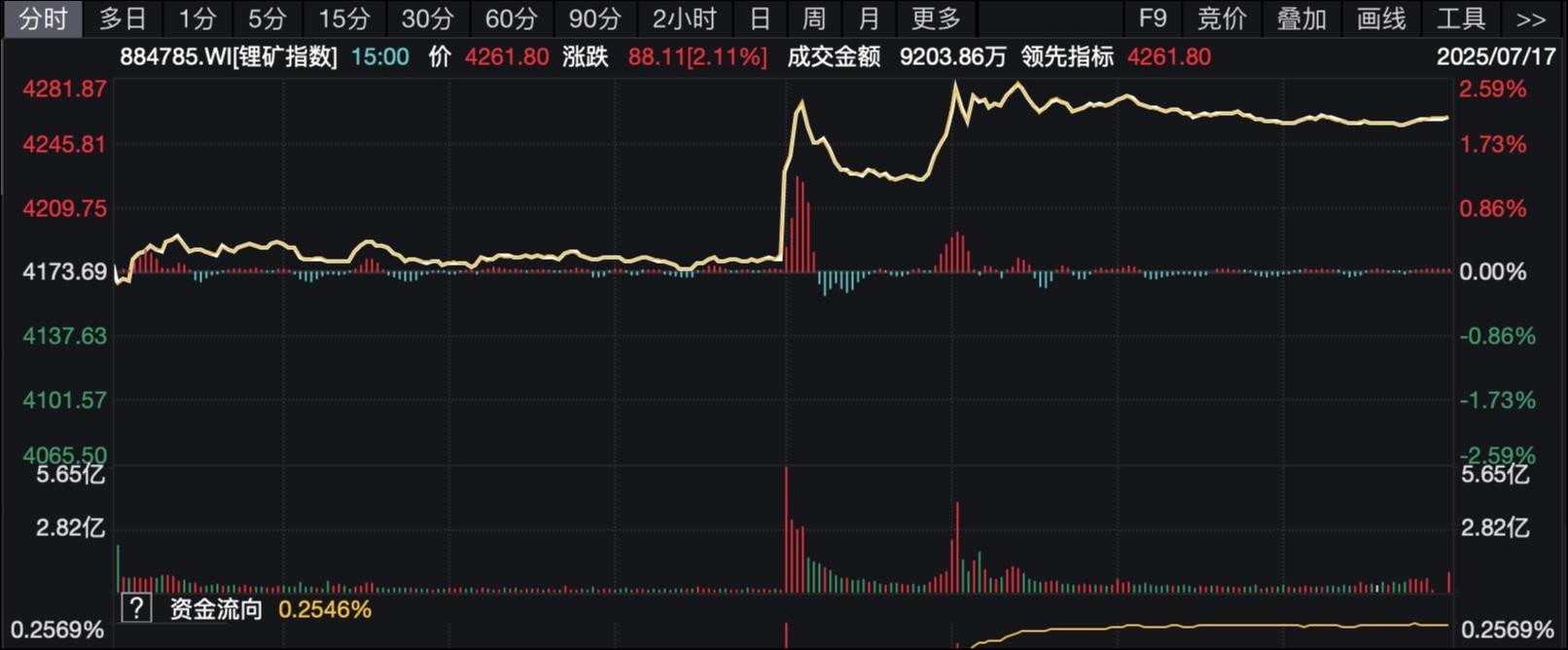
Core Viewpoint - The lithium mining sector experienced a significant rally following the announcement from Cangge Mining regarding the suspension of lithium resource development activities due to regulatory orders, although the overall impact on supply is considered limited given the current oversupply in the industry [2][3][7]. Group 1: Company Actions and Announcements - Cangge Mining's subsidiary, Geermu Cangge Lithium Industry Co., has halted production in compliance with a notice from the Haixi State Natural Resources Bureau and the Haixi State Salt Lake Management Bureau [3]. - The company is actively working to rectify its operations and will apply for resumption of production once it has completed the necessary legal procedures for lithium resource extraction [3][4]. - Cangge Mining reported that its lithium production for the first half of the year is expected to be 5,350 tons, with a projected net profit of 49 million yuan, which is a small fraction of the company's overall profitability [4]. Group 2: Market Reactions and Industry Context - Following the announcement, Cangge Mining's stock initially dropped but later rebounded, closing at 42.92 yuan, up 1.27% [5][6]. - The Wind Lithium Index rose by 2.11%, with several lithium mining stocks, including Dazhong Mining and Rongjie Co., experiencing significant gains [6]. - The overall market sentiment indicates that the supply tightening expectations due to Cangge Mining's suspension are more emotional than substantive, as the industry is currently characterized by an oversupply situation [7]. Group 3: Regulatory and Environmental Background - The suspension of Cangge Mining's operations is part of a broader regulatory crackdown on the disorderly expansion of salt lake resource development in Qinghai Province, which has been highlighted in recent environmental protection inspections [7][8]. - The inspections revealed that the development of salt lake resources has exacerbated the ecological burden in the region, prompting the government to take action against multiple responsible parties [8].

Nvidia CEO: Next Wave of AI is "Physical AI," Taps China's Expanding Role in Global AI Ecosystem
Tai Mei Ti A P P· 2025-07-17 11:33
Core Insights - Nvidia's CEO Jensen Huang emphasized the strategic importance of the Chinese market during his recent visit to Beijing, highlighting significant developments such as regulatory approval for the H20 AI chip and the upcoming launch of the RTX Pro GPU, alongside Nvidia's market capitalization surpassing $4.1 trillion [2][3][15] Group 1: AI Development in China - Huang addressed the rapid progress in AI development in China, particularly in large models and computing infrastructure, during the 3rd China International Supply Chain Expo [3][4] - He noted China's strength in AI lies in its talent density and educational foundation, training about half of the world's AI researchers [5] - Companies like Alibaba and DeepSeek are advancing quickly in model development and product integration, fostering a competitive innovation ecosystem [5] Group 2: Nvidia's Product Developments - The approval of Nvidia's H20 chip aligns with U.S. export controls and is designed for large model training, although supply chain uncertainties remain [6] - The RTX Pro GPU is focused on digital twin simulations and robotics, which are key growth areas for Nvidia [7] Group 3: Strategic Partnerships and Ecosystem - Nvidia has a long-standing history in China, with partnerships dating back three decades with companies like Tencent and Xiaomi, which are crucial for its strategy as AI integrates into consumer applications [8] - Nvidia's platform supports over 1.5 million developers in China, enabling the development of commercially viable AI models [9] Group 4: Robotics and Mechatronics - Huang identified robotics as a major AI frontier, with China's unique position in AI software and manufacturing providing a competitive advantage [10] - The combination of advanced mechatronics and strong AI capabilities positions China to lead in the global robotics economy [11] Group 5: Geopolitical Context and Company Strategy - Nvidia's role as a global technology provider is emphasized, with increasing government engagement to understand AI deployment for national priorities [12] - Huang highlighted that practical effectiveness, rather than theoretical intelligence, will drive long-term value in AI models [13] Group 6: Company Evolution and Future Outlook - Founded in 1993, Nvidia has evolved from a gaming chip designer to a key player in global AI infrastructure, significantly impacting various sectors [14] - Huang's increasing visibility in China underscores the importance of the Chinese market in Nvidia's global strategy [15]


增长1648%,200亿市值大厂布局漫剧:优劣如何?
Tai Mei Ti A P P· 2025-07-17 11:21
Group 1 - The core viewpoint of the article highlights the recent strategic moves by Zhongwen Online in the anime short drama sector, focusing on the integration of AI and IP systems to enhance content production and distribution [1][2]. - Zhongwen Online's content strategy is divided into two main areas: the IP matrix and AI content production system, aiming to create a scalable content ecosystem [3][8]. - In the IP matrix, Zhongwen Online has established a strong presence in the web literature sector with platforms like 17K Novel Network and has acquired notable anime IPs such as "The Legend of Luo Xiaohei" [4][7]. Group 2 - The AI content production system includes the launch of the "Zhongwen Xiaoyao" model, which claims to significantly streamline the production process, achieving a 70%-80% AI involvement in traditional anime short drama production [8][10]. - The distribution network for Zhongwen Online is categorized into domestic and overseas channels, with partnerships established with major platforms like Tencent Video and international platforms such as YouTube and TikTok [11][15]. - Despite a robust domestic presence, Zhongwen Online's overseas performance is lagging, as evidenced by lower engagement metrics on platforms like Sereal+ compared to domestic platforms [19][27]. Group 3 - The competitive landscape for anime short dramas is intensifying, with major platforms like Kuaishou and Douyin increasing their investments in this sector, indicating a growing market interest [31][32]. - The Chinese animation industry is experiencing rapid growth, with the total market value projected to rise from 760 billion yuan in 2019 to 4 trillion yuan in 2023, and further growth expected in the coming years [32]. - The influx of major players into the AI anime drama market may lead to increased industry concentration and potential homogenization of content, posing challenges for smaller players [34].


打开,下一次场景革命|新物种爆炸2025
Tai Mei Ti A P P· 2025-07-17 07:59
Core Insights - The concept of "scene" as a new business methodology has evolved significantly since the publication of "Scene Revolution" in 2015, transitioning from a niche to a mainstream approach by 2022, culminating in the formal introduction of "scene brands" [2][4] - The emergence of AI technology has drastically altered the landscape, compressing the cycle of new scene creation into instantaneous moments, emphasizing the need for businesses to provide immediate certainty and ownership in an AI-driven era [4][5] Group 1: New Species and Their Emergence - The term "instant emergence" reflects the rapid development of meaningful connections following technological advancements, with AI accelerating the deconstruction of traditional business narratives [5][7] - Businesses are now tasked with capturing moments of significance in a meaning vacuum created by AI, transforming consumer desires into tangible, participatory scenes [5][7] Group 2: Building Meaningful Brands - The creation of "religious brands" aims to establish a strong sense of meaning and trust amidst information overload, serving as a spiritual anchor for users [7] - Companies are encouraged to weave intricate systems that capture attention in daily life, embedding small yet profound moments of meaning into consumer experiences [7] - Understanding "metaphorical consumption" allows businesses to convert abstract emotions into purchasable cultural symbols, facilitating self-healing and connection among like-minded individuals [7] Group 3: The Future of Business - The AI scene revolution is positioned as a timely opportunity for reshaping value chains, with new business wisdom emerging from these instantaneous moments [8] - The depth of understanding in this new era is equated with the speed of business, suggesting that cognitive depth will drive commercial success [9]
中国成为微软必应全球第一大市场,这绝非偶然
Tai Mei Ti A P P· 2025-07-17 06:00
Core Insights - Bing has achieved a significant milestone in the Chinese market, capturing a 40.23% market share in desktop search as of June 2025, marking its position as the leading search engine in China for 12 consecutive months [2][4] - Microsoft's investment of nearly $100 billion in Bing over the years has finally paid off, particularly benefiting from the digitalization and globalization trends among Chinese enterprises [3][6] - The rise of AI-driven search capabilities has transformed Bing from a mere alternative to a formidable competitor in the search engine landscape, with a notable increase in user engagement and interaction [12][15] Market Position and Growth - Bing's user base in China has surged by 12 times over the past five years, with China contributing 28.25% of Bing's global traffic, surpassing the United States [6][9] - Despite a temporary resurgence of Bing in the U.S. market in May 2025, the alternating leadership in both markets indicates a promising future for Bing in China [9][11] - The integration of Bing into Microsoft's ecosystem, particularly with the launch of Bing Chat Enterprise, has enhanced its presence in enterprise productivity scenarios [10][11] AI and Product Innovation - The introduction of the "New Bing" powered by AI models has redefined the search experience, allowing for more natural interactions and deeper understanding of user intent [15][16] - Bing's advertising model has evolved, with AI enabling more precise targeting and significantly reducing cost-per-click for advertisers, enhancing overall commercial viability [17][19] - The localized features and innovations, such as accurate weather forecasting and tailored marketing strategies, have further solidified Bing's appeal in the Chinese market [10][19] Competitive Landscape - The ongoing AI search battle is intensifying, with major players like Google and emerging startups vying for market share, indicating a long-term competitive environment [20][21] - Microsoft's strategy of integrating Bing into a broader ecosystem, including Windows 11 and Microsoft 365, enhances user engagement and retention [22] - Despite Bing's impressive growth, challenges remain, including reliance on desktop usage and the need to navigate local regulatory landscapes [23]