Tai Mei Ti A P P

Search documents
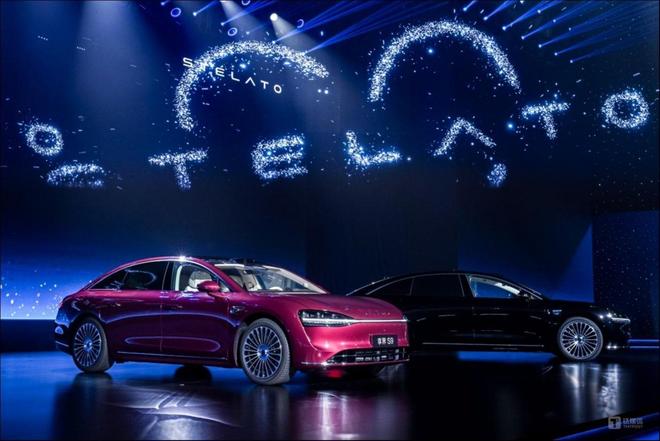
一枚“星”标,开启享界冲击高端新阶段
Tai Mei Ti A P P· 2025-07-17 03:13
Core Insights - The company, Xiangjie, has achieved significant milestones in the high-end smart manufacturing sector, with its S9 model delivering 4,154 units in June, ranking first in the 300,000-level new energy sedan category [2] - A new logo was unveiled during the "2025 Xiangjie User Star Night," symbolizing a new phase in the brand's development and reflecting user feedback [2][3] - The brand's positioning has shifted from a focus on executive sedans to catering to family-oriented users, with 60% of S9 owners being young individuals [5][8] Group 1: Brand Development - The new logo design was inspired by celestial themes and incorporates a hexagonal design consistent with the Hongmeng Intelligent family, enhancing brand recognition [5] - The initial positioning of the S9 as a luxury executive sedan has evolved, with a significant portion of its user base now identified as family-oriented [5][8] - The event highlighted the importance of user feedback in shaping the brand's identity and product offerings [3][12] Group 2: Strategic Partnerships - The collaboration between BAIC Group and Huawei has entered a new phase, with Huawei granting greater operational autonomy to BAIC for the Xiangjie brand [9][11] - The sales strategy is shifting from centralized control by Huawei to independent channel development for each brand under the Hongmeng Intelligent umbrella [9][11] - BAIC has initiated a recruitment drive for Xiangjie dealerships, aiming to establish a robust sales network across multiple cities [9][12] Group 3: Future Product Plans - Xiangjie plans to launch its second model, a family-oriented travel vehicle, in the fall, further diversifying its product lineup [8] - The establishment of the Xiangjie Business Unit within BAIC New Energy indicates a prioritization of resources and development for the brand [12] - The commitment to user-centric design and product development is emphasized as a core strategy moving forward [12]


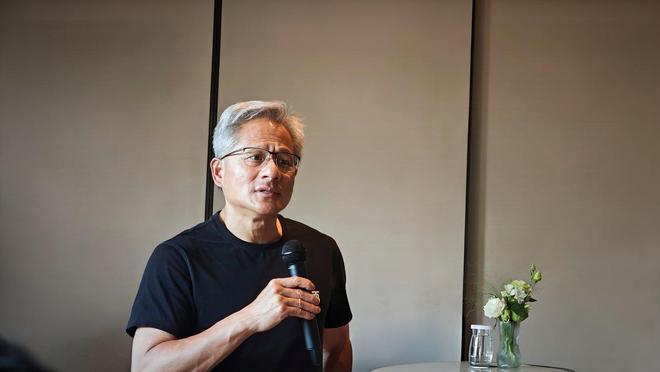
现场直击英伟达黄仁勋:DeepSeek R1非常创新,AI下一个浪潮是机器人
Tai Mei Ti A P P· 2025-07-16 23:40
Group 1 - Nvidia's CEO Jensen Huang emphasized the importance of the Chinese market, stating it has cultivated 50% of the world's AI talent [3][9][10] - The company has made significant advancements in AI technology, with the introduction of the DeepSeek open-source inference model, which is considered revolutionary [3][4][10] - Nvidia's stock reached an all-time high, with a market capitalization exceeding $4.1 trillion, reflecting strong investor confidence [2][5] Group 2 - Nvidia has a long history in the AI infrastructure sector, starting from gaming chips in 1993 and evolving into a leader in AI computing [4][5] - The company has developed technologies that have increased AI computing power by 100 times, significantly outpacing Moore's Law [5][10] - Nvidia's partnerships with major Chinese tech companies like Tencent, Alibaba, and Xiaomi have been crucial for its growth and innovation in the region [4][6] Group 3 - Huang highlighted the rapid development of AI applications in China, driven by intense market competition and a strong educational system [3][6][10] - The company is focused on creating a global AI ecosystem, with applications ranging from healthcare to autonomous vehicles [6][8] - Nvidia's H20 chip is particularly suited for training large models, while the RTX Pro is designed for digital twins and robotic simulations [7][10] Group 4 - Huang praised Huawei for its strong technological foundation in chips, systems, and networks, asserting that underestimating Chinese manufacturing capabilities is naive [9][10] - The future of AI is expected to be driven by robotics, with a focus on automation to address global labor shortages [11][12] - Huang expressed optimism about the unique advantages China possesses in AI technology, mechanical engineering, and manufacturing, which will foster the growth of the robotics industry [11][12]


【钛晨报】黄仁勋链博会发言速览:AI下一波浪潮将是机器人系统,英伟达需要时间提升H20供应链产能;特斯拉六座版MODEL Y L登上工信部新车目录;又一...
Tai Mei Ti A P P· 2025-07-16 23:40
Group 1 - NVIDIA's CEO Jensen Huang highlighted that over 1.5 million developers in China are utilizing NVIDIA's platform to innovate, with significant contributions from Chinese-developed open-source AI models like DeepSeek and Baidu Ernie Bot [2][3] - Open-source AI is seen as a catalyst for global progress, providing opportunities for various countries and industries to participate in the AI revolution, while also ensuring AI safety through collaboration on technical standards and security measures [2][3] - AI is now considered a fundamental infrastructure, reshaping supply chains and transforming production and logistics methods, with China's supply chain being described as a miracle [2][3] Group 2 - Hundreds of projects in China are using NVIDIA Omniverse for digital twin simulations to design and optimize factories and warehouses, with robots being trained in virtual environments for safe collaboration with humans in the physical world [2][3] - The next wave of AI will focus on robotic systems capable of reasoning and executing tasks, with factories expected to be driven by software and AI, coordinating human-robot teams to produce AI-led smart products over the next decade [3] - NVIDIA is working to enhance the capacity of the H20 supply chain and plans to accelerate this process in the coming months, following the announcement of export licenses for H20 chips to China [3] Group 3 - The development of humanoid robots in China is positioned advantageously due to the country's strong AI technology, excellent mechatronics, and a vast manufacturing base [4] - The domestic electric vehicle market has surprised the world with its rapid advancements, with NVIDIA collaborating closely with companies like Xiaomi [3][4] - The CEO of ASML projected that revenue from the Chinese mainland market will exceed 25%, aligning with the current order situation, as AI continues to drive growth in logic and memory chip markets [9]

星巴克变瑞幸、贵宾厅取消,银行的“羊毛”不好薅了|巴伦精选
Tai Mei Ti A P P· 2025-07-16 14:08
Group 1 - The core viewpoint of the articles highlights a significant reduction in credit card benefits across various banks, driven by cost pressures and a shift in the banking industry's strategy towards high-value customers [1][3][4] - The changes in benefits have led to customer dissatisfaction, with many users expressing their frustration on social media and even canceling their cards [5][6] - The credit card market is entering a phase of stock competition, with many banks experiencing negative growth in card issuance and a decline in transaction volumes [4][6] Group 2 - Banks are facing cost pressures due to narrowing interest margins, declining transaction amounts, and rising customer acquisition costs, prompting a need for efficiency [3][4] - The reduction in benefits is seen as a short-term cost-cutting measure, but it risks losing high-net-worth customers who are sensitive to service quality [5][6] - To retain high-value clients, banks are encouraged to offer personalized services and higher-yield products, moving away from traditional benefits [6][7] Group 3 - The industry is transitioning towards "data-driven services and scenario-based benefits," with banks innovating through co-branded cards and tailored offerings to enhance customer loyalty [7][8] - By leveraging big data, banks can provide customized products and services, increasing credit card usage frequency and overall customer satisfaction [8]






3C认证+新国标,充电宝进入强监管时代
Tai Mei Ti A P P· 2025-07-16 11:59
Group 1 - The domestic power bank industry is facing a significant recall event, with over 2 million units recalled due to issues with core battery suppliers [2] - The Ministry of Industry and Information Technology is soliciting opinions on the revision of the "Safety Technical Specifications for Mobile Power Supplies," indicating stricter regulations for the industry [2][4] - The new national standard will introduce more rigorous testing requirements for extreme conditions and specific regulations for key materials and production processes [4] Group 2 - The implementation of the 3C certification standard has been delayed, leading to many power banks in circulation lacking the certification, raising safety concerns [3] - The Civil Aviation Administration has prohibited passengers from carrying power banks without 3C certification on domestic flights, and some courier services have also tightened regulations [3] - There have been 15 incidents of power banks catching fire during air transport in the first half of 2025, highlighting safety issues in the industry [3] Group 3 - Major brands like Anker Innovation are adapting by terminating partnerships with problematic suppliers and establishing new collaborations to ensure battery quality [6] - Anker has purchased 45 million battery cells from a new supplier, ATL, and is investing in traceability and reliability testing for battery cells [6] - Romoss has announced a six-month suspension of operations, with significant impacts on its workforce and product availability [7] Group 4 - The recall event and new regulations may lead to a market shift, with industry leaders gaining market share and benefiting from consumer trust in brand safety [8] - The industry is expected to experience a painful transition period but may ultimately see a consolidation of market players and improved profit margins [8]
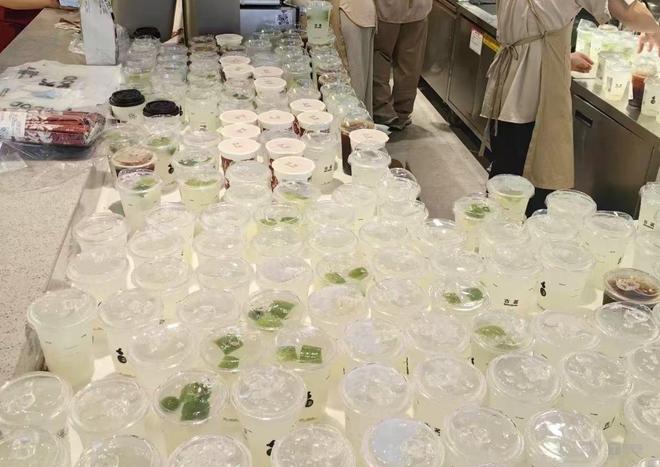
9.9打不动,90亿抢着买?资本为何青睐星巴克
Tai Mei Ti A P P· 2025-07-16 07:04
Core Viewpoint - Starbucks is facing significant challenges in the Chinese market, leading to speculation about its valuation and potential sale of equity, with a reported valuation of $9 billion, raising questions about its worth in the current competitive landscape [1][4][6] Group 1: Market Dynamics - Starbucks China is projected to generate $2.958 billion in revenue for the fiscal year 2024, reflecting a year-over-year decline of 1.4% [4] - In contrast, Luckin Coffee's revenue is expected to reach approximately $5 billion, with a significantly lower price-to-sales ratio of 1.89 compared to Starbucks' 3 [8] - The number of Starbucks locations in China is 7,758, while Luckin has surged to 24,097 locations, indicating a substantial competitive advantage for Luckin [6] Group 2: Consumer Behavior - Consumer sentiment towards Starbucks has shifted, with many expressing that they would rather choose cheaper options from competitors like Luckin, even when Starbucks offers discounts [6][19] - The perception of Starbucks as a premium brand is deteriorating, as evidenced by comments on social media indicating that consumers are now more price-sensitive and less loyal to the brand [6][21] Group 3: Strategic Moves - The potential sale of a stake in Starbucks China is seen as a strategic retreat, with the company looking to retain 30% ownership while seeking new capital partners [6][23] - The involvement of major investors like Dazhong Capital, which has a history of aggressive market strategies, suggests a shift in control and potential rebranding efforts for Starbucks [10][12] Group 4: Future Outlook - The coffee market in China is still growing, with per capita coffee consumption significantly lower than in countries like Japan and South Korea, indicating room for expansion [15] - The outcome of the potential equity sale and subsequent strategies will determine whether Starbucks can reclaim its premium status or if it will continue to struggle against lower-priced competitors [24][26]


极氪9X首搭浩瀚-S:架构豪华,还是叙事先行?
Tai Mei Ti A P P· 2025-07-16 03:50
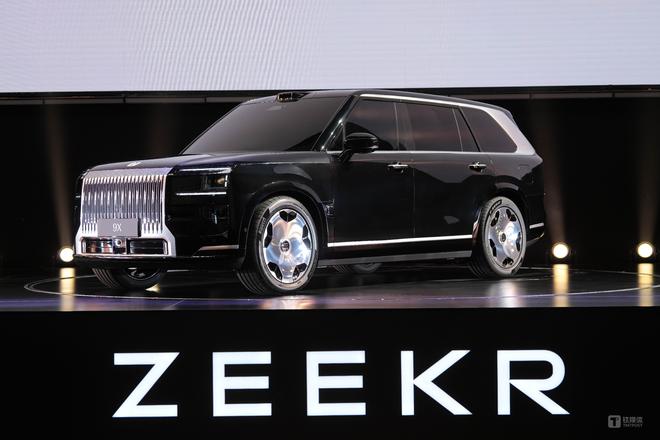
Core Viewpoint - The launch of the "Hao Han-S" luxury hybrid architecture by Zeekr represents a significant technological shift in the automotive industry, aiming to redefine luxury electric mobility beyond traditional hybrid solutions [2][11]. Group 1: Technological Innovation - The Hao Han-S architecture is the world's first high-end hybrid platform built on a pure electric architecture, featuring a 900V high-voltage system and a megawatt-level electric drive system [2][5]. - The Zeekr 9X, the first model based on the Hao Han-S architecture, boasts a maximum power of 1030 kW and can accelerate from 0 to 100 km/h in just 3.1 seconds, making it the fastest hybrid SUV globally [5]. - The vehicle achieves a pure electric range of 380 km under CLTC conditions and features a 6C ultra-fast charging capability, allowing it to charge from 20% to 80% in just 9 minutes [5]. Group 2: Market Positioning - Zeekr's strategy to enter the luxury new energy market through hybrid technology addresses current technological bottlenecks and user anxieties regarding electric vehicles [2][3]. - The Hao Han-S architecture aims to bridge the technological gap between traditional hybrids and electric vehicles, targeting high-end users who require performance and range [3][11]. - The Zeekr 9X is positioned as a flagship SUV for the new energy era, with a focus on practical user scenarios rather than just performance metrics [10][11]. Group 3: Safety and Intelligence - The Zeekr 9X incorporates advanced safety features, including high-strength body materials and a unique battery layout designed to withstand extreme conditions [7]. - The vehicle is equipped with the "Qianli Haohan H9" intelligent driving system, featuring dual NVIDIA DRIVE Thor-U chips and a comprehensive 360-degree perception system [7]. - The design philosophy emphasizes user experience and practical applications, such as automatic stability control in high-wind conditions [8][10]. Group 4: Brand Strategy - The Hao Han-S architecture is seen as a key weapon for Zeekr to break through brand limitations and restructure its position within the Geely brand matrix [11]. - Zeekr aims to compete directly with luxury brands like Mercedes-Benz and BMW, focusing on a new definition of luxury based on technology rather than traditional materials [13]. - The brand is transitioning from a performance-centric approach to one that emphasizes user needs and co-creation, reflecting a shift in market strategy [10][11].

下一句会是什么?我们是否高估了预测编码理论?
Tai Mei Ti A P P· 2025-07-16 03:50
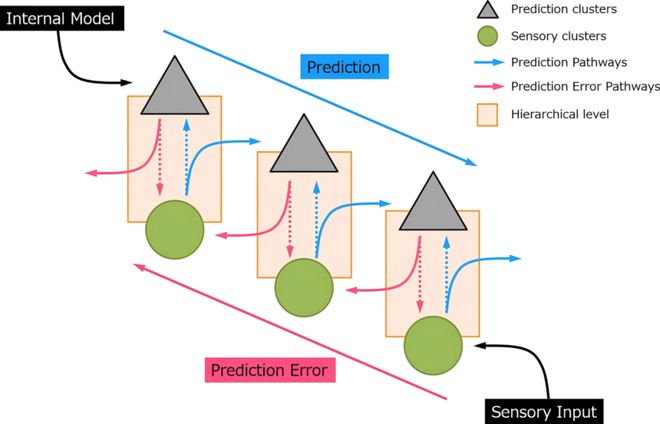
Core Argument - The article explores the relationship between large language models (LLMs) like ChatGPT and the brain's language processing mechanisms, questioning whether LLMs capture deep cognitive processes or if their predictive capabilities are merely coincidental [1][12]. Group 1: Predictive Coding Theory - Predictive coding theory, proposed by Karl Friston in the 1990s, suggests that the brain actively predicts future events and adjusts its predictions based on sensory input to minimize prediction errors [1][2]. - This theory has gained traction as it provides a coherent framework for understanding various cognitive functions, including language processing, where the brain anticipates upcoming words and sentences [3][4]. Group 2: Neural Network Language Models (NNLM) - NNLMs are artificial neural networks designed for word prediction tasks, leveraging vast amounts of natural language text for training, which allows them to learn statistical patterns across different text types [6][9]. - Recent advancements in NNLMs have led to the development of fine-tuning techniques, enabling models to adapt learned representations for various language tasks, improving performance compared to models trained from scratch [6][10]. Group 3: Neuroscience Research Using NNLM - NNLMs have been employed in neuroscience to predict brain responses to natural language, with studies showing that models based on language representations outperform those using non-contextual embeddings [10][11]. - Research indicates a strong correlation between a model's word prediction accuracy and its ability to explain brain activity, suggesting that word prediction may be fundamental to language processing [10][11]. Group 4: Alternative Explanations - Antonello and Huth challenge the predictive coding theory, proposing that the success of language models may stem from their ability to capture universal information rather than predictive capabilities [12][17]. - Their research indicates that the correlation between model performance and brain response may be due to the generalizability of the representations used, rather than evidence of predictive coding in the brain [12][14]. Group 5: Future Research Directions - Future studies should aim to identify measurable phenomena that can distinctly demonstrate whether the brain employs predictive coding during language processing, potentially providing stronger evidence for or against the theory [18].
英伟达、AMD恢复向中国销售AI芯片,美国商务部长:中国只能买到英伟达“第四等”货
Tai Mei Ti A P P· 2025-07-16 03:09
Core Viewpoint - The U.S. government has relaxed export restrictions on AI chips, allowing NVIDIA and AMD to sell their respective H20 and MI308 AI chips in China, indicating a shift in U.S.-China trade relations and a strategic move to maintain U.S. technological dominance in the AI sector [2][3][11]. Group 1: Company Developments - AMD plans to resume shipments of its MI308 AI chip to China following the approval of its export license application by the U.S. government [2]. - NVIDIA has announced the resumption of H20 chip sales in China, with CEO Jensen Huang expressing optimism about the market potential [11]. - Both companies experienced significant stock price increases following the news, with AMD's stock rising by 8.5% and NVIDIA's by 5% on July 15, leading to a combined market value increase of over $170 billion [5]. Group 2: Market Dynamics - The decision to allow sales of these AI chips is linked to ongoing U.S.-China trade negotiations, particularly concerning rare earth materials [3]. - NVIDIA's H20 chip is a "special version" designed for the Chinese market, which, while lower in performance compared to the latest models, still outperforms most domestic AI chips [7][10]. - The Chinese market is crucial for NVIDIA, with revenue from the region reaching $17.11 billion in the fiscal year ending January 2024, a 66% increase from the previous year [10]. Group 3: Strategic Implications - U.S. officials believe that allowing Chinese companies access to NVIDIA's technology will create dependency on American tech, thereby maintaining U.S. market influence [3][4]. - The strategy involves selling "just adequate" products to ensure that Chinese developers remain reliant on U.S. technology ecosystems [4][13]. - NVIDIA is expected to introduce a new B30 chip in 2025, which will be a lower-performance version aimed at the Chinese market, further solidifying its presence despite the competitive landscape [15][16]. Group 4: Industry Outlook - The Chinese AI chip market is projected to grow significantly, with estimates suggesting it could reach $50 billion in the next few years [11]. - The domestic AI chip market is also expanding, with predictions indicating a compound annual growth rate of 53.7% from 2025 to 2029 [17]. - The GPU market in China is expected to grow from approximately 384.77 billion yuan in 2020 to 1,638.17 billion yuan by 2024, highlighting the increasing demand for AI computing solutions [18].

外卖大战让门店快扛不住了!嘉和一品乡村基南城乡创始人纷纷吐槽
Tai Mei Ti A P P· 2025-07-16 02:14
Core Insights - The ongoing food delivery war is causing significant distress for restaurant businesses, as they bear the brunt of platform subsidies and competitive pricing strategies [2][3][4] - Major players in the food delivery market, including Meituan and Alibaba, are engaged in aggressive discounting strategies, leading to a surge in order volumes but also raising concerns about long-term profitability [4][6][10] Group 1: Industry Challenges - Restaurant operators are struggling with high operational costs due to platforms requiring them to subsidize customer discounts, with merchants covering 70% of the costs in some cases [2] - The intense competition has led to a dramatic increase in order volumes, with some restaurants experiencing a tenfold increase in orders, causing operational strain [7] - The Chinese Chain Operation Association has called for regulation of the market to ensure fair competition and protect consumer rights [3] Group 2: Market Dynamics - As of July 12, 2023, Meituan reported over 1.5 billion daily orders, while Alibaba's Taobao Flash Sale reached 80 million orders, indicating a doubling of market size since the beginning of the year [4][6] - The market is projected to grow significantly, with Goldman Sachs estimating a 30% year-on-year increase in order volume, driven by aggressive promotional strategies [10] - The competition has led to a substantial increase in investment, with Alibaba, JD, and Meituan collectively investing approximately 25 billion RMB (around 3 billion USD) in the second quarter alone [10] Group 3: Financial Implications - Morgan Stanley predicts that the current subsidy war will negatively impact the profitability of all major players in the short term, with expected stock price pressures in the coming months [8][9] - Long-term market potential remains uncertain, with Morgan Stanley suggesting that if the instant retail market does not reach projected growth, current investment levels may be excessive [9] - The shift towards instant retail is expected to cannibalize traditional e-commerce sales, with food and beverage categories being particularly affected [11][12]