Tai Mei Ti A P P

Search documents
又见0佣金,京东刘强东正式宣布进军酒旅行业
Tai Mei Ti A P P· 2025-06-18 16:17
Group 1 - The core viewpoint of the articles is that the hotel and travel industry is entering a new competitive phase, with JD.com officially announcing its entry into the online travel agency (OTA) market, leveraging its supply chain capabilities [2][3] - JD.com has a significant user base, with over 800 million high-spending users and partnerships with over 30,000 large enterprises and 8 million small and medium-sized businesses, positioning itself as a major player in local life services [2] - The company is offering new incentives for hotel operators, including a three-year zero-commission policy for those participating in the "JD Hotel PLUS Membership Program," aiming to attract more hotels to its platform [2] Group 2 - JD.com is not new to the travel business, having launched flight booking services in 2011 and invested in Tuniu in 2015, indicating a long-term interest in the sector [3] - The company is focusing on a "no-bundling" approach for flight tickets, eliminating additional insurance fees that are common in other OTA platforms, which may appeal to cost-sensitive consumers [3] - However, replicating the successful strategies from its food delivery business in the hotel sector may be challenging due to the established pricing systems and competitive dynamics among airlines and hotels [4][6] Group 3 - The hotel and travel industry has seen significant competition, with established players like Ctrip and Meituan dominating the market, making it difficult for new entrants to gain a foothold [7] - Ctrip is focusing on global expansion, aiming to double its overseas revenue share in the next three to five years, while also establishing a 1 billion yuan tourism innovation fund to support breakthroughs in the sector [8] - Meituan is exploring the "accommodation+" model, which integrates various services such as entertainment and dining, indicating a shift in consumer preferences towards multi-category offerings [10]


震安科技实控人欲2.72亿元转卖控制权,新主“卖身”失败存“借壳”预期
Tai Mei Ti A P P· 2025-06-18 11:57
Core Viewpoint - The announcement of a change in control at Zhenan Technology (震安科技) following the signing of a share transfer agreement between its controlling shareholder Huachuang Sanxin and Shenzhen Dongchuang Technology Co., Ltd. has led to significant market reactions, including a 20% increase in stock price despite the company's declining performance and revenue [2][3][4]. Group 1: Company Performance - Zhenan Technology has raised over 840 million yuan through three rounds of fundraising since its IPO, but these investments have not yielded expected returns, resulting in a cumulative loss of 22.95 million yuan from its six major projects by the end of 2024 [3][4]. - The company's revenue has halved from 897 million yuan in 2022 to 417 million yuan in 2024, with a record net loss of 144 million yuan, attributed to adjustments in sales and collection policies [4][5]. - The stock price has shown a "V" shaped decline, dropping from a peak of 105.62 yuan in October 2021 to around 10 yuan in recent months, reflecting ongoing financial struggles [4][5]. Group 2: Share Transfer and Control Change - The share transfer involves Shenzhen Dongchuang acquiring 100% of Huachuang Sanxin for 616 million yuan, while the current actual controller Li Tao relinquishes voting rights on 12% of his shares, retaining 5.28% voting rights [3][4]. - Following the transaction, Shenzhen Dongchuang will indirectly control 18.12% of Zhenan Technology, with new controllers Ning Huaxiang and Zhou Jianqi taking over [3][4]. Group 3: Market Reactions and Expectations - The market has reacted positively to the news of the control change, with Zhenan Technology's stock hitting the daily limit up, indicating investor optimism about potential restructuring or revitalization under new management [2][5]. - There are strong expectations of a "backdoor listing" as Shenzhen Dongchuang enters Zhenan Technology, given its previous failed attempts to sell itself and the lack of success in its IPO efforts [5][6].


我们和“并购之王”聊了4个小时——在潮汐中造浪
Tai Mei Ti A P P· 2025-06-18 10:30
Core Viewpoint - The current merger and acquisition (M&A) market is experiencing significant growth, with a notable increase in demand for M&A professionals and a surge in M&A activities across various sectors, particularly in the technology and internet industries [2][3][4]. Group 1: M&A Market Trends - Many general partners (GPs) and investment banks have established new M&A departments, with a reported 300% increase in M&A manager positions over the past six months [2]. - Government-led M&A funds have proliferated, with an estimated total scale nearing 100 billion yuan by May of this year [2]. - The M&A team at Huaxing Capital has grown by over 50% in the past year, completing multiple strategic acquisitions totaling over 20 billion yuan [3][9]. Group 2: Huaxing Capital's M&A Strategy - Huaxing Capital has been a key player in major M&A transactions in China's internet sector since its establishment in 2005, participating in landmark deals that have reshaped the industry landscape [2][3]. - The company emphasizes that M&A is not merely a trend but a sustainable business model with significant social value, especially in the current economic climate where traditional growth drivers are diminishing [5][6]. - Huaxing's approach to M&A focuses on aligning external resources with the best growth opportunities, believing that M&A is essential for companies seeking above-average growth [5][12]. Group 3: Buyer and Seller Dynamics - There is a noticeable shift in the buyer landscape, with more startups engaging in M&A as a primary growth strategy, even before reaching unicorn status [6]. - The mindset of sellers has evolved, with many now viewing M&A as a viable exit strategy rather than a sign of failure, reflecting a more mature market [8][9]. - A significant 92% of investment institutions are willing to promote M&A exits for their portfolio companies, indicating a growing acceptance of M&A as a strategic option [9]. Group 4: Evaluation and Execution of M&A - Huaxing Capital employs a three-phase work system for M&A, focusing on idea generation, cooking (strategy development), and execution, which distinguishes it from traditional investment banks [17][18]. - The firm prioritizes understanding the strategic goals of buyers and ensuring alignment among stakeholders to avoid common pitfalls that lead to M&A failures [10][11]. - Huaxing's internal evaluation process emphasizes the importance of assessing both the buyer's capabilities and the strategic fit of potential acquisitions [11][12]. Group 5: Future Outlook - The M&A market is expected to continue its upward trajectory, with healthy deal flow anticipated in the coming period, although the unpredictability of M&A transactions remains a challenge [30]. - Huaxing Capital aims to maintain its leadership position in the M&A space by focusing on growth-oriented transactions and leveraging its unique operational model [18][20].
科创金融加码,全国试点科技企业并购贷
Tai Mei Ti A P P· 2025-06-18 09:43
Core Viewpoint - The relaxation of merger and acquisition (M&A) loan policies is enhancing M&A activities among technology companies, providing venture capital (VC) and private equity (PE) firms with exit opportunities beyond IPOs, and facilitating capital circulation and reinvestment [2] Group 1: Financing Challenges for Technology Companies - Technology companies, especially those in growth and expansion phases, face three major financing challenges: high financing thresholds, low acquisition leverage, and short repayment periods [2] - Traditional M&A loan policies limited the loan-to-value ratio to 60%, requiring companies to self-fund 40%, which hampers the leverage effect during acquisitions [2] - The original loan term of up to 7 years often leads to a "short loan, long investment" risk due to the rapid technological iteration and long integration cycles in sectors like semiconductors and artificial intelligence [2][3] Group 2: Policy Adjustments and Impacts - In March, the financial regulatory authority initiated a pilot program to ease M&A loan policies for technology companies, increasing the loan-to-value ratio for "controlling" acquisitions from 60% to 80% and extending the loan term from 7 years to 10 years [2][3] - The extended loan term respects the nature of the technology industry, which typically requires a 3-5 year integration period, allowing companies to focus on technology integration and business expansion rather than short-term debt repayment [3] - The pilot program is being implemented in 18 cities, focusing on major technology resource hubs like Beijing, Shanghai, and the Guangdong-Hong Kong-Macau Greater Bay Area, ensuring precise release of policy benefits [3] Group 3: Banking System and VC/PE Challenges - The pilot program requires banks to shift from traditional risk assessment methods to a more nuanced understanding of technology, establishing differentiated credit evaluation systems that include industry analysis and patent assessments [4] - Banks are encouraged to optimize risk pricing mechanisms and develop comprehensive financial services through combinations of M&A loans and equity investments [4] - For VC/PE firms, increased competition from banks may replace some financing services traditionally provided by them, leading to valuation pressures as the influx of M&A transactions could affect target company valuations [4] Group 4: Market Activity and Trends - The policy changes are expected to invigorate the M&A market, with data from Q1 2025 indicating a 7.8% year-on-year increase in M&A exits, and 34 M&A exit cases in April involving a total amount of 1.209 billion yuan [5]

水井坊:库存处于合理水平,新品将按计划推出 |直击股东大会
Tai Mei Ti A P P· 2025-06-18 09:35
Core Viewpoint - The company is navigating a challenging environment in the liquor industry but remains focused on brand enhancement, product upgrades, and team development to create sustainable value for stakeholders [1][2]. Group 1: Financial Performance - In 2024, the company achieved revenue of 5.217 billion, a year-on-year increase of 5.32%, and a net profit of 1.341 billion, up 5.69% year-on-year [2]. - The growth is attributed to a consumer-centric approach, channel deepening, and improved sales strategies [2][3]. Group 2: Inventory Management - The company maintains a reasonable inventory level despite industry challenges such as supply-demand imbalance and price pressure [2][3]. - Inventory management is a key performance indicator for the company, with a focus on aligning shipments with sales [3]. Group 3: Product Strategy - The company is implementing a dual-brand strategy with "Shuijingfang" and "Diyifang," with new products set to launch in the second half of the year [4]. - There is a commitment to product innovation, including offerings targeted at younger consumers and the introduction of lower-alcohol products [4]. Group 4: Expansion Plans - The company plans to accelerate store coverage in key cities, aiming for double-digit growth in new store openings [4]. - The company is also enhancing its group purchase capabilities, with some cities seeing group sales exceeding double digits as a percentage of total sales [4]. Group 5: Project Development - The company is investing 4.048 billion in the second phase of the Qionglai project, which includes various facilities for production and logistics [5]. - Construction has commenced, with a flexible approach to project pacing based on market conditions [5].

U.S. Senate Passes GENIUS Stablecoin Bill
Tai Mei Ti A P P· 2025-06-18 06:01
Group 1 - The U.S. Senate passed the GENIUS Act with a vote of 68-30, marking the first federal regulatory framework for stablecoins, which are crypto tokens pegged to various assets [1] - The bill received support from 18 Democrats and the majority of Republicans, indicating a growing acceptance of the crypto industry within the Republican Party [2] - The GENIUS Act will now move to the House of Representatives, which is developing its own related legislation, the STABLE Act [3] Group 2 - There was a notable shift in support for the GENIUS Act, as nine Democrats who initially backed the bill requested revisions, leading to a blockage by Senators Elizabeth Warren and Ron Wyden [4] - Senator Warren, a prominent advocate for consumer protections, ultimately voted against the bill, citing a lack of essential regulatory safeguards [5] - The digital assets sector views the passage of the GENIUS Act as a critical moment, with significant investments in lobbying efforts and political engagement from the industry [5]
全球首个AI眼镜支付技术落地,Rokid称明年量产目标100万台
Tai Mei Ti A P P· 2025-06-18 03:48
Core Insights - The launch of the world's first AI glasses payment technology by Rokid and Alipay marks a significant advancement in the smart glasses industry, enabling users to make payments through voice commands and QR code recognition, thus enhancing payment efficiency [2][4]. Company Overview - Rokid, established in 2014, focuses on human-computer interaction technology and is a leading player in the AI glasses sector, with applications in various fields such as education, healthcare, and industrial use [3]. Product Features - The Rokid Glasses will feature the "Look and Pay" function, allowing users to complete transactions simply by wearing the glasses and issuing a voice command after scanning a merchant's QR code, streamlining the payment process compared to traditional mobile payments [4][5]. Market Potential - Rokid has received over 250,000 global orders for its smart glasses, with expectations to exceed 500,000 units shipped in the domestic market by the end of the year, and a target of 1 million units for the following year [2][6]. Competitive Landscape - The entry of major players like Xiaomi and Huawei into the AI glasses market is intensifying competition, with Rokid emphasizing its superior screen quality and user experience as key competitive advantages [6][7]. Future Applications - The "Look and Pay" feature is expected to expand into various scenarios, including parking fees and utility bill payments, enhancing the overall user experience by integrating payment records with personal management tools [7].

猪价跌跌不休时豪赌养猪,邦基科技是救命还是送命?
Tai Mei Ti A P P· 2025-06-17 09:23
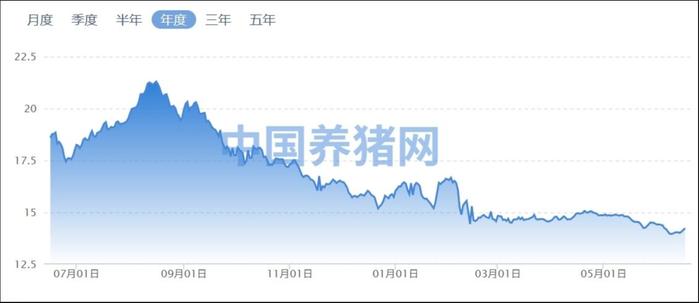
Core Viewpoint - The company, Bangji Technology, is making a significant move to acquire seven pig farming enterprises despite a backdrop of declining pork prices, indicating a strategy of expansion against market trends [1][2]. Group 1: Acquisition Strategy - Bangji Technology plans to acquire 100% stakes in several pig farming companies, including Beixi Agriculture and others, through a combination of cash and stock issuance [2]. - The acquisition aims to extend the company's operations from pig feed production to the downstream pig farming sector, creating a vertically integrated supply chain [2][3]. - The final transaction price for the acquisitions will be determined based on an assessment value, reflecting the company's strategic shift [2]. Group 2: Market Conditions - Pork prices have been on a downward trend, with a 0.7% decrease in May and monthly declines of 1.9%, 4.4%, and 1.6% from February to April [2][3]. - The average price of live pigs peaked at 15.76 yuan per kilogram in January but has since dropped significantly, impacting profitability in the sector [3]. - Major competitors like Muyuan and Wens Foodstuffs have also reported declining sales, indicating a challenging market environment for all players [3]. Group 3: Financial Performance - Bangji Technology has experienced a continuous decline in net profit for three consecutive years since its IPO, with a projected revenue of 2.542 billion yuan for 2024, but a net profit of only 50 million yuan, down 40.24% year-on-year [6][8]. - The company attributes the profit decline to low capacity utilization rates and changes in customer structure, leading to increased accounts receivable [8]. - The company has frequently altered its fundraising projects, indicating potential instability in its financial strategy [9][11].

国补退潮,外卖开战:618棋局的新变数
Tai Mei Ti A P P· 2025-06-17 08:20
Core Viewpoint - The e-commerce industry is transitioning from growth to a more competitive landscape, with major promotional events like 618 becoming less about performance boosts and more about meeting expectations and testing resilience [1][17]. Group 1: Market Reactions - Major e-commerce platforms reported disappointing financial results, leading to significant stock declines: Alibaba down 8%, JD.com down 4%, and Pinduoduo experiencing a record drop of approximately 18% [2]. - The negative market sentiment casts a shadow over the upcoming 618 shopping festival, indicating a challenging environment for these platforms [2]. Group 2: Competitive Dynamics - JD.com has entered the food delivery market, achieving daily order volumes of 25 million, while Alibaba has followed suit, with daily orders reaching 40 million [4]. - Meituan has also joined the competition by launching a comprehensive promotional campaign for 618, marking its first participation in this major sales event [4]. - The adjustment of national subsidies in various regions may impact consumer spending during the 618 event, necessitating stronger promotional strategies from platforms [5][6]. Group 3: National Subsidy Impact - Recent adjustments to national subsidies have led to temporary unavailability in certain regions, although the overall policy is expected to continue until the end of the year [5]. - The overlap of subsidy adjustments with the peak shopping period of 618 presents challenges for e-commerce platforms, which must implement additional measures to mitigate the impact on consumer demand [5][6]. Group 4: Company-Specific Strategies - JD.com has shown impressive revenue growth of 13.4% and 16% in the last two quarters, attributed to its self-operated business model and effective subsidy implementation [7]. - However, the market remains skeptical about JD.com's long-term prospects due to the temporary nature of national subsidies [7][8]. - Pinduoduo's reliance on national subsidies is less pronounced, allowing it to potentially weather the storm during the 618 event, but future pressures may arise as subsidies are reinstated [11][12]. Group 5: Alibaba's Position - Alibaba is currently in a relatively stable position, focusing on enhancing monetization through increased service fees and significant investments in the food delivery sector [14][15]. - The company aims to maintain market share while optimizing user experience, although this conservative approach may not be well-received by capital markets [16]. Group 6: Long-term Industry Outlook - The 618 event has evolved into a test of strategic adjustments rather than a mere sales boost, with JD.com attempting to break through via food delivery, Alibaba seeking stability, and Pinduoduo recalibrating its position amid subsidy challenges [17]. - The changing dynamics of national subsidies, market reactions, and competitive pressures from players like Meituan are reshaping the underlying logic of the e-commerce narrative, emphasizing efficiency, structure, and long-term capabilities over mere pricing strategies [17].


逼迫苹果转移产能?特朗普宣布造手机,土豪金配色、售价499美元
Tai Mei Ti A P P· 2025-06-17 03:37
Group 1 - Trump Group announced the launch of a mobile service called "Trump Mobile" and a new smartphone priced at $499, aimed to commemorate the 10th anniversary of Trump's presidential campaign announcement [1] - The mobile service offers a $47.45 monthly 5G plan with unlimited calls, texts, and data, along with roadside assistance and telehealth benefits, claiming coverage comparable to the top three U.S. carriers [1] - The new smartphone, named "T1," features a gold metal casing, runs on Android 15, and includes specifications such as a 6.8-inch AMOLED screen, 16MP selfie camera, 50MP main camera, 12GB RAM, and 256GB storage, with a planned release in August [1] Group 2 - Eric Trump stated that the new phone and service align with his father's policies to promote American manufacturing and jobs, indicating a competitive stance against Apple [2] - Trump has previously pressured Apple to move its manufacturing from China and India back to the U.S., threatening tariffs if they do not comply [4] - Apple has a well-established supply chain in China, with over 80% of its suppliers based there, making it challenging for the company to shift production back to the U.S. [5] Group 3 - Only one company, Purism, currently produces smartphones in the U.S., with its Liberty phone priced at $1999, highlighting the difficulty of manufacturing at a lower price point domestically [6] - Eric Trump hinted that initial production of the phones may not occur in the U.S., but ultimately all phones are expected to be manufactured domestically [6] - Trump Group's business portfolio includes real estate, hotels, social media, cryptocurrency investments, and now mobile telecommunications services [6]