Tai Mei Ti A P P

Search documents
AI接管动力域,吉利“星睿云动力2.0”揭开电混下半场
Tai Mei Ti A P P· 2025-06-17 03:06
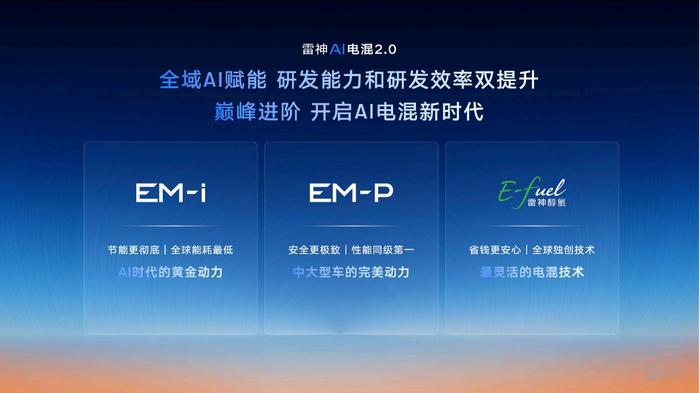
源:吉利官方 来 来 源:吉利官方 当然,"聪明"不等于无短板。AI对动力系统的介入虽然提升了智能水平,但也对硬件的稳定性、系统的 响应速度以及数据的安全性提出更高要求。比如,用户是否愿意让自己的驾驶数据长期上传云端、是否 能够适应AI介入后的驾驶风格变化,这些都仍需时间验证。 同时,吉利现阶段的算法训练和策略库主要基于自有品牌和用户数据,如何实现跨品牌、跨用户偏好的 泛化能力,也将是星睿系统要面对的技术难题。 从产业视角看,吉利此举有着清晰的战略考量。一方面,在纯电逻辑尚未统一、插混红利继续释放的大 背景下,动力技术智能化成了新的差异化窗口;另一方面,从雷神EM-i、EM-P再到醇氢EF,吉利正试 图以多路径混动技术形成全场景覆盖,配合星睿AI统一底座,实现从技术多样化到智能统一性的跃 迁。这也是为什么它将这套系统描述为"电混的AI时代"。 在智能汽车时代,AI正在加速重塑传统汽车工业的每一个模块,而如今,这股风潮已经席卷到动力系 统的深水区。 近日,吉利发布了"星睿AI云动力2.0"——一个号称行业首个基于AI场景引擎的动力域智能体。这个听 起来有些科幻的名称,背后代表着吉利试图用AI"接管"动力管理,从 ...


果链设备龙头博众精工并购疑云:高溢价收购与标的净资产缩水悖论
Tai Mei Ti A P P· 2025-06-16 14:07
Core Viewpoint - The company, Bozhong Precision (688097.SH), announced a plan to acquire 70% of Shanghai Wodian Industrial Automation Co., Ltd. for 420 million yuan, despite a significant anticipated decrease in the target company's net assets, raising questions about the high valuation and the rationale behind the acquisition [1][2][7]. Group 1: Acquisition Details - The acquisition price of 420 million yuan reflects a high premium, with a valuation of 600 million yuan based on a 416.16% increase in value assessed using the income approach [2][5]. - The expected goodwill from the acquisition is approximately 360 million to 362 million yuan, based on the target's identifiable net asset value being only 82.77 million to 85.54 million yuan at the time of consolidation [2][6]. - The target company's net assets are projected to decrease by 30-40% shortly after the acquisition, despite a recent capital injection of 39.9 million yuan from its shareholders [2][5][7]. Group 2: Financial Performance and Projections - The target company, Shanghai Wodian, had a net asset value of 145 million yuan at the end of Q1 2025, which would increase to approximately 184.9 million yuan after the recent capital injection, yet the acquisition valuation suggests a significant decline [5][6]. - The financial data indicates that the target's revenue for Q1 2025 was 82.74 million yuan, with a net profit attributable to shareholders of 12.65 million yuan [6][10]. - The company has set performance targets for the acquired entity, requiring a cumulative net profit of no less than 185 million yuan from 2025 to 2027, or 260 million yuan if the performance commitment period is extended [9][10]. Group 3: Strategic Context - Bozhong Precision is a leading player in the 3C automation equipment sector and is looking to diversify its business beyond the consumer electronics sector, particularly into the new energy and semiconductor fields [8][9]. - The company has postponed several investment projects in the new energy sector, indicating a cautious outlook on the domestic new energy market [8][9]. - The acquisition of Shanghai Wodian is seen as a strategic move to enhance capabilities in the automotive intelligent equipment sector, leveraging the target's technology and customer resources [9][10].

迁徙:微信鸿蒙版的长征 | 「钛度号」作品月榜第127期
Tai Mei Ti A P P· 2025-06-16 13:28
Core Insights - The article highlights the monthly selection of outstanding works by "Titan Media" through its "Titan Degree" platform, emphasizing the importance of quality content and audience engagement in the digital media landscape [1][9]. Group 1: Top Works Summary - **Top 1**: The piece by "Brain Extreme" discusses the collaboration between WeChat and Hongmeng, likening it to a significant historical event, suggesting that this partnership is pivotal for the domestic system ecosystem [1]. - **Top 2**: "Power Plant" analyzes BYD's recent price war, indicating that maintaining rapid sales growth is crucial for alleviating debt pressure, especially in the context of high-end brand challenges [2]. - **Top 3**: "On the Mountain" reflects on Xiaomi's 15th-anniversary event, noting that the company's advancements in self-developed chips are a foundation for its future strategies [3]. - **Top 4**: "Huashang Taolue" reports on the rapid expansion of domestic tea brands like Mixue Ice City, suggesting that local brands are gaining consumer preference over international ones [4]. - **Top 5**: "Data Reading Smart Car" discusses the competitive landscape of Chinese battery manufacturers, highlighting LG Energy's struggles against rising Chinese competitors [5]. Group 2: Additional Notable Works - **Top 6**: "Technology New Knowledge" explores the transformation in the automotive industry, emphasizing the need for companies to enhance organizational efficiency to survive [6]. - **Top 7**: "Giant Wave" describes the intense competition in the chip industry, characterizing it as a "Chinese civil war" in high-tech sectors [7]. - **Top 8**: "Market Value Observation" argues that nuclear power is undervalued in the A-share market, predicting significant growth potential as part of the energy transition [8]. - **Top 9**: "Big V Business" reflects on Alibaba's challenges, questioning the company's past decisions and their impact on its current situation [9]. - **Top 10**: "Silicon Valley 101" analyzes Apple's strategies in response to global supply chain disruptions caused by tariffs, particularly its reliance on China [10].

10天7板金时科技:扭亏道远,巨额分红,“稳定币”仅概念
Tai Mei Ti A P P· 2025-06-16 13:16
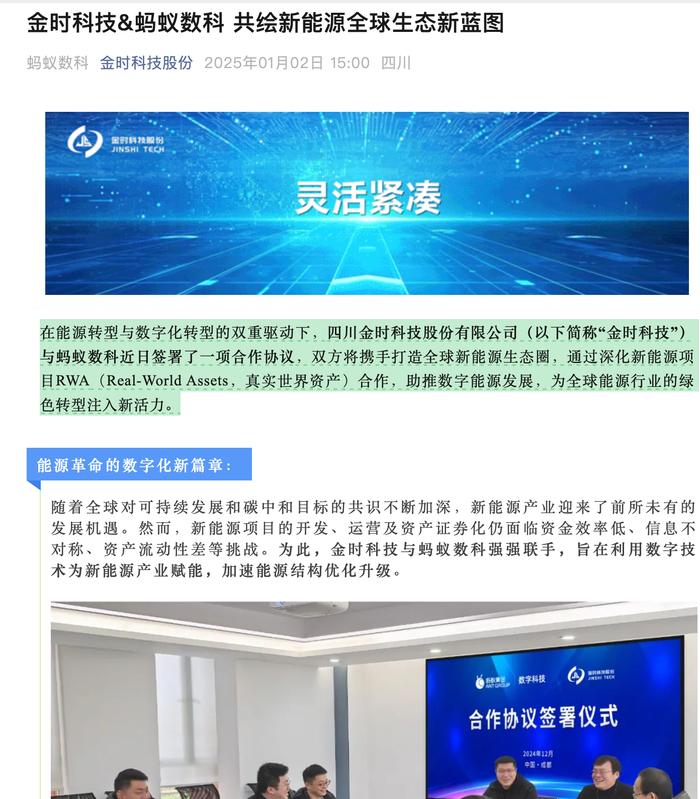
Core Viewpoint - Jinshi Technology (002951.SZ) has experienced a significant stock price surge, with a 10.03% increase to 15.36 yuan, marking its seventh trading limit in the last ten days, driven by news of a partnership with Ant Group in the renewable energy sector [1][2][8]. Group 1: Stock Performance and Market Reaction - The stock has seen a nearly threefold increase from its low of 5.61 yuan in February 2023, reflecting a strong speculative interest from investors [9][10]. - The surge in stock price coincided with legislative advancements in stablecoin regulations in Hong Kong and the U.S., which have positively impacted the fintech sector in A-shares [2][3]. - Jinshi Technology's stock price reached a peak of 14.93 yuan on June 10, 2023, following a series of trading limits [8]. Group 2: Company Background and Business Transition - Jinshi Technology, originally established in 2008, transitioned from its core business of cigarette packaging to focus on new energy and materials, particularly supercapacitors and energy storage solutions [10][11]. - The company has faced significant challenges, including a decline in its original business, legal issues, and a recent history of financial losses, leading to a risk warning for potential delisting [10][12]. - In 2024, the company reported a revenue of 376 million yuan, indicating a recovery in its operational capacity, although it continued to report net losses [11][12]. Group 3: Financial Performance and Dividends - Despite ongoing losses, Jinshi Technology has maintained a policy of substantial dividends, proposing a cash dividend of 200 million yuan for 2024, which raises questions about its financial sustainability [19][20]. - Since its IPO, the company has distributed a total of 744 million yuan in dividends, significantly exceeding its cumulative profit of 314 million yuan [19][22]. - The majority of dividends have benefited the controlling shareholders, with 82.3% of the total dividends going to the family of the actual controller [22].

越南成为金砖伙伴国;TikTok宣布在英国扩大投资至13亿元;越南引领东南亚商用空调增长机遇|一周「出海参考」(06.09-06.15)
Tai Mei Ti A P P· 2025-06-16 11:43
Emerging Markets Dynamics - Vietnam has officially joined the BRICS cooperation mechanism as a partner country, welcomed by the Brazilian government, which currently holds the rotating presidency of BRICS [1] - The BRICS partner countries now include Nigeria, Belarus, Bolivia, Kazakhstan, Cuba, Malaysia, Thailand, Uganda, and Uzbekistan, expanding the total number of BRICS members to 11 [1] Financial Cooperation - The People's Bank of China and the Central Bank of Turkey have renewed a bilateral currency swap agreement with a scale of 350 billion RMB (approximately 189 billion Turkish Lira), effective for three years [2] - A memorandum of cooperation was signed to establish a RMB clearing arrangement in Turkey, enhancing financial cooperation and facilitating cross-border trade and investment [2] Platform Developments - TikTok announced an investment expansion in the UK to approximately £140 million (around 1.36 billion RMB), including the establishment of a new office in London and an increase in employee numbers to 3,000 [3] - TikTok Shop in Southeast Asia has relaxed entry policies for businesses, removing e-commerce experience requirements, allowing individual sellers to enter the market more easily [4] - TikTok Shop has launched a "Hot Product Takeoff Plan" in the US and Europe, providing various support resources to help merchants boost sales during the summer season [5] Industry Observations - Vietnam's commercial air conditioning market is projected to reach $600 million in 2024, with a year-on-year growth of 14.9%, while the first quarter of 2025 is expected to see a market size of $123 million, growing by 13.9% [9] - In Indonesia, the commercial air conditioning market is expected to reach $218 million in the first quarter of 2025, reflecting a year-on-year growth of 7.2% [10] - The Chinese mobile gaming industry accounted for 36.6% of global revenue in May 2025, with 33 Chinese companies making it to the top 100 global mobile game publishers [11] Shipping and Logistics - In the first five months of the year, Chinese shipbuilders secured 274 new ship orders, accounting for approximately 49% of the global market share, while global new ship orders have dropped to a near four-year low [12][13] - The demand for OLED display panels is expected to grow significantly, with a projected annual growth rate of 69% in 2025, driven by strong demand in the gaming sector [14] Policy Changes - Starting July 1, Vietnam will require e-commerce platforms to withhold and pay taxes on behalf of sellers, including VAT and personal income tax, with specific rates outlined for different types of transactions [21]
【产业互联网周报】字节AI Lab负责人李航被曝正式卸任;OpenAI ARR破100亿美元;谷歌启动全公司范围“自愿离职计划”
Tai Mei Ti A P P· 2025-06-16 08:33
Financial Performance - Oracle reported a total revenue of $57.4 billion for the fiscal year 2025, with a net profit of $12.4 billion. The fourth quarter revenue reached $15.9 billion, marking an 11% year-over-year increase [2] - Adobe's Q2 revenue was $5.87 billion, up 11% year-over-year, exceeding analyst expectations. Adjusted EPS was $5.06, a 13% increase, but investor concerns about future competition in AI remain [3] Company Changes - ByteDance's AI Lab head, Li Hang, has officially stepped down, transitioning to a consultant role. This change follows the integration of the AI Lab into the Seed team led by former Google DeepMind VP Wu Yonghui [3][5] - Kingsoft Cloud announced the resignation of CFO He Haijian, effective June 30, 2025, due to personal reasons [6] AI Talent Acquisition - Baidu launched its largest AI talent recruitment initiative, expanding job openings by over 60% compared to last year, focusing on cutting-edge AI fields [6] AI Product Developments - ByteDance's self-developed AI IDE "TRAE" has surpassed 1 million monthly active users, with over 80% of internal engineers utilizing it for development [7] - Volcano Engine released version 1.6 of its Doubao large model, introducing a pricing model based on input length, significantly reducing costs [9] - Alibaba's Tongyi Qianwen 3 model achieved over 12.5 million downloads in its first month, with over 130,000 derivative models created [10] Corporate Investments - Amazon plans to invest AUD 20 billion in expanding its data center infrastructure in Australia from 2025 to 2029, marking the largest global tech investment in the country [18] - Meta announced the acquisition of a 49% stake in Scale AI for $14.8 billion to enhance its AI capabilities [22][23] Market Trends - IDC forecasts that the Chinese graph database market will reach RMB 644 million in 2024, growing 17% year-over-year, with major players including Huawei Cloud and Ant Group [24] - The Ministry of Transport emphasized the need for collaboration in technology transfer within the transportation sector to enhance AI applications [27]





核心网年收入不足1亿,震有科技拟定增10.69亿“豪赌”卫星互联网
Tai Mei Ti A P P· 2025-06-16 06:39
Core Viewpoint - Zhenyou Technology (688418.SH) plans to raise no more than 1.096 billion yuan through a private placement to fund the "Satellite Internet Communication Product R&D and Industrialization Project" and the "All-Optical Network System R&D and Industrialization Project" [2][4] Group 1: Fundraising and Projects - The company intends to allocate 709 million yuan for the satellite internet communication project and 360 million yuan for the all-optical network system project, with a total fundraising target of 1.096 billion yuan [2][3] - The satellite internet project focuses on the R&D and industrialization of ground core network systems, onboard core networks, and satellite intelligent terminal devices, with a construction period of three years in Shenzhen [3] - The all-optical network project aims to develop AI-driven 50GPON systems and 400G/800GOTN optical transmission systems, also with a three-year construction period, located in Hangzhou [4] Group 2: Financial Performance and Challenges - Zhenyou Technology has faced a three-year period where R&D investments exceeding 400 million yuan did not translate into profits, resulting in a cumulative net profit loss of over 400 million yuan from 2021 to 2023 [2][5] - The company experienced significant cash flow issues, with operating cash flow continuously flowing out during the same period, leading to a high accounts receivable ratio exceeding 100% of revenue from 2020 to 2022 [5] - In 2024, the company reported a net profit of 27.437 million yuan and a net cash inflow of 112 million yuan, attributing the improvement to opportunities in overseas markets and satellite internet development [5][6] Group 3: Market Position and Future Prospects - Zhenyou Technology is one of the few companies capable of providing satellite 5G core network communication systems, with a focus on both high and low orbit satellite core networks [6] - Despite being in a critical segment of the satellite internet market, the core network business generated only 94 million yuan in revenue in 2024, accounting for 9.86% of total revenue [6] - The company’s previous fundraising efforts were retracted due to market conditions and concerns over the fairness of pricing, highlighting the challenges it faces in securing investor confidence [4][5]


如何看待黄仁勋改口说,英伟达AI技术比华为领先一代?
Tai Mei Ti A P P· 2025-06-16 03:24
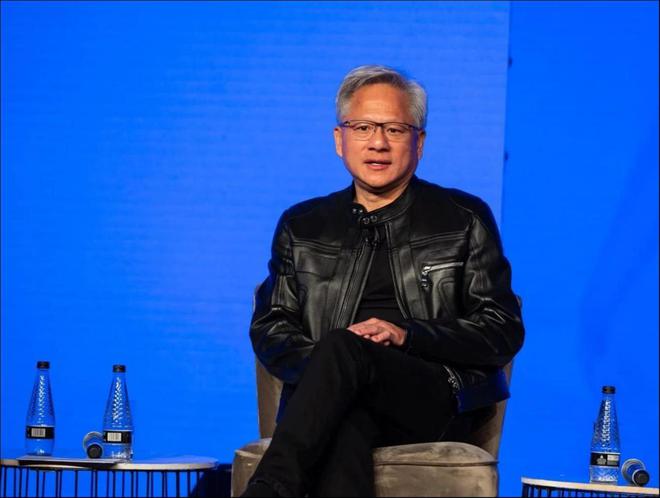
Core Viewpoint - The ongoing discourse between NVIDIA's CEO Jensen Huang and Huawei's CEO Ren Zhengfei highlights the competitive landscape of AI chip technology, with Huang asserting that NVIDIA's technology is a generation ahead of Huawei's, while acknowledging that Huawei's AI capabilities are sufficient for the Chinese market [2][3][12]. Group 1: NVIDIA's Position and Market Dynamics - Huang emphasizes that NVIDIA's technology is superior to Huawei's by about 12 months, indicating a significant lead in AI computing capabilities [2][3]. - Due to U.S. export control policies, NVIDIA has excluded revenue from the Chinese market in its financial forecasts, reflecting a strategic shift in response to regulatory challenges [3][12]. - NVIDIA's stock has seen limited growth, with a year-to-date increase of only 2.65%, and its market capitalization currently stands at $3.46 trillion [5]. Group 2: Financial Performance and Challenges - NVIDIA reported a revenue of $44.1 billion for Q1 of fiscal year 2026, marking a 12% quarter-over-quarter increase and a 69% year-over-year increase, with a net profit of $18.775 billion [8][10]. - The data center business has become NVIDIA's core growth engine, surpassing competitors like AMD and Intel in revenue [10]. - The U.S. government's export restrictions have led to significant financial losses for NVIDIA, with an estimated total loss of $15 billion in the first half of the year due to the inability to sell H20 products in China [11][12]. Group 3: Competitive Landscape and Future Outlook - Huang acknowledges that while NVIDIA faces challenges in the Chinese market, the company is transitioning towards becoming a comprehensive AI infrastructure provider, integrating various technologies beyond just GPU chips [12][18]. - The concept of "Sovereign AI" has been introduced by Huang, advocating for countries to develop independent AI ecosystems, which may impact NVIDIA's global sales strategy [18][20]. - Analysts predict that the Chinese AI market could grow to $50 billion in the next 2-3 years, but NVIDIA's market share is expected to decline significantly due to U.S. restrictions [11][12].

车圈没有恒大,内卷没有赢家|财经峰评
Tai Mei Ti A P P· 2025-06-13 10:11
Core Viewpoint - The automotive industry is facing concerns over high leverage expansion and chaotic competition, with a call for regulatory measures to address "involution" in the sector [2][8] Group 1: Industry Concerns - Weijianjun's statement about the automotive industry having a "Hengda" reflects worries about high leverage and disordered competition [2] - The Ministry of Industry and Information Technology has announced plans to intensify efforts to regulate "involution" in the automotive sector [2] - The term "next Hengda" is seen as a sensationalist narrative, while the real issue is the involutionary competition affecting the automotive and other industries [2][8] Group 2: Financial Comparisons - Li Yunfei from BYD refuted the "car circle Hengda" claim by comparing financial metrics of domestic and international car manufacturers, emphasizing the differences in financial structures [3] - The financial reports of car manufacturers and real estate companies are fundamentally different, making direct comparisons unprofessional [4][6] - The automotive industry operates on a cash flow model primarily from vehicle sales, contrasting with the high-leverage financing model of real estate [6][7] Group 3: Price Wars and Profitability - The automotive industry is experiencing a price war, leading to a decline in industry profit margins from 4.3% in 2024 to 3.9% in Q1 2025, below the average for manufacturing [8] - The prevalence of price wars has resulted in a significant number of models being sold at reduced prices, with 70% of over 60 discounted models being driven by homogenous competition [8] - The ongoing price competition is reminiscent of the solar industry, which faced similar challenges leading to widespread losses [8][9] Group 4: Innovation and Market Dynamics - The rapid diffusion of technology in the automotive sector is creating an "innovator's dilemma," where advancements are quickly replicated, undermining competitive advantages [9][10] - The automotive industry must shift from price competition to value competition to build sustainable competitive advantages and avoid overcapacity [10] - Protecting innovation and moving away from involution is increasingly recognized as essential for the industry's future [10]

AI 大模型正在重塑中国债券市场
Tai Mei Ti A P P· 2025-06-13 09:08
Group 1: Bond Market Trends - The bond market has experienced significant fluctuations in issuance scale, with a notable decrease of 32.59% in the issuance scale from May 24 to 30, totaling 1.49 trillion yuan, primarily due to a sharp decline in government bonds (-59.25%) and financial bonds (-46.98%) [2] - The issuance of Sci-Tech Innovation Bonds also saw a substantial drop of 72.5%, amounting to 34.848 billion yuan, although the cumulative issuance has reached 365.211 billion yuan, with banks being the main contributors, holding over 50% of the market share [2] - The low interest rate environment has prompted various financial companies to increase their bond investment ratios, leading to a transformation in traditional bond research and trading models [2] Group 2: AI Technology in Bond Market - Chinese AI companies have made breakthroughs in foundational technologies, establishing a critical basis for vertical applications in the bond sector [3] - Innovations by teams like DeepSeek have redefined the deployment path of AI large models, achieving a 98% reduction in deployment costs and nearly doubling processing speeds through memory compression techniques [3] - The collaboration mechanism has been upgraded to an "expert consultation" model, significantly enhancing the efficiency of complex problem-solving by over 800 times [3] Group 3: Demand for Intelligent Tools - The rapid development of the Chinese bond market has created an urgent demand for intelligent tools, with bond custody balances reaching 183 trillion yuan by the end of 2024 and foreign institutional holdings increasing to 4.5 trillion yuan [4] - The low interest rate environment expected in 2025 is intensifying the pressure on financial institutions to leverage AI for improving interest rate predictions, risk assessments, and research efficiency [4] - Current applications of AI large models in the bond sector focus on three core scenarios: interest rate prediction and strategy optimization, credit risk assessment, and intelligent research and trading assistance [4][5] Group 4: Challenges in AI Implementation - Despite the gradual implementation of AI applications, structural challenges remain, including data acquisition and quality control issues, as well as limitations in model capabilities [5][6] - The complexity of interest rate predictions requires multi-factor analysis, and existing models face "hallucination risks" in high-order logical reasoning, necessitating the use of retrieval-augmented generation (RAG) technology and human verification for reliability [5][6] - Compliance and security challenges also exist, as financial data privacy regulations and transparency requirements push models towards interpretable architectures [6] Group 5: Emerging Players and Solutions - Various participants have emerged in the market, with firms like Zhongxin Securities' Bond Copilot focusing on the entire bond investment banking process, while Weijing Technology's Dealrisk offers integrated tools for pre-investment, investment, and post-investment phases [6][7] - Weijing Technology's systems are localized and tailored to the Chinese market, ensuring compliance with domestic regulations and meeting the requirements of the latest Basel III agreements [7] - The industry consensus indicates that future AI large models in the bond sector will exhibit trends such as technological path differentiation, deepening business scenarios, and regulatory-technology collaboration [8]