Tai Mei Ti A P P

Search documents
China's Unisound Clears Hong Kong Listing Hurdle, Set to Become First AGI Stock of 2025
Tai Mei Ti A P P· 2025-06-13 05:20
Core Insights - Unisound Intelligent Technology Co., Ltd. has passed its listing hearing with the Hong Kong Stock Exchange, aiming to become the first AGI stock to debut in Hong Kong this year [2][3] - The company specializes in voice intelligence and integrated AI solutions, with a flagship model launched in 2023 featuring 60 billion parameters [4] - Unisound has raised over $340 million through 11 funding rounds, with significant backing from notable investors [8] Company Overview - Founded in 2012, Unisound focuses on AI solutions for healthcare and lifestyle services, ranking as the fourth-largest AI solutions provider in China by 2024 revenue [4][7] - The company is led by CEO Huang Wei, who emphasizes the importance of pursuing challenging innovations in AI [5][6] Financial Performance - Unisound's revenue increased from RMB 601 million in 2022 to RMB 939 million in 2024, reflecting a compound annual growth rate of 25% [9] - Despite revenue growth, the company reported widening net losses from RMB 375 million in 2022 to RMB 454 million in 2024 [9] - R&D expenses rose by 29% year-on-year to RMB 370 million in 2024, contributing to ongoing losses [10] Business Model and Revenue Streams - The lifestyle AI segment is the primary revenue driver, contributing nearly 79% of total revenue in 2024 [11] - A shift in business model is noted, with revenue from system integrators/agents surpassing that from direct users [11] Future Outlook - Proceeds from the IPO will be allocated to scaling AI infrastructure, funding R&D, pursuing international expansion, and investing in new verticals [11] - CEO Huang remains optimistic about the future of AI in China, highlighting the inevitability of large model innovations [12]

血压计累计出货量达500万台,海尔加速AI家庭医疗布局 | 科技前线
Tai Mei Ti A P P· 2025-06-13 04:15
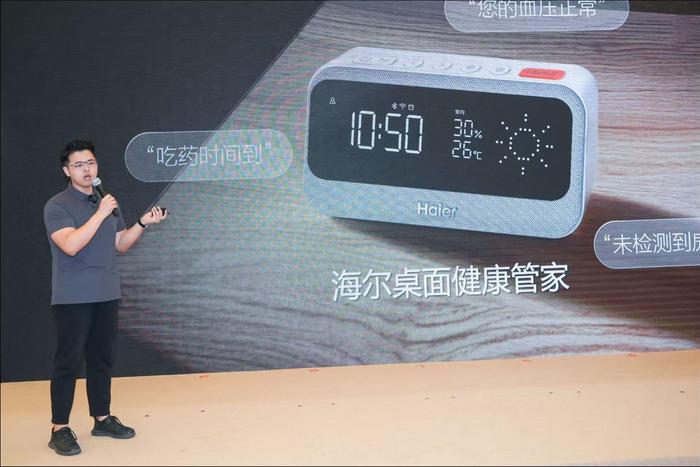
Core Viewpoint - Haier has launched its first smart blood pressure monitor, the M8, during the Shanghai Old Expo, marking a significant milestone in its home healthcare segment, which has achieved cumulative shipments of 5 million units [2] Group 1: Product Features and Innovations - The M8 blood pressure monitor features the Haier V-sense cardiovascular health monitoring system, which allows for early monitoring and alerts for potential cardiovascular issues [2] - The device integrates multiple functionalities, including vital sign monitoring, environmental sensing, smart alarms, and medication reminders, along with a magnetic storage design for seamless integration with Haier's smart home ecosystem [2][3] - User data collected by the M8 will be stored in the Haier Smart Home app and can be synchronized across various devices, enabling a comprehensive and intelligent chronic disease management platform [3] Group 2: Market Potential and Growth - The global home healthcare device market is projected to reach $58.3 billion in 2024, with a year-on-year growth of 23.5%, and is expected to exceed $100 billion by 2028, with a compound annual growth rate of 22.3% [5] - Haier aims to achieve a growth rate of approximately 30% in the blood pressure monitor segment, with aspirations to rank among the top three global brands [5] Group 3: Challenges and Compliance - The integration of smart features into medical devices faces challenges due to compliance requirements, as each new feature necessitates re-certification, leading to longer development cycles and higher costs [5] - Current market competitors, particularly in Japan, have slower product iteration rates, presenting an opportunity for Haier to capitalize on its innovative approach [5] Group 4: Future Developments - Future iterations of Haier's blood pressure monitors are expected to include functionalities for monitoring blood sugar and blood oxygen levels, enhancing the device's capabilities [3] - The company is focusing on AI health management, IoT integration, and data-driven services to accelerate its presence in the smart healthcare market [5][6]

网贷市场,银行被迫当乙方
Tai Mei Ti A P P· 2025-06-13 02:21
Core Viewpoint - The personal credit market in China is experiencing a divergence between banks and lending platforms, with banks facing increasing pressure on retail loan performance while lending platforms report strong growth in credit issuance and profitability [2][9]. Banking Sector - Banks, represented by institutions like China Merchants Bank (CMB), are struggling with retail loan performance, showing a retail non-performing loan (NPL) ratio of 1.01%, up 0.03 percentage points from the end of last year [2][3]. - CMB's retail loan balance decreased from 13.43 trillion yuan to 13.37 trillion yuan, with a mere 0.38% growth in retail loans during the first quarter, significantly lower than the 6.49% growth in corporate loans [3][4]. - The overall trend shows that all six major banks experienced a rare increase in personal loan NPL ratios, with one bank reporting a personal consumption loan NPL ratio of 12.37% [4]. - The asset quality pressure is attributed to economic downturns leading to higher unemployment and reduced income growth, impacting borrowers' repayment capabilities [4][10]. Lending Platforms - Lending platforms, such as Qifu Technology and Xiaoyin Technology, reported strong performance in the first quarter, with significant year-on-year growth in loan issuance, revenue, and net profit [5][6]. - For instance, Qifu Technology's loan balance increased by 2.38%, with a quarterly loan issuance of 88.89 billion yuan, reflecting a 15.76% year-on-year growth [5]. - The asset quality of these platforms remains stable, with most reporting a decrease in NPL ratios, and some platforms like Xiaoyin Technology showing a 63.45% increase in loan issuance [6][7]. - The overall performance of lending platforms contrasts sharply with banks, as they have adapted their risk preferences and improved their risk assessment systems, allowing for more agile responses to market conditions [9][10]. Market Dynamics - The relationship between lending platforms and banks has shifted, with lending platforms becoming the primary players (甲方) and banks taking a secondary role (乙方) in the lending process [8][10]. - Smaller banks are increasingly reliant on larger lending platforms for retail business expansion, often leading to unfavorable financial outcomes due to high funding costs and competitive pressures [10][11]. - New regulations have compressed interest rates for smaller lending platforms, creating challenges for their survival, while larger platforms continue to attract funding and maintain lower financing costs [11].

【钛晨报】两部门:推动更多符合条件的在闽优质台资企业在大陆上市;蚂蚁集团两家子公司官宣入局稳定币;黄仁勋:自动驾驶与机器人将在未来几年腾飞
Tai Mei Ti A P P· 2025-06-12 23:26
Group 1 - The People's Bank of China and the State Administration of Foreign Exchange issued measures to support the construction of a cross-strait integration development demonstration zone in Fujian, focusing on financial support for cross-strait exchanges [2][3] - The measures include allowing banks in Fujian to handle cross-border RMB payments for Taiwanese residents involved in real estate transactions and enhancing payment services for foreign personnel in Fujian [2][3] - The initiative aims to facilitate high-level openness in cross-border trade and capital financing, encouraging Taiwanese enterprises to invest in Fujian and participate in the mainland financial market [3] Group 2 - Ant Group announced plans to apply for stablecoin licenses in Hong Kong and Singapore, aiming to enhance its global treasury management and blockchain innovations [4] - Tencent is reportedly exploring the acquisition of South Korean gaming giant Nexon, with discussions ongoing with the founder's family regarding potential options [5] - New China Life Insurance plans to invest up to 15 billion yuan in a private equity fund to optimize asset-liability matching and improve capital efficiency [5] Group 3 - Vanke A completed the sale of 72.96 million A-shares, raising approximately 479 million yuan to enhance liquidity [6] - GAC Group launched its first mass-produced flying car, AirCab, with a price not exceeding 1.68 million yuan [6] - 360 Group introduced a new AI-powered search product capable of processing complex tasks and integrating information from multiple platforms [6] Group 4 - Yonghui Supermarket reported that 41 reformed stores have distributed over 26 million yuan in bonuses to employees [7][8] - New City Development issued a 300 million USD bond with a coupon rate of 11.88%, marking a significant step for private real estate companies in resuming USD bond financing [8] Group 5 - Boeing is in contact with Air India regarding a recent aircraft accident, offering support as needed [9] - Micron Technology announced plans to invest approximately 200 billion USD in memory manufacturing and R&D in the U.S., reinforcing its position as a global leader in memory technology [9] Group 6 - Nvidia's CEO highlighted the expected growth of autonomous driving and robotics in the coming years, emphasizing Nvidia's role in providing both hardware and software solutions [10] - Meta AI launched a new generative AI video editing feature, allowing users to change clothing, scenes, and lighting with preset prompts [11] Group 7 - The Chinese government has approved a number of export licenses for rare earth-related items, indicating a commitment to meet global demand while ensuring compliance [21] - The National Development and Reform Commission supports Hong Kong-listed companies in issuing depositary receipts on the Shenzhen Stock Exchange [16]

电动豪华的下半场,新世代宝马iX3能否重塑“德系标杆”?
Tai Mei Ti A P P· 2025-06-12 23:20
Core Viewpoint - The BMW iX3 represents a significant step for BMW as it transitions into the electric vehicle era, emphasizing the brand's commitment to driving pleasure while addressing common electric vehicle driving issues [2][4][7] Group 1: Product Development - The BMW iX3 prototype was unveiled on June 12 at the Miramas testing facility in France, marking a critical phase in BMW's electric vehicle development [2] - The iX3 aims to tackle common electric vehicle challenges such as low-speed stuttering and brake drag through an integrated control system for acceleration, deceleration, and steering [2] - The vehicle demonstrates stability and responsiveness in various driving conditions, showcasing BMW's technological advancements in intelligent chassis and body coordination [2] Group 2: Market Strategy - The iX3 is positioned as a "China-exclusive" model, highlighting BMW's understanding of local consumer demands and its strategy for success in the Chinese market [2][4] - BMW recognizes that "China exclusivity" is essential for brand differentiation amid increasing competition from local brands, indicating a shift from merely manufacturing to innovation in the region [4] - The production of the iX3 in Shenyang signifies BMW's commitment to local development, testing, and production, reflecting a deeper integration into the Chinese market [4] Group 3: Industry Implications - The testing of the BMW iX3 serves as a signal for the entire industry, indicating that traditional luxury brands must redefine their core values in response to the rise of domestic electric vehicle brands [7] - The iX3 is seen as a pivotal moment for BMW, potentially marking the beginning of a new era or merely a transitional phase in its electric transformation [7]

对话美的CTO卫昶:美的能源,将成为集团战略转型的支柱产业
Tai Mei Ti A P P· 2025-06-12 10:22
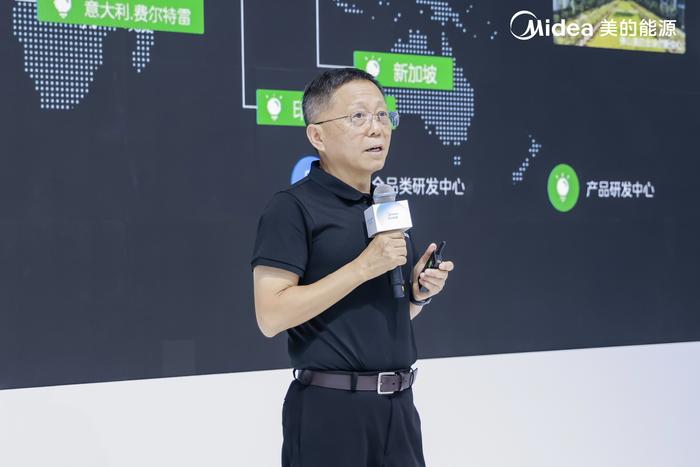
Core Insights - Midea has initiated a new round of business integration by establishing the "Midea Energy" brand, following previous mergers and acquisitions in the home appliance sector [2] - The establishment of Midea Energy aims to unify various sub-businesses and enhance collaboration within the energy sector, positioning it as a key pillar of Midea Group's strategic transformation [3][6] Business Integration - Midea previously integrated its medical subsidiaries under the Midea Medical brand to enhance overall performance, and now it is applying a similar strategy to the energy sector [2] - The Midea Energy brand encompasses subsidiaries such as Hekang New Energy and Kelu Electronics, focusing on energy storage solutions [2] Financial Performance - Hekang New Energy reported total revenue of 2.24 billion yuan and a net profit of 28.16 million yuan for Q1 2025, marking year-on-year growth of 220.56% and 155.29% respectively [2] - Kelu Electronics achieved total revenue of 1.214 billion yuan and a net profit of 67.45 million yuan, with year-on-year growth of 16.2% and 857.45% [2] Strategic Objectives - Midea Energy aims to enhance energy efficiency through three dimensions: improving storage system efficiency, increasing thermal conversion efficiency, and leveraging AI technology [3][4] - The company plans to address energy usage efficiency and cost reduction by optimizing power consumption during peak and off-peak hours [3] Product Offerings - Midea Energy's Hekang New Energy has launched the "Mivilla 2.0" solution, providing up to 240 kWh of storage capacity for residential use [4] - In large-scale storage applications, Midea Energy has implemented a significant project in Chile with a capacity of 485 MWh [4] Technological Integration - Midea's Building Technology and KUKA Robotics play crucial roles in energy efficiency management and manufacturing tools, contributing to the overall success of Midea Energy [5] - KUKA's heavy-duty robots hold over 25% market share in the renewable energy sector, enhancing production efficiency and reducing costs [5] Research and Development - Midea Group's R&D structure includes a central research institute focused on long-term technology research, supporting the development of new products and technologies [5] - The CTO of Midea emphasizes the importance of integrating R&D efforts across the group to accelerate the development of new energy business [6]

抛弃大铁笼“锁电脑”,《时间之子》国产动画电影的“全云制作”实践
Tai Mei Ti A P P· 2025-06-12 02:49
Core Viewpoint - The article discusses the innovative approach of "fully cloud-based production" in the animation film industry, exemplified by the original animated film "The Time Traveler," which achieved over 100 million in box office revenue during the Dragon Boat Festival despite lacking a major IP or renowned director. This method addresses significant challenges in traditional animation production, such as environmental fragmentation, inefficient data transmission, and computational bottlenecks [2][3][4]. Group 1: Challenges in Traditional Animation Production - Traditional animation production faces three main challenges: environmental fragmentation, inefficient data transmission, and computational bottlenecks. The current mainstream model involves multiple teams working across various locations, leading to significant discrepancies in local environments [3][4]. - Data transmission issues are prevalent, with large files often being compressed or delayed, which can impact project timelines. For instance, a 50GB model file can be reduced to 10GB for email transmission, risking errors upon decompression [4]. - The computational demands for rendering are substantial, with complex scenes potentially requiring days of rendering time on local machines. The film "The Time Traveler" consists of 2,336 shots and 97,234 production tasks, highlighting the need for efficient computational resources [4]. Group 2: Advantages of Fully Cloud-Based Production - Fully cloud-based production resolves these issues by providing a unified environment where all teams use standardized software and tools, significantly reducing setup time. For example, a supplier was able to start working on the cloud the same day as the kickoff meeting, submitting their first shot just three days later [5]. - The centralized computational power allows for rapid processing of tasks that previously took hours on local machines. For instance, complex effects that once required hours of local rendering can now be processed in just half an hour on the cloud [5][6]. - The iterative capabilities of cloud production enable real-time data sharing, allowing teams to work concurrently rather than sequentially, thus enhancing the creative process and allowing for more extensive revisions [6]. Group 3: Future Implications and Industry Impact - The success of "The Time Traveler" demonstrates the replicability of cloud production, with plans to promote this model in future projects, particularly those requiring extensive collaboration among multiple teams [7]. - The cloud production model is expected to become a foundational infrastructure for the animation industry, reducing costs and increasing efficiency for smaller teams that previously had to invest heavily in equipment and software [7][8]. - The Chinese animation market is projected to reach 742.54 billion by 2024, accounting for 28% of the global market, with the potential for further growth to 3,595.42 billion by 2030. The widespread adoption of cloud production could help Chinese animation align technologically with international standards [8].


宁德时代再出"大"招,电芯容量争夺白热化|钛度车库
Tai Mei Ti A P P· 2025-06-12 01:26
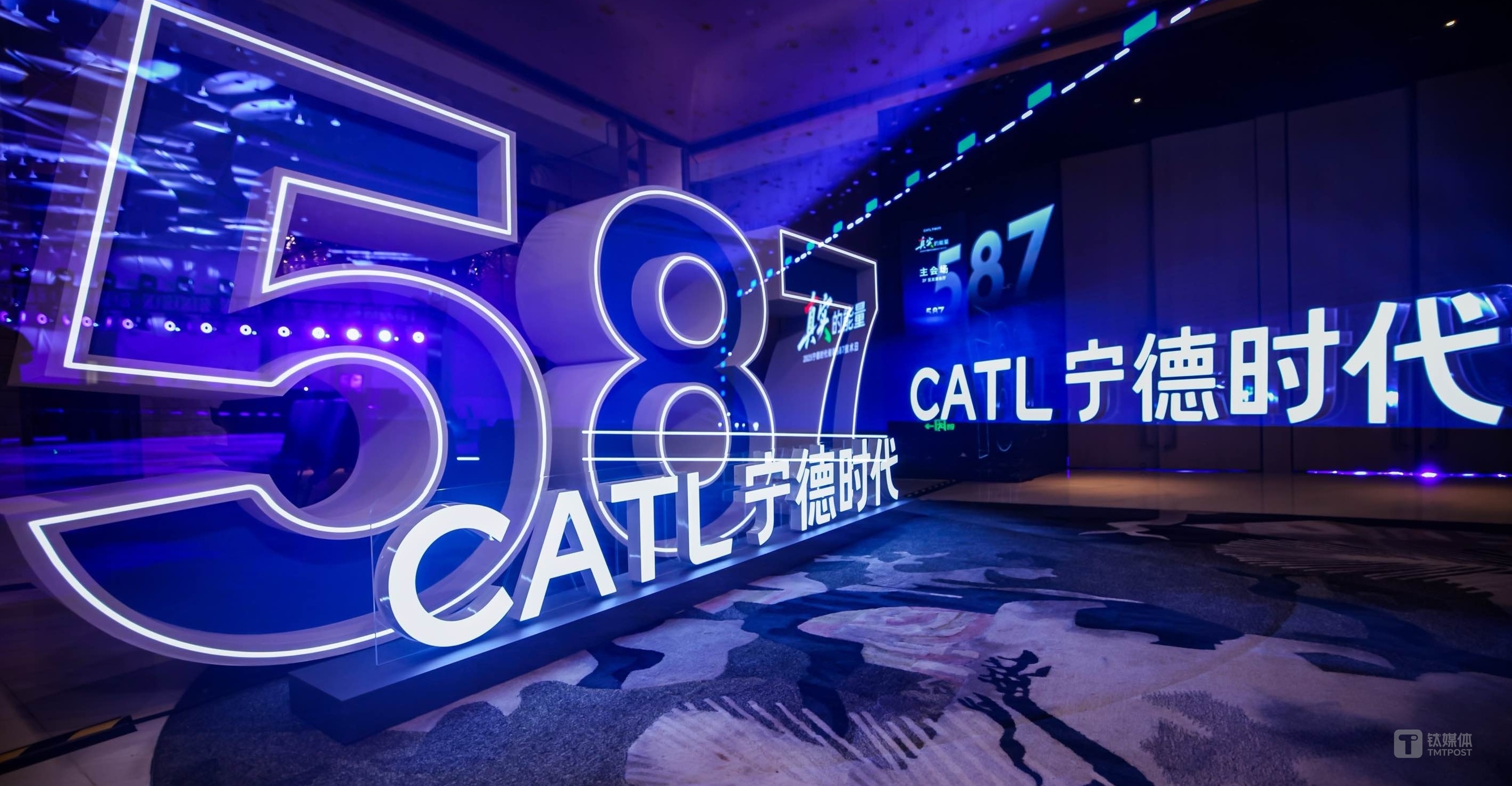
Core Viewpoint - The energy storage industry is undergoing a significant "capacity revolution," with leading manufacturers like CATL and BYD introducing large-capacity battery cells, marking a competitive landscape focused on technology routes, market share, and industry influence [2][3]. Group 1: Industry Trends - The push for extreme cost reduction is essential for the renewable energy sector, and the development of larger battery cells is a key strategy to achieve this goal [3]. - Since 2020, the industry has seen a shift towards larger capacity battery cells, with major manufacturers introducing cells with capacities exceeding 280Ah, which have become the mainstream in the market [4]. - By 2023, the market is primarily focused on battery cells with capacities above 300Ah, with various companies launching products such as CATL's 314Ah and Ruipu Lanjun's 320Ah [4]. Group 2: Technological Innovations - The introduction of large-capacity battery cells has led to improved energy density and reduced unit storage costs, enhancing project profitability [5]. - CATL reported that using a 587Ah battery cell reduced the total number of components in the energy storage system by 40%, leading to a 15% decrease in system costs [6]. - The development of large-capacity cells is not merely about increasing size; it involves addressing challenges such as parameter inflation and safety risks associated with concentrated energy [7][8]. Group 3: Market Dynamics - The shift from policy-driven to market-driven dynamics in the energy storage sector is expected to emphasize lifecycle costs, including initial investment and operational expenses [8]. - The competition among manufacturers is evolving from a focus on specifications to a comprehensive evaluation of total cost of ownership [11]. Group 4: Safety and Reliability - Safety remains a critical concern, with reports of numerous safety incidents in energy storage systems, highlighting the risks associated with large-capacity cells [7]. - CATL has implemented a "three-dimensional defense system" to address safety challenges posed by larger cells, focusing on materials and design to mitigate risks [10].

派林生物三年两易主:国药系或坐拥154个浆站,重构血制品格局丨并购一线
Tai Mei Ti A P P· 2025-06-11 08:43
Core Viewpoint - The blood products industry is undergoing significant consolidation, with the leading player, China National Pharmaceutical Group (Sinopharm), acquiring the third-ranked company, Pailin Biotech, which will further solidify its market position [2][3]. Group 1: Acquisition Details - Pailin Biotech's controlling shareholder, Shengbang Yinghao, signed an acquisition framework agreement with China National Pharmaceutical, intending to transfer 21.03% of its shares [2]. - The estimated transaction price for the share transfer is approximately 4.612 billion yuan, translating to a per-share price of about 29.99 yuan, representing a premium of approximately 76.83% compared to the last closing price before suspension [2]. - The acquisition is still subject to due diligence and final agreement on transaction terms, with the final payment arrangements yet to be clarified [2]. Group 2: Market Impact - The acquisition will reshape the competitive landscape of the blood products sector, with Sinopharm's market dominance being reinforced by its ownership of three major blood product companies, including Tian Tan Biological and Wei Guang Biological, totaling 154 plasma collection stations [3][10]. - Following the announcement, Pailin Biotech's stock rose by 1.06%, while Tian Tan Biological and Wei Guang Biological experienced slight declines [3]. Group 3: Historical Context - Pailin Biotech has undergone multiple ownership changes, with its focus shifting to the blood products sector since 2007, culminating in its rebranding after acquiring another company in 2021 [4][5]. - The company has faced internal conflicts and governance issues, particularly during its transition to new shareholders, which have impacted its operational stability [5][9]. Group 4: Industry Dynamics - The blood products market is characterized by a "three-legged" competitive structure, with Sinopharm, China Resources, and Haier Group as the main players, but Sinopharm has established a significant lead in both the number of plasma stations and collection volume [10][15]. - As of 2024, Sinopharm's total plasma collection volume is 4,743 tons, accounting for approximately 35.4% of the industry, with further growth expected as additional stations become operational [10][16].


海南发展:免税转型遇阻瞄向宠物赛道,标的实控人一年内回购超两成股权|并购一线
Tai Mei Ti A P P· 2025-06-11 07:56
Group 1 - Hainan Development (002163.SZ) plans to acquire 51% of Hangzhou Wanying Technology Co., Ltd. (Wanying Technology) for a total transaction price of 438.4 million yuan, with an overall valuation of 859.6 million yuan, reflecting a 130.04% increase in value [2] - Wanying Technology is a leading player in the pet e-commerce agency sector and has faced challenges in its IPO plans, leading to significant share buybacks by its controlling shareholders, who have spent approximately 189 million yuan in the past year [2][3][7] - The acquisition is significant for Hainan Development as it marks a shift from its original plan to inject duty-free assets into the company, which faced delays and shareholder opposition [10][11] Group 2 - The controlling shareholders of Wanying Technology, Yuan Zhenxing and Fu Yuanyuan, held a combined 80.89% of shares prior to the transaction, with Fu Yuanyuan transferring 48.5% of her shares as part of the deal [3][4] - Wanying Technology has undergone five rounds of financing since its establishment in 2009, with the most recent investment changes occurring in June 2024, when the number of shareholders decreased from 18 to 14 [5][6] - The company has seen a steady increase in revenue over the past two years, with sales reaching 648 million yuan in 2024, although its debt has also significantly increased from 180 million yuan at the end of 2023 to 528 million yuan [19]