凤凰网财经

Search documents
不是谁都是泡泡玛特:靠奥特曼大赚的隐形冠军,揭IP生意脆弱真相
凤凰网财经· 2025-10-26 11:59
Core Viewpoint - The article discusses the rapid growth and potential risks of Jin Tian Animation, a major player in the IP food industry in China, particularly highlighting its heavy reliance on a single IP, Ultraman, which poses significant business risks [2][3][28]. Group 1: Company Performance - Jin Tian Animation's revenue grew from 590 million RMB in 2022 to 880 million RMB in 2024, with a net profit increase from 36.71 million RMB in 2022 to 130 million RMB in 2024 [2]. - The company recorded a net profit of 70.04 million RMB in the first half of 2025, achieving a net profit margin of 15.8% [2]. - The revenue composition shows that candy is the largest income source, increasing from 23.8% in 2022 to 40.1% in the first half of 2025 [4]. Group 2: IP Dependency - Over 50% of Jin Tian Animation's revenue is derived from the Ultraman IP, which has contributed significantly to its income stability [8][11]. - In 2024, Ultraman alone accounted for 54.5% of the company's revenue, indicating a deep dependency on this single IP [8]. - The company has 14 major IP licenses, but 75% of its revenue in 2024 came from Ultraman, My Little Pony, and Crayon Shin-chan [6]. Group 3: Customer Concentration - The revenue contribution from the top five customers surged to 40.7% in the first half of 2025, up from 4.1% in 2022, indicating increased reliance on a few key clients [15]. - Direct sales to retailers increased from 3.5% in 2022 to 43.2% in the first half of 2025, while revenue from distributors decreased significantly [15][18]. Group 4: Key Shareholder Exit - The exit of key shareholder Sun Jian, who was crucial for the Ultraman IP relationship, raises concerns about the stability of income from this IP [27]. - The company is now controlled entirely by founder Cai Jianchun, who holds 92.27% of the shares, leading to potential governance and decision-making concerns [19][27]. Group 5: Overall Risks - Jin Tian Animation faces a growth paradox, where its revenue growth is tied to a concentrated customer base and reliance on a few IPs, increasing operational fragility [28]. - The company's business model, heavily reliant on external IP rights and a limited number of clients, poses significant risks to its long-term sustainability [3][28].


旅游建议:把外套换成它
凤凰网财经· 2025-10-25 12:18
Core Viewpoint - The article promotes the U.S. POLO ASSN Graphene Jacket, highlighting its affordability and advanced technology, making it an attractive option for autumn and winter wear [1][3][7]. Pricing and Promotion - The jacket is originally priced at 1599 yuan but is currently offered at a promotional price of 149 yuan, significantly lower than the retail price [3][7]. - The brand aims to build reputation and gather feedback by offering the product at a lower price during its initial launch phase [6][7]. Product Features - The jacket utilizes graphene technology, which is known for its excellent thermal insulation, allowing it to keep the wearer warm even in temperatures as low as -10°C [9][12]. - It is designed to be waterproof, windproof, and stain-resistant, making it suitable for various outdoor conditions [10][41]. - The 3D tailoring of the jacket provides a flattering fit for a wide range of body types, accommodating weights from 90 to 220 jin [10][75]. Technology and Innovation - Graphene, a Nobel Prize-winning material, enhances the jacket's warmth by capturing and converting body heat into thermal energy, outperforming traditional insulation materials [16][23]. - The jacket's fabric is described as durable and comfortable, with quick heat retention properties [20][23]. Customer Experience and Feedback - Users have reported positive experiences, noting the jacket's effectiveness in keeping warm during cold weather and its ease of maintenance [29][46]. - The jacket is also praised for its stylish design, which helps to create a slimmer appearance [51][52]. Brand Reputation - U.S. POLO ASSN is established as a reputable brand with a history of over 130 years, ensuring customers receive genuine products with anti-counterfeiting measures [79][100]. - The article emphasizes the high quality of the jacket, comparable to items sold in high-end retail stores, but at a fraction of the price [104][107].

2025“十年共识·五年同行”零碳使命国际气候峰会成功举办
凤凰网财经· 2025-10-25 12:18
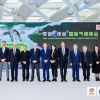
Core Viewpoint - The "2025 Zero Carbon Mission International Climate Summit" emphasizes the importance of global cooperation in addressing climate change, marking significant anniversaries related to the Paris Agreement and China's dual carbon goals [1][11]. Group 1: Summit Overview - The summit was held on October 23-24, 2023, in Beijing, organized by Phoenix Television Group in collaboration with various international institutions, aiming to discuss innovative solutions for global climate justice and carbon reduction [1][3]. - The event featured high-level dialogues, forums, and case sharing, gathering experts from government, business, and environmental organizations [1][3]. Group 2: Key Speakers and Insights - Phoenix Television's Chairman Xu Wei highlighted the need for continued dialogue and action despite challenges in climate change efforts [4]. - RMI's Li Ting noted China's achievements in renewable energy, emphasizing the role of international cooperation in making renewable energy competitive with fossil fuels [5]. - WWF's Dean Cooper acknowledged China's leadership in renewable energy development and its commitment to deep decarbonization [7]. Group 3: Discussions on Climate Goals - Chinese Academy of Engineering's Du Xiangwan discussed the complexity of achieving dual carbon goals, advocating for a cautious and systematic approach to avoid ineffective investments [8]. - National Climate Strategy Center's Xu Huaqing emphasized the ambitious nature of China's carbon peak and neutrality targets, reflecting the country's determination to excel [10]. - The importance of multilateralism in climate action was reiterated by Brazil's Ambassador to China, Marcos Galvão, stressing the need for collective cooperation [11]. Group 4: Sustainable Investment Focus - The CFA Institute hosted a forum on sustainable investment, highlighting its role in driving high-quality development and green finance [18]. - Margaret Franklin, CFA's CEO, emphasized the need for collaboration among various stakeholders to build a resilient talent pipeline in sustainable finance [18]. - The forum included discussions on carbon market mechanisms and the relationship between ESG and corporate internationalization [23][24]. Group 5: Awards and Recognition - Phoenix Television initiated the "Carbon Neutrality Action Award" and the "Green Development Annual Tribute" to honor Chinese enterprises' efforts in energy transition [29][31]. - The awards focused on recognizing exemplary practices in ESG and sustainable development, showcasing leading companies in the field [31][32].
Q3净利暴增14倍,这家动力电池公司激进扩张负债超868亿
凤凰网财经· 2025-10-25 12:18
Core Viewpoint - Guoxuan High-Tech's Q3 2025 financial report shows impressive revenue growth, but the significant profit increase is largely due to one-time gains from early investments in Chery Automobile, raising concerns about the sustainability of its core business profitability [2][4][6]. Financial Performance - In Q3 2025, Guoxuan High-Tech achieved revenue of 10.114 billion yuan, a year-on-year increase of 20.68%, and a net profit attributable to shareholders of 2.167 billion yuan, up 1434.42% [2]. - For the first three quarters of 2025, the company reported total revenue of 29.508 billion yuan, a 17.21% increase, and a net profit of 2.533 billion yuan, reflecting a 514.35% growth [4]. - The significant profit increase is primarily attributed to a 2.438 billion yuan investment gain from Chery Automobile, highlighting a weak core business performance with a non-recurring net profit of only 12.507 million yuan [4][5]. Cost Structure and Profitability - Guoxuan High-Tech's total operating costs for the first three quarters reached 29.101 billion yuan, growing 18.07%, which outpaced revenue growth [5]. - The company incurred financial expenses of 1.047 billion yuan, with interest expenses at 1.188 billion yuan, indicating high financing costs that erode profits [5]. Cash Flow and Investment - Operating cash flow nearly doubled, reaching 457 million yuan, a year-on-year increase of 87.72%, but profitability remains reliant on one-time gains [6]. - The company reported a net cash outflow from investment activities of 5.771 billion yuan, indicating aggressive capacity expansion plans [7]. Capacity Expansion and Financial Health - Guoxuan High-Tech's construction projects increased significantly, with ongoing projects rising from 14.799 billion yuan to 21.040 billion yuan, a 42.16% increase [7]. - Despite reducing the debt ratio from 72.22% to 71.72%, the company's total liabilities reached 86.886 billion yuan, with short-term borrowings of 18.714 billion yuan, indicating substantial short-term repayment pressure [8]. Research and Development - The company invested 1.605 billion yuan in R&D, a 17.10% increase, focusing on solid-state battery technology and new applications [10]. - Guoxuan High-Tech's advancements in solid-state batteries position it as a leader in the domestic market, with ongoing efforts to commercialize new technologies [10][11].


“惠民保”最大服务商赴港IPO,3年亏掉8个亿
凤凰网财经· 2025-10-25 12:18
Core Viewpoint - The article discusses the challenges faced by Meixin Health as it attempts to go public again after previous setbacks, highlighting its significant losses, regulatory scrutiny, and the complexities of its business model [1][2][14]. Financial Performance - Meixin Health has accumulated losses exceeding 800 million RMB over three years, with net losses of 446 million RMB in 2022, 288 million RMB in 2023, and 76 million RMB in 2024 [5][6]. - Despite revenue growth from 1.07 billion RMB in 2022 to 2.04 billion RMB in 2024, the company continues to face profitability challenges [2][4]. - The company's gross profit margin has improved but remains insufficient to offset ongoing losses, with the gross margin for its "Smart Drug Solution" at only 10.8% in 2024, while the "Smart Insurance Solution" boasts a much higher margin of 81.5% [10][11][13]. Business Model and Strategy - Founded in 2017, Meixin Health operates as an intermediary in the healthcare ecosystem, providing solutions to pharmaceutical companies and insurance firms [2]. - The company has raised over 3.1 billion RMB through multiple funding rounds, indicating strong interest from major industry players [13]. - Meixin Health's business model is under scrutiny due to its reliance on the "drug-to-insurance" model, which has faced regulatory challenges [15][18]. Regulatory Challenges - The "Hui Min Bao" insurance product, once a flagship offering, has seen a drastic decline in growth, with enrollment growth plummeting from nearly 150% in 2021 to just 6% in 2023 [15][17]. - Regulatory bodies have raised concerns about the compliance of Meixin Health's business practices, particularly regarding its "drug-to-insurance" model, which has been criticized for not providing genuine risk coverage [18][22]. - The China Securities Regulatory Commission has issued feedback requiring detailed disclosures about the company's business operations and compliance with foreign investment regulations [22][23]. Market Position and Competition - Meixin Health is competing in a challenging market alongside peers like Sipai Health and Yuanzhen Technology, both of which have successfully navigated the IPO process [21]. - The company is attempting to pivot its focus from traditional insurance products to more innovative solutions, such as the "One Code Direct Payment" platform, to enhance its service offerings [20].

69家空壳公司骗贷!涉案银行损失近9000万已破产
凤凰网财经· 2025-10-25 12:18
Core Viewpoint - The article highlights the significant risks associated with rural banks in China, particularly focusing on a case of loan fraud that led to the bankruptcy of the Taihe River Village Bank in Liaoning Province, emphasizing the need for stronger risk management practices in the banking sector [3][10]. Group 1: Loan Fraud Case - A criminal ruling revealed that an individual named Fu defrauded the Taihe River Village Bank by using 69 shell companies and false documents to obtain 109 loans, resulting in a loss of nearly 90 million yuan (approximately 12.5 million USD) for the bank [5][7]. - Between 2016 and 2019, Fu, with the help of accomplices, created these shell companies to apply for loans, receiving a kickback of 50,000 yuan (approximately 7,000 USD) for each successful loan application [5][6]. - The total amount of loans fraudulently obtained was 709 million yuan (approximately 100 million USD), with only a small portion of the interest repaid [7][9]. Group 2: Bank's Bankruptcy - The Taihe River Village Bank was approved for bankruptcy on August 3, 2022, largely due to the exposure of loan risks stemming from this fraud case [10]. - The article notes that the significant amount of fraudulent loans and the resulting financial loss were critical factors leading to the bank's downfall, highlighting the vulnerabilities of rural banks in managing risk [10]. - The original purpose of establishing village banks was to fill market gaps and provide financial services to rural and small enterprises, but the case illustrates how lapses in risk management can undermine their intended role [10].

“驱蚊第一股”润本股份净利润增速放缓:Q3核心品类增长分化,营销费用高企
凤凰网财经· 2025-10-25 12:18
Core Viewpoint - Runben Co., Ltd. (603193.SH), known as the "first stock in mosquito repellent," reported a year-on-year increase in revenue and net profit for the first three quarters of 2025, but the capital market reacted negatively, with a stock price drop of over 4% the day after the earnings release. The main concerns are insufficient growth momentum and weakening profit indicators [1]. Group 1: Financial Performance - For the first three quarters, Runben achieved a revenue of 1.237 billion yuan, a year-on-year increase of 19.28%, while net profit attributable to shareholders was 266 million yuan, up 1.98%. However, the net profit excluding non-recurring gains and losses decreased by 1.79% to 251 million yuan [5]. - In Q3 alone, the company reported a revenue of 342 million yuan, a 16.67% increase year-on-year, but net profit fell by 2.89% to 78.5 million yuan, with a decline of 7.58% in net profit excluding non-recurring items [6]. Group 2: Product Performance - The company's product structure has shifted, with the baby care series becoming the most significant revenue source, contributing 52.4% to total revenue, surpassing the mosquito repellent series at 33.3% and the essential oil series at 12.0% [7]. - The mosquito repellent category generated 508 million yuan in revenue, a 20.88% increase, while the baby care category saw a revenue of 551 million yuan, up 24.64%. However, the essential oil category experienced a decline of 7.02% [7]. Group 3: Marketing and R&D Investment - The company's sales expenses reached 370 million yuan, a 30.92% increase, with the sales expense ratio rising from 27.25% to 29.92% [10]. - The R&D expenses for the first three quarters were 25.14 million yuan, a slight increase of 2.12%, but the R&D expense ratio decreased from 2.4% to 2.0%. The ratio of sales expenses to R&D expenses has expanded to 14 times, up from 11.5 times the previous year, indicating a "light R&D, heavy marketing" approach [11].


谁“操控”了女人的追金游戏?
凤凰网财经· 2025-10-24 13:38
Core Viewpoint - The article discusses the rising trend of gold prices in China and the consumer behavior surrounding "Lao Pu" gold, highlighting the emotional and psychological factors driving demand despite fluctuations in gold prices [3][12][34]. Group 1: Consumer Behavior and Market Dynamics - The phenomenon of "Lao Pu" gold has become a cultural trend, with consumers, particularly women, eagerly queuing for purchases during price adjustments, indicating a strong belief in the brand and its value [4][19]. - The pricing strategy of "Lao Pu" gold involves infrequent price adjustments, which creates a perception of value and urgency among consumers, leading to increased sales even when gold prices fluctuate [12][13][14]. - A significant portion of consumers (approximately 80%) express confidence in the value retention of "Lao Pu" gold, viewing it as a form of emotional investment rather than a mere commodity [16][24]. Group 2: Market Trends and Future Outlook - The gold jewelry market, particularly for "Lao Pu" gold, is projected to grow significantly, with a compound annual growth rate of 21.8% from 2023 to 2028, indicating strong future demand [30]. - The article suggests that even if gold prices decline, "Lao Pu" gold may maintain its pricing strategy similar to luxury goods, relying on brand perception and consumer loyalty to sustain value [31][33]. - The shift towards lighter, more affordable gold products reflects changing consumer preferences, with a growing segment of the market focusing on items priced between 10,000 to 50,000 yuan [24][22].

3C认证!能上飞机!高铁上被问了一路的充电宝,就是它!
凤凰网财经· 2025-10-24 13:38
Core Viewpoint - The article discusses the growing concern of "battery anxiety" among consumers, particularly regarding the safety and compliance of portable chargers in light of new regulations [1][3]. Regulation Impact - New regulations require clear and durable 3C certification labels and easily visible capacity information on power banks [5][9]. - Many non-compliant power banks have been confiscated at security checkpoints, highlighting the prevalence of substandard products in the market [7][9]. Product Recommendation - The article promotes the "Huanxiang Fast Charging Power Bank Series" as a reliable choice that meets the new regulations [10][28]. - The recommended models, S16 (10,000mAh) and S17 (20,000mAh), are designed to be compact and stylish, addressing common consumer pain points such as weight and safety [13][17]. Safety Features - The power banks utilize high-performance polymer lithium-ion cells that do not overheat or swell, ensuring user safety [16][39]. - They include smart chips with ten layers of protection against over-voltage and over-temperature, enhancing user confidence [42]. Design and Usability - The S16 model features an external dual-head fast charging cable, while the S17 has a retractable cable design, both eliminating the hassle of carrying extra cables [50][60]. - The compact size of the S16 makes it easy to carry, comparable to a tissue pack, while the S17 can charge multiple devices simultaneously [56][62]. Pricing and Value - The article highlights the competitive pricing of the power banks, with discounts making them an attractive option compared to rental charging solutions [25][87]. - The cost-effectiveness is emphasized, suggesting that investing in these power banks can save consumers money in the long run [87].

无语!高德竟然在语音导航第一句插播广告
凤凰网财经· 2025-10-24 13:38
Core Viewpoint - The article discusses the recent introduction of voice advertisements in Gaode Map's navigation system, which has sparked complaints from users about the intrusive nature of these ads [1][3][31]. Group 1: User Experience - Several users reported that the first voice prompt during navigation is an advertisement, which feels abrupt and unexpected [21][26]. - Not all users encounter this issue, indicating that the advertisement feature may only affect a subset of Gaode Map users [2]. - Users expressed frustration over ads appearing not only during navigation but also when the app is opened, leading to concerns about the frequency and placement of these ads [15][12]. Group 2: Advertising Strategy - A promotional post highlighted the effectiveness of Gaode Map's voice advertisements as a new marketing strategy, claiming it can directly attract customers to nearby businesses [27][29]. - The cost of this advertising method is relatively low, with a rate of 195 yuan for 1000 broadcasts, translating to less than 0.2 yuan per ad [30]. - The article notes that while users may resist ads in mapping applications, businesses feel compelled to adopt such commercialization strategies to sustain operations [31][32]. Group 3: Industry Implications - The introduction of voice ads raises questions about the balance between providing free services and implementing effective monetization strategies in mapping applications [32][33].