投资界

Search documents
LP圈发生了什么
投资界· 2025-11-08 08:27
Group 1 - Zhejiang Social Security Science and Technology Innovation Fund launched with a total scale of 500 billion RMB, aiming to enhance the technology innovation ecosystem in Zhejiang [2] - Jiangsu Social Security Science and Technology Innovation Fund established with a scale of 500 billion RMB, focusing on high-growth potential tech projects in strategic emerging industries [3] - Guangzhou Baiyun District launched a 100 billion RMB biomanufacturing industry fund to promote high-quality industrial development [5][6] Group 2 - Chengdu established a 100 billion RMB electronic information industry fund to support private equity investments and asset management [7] - Shenzhen released a plan to attract overseas sovereign funds, aiming to enhance cross-border capital cooperation [8] - A 50 billion RMB industrial development fund was launched in Chengdu's Pidu District, focusing on financial support for modern industrial systems [9][10] Group 3 - New funds established in Qingdao with a total investment of 30 billion RMB, focusing on chemical new materials and sustainable marine development [11] - Inner Mongolia's key industry guidance fund established with an investment of 8.675 billion RMB, focusing on private equity investments [12] - Hohhot initiated the formation of 11 mother funds to support modern industrial system development [13][14] Group 4 - Chaoyang District launched a 30 million RMB embodied intelligence industry investment fund, targeting core technologies and key components [15] - Hubei established a 20 billion RMB technology innovation supply chain investment fund to support early-stage projects [16] - Xiamen launched a 20 billion RMB renewable energy fund, focusing on solar and wind energy projects [17] Group 5 - Hubei Jiao Investment Fund established with a total investment of 900 million RMB, focusing on private equity and venture capital management [18][19] - Hainan Province established a 2.5 billion RMB equity investment fund, focusing on the Hainan Free Trade Port [20] - Guotai Junan's subsidiary launched a 4 billion RMB venture capital fund, focusing on future industries [21] Group 6 - Evonik and Houxin Investment signed an agreement to establish an innovation fund to support local high-quality innovation [22] - Anhui Wuhu established a 1.6 billion RMB equity investment fund, focusing on private equity investments [23][24] - Shandong Gold Group launched a 1 billion RMB mining investment fund to support private equity investments [25] Group 7 - Shanghai Jiao Tong University established a 1 billion RMB technology innovation fund, focusing on strategic emerging industries [26] - Jiangsu's first QDLP project, Yichu New Energy, was signed to enhance high-end industrial development [27] - Yida Capital and Guangzhou plan to establish a cross-border investment fund to support international capital flow [28] Group 8 - Hubei's first embodied intelligence industry investment fund launched with a scale of 1 billion RMB [29][30] - CapitaLand's CLARA II fund raised over 650 million USD, focusing on Asia-Pacific data centers and new economic infrastructure [31] - Zhengzhou's strategic emerging industry mother fund established its first sub-fund, focusing on new electric power equipment manufacturing [32] Group 9 - Qingdao established a new marine health industry fund with a scale of 1 billion RMB [33] - Anhui Conch Group signed an agreement for a new emerging industry fund, focusing on strategic emerging industries [34] - A 50 billion RMB central enterprise industry fund was launched in Wuhan to enhance local industrial development [36] Group 10 - Beijing plans to establish a brain-computer interface incubation fund to support the medical health industry [37] - Dongguan's industrial chain development mother fund registered with an investment of 1.5 billion RMB [38] - Hubei's first laboratory seed fund signed a strategic cooperation agreement to support agricultural technology [39][40] Group 11 - Henan's Qinzhi Angel Venture Capital Fund established with a scale of 1 billion RMB, focusing on biomedicine [41] - Shijiazhuang's talent fund established a sub-fund to support medical device innovation [42] - Wuxi launched a 2 billion RMB integrated circuit fund to promote the local integrated circuit industry [43] Group 12 - Fujian announced the selection of management institutions for a series of merger and acquisition sub-funds [44] - Jiangsu Taizhou's health advanced manufacturing industry mother fund announced its planned sub-funds [46] - Nanjing's talent development fund announced its first sub-fund focusing on AI and biomedicine [48]


1000亿,深圳女王要去IPO了
投资界· 2025-11-08 08:27
上市窗口。 作者 I 余梦莹 杨文静 报道 I 投资界PEdaily 在苹果产业链中,有三位中国女人——蓝思科技周群飞、立讯精密王来春、还有领益智造 曾芳勤。 曾芳勤鲜少被人提及。出生于深圳,她早年毕业于武汉大学,后来察觉到精密仪器的订单 风口后,4 0多岁果断辞职创业,领益智造由此诞生。一路摸爬滚打,曾芳勤带领公司成 为制造业龙头,最新市值超1 000亿元。 近日,领益智造发布公告称,公司正在筹划境外发行股份(H股)并在港交所上市事项, 以推动国际化战略落地,加强海外业务布局。至此,又一位果链女王将带队赴港IPO了。 武大毕业,始于深圳 她执掌1000亿 这是一位女性白手起家的故事。 1 9 6 5年,曾芳勤出生在广东深圳。从武汉大学毕业后,她进入一家分配的国企工作。恰 逢8 0年代留学潮兴起,曾芳勤前往美国攻读硕士学位,回国后担任美时精密公司中国区 总经理,由此接触到精密件制造业。 转折点出现在20 06年,诺基亚为热熔胶业务寻找合作伙伴。曾芳勤随即辞去高管职位, 在深圳创立领胜电子,为诺基亚等手机厂商提供精密模切件。"创业初期最大的担忧就是 不能出货。"曾芳勤曾公开回忆。 2 0 0 7年,苹果开始在全 ...

燃油车又杀回来了
投资界· 2025-11-07 08:15
Core Viewpoint - Despite the rise of electric vehicles, traditional fuel vehicles continue to show resilience in the market, with recent data indicating a rebound in sales and market share [4][5][10]. Sales Performance - In September, domestic sales of traditional fuel vehicles reached 1 million units, marking a year-on-year increase of 6,000 units and a month-on-month growth of 10.9% [4]. - From January to September, cumulative sales of traditional fuel vehicles totaled 8.141 million units, reflecting a year-on-year growth of 1.7% [5]. - Fuel vehicles accounted for 47.76% of total passenger vehicle sales in the same period, indicating their significant market presence [5]. Market Dynamics - The recent growth in fuel vehicle sales is attributed to aggressive pricing strategies, with discounts averaging around 30%, and some luxury models offering discounts exceeding 40% [7][8]. - The Nissan Sylphy emerged as the best-selling fuel vehicle in September, with sales of 33,000 units, benefiting from substantial cash discounts [7]. - Traditional automakers are adjusting their product positioning and marketing strategies to compete with electric vehicles, leading to a notable increase in the cost-performance ratio of fuel vehicles [8]. Strategic Shifts - Major automakers like Honda and Volkswagen reported significant sales increases in their fuel vehicle segments, with Honda's production in China rising by 25.7% year-on-year [10][11]. - Chinese brands such as Geely and Chery are also focusing on fuel vehicle strategies, with Geely emphasizing a dual approach of investing in both fuel and electric vehicles [12][11]. Technological Advancements - Fuel vehicles are increasingly incorporating advanced technologies, such as intelligent driving systems and high-performance chips, narrowing the gap with electric vehicles in terms of smart features [13][15]. - Recent models from various manufacturers are equipped with enhanced intelligent features, indicating a shift in consumer perception regarding the capabilities of fuel vehicles [14][15]. Future Outlook - The automotive market is expected to evolve into a more diversified landscape where both fuel and electric vehicles coexist, catering to different consumer needs [16]. - Companies are likely to adopt a multi-faceted strategy rather than solely focusing on electric vehicles, reflecting a balanced approach to market demands [16].


贝泰妮,闯入LP圈
投资界· 2025-11-07 08:15
Core Viewpoint - The article discusses the recent investment by Betaini, a publicly listed company, in the Jin Yu Fund, highlighting the strategic move to seek new growth opportunities in the healthcare sector amidst declining market performance [5][9][10]. Investment Details - Betaini has committed 50 million yuan to the Jin Yu Fund, which has a total subscription amount of 1 billion yuan and a partnership duration of 10 years [7][9]. - The Jin Yu Fund is managed by Jin Yu Mao Wu, a venture capital firm based in Jiangsu, focusing on strategic emerging industries such as new materials, renewable energy, and healthcare [7][9]. - The largest limited partner (LP) in the fund is the Jiangsu Wuxi Biomedical Industry Special Mother Fund, contributing 300 million yuan, accounting for 30% of the fund [7][8]. Company Background - Betaini is known for its skincare brand Winona, which has gained significant market share in the sensitive skin segment, previously exceeding a market capitalization of 120 billion yuan but has now fallen below 20 billion yuan [9][10]. - The company is facing intense competition in the cosmetics market, leading to a 49.01% decline in net profit in the first half of the year [10]. Strategic Rationale - The investment in the Jin Yu Fund is part of Betaini's strategy to deepen collaboration with professional funds and enhance its presence in the health ecosystem, aiming to improve its overall competitiveness and profitability [10][12]. - This is not Betaini's first investment with Jin Yu Mao Wu; the company previously invested 30 million yuan in another fund managed by the same firm, indicating a pattern of strategic partnerships [12]. Industry Context - The trend of companies becoming LPs in venture capital funds is becoming more common, as firms seek to leverage established relationships and trust with previous investors [13]. - The current investment landscape shows a scarcity of willing social capital, making corporate LPs a vital resource in the market [13].

宁王造富,一笔回报1000亿
投资界· 2025-11-07 08:15
一笔隐秘千亿回报 梳理宁德时代过往公告,这段投资往事渐渐浮出水面: 2 0 1 5年,宁德新能源将其持有的宁德时代有限1 5%的股权以8 9 00万元的价格转让给宁波 联 创 , 后 者 即 宁 波 联 合 创 新 新 能 源 投 资 管 理 合 伙 企 业 ( 有 限 合 伙 ) , 由 浙 大 联 创 担 任 GP,裴振华是最大LP,出资比例为79. 9%,也是该基金受益所有人。 外界都知道浙大联创在宁德时代身上赚到了大钱,殊不知裴振华才是更大赢家。业内曾传 闻 , 裴 振 华 在 上 中 欧 EMBA 时 结 识 了 宁 德 时 代 的 联 合 创 始 人 李 平 , 才 有 了 这 次 投 资 机 会。 人 生 往 往 就 是 那 么 一 两 次 关 键 机 会 。 作者 I 吴琼 刘博 报道 I 投资界PEdaily 宁 王 又 出 手 了 。 天华新能近日公告称,公司实际控制人裴振华、容建芬夫妇将向宁德时代转让部分持股, 转让价款超过2 6亿元。 如果不是这笔交易,外界可能不会注意到裴振华,一位财富榜上的常客。他早年下海经 商,一手创立天华超净(即天华新能前身),后于20 1 4年登陆 创业板 。 ...

女博士养清远鸡,要IPO了
投资界· 2025-11-07 08:15
Core Viewpoint - Guangdong Tiannong Group Co., Ltd. is preparing for an IPO on the Hong Kong Stock Exchange, positioning itself as a leading supplier of Qingyuan chicken, known for its high-quality meat and unique flavor [6][10]. Company Overview - Tiannong Group, founded by Zhang Zhengfen and her husband Xiao Wenqing, has become the largest supplier of Qingyuan chicken in China, producing over 32 million chickens annually [6][8]. - The company has developed a vertical integration model covering breeding, farming, feed production, slaughtering, and brand marketing [11]. Market Position - Tiannong Group holds a 59.3% market share in the Qingyuan chicken segment, with an expected output of 32.7 million chickens in 2024, surpassing all competitors combined [13]. - The company ranks second among yellow feathered chicken suppliers in Guangdong province [13]. Financial Performance - Revenue projections for Tiannong Group show fluctuations due to industry cycles, with expected revenues of RMB 39.52 billion, RMB 35.96 billion, and RMB 47.76 billion for 2022, 2023, and 2024 respectively [13]. - The net profit for the same years is projected at RMB 3.41 billion, -RMB 6.69 billion, and RMB 8.90 billion [13]. Product Segmentation - The company's core products include Qingyuan chicken, live pigs, and related meat products, primarily marketed under the brands "Tiannong" and "Fengzhonghuang" [11]. - In terms of revenue contribution, pig products accounted for 65.5%, 61.6%, and 67.1% from 2022 to 2024, while Qingyuan chicken's contribution decreased from 25.6% to 20.7% in the same period [14][15]. Operational Insights - Tiannong Group has established a breeding system that includes original breeds and various generations to ensure quality and sustainability [8]. - The company has faced challenges such as market price fluctuations and risks associated with poultry diseases, which can impact revenue and profitability [16]. Industry Context - The Qingyuan chicken industry has seen significant growth, with a total output value reaching RMB 11.196 billion in 2024, marking a 26.3% increase year-on-year [19]. - The unique breeding and farming practices in Qingyuan contribute to the chicken's reputation and market demand, making it a staple in Guangdong cuisine [18][19].

段永平,给老家捐钱
投资界· 2025-11-06 02:40
Core Viewpoint - The article discusses the philanthropic actions of Duan Yongping, who donated 10,000 shares of Kweichow Moutai stock to Jiangxi Water Conservancy and Electric Power University, emphasizing his long-term investment strategy and confidence in the company's future value [2][6]. Group 1: Philanthropy and Donations - Duan Yongping donated 10,000 shares of Kweichow Moutai, valued at approximately 15 million RMB, to the university's education development foundation [2][6]. - The donation is part of a larger initiative to establish an educational fund in honor of his parents, reflecting a commitment to supporting education [6]. - This is not the first donation; he previously contributed $5 million in 2007 for the construction of a library at the same university [6]. Group 2: Investment Philosophy - Duan Yongping has been a long-term holder of Kweichow Moutai since 2012, demonstrating unwavering confidence in the company's potential despite market fluctuations [5][6]. - He adopts a "full position" investment strategy, indicating that he prefers to invest all available funds rather than holding cash, which he believes loses value over time due to inflation [10]. - Duan emphasizes the importance of understanding the business model and culture of a company, focusing on three criteria: right business, right people, and right price [10]. Group 3: Market Sentiment and Stock Performance - Despite recent volatility in Kweichow Moutai's stock price, which has seen a nearly 10% decline from its March peak and a significant drop from its historical high in 2021, Duan continues to express support and has recently increased his holdings [5][6]. - He has publicly questioned the market's fears regarding Kweichow Moutai, suggesting that the concerns are unfounded and that the company remains a strong investment [5][6]. - Duan's investment actions and philosophy have garnered a following, with many investors looking to emulate his strategies and insights [8].

企业愁迁总部
投资界· 2025-11-06 02:40
Core Viewpoint - The article emphasizes the importance of staying updated with investment trends and market dynamics to identify potential opportunities and risks in the investment landscape [1] Group 1 - The article highlights the significance of following investment circles and trends to gain insights into market movements [1] - It suggests that being aware of the latest developments in the investment community can lead to better decision-making [1] - The content encourages active engagement with investment-related content to enhance knowledge and understanding of the market [1]
男人的梦中情车,崩盘了
投资界· 2025-11-06 02:40
Core Viewpoint - Porsche is experiencing a significant decline in financial performance, with a 99% drop in operating profit and a 6% decrease in sales revenue, indicating a critical period for the luxury car brand [4][5][11]. Financial Performance - In the first three quarters of 2025, Porsche reported sales revenue of €26.86 billion, down 6% year-on-year, and an operating profit of only €40 million, a staggering 99% decrease from €4.035 billion in the same period last year [5][6][11]. - The company faced a loss of €9.66 billion in the third quarter, contrasting sharply with a profit of €9.74 billion in the same quarter of the previous year [5][11]. Market Position and Historical Context - Porsche was once a darling of the European capital market, achieving a market valuation of over €750 billion at its IPO in 2022, but has since seen its market value halved [6][7]. - The brand's sales in China, previously its largest market, have plummeted by 26% in the first three quarters of 2025, marking a significant shift in its market dynamics [13][14]. Strategic Challenges - The decline in Porsche's performance is attributed to structural delays, including challenges in electrification, geopolitical factors, and changing consumer preferences [17][21]. - The company has postponed the launch of several electric models and extended the lifecycle of combustion engine vehicles, indicating a strategic pivot in response to market conditions [17][24]. Internal and External Pressures - Porsche's internal restructuring includes significant layoffs, with plans to cut 1,900 jobs to improve efficiency and reduce costs [25]. - The company is also facing increased costs due to tariffs in the U.S. market, which are expected to reach €700 million for the year, further straining its financials [19][21]. Future Outlook - Porsche aims to regain stability and growth by focusing on product differentiation and understanding consumer needs, particularly in the Chinese market, where it plans to establish a local R&D center [24][25]. - The appointment of a new CEO, Michael Leiters, is seen as a pivotal move to navigate the brand through its current challenges and towards a successful transition to electrification [25].

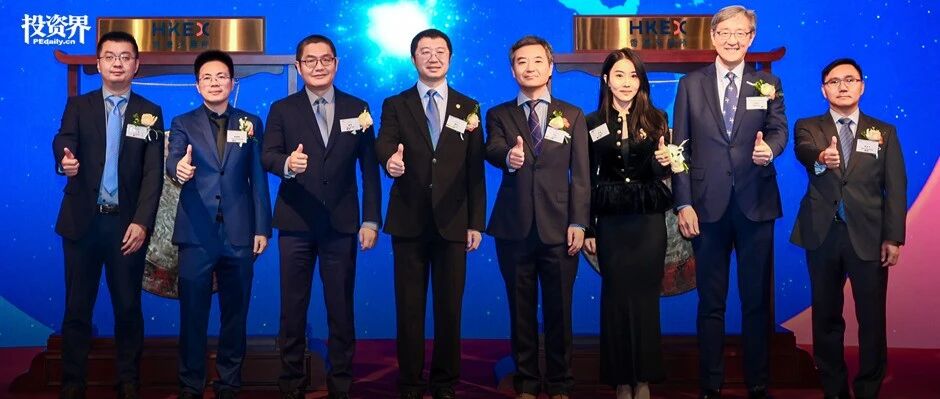
今天,广州超级IPO诞生
投资界· 2025-11-06 02:40
Core Viewpoint - WeRide has successfully completed a dual listing on the Hong Kong Stock Exchange and NASDAQ, marking its position as the world's first "Robotaxi" stock and a significant player in the autonomous driving sector [3][14]. Company Overview - Founded in 2017 by Han Xu, WeRide has rapidly ascended to become a leading global autonomous driving company, focusing on Level 4 (L4) autonomous driving technology [4][10]. - The company has developed a comprehensive product matrix, including autonomous taxis, minibuses, freight vehicles, and sanitation vehicles, supported by its WeRide One technology platform [11][20]. Financial Performance - WeRide's revenue for 2022, 2023, and 2024 was reported at 528 million RMB, 402 million RMB, and 361 million RMB respectively, with a projected increase to 1.996 billion RMB in 2025, reflecting a growth rate of 32.8% [17]. - The company has accumulated over $1.1 billion in financing prior to its U.S. listing, attracting significant investments from various strategic partners, including major automotive and technology firms [14][15]. Market Position and Strategy - WeRide has become the only company globally to hold autonomous driving licenses in seven countries, with a fleet of over 1,500 autonomous vehicles [14][26]. - The global market for L4 and above autonomous driving is projected to reach $1 billion in 2024, with a compound annual growth rate (CAGR) of 238% expected by 2030 [25]. Research and Development - The company has invested heavily in R&D, with expenditures totaling 3.553 billion RMB from 2022 to mid-2025, which has enabled the development of its advanced autonomous driving technology [19][20]. - WeRide's innovative WeRide GENESIS simulation engine enhances testing and model training, contributing to faster development cycles and improved robustness [20]. Operational Achievements - WeRide's Robotaxi service has completed over 2,200 days of public operation, accumulating over 5.5 million kilometers without regulatory penalties due to system failures [22][23]. - The company has established a significant presence in key international markets, including the Middle East and Singapore, where it has launched commercial operations of its Robotaxi services [28][29]. Future Outlook - The company aims to expand its global footprint, focusing on regions with high demand for autonomous driving solutions, such as the Middle East and Europe, where labor shortages and aging populations present opportunities for growth [28][29]. - WeRide's strategic partnerships and early market entry in various countries position it favorably against competitors, with a lead of at least 18 months in some markets [29].