36氪

Search documents
Substack:500万付费用户,11亿美元估值,和创作者经济的未来
36氪· 2025-11-15 01:12
Core Insights - The central question regarding Substack's $1.1 billion valuation is not whether it can grow, but rather what price it is willing to pay for that growth [2][9]. Group 1: Company Overview - Substack, founded in 2017, has gained popularity as a platform for creators to monetize their content, recently surpassing 5 million paid subscribers, up from 2 million in 2023 [5][6]. - The company completed a $100 million Series C funding round led by BOND and The Chernin Group, raising its valuation to $1.1 billion, a nearly 70% increase from its previous valuation of $650 million in 2021 [3][4][6]. Group 2: Business Model Evolution - Substack's initial business model was based on a 90/10 revenue split, where it takes a 10% commission from creators' subscription income, allowing creators to retain approximately 86-87% of their earnings [27][28][30]. - The company is now shifting towards advertising, acknowledging the need for diverse monetization options to justify its valuation and meet creators' demands [31][32]. - Substack has allowed creators to operate sponsorships independently, with some creators generating significant income through sponsorships, sometimes exceeding their subscription revenue [32][33]. Group 3: Growth Metrics - Substack's paid subscriber count has grown exponentially from 11,000 in 2018 to over 500,000 by March 2025 [55]. - Monthly active users have increased from over 20 million in early 2024 to over 35 million by 2025 [54]. - The platform attracts approximately 49.4 million unique visitors monthly [57]. Group 4: Financial Performance - Despite rapid revenue growth, Substack has not yet achieved profitability, reporting a net loss of $22.9 million in 2021 [59]. - The company has focused on growth over short-term profitability, with CEO Chris Best indicating no immediate plans for profitability [60]. Group 5: Product Development - Substack has evolved from a simple publishing tool to a more integrated social network, introducing features like podcasts, videos, and live streaming to enhance user engagement [70][79]. - The launch of the Substack app has significantly contributed to user growth, accounting for over 25% of new subscriptions [72]. Group 6: Challenges and Controversies - Substack has faced criticism for its "Substack Pro" initiative, which provided upfront payments to attract well-known writers, leading to accusations of creating an unfair competitive environment [90][91]. - The platform's content moderation policies have come under scrutiny, particularly regarding the presence of extremist content, which has led to a backlash from creators and users alike [93][94]. Group 7: Competitive Landscape - Substack's main competitors include Ghost, Beehiiv, and Kit, each offering different business models and features that appeal to creators seeking better revenue retention and advanced tools [126][128][130]. - The shift towards advertising and the introduction of new monetization strategies indicate a response to competitive pressures and the need to retain top creators [46][47].


字节、红杉投资的AI公司接入网易《蛋仔派对》,融资数千万美元|早起看早期
36氪· 2025-11-15 01:12
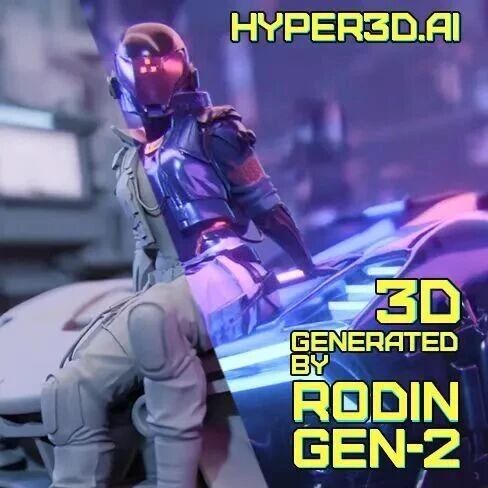
Core Insights - The article discusses the recent funding round of AI 3D generation company Yingmou Technology, which raised tens of millions of dollars in Series A+ financing led by BlueRun Ventures, with participation from existing investors like ByteDance and Red Shirt China Seed Fund. The funds will be used for technology development and market expansion to enhance the usability of 3D generation models and deepen applications in gaming and industrial design [4][5]. Company Overview - Yingmou Technology focuses on the development of AI-native 3D generation models, with its core product Hyper3D.AI providing high-quality, controllable, and usable 3D asset generation solutions for industries such as gaming, film special effects, industrial design, and 3D printing [5][9]. - The company has integrated its technology into NetEase's mobile game "Egg Party," allowing players to create custom scenes without complex modeling tools, thus enhancing user-generated content (UGC) capabilities [5][7]. Technological Innovations - Yingmou Technology has introduced the Rodin Gen-1.5 Zero mode, which optimizes real-time gaming environments while maintaining excellent visual performance under low polygon constraints, addressing the balance between generation quality and UGC gameplay efficiency [7][9]. - The company’s core team, originating from Shanghai University of Science and Technology, has been dedicated to 3D modeling research since 2016, leading to the development of the Hyper3D.AI model, which was recognized at SIGGRAPH as a significant advancement in the field [9][10]. Industry Challenges and Solutions - The 3D generation technology is transitioning from laboratory research to industrial application, facing challenges such as insufficient generation quality and the need for extensive manual adjustments to integrate models into existing production workflows [9][10]. - Yingmou Technology's innovations, such as the BANG feature in Rodin Gen-2, allow for the disassembly of generated 3D models into multiple components, enhancing efficiency in binding, editing, and secondary production, which is crucial for gaming and industrial design [10][11]. Future Plans - The company aims to expand into the industrial design sector, which has a larger market size compared to gaming, aligning with national strategies for new productivity [11]. - Long-term goals include the development of "world models" and embodied intelligence training data generation, integrating 3D content with robotics and general intelligence [11].
9点1氪:上海“绿捷食安事件”8名责任人被捕;1299元起的iPhone Pocket多款开售即告罄;理想汽车内部就两起事故问责
36氪· 2025-11-15 01:12
Group 1 - Shanghai Green捷's food safety incident led to the arrest of 8 responsible individuals, with the company facing severe penalties including the revocation of its food business license [2] - The iPhone Pocket launched in China on November 14, with initial sales showing strong demand despite mixed reviews on its design and pricing [3] - Li Auto held internal accountability for two quality incidents, resulting in disciplinary actions against 18 employees [3] Group 2 - The Shenzhou 21 manned spacecraft successfully landed back on Earth on November 14 [5] - The UK Competition Appeal Tribunal rejected Apple's appeal against an antitrust ruling, which could result in a potential fine exceeding £1 billion [10] - The first Chinese LNG dual-fuel car carrier, capable of transporting 7,000 vehicles, was completed, marking a significant advancement in international standards for transporting new energy vehicles [10] Group 3 - The Australian AI company Firmus announced a $325 million funding round, supported by Nvidia and other investors, to accelerate its AI infrastructure development [15] - Zai Jian Pharmaceutical plans to issue H-shares and list on the Hong Kong Stock Exchange to enhance its international presence [18] - Dexmal, a company focused on embodied intelligence, completed nearly 1 billion yuan in financing across two rounds to support its technology development [17]


京东物流一号位变动,「老将」王振辉接任丨36氪独家
36氪· 2025-11-14 13:36
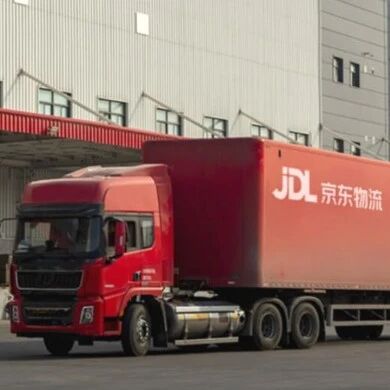
Core Viewpoint - JD Logistics has appointed Wang Zhenhui as the new CEO, focusing on technological innovation and aligning with the company's future business development direction [6][9]. Group 1: Leadership Changes - Wang Zhenhui has returned to JD Logistics as the CEO, succeeding Hu Wei, who has been reassigned [6]. - Wang has a long history with JD, having joined in April 2010 and held various key positions, including leading the logistics division [6]. Group 2: Business Performance - JD Logistics achieved a total revenue of 98.5 billion yuan in the first half of the year, representing a year-on-year growth of 14.1%, with profits reaching 3.3 billion yuan, up 10.2% [6]. - By the second quarter of 2025, external customer revenue accounted for 65.6% of JD Logistics' total income, indicating a significant increase in third-party client engagement [7]. Group 3: Technological Innovation - JD Logistics plans to purchase 3 million robots, 1 million unmanned vehicles, and 100,000 drones over the next five years to enhance its technological capabilities [8]. - The company has introduced advanced robotics, including the "Wolf Pack" series, which covers various operational aspects such as warehousing and sorting [8]. - JD's founder, Liu Qiangdong, announced plans to establish the world's first fully unmanned delivery station by April 2026, featuring drones and robotic arms for automated operations [8].
限制汽车「5秒破百」,我拍烂手掌叫好
36氪· 2025-11-14 13:36
Core Viewpoint - The article discusses the implications of the new national standard proposed by the Ministry of Public Security in China, which mandates that passenger vehicles must default to a mode where the acceleration from 0 to 100 km/h takes no less than 5 seconds, highlighting the safety concerns associated with high-performance electric vehicles [5][10][18]. Group 1: Performance and Safety Concerns - The era of "performance democratization" in electric vehicles allows consumers to purchase cars capable of accelerating from 0 to 100 km/h in as little as 2 to 3 seconds for around 200,000 yuan [4]. - The increase in high-speed incidents and accidents related to rapid acceleration has led to public outcry and the need for regulatory measures [5][10]. - The proposed regulation aims to address the issue of drivers lacking the necessary skills to control high-performance vehicles, which has resulted in numerous accidents [8][14]. Group 2: Debate on Regulation - There is a significant debate surrounding the new regulation, with opponents arguing that it is a superficial solution that does not address the root cause of reckless driving behavior [11][12]. - Some voices suggest that the market should regulate itself, similar to how insurance companies adjust premiums based on vehicle safety records [13]. - Critics of the regulation emphasize that limiting vehicle performance does not solve the underlying issues of driver training and responsibility [11][12]. Group 3: Comparison with Historical Context - The article contrasts the proposed regulation with Japan's historical "gentlemen's agreement" that limited vehicle horsepower, which stunted the development of high-performance cars in Japan [20][22]. - The new standard in China is seen as a safety measure rather than a blanket restriction on performance, allowing for high-performance capabilities while ensuring safer driving conditions [22][23]. Group 4: Practical Implications - The article highlights that the current safety standards for vehicles are designed for lower speeds, and exceeding these speeds can render safety features ineffective [26]. - It points out that the extreme acceleration capabilities of modern vehicles are often impractical for everyday driving conditions in China, where speed limits and traffic congestion are prevalent [27][30]. - The emphasis is placed on the importance of safety over speed in everyday driving scenarios, advocating for responsible driving practices [30].

中国消费品企业大举进入巴西市场
36氪· 2025-11-14 13:36
Core Viewpoint - Chinese consumer brands are increasingly entering the Brazilian market, capitalizing on the growing middle class and consumer demand, while also facing some local resistance due to competitive pressures [4][11][15]. Group 1: Market Entry and Expansion - Chinese brands like Meituan, Didi, and Mixue Ice City are expanding their presence in Brazil, with Mixue planning to open numerous stores and invest 3.2 billion reais (approximately 4.235 billion yuan) by 2030 [5][8]. - Meituan's overseas brand "Keeta" is set to invest 5.6 billion reais in the next five years, starting its services in the suburbs of São Paulo [7]. - Didi is doubling its investment in Brazil to 2 billion reais by 2026 to expand its food delivery service [8]. Group 2: Consumer Perception and Brand Image - Brazilian consumers are increasingly favoring Chinese products, with over 60% expressing a preference for Chinese goods in the tech sector, surpassing the 30% favoring American products [10]. - The perception of Chinese brands as offering "low prices and high performance" is becoming entrenched in Brazil, driven by the success of companies like BYD [11]. Group 3: Economic and Political Context - The strengthening political ties between China and Brazil are enhancing the investment environment, encouraging Chinese companies to target Brazilian consumers directly [8][12]. - Brazil's economic landscape, characterized by a population exceeding 200 million and a growing middle class, presents significant opportunities for Chinese brands [8]. Group 4: Local Resistance and Competitive Pressure - There are emerging concerns in Brazil regarding the competitive pressure from Chinese companies, particularly in light of the entry of cross-border e-commerce platforms like Temu and SHEIN [15]. - Local businesses are advocating for measures to counter the impact of Chinese brands, including adjustments to import tax policies [15].

李飞飞「世界模型」正式开放,人人可用, Pro版首月仅7元
36氪· 2025-11-14 13:36
Core Insights - The article discusses the launch of Marble, a world model by World Labs, which allows users to create immersive 3D environments using a single image or text prompt [2][3][4] - The concept of "spatial intelligence" is highlighted as a key focus for the next decade of AI development, as articulated by Li Feifei [6][7][70] Group 1: Product Features - Marble enables the generation of persistent, downloadable 3D environments, distinguishing it from other real-time models [21] - Users can upload 2D images or 3D models (with a fee) to create worlds, achieving high-quality visuals akin to AAA games [11][13] - The platform includes AI-native editing tools and a mixed 3D editor, allowing users to construct spatial frameworks and fill in visual details [23][50] Group 2: Creative Control - Marble supports multi-image prompts, allowing for more creative control and higher precision in world creation [39][43] - Users can input multiple images or short videos to generate 3D worlds that incorporate real-world elements [44] - The editing process is iterative, enabling users to refine and modify generated worlds extensively [46][47] Group 3: Export Options - Marble offers various export options, including high-quality mesh and video formats, facilitating integration into downstream projects [54][62] - The system can generate both low-precision collision meshes for physical simulations and high-quality visual meshes [59][61] Group 4: Pricing Structure - Marble has a tiered pricing model with three levels: a free version allowing limited world generation, a standard version at $20 per month, and a pro version at $95 per month for up to 75 worlds [82][84] - The pro version offers significant credits for actions and commercial rights, enhancing its appeal for professional users [87]

第一批人形机器人,已经开始倒闭了
36氪· 2025-11-14 13:36
Core Viewpoint - The humanoid robot industry is facing significant challenges in achieving mass production, with recent failures highlighting the gap between technological potential and market viability [4][5][13]. Group 1: Company Overview - K-Scale Labs, a humanoid robot startup founded in 2024, aimed to create an open-source, low-cost humanoid robot platform but has recently announced its closure due to financial difficulties [8][10]. - The company had raised approximately $400 million in seed funding at a valuation of $50 million but failed to secure additional financing, leading to a cash reserve of only $40,000 [8][11]. Group 2: Industry Challenges - The humanoid robot industry is at a critical juncture, with the anticipated "mass production year" facing obstacles such as financing constraints, supply chain issues, and high production costs [5][13]. - Key technical challenges include energy consumption, precision in perception, and data scarcity, which hinder the development and deployment of humanoid robots [14][15]. Group 3: Market Dynamics - The average Bill of Materials (BOM) cost for humanoid robots is around 400,000 RMB, significantly higher than the target price of 20,000 USD set by industry leaders like Elon Musk [15]. - The reliance on imported components for critical parts, which account for 70% of the joint costs, exacerbates the cost issues faced by domestic manufacturers [15][16]. Group 4: Future Prospects - Despite current challenges, humanoid robots are seen as a potential solution for various applications, including industrial tasks and customer service roles, due to their adaptability and human-like interface [20][22]. - As the cost curve decreases and technology matures, humanoid robots could become a mainstream labor force, freeing humans from repetitive and hazardous tasks [23].

这个双11,线上奢侈品开始抓牢年轻人
36氪· 2025-11-14 09:07
Core Insights - The luxury goods market in China is experiencing a significant shift towards online purchasing, particularly among younger consumers who prefer the convenience and exclusivity of e-commerce platforms [4][5][11] - The 2023 Double 11 shopping festival saw luxury brands like Balenciaga, Canada Goose, and Coach achieve high double-digit growth on platforms like Tmall, indicating a strong demand for luxury items [5][13] - The rise of functional luxury items, particularly winter apparel, has become a key driver of sales, with brands launching exclusive collections tailored for the season [7][8] Group 1: Online Shopping Trends - More young consumers are opting for online purchases of luxury goods, with platforms offering a wide range of exclusive and limited-edition items [4][5] - Over 200 luxury brands launched new collections on Tmall ahead of Double 11, showcasing a trend towards unique and exclusive online offerings [5] - The winter apparel category has become a significant growth driver for luxury sales on Tmall, with brands like Moncler and Canada Goose introducing new lines [7] Group 2: Consumer Behavior and Preferences - The Z generation is purchasing luxury goods at a younger age, integrating them into their self-expression rather than waiting for career stability [11][12] - Brands like Coach have successfully engaged Z generation consumers by understanding their lifestyle and emotional needs, leading to substantial sales growth [12] - The luxury market is shifting from a focus on brand symbols to a more subjective approach based on lifestyle and design details [16][21] Group 3: E-commerce Platform Evolution - E-commerce platforms like Tmall are evolving from mere sales channels to emotional mediators that foster long-term relationships between brands and consumers [21][22] - The platform's role is to help brands convey meaning to the right audience rather than just increasing sales volume [22] - Tmall is implementing a tiered membership structure to enhance the shopping experience for high-net-worth individuals, offering exclusive access to new products and events [23] Group 4: Digital Transformation in Luxury Retail - The luxury industry is entering a new phase of digitalization, focusing on smart and content-driven experiences rather than just product listings [27][28] - Initiatives like the "Little Red Star" and "Red Cat Plan" are helping brands target specific consumer groups more effectively, resulting in significant sales conversions [28] - AI technology is being integrated into luxury retail, with brands utilizing AI hosts for live streaming and personalized shopping experiences, enhancing engagement and reducing costs [30]


科技巨头「偷偷借钱」搞AI,次贷危机魅影重现?
36氪· 2025-11-14 09:07
Core Viewpoint - The article discusses the potential emergence of an "AI bubble" driven by significant debt accumulation among tech companies investing heavily in AI infrastructure, while also highlighting the differences between the current situation and past financial bubbles [4][10][32]. Group 1: Investment and Financing Activities - Meta announced a $600 billion investment in AI data centers and talent recruitment by 2028 [5]. - Meta completed a $30 billion financing through a Special Purpose Vehicle (SPV) for data center construction [6]. - Alphabet plans to issue an additional €3 billion in bonds following a previous €6.75 billion issuance [7]. - As of September 2023, tech companies in the U.S. raised $157 billion in the bond market, a 70% increase year-over-year, with ongoing financing activities for AI infrastructure [9]. Group 2: Debt and Credit Risk - Oracle's Credit Default Swaps (CDS) surged in September, indicating market concerns over its high debt levels related to AI investments [8]. - Oracle's debt-to-equity ratio is significantly higher than other AI giants, with a debt ratio of approximately 85% compared to 25%-45% for companies like Nvidia and Microsoft [18][19]. - The rising CDS rates for Oracle reflect fears that its substantial AI spending could jeopardize financial health, a sentiment that may extend to the broader AI sector [17][21]. Group 3: Market Performance and Valuation - Despite Oracle's high leverage, many leading AI companies continue to show strong profit growth, with Alphabet reporting a 16% year-over-year revenue increase and a 33% rise in net profit [22]. - AI technology is driving productivity growth across various industries, suggesting that current capital investments in AI, while large, remain within a reasonable range [24][25]. - Current valuations of AI giants are lower than those seen during the 2000 internet bubble, with Nvidia at a PE ratio of approximately 56 and Microsoft at 36 [28]. Group 4: Structural Financing and Risk Management - The trend of using SPVs for financing is becoming common among U.S. tech companies to manage debt pressure and maintain credit ratings [37]. - Meta's SPV structure allows it to isolate $30 billion in debt from its balance sheet, improving its financial appearance while still fulfilling obligations through lease payments [36]. - The use of SPVs may also help companies navigate regulatory challenges and reduce compliance costs [38]. Group 5: Indicators of an "AI Bubble" - To assess the potential for an "AI bubble," two quantitative indicators are suggested: the proportion of new funding from loans compared to historical levels and the sustainability of stock price growth rates [40]. - Current debt levels among AI companies are significantly lower than during the internet bubble, indicating a safer debt structure [41]. - While there are signs of a bubble, the market's ability to self-correct is enhanced by modern trading efficiencies compared to the early 2000s [42].