36氪

Search documents
中国股市创10年来高点,科技和EV崛起
36氪· 2025-08-22 13:47
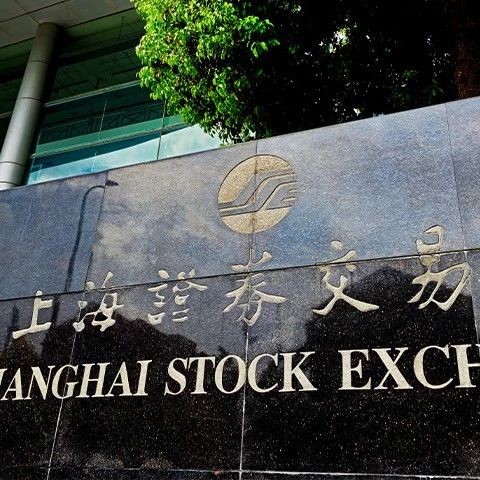
Core Viewpoint - The Chinese stock market is showing signs of recovery, with the Shanghai Composite Index reaching its highest level since August 2015, driven by the rise of technology and electric vehicle (EV) related stocks [5][7]. Group 1: Market Performance - The Shanghai Composite Index closed at 3728.0273 points on August 18, marking a significant increase since mid-August 2015 [5]. - The index has risen nearly 20% from its recent low in early April [5]. - The recovery is attributed to a reduction in tariffs between China and the U.S., easing trade tensions [5]. Group 2: Leading Companies - Tencent Holdings is currently the largest company by market capitalization in China, valued at $694.1 billion, which is a 4.3 times increase over the past decade [8][9]. - Other notable companies include: - Industrial and Commercial Bank of China: $349.5 billion, up 53% [9]. - Alibaba Group: $288 billion, up 73% [9]. - CATL (Contemporary Amperex Technology Co., Limited): $180.3 billion, marking a significant rise in the EV sector [9][10]. Group 3: Emerging Industries - The rise of new industries, particularly in technology and electric vehicles, is evident, with CATL and BYD showing substantial growth in market capitalization [9][11]. - Government subsidies have played a crucial role in supporting these emerging industries, with CATL receiving over 16.9 billion yuan in subsidies from 2015 to mid-2024 [11]. - The strategy of the Chinese government involves directing funds to industries in their growth phase and then reallocating support as they mature [11].

王宁掏出迷你版LABUBU
36氪· 2025-08-22 13:47
Core Viewpoint - The article discusses the impressive growth of Pop Mart, driven by the popularity of its LABUBU product, and highlights the challenges and expectations for future growth in the collectible toy market [4][10][12]. Financial Performance - In the first half of 2025, Pop Mart reported revenue of 138.8 billion RMB, a year-on-year increase of 204.4%, and an adjusted net profit of 47.1 billion RMB, up 362.8% [7]. - The LABUBU series generated 48.1 billion RMB in revenue, accounting for 34.7% of total revenue, significantly higher than previous years [7]. - The contribution of plush toys to Pop Mart's revenue rose from approximately 10% last year to 44% this year [7]. Market Expansion - Pop Mart experienced substantial growth in overseas markets, with revenue increases of 1142.3% in the Americas and 729.2% in Europe [8]. - The company opened 19 new stores in the U.S., making it the largest overseas market for Pop Mart, surpassing Hong Kong, Macau, and Taiwan [15]. - The average selling price in overseas markets increased by nearly 30% due to tariffs, yet consumer enthusiasm remained strong [17]. Product Strategy - The upcoming Mini LABUBU is expected to enhance its market presence and usage scenarios, potentially becoming a new hit product [4][5]. - Pop Mart is focusing on creating new IPs to sustain growth, with CRYBABY and Star People being highlighted as emerging characters [31][32]. Market Sentiment - Following the financial report, Pop Mart's stock price surged, reaching a historical high of 315.40 HKD per share, with a market capitalization exceeding 425.44 billion HKD [8]. - Despite optimism from mainstream institutions, there are concerns regarding the sustainability of LABUBU's popularity and the company's high valuation [10][11]. Competitive Landscape - The article notes that while Pop Mart currently faces no significant domestic competitors, the high profit margins in the collectible toy sector have attracted new entrants [36][37]. - Other companies in the collectible toy space, such as 52TOYS and TOP TOY, are noted to have weaker IP development compared to Pop Mart [36][38].

从智能手机到MR头显,vivo的未来答案
36氪· 2025-08-22 13:47
Core Viewpoint - The article emphasizes that vivo's launch of the Vision Explorer MR headset is not merely a trend-chasing move but a strategic extension based on user needs and technological advancements [6][21][26] Group 1: Market Context - The MR headset market is projected to grow significantly, with global shipments expected to reach 12.8 million units by 2025, a 26% increase year-on-year, while China's growth rate is anticipated to exceed 100% [5][9] - The smartphone has dominated the mobile internet for nearly 20 years, but MR headsets are emerging as the next potential mainstream device, unlocking capabilities beyond the limitations of 2D screens [4][5] Group 2: Product Features - The vivo Vision Explorer headset weighs only 398 grams, marking a significant reduction in weight compared to traditional MR headsets, making it more user-friendly [13] - It incorporates advanced technology such as the VST algorithm, which minimizes latency to 13ms, enhancing the integration of virtual and real-world experiences [13][17] Group 3: User Experience and Ecosystem - The headset aims to address user pain points by providing a lightweight, comfortable design and a diverse content ecosystem, moving from novelty to regular use [10][14] - Users can engage with immersive experiences, such as viewing spatial photos and videos captured by vivo devices, creating a compelling reason for daily use [14] Group 4: Strategic Importance - vivo's entry into the MR market positions it alongside global tech giants like Apple and Meta, marking a significant milestone for Chinese technology firms [22][23] - The development of the MR headset is seen as a foundational step towards integrating robotics and AI, leveraging vivo's extensive user data and technological capabilities [18][21] Group 5: Long-term Vision - The company envisions a future where smartphones, MR, and robotics coexist, addressing diverse user needs across various scenarios [14][21] - The article highlights the importance of sustained investment and ecosystem development over time, drawing parallels with the evolution of the PC and smartphone industries [22][24]

「中国式方案」点亮AI黄金时代|36氪2025 AI Partner百业大会核心看点剧透
36氪· 2025-08-22 13:47
Core Viewpoint - The article emphasizes that China's AI industry is not only leading in technological innovation but also exploring unique commercialization models, termed "Chinese-style solutions," which are reshaping the global AI landscape [2][13]. Group 1: Chinese-style Solutions - The "Chinese-style solution" is characterized by a complete closed loop of "technology research and development - scene implementation - industry feedback," driven by scene demands to iterate technology and enable AI across various industries [2][13]. - The upcoming "2025 AI Partner Conference" will focus on topics such as "Chinese-style innovation," "super intelligent agents," and the integration of AI with various industries, highlighting the deep fusion of AI with the real economy [2][11]. Group 2: AI Embodiment and Infrastructure - AI embodiment requires breakthroughs in hardware, software, and computing power, with a focus on smart terminals and robotics as key areas for innovation [4]. - The development of AI infrastructure is crucial for supporting the demands of full-domain intelligence, with practices in computing resource scheduling and data foundation construction being shared [6]. Group 3: AI as a Necessity - AI is transitioning from a "show-off technology" to a "necessity" by integrating into core industry processes in sectors like enterprise services, healthcare, and environmental protection [8]. - The application of AI in human resources, medical services, and commercial content creation is being explored to enhance efficiency and innovation [8]. Group 4: Future Directions and Challenges - The commercialization of humanoid robots is still in its early stages, with discussions on overcoming challenges related to technology maturity and market acceptance [5]. - The role of AI in carbon management and the automotive finance industry is being examined, focusing on how AI can transform traditional models into more efficient ecosystems [9]. Group 5: Event Highlights - The "AI Partner" initiative has become a platform for communication between AI application and scene sectors, with plans to continue fostering AI innovation and collaboration among over 70 companies [11].

8年营收增长77倍,「追杀」年轻人的「美国绿鸟」,创下百亿美元市值
36氪· 2025-08-22 13:47
Core Viewpoint - Duolingo, represented by the green owl Duo, has transformed language learning into a game-like experience, attracting a significant user base and achieving impressive financial growth, with a projected revenue of $1.01 billion to $1.019 billion for 2025, surpassing analyst expectations of $996 million [7][25]. User Engagement and Growth - Duolingo has successfully gamified learning, leading to 500 million users who engage in learning through game mechanics, earning rewards, and competing on leaderboards [4][7]. - The platform's daily active users grew by 40% year-over-year, reaching 47.7 million, while monthly active users increased by 24% to 128.3 million [44]. Financial Performance - Duolingo's stock price has increased over 300% since its NASDAQ debut in 2021, with a market capitalization of $15.116 billion [25]. - The company's revenue expectations for 2025 represent a 77-fold increase from $13 million in 2017 [25]. Marketing and Social Media Strategy - Duolingo employs a "social first" strategy, leveraging social media to enhance user engagement and brand visibility, adapting its marketing approach based on regional preferences [41][49]. - The brand's ability to capitalize on trending topics and cultural references has helped maintain its relevance and visibility on social platforms [7][17]. Challenges and Criticisms - Despite growth, Duolingo faces challenges, including a slowdown in user growth rates and criticism regarding the effectiveness of its AI-generated content [51][54]. - Users have expressed dissatisfaction with the perceived lack of depth in learning, questioning the platform's ability to deliver substantial educational value [54].

当时间成为稀缺资本:精英们的身体投资逻辑是什么?
36氪· 2025-08-22 11:20
Core Viewpoint - Health is the true underlying capital that determines the value of time, and neglecting health can lead to a significant depreciation of time as a resource [4][10]. Group 1: Time Economics and Health - Time is a scarce resource that must be allocated optimally among various uses, and health significantly influences the marginal productivity of time [3][7]. - The global health crisis has resulted in productivity losses equivalent to over $15 trillion annually, representing 17% of the global economy [8]. - In China, the prevalence of chronic diseases such as hypertension (27.5%), hyperlipidemia (over 40%), and diabetes (nearly 12%) indicates a significant health crisis impacting productivity [8]. Group 2: Investment in Health and Longevity - The establishment of companies like Altos Labs, which focuses on cellular anti-aging, highlights the growing investment in health and longevity technologies, with significant backing from high-profile investors [12][14]. - NAD+ has emerged as a key molecule in cellular metabolism and repair, with its levels declining sharply with age, leading to decreased energy metabolism and cellular repair capabilities [15][17]. - Research institutions are exploring ways to enhance NAD+ levels through nutritional supplementation, making it a critical variable influencing health, time, and wealth [18]. Group 3: Target Audience for NAD+ Solutions - High-demand groups for NAD+ supplementation include celebrities, corporate executives, and high-intensity knowledge workers who require optimal physical and mental performance [20][22]. - SwissePLUS has developed a range of NAD+ products aimed at these demographics, demonstrating the importance of managing physical capital alongside financial assets [22][31]. Group 4: SwissePLUS Product Offerings - SwissePLUS offers a comprehensive cellular nutrition anti-aging solution, including products tailored to different needs and life stages, emphasizing the importance of health management as a proactive capital operation [24][30]. - The brand's mission is to provide sustainable body capital management tools that enhance the quality of time, rather than merely increasing its quantity [31].

要情绪、要体验、要特昂,在深圳的一场消费「价值感」实验
36氪· 2025-08-22 11:20
Core Viewpoint - The discussion of "consumption downgrade" has been replaced by the consensus of "consumption stratification," indicating a shift in consumer behavior towards valuing experience, identity, and future potential rather than merely seeking low prices [3][4]. Group 1: Consumer Behavior Trends - Consumers are increasingly emphasizing "value for money" rather than just low prices, showing a willingness to pay for "emotional value" in areas like tea drinks and supermarkets [3][4]. - Experience consumption is a major category for younger consumers, with activities such as travel, concerts, and outdoor events being prioritized [3][4]. - The new consumption trends are characterized by a focus on emotional and practical values, leading to the emergence of new economic sectors like toy economy, pet economy, and cultural creative economy [4]. Group 2: New Consumption Landscape - The retail sales of consumer goods reached 24.55 trillion yuan in the first half of the year, with a year-on-year growth of 5.0%, indicating steady growth in the overall market [4]. - New consumption is defined by diverse demands from target customer groups, driven by new technologies, concepts, and models, leading to continuous product and service innovation [4]. - The essence of new consumption lies in the innovation of product categories, scenarios, and the emotional connection consumers have with brands [4]. Group 3: Event Overview - The Shenzhen Craft Beer Festival and the Third Shenzhen Teao Festival aim to explore new consumption scenarios and promote night economy development [5][7]. - The event will feature various activities, including beer competitions, live music, and creative showcases, designed to create a vibrant social atmosphere [7][12]. - Over 70 brands will participate, fostering cross-industry collaboration and creative exchanges to inspire new lifestyle concepts [12][14]. Group 4: Brand and Market Insights - The event organizers recognize the importance of brand beliefs that can transcend cycles, memorable product expressions, and commercial language that reflects urban culture [14]. - The "CITYFORCE Annual Brand" initiative will be launched to identify brands that excel in commercial, user, and social value, showcasing innovation and experience [14].

涨价152万火速转卖,投资客豪赌广州「老破小」拆迁
36氪· 2025-08-22 11:20
Core Viewpoint - The article discusses the ongoing urban renewal in Guangzhou, particularly focusing on the investment opportunities arising from the demolition and compensation schemes in the Haizhu District, where old residential areas are being targeted for redevelopment [4][12]. Group 1: Urban Renewal and Investment Opportunities - The demolition of the New Port Commercial City has begun, with compensation for residential properties in the area reaching up to 60,000 yuan per square meter, significantly higher than the current market prices of nearby older properties, which range from 23,600 to 31,300 yuan per square meter [4][5]. - Investors are targeting older residential buildings like Hongyun Garden, hoping to benefit from future compensation and price appreciation as demolition expectations rise [5][10]. - The urban renewal plan has been accelerated since last year, with multiple old factories and villages being transformed, creating a broader hunting ground for investors beyond just Haizhu [12][13]. Group 2: Market Dynamics and Price Trends - Despite the anticipation of demolition, the overall Guangzhou real estate market remains subdued, with new home sales down 33% month-on-month and 18% year-on-year in July, while second-hand home sales also saw declines [17]. - The average selling price of new residential properties in July decreased by 0.3% month-on-month and 4.6% year-on-year, while second-hand residential prices fell by 6.0% year-on-year and 1.0% month-on-month [19]. - The expectation of demolition has led to a rise in listing prices for certain properties, but the narrowing of arbitrage opportunities has diminished the investment appeal of older properties, resulting in reduced transaction volumes [19][22].

恒大二把手现身:提前10年铺路,出国了还在帮许老板管资产?
36氪· 2025-08-22 11:20
Core Viewpoint - The recent emergence of former Evergrande president Xia Haijun in California raises questions about the potential recovery of assets for Evergrande's creditors, as his assets have been frozen by a Hong Kong court [4][26]. Group 1: Xia Haijun's Background and Actions - Xia Haijun, who has been missing for over four years, was a key figure in Evergrande's rapid expansion and is now under scrutiny for asset concealment [6][12]. - He holds significant real estate assets in the U.S., including three luxury homes valued at approximately $30 million, while Evergrande's liquid assets are only about $1.1 million [10][30]. - Xia's early departure from Evergrande in July 2022, prior to the company's crisis, suggests a strategic move to protect his interests [15][20]. Group 2: Implications for Evergrande's Creditors - The potential capture of Xia Haijun could expedite the asset recovery process for Evergrande's creditors, as his frozen assets may be liquidated to satisfy debts [26][30]. - The investigation into Xia's actions could reveal more about the financial mismanagement and asset transfers that contributed to Evergrande's debt crisis [32][30]. - The ongoing cooperation between U.S. and Chinese law enforcement may facilitate the pursuit of Xia and other individuals involved in the financial misconduct at Evergrande [28][30]. Group 3: Broader Context of Evergrande's Crisis - Evergrande's total liabilities exceed 2 trillion yuan, and even if Xia's assets are recovered, they would only cover a fraction of the company's debts [30][32]. - The accountability of all individuals involved in the decision-making processes at Evergrande is crucial for addressing the company's financial issues and restoring stakeholder confidence [32][30].

院士孵化,机器人合成数据公司获合肥国资A轮融资丨早起看早期
36氪· 2025-08-22 00:21
Core Viewpoint - DeepTrust Technology has completed Series A financing to enhance its synthetic data generation technology and continuous learning framework, focusing on applications in autonomous driving, industrial scenarios, and embodied robotics [5][10]. Group 1: Company Overview - DeepTrust Technology, founded in 2019 and incubated by Turing Award winner Yao Qizhi, is headquartered in Hefei High-tech Zone and specializes in a closed-loop toolchain for "data collection - data processing - simulation training" [5][11]. - The company has launched three core products: Oasis Rover for data collection, Oasis Data for data platform, and Oasis Sim for simulation systems, serving the fields of autonomous driving, robotics, and industrial digital twins [5][8]. Group 2: Market Context and Challenges - The Ministry of Industry and Information Technology requires L3+ vehicles to complete 10 million kilometers of equivalent testing, while traditional manual modeling takes 6 months for 1 million kilometers, leading to high costs and insufficient coverage of extreme scenarios [7]. - Industrial scenarios such as nuclear power and ports face challenges with low digital twin accuracy and high cross-scenario adaptation costs [7]. Group 3: Technological Innovations - The core technologies of DeepTrust Technology include a continuous learning framework and world models, which enhance the realism, challenge, and diversity of scenarios through a closed loop of "real data seeds → multi-agent dynamic adversarial → autonomous generalization iteration" [8][10]. - The world model integrates various technologies to build a digital twin system that is consistent in geometry, physics, and semantics, including dynamic environmental modeling and multi-agent interaction prediction [10]. Group 4: Performance and Growth - DeepTrust Technology's synthetic data technology has been validated across multiple fields, significantly improving testing efficiency for autonomous driving algorithms by 2.1 million times in collaboration with a leading automotive company [10]. - The company experienced exponential revenue growth last year, with high-fidelity simulation and synthetic data software products being the main revenue drivers, and has established partnerships with over 10 leading automotive and industrial enterprises [10][11]. - The team consists of 80 members, with 10% holding PhDs from top overseas universities, and the founder, Yang Zijiang, is a professor at the University of Science and Technology of China with extensive research experience [11].