36氪

Search documents
神州租车:向上造梦、向下扎根
36氪· 2025-12-28 03:18
神州租车,把自己留在未来里。 在国内市场的出行版图中,租车长期处在一个微妙的位置。 它不算新赛道,更多时候被视作一种社会基建性的商业服务:稳定、可靠、覆盖广,却很少被寄予额外想象。 与此同时,它的护城河也相对较重。车队密度、网点覆盖、运维体系、履约稳定性、标准化流程,一切都建立在规模化运转的效率上。但也就是在这样的行 业里,头部玩家们的风险往往并不来自对手,而来自于自身角色的固化。 在这一背景下,神州租车却以自身亲身实践,展示了一个"反常规"的样本:租车行业的头部玩家,如何打造一条动态的护城河,来打开自身与行业的商业想 象力? 向上托举:用科技打开 租赁出行叙事的想象力 在一个高度成熟的行业里,保持领先不容易。 观察神州租车不难发现,稳定的车队规模、密集的网点网络、成熟的履约体系,构成了一张高度工程化的运行底盘。但底盘足够稳固时,新的挑战也才真正 浮现了出来:随着时代滚滚向前,效率与规模边际效益愈发凸显,如何才能让护城河继续存在? 此时,神州租车的选择显得耐人寻味。除了继续加码规模与效率,保持领先者身位以外,还在探索从租车到出行租赁的跳跃,寻找新的叙事想象力。 突破的切口,首先在于科技和战略层面的双重向上。 ...


一场正在发生的迁移:AI如何穿过产业深水区
36氪· 2025-12-27 13:06
Core Insights - The emergence of generative AI marks a shift from digital technology as merely a "connecting tool" to a core component in judgment, decision-making, and action within organizations [3] - Companies now face the critical question of how to effectively integrate AI to create real value rather than merely adopting it as a trend [3][12] Group 1: Industry Transformation - Digital transformation has historically focused on "connection," with a race to establish networks and data integration across various sectors [2] - The introduction of AI challenges traditional notions of efficiency, emphasizing the need for stability, risk control, and long-term certainty in complex systems [5][13] - AI's true value is becoming evident in industries with low penetration and minimal tolerance for error, such as manufacturing and agriculture [6][10] Group 2: AI in Manufacturing - In manufacturing, the example of Jianghuai Zunji Super Factory illustrates how AI can manage increasing complexity and maintain quality standards through digital twin technology and flexible production [8][9] - AI acts as a stabilizer in manufacturing systems, helping to ensure consistent decision-making amidst rising complexity [9] Group 3: AI in Agriculture - In agriculture, COFCO's smart farming initiatives address systemic risks by transforming traditional practices into a continuously monitored and predictable system [10][12] - AI enables proactive risk management, shifting from reactive to preventive measures in large-scale farming operations [12] Group 4: Challenges in AI Integration - The integration of AI into industries is not merely about technological advancement but requires clear pathways for implementation [15][23] - High-complexity sectors like healthcare and education face unique challenges that necessitate tailored approaches rather than generic solutions [16][21] Group 5: Pathways to Successful AI Deployment - Huawei's ACT framework emphasizes assessing high-value scenarios, calibrating industry data, and deploying AI at scale, positioning AI as a structural variable rather than an add-on [24][25] - This cautious approach is essential in complex industries to ensure that AI is effectively embedded within existing industry logic [25] Group 6: Infrastructure and Ecosystem Development - The acceleration of industry digitalization is linked to advancements in foundational technologies such as wireless communication and data networks [27][28] - Huawei's focus on enhancing computing, networking, and storage capabilities aims to create a robust infrastructure that supports widespread AI adoption [29][30] Group 7: Bridging the Gap for SMEs - Huawei's solutions for small and medium enterprises (SMEs) aim to lower the barriers to AI adoption by providing pre-integrated, validated solutions that reduce the complexity and cost of implementation [30][31] - This approach transforms AI from a high-barrier investment into a replicable and affordable capability for various industries [31][32] Group 8: Long-term Vision for AI Integration - The transition to AI as a foundational capability requires a continuous and methodical approach, emphasizing the importance of replicable certainty in an uncertain environment [32][33] - Huawei's role in facilitating this transition reflects a broader responsibility to guide industries through the complexities of AI integration [33]

罗永浩炮轰,空调售后成「暴利江湖」?
36氪· 2025-12-27 13:06
Core Viewpoint - The article highlights the high costs associated with air conditioning maintenance and repair services, emphasizing the lack of transparency and regulation in the after-sales market, which has become a lucrative but problematic area for consumers and companies alike [4][16][37]. Group 1: Consumer Sentiment and Market Dynamics - Consumers are increasingly frustrated with high maintenance costs, as illustrated by a recent complaint from a prominent figure regarding a quote of approximately 15,000 yuan for seasonal cleaning of central air conditioning units [4][6]. - The air conditioning market is experiencing a price war at the front end, while the after-sales service sector remains largely unregulated, presenting a new battleground for major appliance companies [6][25]. - Many consumers feel that the cost of repairs often exceeds the price of new units, leading to a perception that "repairing is more expensive than buying" [12][15]. Group 2: Pricing and Service Quality - The article details the breakdown of costs for air conditioning maintenance, revealing that filter replacement can account for 70% of the total service fee, with installation fees also contributing significantly [8][11]. - Comparatively, other brands like Midea and Gree offer cleaning services at much lower rates, typically ranging from 100 to 300 yuan, indicating that the high costs associated with brands like Daikin may not be standard across the industry [9][10]. - The rising costs of maintenance are attributed to increased prices for parts and labor, as well as the complexity of repairs for older units, which often require more extensive work [12][15]. Group 3: After-Sales Market Issues - The after-sales market is plagued by issues such as price opacity, unnecessary repairs, and misleading practices by service providers, which have left consumers feeling vulnerable [17][19]. - There are significant discrepancies in pricing between official service providers and third-party platforms, with the latter often charging 3-4 times more for similar services [19][20]. - The article notes that many third-party service providers may misrepresent themselves as official brand representatives, leading to consumer confusion and potential overcharging [20][21]. Group 4: Industry Response and Future Outlook - Major appliance brands are increasingly recognizing the importance of after-sales service as a competitive differentiator, with companies like Gree and Midea expanding their service networks and improving service quality [28][29]. - The article mentions that consumer complaints regarding after-sales service have risen significantly, indicating a growing need for brands to enhance their service offerings [27]. - As the price war in the air conditioning market reaches its limits, companies are shifting focus towards improving service quality and customer experience as a means of differentiation [33][37].





失去的,宁德时代要拿回来|深氪
36氪· 2025-12-27 09:48
Core Viewpoint - The article discusses the competitive dynamics between leading companies in the electric vehicle battery market, particularly focusing on CATL (宁德时代) and its strategies to regain market share amidst rising competition from companies like Xiaomi and Li Auto [4]. Group 1: Negotiation Dynamics - A negotiation took place between CATL's chairman, Zeng Yuqun, and Xiaomi's chairman, Lei Jun, regarding battery supply agreements, with Xiaomi seeking to secure favorable rebate conditions [5][6]. - Xiaomi's first car, the SU7, had a high dependency on CATL for battery supply, but the second model, YU7, saw a shift towards BYD batteries, reducing CATL's share significantly [6][7]. - Xiaomi's successful sales of 130,000 units of the SU7 in its first year highlight its effective supply chain management, which has attracted numerous suppliers [7][8]. Group 2: Market Share and Financial Performance - CATL's market share in the domestic battery market has declined from 53% in 2021 to 43% currently, while its battery gross margin has also decreased to around 23% [11][12]. - The competitive landscape has forced CATL to restructure its sales team and adopt a more aggressive approach to regain lost market share [12][13]. - CATL's financial performance remains strong, with a profit of 30.5 billion yuan in the first half of the year, surpassing the total profits of 17 car manufacturers combined [55]. Group 3: Strategic Responses - CATL is expanding its production capacity, aiming to reach 1,000 GWh by next year, to meet the increasing demand for batteries [24]. - The company is also adopting a "2C strategy" to enhance its brand presence among consumers, investing nearly 10 billion yuan in marketing efforts [41][42]. - CATL's ability to deliver batteries quickly and efficiently has positioned it favorably against competitors, allowing it to capture significant orders from emerging car manufacturers like Zero Run [30][31]. Group 4: Competitive Tactics - CATL employs a "blocking tactic" by preparing resources in advance and quickly stepping in to fill gaps left by competitors, ensuring it remains a preferred supplier [31][32]. - The company has successfully captured orders from various automakers by offering competitive pricing and rapid delivery, which has made it difficult for second-tier battery manufacturers to compete [36][37]. - CATL's strategic investments in its brand and technology have solidified its position as a leader in the high-performance battery market, particularly in the ternary lithium battery segment [45][46]. Group 5: Industry Trends and Future Outlook - The article suggests that the ongoing competition between battery suppliers and automakers will continue, with companies striving to establish control over their supply chains [61]. - As automakers like Li Auto and Xiaomi explore their own battery production capabilities, the dynamics of the battery supply market are expected to evolve further [56][58]. - The future of the industry will depend on balancing cost efficiency with the need for high-quality, high-density batteries, as well as the ability to navigate the complexities of supply chain management [60].

美丽废物还是年轻人潮品?一款迷你AI手机靠情绪价值众筹千万
36氪· 2025-12-27 09:48
Core Viewpoint - The article discusses the emergence of a niche AI smartphone, the IKKO Mind One Pro, which has successfully raised over 11.5 million HKD on Kickstarter, highlighting a shift in the smartphone industry towards catering to specific user needs rather than competing with mainstream devices [6][8]. Group 1: Product Features and Design - The IKKO Mind One Pro features a unique 4.02-inch square AMOLED display, making it approximately half the size of traditional smartphones, and includes a 50-megapixel 180-degree rotating camera [12][14]. - It employs a dual-system design with Android 15 for a complete app ecosystem and a lighter IKKO AI OS focused on minimizing distractions, which includes AI tools for translation and voice transcription [14][15]. - The device's compact size and innovative design challenge the prevailing trend of large screens in smartphones, positioning it as a supplementary device rather than a primary one [13][14]. Group 2: Market Position and Business Model - IKKO's strategy targets niche users, capitalizing on the emotional value of unique design and functionality, which contrasts with the more generic offerings from larger brands [11][24]. - The business model incorporates a subscription service for AI functionalities, potentially allowing for a more integrated hardware-software experience, although the viability of this model in the broader smartphone market remains uncertain [16][25]. - The article suggests that the AI smartphone market may evolve into a dual structure, with major brands competing at the top and smaller niche players innovating at the bottom [25]. Group 3: Challenges and Industry Trends - Despite its innovative approach, the IKKO Mind One Pro faces skepticism regarding its practicality and performance, particularly due to its use of an older MediaTek Helio G99 processor and a relatively small battery capacity of 2,200 mAh [20][21]. - The article notes that as AI capabilities become more integrated into mainstream smartphones, smaller brands like IKKO may struggle to differentiate themselves in the AI application space [22][21]. - The future of AI smartphones may hinge on addressing unmet design and emotional needs, rather than solely focusing on technical specifications [24][26].

北京打工人,吃出外卖「四大天王」
36氪· 2025-12-27 01:19
Core Viewpoint - The article discusses the rise of four popular food delivery brands in Beijing, referred to as the "Four Kings," which are Tasting, Liu Wenxiang, Nonggengji, and Wei's Liangpi. These brands have successfully captured the preferences of young urban workers by offering quick delivery, stable flavors, and reasonable pricing, addressing the need for efficiency and reliability in their busy lives [6][12][21]. Group 1: Brand Characteristics - The "Four Kings" consist of Tasting, Liu Wenxiang, Nonggengji, and Wei's Liangpi, which cater to the basic desire for a reliable meal amidst daily uncertainties [12][15]. - Each brand has tailored its offerings for the delivery scenario, ensuring quick service and maintaining flavor consistency. For example, Tasting offers a solid "burger + side + drink" combo, while Liu Wenxiang maintains its Northeast flavor with a leak-proof soup base [15][21]. - The pricing strategy is crucial, with most main products priced between 20-35 yuan, appealing to young workers who earn between 10,000 to 20,000 yuan monthly [15][16]. Group 2: Market Dynamics - The article highlights a shift in consumer behavior, with 80% of respondents indicating a change in dining habits since the 2025 delivery wars, where 44% order more takeout and 75% choose it for being cheaper [24]. - The delivery market is projected to grow significantly, with estimates suggesting it could reach 1.4 trillion yuan by 2025, while dine-in dining is expected to decline [24]. - The "Four Kings" have established a strong presence in Beijing, with monthly sales reaching around 5,000 orders per store, indicating their popularity and market penetration [16][19]. Group 3: Consumer Preferences - Consumers increasingly prefer "safety" in their meal choices, with 84.1% having a "backup brand" they trust, and 92.3% turning to these brands when uncertain about what to eat [30]. - The stability of flavors and quality is a significant factor for consumers, as many seek to avoid the unpredictability associated with lesser-known restaurants [30][34]. - The brands provide a sense of comfort and reliability, allowing consumers to focus on their work without the stress of meal decisions, reflecting a broader trend towards seeking simplicity in choices [30][36].

加速功能复合薄膜国产替代,这家清华系新材料公司完成数千万天使轮融资|早起看早期
36氪· 2025-12-27 01:19
Core Viewpoint - "Qingrong Technology," a developer of functional composite film materials, has recently completed several million yuan in angel round financing, which will be used for production line expansion, core equipment research and development, and market expansion in high-frequency communication, new energy, and AI server sectors [5]. Group 1: Company Overview - "Qingrong Technology" was established in September 2024 by a materials science team from Tsinghua University, focusing on the research and production of high-frequency copper-clad laminates and high-temperature, high-energy storage capacitor films [5]. - The company aims to break the monopoly of American companies like Rogers in the high-end materials market, targeting applications in 5G communication, new energy vehicles, AI servers, and millimeter-wave radar [5][6]. - The high-frequency copper-clad laminate has a dielectric loss as low as 0.001, with performance comparable to top international products, and offers high batch stability and cost advantages [5]. Group 2: Market Potential - The global functional film market is projected to reach 387.85 billion yuan in 2024 and 411.78 billion yuan by 2030 [6]. - The high-frequency copper-clad laminate market is expected to exceed 44 billion yuan by 2028, with domestic manufacturers currently relying on imports due to outdated processes and unstable performance [6]. - The increasing demands for material temperature resistance and dielectric loss in applications like new energy vehicles and millimeter-wave radar are driving the need for domestic alternatives [6]. Group 3: Technological Advancements - "Qingrong Technology" has achieved breakthroughs in technology through over 20 years of research by Tsinghua University, addressing challenges in composite material dispersion and interface optimization [6]. - The company has developed a high-frequency copper-clad laminate with a dielectric constant adjustable between 1.8 and 10.7, and a thermal expansion coefficient below 30 ppm/°C, suitable for millimeter-wave radar applications [6]. - The capacitor film has an energy density 2.5 times that of commercial BOPP materials and is compatible with high-temperature environments up to 150°C [6]. Group 4: Market Progress and Future Plans - "Qingrong Technology" has sent samples of its high-frequency copper-clad laminate to millimeter-wave radar manufacturers and leading PCB companies, with plans to complete production line debugging and deliver the first batch of orders by 2026 [7]. - The capacitor film products are undergoing reliability testing with photovoltaic inverter and smart grid customers, with mass production expected to begin in 2026 [7]. - The company aims to develop low-dielectric films for high-speed flexible boards and expand into new markets for AI server materials while also pursuing overseas market opportunities [8]. Group 5: Investor Insights - The lead investor, Zhongke Chuangxing, believes that "Qingrong Technology" possesses comprehensive independent capabilities in the field of functional composite dielectric film materials, with core products that have global competitiveness [9]. - The growth of artificial intelligence and future mobility industries is expected to sustain long-term rapid growth in the functional composite film materials market, indicating a promising commercial outlook for the company [9].

9点1氪:小米17 Ultra徕卡版被炒至2万元;周大福黄金吊坠被指阴阳打工人;和睦家医院回应女明星生产信息疑被泄露
36氪· 2025-12-27 01:19
Group 1 - Xiaomi 17 Ultra Leica version sold out within hours of pre-sale, with second-hand prices reaching up to 20,000 yuan, while the official starting price is 8,999 yuan [4] - The pre-sale for Xiaomi 17 Ultra Leica version began on December 25, and by 10:30 PM the same day, all configurations were out of stock across various channels, with over one million reservations on JD platform [4] - The 16GB+1TB top configuration is currently out of stock on multiple platforms, while the 16GB+512GB version is available on Xiaomi's official store [4] Group 2 - LV responded to a customer's complaint regarding a pair of shoes that caused injury after 10 minutes of wear, stating that the return policy does not cover used products [11] - The customer reported severe skin damage after wearing the shoes, which cost 9,250 yuan, and has not reached an agreement with LV regarding compensation [11] Group 3 - Douyin has launched a long-form text feature that allows users to publish articles up to 8,000 words with up to 30 images and background music [9] - This feature aims to enhance user engagement and content creation on the platform [9] Group 4 - XPeng Motors has officially entered the Mauritius market following its expansion into Qatar, and has opened a flagship showroom in Abu Dhabi [10] - The company is also establishing a service center in New Cairo, Egypt, to enhance its presence in the Middle East and North Africa [10] Group 5 - The first mandatory standard for electric vehicle energy consumption will be implemented in China starting January 1, 2026, tightening limits by approximately 11% compared to previous recommendations [14] - This standard aims to guide the development of energy-saving technologies and accommodate diverse vehicle types [14]


从孙东旭到孙进,俞敏洪还是只信「自己人」
36氪· 2025-12-26 13:08
Core Viewpoint - The appointment of Sun Jin as the new CEO of Dongfang Zhenxuan is a strategic move by Yu Minhong to stabilize the company amid recent turmoil and declining performance [4][6][7]. Group 1: Leadership Changes - Sun Jin, a long-time employee of New Oriental, has been appointed as the new CEO of Dongfang Zhenxuan, succeeding Sun Dongxu, who was dismissed amid controversy [4][6]. - The leadership transition comes after significant upheaval within the company, including the departure of key figures like Dong Yuhui and Sun Dongxu, which has raised concerns about the company's direction [6][7]. Group 2: Company Performance - Dongfang Zhenxuan reported a revenue of 4.392 billion yuan for the fiscal year ending May 31, 2025, representing a 32.7% decline year-on-year [7]. - The net profit from continuing operations was only 6.191 million yuan, a staggering 97.5% decrease compared to the previous year, highlighting the company's financial struggles [7]. Group 3: Strategic Direction - Sun Jin's appointment reflects Yu Minhong's preference for promoting from within, as he has been with New Oriental for 19 years, starting as an English teacher and progressing through various roles [8][10]. - The company is exploring new growth avenues, as evidenced by the recent opening of its first offline flagship store in Beijing, signaling a shift towards diversifying its business model [13]. Group 4: Management Philosophy - Yu Minhong emphasizes a management philosophy that prioritizes internal talent development, selecting leaders from the ranks of long-serving employees who understand the company's culture [10][11]. - This approach has been consistent with the company's history, as both Sun Dongxu and Dong Yuhui also rose through the ranks, indicating a strong internal promotion culture [10][11].

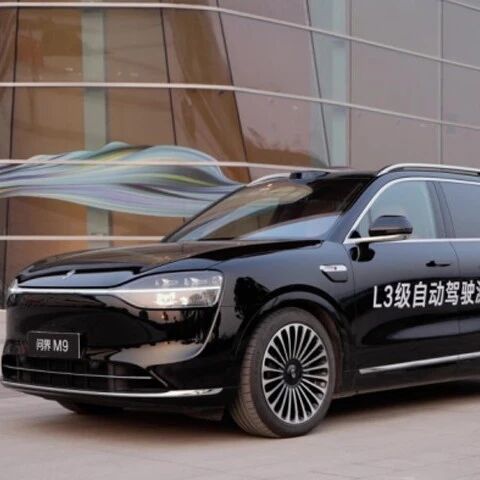
鸿蒙智行开启的L3路测,通向一个怎样的未来?
36氪· 2025-12-26 13:08
Core Viewpoint - The article discusses the recent approval of L3 conditional autonomous driving vehicles by the Ministry of Industry and Information Technology in China, highlighting the significance of real-world testing by companies like Hongmeng Zhixing to validate their systems and advance the industry [1][3][28]. Group 1: L3 Development and Testing - Hongmeng Zhixing has initiated real-world testing of L3 autonomous driving systems in cities like Chongqing and Hefei, utilizing its mass-produced models, the Zun Jie S800 and Wen Jie M9, to validate performance under actual traffic conditions [1][3]. - The testing videos demonstrate the vehicle's ability to autonomously navigate, change lanes, and overtake in traffic, showcasing the system's capability to execute dynamic driving tasks without the driver needing to hold the steering wheel [13][15]. - The company emphasizes the importance of extensive real-world testing to bridge the gap between functional demonstrations and user trust in L3 systems, addressing challenges such as human-machine interaction and responsibility delineation [8][10][24]. Group 2: Technical and Safety Considerations - The distinction between L2 and L3 lies in the shift of responsibility from the driver to the system, necessitating a robust safety engineering framework focused on system reliability and extensive validation standards [7][24]. - Hongmeng Zhixing's L3 system is built on the WEWA architecture, which allows for the creation of complex virtual driving scenarios, enabling the system to learn from extreme situations and improve decision-making capabilities [15][16]. - The company has developed a multi-source sensor array to enhance perception capabilities, ensuring reliable performance in challenging conditions such as heavy rain and fog [19][21]. Group 3: Market Outlook and Industry Impact - The market for L3 autonomous vehicles in China is projected to grow significantly, from 150 billion yuan in 2025 to 800 billion yuan by 2030, with a compound annual growth rate of 38.7% [25][30]. - Hongmeng Zhixing's proactive approach in L3 testing positions it as a leader in the industry, setting a high standard for engineering validation and potentially reshaping user trust in autonomous driving technology [26][30]. - The company aims to establish a competitive edge through data-driven improvements and a comprehensive safety framework, addressing the industry's need for reliable autonomous vehicles [16][30].