市值风云

Search documents
从底仓到增强:解码杨冬团队“主观+量化”工具化配置策略
市值风云· 2025-12-02 10:09
Core Viewpoint - The A-share market has shown a structural differentiation in the first 11 months of this year, with new economy sectors like artificial intelligence and innovative pharmaceuticals leading the market, while traditional sectors like liquor have underperformed, creating a stark contrast [2][3]. Investment Strategy - The significant differentiation between new and old market drivers has become a key factor in investment success this year. The rapid expansion of ETF management scale and the issuance of floating fee rate funds have led public funds to focus more on performance benchmarks, resulting in clearer investment styles and directions [3][4]. Core and Satellite Strategy - The "core + satellite" strategy is recommended for investors as a stable allocation method. Core assets should be balanced and historically stable with low drawdowns, while satellite assets should target emerging industries with greater return elasticity. This approach is essential for funds to generate excess returns across different market conditions [4]. Performance of Fund - The Guangfa Multi-Factor Fund (002943) has shown impressive long-term performance, with a net value growth rate of 376.1% from early 2018 to November 28, 2025, translating to an annualized return of 21.82%. It has consistently outperformed major indices during bull and bear markets [5][8][9]. Fund Management - The fund is managed by experienced professionals, including Yang Dong, who has 19 years of experience in investment management. The fund's holdings are well-diversified across 30 industries, and it employs a dynamic adjustment strategy based on a "macro four-cycle" framework to capture excess returns [10][11]. Sector Allocation - The fund has effectively managed its exposure to the electronics sector, increasing its allocation significantly in 2024 and adjusting it based on market performance. This strategic allocation has allowed the fund to maintain a competitive edge [12]. Satellite Asset Tools - The Guangfa team has developed Smart Beta and thematic enhancement products to provide investors with tools for enhanced returns. These products aim to achieve stable excess returns through a combination of strategies, catering to various investor preferences [17][18]. New Product Launch - The Guangfa Quality Selection Fund, utilizing a "PB-ROE" strategy, has been launched to adapt to changing market preferences, focusing on quality and valuation. This strategy aims to identify undervalued companies with strong profitability potential [23][24].

在手订单超百亿!轨交减振全球第一,风电叶片国内“唯二”,不香嘛?
市值风云· 2025-12-02 10:09
Group 1 - The global wind power market remains highly prosperous, with a record new installed capacity of 117 GW expected in 2024, increasing to 138 GW in 2025, and continuing to grow at a CAGR of 8.8% until 2030 [4] - TPI, a leading global wind turbine blade manufacturer, filed for bankruptcy protection in August 2025 due to ongoing losses and insolvency, currently undergoing debt restructuring [6] - TPI holds approximately 10% of the global blade market share in 2023, with a higher market share of 27% in non-China markets, indicating significant shifts in the competitive landscape of the global wind blade market [6]

中国中免:封关东风,静待破局
市值风云· 2025-12-01 10:10
Core Viewpoint - The upcoming full closure operation of Hainan Free Trade Port marks a new stage of high-level opening in China, with China Duty Free Group (601888.SH) positioned as a key beneficiary due to its dominant position in the offshore duty-free market [3][4]. Policy and Strategic Significance - The closure operation is designed to create a new regulatory framework of "one line open, two lines controlled, and free within the island," significantly reducing tariffs on approximately 74% of goods, covering 6,600 tariff items, thus transforming Hainan into a "systemic open highland" [4][5]. - This policy change will create a favorable environment for duty-free and specialty goods, enhancing the development prospects for companies like China Duty Free Group [5]. Benefits for China Duty Free Group - The closure operation will bring three major policy benefits: 1. Continuous optimization of offshore duty-free policies, with increased quotas and expanded categories, directly benefiting China Duty Free Group as the market leader [6]. 2. Revolutionary upgrades in "island consumption" scenarios, allowing local residents and long-staying tourists to enjoy new consumption privileges, enabling the company to explore diversified business models [6]. 3. Significant improvements in supply chain efficiency, allowing better integration with international supply chains, reducing procurement costs and turnover times, thus enhancing price competitiveness and profitability [6]. Competitive Advantages - China Duty Free Group has established formidable competitive barriers through: 1. Exclusive licensing and first-mover advantages, being the only company with full duty-free channel licenses and extensive early investments in Hainan [8]. 2. Scale effects from partnerships with over 1,000 global brands, providing strong purchasing power and ensuring product diversity and exclusivity [8]. 3. Strong brand recognition and operational experience, making "China Duty Free" the preferred brand for duty-free shopping in China [8]. Future Growth Potential - The company's growth potential is reflected in three aspects: 1. Market expansion as Hainan aims to become an international tourism consumption center, with increasing tourist numbers and spending power [8]. 2. Consumption upgrades, benefiting from the trend of luxury goods consumption returning to China, with Hainan as a key destination [8]. 3. Business model innovation, exploring high-end taxable goods retail, brand flagship stores, and immersive experience consumption [9]. Financial Performance - In the first three quarters of 2025, the company reported revenues of 39.86 billion yuan, with a net profit of 3.05 billion yuan, reflecting year-on-year declines of 7.3% and 22.1% respectively [13]. - However, Q3 2025 showed signs of stabilization with revenues of 11.71 billion yuan, a slight year-on-year decrease of 0.4%, indicating a narrowing decline compared to earlier in the year [13][18]. - The gross profit margin remained high at 32.5%, showing a 0.5 percentage point increase from 2024, suggesting potential for recovery as the closure policy is implemented [18]. Market Trends - The Hainan offshore duty-free market is beginning to recover, with sales figures showing initial positive effects from new policies, indicating a potential expansion of the consumer base to include international travelers [18][19].


震荡市追求稳健增值 银华盛安六个月持有混合今起发行
市值风云· 2025-12-01 10:10
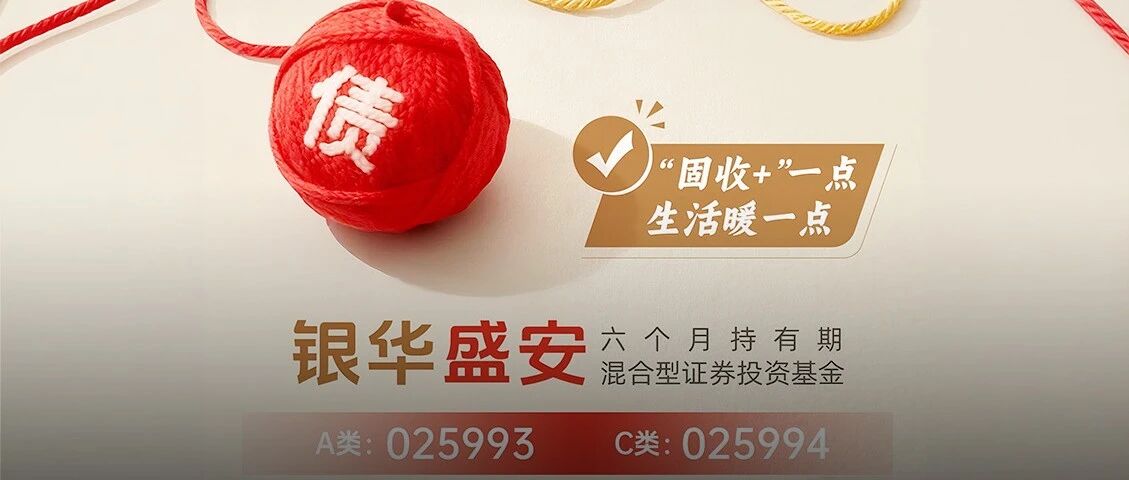
Group 1 - The core viewpoint of the article highlights the emergence of "fixed income +" as an ideal investment choice for diversifying portfolios amid increasing market volatility and a low interest rate environment, with total net assets of "fixed income +" funds reaching approximately 2.75 trillion yuan by the end of Q3 2025, marking a historical high [1] - "Fixed income +" products are defined as mixed investment strategies that primarily allocate to fixed income assets while including a small portion of equity assets to enhance returns, aiming for absolute returns that exceed pure fixed income products while controlling volatility [1] - Historical backtesting of the representative index for "fixed income +" products, the hybrid bond fund index, shows its ability to perform well in rising markets (52% increase from 2012 to 2015) while maintaining lower losses in declining markets (-3.36% from 2021 to 2024) compared to mixed fund indices [1] Group 2 - The newly launched Yin Hua Sheng An Six-Month Holding Mixed Fund is a hybrid bond fund that invests 10%-30% of its assets in equity and convertible bonds, with at least 10% allocated to domestic stocks and a maximum of 50% in Hong Kong Stock Connect stocks [1] - The fund is managed by Yu Lei, who has over 20 years of experience in pension management, focusing on maximizing long-term returns while controlling performance drawdowns, as evidenced by the 6.81% net value growth of her representative product since her appointment [1] - The fund also imposes a minimum holding period of six months for each share, encouraging investors to maintain their positions [1] Group 3 - Looking ahead, the liquidity and risk appetite of investors are expected to weaken in Q4, leading to a market characterized by consolidation, suggesting that investment portfolios should be balanced to reduce volatility [2] - Investors are encouraged to consider the Yin Hua Sheng An Six-Month Holding Mixed Fund as a means to participate in equity market opportunities while managing risk [2]
生物科技ETF迎来黄金布局时机,标普与纳指ETF投资机会全透视
市值风云· 2025-12-01 10:10
生物科技ETF价值凸显,但慎防短期溢价风险。 作者 | RAYYYY 编辑 | 小白 刚刚过去的11月,生物科技ETF成为市场最大赢家。 Choice数据显示,纳指生物科技ETF(513290.SH)和标普生物科技ETF(159502.SZ)分别以显著涨 幅位居全市场ETF月度涨幅排名第一、第二位,这一强劲表现凸显了生物科技板块在当前市场环境下 的投资价值。 | | | 11月ETF涨幅榜TOP10(规模大于1亿) | | | | --- | --- | --- | --- | --- | | 证券代码 | 证券名称 | 跟踪指数名称 | 基金规模合并值(亿元) 11月涨跌幅(%) | | | 159502. SZ | 标普生物科技ETF | 标普生物科技精选行业指数 | 22. 08 | 14. 03 | | 513290. SH | 纳指生物科技ETF | 纳斯达克生物科技指数 | 15. 37 | 12. 83 | | 513350. SH | 标普油气ETF | S&P Oil & Gas Exploration & Production Select Industry | 6. 19 | 4. 30 ...

景区收入连跌6年,却砸9.6亿买地!宋城演艺关联交易惹众怒,“骚操作”早有前车之鉴
市值风云· 2025-12-01 10:10
Core Viewpoint - The article raises concerns about the governance level of Songcheng Performance (300144.SZ) following its acquisition of 100% equity in Hangzhou Songcheng Industrial Co., Ltd. for 9.63 billion, suggesting potential conflicts of interest and financial mismanagement [3][4][6]. Summary by Sections Acquisition Details - Songcheng Performance announced the acquisition of Hangzhou Songcheng Industrial, which includes land and buildings adjacent to its theme park, previously leased for operations [5][9]. - The acquisition price of 9.63 billion is considered excessively high, given that Hangzhou Songcheng Industrial's net profit for 2024 is projected at only 2.03 million, implying a payback period of nearly 474 years [6][7]. Financial Concerns - The acquisition raises suspicions about the financial health of the controlling shareholder, Songcheng Group, especially during a downturn in the real estate market [5][6]. - There is a notable 31% pledge ratio of shares held by Songcheng Group, indicating potential liquidity issues [6]. Revenue Performance - Songcheng Performance's revenue from its theme park has declined from 769 million in 2018 to 530 million in 2024, highlighting operational challenges rather than a need for expansion [10][11]. - The article argues that the decision to acquire land and property should be based on increased revenue and visitor numbers, which are currently lacking [12]. Historical Context - The article references past financial mismanagement, including a significant impairment loss of 1.8 billion in 2021 related to the acquisition of the "Liujianfang" platform, raising further doubts about governance practices [16][18]. - Previous regulatory issues, including incomplete disclosures and accounting adjustments, have led to warnings from regulatory bodies, further questioning the company's governance [20][21]. Conclusion - The article concludes that the recent acquisition, combined with historical financial practices, necessitates a reevaluation of Songcheng Performance's governance and operational strategies [13][14].


科幻照进现实!全国首例“医保价”手术完成,脑机接口未来已来
市值风云· 2025-12-01 10:10
Core Viewpoint - The article discusses the advancements in brain-computer interface (BCI) technology, highlighting its clinical applications and the support from national healthcare policies in China, particularly the first BCI surgery covered by insurance in the country [3][10][22]. Summary by Sections What is Brain-Computer Interface? - BCI is a cutting-edge system engineering that connects the brain with external devices, enabling bidirectional information exchange through neural signal acquisition and decoding [6]. Types of BCI Technologies - **Invasive Technology**: Involves surgical implantation of electrode arrays into the central nervous system, providing high-quality signals but with significant health risks [7]. - **Non-Invasive Technology**: Utilizes wearable devices to collect brain signals without surgery, dominating the market but with lower signal quality [8][9]. - **Semi-Invasive Technology**: Balances between invasive and non-invasive methods, implanting electrodes within the skull but not penetrating brain tissue, suitable for patients needing high signal quality without full surgery [11]. Domestic and International Technology Comparison - **China**: Dominates in non-invasive technology, with 70% market share in 2024, and is pushing for breakthroughs in implantable devices [13]. - **USA**: Leads in invasive technology, with companies like Neuralink advancing clinical applications for various medical conditions [14]. - **Other Countries**: Countries like Japan and Germany are exploring semi-invasive technologies to balance performance and clinical feasibility [16]. Market Growth - The BCI industry is rapidly expanding, particularly in medical rehabilitation and consumer electronics, with China's market expected to exceed 8 billion yuan by 2025 and reach 15 billion yuan by 2027, reflecting a compound annual growth rate of over 40% [17]. - Globally, the market is projected to grow from approximately $2.35 billion in 2023 to $10.89 billion by 2033, with medical applications accounting for over 50% [19]. Driving Factors Behind Growth - **Policy Support**: The establishment of BCI as an independent billing item by the National Healthcare Security Administration in 2025 has facilitated commercialization [22]. - **Technological Advancements**: Improvements in signal acquisition precision and processing efficiency are enhancing product performance and reducing costs [22]. - **Funding and Collaboration**: Local governments are fostering partnerships between academia and industry, accelerating innovation and increasing investment in the BCI sector [22]. Industry Chain Analysis - The BCI industry encompasses a complete ecosystem from core hardware to signal processing and application in medical and consumer sectors, forming a comprehensive technological framework [23].

焦作万方:电解铝供给刚性核心赢家,利润大增72%领跑行业
市值风云· 2025-11-28 10:11
Core Viewpoint - The aluminum industry in China is undergoing significant transformation driven by the "dual carbon" goals, with companies like Jiaozuo Wanfang leveraging their integrated supply chain to enhance profitability and optimize structure by 2025 [3][5]. Industry Changes - The aluminum industry is experiencing a profound change characterized by three key features: 1. The production capacity ceiling is firmly established at 45 million tons, with any new capacity requiring equal or reduced replacement, shifting supply from elastic to rigid [5][6]. 2. The cost structure is undergoing a revolutionary change, with electricity costs accounting for 35%-40% of production costs, and the shift towards hydropower aluminum due to its clean and low-carbon advantages [6]. 3. Demand is shifting, with traditional sectors like construction slowing down while new sectors such as electric vehicles and photovoltaics are emerging as new growth points for aluminum consumption [6]. Company Advantages - Jiaozuo Wanfang has a high degree of resource self-sufficiency, holding a 30% stake in Zhao Gu Energy, which provides stable coal supply, and its power generation units meet nearly 90% of its electricity needs [7][9]. - The company benefits from low logistics costs due to its location in the Central Plains Economic Zone, close to aluminum consumption markets [9]. Financial Performance - In 2022, the company faced a significant decline in net profit to 250 million yuan, down 62% year-on-year, but began to recover in 2023 as aluminum prices stabilized [10]. - For the first three quarters of 2025, the company reported revenue of 4.98 billion yuan, a 4% increase year-on-year, and a net profit of 910 million yuan, a substantial increase of 71.6% [12]. - The company's gross margin improved to 20.9%, a 10 percentage point increase from 2024, and net margin reached 18.2%, with return on equity (ROE) at 13.7%, the highest in five years [12][14]. Competitive Position - Jiaozuo Wanfang's gross margin of 26.7% in Q3 2025 significantly outperformed competitors like China Aluminum and Yun Aluminum, which had margins of 18.4% and 18%, respectively [14][17]. - The company's low debt levels, with a debt-to-asset ratio of 14% and interest-bearing debt ratio of 5%, provide a strong risk resilience compared to its peers [17]. Future Outlook - The aluminum industry is expected to maintain a tight supply-demand balance, with limited capacity expansion due to the 45 million ton ceiling, while new demand from electric vehicles and energy transition projects will continue to drive growth [20].


全球“种草之王”,ROE常驻20%,产能扩张进行中!
市值风云· 2025-11-28 10:11
Group 1 - The core viewpoint of the article highlights the impact of the "Soochow Super" league on local tourism and consumption, as well as its initial influence on the capital market, particularly in sports-related stocks [4] - The excitement surrounding the league led to a surge in stock prices for related sectors, including sports equipment and local tourism, which attracted significant market attention [4] - As the initial enthusiasm wanes, stock prices have returned to a more rational level, yet there remain high-quality investment opportunities within these sectors [5]

流感季来袭,中药ETF与疫苗ETF或成投资焦点!
市值风云· 2025-11-27 10:45
Core Viewpoint - The article highlights the investment opportunities arising from the flu season, emphasizing both prevention and treatment strategies as key areas for potential growth in demand for related products [1][3]. Group 1: Flu Season Overview - The flu season in China is expected to peak earlier this year, with the flu activity showing an upward trend, currently at a medium epidemic level [4][5]. - The flu virus strain predominantly circulating this year is H3N2, which has led to lower pre-existing immunity in the population, resulting in a broader susceptible group and stronger transmission [8]. Group 2: Investment Opportunities in Prevention and Treatment - The rising flu cases are likely to increase public and market attention, driving demand for flu prevention and treatment products [9]. - Vaccines are recognized as the most effective and economical means of prevention, with the arrival of flu season directly catalyzing vaccine uptake [9]. - Two major vaccine ETFs are highlighted: Penghua Vaccine ETF (159657.SZ) with a fund size of 1.07 billion and a return of 5.63%, and another Vaccine ETF (562860.SH) with a fund size of 2.46 billion and a return of 17.53% this year [10]. Group 3: Traditional Chinese Medicine (TCM) ETFs - TCM products like Lianhua Qingwen and Jinhua Qinggan have proven effective in alleviating flu symptoms and shortening illness duration [14]. - Two TCM ETFs are mentioned: TCM ETF (159647.SZ) with a fund size of 13.81 billion and a return of 0.01%, and another TCM ETF (560080.SH) with a fund size of 26.78 billion and a return of -0.42% [15]. - The underperformance of TCM ETFs compared to vaccine ETFs is attributed to policy changes, market sentiment, and funding preferences [15]. Group 4: Future Outlook for TCM ETFs - The current flu outbreak is expected to significantly boost sales of related TCM products, potentially supporting company performance and serving as a catalyst for valuation recovery in the sector [16]. - For investors with a higher risk appetite looking for short-term opportunities, vaccine ETFs may be a more direct choice due to their stronger correlation with flu data [16]. - Conversely, for long-term investors seeking value, the currently low valuations of TCM ETFs may offer better safety margins [16].