克而瑞地产研究

Search documents
政策动态 | 上海发布“好房子”新规,广州允许自持住房入市销售(9.22-9.28)
克而瑞地产研究· 2025-09-29 03:36
Core Viewpoint - The term "Good House" has become a key focus in recent policies aimed at stabilizing the real estate market, with multiple government departments and local authorities implementing measures to promote high-quality housing and community development [1][2][4]. Group 1: Central Policies - Six ministries, including the Ministry of Housing and Urban-Rural Development, launched the "Good Materials Support Good Houses" initiative to enhance housing quality and establish pilot projects for good housing materials [2][3]. - The central government emphasized the need for reform-oriented approaches to address issues in housing and real estate, prioritizing the development of "Good Houses" as a key strategy for market stability [2][3]. Group 2: Local Policies - Thirteen provinces and cities issued 15 market stabilization policies, with a notable focus on promoting "Good Houses," including new regulations in Shanghai that expand the balcony area calculation for larger residential units [4][5]. - Various regions, such as Hubei and Dongguan, introduced home purchase subsidies to stimulate demand, with specific incentives for families with multiple children [4][5]. Group 3: Policy Trends - The frequency of policy announcements aimed at stabilizing the market has increased, particularly those related to "Good Houses," which saw five new policies introduced in a week [7][8]. - Tax incentives and public fund optimization policies have also seen a rise, with Guangzhou allowing the use of housing provident funds for down payments on existing homes [10].


总结与展望 | 2025年三季度中国房地产行业总结与展望(中)
克而瑞地产研究· 2025-09-28 09:18
Core Viewpoint - The real estate market is experiencing a decline in both supply and demand, with first-tier cities showing resilience in transaction growth despite overall market weakness [1][2][10]. Policy Section - New housing supply and demand have decreased by approximately 20% compared to the previous month, with a cumulative year-on-year decline of 18% [1][3]. - First-tier cities have shown a cumulative year-on-year increase in transactions, indicating strong market resilience [1][2]. Supply Section - In Q3 2025, the overall housing supply decreased significantly, with a 21% year-on-year decline in new supply across 110 key cities [3][4]. - First-tier cities experienced a 25% month-on-month decline in supply, but the year-on-year decline was less severe at 14% [7]. - Some second and third-tier cities, such as Kunming and Changchun, showed positive growth in supply, indicating localized recovery [8]. Transaction Section - New housing transactions fell to the lowest level in nearly five years, with a year-on-year decline of 18% in Q3 2025 [10][11]. - First-tier cities maintained a cumulative year-on-year transaction growth of 4%, outperforming second and third-tier cities [18][19]. - The overall transaction volume in second and third-tier cities decreased significantly, with some cities like Chengdu showing strong demand despite a decline [19]. Second-hand Market Section - The second-hand housing market remains relatively stable, with a cumulative year-on-year increase of 4% in transaction volume across 30 monitored cities [21][22]. - Cities like Shanghai and Shenzhen saw significant year-on-year growth in second-hand transactions, while others like Nanjing and Zhengzhou are still in a correction phase [23]. Price Section - The price decline in new homes across 70 cities is slowing, with first-tier cities like Beijing and Shanghai maintaining price increases [25][26]. - High-end properties in core cities are experiencing stable demand, while lower-tier cities face price corrections due to oversupply [26]. Inventory Section - The inventory of new homes is gradually decreasing, with a total of 45.56 million square meters reported by the end of August 2025, reflecting a 9% year-on-year decline [27][34]. - First-tier cities have manageable inventory levels, while second and third-tier cities face significant inventory challenges [34]. Future Outlook - The fourth quarter is expected to see a slight increase in new housing supply, driven by policy support and increased marketing efforts from developers [36][38]. - The market is likely to experience a weak recovery, with an anticipated annual transaction decline of around 10% [38][39]. - The "Good House" initiative is gaining momentum, with a focus on high-quality housing driven by policy support and market demand [75].

圆桌跨界对话:“一带一路”引领下中外投资前景与潜力 | 中东高峰论坛后记
克而瑞地产研究· 2025-09-28 09:17
Core Viewpoint - The forum highlighted the investment opportunities in the Middle East, particularly in the context of the Belt and Road Initiative, emphasizing the importance of policy communication and collaboration between China and Arab countries to enhance investment confidence and quality of cooperation [2][5][6]. Group 1: Investment Opportunities - The UAE, especially Abu Dhabi, is becoming a global investment hub, with significant potential in residential and commercial real estate development [6]. - The Belt and Road Initiative has facilitated greater connectivity and investment opportunities, with high rental yields and asset appreciation rates attracting Chinese investors [6][15]. - The UAE's tax advantages, including the absence of income tax, capital gains tax, and inheritance tax, significantly enhance its appeal for global investors [7][8]. Group 2: Strategic Considerations for Outbound Investment - Chinese companies should align their outbound investment strategies with national policies and the development strategies of host countries, such as aligning with Saudi Arabia's Vision 2030 [7]. - Understanding the local market dynamics, cultural nuances, and potential demand for construction projects is crucial for successful investment [7][12]. - The establishment of free zones and government support in the UAE provides a conducive environment for foreign enterprises to set up operations [8]. Group 3: Risk Management and Legal Strategies - Companies must be aware of geopolitical risks, project execution challenges, and operational risks when investing abroad, particularly in volatile regions [12][13]. - Effective risk management strategies include selecting appropriate legal frameworks and dispute resolution mechanisms to mitigate uncertainties in cross-border investments [17]. - The importance of data sharing and knowledge exchange between academia and industry is emphasized to reduce cooperation costs and enhance decision-making [9][10].

破解660亿㎡建筑“老龄化”危机,首个《房屋建筑体检实施评价导则》团标将于12月发布
克而瑞地产研究· 2025-09-28 09:17
Core Viewpoint - The article emphasizes the importance of establishing a standardized "health check" system for existing buildings in China, addressing the aging issue of the real estate sector and promoting a shift from reactive maintenance to proactive prevention [2][5]. Group 1: Implementation of Building Health Checks - The "Building Health Check Implementation Evaluation Guidelines" (hereinafter referred to as "Guidelines") will be officially released in December, providing a standardized approach to building inspections [2][5]. - The Ministry of Housing and Urban-Rural Development has initiated a nationwide building health check program, marking the beginning of a system for "building health checks, building insurance, and building retirement" [2][5]. - The guidelines aim to create a long-term mechanism for managing health and safety issues throughout the entire lifecycle of buildings [3][5]. Group 2: Market Demand and Industry Impact - As of 2024, China's total housing construction area exceeds 660 billion square meters, with 35% of buildings over 30 years old, highlighting the urgent need for building inspections [5]. - The building repair market in China has surpassed one trillion yuan, with an estimated 500,000 professionals expected to be involved in building health checks over the next five years [5][6]. - The implementation of the guidelines is expected to transform urban renewal from "treating existing problems" to "preventing future issues," creating new opportunities in the real estate sector [5][6]. Group 3: Features of the Guidelines - The guidelines introduce a "management + implementation" dual-core system, featuring a comprehensive health check mechanism that includes routine, basic, and specialized inspections [6][8]. - The guidelines advocate for the use of non-destructive intelligent technologies, such as drones and wall-climbing robots, to minimize secondary damage during inspections [6][8]. - A three-tier evaluation system categorizes inspection results into excellent, good, and satisfactory based on eight dimensions, providing a management benchmark [6][8]. Group 4: Systematic Framework and Coverage - The guidelines are designed to provide scientific and standardized implementation instructions, covering various aspects of building inspections, including structural integrity, environmental factors, and information management [8][9]. - The focus of the guidelines is not on assessing the quality of buildings but on evaluating the completeness and thoroughness of the inspection process [8][9]. - The guidelines are expected to be finalized and published by the end of December, marking a new standardized phase for building health checks in China [9].

每周精读 | 2025H1房企偿债能力、盈利能力、存货管理专题;《2025H1阿联酋住宅市场趋势报告》发布(9.22-9.26)
克而瑞地产研究· 2025-09-27 00:39
Core Insights - The article focuses on the real estate industry, highlighting the ongoing challenges and strategies of listed companies in managing inventory and financial performance amid a shrinking scale and risk mitigation [5][6][7]. Group 1: Inventory Management - A study of 50 typical listed real estate companies reveals that impairment provisions are still being made, indicating a continued focus on inventory management as companies navigate through "scale contraction" and "risk mitigation" [5]. - The report indicates that during the first half of 2025, these companies recognized inventory impairment losses amounting to 49.4 billion, contributing to a net profit loss of 90.2 billion [6]. Group 2: Profitability and Debt Management - The gross profit margin for the industry has recovered to 10.87%, yet net profits remain in the red, highlighting ongoing profitability challenges [6]. - The cash-to-short-term debt ratio continues to decline, with the cash holdings of the 50 companies at 1,186.7 billion, a decrease of 9.49% from the beginning of the period, indicating a need for improved debt management [7]. Group 3: Community Operations and Market Trends - Leading real estate companies are increasingly focusing on community operations, with firms like China Resources and Huafa establishing group IPs, reflecting a growing trend in the industry [9]. - The article discusses the demand for construction management in urban renewal, emphasizing the importance of understanding policies and balancing various stakeholder interests for companies looking to enter this market [10]. Group 4: Land Transactions and Policy Developments - In a recent land auction in Xiamen, four residential plots were sold for a total of 8.125 billion, all acquired by local state-owned enterprises, indicating a trend in land acquisition strategies [12]. - The article notes that the land supply has continued to decline, with a significant drop in the monitored land supply area by 25%, while the transaction area surged by 261%, reflecting a complex market dynamic [15]. Group 5: International Market Opportunities - The UAE residential market is experiencing growth driven by policy incentives, economic restructuring, and continuous population influx, presenting differentiated investment opportunities in core and emerging areas [18]. - The "2025 Middle East Real Estate Investment Summit" highlighted the potential for investment in the UAE, with discussions on the importance of regional partnerships and understanding local market dynamics [19][20].

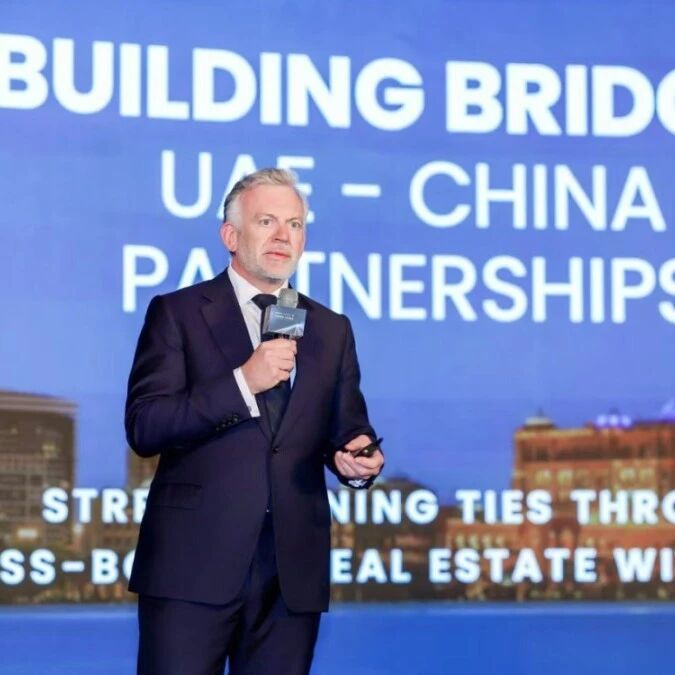
阿布扎比Jonathan Emery:ALDAR如何借力国家战略打造“阿联酋名片” | 中东高峰论坛后记
克而瑞地产研究· 2025-09-27 00:39
Core Insights - The forum "Global Vision · Middle East Opportunities - 2025 Middle East Real Estate Investment Summit" was held in Shanghai, showcasing the growing relationship between China and the UAE, with a focus on real estate collaboration [1][4][16]. Group 1: UAE Economic Growth - The UAE is experiencing rapid economic growth, with a projected real GDP growth rate of 3.8% in 2024, increasing to 4% in 2025 and 5% in 2026, making it one of the fastest-growing economies globally [6]. - The diversification of the UAE's economy is evident as it shifts focus from oil and gas to sectors like finance, digital technology, logistics, and tourism [6][7]. Group 2: Abu Dhabi's Real Estate Market - Abu Dhabi's real estate market is thriving, with property transaction volumes exceeding $14 billion in the first half of 2025, marking a 39% year-on-year increase [8]. - The share of overseas and foreign buyers in Aldar's sales has surged to 78% in 2024, up from 21% in 2021, with significant contributions from Chinese buyers [8]. Group 3: Key Developments and Attractions - Saadiyat Island is emerging as a cultural hub, featuring landmarks like the Louvre Abu Dhabi and upcoming museums, enhancing its appeal as a tourist destination [9]. - Yas Island is positioned as a vibrant entertainment hub, hosting attractions such as Ferrari World and Warner Bros. World, and is set to become a major lifestyle destination [10]. - Al Fahid Island is being developed as a coastal health destination, integrating luxury living with sustainability, with an expected development value exceeding $10 billion [10]. Group 4: Aldar's Role in Development - Aldar is a key player in shaping Abu Dhabi's urban landscape, focusing on residential, commercial, retail, and hospitality sectors, while expanding its operations beyond Abu Dhabi to Dubai, Egypt, and the UK [11]. - The company collaborates with leading brands and global institutions, enhancing its reputation as a reliable partner in the UAE's real estate development [11].
总结与展望 | 2025年三季度中国房地产行业总结与展望(上)
克而瑞地产研究· 2025-09-27 00:39
Policy - The central government is focusing on high-quality urban development and has initiated a series of policies to stabilize the real estate market, including the construction of a new real estate development model and urban renewal projects [5][7][28] - The central government has emphasized the importance of local governments in implementing these policies, with significant policy announcements from major cities like Beijing, Shanghai, and Shenzhen aimed at easing market pressures [13][15][19] Industry - The real estate market is experiencing a gradual recovery, with a narrowing decline in housing prices and a decrease in unsold inventory, although new home sales continue to face challenges [34][38][50] - The land market is seeing a rational cooling, with a 9% year-on-year decline in land transaction volume across 300 cities, while the average land price is increasing, indicating a shift towards quality over quantity in land supply [54][54] - The overall sentiment in the real estate sector is cautious, with developers adopting a more prudent approach to investments, focusing on high-quality land and projects [54][54]

专题 | 2025上半年房企偿债能力报告:现金短债比继续下滑,行业信用修复仍需时间
克而瑞地产研究· 2025-09-26 09:48
Group 1 - The cash holdings of 50 typical listed real estate companies decreased to 118.67 billion yuan, a reduction of 9.49% compared to the beginning of the period [1][5][7] - The financing policies for real estate companies remained relatively loose in the first half of 2025, with a total of 6.7 trillion yuan approved for "white list" loans, alleviating some financial pressure [3][8] - The overall debt pressure for real estate companies remains high, with total interest-bearing liabilities decreasing by only 0.95% to 51.816 billion yuan [5][15] Group 2 - 80% of real estate companies experienced a decrease in cash holdings, with state-owned enterprises showing a smaller decline compared to private firms [10][11] - The adjusted non-restricted cash to short-term debt ratio fell to 0.37, indicating increasing short-term repayment pressure for real estate companies [23][27] - The average net debt ratio rose to 108.71%, with private real estate companies experiencing a significant increase [29][30] Group 3 - The overall financing cost for real estate companies decreased to 3.92%, with state-owned enterprises benefiting from lower costs [32][34] - Nearly 80% of real estate companies have an adjusted quick ratio of less than 1, highlighting liquidity pressures [33][34] - The industry is still in a bottoming phase, with 56% of the top 100 real estate companies reporting a year-on-year decline in sales performance [34][35]

代建双周报 | 行业首部《代建企业综合能力评价标准》发布,金地管理《委托方服务白皮书》2.0发布(2025.9.13-9.26)
克而瑞地产研究· 2025-09-26 09:48
Industry - The first comprehensive capability evaluation standard for construction management companies has been officially released, known as the "Construction Management Company Comprehensive Capability Evaluation Standard" [1] - This standard aims to provide a fundamental framework for the industry, facilitating quick and intuitive understanding for clients regarding the capabilities of construction management firms [1] Company - Runze Management participated in the 16th Real Estate Scientific Development Forum, showcasing its management strategy that emphasizes efficiency and cost-effectiveness, achieving a construction period of 19 months for a large cultural and sports venue [1] - Longfor Qianting Digital released a white paper on the digital transformation of real estate, indicating a focus on smart solutions in the industry [1] - Xuhui Construction Management won a bid for a high-quality project in Qingbaijiang District, Chengdu, providing comprehensive construction management services [1] Projects - Longfor Longzhizao is collaborating with Dajia Health Investment to establish a benchmark elderly care community in Shanghai's Jing'an District, responding to the growing demand for high-end elderly care services [4] - Xuhui Construction Management has successfully delivered a high-end service apartment project in Nanjing's Hexi South G116 community [1] - Several projects have been awarded, including the Yuyiao Yangming East Road residential project with a contract amount of 458 million yuan and the Longquan Shutangfan land construction project with a contract amount of 349 million yuan [8]
上海建工李岚:中国企业布局中东需以“伙伴思维”深化合作 | 中东高峰论坛后记
克而瑞地产研究· 2025-09-26 09:48
9月23日, 由克而瑞主办的"全球视野·中东机遇——2025中东不动产投资高峰论坛"在上海举办 。克而 瑞集团董事长丁祖昱先生、克而瑞集团CEO张燕女士携手国内外、来自产学研跨界专家、领袖、高管出 席论坛并发布重要研究成果及主题演讲。 上海建工集团海外业务管理部总经理李岚女士围绕《中国经验,海外实践:海外项目的本土化策略》作主 题演讲,主要内容如下: 李岚 上海建工集团海外业务管理部总经理 一、中国经验全球化实践:三大路径破局 ▲点击图片查看论坛实录 上海建工53个在建项目遍布东南亚、非洲等26个"一带一路"沿线国家,以三类实践树标杆: 1、标杆项目显科技硬实力:建卡塔尔世界杯教育城体育场、乌兹别克斯坦塔什干新城银行大楼等项目, 展现技术与建造能力; 2、属地化运营扎根,打造长期根据地市场:比如深耕柬埔寨市场,参与巴萨河大桥、金边三环等基建, 成为当地"路桥"建设主力军; 1、从输出产品到产业共建:突破能源合作局限,共建新能源、先进制造产业链,将中东纳入全球产业布 局;从"项目输出者"转变为"长期合作者"。 2、从低价竞争到价值出海:对接中东4万亿美元主权资本,聚焦新能源、数字基建等高附加值项目,建 立"懂中 ...