创业邦

Search documents
出海已是必答题,中国新势力如何带领产业“再全球化”?
创业邦· 2026-01-24 04:10
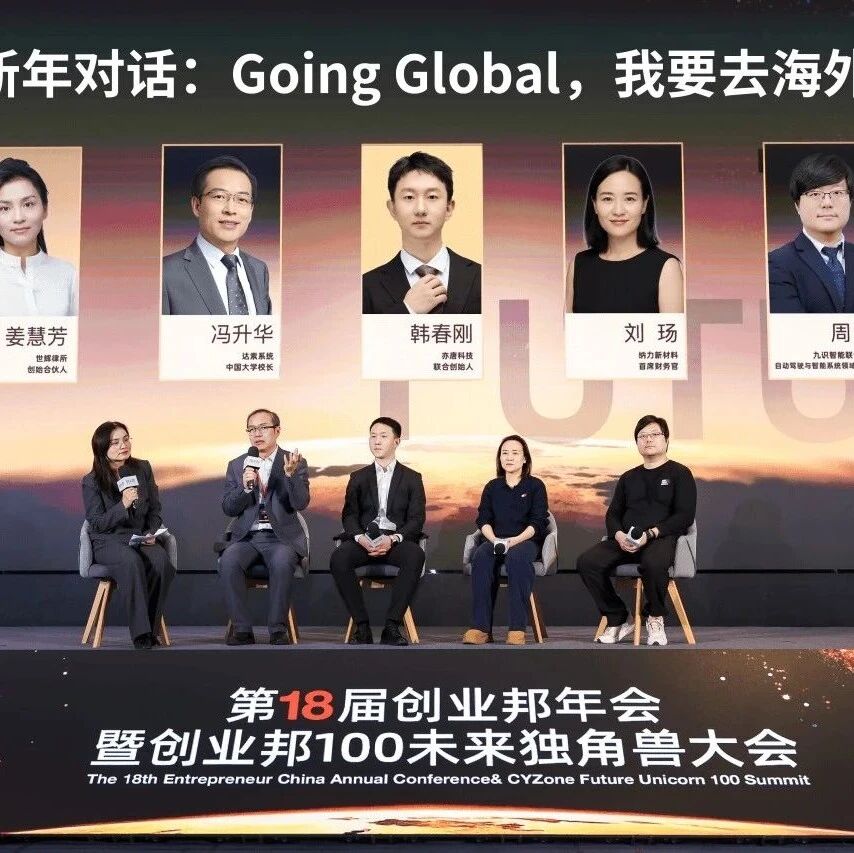
Core Viewpoint - The current wave of international expansion for Chinese technology companies has shifted from "lightweight" consumer products to hard technology breakthroughs, focusing on high-end manufacturing tools, software, and core materials, necessitating a comprehensive relocation of supply chains and production processes overseas [2][5]. Group 1: Industry Insights - The globalization logic for Chinese companies has fundamentally changed, making international expansion a mandatory strategy rather than an option [5]. - Companies like Dassault Systemes are pivotal in supporting Chinese enterprises by providing software that helps simulate and validate manufacturing processes before they are implemented abroad [8]. - The domestic market for high-end equipment, such as pick-and-place machines, is still largely dominated by international brands, indicating a significant opportunity for local companies to innovate and expand internationally [6]. Group 2: Strategic Considerations - Companies are considering international expansion primarily for two reasons: to complete the technology loop and to enhance industry resilience against market shocks [6][10]. - The strategy of companies like Nali New Materials involves not just selling materials but also providing technical services to ensure successful integration with international clients [10]. - The logistics and automation sector, represented by companies like RoboVan, emphasizes the importance of leveraging local partnerships and adapting to regulatory environments in target markets [12]. Group 3: Challenges and Solutions - Companies face significant challenges in adapting to local regulations and operational practices when entering foreign markets, which can lead to operational inefficiencies [15][16]. - The need for a skilled labor force in new markets is critical, and companies must negotiate labor agreements to ensure access to qualified workers [16]. - Compliance with international standards, such as carbon emissions regulations, is essential, and companies can utilize simulation technologies to preemptively address these challenges [18]. Group 4: Future Outlook - The future of international expansion for Chinese companies will rely on a combination of technological innovation and localized service offerings to create unique value propositions in global markets [20]. - Companies are encouraged to prioritize partnerships with established local firms to navigate regulatory landscapes effectively and enhance their market entry strategies [20].

哈佛辍学“三剑客”,做AI芯片,刚刚融了35亿
创业邦· 2026-01-24 04:10
专用芯片正在崛起。 作者丨漫地 编辑丨 关雎 三位 从哈佛辍学的 00 后,最近刚为自己的人工智能芯片初创公司 Etched.ai 融了 5 亿美元。 这是人工智能硬件领域规模最大的融资之一,此轮融资使 Etched.ai 的估值接近 50 亿美元,总融资额也接近 10 亿美元。 Etched.ai 的创始人 Gavin Uberti ,今年才 24 岁。 他和另两位创始人 Chris Zhu 、 Robert Wachen 一同 从哈佛辍学后,致力于领导公司打造下一代 人工智能芯片,与芯片巨头英伟达不同的是,他 们 闯出了一条细分赛道 —— 做专用于当 前 AI 主流模型 Transformer 架构 的 ASIC 芯片,从而超越通 用 GPU 芯片。 ASIC 是为了某种特定的用途而定制设计的芯片,而不是像 CPU (中央处理器)或 GPU (图形处理器)那样可以运行各种不同类型的程序。 算力市场的逻辑正在生变。 Etched.ai 何以能挑战英伟达? 从哈佛辍学的创业者 Etched.ai 的成立,要从一位哈佛大学的辍学生 Gavin Uberti 说起。 在创立 Etched.ai 之前, Gavin ...


机构:2025年全球人形机器人出货量约1.8万台;我国首次实现火箭平台太空金属3D打印实验交付丨智能制造日报
创业邦· 2026-01-24 04:10
Group 1 - The largest automobile transport ship in China, capable of carrying 10,800 vehicles, has been launched, featuring a dual-fuel LNG and oil propulsion system that meets international emission standards [2] - IDC forecasts that the global humanoid robot market will see explosive growth, with shipments expected to reach approximately 18,000 units by 2025, representing a year-on-year increase of about 508% [2] - China has successfully completed its first space metal 3D printing experiment using a rocket platform, marking a significant advancement in utilizing additive manufacturing technology in microgravity environments [2] Group 2 - Blue Origin plans to conduct the third launch of its New Glenn rocket at the end of February, which will carry a satellite for AST SpaceMobile into low Earth orbit instead of the previously planned lunar mission [3]

10个亿,机器人赛道开年第一大融资来了
创业邦· 2026-01-24 01:10
以下文章来源于快鲤鱼 ,作者好好 快鲤鱼 . 创业邦旗下AGI矩阵号,寻找海内外创新性的AGI高成长公司,记录AGI商业领袖的成长轨迹。 作者丨好好 编辑丨小龙 图源丨自变量机器人官网 1月12日,自变量机器人完成A++轮融资,金额为10亿元人民币。字节跳动、红杉中国、深创投等顶 级机构领投。 图片来源:自变量官网 自变量成立于2023年12月,自成立以来,两年时间完成9轮融资。总金额超30亿元,估值从天使轮 的2亿元快速攀升至A++轮后的100亿元,实现50倍增长。 两年前,具身智能对公众而言还是一个相当陌生的术语。它不同于传统工业机器人基于预设程序执行 任务,而是指能通过"大脑"(智能模型)理解环境、自主决策的智能机器人。 如今,整个行业正迎来拐点。高工机器人产业研究所数据显示,2025年国内具身智能产业链发生 144次融资事件,融资金额达195亿元,平均单笔融资规模达到1.35亿元 。 自变量自创立之初就选择了技术难度极高的"端到端通用具身智能大模型"路线 。这与传统机器人分 模块、单任务优化的技术范式截然不同,目标是打造一个能统一处理感知、规划与控制的机器人"大 脑"。 光速光合合伙人蔡伟认为,这种路 ...
李飞飞的创企World Labs拟融资5亿美元,目标估值50亿美元;谷歌挖走情感语音智能企业Hume AI的CEO与多位工程师丨AIGC日报
创业邦· 2026-01-24 01:10
Group 1 - Google has invested in Japanese startup Sakana AI to enhance the influence of its chatbot Gemini in Japan, following a $135 million Series B funding round last year, which valued the company at approximately $2.6 billion [2] - AI expert Fei-Fei Li is in talks to raise about $500 million for her startup World Labs, targeting a valuation of nearly $5 billion, after previously securing $230 million in funding in 2024 at a valuation of $1 billion [2] - OpenAI's CEO Sam Altman announced that the company added over $1 billion in annual recurring revenue (ARR) from its API business in the past month [2] Group 2 - Google has signed a non-exclusive licensing agreement with emotional voice AI company Hume AI, resulting in the departure of Hume AI's CEO Alan Cowen and approximately seven other engineers to join Google's DeepMind team [2][3] - Hume AI plans to continue providing its technology to other leading AI labs and is set to release its latest model in the coming months, with the incoming CEO Andrew Ettinger emphasizing that voice will become a primary user interface for AI [3]


李亚鹏直播带货成总榜第一;理想汽车:批量闭店、裁员均为不实信息;马斯克称特斯拉FSD中国获批最快下个月?特斯拉中国回应丨邦早报
创业邦· 2026-01-24 01:10
Group 1 - Tesla's Full Self-Driving (FSD) system is expected to be approved in China as early as next month, according to CEO Elon Musk, although Tesla China has not confirmed this information [3] - Li Auto has denied rumors of mass store closures and layoffs, stating that only a few low-efficiency stores will be shut down this year, with a total of 548 retail centers planned by the end of 2025 [5] - The "Did You Die?" app's developer has been listed in the business anomaly directory due to being unreachable at their registered address, which the founder attributed to remote work [8] Group 2 - Suzuki plans to sell its vehicle manufacturing plant in Thailand to Ford, with the sale amount undisclosed, as Suzuki is set to withdraw from local production by 2024 [12] - MTG, the parent company of ReFa, announced the dissolution of its subsidiary in China due to continuous losses, despite the brand's online presence remaining operational [13] - The global humanoid robot market is projected to see explosive growth, with an estimated shipment of 18,000 units by 2025, marking a 508% year-on-year increase [21]



智界首款MPV参数公布;鸿海与三菱FUSO合作进军电动巴士,目标2027年接单丨汽车交通日报
创业邦· 2026-01-23 10:15
Group 1 - Tesla's CEO Elon Musk announced that the Full Self-Driving (FSD) system requiring driver supervision may receive regulatory approval in Europe and China as early as next month, aiming to open new growth avenues amid slowing car sales [2] - Foxconn (Hon Hai) plans to establish a joint venture with Mitsubishi FUSO to develop and produce electric buses, targeting to accept large orders in Japan by 2027 and expand into overseas markets [2] - Zhijie Automotive unveiled its first MPV, the Zhijie V9, with dimensions of 5359mm in length, 2009mm in width, and 1879mm in height, featuring a wheelbase of 3250mm and equipped with Huawei's full-stack intelligent automotive solutions [2] - The first shared battery product for heavy-duty trucks, the CTB400, has been produced at the Tianjin Intelligent Manufacturing Factory, marking a new phase in flexible production [2]

马斯克说“中国将最终赢得AI竞争”,有什么深意?
创业邦· 2026-01-23 10:15
Core Viewpoint - Musk's assertion that "China will be the biggest winner in AI competition" is based on the premise that electricity is the bottleneck for AI development, and China possesses the largest power infrastructure globally, which will enable it to surpass other regions in AI computing power [6]. Group 1: AI Competition Landscape - The AI competition has shifted from a focus on chips to the entire industrial infrastructure, revealing electricity shortages as a critical issue [8]. - From 2023 to 2025, the AI arms race centers around chip capabilities, particularly Nvidia's GPU architecture, which has seen limited power improvements [10]. - Despite advancements in domestic chip production, challenges such as ecological constraints and high-end equipment embargoes hinder progress, resulting in major AI firms like ByteDance and Alibaba not meeting their capital expenditure plans for AI [10]. Group 2: Electricity as a Bottleneck - By mid-2025, the focus of AI infrastructure development will pivot to electricity, as the power demands of AI systems outpace chip advancements [11]. - China has a total installed power capacity of 3.8 billion kilowatts, with projected electricity consumption of approximately 10.4 trillion kilowatt-hours in 2025, indicating a significant surplus even if global data centers were to rely solely on Chinese power [12]. - In contrast, the U.S. has an installed capacity of about 1,300 GW, with electricity generation only half that of China, and a lower redundancy level compared to China [14]. Group 3: Future Electricity Demand - The U.S. electricity consumption has stagnated over the past 20 years, with industrial electricity demand declining, leading to a projected increase in electricity prices due to rising AI power consumption [15][17]. - By 2030, AI electricity demand in the U.S. is expected to reach 10% of total consumption, potentially rising to 800-1,000 TWh by 2035, which could account for nearly 20% of total electricity use [17]. - The U.S. faces a structural electricity supply issue, with a significant risk of power shortages by 2027 if new capacity is not added [22]. Group 4: China's Electricity Advantage - China's electricity development strategy has resulted in a robust and redundant power supply system, with a projected total generation of 15 trillion kilowatt-hours by 2035, significantly outpacing the U.S. [25]. - The electrification rate in China is expected to reach 35% by 2030, surpassing the OECD average by 8 percentage points [25]. - In contrast, the U.S. is experiencing rising electricity prices, with residential and industrial rates higher than in China, indicating a shift away from historically low prices [28]. Group 5: U.S. Electricity Market Challenges - The U.S. electricity market is characterized by regional disparities and a lack of cohesive infrastructure, complicating the resolution of electricity supply issues [19][30]. - Proposed solutions include allowing large tech companies to build localized power grids, but this approach does not address the underlying generation and grid issues [28]. - The U.S. is exploring options such as gas turbines and nuclear power to meet future electricity demands, but these solutions face significant implementation challenges [30].

大众裁员裁到董事会,踢出1/3高管,20款新车今年反攻中国
创业邦· 2026-01-23 10:15
这只是大众"裁员35000人"计划的一部分。不仅如此,大众的德国德累斯顿工厂,上个月正式停产, 也是大众88年来首次关停本土产线。 裁员、关厂、重组架构……为的都是开源节流,毕竟去年三季度财报出炉时,大众已经亏损上百亿 元。 但省钱也是为了更好地卖车,大众打算今年面向中国火力拉满,已经准备好20款多新能源车,来华投 放了。 以下文章来源于智能车参考 ,作者有车有据 智能车参考 . 追踪AI+汽车新进展。量子位旗下汽车频道 来源丨智能车参考 (ID: AI4Auto ) 作者丨 杰西卡 谁能想到,德系汽车工业老大哥 大众 ,降本已经到这个地步了…… 集团大裁员裁到董事会头上,近 1/3的董事会成员 ,都会在今年夏天前被裁撤。 大众计划裁掉三成董事会成员 大众最近刚在官网发布公告,宣布了裁员重组的消息: 大众汽车集团旗下的核心品牌集团(BGC),将在 今年夏季之前 ,将董事会成员的人数减少约 1/3 , 从29人减少到19人 。 具体来说,大众旗下的主流品牌,包括大众乘用车、斯柯达、西雅特/Cupra、大众商用车等,管理 层都将只保留一位 CEO ,以及在 财务、销售和人力资源 方面各保留一位高管。 而各品牌 研 ...

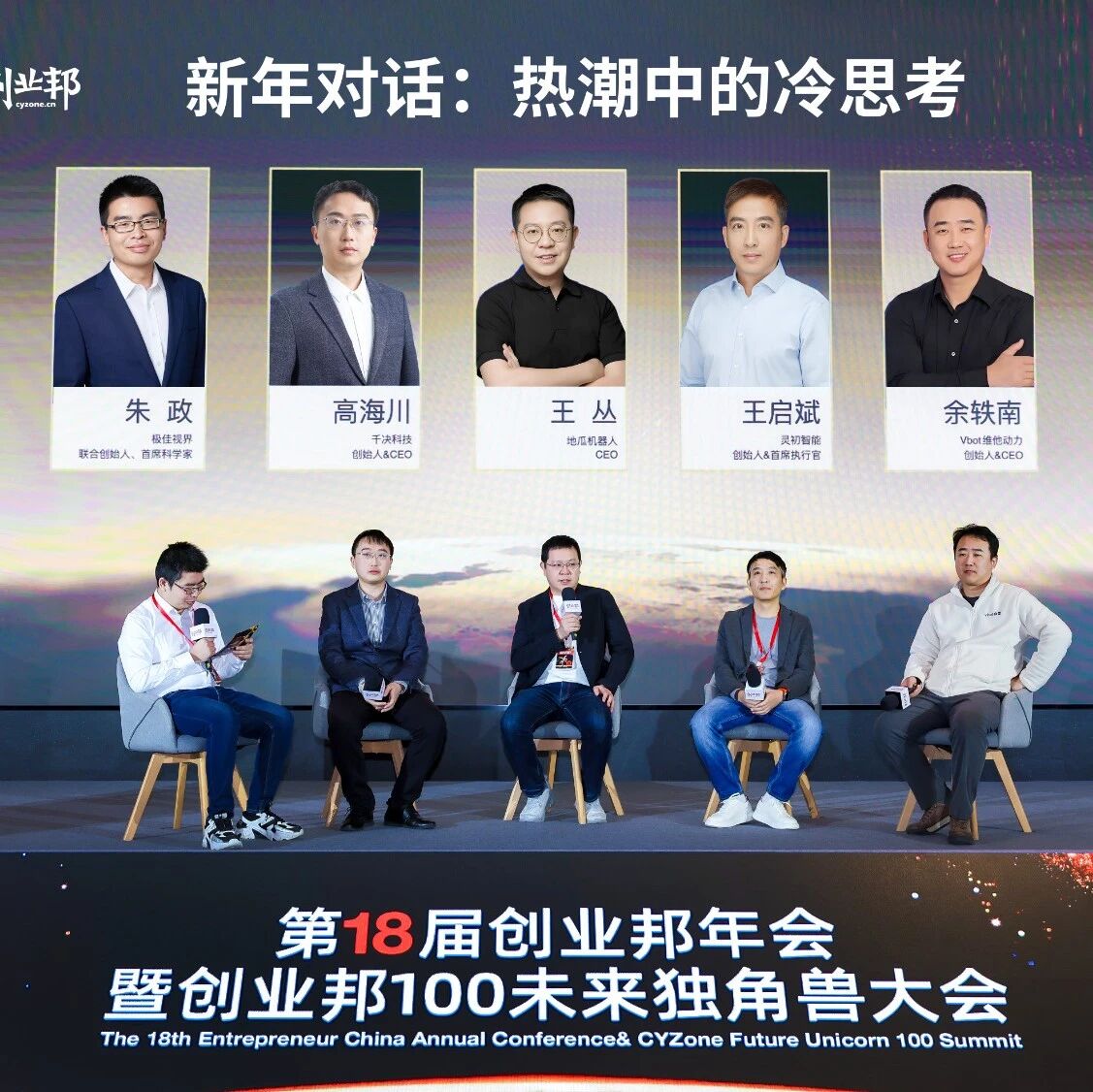
具身智能的冷思考:告别宏大叙事,奔向商业战场
创业邦· 2026-01-23 10:15
Core Viewpoint - The article discusses the rapid rise of embodied intelligence and the skepticism among industry practitioners regarding the feasibility of achieving true general-purpose robots, emphasizing the need for a realistic assessment of the technology's current state and future potential [2][3]. Group 1: Industry Insights - The conversation highlights the significant financial backing from national strategies that have propelled the development of brain-like robots, indicating a long-term commitment to this technology [5]. - Entrepreneurs express a shared vision of enhancing the intelligence and functionality of various smart devices and robots, focusing on practical applications rather than strictly adhering to the concept of "embodiment" [5]. - The discussion reveals a consensus that the term "general-purpose" in robotics is overly broad and often unrealistic, suggesting a more focused approach on specific operational domains (ODD) for practical advancements [6][7]. Group 2: Technology and Commercialization - The panelists caution against conflating impressive demos with actual commercialization, stressing that demos do not equate to market-ready products and that a clear understanding of the path from demo to commercial viability is essential [12][13]. - There is a recognition of the evolving nature of demos, which are now often aimed at ecosystem partners rather than end-users, leading to potential misunderstandings about their commercial applicability [14]. - The importance of balancing algorithm development with engineering capabilities is emphasized, with a call for teams to possess a diverse skill set that includes both technical and operational expertise [15][16]. Group 3: Future Outlook - Looking ahead to 2026, the key to survival for companies in the embodied intelligence sector will be their ability to transition from pure technology development to effective business operations and commercialization strategies [19]. - The discussion identifies three critical cycles in the industry: hardware, scenario, and data cycles, with a focus on the scenario cycle as particularly important for the upcoming year [20]. - The competitive landscape is expected to shift in 2026, with companies beginning to vie for orders and market share, indicating a more aggressive commercial environment [20].