创业邦

Search documents
恒者蓬勃!第18届创业邦年会暨创业邦100未来独角兽大会圆满举办
创业邦· 2026-01-17 11:05
Group 1 - The 18th Entrepreneurial Conference and the "2025 Future Unicorns" list were successfully held, focusing on high-potential tech companies valued between 1-10 billion USD [2][4] - The "2025 Global Unicorn Enterprises Observation Report" indicates a projected increase of 120 new unicorns globally by 2025, with the US and China leading in numbers [4] - The AI sector continues to dominate the emergence of new unicorns, with 53 AI unicorns expected, accounting for 44.2% of the total [4] Group 2 - The "2025 Entrepreneurial 100 Future Unicorns" list was compiled based on five dimensions, including founding team, technological barriers, commercialization ability, capital attraction, and growth momentum [18] - The average valuation of the listed companies reached 2.57 billion CNY, with 61% having completed five or more funding rounds [18] - 70% of the listed companies have achieved global expansion, covering key markets in Europe and North America [18] Group 3 - The investment environment is shifting from dollar dominance to state-owned capital, but innovation opportunities will continue to attract capital [6] - The Hong Kong stock market is expected to become a primary financing avenue for startups, with a focus on companies with a potential market value of 10 billion CNY [13] - The AI investment trend is characterized by a concentration of capital in leading firms and infrastructure, with a focus on "computing power" as a competitive edge [15] Group 4 - The medical industry emphasizes a long-term mindset, focusing on core technologies and clinical value to navigate through challenges [24] - Companies are encouraged to manage cash flow effectively, balancing long-term strategies with immediate operational needs [26] - The report on CVC development indicates a significant drop in active CVC numbers, with AI and smart manufacturing leading in investment events [29]


从广州菜市场到东南亚,全球门店超4000家,饺子界“蜜雪冰城”要上市了
创业邦· 2026-01-17 11:05
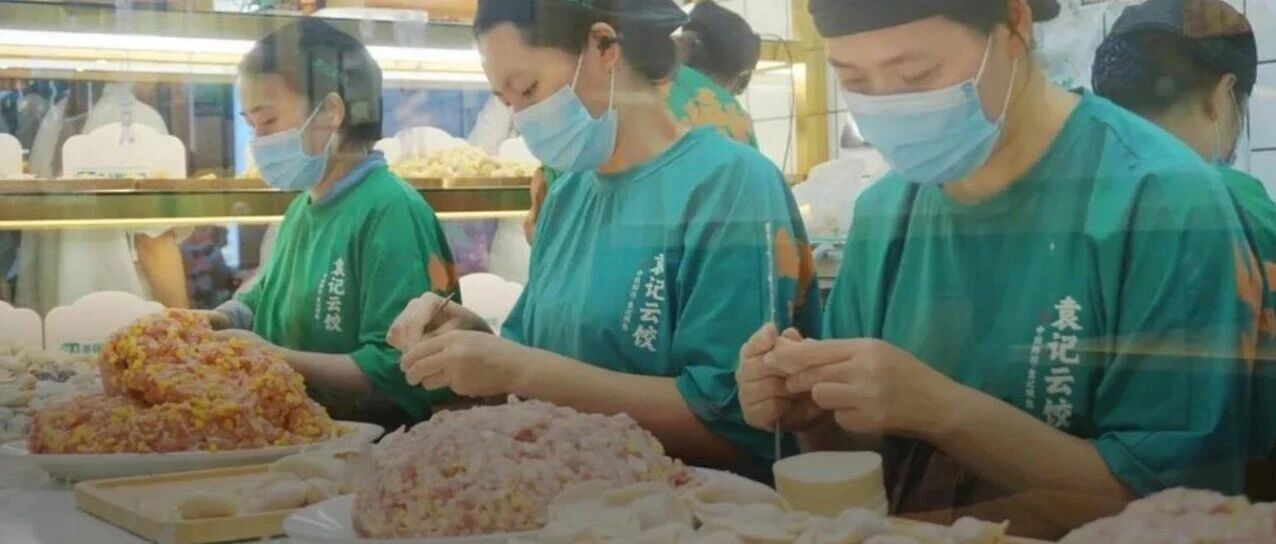
Core Viewpoint - Yuanji Food Group, known for its "Yuanji Cloud Dumplings," is preparing for an IPO in Hong Kong, marking a significant step towards capitalizing its business model and expanding its market presence [5][6]. Business Structure - Yuanji Food operates two main brands: "Yuanji Cloud Dumplings" and "Yuanji Weixiang," with the former contributing approximately 97% of total revenue [8][10]. - The revenue model primarily relies on selling ingredients to franchisees, with a significant portion of the business dependent on the performance of these franchisees [10][12]. Financial Performance - In 2023, Yuanji Cloud Dumplings generated revenue of 2.02 billion RMB, projected to increase to 2.56 billion RMB in 2024 [10][11]. - The total GMV (Gross Merchandise Value) for stores was 4.77 billion RMB in 2023, with an average order price decreasing from 26.5 RMB to 22.8 RMB from 2023 to 2025 [10][11]. - The adjusted net profit for the company was 1.79 billion RMB in 2023, with a gross profit margin of 25.9% [11][12]. Supply Chain and Operational Efficiency - The company has five factories and 24 warehouses, achieving a low inventory turnover of 12.1 days, which is significantly better than the industry average of 25 days [13]. - The supply chain's efficiency is crucial for maintaining low costs and ensuring product freshness, especially given the low profit margins [13]. Market Expansion and Challenges - Yuanji Food is expanding into lower-tier cities, with a notable increase in store numbers from 617 to 1,121 in these areas, indicating a strategic shift towards capturing new market segments [16][18]. - The brand faces challenges related to food safety and consumer perception, particularly regarding its "handmade" claims versus the reality of its supply chain model [15][16]. Competitive Landscape - Yuanji Cloud Dumplings leads the market with 4,266 stores, but faces competition from brands like Xijia De and Jixiang Dumplings, which are also expanding their footprints [20][22]. - The company is exploring new revenue streams through retail and international expansion, with a 46% revenue growth in its retail segment, although it currently represents a small portion of total income [22]. Conclusion - Yuanji Cloud Dumplings has established itself as a leader in the Chinese fast-food sector, but must navigate challenges related to brand perception, supply chain management, and competition to sustain its growth trajectory [22].
OpenAI核心旧部,再创业又内讧了
创业邦· 2026-01-17 03:23
来源丨量子位 (ID: QbitAI ) 作者丨h enry 这都什么样的硅谷剧情! 创业不到一年,联创被开!然后马上跑回了老东家… 最新消息称,2024年年底才从OpenAI出走、联合众OpenAI老将创立Thinking Machines Lab的 Barret Zoph ,在不到一年的时间里,已选择重返老东家。 虽然在没有竞业协议的硅谷,这样的"折返跑"并不罕见。 但这一次,Barret Zoph离场方式并不大……体面。 一头是前《连线》杂志资深记者Kylie Robison发文表示,Zoph的离职系因发生"不当行 为"(unethic problem) 被开除 。 另一头是,前OpenAI CTO,代班CEO(内乱版),现Thinking Machines Lab CEO Mira 在爆料 后,火速现身说法: 我们已经与Barret Zoph结束了合作关系,新一任CTO由Soumith Chintala担任。 更离谱的是,一位接近Thinking Machines的消息人士向连线杂志表示,Zoph曾向竞争对手泄露公司 机密信息。 这一顿刷屏给网友整的是一愣一愣。 最骚的是爆料一小时后,Zoph转推表示 ...

罗马仕正通过渠道商亏本清理库存充电宝;拓斯达发布四足机器狗“星仔”丨智能制造日报
创业邦· 2026-01-17 03:23
Group 1 - Roma's current strategy involves clearing inventory of power banks through distributors at significantly reduced prices, indicating a slight loss on clearance sales [2] - Ford is negotiating with BYD for battery supply for its overseas hybrid vehicle production, aiming to expand its hybrid model lineup [2] - The delivery of the domestically produced light sport aircraft "Aruola" in Hunan marks a significant breakthrough in the domestic aviation industry, achieving full localization of its power and avionics systems [2] Group 2 - TuoStar has launched a quadruped robot dog named "Xingzai," designed for firefighting and security applications, featuring advanced capabilities such as a night vision system and the ability to carry loads up to 80 kg [3]

马斯克预警:留给旧世界的时间只剩2000天,而中国握着唯一的“王牌”……
创业邦· 2026-01-17 03:23
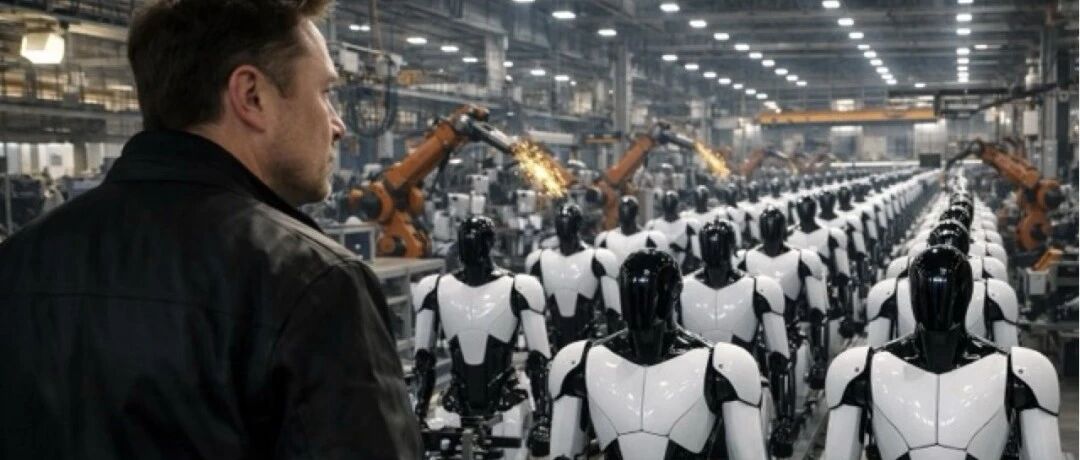
Core Insights - The article emphasizes the urgency of the next 3 to 7 years in the context of technological advancements and their implications for various sectors, particularly in China and the U.S. [5] Group 1: Key Predictions from Musk's Dialogue - Musk asserts that we are currently in a "singularity," with AI intelligence expected to surpass the smartest human individuals by 2026, and the total intelligence of AI surpassing that of all humanity by 2029 [9] - He warns that the upcoming crisis will revolve around transformers and electricity, highlighting China's significant advancements in energy infrastructure, which he claims are far ahead of the U.S. [11] - The job market will undergo a major transformation, with white-collar jobs being the first to be affected by AI, while blue-collar jobs will face a delay in impact until the widespread deployment of advanced robots [13] Group 2: Economic and Educational Implications - Musk predicts the end of traditional economic models, suggesting that saving for retirement will become irrelevant due to extreme deflation driven by AI and robotics, leading to a future of Universal High Income (UHI) [13] - He critiques the current education system, stating that schools will primarily serve social functions, as AI tutors will render traditional knowledge acquisition obsolete [16] - The future of education will focus on human-AI collaboration, with students needing to develop skills in directing AI rather than rote memorization [36] Group 3: Competitive Landscape and Manufacturing - Musk identifies three main players in the future of AGI: xAI, Google, and "China Inc.," emphasizing that only those with significant infrastructure and talent will compete effectively [40] - He highlights the impending obsolescence of the "population dividend" in China due to advancements in robotics, which will drastically reduce labor costs and challenge the current manufacturing paradigm [32] - Musk argues that the U.S. will struggle to compete in the energy sector, as China has significantly increased its power generation capacity, with projections indicating that by 2026, China's electricity output will be three times that of the U.S. [29][31]
重夺“汽车第一城”,西部大佬杀回来了
创业邦· 2026-01-17 01:36
Core Viewpoint - The competition for the title of "Automobile Capital" in China is intensifying, with Chongqing set to achieve a record automotive production of 2.788 million vehicles in 2025, marking a 9.7% increase, and a significant rise in new energy vehicle (NEV) production to 1.296 million units, up 36% [6][8]. Group 1: Historical Context and Challenges - Chongqing aimed to become "China's Detroit" in 2013, reaching a peak production of 3.156 million vehicles in 2016, but faced a decline starting in 2017, with production dropping to 1.383 million vehicles by 2019 [8][9]. - The decline was attributed to a mismatch between Chongqing's focus on mid-to-low-end vehicles and the market's shift towards mid-to-high-end preferences, alongside production capacity issues [8][9]. - The rise of NEVs began to disrupt the traditional automotive landscape, with national sales surpassing 100,000 units within three years after first exceeding 10,000 units in 2015 [9]. Group 2: Strategic Shifts and Collaborations - Changan Automobile, a leading player in Chongqing, announced a plan in 2017 to phase out traditional fuel vehicles by 2025, but initially struggled to keep pace with national NEV growth [9][10]. - A turning point occurred in 2021 when Changan partnered with Huawei and CATL to launch new high-end NEV brands, resulting in a significant increase in sales, with total vehicle sales reaching 2.913 million units and NEV sales up 51.1% to 1.11 million units [10][14]. - The collaboration with Huawei has been pivotal for both Changan and Seres, with Seres becoming the first company to benefit from Huawei's "Smart Selection" model, leading to increased competitiveness in the NEV market [13][14]. Group 3: Future Prospects and Competitive Landscape - The automotive industry is entering a new competitive phase, with Chongqing positioned to lead in NEVs and smart driving technologies, especially after receiving approval for L3-level autonomous driving vehicles [17][19]. - Chongqing's strategic focus on becoming a "Smart Connected New Energy Vehicle Capital" by 2024 aims to leverage its unique geographical features for testing smart vehicles [19][20]. - However, challenges remain, including a lack of competitiveness in AI technology and talent shortages, which could hinder Chongqing's ability to maintain its leading position in the next industrial competition [21][22].



贾国龙、罗永浩微博被禁言,微博CEO回应;谷歌DeepMind CEO:中国的AI模型仅落后美国几个月;2025年漫剧市场规模有望突破200亿元丨邦早报
创业邦· 2026-01-17 01:36
Group 1 - The article discusses the resignation of Song Xuan, the Vice President of Public Relations at Xibei, and the response from founder Jia Guolong, who emphasized that all decisions are ultimately his responsibility and expressed support for Song's future endeavors [3] - Jia Guolong and Luo Yonghao's Weibo accounts have been silenced, with Jia planning to respond to allegations made by Luo regarding Xibei [6] - Smart car has suspended its charging partnerships with several operators, including Star Charging and Teld, due to potential financial pressures, leading to the removal of these charging stations from the Smart app [7] Group 2 - Romashi is clearing inventory of power banks at significantly reduced prices, indicating a slight loss on clearance sales due to previous production before a certification was revoked [9] - Huawei, Xiaomi, and other brands have been included in Apple's trade-in program, allowing users to receive discounts on new iPhones when trading in older devices [9] - GAC Group has established a new business unit for the Trumpchi brand, with a leadership team composed of experienced personnel from within the company [9] Group 3 - Beijing Hyundai plans to launch four new products by 2026, including two electric vehicles, and is collaborating with Momenta to enhance advanced driver assistance systems [10] - WeRide has announced that its global fleet of Robotaxis has surpassed 1,000 units, with operations in cities like Guangzhou and Abu Dhabi [10] - Anthropic has appointed a former Microsoft executive as the General Manager for India, indicating its expansion plans in the region [11] Group 4 - The Japanese government has requested social media platform X to take measures against the misuse of its AI tool Grok for creating inappropriate content [13] - Google's DeepMind CEO stated that Chinese AI models are only a few months behind those in the US, highlighting the rapid advancements in China's AI sector [13] - Ford is in talks with BYD for battery supply for its overseas hybrid vehicle production, indicating a strategic partnership in the electric vehicle supply chain [15] Group 5 - The market for animated short dramas (manga) is projected to exceed 20 billion yuan by 2025, attracting a significant influx of talent into the industry [22] - Porsche has announced a 10% decrease in global deliveries for 2025, primarily due to supply chain issues related to EU regulations affecting certain models [23]

日本要求X平台采取措施应对Grok伪造色情图像;美团上线首个开源“重思考”模型丨AIGC日报
创业邦· 2026-01-17 01:36
Group 1 - Anthropic has appointed Irina Ghose, a former Microsoft executive, as the General Manager for India, with plans to open its first office in Bangalore by early 2026, supported by Google and Amazon [2] - OpenAI announced plans to strengthen the U.S. artificial intelligence supply chain through domestic manufacturing, including a new request for proposals focusing on key areas such as data center input devices and robotics [2] - The Japanese government has requested that the social media platform X take measures to combat the misuse of its AI tool Grok, which has been used to create and disseminate fake explicit content [2] Group 2 - Meituan has launched its first open-source "Re-Think" model, LongCat-Flash-Thinking-2601, which achieves state-of-the-art performance in core evaluation benchmarks and significantly reduces training costs for adapting new tools in real-world scenarios [2]
一块布,卡了英伟达的脖子?
创业邦· 2026-01-16 10:14
Core Viewpoint - The article emphasizes the critical role of high-end electronic fabric in supporting AI computing power, highlighting the dominance of Japanese companies in this sector and the emerging competition from Chinese firms. Group 1: Importance of Electronic Fabric - Electronic fabric is likened to the chassis of a supercar, essential for the performance of AI servers, which rely on advanced chips [7][10] - High-end electronic fabric is made from electronic-grade glass fiber, integrating cutting-edge materials science [8] Group 2: Market Dynamics - Japanese companies like Nitto Denko, Asahi Kasei, and AGC dominate nearly 70% of the global high-end electronic fabric market, creating an oligopoly [9] - These companies do not manufacture AI chips but control a crucial segment of AI computing power [10] Group 3: Competitive Landscape - Chinese companies are primarily engaged in the mid-to-low-end market, lacking the technological advancements of their Japanese counterparts [12] - Japanese firms have built a formidable barrier to entry through decades of research and development, creating a dense patent network [17] Group 4: Innovation and Breakthroughs - Chinese companies are beginning to challenge the Japanese monopoly, with firms like Honghe Technology successfully producing ultra-thin electronic fabric [32] - The development of low-dielectric fabric has also seen breakthroughs from companies like Linzhou Guangyuan, marking a significant shift in the competitive landscape [36] Group 5: Material Revolution - The next generation of quartz electronic fabric is emerging as a critical material for AI, with companies like Feilihua leading the charge in this new material revolution [40] - The article underscores the importance of material science in technological advancements, asserting that breakthroughs in materials are essential for the evolution of high-end manufacturing in China [56]

数据中心背后民怨沸腾,微软给马斯克上了一课
创业邦· 2026-01-16 10:14
Core Viewpoint - The article discusses the growing tension between tech giants' data center expansions and local community resources, highlighting Microsoft's new commitments to responsible infrastructure development as a potential model for the industry [5][6][10]. Group 1: Microsoft's Commitments - Microsoft President Brad Smith announced the "Community-First AI Infrastructure" plan, which includes five commitments: no electricity subsidies, reduced water usage, no tax breaks, job creation, and community feedback [6][9]. - The company promises not to raise local electricity prices and to cover additional electricity costs incurred by data centers, while also investing in local water systems to offset water usage [9][10]. - Microsoft has already implemented some of these commitments in Arizona, collaborating with local authorities to reduce freshwater loss and testing closed-loop cooling systems to minimize water consumption [9][10]. Group 2: Data Center Investment Trends - Major tech companies are engaged in an unprecedented data center investment race, with projected capital expenditures reaching $400 billion by 2025, primarily for AI infrastructure [12]. - The total capital expenditure for the five largest cloud service providers is expected to exceed $600 billion this year, marking a 36% increase from the previous year [12][13]. - Data center electricity consumption is projected to rise dramatically, with estimates suggesting it could exceed 400-426 terawatt-hours by 2030, accounting for 6.7-12% of the total U.S. electricity consumption [13][15]. Group 3: Community Concerns - Communities are increasingly concerned about the rising electricity costs and resource burdens associated with data centers, with wholesale electricity prices in densely populated areas increasing by up to 267% over five years [15][16]. - The water consumption of data centers is also alarming, with estimates indicating that by 2028, water usage for cooling could double, reaching between 129 million to 258 million tons [16]. - Local residents express dissatisfaction with the limited long-term job opportunities provided by data centers, as they typically require only 50 to 100 full-time employees once operational [16][20]. Group 4: Case Studies - Arizona exemplifies the resource tension, where data centers consume significant resources while nearby communities, such as the Navajo Nation, lack basic electricity [18][20]. - The approval process for data center projects in Arizona has faced community protests due to concerns over water usage and environmental impact, highlighting the conflict between short-term economic benefits and long-term community welfare [20][21]. - In contrast, Elon Musk's xAI company in Tennessee has taken extreme measures to meet energy demands, including deploying portable gas turbines without necessary permits, raising significant environmental concerns [23][24]. Group 5: Industry Response and Future Outlook - The article emphasizes the need for a new social contract between tech companies and communities, where companies must bear the costs of their resource consumption and contribute positively to local economies [35][36]. - Microsoft's commitments serve as a potential framework for the industry, but the article questions whether other tech giants will follow suit and whether these commitments will be fulfilled [36].