半导体芯闻

Search documents
中国台湾芯片设备,限制出口
半导体芯闻· 2025-11-17 10:17
Group 1 - Taiwan authorities announced a revision of the export control list for strategic high-tech goods, adding 18 new controlled items including advanced 3D printing equipment, semiconductor equipment, and quantum computers [2] - The revision requires Taiwanese manufacturers to apply for export permits for controlled items, with the Trade Bureau assessing the risk of military expansion before granting permission [2][3] - The Trade Bureau aims to align Taiwan's controlled goods list with international export control organizations, referencing agreements such as the Wassenaar Arrangement and the Nuclear Suppliers Group [3] Group 2 - The semiconductor industry is experiencing significant market fluctuations, with major chip companies facing declines in market value [4] - Huang Renxun described High Bandwidth Memory (HBM) as a technological marvel, indicating its importance in the semiconductor landscape [5] - Jim Keller expressed confidence in the RISC-V architecture, predicting its eventual success in the industry [5]


存储双雄,挣疯了
半导体芯闻· 2025-11-17 10:17
如果您希望可以时常见面,欢迎标星收藏哦~ 来 源 : 内容 编译自 chosun ,谢谢 。 三星电子和SK海力士于16日宣布,将继续推进大规模半导体设施投资。三星电子将在其平泽园区 启动第五座工厂(P5)的建设,计划于2028年竣工,以扩大下一代存储半导体(例如高带宽内存 (HBM))的产能。预计投资额至少为60万亿韩元。SK海力士将在龙仁半导体产业集群投资至少 128万亿韩元,建设共计四座晶圆厂,同样旨在提高高附加值存储产品(例如HBM)的产能。 这些大规模投资的背后,是人工智能(AI)普及带来的内存需求激增。由于人工智能数据中心和 其他基础设施的扩张,大型科技公司持续面临内存短缺的困境,市场普遍预期三星电子和SK海力 士明年的营业利润将远超今年的两倍。科技行业预测,此次"半导体超级周期"并非每七八年一次的 周期性繁荣,而是由结构性因素引发的史无前例的繁荣。 三星+SK海力士预计明年营业利润将超过200万亿韩元 据 科 技 行 业 和 证 券 公 司 预 测 , 三 星 电 子 今 年 的 合 并 营 业 利 润 预 计 将 比 上 年 增 长 15.14% , 达 到 37.6809万亿韩元。SK海力士 ...
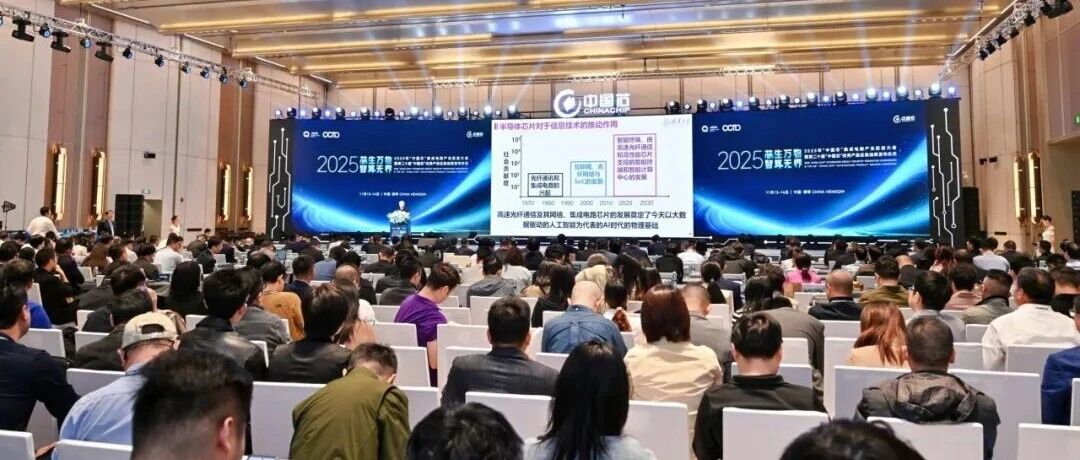
2025年“中国芯”集成电路产业促进大会暨第二十届“中国芯”优秀产品征集结果发布仪式在横琴举行
半导体芯闻· 2025-11-14 11:09
Core Insights - The 2025 "China Chip" Integrated Circuit Industry Promotion Conference was held in Hengqin, focusing on the theme "Chip Creates Everything, Intelligent Computing Without Boundaries" [1] - The conference announced the results of the annual "China Chip" product collection and inaugurated the "China Chip"-RISC-V demonstration base, aiming to enhance innovation resources in the Guangdong-Hong Kong-Macao Greater Bay Area [1][8] Industry Development - The integrated circuit industry is recognized as a strategic and foundational industry crucial for economic development and national security [8] - Guangdong is striving to establish itself as the "third pole" of the national integrated circuit industry, with the Hengqin area focusing on building a distinctive industrial chain and innovation ecosystem [8][13] - The conference highlighted the significant growth of China's integrated circuit industry, with the market size increasing from 15 billion yuan in 2005 to 646 billion yuan in 2024, and domestic products' market share rising from 0.81% to 14.5% during the same period [16] Event Highlights - The 20th anniversary of the "China Chip" product collection was celebrated, with a record 133 products awarded from 411 submissions, showcasing the continuous innovation in China's integrated circuit sector [18] - The conference featured various expert presentations on topics such as artificial intelligence and semiconductor cooperation between China and ASEAN [22] - The establishment of the "China Chip"-RISC-V demonstration base aims to promote the integration of RISC-V technology across government, industry, academia, and application sectors [20] Regional Collaboration - The Hengqin area is positioned as an international hub for the "China Chip" initiative, leveraging its geographical advantages to attract talent and foster collaboration between enterprises and educational institutions [27][28] - The region has seen significant growth in technology enterprises, with revenue increasing from 1.15 billion yuan in 2020 to 4.2 billion yuan in 2024, reflecting the effective transformation of policy benefits into industrial innovation [28]
刚刚,安世中国回击
半导体芯闻· 2025-11-14 11:09
Group 1 - The core issue highlighted is the interference of the Dutch government in the internal affairs of Nexperia, which has led to confusion and disruption within the company, particularly affecting Nexperia China [4][5] - Nexperia China asserts that it is capable of maintaining normal operations and ensuring full payment of salaries and benefits to its employees despite the challenges posed by the Dutch management and government interference [5] Group 2 - The Chinese government has emphasized its commitment to stabilizing the global semiconductor supply chain and has called for the Dutch government to take constructive actions to resolve the issues [4] - Nexperia China is actively engaging in "self-rescue" measures to maintain production and comply with government requirements for restoring exports for civilian use [4][5]

高通芯片,不得不用?
半导体芯闻· 2025-11-14 11:09
Core Insights - Samsung is expected to use Snapdragon 8 Elite Gen 5 in 75% of its Galaxy S26 models, with the Galaxy S26 Ultra exclusively featuring this Qualcomm flagship SoC in all markets [2] - Samsung's chip expenditure reached approximately $9 billion in 2023, driven by rising costs from Qualcomm's next-generation processes and self-developed CPU cores [2] - The price of Snapdragon 8 Elite Gen 5 is around $280 per unit, leading Samsung to increase the price of Galaxy S26 Ultra, as Exynos 2600 will only cover the remaining models [2] Group 1 - Samsung's continued procurement of Qualcomm chips is influenced by a contractual obligation that could incur significant penalties if terminated early [3] - The low yield of Exynos 2600 complicates Samsung's situation, making its reliance on Qualcomm a "double-edged sword" [3] - Qualcomm's aggressive business strategy has drawn criticism for being "greedy," as it charges high fees for 5G modem licenses and related patent royalties, pushing companies like Apple to develop their own chips [3] Group 2 - Apple's licensing agreement with Qualcomm for modems is set to expire in March 2027, suggesting that Samsung may have a similar long-term agreement [4] - The reality is that Samsung's self-sufficiency in chip production is not its strong suit, allowing companies like Qualcomm to expand their influence [4]

英特尔,出现重大调整
半导体芯闻· 2025-11-14 11:09
Core Insights - Intel's CEO, Lip-Bu Tan, acknowledged significant changes in the AI leadership team following the departure of Sachin Katti, who was appointed as Chief Technology and AI Officer earlier this year [2][3] - Katti is set to join OpenAI to help build computing infrastructure for its general AI goals, highlighting a shift in Intel's AI strategy [2][3] - Tan emphasized the importance of AI as a top priority for Intel, aiming to establish the company as a preferred computing platform for next-generation AI workloads [3] Leadership Changes - The announcement of Katti's departure coincided with the exit of Saurabh Kulkarni, a senior executive in the data center AI division, who has joined AMD [4][5] - Anil Nanduri has taken over Kulkarni's responsibilities in AI product management [5] - Tan has been actively restructuring Intel's organization to reduce complexity and enhance innovation, marking his second major adjustment in two months [6][8] AI Strategy and Market Position - Intel's AI strategy aims to challenge Nvidia's dominance in the AI infrastructure market, with a focus on high-performance GPUs and cost-effective systems [2][10] - Katti previously outlined a new strategy involving heterogeneous systems designed to optimize performance for different stages of AI workloads, claiming a 70% cost-performance improvement compared to existing homogeneous systems [10][11] - The company is committed to an open software approach that supports multiple infrastructure vendors without requiring developers to change their usage habits [11]

日本芯片巨头,暴跌!
半导体芯闻· 2025-11-14 11:09
Core Viewpoint - Kioxia is experiencing significant profit decline despite the booming demand for storage driven by AI, with a net profit drop of 62% year-on-year in Q2 FY2025 [2][3]. Financial Performance - Kioxia reported a net profit of 40.7 billion yen for Q2 FY2025, a substantial decrease from the previous year [2]. - The company's Q2 profit fell 74% compared to the previous quarter, indicating a challenging financial environment [3]. - Analysts had expected a profit of 47.4 billion yen, highlighting a shortfall in performance [2][3]. Market Dynamics - The decline in Kioxia's profits is attributed to a shift in product mix, with low-margin smart device products increasing to 35% of sales due to seasonal demand [3]. - Despite short-term pressures, Kioxia remains optimistic about future quarters, anticipating record revenue and strong profit recovery in Q3 FY2025, with revenue expected to grow by 12-23% to 500-550 billion yen [3]. NAND Market Outlook - Kioxia forecasts that NAND demand will exceed supply in 2025, leading to a mid-double-digit percentage growth in bit shipments [3]. - The company expects bit growth to accelerate to high double digits in 2026 as supply tightens further [3][4]. Future Developments - Kioxia plans to launch its 8th generation BiCS Flash in early 2026 to meet AI application demands, alongside the mass production of 245TB QLC SSDs and the introduction of the 10th generation BiCS Flash [4]. - The company anticipates a consistent annual growth rate of around 20% in NAND storage demand, primarily driven by the rising needs of AI data centers [4].

DDR5,再次暴涨!
半导体芯闻· 2025-11-14 11:09
Core Viewpoint - Samsung Electronics has raised the prices of some memory chips by up to 60% compared to September due to a severe shortage driven by the global surge in AI data center construction [2][3]. Price Increases - The contract price for Samsung's 32GB DDR5 memory module has increased from $149 in September to $239 in November [2]. - Prices for 16GB DDR5 and 128GB DDR5 have risen by approximately 50%, reaching $135 and $1,194 respectively; prices for 64GB and 96GB DDR5 have increased by over 30% [3]. Market Impact - The current chip shortage has led to panic buying among some customers, with major server manufacturers and data center builders struggling to secure sufficient products [3]. - Xiaomi, a major Chinese smartphone and electronics manufacturer, has warned that rising memory chip prices have increased the cost of smartphone production [3]. Competitive Position - The chip shortage has become a favorable situation for Samsung, which previously lagged behind competitors in the advanced AI chip sector [3]. - Samsung's slower transition to AI chips has enhanced its bargaining power in the memory business compared to smaller competitors like SK Hynix and Micron [3]. Future Price Expectations - Analysts expect Samsung to increase quarterly contract prices by 40% to 50% during the October to December period, surpassing the industry average increase of about 30% [3]. - There is strong confidence in continued price increases due to exceptionally strong demand and long-term agreements being signed by customers, often covering 2026 or 2026-2027 [4].
天准科技二十周年峰会隆重举行:感恩同行二十载,智创工业新未来
半导体芯闻· 2025-11-14 11:09
Core Viewpoint - Tianzhun Technology celebrates its 20th anniversary, reflecting on its journey in AI and industrial integration while looking forward to future opportunities and challenges in the industry [1][3]. Group 1: Historical Achievements - Tianzhun Technology has focused on "AI + Industry" for two decades, overcoming critical technology barriers and establishing itself as a benchmark enterprise on the Sci-Tech Innovation Board [3][5]. - The company has developed a dual-engine structure centered on "visual precision control platform" and "AI technology platform," achieving significant growth and gaining the trust of over 6,000 global clients [5][9]. Group 2: Current Initiatives - The launch of the "Meidao Fund" aims to support young talent in AI and the development of education in Suzhou, with a total donation of approximately 450 million yuan, consisting of 8 million shares and 8 million yuan in cash [7][9]. - Tianzhun Technology showcases its technological capabilities with a complete system from precise perception to intelligent decision-making, focusing on sectors like electronics, semiconductors, new energy vehicles, and robotics [9][11]. Group 3: Future Strategy - The company plans to deepen its AI strategy in industrial sectors, emphasizing breakthrough technologies, market positioning, and ecosystem development to empower the transformation of the manufacturing industry [13][15]. - Tianzhun Technology aligns with Suzhou's "AI + City" action plan, which aims to gather over 3,000 AI enterprises and achieve an annual growth rate of over 20% in the smart economy by 2026 [11][12].


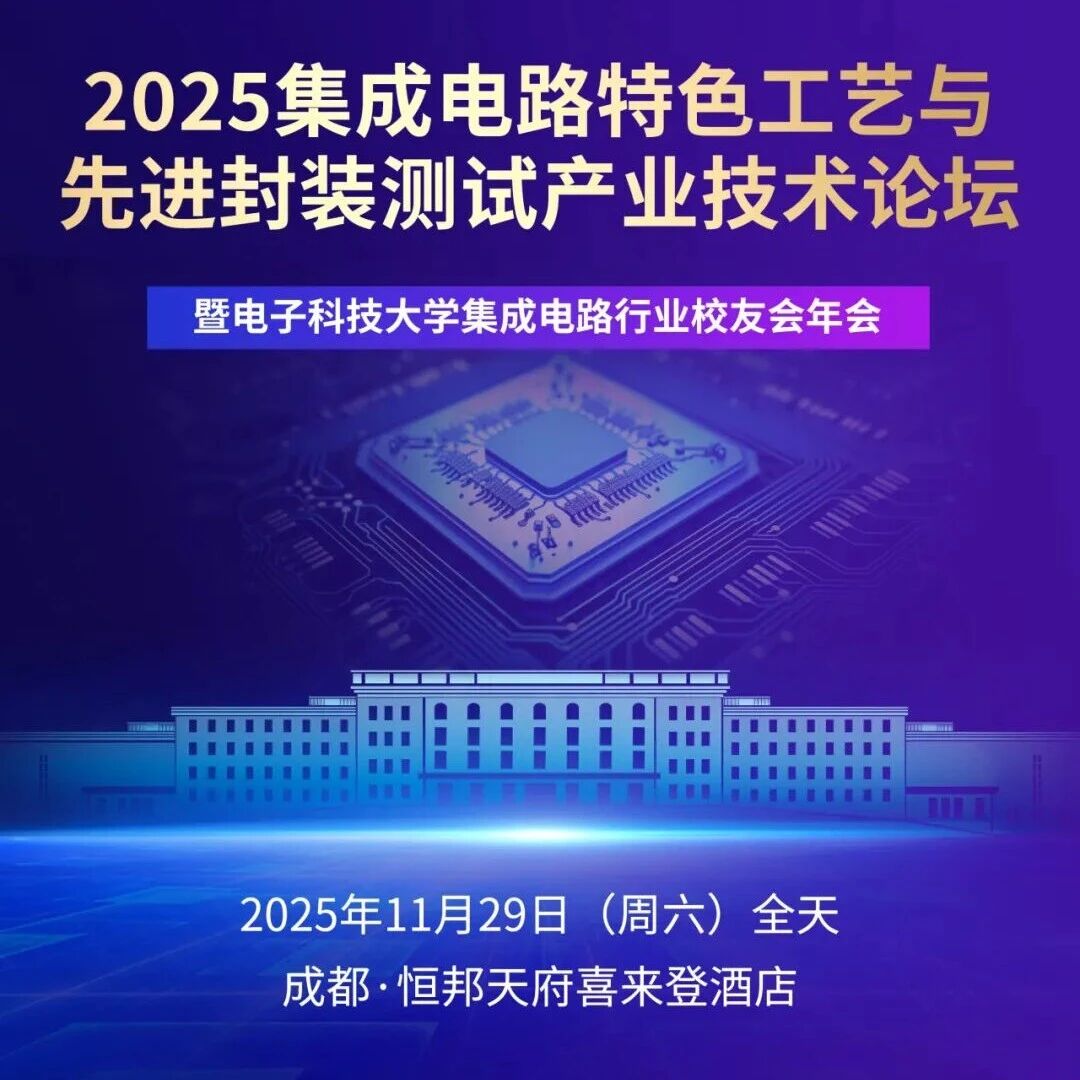
【大会议程|重磅嘉宾】2025集成电路特色工艺与先进封装测试产业技术论坛暨电子科技大学集成电路行业校友会年会
半导体芯闻· 2025-11-14 11:09
Core Viewpoint - The article discusses the trends and opportunities in the integrated circuit industry, particularly focusing on advancements in semiconductor technology, AI applications, and the development of advanced packaging techniques [5][6][7][8]. Group 1: Integrated Circuit Development Trends - The conference features discussions on the development trends of integrated circuits in the post-Moore era, emphasizing the importance of innovative materials and processes [5]. - Keynote speakers include prominent figures such as Wu Hanming and Li Yanrong, who address the challenges and innovations in power semiconductor technology [5][6]. Group 2: AI and Semiconductor Technology - The integration of AI in semiconductor technology is highlighted, with presentations on AI-driven advancements in power integration and the role of AI in enhancing data center efficiency [6][7]. - Discussions include the dual relationship between AI and TGV (Through Glass Via) technology, showcasing how both fields can benefit from each other [6]. Group 3: Advanced Packaging Techniques - The article outlines various sessions dedicated to advanced packaging technologies, including the development of glass substrates and their applications in integrated circuits [8]. - Experts discuss the challenges and innovations in silicon carbide (SiC) and gallium nitride (GaN) power devices, focusing on their industrialization and application in modern electronics [7][8]. Group 4: Industry Ecosystem and Collaboration - The conference emphasizes the importance of building an ecosystem for integrated circuits, involving collaboration among academia, industry, and government [10]. - The role of alumni networks in fostering innovation and investment opportunities in the semiconductor sector is also discussed [10].