半导体芯闻

Search documents
三星NAND,受挫!
半导体芯闻· 2025-09-16 10:33
Core Viewpoint - Samsung Electronics is facing challenges in the commercialization of its ninth-generation (V9) high-capacity NAND products, originally planned for last year, due to performance issues that require design and process adjustments [2][3]. Group 1: Product Development Challenges - The V9 NAND utilizes a 280-layer structure and began initial mass production in April last year with a 1Tb capacity based on TLC (Triple-Level Cell) technology, which stores 3 bits of data per cell [3]. - Samsung announced the start of V9 QLC (Quad-Level Cell) NAND mass production in September last year, which can store 4 bits of data per cell, offering advantages for high-capacity storage [3]. - However, early products encountered performance declines due to design issues, prompting Samsung to optimize the design and processes, with expectations to complete these improvements by the first half of next year [3]. Group 2: Market Position and Competition - The demand for high-capacity NAND products is rapidly increasing, particularly driven by the growth of the AI industry, which requires handling large volumes of data [4]. - Despite maintaining a leading position in the overall NAND market, Samsung is at a disadvantage in the QLC NAND segment, with an expected market share of only about 9% next year, compared to competitors like SK Hynix at 36%, Kioxia and SanDisk at 29%, and Micron at 17% [5]. - The importance of QLC NAND is growing as global tech giants invest and replace traditional NAND, indicating that Samsung must ensure stable mass production and expansion of its advanced products to benefit from this trend [5].


联发科首款2nm芯片,完成流片
半导体芯闻· 2025-09-16 10:33
Core Viewpoint - MediaTek has successfully completed the design tape-out of its first flagship SoC using TSMC's 2nm process technology, marking a significant milestone in their partnership and is expected to enter mass production by the end of next year [2][3] Group 1: Technology Advancements - TSMC's 2nm process technology introduces a new nanosheet transistor structure, enhancing performance, power efficiency, and yield [2] - Compared to the existing N3E process, the new technology increases logic density by 1.2 times, improves performance by up to 18% at the same power level, and reduces power consumption by approximately 36% at the same speed [2] Group 2: Strategic Collaboration - The collaboration between MediaTek and TSMC aims to maximize performance and energy efficiency across various applications, including mobile platforms, computing, automotive, and data centers [2][3] - MediaTek's General Manager highlighted the company's commitment to applying advanced semiconductor process technologies to diverse innovative solutions [2]

机构警告:下行周期将至!
半导体芯闻· 2025-09-16 10:33
Core Viewpoint - The semiconductor industry is facing a potential cyclical downturn despite the current AI-driven boom, as indicated by Morningstar's analysis, which suggests that the strong demand for AI-related sales may be reaching its peak [2][3]. Group 1: Semiconductor Industry Dynamics - The typical semiconductor cycle lasts about four years, and the current upcycle has been extended due to AI demand [2]. - Semiconductor billing revenue growth, a reliable indicator of industry health, has begun to slow, signaling that the industry may be nearing its peak [2]. - Weak sales in smartphones and consumer electronics are dragging down demand for non-AI chips [2]. Group 2: AI Investment and Market Sentiment - AI spending is expected to peak in 2025, with potential risks of a slowdown in 2026 due to macroeconomic challenges and weak consumer demand [2]. - Despite record mentions of AI in earnings calls by S&P 500 companies, the proportion of companies quantifying AI's impact on profits remains limited [3]. Group 3: Company-Specific Insights - TSMC is noted for its technological leadership and significant investments in the U.S., providing it with some risk buffer against industry-wide cyclical fluctuations [3]. - Even leading companies like TSMC cannot completely escape the cyclical nature of the semiconductor industry [3].

复旦微回应
半导体芯闻· 2025-09-15 09:59
Core Viewpoint - Fudan Microelectronics emphasizes its commitment to independent innovation and stable operations in response to being added to the U.S. BIS Entity List, highlighting its strategic reserves and diversified product offerings [2][3]. Group 1: Strategic Reserves - The company has strengthened its strategic reserves for core product lines, with inventory increasing from approximately 600 million yuan at the end of 2020 to about 3.1 billion yuan by mid-2025, enhancing supply chain stability and risk resistance [3]. Group 2: Industry Collaboration - Fudan Microelectronics maintains an open cooperation mindset, enhancing supply chain diversification since 2022 and deepening collaboration with domestic and international partners, which has improved supply chain resilience and production capacity [4]. Group 3: Frontier Innovation - The company has established a research and development platform for FPAI heterogeneous fusion architecture chips, covering a full range of computing power chips from 4 TOPS to 128 TOPS, with the first 32 TOPS product progressing well, supporting stable operations and long-term value growth [5].
张忠谋身价曝光
半导体芯闻· 2025-09-15 09:59
Group 1 - TSMC's stock price has reached new highs, significantly increasing the wealth of its executives and board members, with notable holdings from board member Zeng Fan Cheng valued at 37.135 billion TWD [2] - Former chairman Morris Chang, if he had not sold any shares since his retirement in 2018, would have seen his stock value rise to 157.673 billion TWD, an increase of over 129 billion TWD [2] - Current independent director Lin Quan holds 126 shares valued at approximately 160 million TWD, while chairman Wei Zhejia holds 6,825 shares worth nearly 8.6 billion TWD [2] Group 2 - Not all executives have benefited equally; Vice President He Jun, who joined in 2017, holds only 78 shares valued at about 99.82 million TWD, making him the only senior executive not to exceed a billion TWD in wealth [3] - He Jun has pledged 28 of his shares, indicating a significant disparity in stock holdings among TSMC's management [3]
英伟达,被进一步调查
半导体芯闻· 2025-09-15 09:59
Core Viewpoint - Nvidia is under investigation by China's State Administration for Market Regulation for allegedly violating antitrust laws related to its acquisition of Mellanox Technologies, which was valued at $6.9 billion in 2020 [2][5][31]. Group 1: Investigation Details - The investigation stems from Nvidia's 2020 acquisition of Mellanox, which is significant for supercomputing and artificial intelligence [5][6]. - The State Administration for Market Regulation had previously approved the acquisition with specific conditions to prevent anti-competitive practices, such as prohibiting forced bundling and unreasonable trading conditions [5][31]. - The exact nature of Nvidia's violations of these conditions is currently unclear [5]. Group 2: Mellanox Overview - Mellanox, founded in 1999, is a leader in high-performance interconnect technology, particularly known for its InfiniBand technology, which is used in over half of the world's supercomputers [6][7]. - The acquisition of Mellanox by Nvidia is seen as a strategic move to integrate core technologies essential for cloud-based AI solutions [7][9]. Group 3: Market Impact - The merger is expected to create a significant competitive barrier in the AI chip market, as Nvidia's GPUs and Mellanox's networking technologies will be tightly integrated [9][10]. - Nvidia's dominance in the GPU market (90-95% globally) and Mellanox's strong position in networking (55-60% globally) raises concerns about potential anti-competitive behavior post-merger [25][26]. - The combined entity's ability to control pricing and market access could limit competition, particularly in the rapidly growing AI and data center sectors [27][28]. Group 4: Regulatory Conditions - The approval of the acquisition included several conditions aimed at maintaining market competition, such as ensuring non-discriminatory practices in product sales and maintaining interoperability with third-party products [31][32]. - These conditions are legally binding and will be monitored by the regulatory authority for compliance [34].

日本芯片,难搞了
半导体芯闻· 2025-09-15 09:59
Group 1 - The southwestern region of Japan, known as "Silicon Island," is facing a land shortage as it seeks to build a semiconductor-focused economy [2] - Kyushu aims to create a technology research and manufacturing cluster similar to Taiwan's Hsinchu Science Park, but finding sufficient land for such a development is challenging [2] - As of March, Kyushu has 15 industrial sites available for development, totaling approximately 340 hectares [2] Group 2 - Oita Prefecture has identified 85 potential flat and accessible sites for development, covering a total area of 1,120 hectares, with 28 sites exceeding 15 hectares [3] - There are concerns that even if these sites are prepared, manufacturers may not invest in Kyushu due to past experiences of losing tenants during economic downturns [3] - The semiconductor industry is showing signs of losing momentum, with weak demand for electric vehicles and uncertainties from U.S. tariff policies affecting its outlook [3][4] Group 3 - A semiconductor equipment supplier in Kyushu predicts that the recovery of the market will be delayed until around 2027 [4] - Local governments are facing challenges in securing sufficient funding for land development, with budget constraints being a significant concern [4] - Development officials argue that inaction could lead to the decline of their towns, emphasizing the need for proactive measures [4]
中国企业500强发布
半导体芯闻· 2025-09-15 09:59
Group 1 - The core viewpoint of the article highlights the continuous growth and improvement of China's top 500 enterprises, with total operating revenue reaching 110.15 trillion yuan, an increase from the previous year [2][3] - The threshold for entering the top 500 has risen for 23 consecutive years, now at 47.96 billion yuan, up by 579 million yuan [2] - The total assets of the top 500 enterprises reached 460.85 trillion yuan, reflecting a growth of 7.46% [2] Group 2 - The net profit attributable to the owners of the parent company for the top 500 enterprises totaled 4.71 trillion yuan, an increase of 4.39%, with a net profit margin of 4.27%, up by 0.17 percentage points [2] - The number of enterprises with operating revenue exceeding 100 billion yuan has increased to 267, with 15 enterprises surpassing 1 trillion yuan [2] Group 3 - The research and development (R&D) intensity of the top 500 enterprises reached a new high of 1.95%, marking an increase for eight consecutive years, with total R&D expenditure amounting to 1.73 trillion yuan [3] - The total number of valid patents held by the top 500 enterprises reached 2.2437 million, an increase of 214,000 patents, or 10.54% [3] - The number of invention patents increased by 150,000 to 1.0396 million, a growth of 16.86%, with invention patents accounting for 46.33% of all patents [3] Group 4 - The structure of industries continues to optimize, with an increase in the number of enterprises from advanced manufacturing and modern service industries [3][4] - The contribution to revenue growth from manufacturing, service, and other industries is 40.48%, 40.29%, and 19.23% respectively [4] Group 5 - The article also mentions the release of additional rankings, including the "2025 China Top 100 Multinational Companies" and "2025 China Top 100 Innovative Large Enterprises" [4]



大家都不抢芯片了
半导体芯闻· 2025-09-15 09:59
Group 1 - The consumer IC market is experiencing a slowdown due to the impact of tariff policies and the diminishing effects of subsidy policies in China, leading to a weaker demand for consumer ICs in the second half of the year [2][3] - Many IC design companies reported that the traditional peak season is not as strong this year, with some firms stating that they hope to at least maintain performance levels similar to last year [2] - The anticipation of upcoming purchasing seasons in China and the US is not showing strong demand, indicating that the second half of the year may be weaker than the first half [2][3] Group 2 - The AI wave is attracting significant attention and investment, with IC design companies acknowledging that those not involved in AI may struggle to achieve explosive growth [3] - Industry leaders suggest that economic cycles will eventually lead to a resurgence in demand for ICs in other sectors after the current focus on AI infrastructure and applications [3]
图像传感器的未来方向
半导体芯闻· 2025-09-15 09:59
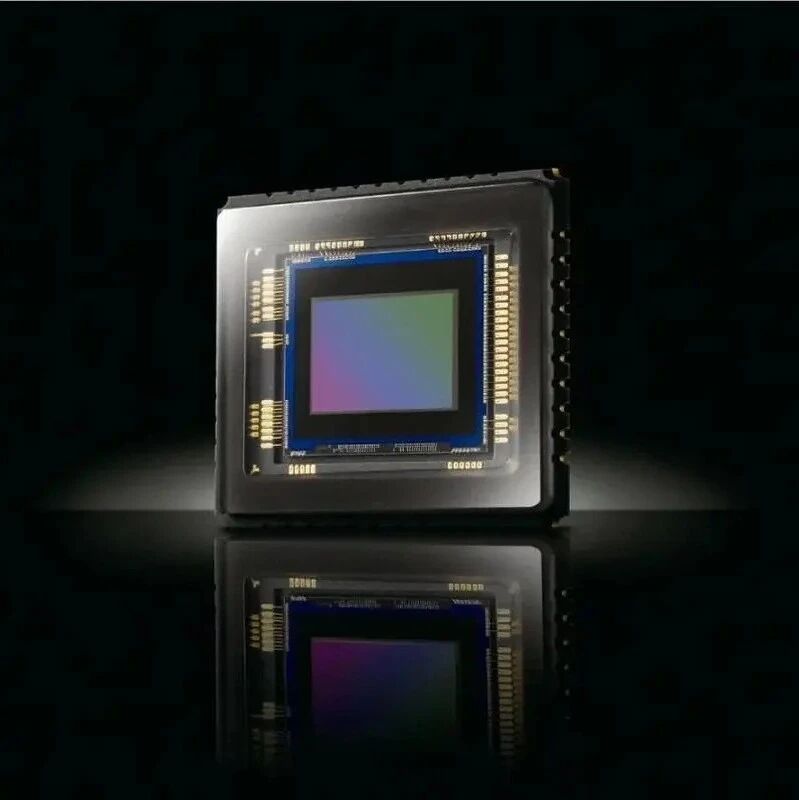
Core Viewpoint - The article discusses the advancements in image sensor technology, highlighting the complexity of manufacturing processes and the innovations that have emerged to meet market demands. Group 1: Technological Advancements - The development of image sensors has involved a series of process improvements to enhance performance, yield, and cost, including the use of new materials to reduce crosstalk and improve optical performance [2][3] - Stacking technology has evolved from front-illuminated single-metal CCDs to multi-metal CMOS, improving optical response and enabling additional functionalities [5][6] - The trend in interconnect spacing has stabilized after 2020, with TSMC being competitive at a spacing of 1.4µm, while the optimal size for smartphone image sensors appears to be 50 million pixels with a pixel pitch of 0.5µm to 0.7µm [9] Group 2: Innovations in Pixel Design - The unique design of photodiodes with deep trench isolation reduces light loss and prevents crosstalk between pixels, with etching depths ranging from 10:1 to 40:1 [17] - The shift in pixel development has moved from merely shrinking pixel sizes to adding more functionalities, with improved capacitors being key to enhancing dynamic range and global shutter capabilities [18] - The emergence of small pixel pitch interconnect technology allows SPAD sensors to achieve 100% fill factor by placing pixel circuits behind the photodiode [20] Group 3: Market Applications and Future Prospects - Enhanced image sensor processes have enabled non-photographic imaging applications, such as eye-tracking in augmented reality devices, utilizing near-infrared technologies [25] - Innovations in short-wave infrared imaging are necessary for commercial applications, with challenges related to manufacturability and environmental concerns [26] - The continuous technological development in image sensors indicates a shift from a single dominant product to a broader range of opportunities, with the cost per pixel reaching remarkably low levels [26]