半导体芯闻

Search documents
HBM龙头,市占50%
半导体芯闻· 2025-09-15 09:59
Core Viewpoint - SK Hynix has announced the readiness for mass production of its next-generation high bandwidth memory (HBM4) chips, positioning itself ahead of competitors and marking a significant milestone in the industry [2][3]. Group 1: HBM4 Technology and Features - HBM4, the fourth generation of HBM, features 2,048 input/output terminals, doubling the bandwidth compared to previous versions, and includes new power management and RAS functionalities [2]. - The operational speed of HBM4 exceeds 10 Gbps, significantly surpassing the JEDEC standard of 8 Gbps [2]. - SK Hynix's HBM4 is expected to enhance AI service efficiency by up to 69% while improving energy efficiency by over 40% compared to the previous generation [3]. Group 2: Market Position and Competition - SK Hynix is set to establish the world's first HBM4 mass production system, solidifying its leadership in the HBM market [4]. - Analysts predict that SK Hynix will maintain a market share of approximately 50% in the HBM sector by 2026, despite the entry of competitors like Samsung and Micron [4]. - The pricing of HBM4 is expected to be 60% to 70% higher than the previous generation, with potential price reductions occurring only after competitors enter the market [4].


突发,复旦微等被列入实体清单
半导体芯闻· 2025-09-13 02:12
Core Viewpoint - The U.S. Department of Commerce's Bureau of Industry and Security (BIS) has added 23 Chinese entities to its Entity List, citing actions that contradict U.S. national security or foreign policy interests [1] Group 1: Semiconductor and Integrated Circuits - 13 companies related to semiconductor and integrated circuits have been listed, including Beijing Fudan Microelectronics Technology Co., Ltd. and Sino IC Technology Co., Ltd., which is involved in HPC/AI chips [3][6] - The inclusion of these companies means that all items governed by the Export Administration Regulations (EAR) require a license for export, with a presumption of denial for such licenses [1] Group 2: Biotechnology and Life Sciences - Three biotechnology companies have been added to the list, including Beijing Tianyi Huiyuan Biotechnology Co., Ltd. and Sangon Biotech (Shanghai) Co., Ltd. [6] Group 3: Aerospace and Quantum Research - Two research institutions related to aerospace information and quantum timing systems have been included: Aerospace Information Research Institute, Chinese Academy of Sciences, and the National Time Service Center of the Chinese Academy of Sciences [6] Group 4: Industrial and Engineering Software - Two companies in the industrial and engineering software sector have been listed: Hong Kong DEMX Co., Ltd. and Shanghai Suochen Information Technology Co., Ltd. [6] Group 5: Supply Chain and Logistics Services - Three entities involved in supply chain and logistics services have been added, including Hua Ke Logistics (HK) Limited and Shenzhen Xinlikang Supply Chain Management Co., Limited [6]

2025世界新能源汽车大会(IAA Mobility专场)在德成功召开
半导体芯闻· 2025-09-12 10:12
Core Viewpoint - The 2025 World New Energy Vehicle Congress (IAA Mobility Special) successfully held in Munich highlights the deep collaboration between the Chinese and German automotive industries in addressing global challenges and leading the technological revolution in electrification and intelligence [1][4]. Group 1: Event Overview - The congress was organized by the China Society of Automotive Engineers (China-SAE), the German Association of the Automotive Industry (VDA), and the World New Energy Vehicle Development Organization (WNEVDO) [1]. - Key leaders from the automotive sectors of China and Germany attended, including Hildegard Müller, the President of the VDA, and other prominent figures [3]. Group 2: Industry Collaboration - Hildegard Müller emphasized the complementary strengths of the German automotive industry's global layout and China's innovative vitality, which together form a robust industrial ecosystem [4]. - The deep integration of the automotive supply chain between China and Germany is highlighted, with a focus on mutual benefits and cooperation in areas such as automated driving and data cross-border flow [5]. Group 3: Future Directions - The congress aims to foster a new chapter in the comprehensive strategic partnership between China and Germany, focusing on addressing risks and seizing opportunities in the automotive sector [5]. - The event serves as a platform for promoting global policy coordination, deepening open cooperation, and facilitating technological and industrial innovation [8]. Group 4: Upcoming Events - The 7th World New Energy Vehicle Congress will take place from September 27-29, 2025, in Haikou, featuring nearly 20 meetings and forums to discuss future transportation and sustainable development [9][10].

国内AI芯片面临两大瓶颈
半导体芯闻· 2025-09-12 10:12
Group 1 - The core viewpoint of the article highlights the significant increase in China's AI chip production capacity, projected to triple by 2026, potentially reaching millions or even tens of millions of units annually [2] - By 2026, two leading Chinese AI chip manufacturers are expected to produce over 1 million AI chips each, driven by the establishment of three new wafer fabs aimed at meeting domestic AI chip demand [2] - The strategy aims to reduce reliance on foreign high-end chips and promote domestic production, although the expansion plans face uncertainties due to U.S. restrictions on advanced process equipment and HBM supply [2] Group 2 - Despite the increase in production capacity, it is noted that the HBM inventory imported by mainland companies will be depleted by the end of this year, potentially hindering manufacturers like Huawei from producing over 1 million AI chips next year [2] - Mainland companies originally had the capability to produce over 800,000 certain types of chips annually, but the actual output is limited due to insufficient HBM supply [2]

荷兰半导体,不可小觑
半导体芯闻· 2025-09-12 10:12
Core Viewpoint - The Netherlands plays a crucial role in the global semiconductor industry, with 85% of chips designed, developed, and produced using Dutch semiconductor equipment, highlighting its leadership in this sector [2][4]. Group 1: The Role of the Netherlands - The Netherlands has a significant semiconductor ecosystem with an annual revenue of nearly €30 billion and approximately 60,000 employees [4]. - Key areas of expertise in the Netherlands include chip machine manufacturing, chip design, and packaging, with companies like NXP leading in automotive, security, and connectivity semiconductors [4]. - The collaboration between industry, knowledge institutions, and government is a key factor in the Netherlands' success, fostering innovation across different disciplines [4][5]. Group 2: Investment and Innovation - The Dutch government and private sector have invested €46 million in semiconductor-related projects since 2021, supporting public-private partnerships [5]. - The establishment of the Dutch Semiconductor Board aims to create a joint agenda for the semiconductor industry until 2035, involving major companies and government collaboration [5]. Group 3: European Semiconductor Landscape - The formation of the European Semiconductor Alliance by nine countries, including the Netherlands, aims to enhance Europe's position in the global semiconductor value chain [7]. - Europe's share of global chip sales has drastically decreased from one-third to less than 10%, attributed to insufficient investment in new technologies [7]. - The need for Europe to invest in its semiconductor industry is emphasized due to the critical shortage of raw materials and the importance of maintaining technological autonomy [7]. Group 4: Domestic Challenges - The Netherlands invests 2.23% of its GDP in innovation, which is lower than neighboring countries like Germany, Belgium, and Sweden [8]. - ASML plans to invest €4.3 billion in R&D in 2024, representing about 15% of its total revenue, underscoring the importance of continuous innovation for maintaining competitiveness [8]. - Practical challenges such as nitrogen emission regulations and physical space for semiconductor companies need to be addressed to foster growth in this sector [8].

英特尔:至强CPU首席架构师离职
半导体芯闻· 2025-09-12 10:12
Group 1 - Intel is facing significant talent loss, including the departure of its second Xeon CPU chief architect, Ronak Singhal, following the exit of Michelle Johnston Holthaus [2][3] - The company is undergoing leadership changes in its Data Center Group, with the appointment of Kevork Kechichian as the new executive vice president and general manager [2] - Intel's CEO, Lip-Bu Tan, has prioritized the server CPU business amid increasing competition from AMD, acknowledging that regaining competitiveness will be a multi-year process [3] Group 2 - The Ohio One project is experiencing leadership departures, including key lobbyist Kevin Hoggatt, which may indicate significant delays for the project [4][5] - Since the announcement of the Ohio One wafer fab three years ago, there have been few signs of high-end process production starting, with the facility potentially not operational until 2031 [5]

拆解灵巧手,ADI深度赋能
半导体芯闻· 2025-09-12 10:12
Core Viewpoint - The article discusses the critical role of dexterous hands in humanoid robots and highlights the challenges and advancements in developing these components, particularly focusing on the contributions of Analog Devices, Inc. (ADI) in this field [2][11]. Group 1: Importance of Dexterous Hands - Dexterous hands are essential for humanoid robots, involving complex control with multiple degrees of freedom, which significantly impacts the overall cost and functionality of the robots [2][3]. - The performance and cost of dexterous hands are influenced by various key technologies, including biomimetic structures, actuation, transmission, sensing, composite materials, and modeling and control [3][4]. Group 2: Challenges in Development - Achieving the dexterity of human hands is challenging due to the need for precise feedback and environmental sensing, requiring both internal and external sensors [3][4]. - Traditional solutions relying on gears or linear sensors are often bulky and costly, necessitating recalibration after power loss, which affects production efficiency [4][5]. Group 3: ADI's Solutions - ADI offers innovative solutions for the actuation market, such as the ADMT4000, which features a dual magnetic sensor architecture that allows for position memory during power outages, significantly reducing system size, weight, and cost [7][8]. - The company has introduced an integrated FOC (Field-Oriented Control) solution that simplifies motor control, enhances efficiency, and reduces wiring complexity, making it suitable for dexterous hand applications [8][9]. Group 4: Wireless Connectivity - ADI is advancing wireless connectivity solutions for dexterous hands, exemplified by the ADMV9611/ADMV9621, which enables high-speed data transmission in the 60 GHz band, facilitating seamless communication within robotic systems [9][10]. Group 5: Future Outlook - The advancements in dexterous hand technology, supported by companies like ADI, are reshaping the future of humanoid robots, moving from chip provision to module and complete system solutions, with the potential to endow robots with human-like dexterity and intelligence [11][12].


一种微芯片制造的新方法
半导体芯闻· 2025-09-12 10:12
Core Viewpoint - Researchers from Johns Hopkins University have discovered a new material and manufacturing process that could enhance the production of smaller, faster, and more economical microchips, which are essential in modern electronics [2]. Group 1: New Manufacturing Process - The research team has developed a precise and cost-effective manufacturing process capable of creating microscopic circuits that are invisible to the naked eye [2]. - The new method, termed Chemical Liquid Deposition (CLD), allows for the deposition of metal-organic photoresists on silicon wafers with nanometer precision [5]. Group 2: Advancements in Photoresist Materials - A new type of photoresist made from metal-organic compounds has been identified, which can withstand higher power radiation beams necessary for etching smaller details on chips [3]. - Zinc and other metals can absorb Beyond Extreme Ultraviolet (B-EUV) light, generating electrons that trigger the required chemical transformations to imprint circuit patterns on an organic material called imidazole [3][4]. Group 3: Future Implications - The research indicates that at least ten different metals and hundreds of organic compounds can be explored for creating new metal-organic pairings, potentially revolutionizing the manufacturing process in the next decade [5]. - The ability to adjust the components for different wavelengths suggests that metals that perform poorly at one wavelength may excel at another, enhancing the versatility of the manufacturing process [5].
SK海力士完成全球首款HBM4开发,准备量产
半导体芯闻· 2025-09-12 10:12
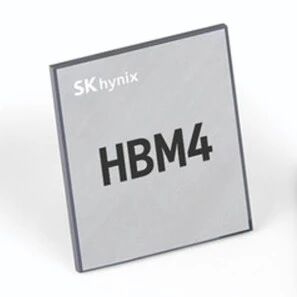
Core Viewpoint - SK Hynix has announced the completion of the development of the world's first ultra-high-performance AI next-generation storage product, HBM4, and is ready for mass production [1][3]. Group 1: Product Development and Features - HBM (High Bandwidth Memory) is a high-value, high-performance memory that significantly increases data processing speed by vertically stacking multiple DRAM chips compared to traditional DRAM products [3]. - HBM4 has doubled the bandwidth by utilizing 2,048 I/O terminals, which is twice that of the previous generation, and has improved power efficiency by over 40%, achieving the best data processing speed and power efficiency in the industry [5]. - The operating speed of HBM4 exceeds 10 Gbps, far surpassing the JEDEC standard operating speed of 8 Gbps [5]. - The Advanced MR-MUF process and 1bnm process (fifth-generation 10nm technology) have been implemented in HBM4 to minimize mass production risks [5]. Group 2: Market Demand and Impact - There is a surge in demand for higher bandwidth memory due to the rapid growth of AI needs and data processing, which is essential for achieving faster system speeds [3]. - HBM4 is expected to enhance AI service performance by up to 69%, helping to alleviate data bottlenecks and significantly reduce data center power costs [5]. - The company aims to supply products that meet customer demands in performance, power efficiency, and reliability, thereby maintaining a competitive edge in the market [3][5]. Group 3: Strategic Vision - SK Hynix positions HBM4 as a symbolic turning point in overcoming the limitations of AI infrastructure and aims to become a full-stack AI storage provider by supplying high-quality, diverse performance storage products [6].
魏少军呼吁:停用英伟达GPU
半导体芯闻· 2025-09-12 10:12
Core Viewpoint - The article emphasizes the need for China and other Asian countries to abandon reliance on NVIDIA GPUs for artificial intelligence training and inference, as this dependence poses long-term risks to regional autonomy and innovation [2][3]. Group 1: Call for Independence - Wei Shaojun, a prominent figure in China's semiconductor industry, advocates for the development of independent AI infrastructure in China, criticizing the current model that mimics the U.S. approach using NVIDIA and AMD GPUs [2][3]. - He warns that continued reliance on U.S. hardware could become "lethal" for the region's AI development, urging a strategic shift away from U.S. templates, particularly in algorithm design and computational infrastructure [2][3]. Group 2: Current Challenges - The U.S. government has imposed performance restrictions on AI and HPC processors that can be shipped to China, creating significant hardware bottlenecks and slowing down the training of advanced AI models [2]. - Despite these challenges, examples like the rise of DeepSeek demonstrate that Chinese companies can achieve significant algorithmic advancements without cutting-edge hardware [2]. Group 3: Future Directions - Wei suggests that China should focus on developing new types of processors specifically designed for training large language models, rather than continuing to rely on GPU architectures, which were originally intended for graphics processing [3]. - He acknowledges that while China's semiconductor industry has made progress, it still lags behind the U.S. and Taiwan, making it unlikely for Chinese companies to produce AI accelerators that rival NVIDIA's high-end products [3]. Group 4: NVIDIA's Dominance - NVIDIA GPUs dominate the AI field due to their large-scale parallel architecture, which is highly efficient for accelerating matrix-intensive operations in deep learning [4]. - The introduction of the CUDA software stack in 2006 allowed developers to write general code for GPUs, facilitating the standardization of deep learning frameworks like TensorFlow and PyTorch on NVIDIA hardware [4][5]. - Over time, NVIDIA has solidified its leading position through specialized hardware, tight software integration, and extensive cloud and OEM support, making its GPUs the default backbone for AI training and inference [5].