
半导体芯闻

Search documents
玻璃基板,英特尔重申
半导体芯闻· 2025-09-11 10:12
Core Viewpoint - Intel is committed to advancing the commercialization of semiconductor glass substrates, denying rumors of exiting the business due to financial difficulties [2][3] Group 1: Business Strategy - Intel's roadmap remains unchanged, aiming to introduce glass substrates before 2030, which are considered crucial for producing high-performance semiconductors needed for AI [2] - The company has been developing glass substrate technology for ten years and plans to establish a pilot production line [2][3] Group 2: Market Position and Collaborations - Intel is collaborating with various materials, components, and equipment companies to build its glass substrate pilot production supply chain [3] - Potential partners for glass substrate manufacturing include companies from Taiwan, Austria, and South Korea, although it is unclear whether Intel will produce in-house or through external collaborations [3] Group 3: Financial Context - Recent poor performance has led to speculation about Intel potentially abandoning the glass substrate business, amidst large-scale layoffs and organizational restructuring [2]


华为海思,换帅
半导体芯闻· 2025-09-11 10:12
来 源 :内容来自半导体芯闻综合 。 9月11日,企查查显示,深圳市海思半导体有限公司发生工商变更。其中,徐直军卸任法定代表 人、董事长,由高戟接任。同时,多位高管均发生变更:公司董事胡厚崑、郭平及公司监事任树录 退出,增补张磊担任董事及财务负责人、胡波担任董事、朱文担任监事。 企查查显示,深圳市海思半导体有限公司,注册资本20亿人民币,经营范围为电子产品和通信信 息产品的半导体设计、开发、销售及售后服务,相关半导体产品的代理,电子产品和通信信息产品 器件和配套件的进出口业务。股东信息显示,该公司由华为技术有限公司全资持股。 据华为官网介绍,徐直军毕业于南京理工大学,博士。1993年加入华为,历任公司无线产品线总 裁、战略与Marketing总裁、产品与解决方案总裁、产品投资评审委员会主任、公司轮值CEO、战 略与发展委员会主任等,现任公司副董事长、轮值董事长等职务。 全球市值最高的10家芯片公司 如果您希望可以时常见面,欢迎标星收藏哦~ 喜欢我们的内容就点 "在看 " 分享给小伙伴哦~ 企查查显示,此次接任徐直军的高戟是海思技术有限公司CEO。 点这里加关注,锁定更多原创内容 *免责声明:文章内容系作者个人 ...
OpenAI,最新技术分享
半导体芯闻· 2025-09-11 10:12
Core Viewpoint - The article emphasizes the necessity for global-scale computing infrastructure to support the widespread adoption of artificial intelligence (AI), as highlighted by Richard Ho from OpenAI during the AI Infrastructure Summit [2][3]. Group 1: AI Infrastructure and Computing Needs - The demand for computing power in AI is expected to exceed the scales seen during the internet and big data bubbles of the late 20th and early 21st centuries [2]. - AI processing requires advanced infrastructure that can support the collaboration of numerous XPU chips, moving beyond traditional computing paradigms [3]. - OpenAI's efforts in developing proprietary accelerators and their "Stargate" project are anticipated to significantly impact AI processing technology [4]. Group 2: Model Performance and Growth - OpenAI's GPT-4 model has shown a slight improvement in computational efficiency, with future models like GPT-5 expected to approach 100% scores on the MMLU test [7]. - The computational requirements for image recognition models have increased dramatically, with GPT-4 estimated to have around 1.5 trillion parameters, showcasing exponential growth in model complexity [9]. Group 3: Future of AI Workflows - The shift towards agent-based workflows in AI will necessitate stateful computing and memory support, allowing agents to operate continuously without user input [14]. - Low-latency interconnects will be crucial for enabling real-time communication between agents, which will be essential for executing complex tasks over extended periods [14]. Group 4: Infrastructure Challenges - Current AI system designs face significant tensions in computing, networking, and storage, with a need for hardware integration to ensure security and efficiency [15]. - The future infrastructure must address issues such as power consumption, cooling requirements, and the integration of diverse computing units to handle the anticipated increase in workload [16]. Group 5: Collaboration and Reliability - Collaboration among foundries, packaging companies, and cloud builders is essential for ensuring the reliability and safety of AI systems [17]. - Testing of fiber optic and communication platforms is necessary to validate the reliability of the infrastructure needed for global-scale computing [17].

三星DRAM,疯狂扩产
半导体芯闻· 2025-09-11 10:12
Core Viewpoint - Samsung Electronics is actively expanding its 1c (6th generation 10nm class) DRAM capacity to secure its leading position in the next-generation HBM (High Bandwidth Memory) market [2][3] Group 1: Investment Plans - Samsung plans to complete investments in its P4 1c DRAM facility in the Pyeongtaek complex by the first half of next year, including converting existing plants like P3 [2] - The final production line of the P4 facility is expected to begin investment early next year, with the P4 DRAM facility investment currently underway [2][3] - The remaining PH2 cleanroom is expected to start construction by the end of this year or early next year, which will likely also include a DRAM production line [2] Group 2: Production Capacity - Samsung's 1c DRAM capacity is projected to reach up to 60,000 wafers per month this year, with further expansion expected in the first half of next year [3] - The company is also converting the 17th line in Hwaseong for 1c DRAM production, indicating a strategic shift towards enhancing DRAM capacity [3] Group 3: Market Strategy - The company is focusing on ensuring production capacity for 1c DRAM to support the commercialization of HBM4, with plans to accelerate investments as yields and performance stabilize [3]
聚光成炬,赋能创新!第 26 届中国国际光电博览会在深圳盛大启幕
半导体芯闻· 2025-09-11 10:12
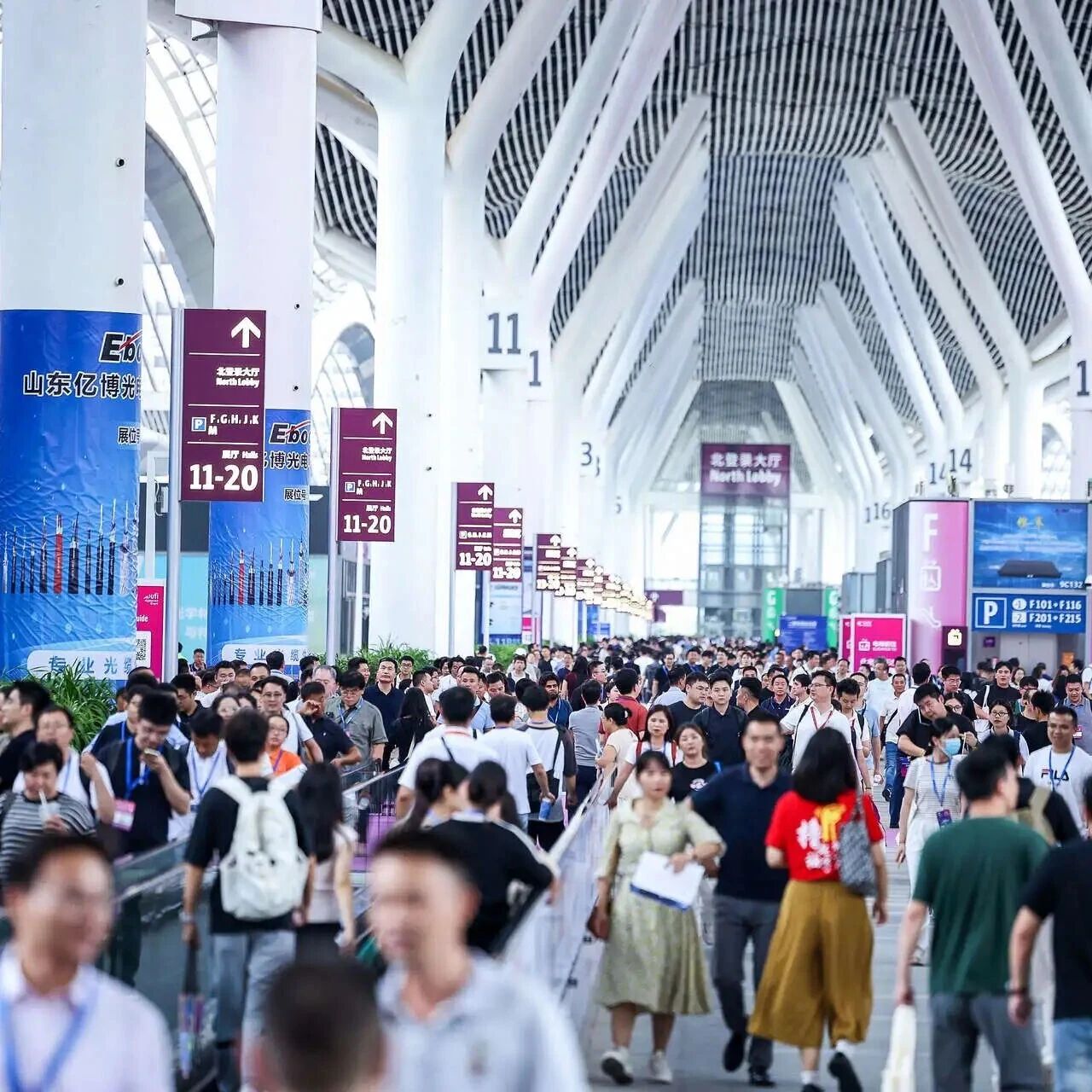
Core Viewpoint - The 26th China International Optoelectronic Exposition (CIOE) showcases over 3,800 global optoelectronic companies, focusing on the integration of "optoelectronics + applications" to drive innovation and development in the industry [1] Group 1: Event Overview - The CIOE 2025 is held in Shenzhen, featuring eight major themes including information communication, precision optics, camera technology, laser and intelligent manufacturing, infrared & ultraviolet, intelligent sensing, new displays, AR & VR, and optoelectronic innovation [1] - The event includes ten special display areas to enhance the integration of technology and applications, aiming for a synergistic effect in the optoelectronic industry [1] Group 2: Dual Exhibition Model - The CIOE is held concurrently with the SEMI-e Shenzhen International Semiconductor Exhibition, creating a dual exhibition model that spans 300,000 square meters [3] - This model facilitates the integration of the optoelectronic and semiconductor industries, providing a platform for efficient communication and collaboration across the supply chain [3] Group 3: Optical Communication Advances - The demand for AI computing power is driving the deployment of 800G and 1.6T technologies, with major companies showcasing their advancements in optical communication at the CIOE [6] - Companies like LightSpeed Technology and Lixun Technology present innovative products and solutions aimed at enhancing AI data centers and optical interconnects [6] Group 4: Intelligent Vision and Optical Innovation - The development of intelligent vision is pushing optical technology innovations across various applications, with companies like Sunny Optical and Phoenix Optical showcasing cutting-edge products [8] - The exhibition highlights advancements in automotive camera modules, AR waveguides, and machine vision systems [8] Group 5: Laser Industry Transformation - The laser industry is undergoing a transformation towards intelligent manufacturing, with AI technologies penetrating the entire laser supply chain [10] - Companies like Han's Laser and Raycus Laser are presenting their latest products and solutions aimed at high-end manufacturing [11] Group 6: Infrared Technology Expansion - The civilian application of infrared technology is entering a period of rapid growth, with a focus on miniaturization and integration alongside AI [13] - Leading companies are showcasing innovative infrared modules and solutions for various sectors, including industrial temperature measurement and security [13] Group 7: Sensor Technology Innovations - The trend of multi-sensor fusion is prominent in the sensor industry, with companies like ams OSRAM and Chipone Technology presenting their latest sensor solutions [15] - Innovations in time-of-flight (ToF) technology and environmental sensing capabilities are highlighted [15] Group 8: New Display Technologies - The new display technology segment showcases diverse applications and innovations, with companies like YG Electronics and Visionox presenting their latest advancements [17] - The exhibition features solutions for semiconductor display vacuum coating and micro-OLED displays [17] Group 9: Research and Industry Collaboration - The event emphasizes the collaboration between industry, academia, and research institutions, showcasing over 20 top research units and their technological breakthroughs [20] - This collaboration aims to bridge the gap between laboratory research and market application, driving high-quality development in the optoelectronic industry [20] Group 10: Forums and Discussions - The CIOE hosts over 90 industry, application, and academic forums, gathering global experts to discuss trends and innovations in the optoelectronic field [21] - Key topics include AI-driven optical transmission technologies and the integration of optical technologies in emerging applications like smart vehicles and AR glasses [21]




苹果这颗芯片,野心很大
半导体芯闻· 2025-09-11 10:12
Core Viewpoint - Apple is replacing Broadcom's Wi-Fi, Bluetooth, and Thread chips with its own N1 chip as part of its strategy for Bluetooth audio alternatives and smart home integration [2][3] Group 1: N1 Chip Development - The N1 chip is Apple's first wireless network chip designed for the iPhone, supporting Wi-Fi 7, Bluetooth 6, and Thread, enhancing overall performance and reliability of features like personal hotspot and AirDrop [3][6] - The introduction of the N1 chip marks a significant shift as Apple has been using Broadcom chips for Wi-Fi connectivity since the iPhone 3G in 2008 [7] Group 2: Market Impact - With the launch of the N1 chip, Apple is expected to capture approximately 15-20% of the mobile Wi-Fi chip market, distancing itself from Broadcom and Qualcomm [7] - Broadcom's future in the chip market appears uncertain as it has lost major clients, with Synaptics taking over Google's Pixel and Qualcomm becoming the main supplier for Samsung's Wi-Fi chips [7] Group 3: Interoperability Challenges - The success of the N1 chip will largely depend on Apple's ability to ensure interoperability with a wide range of Wi-Fi devices produced by numerous companies in the industry [8][9] - Apple will need to provide sufficient information to access points or service providers to optimize user experience, similar to Intel's extensive testing and interaction with the Wi-Fi community [8][9]


人工智能,需要怎样的闪存?
半导体芯闻· 2025-09-11 10:12
在人工智能火热的当下,关于算力的讨论已经充满各大报端。但其实作为这轮AI崛起的关键组 成,存储在其中扮演的角色不容忽视。熟悉人工智能原理的读者都知道,只有将大量准确的数据提 供给大模型训练,才能获得更好的AI应用体验,而这正是闪存发力的地方。 IDC其发布的《理解人工智能数据周期(AI Data Cycle)和闪存在各行业的应用》报告中也直 言,尽管近年来有关AI如何赋能企业的研究主要聚焦于大语言模型(LLMs)以及和图形处理单元 (GPUs)有关的算力方面,但同样重要的是,相关机构也需同步提升其数据存储与管理能力。这 一部分正是支撑AI系统高效处理并应用海量数据、实现先进分析与智能决策的关键所在。 那么,人工智能究竟需要怎样的闪存? 如果您希望可以时常见面,欢迎标星收藏哦~ 人工智能中的存储 如前文所说,在人工智能中,存储的数据不仅存在于云端,端侧也是需要发力的地方。尤其是随着 AI应用不断扩展,对战略性数据管理的需求也将持续上升,进而使得存储解决方案的整合与优化 成为面向未来的企业所需优先考虑的核心任务。在闪迪看来,这时候就需要一个将一堆原始数据转 化为能为大模型使用的"知识"的人工智能数据周期(AI D ...

氮化镓和碳化硅,重磅宣布
半导体芯闻· 2025-09-11 10:12
Core Insights - Wolfspeed has officially commercialized its 200mm SiC material products, marking a significant milestone in the industry's transition from silicon to silicon carbide [2] - The 200mm SiC wafers and epitaxial layers are designed to enhance scalability and quality, supporting the development of next-generation high-performance power devices [2][3] - DB HiTek has completed the development of its next-generation power semiconductor process, the 650V E-Mode GaN HEMT, aimed at improving power efficiency in AI data centers and robotics [3][4] Wolfspeed Developments - The 200mm SiC wafers feature improved specifications, including a thickness of 350µm, and industry-leading doping and thickness uniformity, which enhance MOSFET yield and accelerate time-to-market [2] - The commercial launch of these products is driven by positive market feedback and the significant advantages they offer [2] - The company emphasizes that this advancement is not just about wafer size but represents a material innovation that enables customers to confidently accelerate their device roadmaps [3] DB HiTek Innovations - DB HiTek's new 650V GaN process is expected to significantly reduce power loss compared to silicon, making it a viable alternative for high-efficiency applications [4] - The company anticipates that the GaN process will synergize with its existing BCDMOS technology, which integrates analog, digital, and high-power circuits [4] - Market research predicts that the GaN market will grow at an annual rate of approximately 40%, increasing from $530 million in 2025 to $2.013 billion by 2029 [4] Capacity Expansion - To meet the growing demand for GaN technology, DB HiTek plans to expand its cleanroom capacity, increasing monthly wafer production from 154,000 to approximately 190,000 wafers, representing a 23% increase [4]

继英伟达之后,ASML也投资了这家AI初创企业
半导体芯闻· 2025-09-10 10:11
Core Insights - Mistral AI, a leading AI company in France, raised €1.7 billion (approximately $2 billion) in a Series C funding round led by ASML, increasing its valuation from $6.4 billion to about $13.7 billion [2][3] - Mistral AI is recognized as a competitor to major US AI firms like OpenAI and Google, with its chatbot Le Chat being enhanced with features such as deep research and voice capabilities [3][4] - The partnership with ASML aims to leverage AI to address engineering challenges in the semiconductor industry, highlighting the interconnectedness of AI and semiconductor technologies [6][7] Funding and Valuation - The recent funding round has more than doubled Mistral's valuation to approximately $13.7 billion [2] - Notable investors in this round include Nvidia, DST Global, Andreessen Horowitz, and others [2] Product Development - Mistral has released several advanced AI models, including Mistral Medium 3 and Mistral Code, which outperform competitors' solutions [4] - The company is also focusing on inference-optimized AI models, positioning itself competitively in the current AI landscape [4] Strategic Partnership - ASML's investment is seen as a strategic move to enhance the entire technology chain from AI development to infrastructure engineering [5][6] - ASML's CEO emphasized that the collaboration will bring significant benefits to ASML's customers through innovative products and solutions [4][6] Market Context - The collaboration between a semiconductor equipment supplier and an AI startup reflects the growing importance of AI in semiconductor manufacturing [6][7] - The concept of "technological sovereignty" is driving interest in such partnerships in the post-globalization era [7]


苹果自研WiFi芯片,正式发布
半导体芯闻· 2025-09-10 10:11
Core Viewpoint - Apple has introduced new self-developed chips, including the A19 mobile chip, N1 wireless chip, and C1X modem, which enhance the performance and efficiency of the new iPhone Air, making it the most energy-efficient iPhone to date [1][5][27]. Group 1: Chip Developments - The A19 Pro chip features a new 6-core CPU and a 5-core GPU, making it the fastest CPU among smartphones, with a peak GPU computing capability increased by up to 300% compared to the previous generation [5][17]. - The N1 chip supports Wi-Fi 7, Bluetooth 6, and Thread technology, improving the performance and reliability of features like personal hotspots and AirDrop [11][20]. - The C1X modem offers speeds up to 2 times faster than its predecessor, with a 30% reduction in overall power consumption, making it the most power-efficient modem in an iPhone [11][24]. Group 2: Performance Enhancements - The A19 Pro chip, when paired with Apple's custom-designed heat dissipation system, enhances sustained performance by up to 40% compared to the previous generation, suitable for gaming and video editing [17][18]. - The new GPU architecture includes a dedicated neural accelerator in each core, enabling advanced graphics processing and AI model execution [18][26]. - The integration of the N1 and C1X chips with the A19 Pro allows the iPhone Air to achieve professional-grade performance in a lighter and thinner design [26][28]. Group 3: Strategic Direction - Apple aims to reduce reliance on third-party components, such as Qualcomm's modem, by developing its own chips, which is part of a broader strategy to enhance product functionality and efficiency [27][28]. - The company plans to eventually integrate its modem and processor into a single chip, although this may take several years to achieve [27].
