半导体行业观察

Search documents
博通Marvell,迎来一个新对手
半导体行业观察· 2025-11-03 00:39
Group 1: ASIC Business Overview - The ASIC business remains at the forefront of the semiconductor industry and is a key driver of the ongoing AI revolution [2] - ASICs provide unparalleled performance, energy efficiency, and cost-effectiveness compared to general-purpose chips like CPUs and GPUs, playing a crucial role in AI, high-performance computing, telecommunications, automotive, and consumer electronics [2] - The global ASIC market is projected to exceed $20 billion by 2025, with expectations to double in the next five years, driven by strong demand in AI, edge computing, and advanced connectivity (5G/6G) [3] Group 2: Major Players in ASIC Market - Broadcom and Marvell are significant semiconductor companies producing ASIC chips, while companies like Chipone, Silex, and Creative focus solely on ASIC services without competing directly with clients [3] - Broadcom's ASIC business has seen significant contributions to revenue, with a gross margin exceeding 50% in its custom ASIC business as of Q2 2025 [3] - Marvell has shifted focus to custom ASIC chips for AI, 5G, and cloud computing, reporting a 58% revenue growth in Q2 of FY 2026 due to demand in these sectors [4] Group 3: Intel's Strategic Moves - Intel's CEO, Pat Gelsinger, announced a new central engineering team to enhance efficiency in ASIC and design services, aiming to integrate Intel's CPU architecture with NVIDIA's AI capabilities [5] - This strategic move is intended to expand Intel's core x86 IP applications and leverage design advantages to provide a range of solutions from general computing to fixed-function computing [5] - Intel's approach contrasts with competitors like Broadcom and Marvell, focusing on utilizing its wafer fabrication and packaging technology to develop custom ASIC chips [6] Group 4: Industry Trends and Challenges - The trend of self-developed ASICs is gaining momentum among major cloud service providers (CSPs) like AWS, Google, Microsoft, and Meta, aiming to reduce reliance on general-purpose GPUs [8] - The ASIC industry faces a potential decline in margins due to increased competition from traditional IC design companies entering the ASIC space [9] - Despite the competitive landscape, the demand for advanced packaging and system performance integration is expected to drive growth opportunities for ASIC suppliers [9]


纳芯微MCU打法,全面披露
半导体行业观察· 2025-11-03 00:39
Core Viewpoint - Naxin Micro is entering the MCU market with a focus on real-time control MCUs, differentiating itself from the highly competitive general MCU market [1][3]. Group 1: Market Entry and Strategy - Naxin Micro aims to create a competitive real-time control MCU ecosystem, leveraging its unique position as the only company offering a full range of C2000 PIN-to-PIN compatible products [3][4]. - The company has identified high barriers to entry in the real-time control MCU market, which has been dominated by TI for over a decade, due to specialized application scenarios and stringent reliability requirements [3][4]. - Naxin Micro's strategy includes targeting the mid-range market first, as it has the broadest application scenarios, particularly in areas requiring real-time performance [8][10]. Group 2: Product Development and Ecosystem - Naxin Micro has developed a comprehensive ecosystem for its MCUs, including development tools, application solutions, and software support, to facilitate customer adoption [4][6]. - The company has created a self-developed development environment, NovoStudio, based on open-source GCC and Eclipse architecture, to meet diverse customer needs [4]. - Naxin Micro's real-time control MCUs are designed with a focus on compatibility and ease of migration for customers, aiming for minimal changes in hardware and software during the transition [5][6]. Group 3: Market Focus and Customer Collaboration - The core markets for Naxin Micro's real-time control MCUs include digital power and motor control, with applications in industrial and automotive sectors [8][9]. - The company has successfully entered the mass supply phase for its MCUs in the wind and solar energy inverter and industrial motor drive sectors, with automotive electronics expected to follow soon [9][10]. - Naxin Micro benefits from existing relationships with customers who already use its analog products, facilitating quicker adoption of its MCU offerings [9][10]. Group 4: Product Architecture and Performance - Naxin Micro has established a product lineup across low-end, mid-range, and high-end segments, all utilizing the Arm Cortex-M7 core to ensure high performance and real-time capabilities [12][14]. - The company’s strategy of using the Cortex-M7 core across all product tiers allows for a consistent performance level, even in lower-end products, enhancing value for customers [13][14]. - Naxin Micro's eMath core provides significant computational advantages, particularly in applications requiring complex mathematical operations, positioning it competitively against established players like TI [18][19]. Group 5: Future Outlook and Long-term Commitment - Naxin Micro has outlined a long-term business plan for its MCU segment, with a focus on integrating AI capabilities into future products, targeting edge AI and real-time control applications [20][21]. - The company recognizes that the transition to real-time control MCUs will be gradual, emphasizing the importance of deep understanding of application scenarios and overall system performance [21]. - Naxin Micro's accumulated experience in analog products provides a strong foundation for its MCU business, enabling faster market penetration and product iteration [10][21].


CPO,最新进展
半导体行业观察· 2025-11-03 00:39
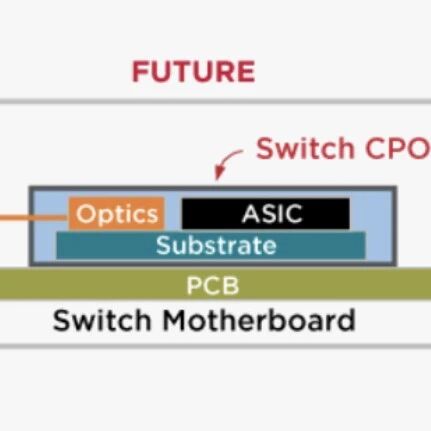
Core Insights - The article emphasizes the growing demand for interconnect bandwidth in data centers, driven by increasing internet traffic and the rapid expansion of AI large language models. However, this demand leads to higher power consumption, prompting the industry to seek improved energy efficiency in data transmission measured in picojoules per bit [2][4]. Group 1: CPO Technology Overview - Co-packaged optics (CPO) is emerging as a key solution to address the challenges of power consumption and efficiency in data center interconnects. By integrating electronic chips and silicon photonic chips in the same package, CPO significantly reduces power consumption and enhances performance [2][5]. - CPO technology offers several advantages over traditional pluggable optical modules, including reduced signal loss, lower power consumption, and increased connection density on the front panel [6][8]. Group 2: Industry Adoption and Developments - Major companies, including Broadcom and Marvell, are heavily investing in CPO technology, with Broadcom's products promising a 70% reduction in power consumption compared to pluggable transceiver solutions [8][10]. - NVIDIA is also adopting CPO technology in its upcoming network switches, claiming a 3.5 times increase in energy efficiency and 10 times network resilience compared to traditional networks [12][14]. Group 3: Market Growth and Future Predictions - The CPO market is projected to grow significantly, with revenues expected to rise from approximately $38 million in 2022 to $2.6 billion by 2033, reflecting a compound annual growth rate (CAGR) of 46% [14][16]. - Analysts predict that CPO technology will see large-scale deployment by 2027, with ongoing research and development activities at an all-time high [16][18]. Group 4: Performance and Testing - Broadcom's CPO technology has undergone extensive testing, achieving over 86,000 hours of high-temperature operating life (HTOL) testing, demonstrating stability and reliability in performance metrics [18][19]. - The performance of CPO solutions is characterized by low power consumption and high bandwidth density, with Broadcom reporting a 30% reduction in power and a 40% decrease in cost per bit for optical devices [6][19]. Group 5: Competitive Landscape - The competitive landscape for CPO technology is evolving, with companies like TSMC and NVIDIA leading advancements in device miniaturization and packaging technologies [10][12]. - The market is also seeing the emergence of startups like Celestial AI and LightMatter, which are developing next-generation CPO technologies that could surpass current offerings from established players [41][43].

五万亿英伟达,意味着什么?
半导体行业观察· 2025-11-03 00:39
Core Insights - Nvidia has become the first company to surpass a market capitalization of $5 trillion, marking a significant milestone in its influence on the global economy [2] - The company is a major driver of market growth in 2023, providing substantial returns to shareholders and significantly increasing CEO Jensen Huang's wealth [2] - Nvidia's market cap exceeds that of six sectors within the S&P 500 and is greater than the total market cap of several countries [2][8] Group 1: Market Impact - Nvidia's stock accounts for 8.5% of the S&P 500 index, surpassing the combined weight of the lowest 240 companies [6] - The company’s market cap is approximately $1 trillion higher than that of Apple, the second-largest company [8] - Nvidia's influence is so pronounced that it has contributed to a significant portion of the S&P 500's performance, with the top seven tech stocks comprising over 36% of the index [6] Group 2: Financial Performance - Nvidia's revenue is projected to reach $285 billion in the next fiscal year, a substantial increase from $11 billion in fiscal 2020 [3] - The company's revenue growth rate is expected to be nearly 60%, significantly higher than the average growth rate of 6% for S&P 500 companies with revenues over $100 billion [14] - Analysts are optimistic about Nvidia's stock, with approximately 91% rating it as a "buy" or "strong buy," and some projecting a target price of $230, which would push its market cap close to $8 trillion [11] Group 3: CEO Wealth - Jensen Huang's net worth has surged to $176 billion, increasing by over $60 billion this year alone, placing him among the top ten richest individuals globally [17] - Huang holds approximately 3.5% of Nvidia's shares through personal and family trusts, contributing to his wealth increase [17]
当算力遇上智造,“AI驱动•智链未来”创新论坛圆满落幕
半导体行业观察· 2025-11-03 00:39
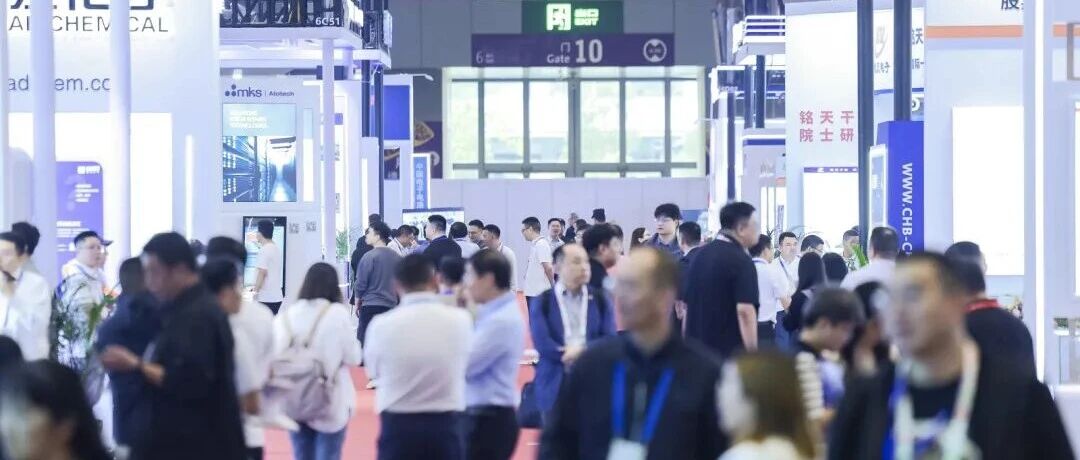
Core Insights - The forum "AI-Driven Innovation in the Semiconductor Industry" highlighted the transformative impact of AI on the semiconductor sector, emphasizing the need for collaborative innovation to address industry challenges and future trends [1][2][22]. Group 1: AI Empowering Industrial Innovation - Industry experts discussed the practical applications of AI in cloud computing, smart manufacturing, storage optimization, and design, showcasing the deep integration of AI within the semiconductor industry [2][22]. - The focus was on addressing industry pain points and exploring pathways for technological implementation, emphasizing the importance of collaboration across the ecosystem [2][22]. Group 2: Intelligent Manufacturing Revolution - The manufacturing sector is facing structural challenges, with AI emerging as a key driver for transformation, positioning manufacturing as a primary battleground for AI applications [5][22]. - Companies are developing autonomous manufacturing solutions that integrate AI technologies to enhance efficiency and data management [5][22]. Group 3: Future of Storage Solutions - The rapid upgrade of smart terminals and the proliferation of AI applications have led to an explosive demand for storage solutions, necessitating the development of AI-native architectures [8][22]. - Innovative storage solutions, such as NAS U disk systems, are being introduced to address traditional storage pain points, offering low-cost, secure, and easy-to-deploy options [8][22]. Group 4: R&D Innovation and Shared Design - AI technology is providing new pathways for small and medium enterprises (SMEs) to overcome challenges in product development, enhancing efficiency and market competitiveness [11][22]. - A shared R&D platform is being established to streamline the digital workflow from design to manufacturing, significantly improving design efficiency and yield rates [11][22]. Group 5: Millimeter-Wave Wireless Isolation Technology - Millimeter-wave technology is gaining traction due to its unique physical properties, making it a key player in wireless isolation technology advancements [14][15][22]. - The demand for millimeter-wave isolation chips is projected to exceed 3 billion units annually, with a market size surpassing 40 billion yuan, driven by applications in various electronic sectors [15][22]. Group 6: Advanced Packaging and EDA Solutions - Advanced packaging technologies are crucial for overcoming the "memory-interconnect wall" in the semiconductor industry, with a growing market demand for chiplet solutions [17][22]. - A comprehensive EDA platform is being developed to facilitate agile development and optimize performance, cost, and testability for AI chip designs [17][18][22]. Group 7: Legal Risks in PCB Enterprises Going Global - PCB companies face significant compliance challenges when expanding internationally, necessitating robust legal risk management strategies [20][21][22]. - Strategies include optimizing supply chain management and establishing strict procurement systems to navigate the complexities of international regulations [21][22]. Group 8: Industry Collaboration and Future Outlook - The forum served as a platform for cross-disciplinary collaboration, showcasing collective progress in technology innovation and ecosystem development within the semiconductor industry [23][22]. - The ongoing upgrades in computing infrastructure and manufacturing models are propelling the semiconductor industry into a new collaborative development cycle [22][23].
又一个芯片骗局?
半导体行业观察· 2025-11-02 02:08
Core Viewpoint - Substrate claims to have developed a method for manufacturing computer chips at significantly lower costs and higher quality than competitors, but evidence suggests the company may be fraudulent [2][21][24] Group 1: Company Background - The founder, James Proud, has a history of fraudulent activities, including a Kickstarter scam that raised $2.5 million for a product that did not meet its promises [13][16] - The co-founder, Oliver Proud, lacks any verifiable professional or academic experience in the semiconductor industry [13] - The company's job postings are reportedly meaningless and generated by artificial intelligence, indicating a lack of genuine recruitment efforts [17][20] Group 2: Manufacturing Process - Chip manufacturing is complex and requires extensive expertise, typically involving thousands of specialists [2] - The process involves a foundry producing chips on silicon wafers, which are then separated and packaged [2] - Substrate's claims about its manufacturing capabilities are met with skepticism due to the unrealistic timelines and lack of evidence [21][23] Group 3: Technology Claims - Substrate asserts that its technology can outperform ASML, a leading competitor that has invested billions over decades, raising doubts about the feasibility of such claims [7][21] - The company has not provided any substantial evidence to support its technological assertions, relying instead on vague statements about investor confidence [21][24] - The patterns in the images shared by Substrate suggest the use of direct writing techniques, which are not suitable for mass production [11][12] Group 4: Financial Aspects - Substrate has raised $100 million in funding, achieving a valuation of $1 billion, but the investor pool lacks significant ties to the semiconductor industry [24] - The company is perceived to be targeting inexperienced investors, which raises concerns about the credibility of its financial backing [24]


芯片巨头,集体改命
半导体行业观察· 2025-11-02 02:08
Group 1: AI and Semiconductor Landscape - The AI wave continues to reshape the global semiconductor landscape, with computing power becoming the new oil of the era [2] - Nvidia dominates the AI training market with over 90% market share and a market capitalization exceeding $4.5 trillion, establishing itself as a leader in the semiconductor industry [2] - Competitors like AMD, Broadcom, and Intel are vying for market share, indicating a shift towards a multi-strong competitive landscape in the AI chip sector [2] Group 2: Intel's Strategic Shift - Intel has faced challenges in keeping up with competitors like TSMC in chip manufacturing and lacks competitive products in the AI market [3][4] - The establishment of the Central Engineering Group (CEG) aims to consolidate engineering talent and focus on custom chip business models, leveraging the ASIC trend [3][4] - Intel's strategy involves transforming from a pure chip manufacturer to a one-stop service provider for design, manufacturing, and packaging [4] Group 3: Intel's ASIC Business Potential - Intel's complete industry chain and IDM model provide a unique advantage in the ASIC market, allowing for a comprehensive service offering [4] - The ASIC business could position Intel as a significant service provider for large tech companies, tapping into various opportunities within the AI supply chain [4][5] Group 4: Competitive Challenges for Intel - Nvidia's recent $5 billion investment in Intel and the collaboration on custom data center products create both opportunities and competitive complexities for Intel [5] - Intel's future products may integrate Nvidia's GPU designs, raising questions about its own GPU development strategy [5][6] Group 5: Qualcomm's Aggressive Expansion - Qualcomm is aggressively entering the data center market with new AI accelerator chips, AI200 and AI250, challenging Nvidia and AMD in the AI inference space [8][10] - The AI200 system features significant memory capacity and power efficiency, positioning Qualcomm as a new competitor in the rapidly growing data center market [10][11] Group 6: Qualcomm's Strategic Focus - Qualcomm's chips are designed for inference rather than training, allowing it to avoid direct competition with Nvidia's strengths in training markets [10][12] - The company is also building a comprehensive software platform to support AI model deployment, enhancing its competitive edge in the data center space [12] Group 7: MediaTek's Entry into ASIC Market - MediaTek is emerging as a key player in the ASIC design services market, competing directly with leaders like Broadcom and securing orders from major tech companies [14][19] - The collaboration with Nvidia on the GB10 Grace Blackwell super chip highlights MediaTek's capabilities in high-performance chip design [15] Group 8: AMD's Strategic Developments - AMD is quietly developing an Arm-based APU, indicating a strategic shift towards mobile applications and the growing importance of the Arm architecture [21][22] - The company aims to explore new markets and avoid being locked out by Nvidia and the x86 ecosystem, reflecting a broader trend in the semiconductor industry [25][26] Group 9: Industry Trends and Future Outlook - The shift towards ASIC and Arm architectures is driven by the need for specialized computing power in AI applications, moving away from general-purpose GPUs [25][26] - Companies are redefining competition rules by focusing on capabilities rather than just products, indicating a decentralization of the AI chip industry [26]


ICCAD-Expo 2025会议详细议程
半导体行业观察· 2025-11-02 02:08
Core Insights - The conference focuses on the latest trends and innovations in the semiconductor industry, particularly in AI, EDA, and advanced packaging technologies [1][2][3]. Group 1: Opening Ceremony and Keynote Speeches - The opening ceremony featured leaders from various semiconductor organizations, emphasizing the importance of innovation in driving industry upgrades [1]. - Keynote speeches included topics such as the role of AI in semiconductor design and the development of resilient semiconductor value chains [1][2]. Group 2: Semiconductor Development Trends - Discussions highlighted the acceleration of AI-driven Chiplet ecosystems and the importance of EDA tools in the AI era [2][3]. - Presentations covered advancements in AI ASIC platforms and the integration of reconfigurable chips into computing nodes [2][3]. Group 3: Advanced Packaging and Testing - The conference addressed the evolution of advanced packaging technologies, including 2.5D/3D EDA as a bridge for design and process innovation [4][5]. - Topics included the challenges and opportunities in testing advanced packaging solutions and the impact of AI on testing methodologies [4][5]. Group 4: EDA and IC Design Services - The agenda included discussions on the integration of AI in EDA tools, enhancing chip design productivity and efficiency [36][37]. - Presentations focused on the development of domestic EDA platforms and their role in the post-Moore era of three-dimensional multi-chip system design [36][37]. Group 5: Industry Collaboration and Future Directions - The conference emphasized the need for collaboration among industry players to drive innovation and address challenges in semiconductor design and manufacturing [1][2]. - Future trends discussed included the potential of RISC-V architecture in AI applications and the importance of modular and high-performance computing solutions [2][3].




封装基板,飙升
半导体行业观察· 2025-11-02 02:08
Core Insights - The global MEMS packaging substrate market is projected to grow from $2.4 billion in 2025 to $3.23 billion by 2030, driven by the expansion of the medical device industry, accelerated 5G deployment, and widespread adoption of IoT solutions, with a CAGR of 6.1% [2][4]. Market Growth Drivers - Key innovations in substrate materials and advanced packaging technologies are crucial for the design of next-generation sensors and actuators, particularly in automotive, medical, and industrial applications [2]. - The glass substrate segment is expected to experience the fastest growth due to its unique combination of electrical insulation, optical transparency, chemical resistance, and thermal stability, making it ideal for high-performance MEMS designs [2][3]. Regional Insights - The Asia-Pacific region is anticipated to maintain its dominant position in the MEMS packaging substrate market by 2030, supported by leading companies in consumer electronics and IoT device manufacturing [4][5]. - The rapid proliferation of smartphones, wearables, AR/VR systems, and smart home technologies in this region is creating sustained demand for compact and efficient MEMS components [5]. Technological Advancements - Advances in glass processing technologies, such as laser drilling and anodic bonding, are reducing costs and improving scalability, further driving the demand for transparent and inert materials in chip lab diagnostics, optical MEMS, and environmental monitoring sensors [3]. Key Market Players - Major companies in the MEMS packaging substrate market are positioned to play an increasingly important role in supporting the next generation of interconnected, high-performance electronic devices, particularly those based on glass solutions [6].

AI 芯片,要上天了
半导体行业观察· 2025-11-02 02:08
Core Insights - Starcloud is launching the NVIDIA H100 GPU on a satellite to explore the feasibility of relocating data centers to space, aiming to reduce pollution and enhance computational speed [2][3] - The initiative could lead to significant environmental benefits, with potential carbon emission reductions up to ten times compared to terrestrial data centers [3][5] Group 1: Importance of Space Data Centers - Traditional data centers consume vast amounts of electricity and water, releasing heat and greenhouse gases, impacting surrounding communities [3] - The space environment offers advantages such as abundant solar energy and efficient cooling through vacuum, minimizing energy costs after the initial rocket launch [3][5] Group 2: Technological Advancements - The Starcloud-1 satellite, equipped with the H100 GPU, will process data in orbit, enabling faster responses and more accurate decision-making for applications like forest fire detection and climate monitoring [4][5] - This mission will also test Google's Gemma language model, marking the first deployment of a large AI model in space [4] Group 3: Future Aspirations - Starcloud plans to build larger, solar-powered data centers in space, utilizing natural cooling to enhance efficiency [5] - The ultimate goal is to create a 5-gigawatt orbital data center spanning approximately 2.5 miles (about 4 kilometers), capable of handling extensive AI computations while reducing costs and emissions [5] - The decreasing costs of rocket launches are making the concept of space-based data centers increasingly viable, with expectations that many new data centers will operate in orbit by the 2030s [5]