半导体行业观察

Search documents
射频前端国产替代:昂瑞微扮演重要角色
半导体行业观察· 2025-10-06 02:28
Core Viewpoint - The rapid development of Angrui Micro in the RF front-end industry is significantly influenced by the U.S. sanctions against Chinese telecom giants, leading to a wave of domestic substitution opportunities [3][12]. Group 1: Company Development - Angrui Micro's IPO application was accepted on March 28, marking a significant event in the RF front-end industry [1]. - The company has achieved rapid growth, with projected sales in 2024 expected to match that of Weijie Chuangxin, positioning itself among the top tier of RF front-end manufacturers [1]. - Angrui Micro has successfully developed a series of RF front-end chips for high-end flagship smartphones, including the challenging Sub3G L-PAMiD product [3][12]. Group 2: Market Dynamics - The U.S. pressure on Chinese companies has led domestic smartphone manufacturers to recognize the importance of a local supply chain, benefiting companies like Angrui Micro [3]. - The RF front-end market in China is still relatively small, with total sales around 200 billion, compared to a global market size of approximately 1200 billion [9]. Group 3: Supply Chain and Collaboration - Effective supply chain management is crucial for RF front-end companies to ensure security and stability under U.S. pressure [5]. - Collaboration among multiple leading smartphone manufacturers is necessary to drive the entire domestic RF front-end industry, as individual companies alone cannot achieve significant impact [7]. - Angrui Micro has established partnerships with domestic GaAs, SOI, and filter manufacturers, contributing to a higher proportion of domestic procurement [9]. Group 4: Investment and R&D - The rapid development of the domestic supply chain requires RF front-end manufacturers to double their R&D investments due to the need for multiple iterations and maintaining both domestic and overseas supply chains [11]. - Angrui Micro is committed to investing in domestic supply chain development, driven by both customer demand and the need for supply security [11]. Group 5: Long-term Strategy - Domestic substitution is a long-term process, and while rapid progress can be made, surpassing established foreign competitors remains challenging [12]. - Angrui Micro has demonstrated a long-term vision by steadily developing competitive products and leveraging opportunities for domestic substitution since 2019 [12][15].


三星CIS重获苹果订单
半导体行业观察· 2025-10-06 02:28
Core Viewpoint - Samsung's CMOS image sensor (CIS) will return to Apple's supply chain, marking the first time in a decade that Samsung has been involved in this capacity, with potential demand estimated at around 200 million units [3][4]. Group 1: Product Details - The flagship iPhone will feature one front CIS and three rear CIS, with one of the rear lenses supplied by Samsung [3]. - Current orders from Apple to Samsung only account for about 20% of the maximum demand, based on an 80% yield from 12-inch wafers [3]. Group 2: Production Timeline - Samsung originally planned to start mass production in March 2026, but this has been pushed back to late 2026 or early 2027 [3]. - Due to the delay, the impact on Samsung's revenue from the iPhone 18 series will not be immediate, with the iPhone 18 models expected to launch in the second half of 2026 [3]. Group 3: Competitive Landscape - Samsung is developing a 50 million pixel CIS for Apple, focusing on stability over the introduction of new technology [4]. - Although Samsung is perceived to lag behind Sony in low-light performance, it has a competitive edge in pixel technology, having achieved 200 million pixel resolution through its ISOCELL brand in 2021 [4]. - There is optimism that Samsung could secure a unique supply role for high-pixel CIS for iPhones and potentially become a second supplier for the 50 million pixel CIS product line traditionally dominated by Sony [4].


60㎡浓缩产业芯力量!四大巨头齐聚湾芯展联合展区,共探生态破局之道
半导体行业观察· 2025-10-06 02:28
Core Viewpoint - The Bay Area Semiconductor Industry Ecological Expo ("Bay Chip Expo") will take place from October 15-17, 2025, in Shenzhen, showcasing over 600 leading global companies and aiming to tap into a billion-level market in the Bay Area through a strategy of "full industry chain linkage and precise matching" [1][3]. Group 1: Event Overview - The Bay Chip Expo will cover an exhibition area of 60,000 square meters and feature a joint exhibition area of 60 square meters, highlighting four key companies: Zhihe Computing, Tektronix, Yuntian Lifeng, and Ouyue Semiconductor [1][3]. - The expo will focus on "AI chip ecology" and "advanced packaging," covering the entire core link from architecture innovation to application in automotive regulations [3]. Group 2: Company Highlights - **Zhihe Computing**: Focuses on developing high-performance, scalable "integrated CPU" chips based on RISC-V architecture for AI applications, with its first product, the "Archimedes" series, designed for efficient general computing and AI inference [3][5]. - **Tektronix**: Known for providing precise and straightforward testing solutions, Tektronix will demonstrate a full-process solution from wafer-level material testing to chip design verification at the expo [4][8]. - **Yuntian Lifeng**: A leader in AI inference chips, the company has developed neural network processor core IP and chips, focusing on efficient inference for large models and enabling AI applications across various sectors [5][8]. - **Ouyue Semiconductor**: The first Chinese company to focus on intelligent automotive third-generation E/E architecture, Ouyue aims to enhance smart technology in practical scenarios, offering a range of products for intelligent automotive components [6][8]. Group 3: Interactive Opportunities - The expo will feature three interactive segments: daily technical salons at 10:00 AM, targeted supply-demand matching meetings at 2:00 PM, and customized technical solution consultations throughout the event [7][8]. - The event will provide opportunities for attendees to engage with experts and core buyers from companies like Huawei and BYD, facilitating direct connections and potential collaborations [7][8].

ARM CEO谈论英特尔的挑战
半导体行业观察· 2025-10-06 02:28
Core Insights - ARM CEO Rene Haas highlighted that Intel has missed critical opportunities in the semiconductor industry, particularly in mobile chip production and the adoption of EUV technology [2][5][7] Group 1: Intel's Competitive Position - Intel has been penalized in several areas, particularly in mobile, where it failed to capitalize on the low-power mobile chip market, missing opportunities to produce chips for devices like the iPhone [5][6] - The delay in adopting EUV technology has allowed TSMC to build a competitive advantage, as Intel did not invest in this advanced manufacturing method at the same pace [7][8] Group 2: Manufacturing Culture and Perception - There is a cultural difference in how manufacturing jobs are perceived in the West compared to Taiwan, where working at TSMC is seen as prestigious, while in the U.S., manufacturing is often viewed as less desirable [8] - A comprehensive reform is needed in the U.S. to rebuild domestic manufacturing capabilities, which involves long-term government support and is not limited to Intel alone [8]



英伟达,无法战胜?
半导体行业观察· 2025-10-06 02:28
Core Insights - Nvidia holds a dominant position in the AI GPU market with a market share of 94%, an increase of 2% from the previous quarter, and is projected to generate $49 billion in AI-related revenue this year, nearly 40% higher than last year [2] - Nvidia's market valuation has reached $4.6 trillion, making it the first company in history to surpass the $4 trillion mark, with Microsoft following closely behind [2] - Major companies like Google and Amazon still rely heavily on Nvidia's GPUs for their AI workloads, indicating Nvidia's significant influence in the industry [4] Nvidia's Market Control - Nvidia's CUDA toolkit reinforces its dominance, making it challenging for developers to switch to competitors like Google's TPU or AMD's GPUs without incurring substantial costs and delays [4] - Maintaining good relations with Nvidia is seen as a strategic move for companies like Google and Amazon, despite their intentions to develop custom chips [4] Geopolitical Factors and Competition - Recent geopolitical tensions have led to a ban on Chinese companies like ByteDance and Alibaba from purchasing Nvidia's RTX Pro 6000D chips, which are designed to comply with U.S. export regulations [5] - Despite the ban, Alibaba has announced a partnership with Nvidia, highlighting the complexities of the U.S.-China trade relationship [5] Competitors' Developments - Amazon is developing a custom chip called Trainium 3, set to launch in December 2024, aimed at creating supercomputers independent of Nvidia [7] - Google has been working on its TPU, now in its seventh generation, named Ironwood, which shows significant performance improvements but still faces challenges in adoption outside of Nvidia's ecosystem [8]

台积电终结一个时代
半导体行业观察· 2025-10-06 02:28
Core Insights - The global semiconductor industry is undergoing a profound economic transformation, with TSMC at its center, marking the end of an era characterized by predictable declines in transistor costs [2] - TSMC's unprecedented price increases for advanced logic chips are driven by astronomical capital expenditures, geopolitical pressures, and fundamental physical limitations in manufacturing at the angstrom scale [2][4] Price Increases and Market Dynamics - TSMC plans to implement a 5-10% price increase for its advanced nodes below 5nm starting in 2026, with a significant jump of over 50% for 2nm wafers, raising costs from approximately $20,000 to $30,000 or more [4][7] - This shift indicates that the cost of manufacturing will now rise faster than the economic benefits derived from density scaling, signaling a structural change in the industry [4] Geopolitical and Operational Costs - TSMC's rising cost structure is significantly influenced by the need for massive capital expenditures for global diversification, particularly in response to geopolitical pressures, with a total investment of $165 billion in its Arizona facility [6][8] - Chips produced in Arizona are reported to be 5% to 30% more expensive than those made in Taiwan, reflecting the higher operational costs of overseas factories [6][8] Technological Complexity and Manufacturing Challenges - The transition from 3nm to 2nm nodes involves a major architectural shift from FinFET to GAA transistors, which increases manufacturing complexity and costs significantly [10][14] - The required capital expenditures for advanced facilities are estimated to be between $15 billion and $20 billion, with critical equipment like EUV lithography machines costing around $350 million each [14] Customer Reactions and Market Implications - TSMC's pricing strategy is reshaping the technology landscape, compelling major customers like Nvidia and Apple to adapt to the new cost structure [16][17] - Nvidia's CEO supports the price increases, emphasizing that TSMC's value is not reflected in current pricing, while Apple faces challenges from rising wafer costs and geopolitical tariffs [16][17] Impact on the Digital Economy - The new cost structure is expected to lead to price increases for flagship consumer devices starting in 2026, ending the trend of declining prices for high-end smartphones and PCs [19] - In the data center sector, the high costs of 2nm wafers will set a new price floor for AI and high-performance computing components, accelerating the industry's shift towards chiplet architectures [19][20]
一个半导体秘密基金的衰落
半导体行业观察· 2025-10-06 02:28
Core Viewpoint - The abrupt withdrawal of $7.4 billion in funding for the Natcast initiative, designed to bolster the U.S. semiconductor industry, has led to significant layoffs and uncertainty within the organization, which was previously seen as a key player in maintaining America's technological edge against China [2][3][6]. Group 1: Impact of Funding Withdrawal - The funding withdrawal has resulted in Natcast facing closure, with over 90% of its workforce laid off, leaving only a few employees to manage legal and financial obligations [10][11]. - The decision has created confusion and frustration among companies, researchers, and lawmakers regarding the implications for ongoing projects and the future of semiconductor research and development [3][9]. - Approximately $2 billion was previously committed to infrastructure, research, and workforce projects across states like Arizona, New York, California, and Texas, which are now in jeopardy [3][6]. Group 2: Industry Reactions and Future Plans - Major companies involved in Natcast, including Nvidia, Intel, and AMD, are now seeking alternative funding sources and are in discussions with the Department of Commerce regarding their own projects [9][15]. - The Albany Nanotech Complex in New York, which received $825 million in federal funding, is expected to continue its operations despite the funding uncertainty, with state officials affirming their commitment to the project [11][16]. - The Department of Commerce is reportedly planning to redistribute the $7.4 billion funding, but details on how this will be structured remain unclear, leading to further speculation and concern within the industry [13][15]. Group 3: Legal and Political Context - The termination of Natcast's funding was justified by the Commerce Secretary, who claimed the organization was politically motivated and lacked a solid legal foundation [22][24]. - There are ongoing discussions among lawmakers from both parties seeking clarification on the decision and its implications for the semiconductor industry [8][14]. - The legal basis for the termination has been questioned, with some officials suggesting that the previous administration's cautious approach to establishing Natcast was mischaracterized as politically driven [23][25].



FD-SOI,走向7纳米?
半导体行业观察· 2025-10-05 02:25
Core Viewpoint - The article discusses the transition of the global semiconductor industry towards low power consumption, high reliability, and strong integration, highlighting the emergence of FD-SOI technology as a key solution for low power challenges in various applications such as edge AI, automotive electronics, and IoT [2][26]. Technology Overview - FD-SOI technology, proposed in 2001, features a unique transistor structure with an ultra-thin buried oxide layer, enabling superior gate control, reduced leakage current, and static power consumption [2][4]. - The technology has evolved from a laboratory concept to a critical component in the semiconductor ecosystem, with significant advancements expected by 2024 [2][26]. Market Growth - The FD-SOI market is projected to grow from $930 million in 2022 to $4.09 billion by 2027, reflecting a compound annual growth rate (CAGR) of 34.5%, driven by demand in IoT, automotive electronics, and edge AI [7][19]. Development Timeline - **2012-2014**: STMicroelectronics launched the 28nm FD-SOI platform, marking the commercialization of the technology. Key breakthroughs in material supply and collaborations helped establish an initial ecosystem [8]. - **2015-2018**: GlobalFoundries introduced the 22nm FD-SOI platform, expanding the technology's application range and fostering partnerships to accelerate adoption [8]. - **2022-Present**: The EU supports the upgrade of the FD-SOI ecosystem, with advancements in 12nm and 18nm technologies, indicating ongoing progress towards more advanced nodes [8][26]. Major Players and Strategies - **Samsung**: Positions FD-SOI as a strategic differentiator in low-power applications, focusing on IoT and automotive markets while maintaining a dual-track strategy for advanced processes [10][11]. - **STMicroelectronics**: Utilizes an IDM model to integrate FD-SOI technology into automotive and industrial applications, emphasizing energy efficiency and reliability [12][16]. - **GlobalFoundries**: Targets edge AI with its 22FDX platform, enhancing connectivity, power efficiency, and integration capabilities [13][14]. Future Outlook - The FD-SOI technology is expected to extend to 10nm and 7nm nodes, enhancing performance and integration while maintaining low power consumption [20][22]. - The technology is seen as a strategic opportunity for the Chinese semiconductor industry, leveraging local production capabilities and market demand to build a complete FD-SOI ecosystem [27][28].


处理器市场,大洗牌
半导体行业观察· 2025-10-05 02:25
Core Insights - The processor market is experiencing significant growth driven by the rapid demand for generative AI applications, with the market size expected to nearly double from $288 billion to $554 billion between 2024 and 2030, primarily due to widespread adoption by enterprises, individuals, and governments [4] - 2024 is projected to be a turning point for the processor industry, as the GPU market is expected to surpass the APU market for the first time, driven by the demand for high computing power to run large language models like ChatGPT, Gemini, and Copilot [4] - The GPU market will face intense competition from hyperscale cloud providers like Google and AWS, which are developing their own AI ASICs to reduce capital expenditure costs [4] Market Dynamics - The processor market is highly concentrated, with three out of five segments dominated by single manufacturers holding over 50% market share; Intel controls 66% of the CPU market, while Nvidia holds over 90% of the GPU market [7] - The APU and AI ASIC & DPU markets are more fragmented, with active participation from companies like Apple, Qualcomm, MediaTek, Google, Samsung, Huawei, NXP, and Texas Instruments [7] - Emerging players from China, such as Xiaomi in the smartphone APU market and NIO in the automotive ADAS APU sector, are beginning to make their mark [7] Technological Advancements - Processor manufacturers share a common goal of launching the most powerful solutions faster than competitors, facing challenges related to cost pressures and technological limitations [11] - A trend towards advancing process nodes annually is evident, with advanced processes previously limited to smartphone APUs now being adopted in server CPUs and other processors [11] - Foundries play a crucial role in this technological race, with a significant reduction in the number of foundries capable of producing advanced process nodes over the past 20 years, and the transition to 2nm may further decrease this number [11]

苹果传感器的进击
半导体行业观察· 2025-10-05 02:25
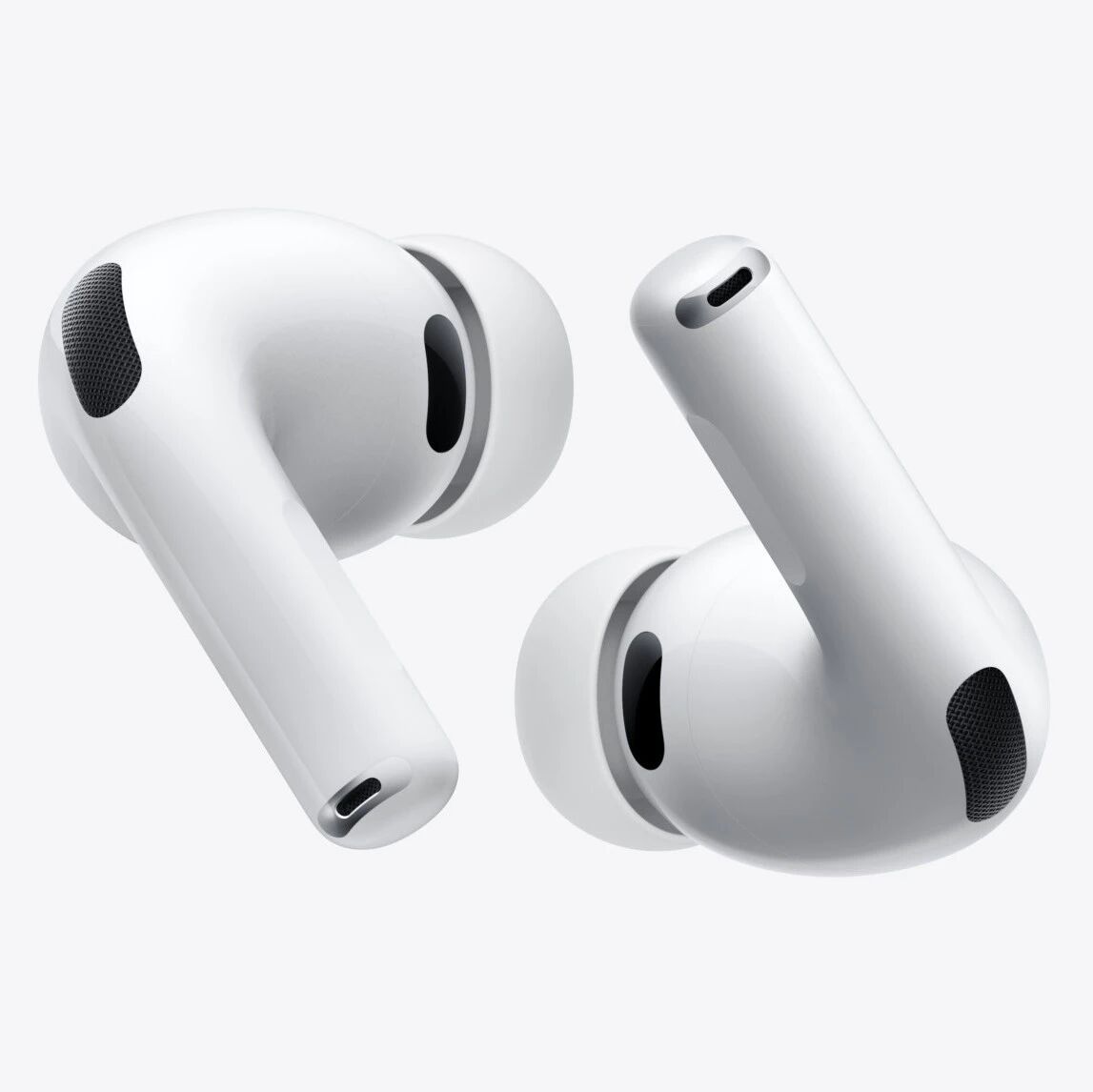
Core Insights - The article discusses the introduction of the heart rate sensor in AirPods Pro 3, highlighting its innovative features and the development process behind it [3][4][5]. Design and Features - AirPods Pro 3 retains the iconic design with redesigned ear tips made of silicone and foam, and a slightly elongated charging case [2]. - The new heart rate sensor allows tracking of 50 different workouts, either independently or in conjunction with the Apple Watch for more accurate readings [2][3]. Development Process - The heart rate sensor is based on a decade of research and development, leveraging knowledge gained from the Apple Watch [4]. - The sensor uses invisible infrared light to measure blood flow in the ear, differing from the green LED used in the Apple Watch [4][5]. Algorithm and Data Processing - The algorithms for heart rate tracking were adapted from the Apple Watch but optimized for the smaller form factor of AirPods [5]. - Extensive testing was conducted on thousands of participants to ensure the sensor works effectively across diverse ear shapes and skin tones [5][7]. Integration with Other Features - The heart rate sensor works in conjunction with accelerometers and gyroscopes to track various workout metrics, including steps, distance, and calories burned [7][8]. - Apple utilized over 50 million hours of workout data to refine the algorithms for AirPods Pro 3 [7]. Accuracy and Validation - Apple employed medical-grade equipment to validate calorie tracking accuracy, ensuring the algorithms are reliable [8]. - The integration of multiple data sources allows for improved accuracy in heart rate readings, comparing signals from both AirPods and Apple Watch [11]. Future Potential - The article suggests that AirPods Pro 3 could be seen as a hybrid device, combining features of high-end headphones and fitness trackers, with ongoing updates expected to enhance functionality [11].