半导体行业观察

Search documents
量子电路突破荣获诺贝尔物理学奖
半导体行业观察· 2025-10-07 13:47
Core Viewpoint - The article discusses the significance of the Nobel Prize awarded to John Clarke and his team for their groundbreaking work in quantum mechanics, particularly in the field of superconducting circuits and quantum tunneling, which has implications for the development of quantum computing and technology [5][9]. Group 1: Research and Findings - John Clarke and his team conducted experiments using "Josephson junction" superconducting circuits, demonstrating that charged particles behave like a single particle filling the entire circuit and exhibit quantum tunneling effects [5][6]. - Their research confirmed energy quantization, where the circuit only absorbs or releases specific amounts of energy, which is fundamental to the operation of modern quantum chips [5][8]. Group 2: Implications for Technology - The Nobel Committee highlighted that their research lays the foundation for future quantum technologies, including quantum computers, quantum cryptography, and quantum sensors [9]. - The work of Clarke and his team is considered essential for the development of superconducting qubits, a primary hardware technology in quantum computing [9]. Group 3: Historical Context - The article provides a brief overview of recent Nobel Prize winners in physics, emphasizing the ongoing advancements in quantum mechanics and related fields [10].


一文看懂新一代光模块差异
半导体行业观察· 2025-10-07 02:21
Core Points - The article discusses the differences between QSFP and QSFP-DD modules, highlighting the complexity of newer optical modules and network technologies, especially from the 400G generation onwards [2] - The primary distinction between the two types of optical modules lies in their electrical connection capabilities, with QSFP-DD featuring more connection pads for enhanced connectivity [3][5] - QSFP28 supports 4 channels at 28G (actual rate 25G), achieving a total transmission of 100Gbps, while QSFP56 increases the single-channel rate to 56G (actual rate 50G), allowing for 200Gbps transmission [5] - QSFP-DD utilizes a second row of pads to enable 8 channels, facilitating 400Gbps transmission with configurations such as QSFP56-DD (8x50G) and QSFP28-DD (8x25G) [6] - The QSFP-DD connector is longer but maintains a similar external cage size to QSFP, allowing QSFP modules to be used in QSFP-DD cages [8] - There is backward compatibility with QSFP-DD, allowing QSFP devices to function in QSFP-DD cages, but not vice versa due to the increased number of electrical connections in QSFP-DD [9] - Understanding optical modules can be simplified into three core components: packaging form, electrical connection configuration, and optical connection configuration, with a focus on packaging and electrical connections for high-speed networks [10]

台积电,又一座1.4nm厂
半导体行业观察· 2025-10-07 02:21
Core Insights - TSMC is rapidly advancing its 2nm production capabilities, with Kaohsiung set to become a key production hub for the 2nm family, including the introduction of the A16 process in 2024 [3][4][5] - The total investment in the Kaohsiung facility is expected to exceed $50 billion, marking a significant milestone in semiconductor manufacturing [3][4] - The establishment of five fabs (P1 to P5) is projected to create approximately 7,000 high-tech jobs and 20,000 construction jobs, significantly boosting the local economy [3][4][5] Investment and Production Plans - The P1 fab is set to begin mass production of 2nm wafers by the end of this year, while the P2 fab is currently in the equipment installation phase, aiming for mass production in Q2 2024 [3][5] - The P3 fab is expected to start construction in October 2024, with all five fabs projected to be operational by Q4 2027, establishing a leading global 2nm cluster [5] - TSMC's investment in Kaohsiung is anticipated to surpass NT$1.5 trillion, setting a new record for corporate investment in the region [3][4] Technological Advancements - The A16 process will enhance performance and power efficiency, incorporating a new chip architecture that is crucial for AI and high-performance computing [4][5] - The A14 process is scheduled for mass production in 2028, with the main production base located in Taichung, indicating a strong market demand for AI and high-efficiency computing [4][5] Economic Impact - The development of the Nanzih Science Park, which includes the P1 and P2 fabs, is expected to create over 10,000 jobs when considering construction workers and downstream contractors [4] - The local government is committed to optimizing the investment environment to support TSMC's operations and enhance the semiconductor ecosystem in southern Taiwan [5]


一颗芯片的新战争
半导体行业观察· 2025-10-07 02:21
Core Insights - The article highlights a significant shift in the AI industry, focusing on the emerging competition in AI inference chips, which is expected to grow rapidly, with the global AI inference market projected to reach $150 billion by 2028, growing at a compound annual growth rate (CAGR) of over 40% [3][4]. Group 1: Huawei's Ascend 950PR - Huawei announced its Ascend 950 series, including the Ascend 950PR and 950DT chips, designed for AI inference, with a focus on cost optimization through the use of low-cost HBM (High Bandwidth Memory) [3][4]. - The Ascend 950PR targets the inference prefill stage and recommendation services, significantly reducing investment costs, as memory costs account for over 40% of total expenses in AI inference [4]. - Huawei plans to double the computing power approximately every year, aiming to meet the growing demand for AI computing power [3]. Group 2: NVIDIA's Rubin CPX - NVIDIA launched the Rubin CPX, a GPU designed for large-scale context processing, marking its transition from a training leader to an inference expert [5][8]. - The Rubin CPX boasts a computing power of 8 Exaflops, with a 7.5 times improvement over its predecessor, and features 100TB of fast memory and 1.7PB/s bandwidth [5][8]. - This chip supports low-precision data formats, enhancing training efficiency and inference throughput, and is expected to solidify NVIDIA's dominance in the AI ecosystem [9]. Group 3: Google's Ironwood TPU - Google introduced the Ironwood TPU, which has seen a geometric increase in inference request volume, with a 50-fold growth in token usage from April 2024 to April 2025 [10][13]. - The Ironwood TPU features a single-chip peak performance of 4.614 Exaflops and a memory bandwidth of 7.4 TB/s, significantly enhancing efficiency and scalability [17][20]. - Google aims to reduce inference latency by up to 96% and increase throughput by 40% through its software stack optimizations [24]. Group 4: Groq's Rise - Groq, an AI startup specializing in inference chips, recently raised $750 million, increasing its valuation from $2.8 billion to $6.9 billion within a year [25][26]. - The company plans to deploy over 108,000 LPU (Language Processing Units) by Q1 2025 to meet demand, highlighting the growing interest in AI inference solutions [26][27]. - Groq's chips utilize a novel "tensor flow" architecture, offering ten times lower latency compared to leading GPU competitors, making them suitable for real-time AI inference [27]. Group 5: Industry Implications - The competition in AI inference chips is intensifying, with a focus not only on raw computing power but also on cost, energy efficiency, software ecosystems, and application scenarios [28]. - As AI transitions from experimental phases to everyday applications, the ability to provide efficient, economical, and flexible inference solutions will be crucial for companies to succeed in the AI era [28].



投资70亿美金,美国一座先进封装厂开工
半导体行业观察· 2025-10-07 02:21
Core Insights - Amkor Technology announced a significant investment to build a state-of-the-art semiconductor advanced packaging and testing campus in Arizona, increasing total investment to over $7 billion [2][3] - The project aims to enhance U.S. semiconductor leadership and will create up to 3,000 high-quality jobs [2][3] Investment Details - The expansion includes new cleanroom space and a second packaging factory, with a total investment exceeding $5 billion, bringing the overall investment to $7 billion [2] - The project will be implemented in two phases, with the first production facility expected to be completed by mid-2027 and operational by early 2028 [2] Strategic Importance - The new campus will focus on advanced packaging and testing technologies, complementing TSMC's front-end wafer manufacturing, thus establishing a complete domestic semiconductor manufacturing ecosystem [3] - The facility is strategically located in Arizona's high-tech corridor, leveraging local talent, infrastructure, and industry clusters [3] Industry Support - The project has received support from the CHIPS for America Program and advanced manufacturing investment tax credits [2] - Key industry leaders, including executives from Apple and NVIDIA, expressed their support, highlighting the importance of this investment for the U.S. semiconductor supply chain and innovation [3]

12英寸氮化镓,巨头宣布
半导体行业观察· 2025-10-07 02:21
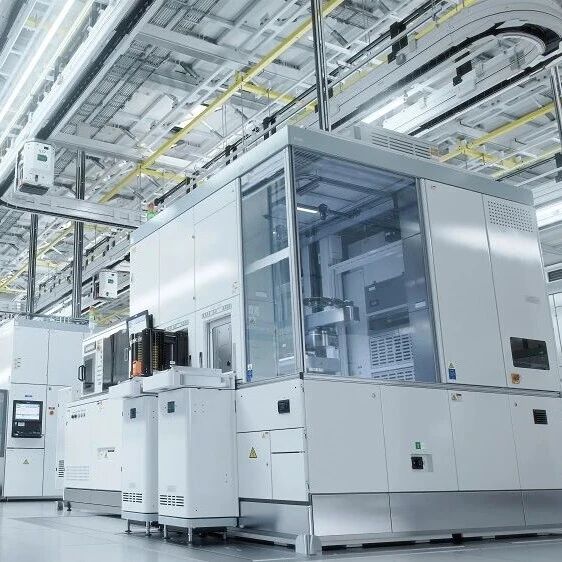
Core Insights - imec has launched a 300mm GaN program aimed at developing power devices, with initial partners including AIXTRON, GlobalFoundries, KLA Corporation, Synopsys, and Veeco [1][4] - The project focuses on low and high voltage power electronics applications, specifically targeting the development of 300mm GaN epitaxial growth technology and HEMT process flows [1][3] Group 1: Project Overview - The 300mm GaN initiative is part of imec's GaN Power Electronics Industrial Alliance Program (IIAP), which aims to reduce manufacturing costs and enhance the development of advanced power electronic devices [1][2] - The transition to 300mm substrates is expected to facilitate the creation of more efficient low-voltage load point converters for CPUs and GPUs [3][4] Group 2: Market Potential - GaN-based fast chargers have recently entered the market, showcasing the technology's potential in power electronics applications [2] - Compared to silicon-based solutions, GaN products are anticipated to offer smaller form factors, lighter weights, and superior energy conversion efficiencies [2] Group 3: Technical Development - imec plans to establish a benchmark technology platform for lateral p-GaN HEMTs using 300mm silicon substrates for low voltage applications (100 volts and above) [3] - The project will also address high voltage applications (650 volts and above) using 300mm semi-spec substrates and CMOS-compatible QST engineering substrates [3] Group 4: Ecosystem Collaboration - Successful development of 300mm GaN technology relies on building a robust ecosystem that fosters collaboration across design, epitaxy, process integration, and application [4] - imec emphasizes the importance of tight cooperation among partners to drive innovation across the entire value chain of GaN power electronics [4]
AI,点燃第三代半导体黄金时代
半导体行业观察· 2025-10-07 02:21
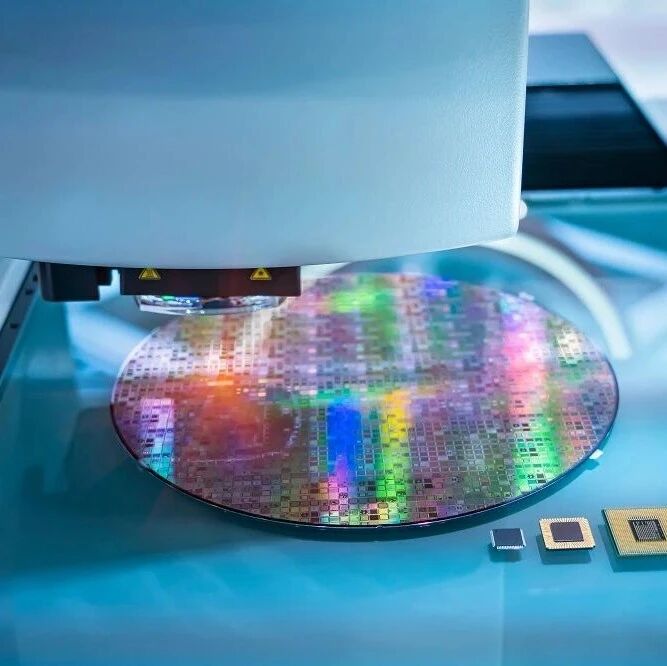
Core Insights - The article discusses the growing importance of Gallium Nitride (GaN) and Silicon Carbide (SiC) as third-generation semiconductor materials, particularly in the context of AI data centers, where they are creating new market opportunities [1][30]. - The rise of AI is significantly increasing power demands in data centers, necessitating upgrades in power supply systems to accommodate higher efficiency and power density [3][30]. Group 1: AI Data Center Power Challenges - The power consumption of AI data centers is projected to reach 7% of global energy consumption by 2030, equivalent to India's current energy usage [3]. - Traditional silicon-based devices have reached their performance limits, making wide bandgap semiconductors like SiC and GaN essential for meeting the demands of higher voltage, faster switching frequencies, and greater power density [3][30]. Group 2: Technical Advantages of SiC and GaN - SiC offers lower conduction resistance and stable temperature characteristics, making it suitable for high-voltage and high-temperature applications, particularly in AC-DC conversion [5]. - GaN achieves low switching losses and high switching frequencies, making it ideal for high-density applications in DC-DC conversion [5][30]. Group 3: Industry Leaders and Competitive Landscape - Infineon is positioned as a leader in power semiconductors, launching products like the CoolSiC™ MOSFET 400V series, which enhances power density and efficiency for AI server power supplies [7][8]. - Navitas Semiconductor combines SiC and GaN technologies to create high-power density solutions, recently introducing a 4.5kW AI data center server power solution with a power density of 137W/in³ and efficiency exceeding 97% [9]. - ON Semiconductor focuses on high output power, conversion efficiency, and power density, offering innovative solutions that balance small packaging with high performance [10]. Group 4: NVIDIA's Role in Driving Change - NVIDIA is seen as a key player in pushing the adoption of third-generation semiconductors, advocating for an 800V high-voltage direct current (HVDC) infrastructure in data centers [14][15]. - The shift to an 800V architecture is expected to create significant demand for new power devices and semiconductors, with NVIDIA's plans for future GPU and CPU deployments driving this transformation [15][16]. Group 5: Market Outlook - The market for GaN is expected to grow faster than SiC in AI data centers, driven by the demand for high-voltage applications and the advantages of GaN in high-frequency, low-loss scenarios [20][30]. - The article anticipates a golden era for third-generation semiconductors in AI data centers, contributing to technological advancements and more efficient infrastructure [30].

AMD的又一次豪赌
半导体行业观察· 2025-10-07 02:21
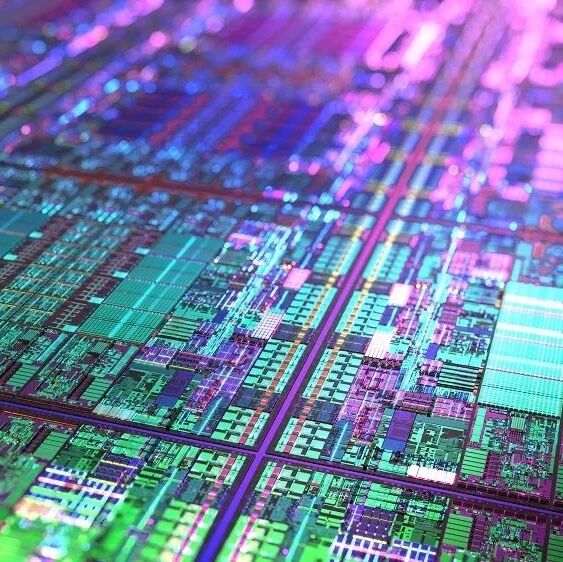
Core Insights - AMD and OpenAI have announced a strategic partnership involving the purchase and deployment of up to 6 gigawatts of AMD Instinct GPUs, potentially generating sales of up to $90 billion [1][2] - The partnership is seen as a structural shift in AI infrastructure financing, linking AMD's long-term valuation directly to OpenAI's growth [2][3] - AMD's stock surged over 30% following the announcement, indicating market confidence in the partnership's potential to accelerate AMD's AI revenue goals [2][16] Partnership Details - OpenAI will initially purchase 1 gigawatt of AMD Instinct MI450 GPUs, with the potential to scale up to 6 gigawatts over time [3][4] - The agreement includes a performance-based warrant allowing OpenAI to purchase up to 160 million shares of AMD at $0.01 each, contingent on achieving certain milestones [1][4] - The structure of the deal is designed to align incentives between AMD and OpenAI, rewarding AMD based on OpenAI's success in deploying the GPUs [4][10] Financial Implications - The partnership is expected to generate "hundreds of billions" in revenue for AMD, with the potential for significant stock price appreciation linked to performance milestones [2][9] - The warrant structure allows AMD to convert customer acquisition costs into equity, limiting dilution while ensuring a minimum shipment commitment of 1 gigawatt [5][10] - OpenAI's ability to monetize GPU capacity is crucial for the value of the warrants, creating a dependency on AMD's stock performance [10][13] Industry Context - The collaboration occurs in a competitive landscape dominated by NVIDIA, with OpenAI's existing partnerships with Microsoft and Oracle further complicating the dynamics [11][12] - AMD's approach contrasts with NVIDIA's and Intel's models by embedding equity incentives rather than requiring direct capital investment, fostering a more distributed network of strategic buyers [11][12] - The partnership may attract smaller AI developers seeking long-term relationships with semiconductor partners without the capital burdens of larger ecosystems [12] Technical Roadmap - The MI450 GPU, based on the CDNA4 architecture, is positioned as AMD's first product optimized for rack-level deployment, competing directly with NVIDIA's offerings [7][8] - AMD's Helios platform integrates MI450 GPUs with Zen 6 CPUs, aiming to provide a comprehensive solution for large AI clusters [7][8] - Future developments may include the MI500 series, which will build on the same design principles and enhance memory bandwidth and integration [8][9] Market Reaction - Following the announcement, AMD's stock price increased significantly, reflecting investor optimism about the partnership's implications for AMD's growth trajectory [16][17] - Analysts view the deal as a validation of AMD's AI strategy, positioning its data center division as a comparable growth engine to NVIDIA's [16][17] - The market response suggests confidence in AMD's ability to capture high-value AI workloads through its upcoming GPU architectures [16][17] Strategic Considerations - The partnership's success hinges on OpenAI's ability to scale its operations and effectively utilize AMD's hardware, which may influence AMD's broader market strategy [20] - AMD's recent acquisitions aim to strengthen its position in the AI value chain, enhancing its capabilities from chips to systems and software [18][19] - The collaboration with OpenAI could accelerate the evolution of AMD's ROCm ecosystem, providing valuable feedback for improvements [19][20]

HBM,增速放缓
半导体行业观察· 2025-10-07 02:21
公众号记得加星标⭐️,第一时间看推送不会错过。 NAND Flash 也呈现类似趋势。2026 年 NAND Flash 需求增长率预计为 13.8%,生产增长率预计为 14.0%,供需将保持平衡。 iM 证券分析师宋明燮指出:"HBM 在 2024-2025 年经历了爆发式增长,但 2026 年随着竞争对手进入市场、供应规模扩大,其增长速度很可能放缓。" 与之相对,他 分析称:"长期处于价格下跌态势的 NAND Flash,目前已触底,未来有相对走强的空间。" 智能手机、服务器需求成关键变量 需求层面,智能手机与服务器被视为核心影响变量。 来源 : 内容来自 编译自zdnet 。 过去几年拉动行业景气度的高带宽内存(HBM),将因竞争加剧而增长放缓;反观动态随机存取内存(DRAM)与闪存(NAND Flash),则有望凭借供需平衡实 现良好业绩。 根据 iM 证券 6 日发布的报告,2025 年 DRAM 需求增长率已上调至 19.3%,小幅高于行业 18.1% 的生产增长率。展望 2026 年,受全球经济放缓影响,DRAM 需求 增长率预计为 14.1%,生产增长率预计为 14.2%。 https://z ...

晶体管专利 75 周年:开启硅与软件时代
半导体行业观察· 2025-10-06 02:28
Core Viewpoint - The invention of the transistor 75 years ago by scientists at Bell Labs marked the beginning of the silicon and software era, which continues to dominate business and society today [2][5]. Group 1: Historical Context - The first working transistor was created in 1947, but the patent was not granted until October 3, 1950, to John Bardeen, Walter Brattain, and William Shockley [4][5]. - The patent was for a "three-electrode circuit element utilizing semiconductor materials," which took years to realize its significant impact on commerce and society [5]. Group 2: Technological Advancements - Transistors replaced bulky, fragile, and power-hungry vacuum tubes, although vacuum tubes are still used in niche applications like certain audio equipment and military uses [5][6]. - Transistors brought substantial improvements in computing speed, energy efficiency, and reliability, forming the foundation for integrated circuits and processors [7]. Group 3: Moore's Law - Moore's Law, proposed in 1965, predicted that the number of transistors on integrated circuits would double approximately every two years with minimal cost increase [7][11]. - The advancements in transistor technology prior to the proposal of Moore's Law indicated that such predictions were reasonable, and many in the semiconductor industry still believe it remains valid today [11]. Group 4: Current Implications - The incredible miniaturization and progress in computing and software since the patenting of the transistor have greatly expanded the possibilities for human thought and machines, particularly in the realm of artificial intelligence [11].